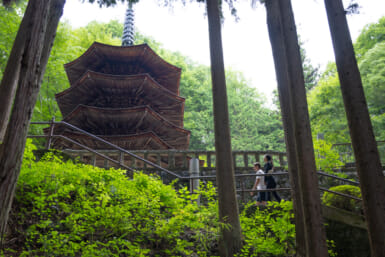
Overview of Chubu
Chubu, meaning “central region” in Japanese, occupies the widest part of Japan’s main island Honshu. It comprises nine prefectures — Aichi, Fukui, Gifu, Ishikawa, Nagano, Niigata, Shizuoka, Toyama and Yamanashi — stretching from the Pacific Ocean to the Sea of Japan and covering roughly 20% of Japan’s land area, with around 21 million residents. The region is usually divided into three sub-regions: Tokai (Aichi, Gifu and Shizuoka) along the Pacific coast; Koshinetsu (Niigata, Nagano and Yamanashi) in the central highlands; and Hokuriku (Toyama, Ishikawa and Fukui) on the Sea of Japan coast.
Chubu is defined above all by its mountains. The Japanese Alps — divided into the Northern (Hida), Central (Kiso) and Southern (Akaishi) ranges — cut down the middle of the region and include many of the country’s highest peaks, often called the “roof of Japan.” Mt. Fuji, Japan’s iconic 3,776-meter volcano, straddles the border between Shizuoka and Yamanashi and was inscribed as a UNESCO World Heritage site in 2013. The alpine terrain creates a dramatic climate divide: the Pacific side is sunny and mild in winter, while the Sea of Japan side receives some of the heaviest snowfall in the world — the foundation for Chubu’s world-class ski industry, especially in Nagano (host of the 1998 Winter Olympics) and Niigata.