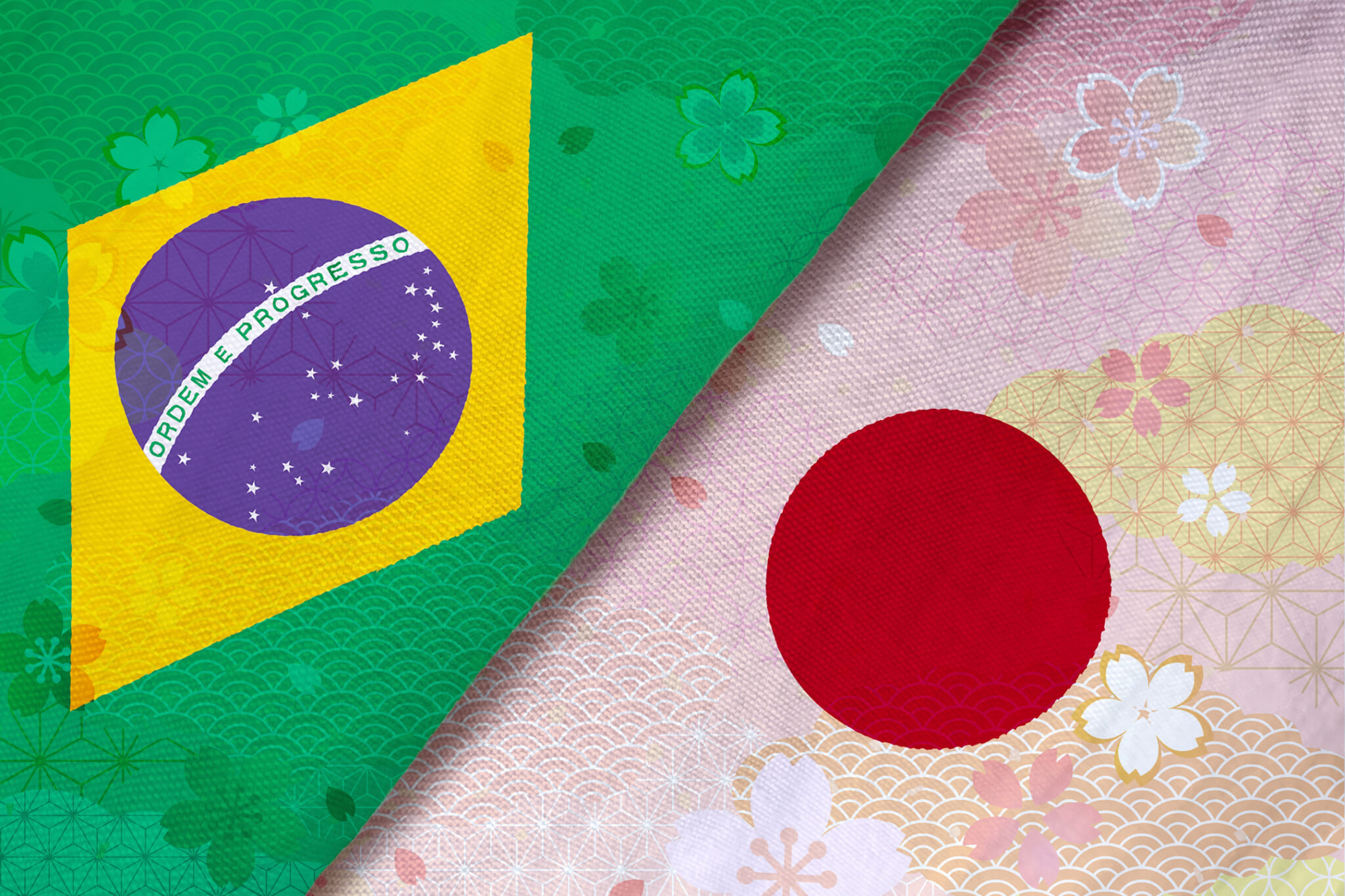

Brazil boasts the largest Japanese community outside of Japan. Today, over 2.7 million Nikkei — people of Japanese descent — call the country home, a diaspora known locally as the Nipo-Brasileiros. Movement across the Pacific hasn’t been one-sided, either: Japan is home to the fifth-largest Brazilian community abroad. These immigrants, who responded to labor shortages in Japan, were initially nicknamed dekasegi (migrant workers). Many, however, have since settled and built vibrant communities across the archipelago.
Here’s a look at the history that brought these two cultures together, and some recommended spots to enjoy Brazilian culture in Japan.

The Kasato Maru ship brought hundreds of Japanese people to Brazil in the 20th century and now stands as a symbol of Japanese immigration | Image courtesy of Wikimedia Commons
Over 130 Years of Japanese-Brazilian History
The story of Japanese immigration to Brazil can be traced back to 1895, when the two nations signed the Treaty of Friendship, Commerce and Navigation — a document that opened diplomatic representation and soon paved the way for bilateral immigration.
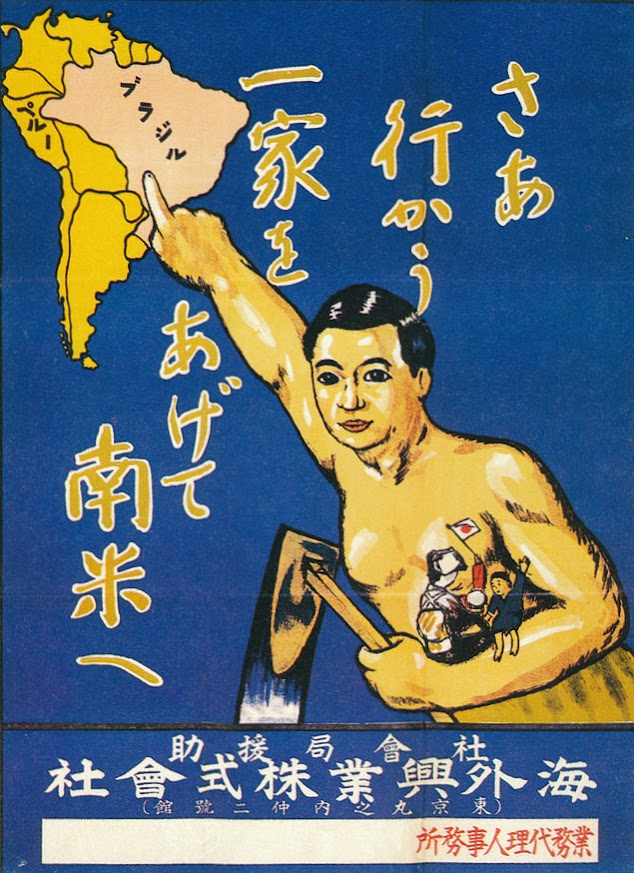
Propaganda poster encouraging Japanese people to move to Brazil | Image courtesy of Wikimedia Commons
At the turn of the century, the northeastern Tohoku region of Japan was suffering from a crushing convergence of crises, compounded by a vicious famine in 1905. State-sanctioned propaganda pushed for desperate northerners to start anew in Brazil, promising a land of rich, golden soil that would bring them prosperity.
In 1908, the ship Kasato Maru brought hundreds of Japanese people from Kobe and into the port of Santos in the state of São Paulo. A majority of the passengers had never set foot outside of Japan — and many would never be able to see it again.
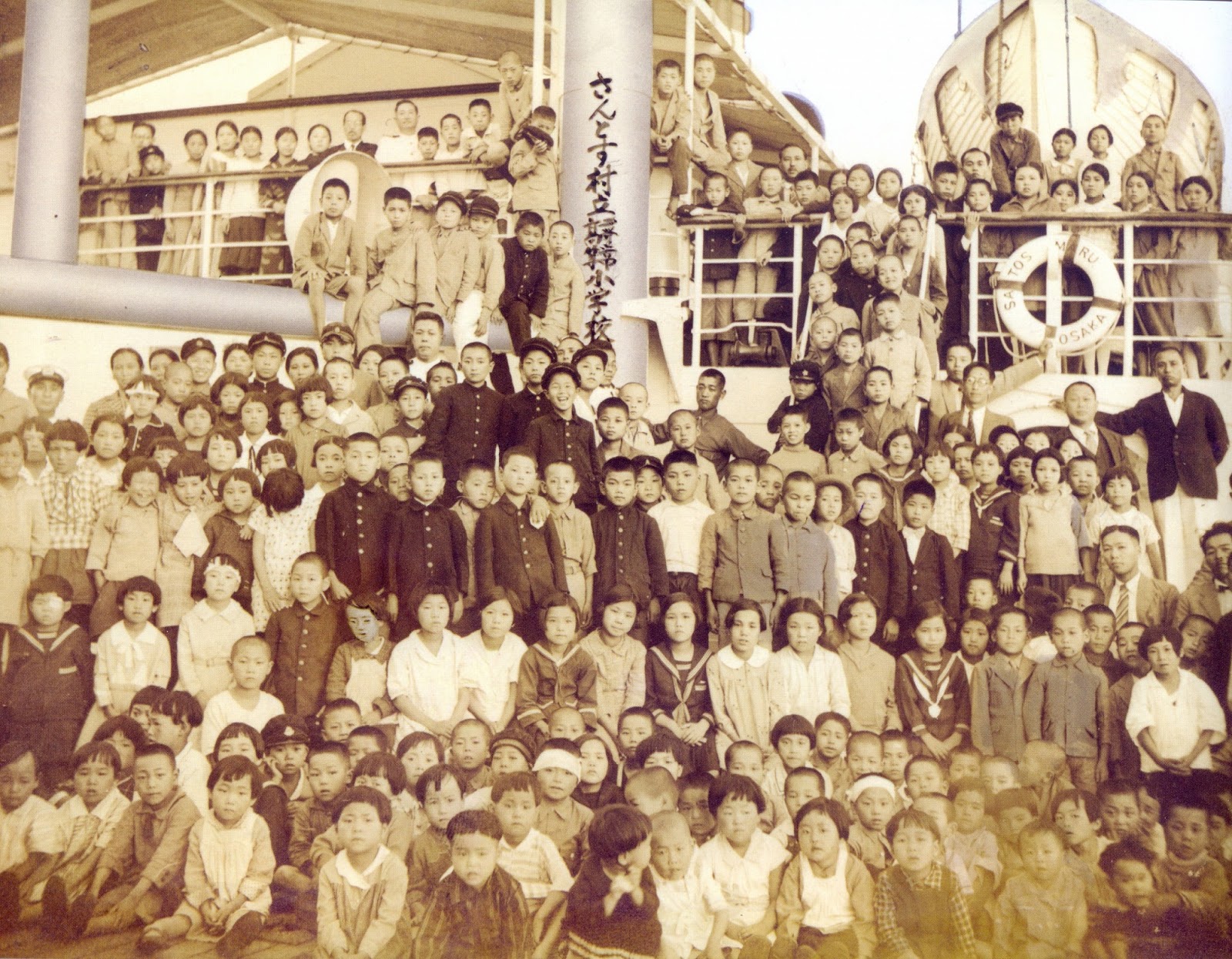
Immigrant children on the Santos Maru, another ship like the Kasato Maru that brought Japanese people to Brazil in the 1930s | Image courtesy of Wikimedia Commons
While the immigration posters had painted an idyllic dream, the reality was grueling. Brazil had outlawed slavery mere decades earlier, and its labor-intensive industries continued to hunger for a stable source of low-cost workers. Japanese emigrants fulfilled that need, with many soon finding themselves trapped in harsh conditions on the country’s coffee plantations.
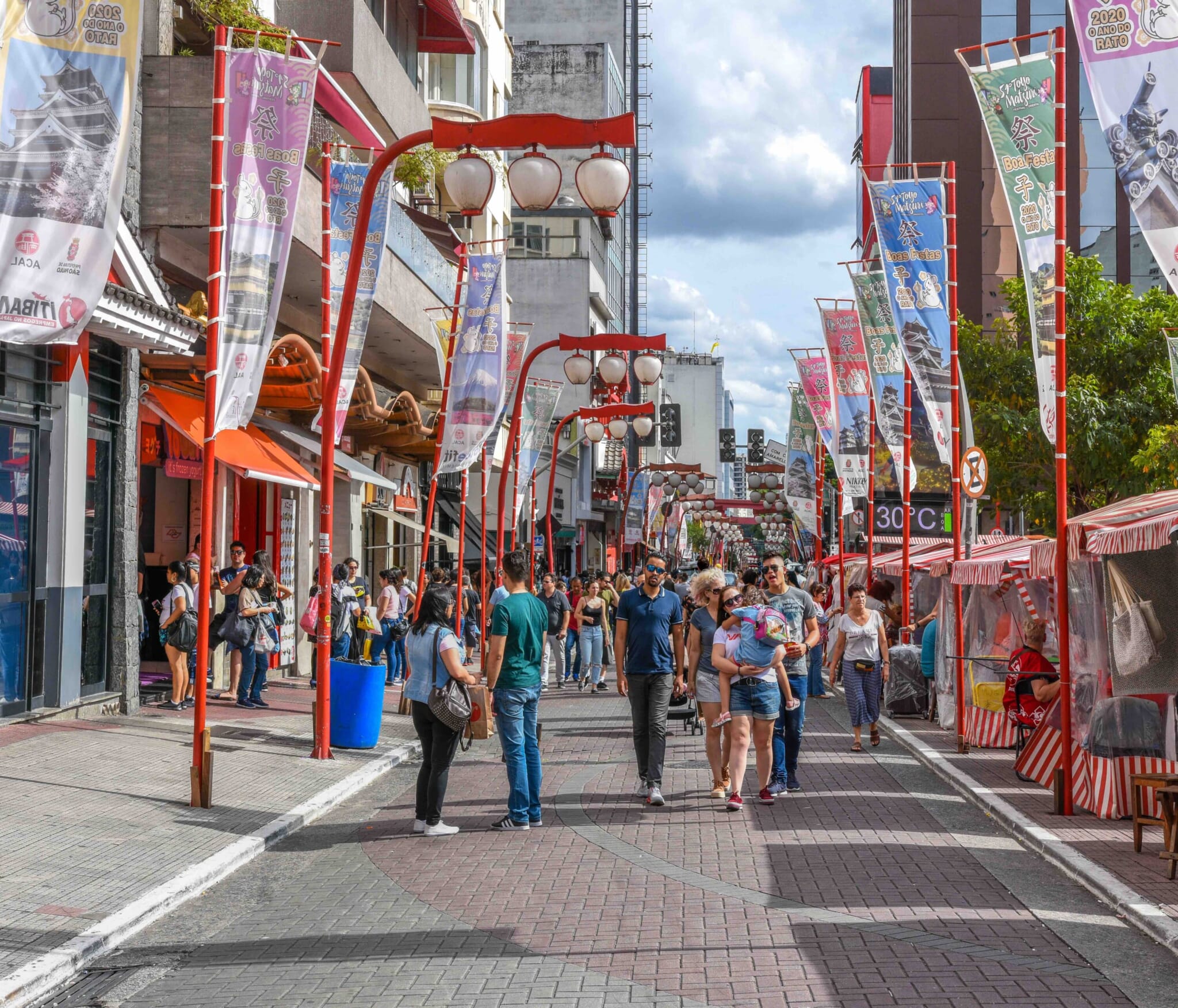
The “Japantown” in São Paulo’s Liberdade district is filled with shops, restaurants and street signs inspired by Japanese culture | Image courtesy of Wikimedia Commons
Despite myriad challenges, these first Japanese families persisted, creating their own communities, raising families, establishing groups and developing traditions rooted in both Japanese and Brazilian identity. The Nipo-Brasileiros, the biggest community in the Japanese diaspora, are here today thanks to their efforts. Their collective story is one that grew from the narrow boundaries of an immigrant ship to a permanent presence across oceans.
Where To Experience Brazilian Culture in Japan
Tokyo
The culinary landscape of Tokyo reflects this deep cross-cultural history, offering authentic windows into Brazil’s rich gastronomic traditions. While chain restaurants such as Barbacoa and Rio Grande offer convenient access to churrasco (Brazilian-style barbecue), with multiple locations scattered throughout the city, there are also smaller neighborhood spots that are definitely worth visiting for a more immersive and authentic experience.
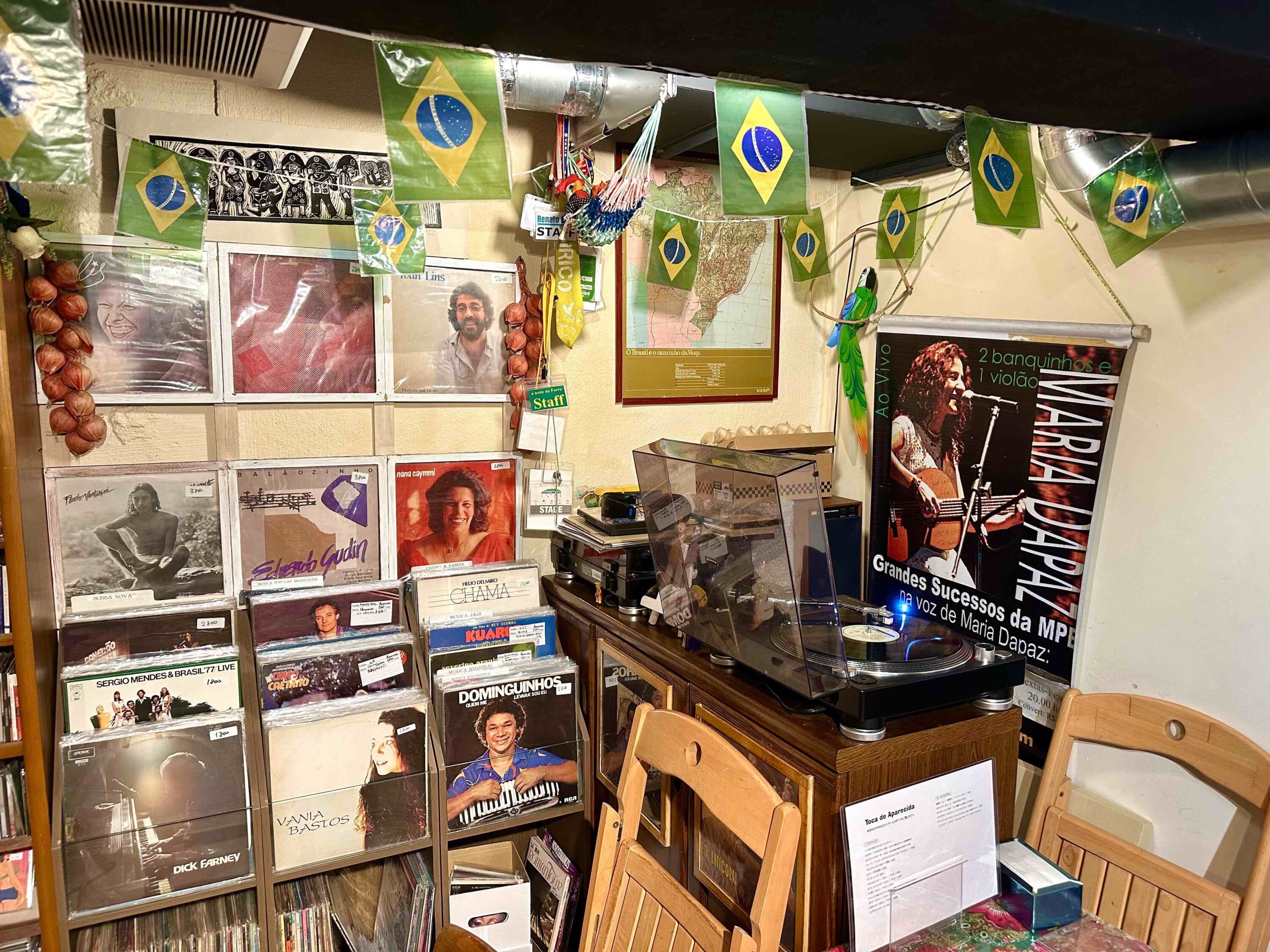
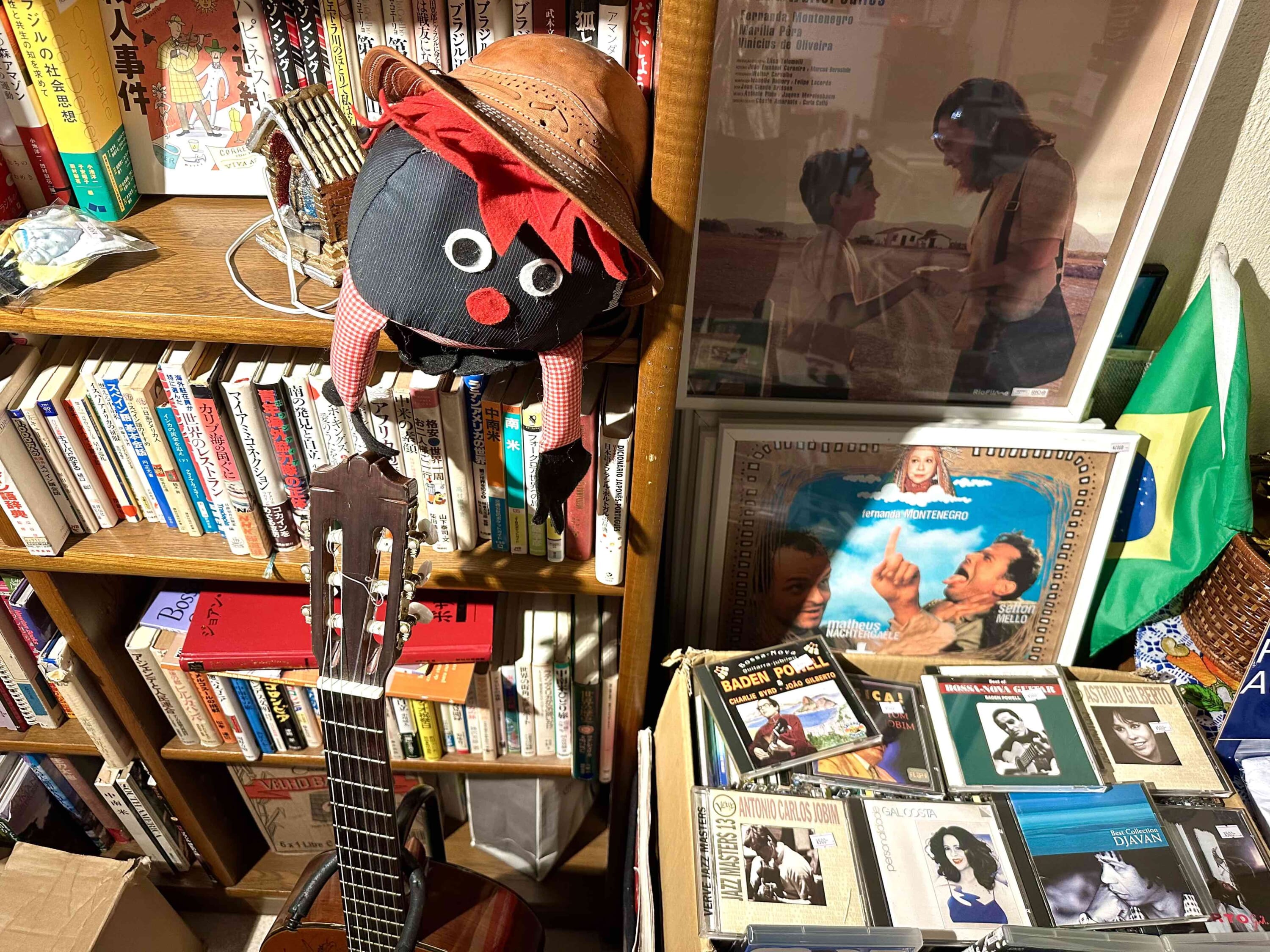
Koenji’s Toca de Aparecida, just a few meters from the train station, is like a hidden Brazilian oasis tucked into one of Tokyo’s most dynamic neighborhoods. Here you’ll find Brazilian flags and memorabilia in every corner — including a signed drawing by Mauricio de Sousa, the renowned Brazilian cartoonist and creator of the children’s comic book series Turma da Mônica.
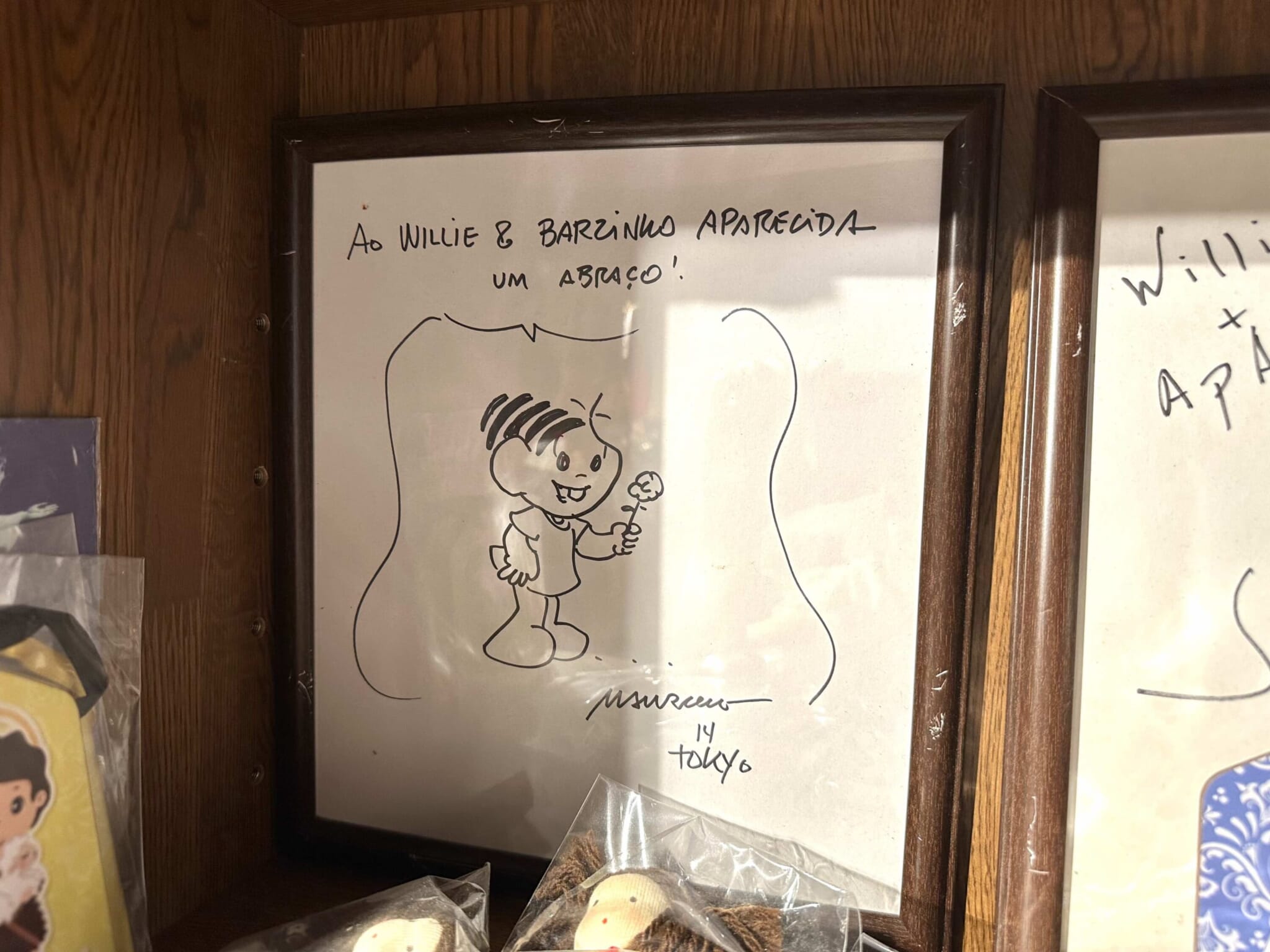
An original drawing from Brazil’s renowned cartoonist Mauricio de Souza | Photos by Aya Sato
Aparecida is not just a simple restaurant; it bills itself as a Brazilian cultural center, offering everything from a bar and concert venue to a secondhand shop, Portuguese language school, and exhibition space. Ultimately, it functions as a vibrant slice of Brazil, catering to its community’s needs while introducing the neighborhood to the richness of South America’s largest country.
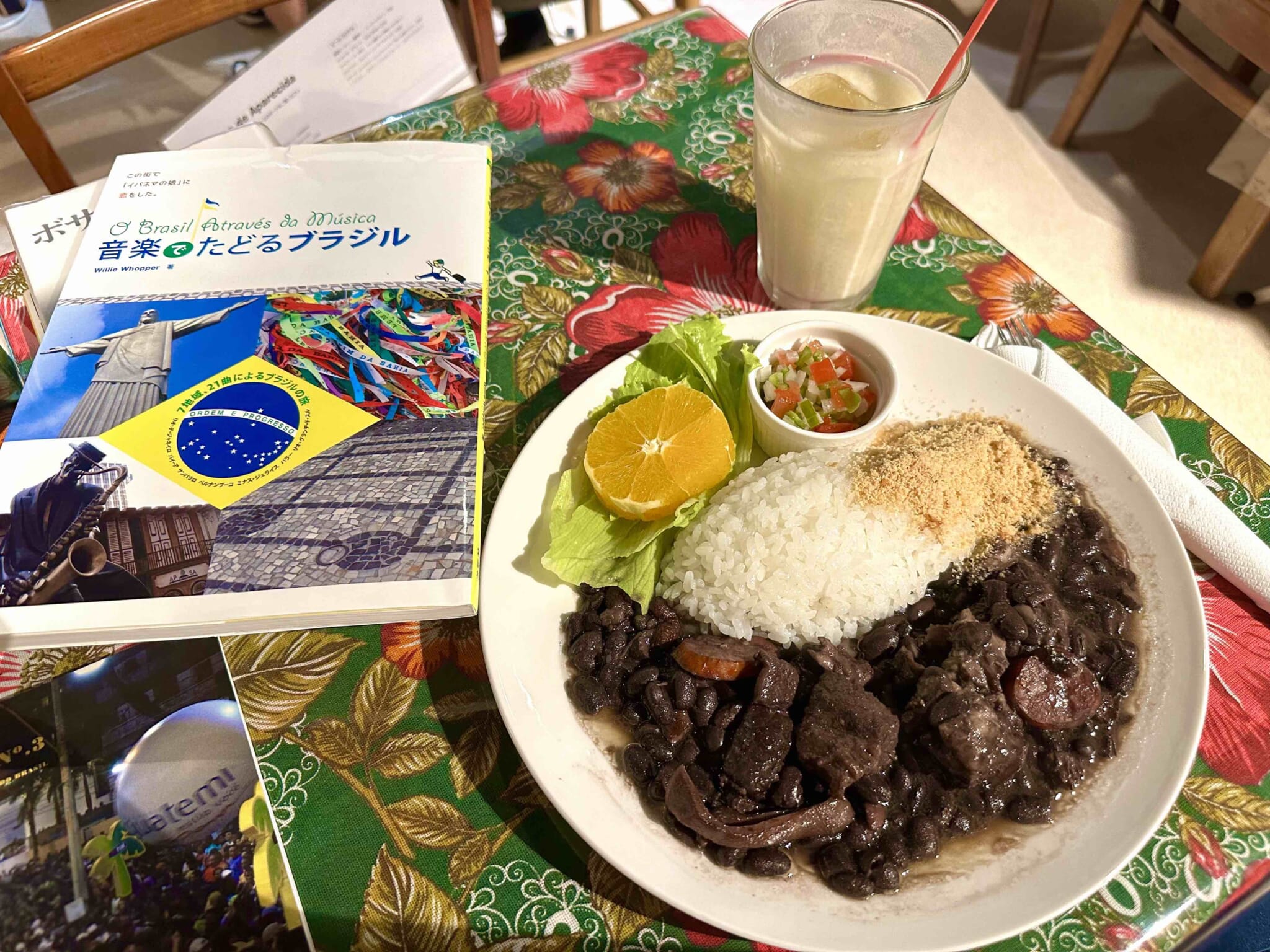
Photos by Aya Sato
As for the menu, Aparecida offers a wide selection of Brazilian comfort food, including feijoada (bean and pork stew), prato de calabresa (smoked sausage) and fried snacks like pastéis (pastries with various fillings). The dishes come complete with truly Brazilian pairings, like farofa (toasted cassava) as a topping for the beans and sliced oranges to cut through the richness of the meat.
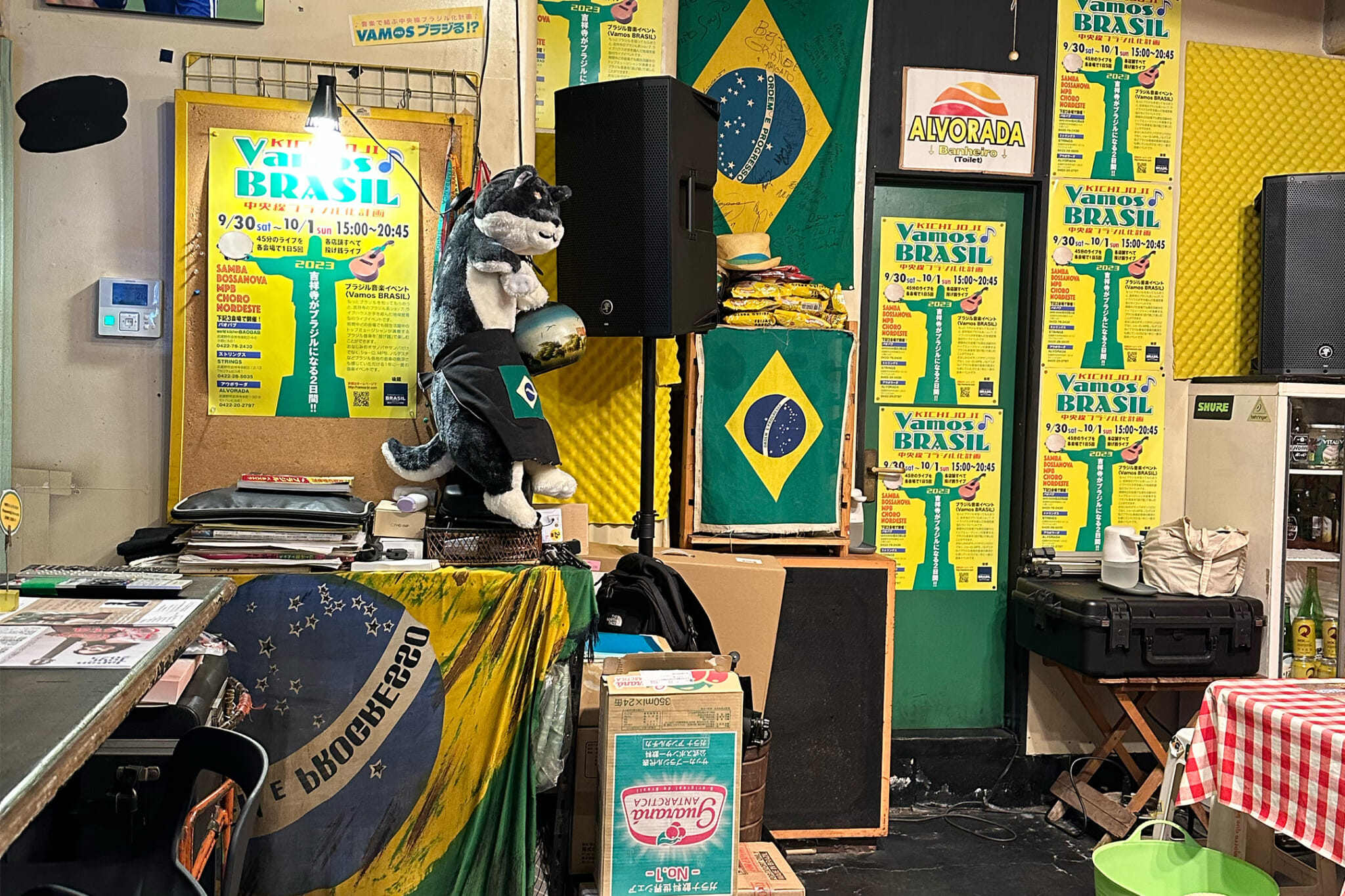
Photos by Aya Sato
Alvorada sits on the JR Chuo Line in Kichijoji. Showcasing the bright, bold flavors and cultures of Brazil, the restaurant is ornamented with festive Brazilian decor. You’ll even encounter the plastic chairs and tablecloths common at the country’s beachside eateries and street food counters.
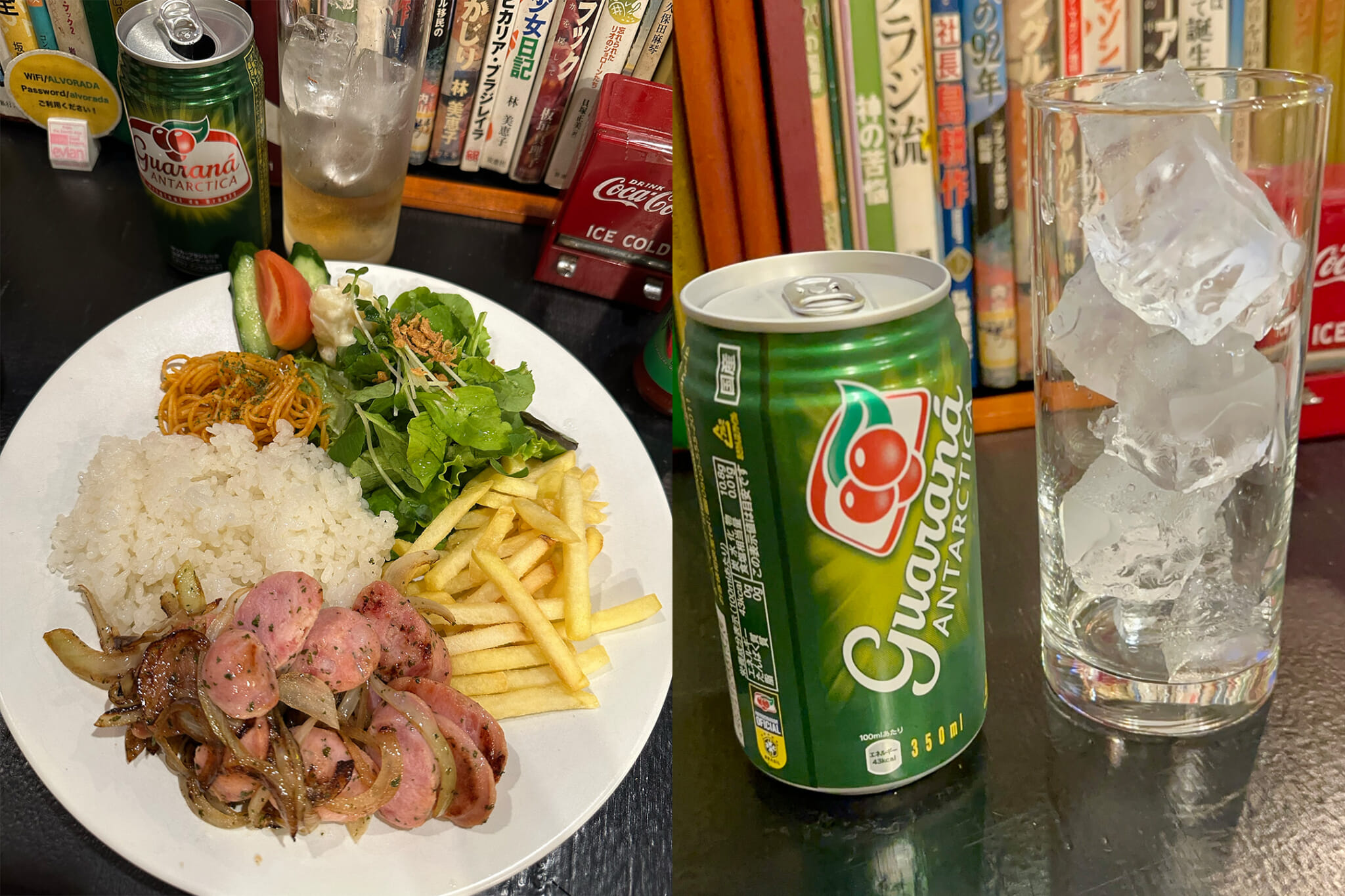
Photos by Aya Sato
In addition to popular dishes like picanha (top sirloin cap), it also serves Brazilian takes on other worldly specialties like estrogonofe (stroganoff) and kibe (Lebanese kibbeh). These creations highlight the rich diversity of the Brazilian community.
Established in 1974, Saci Pererê in Shinjuku is celebrated as the oldest Brazilian restaurant and music venue in Japan. The restaurant, named after a mythological figure of Brazilian folklore, sits between Yotsuya and Ichigaya stations and regularly hosts live performances featuring bossa nova and samba. A firsthand touchpoint to Brazilian culture for many people in Tokyo, it introduced countless locals to the tastes and sounds of the tropics.
At Saci Pererê, you’ll find a host of crowd favorites: garlic sirloin steak, bolinho de bacalhau (salt-cod fritters), mandioca frita (fried cassava) and many more. Meanwhile, the drink menu offers caipirinha cocktails, passion fruit spirits and classic Guaraná Antarctica soda. Acai lovers will find authentic acai juice and even an acai beer.
Beyond restaurants, Tokyo is home to Japan’s biggest Brazilian and Latin American festival — Festival Brasil & Latino. The 2026 edition will be held at Yoyogi Park on July 18 and 19, featuring attractions like music stages, food stalls and merchandise booths.
The Festival Brasil & Latino will host its 19th event with music, food and exhibit booths, showcasing cultures from Brazil and Latin America.
Festival Brasil & Latino 2026
Date & Time
Jul 18-19・11 a.m.–8 p.m.
Price
Free
Location
Yoyogi Park Event Square
Photos by Aya Sato
Oizumi, Gunma Prefecture
The population of Oizumi is nearly 20% foreign, representing 49 different countries. Over half of the foreign nationals are Brazilians. The town has been a pioneer in nurturing a multicultural and inclusive society, with schools implementing Japanese language support classes for children and the municipality providing newsletters and community assistance in Portuguese.
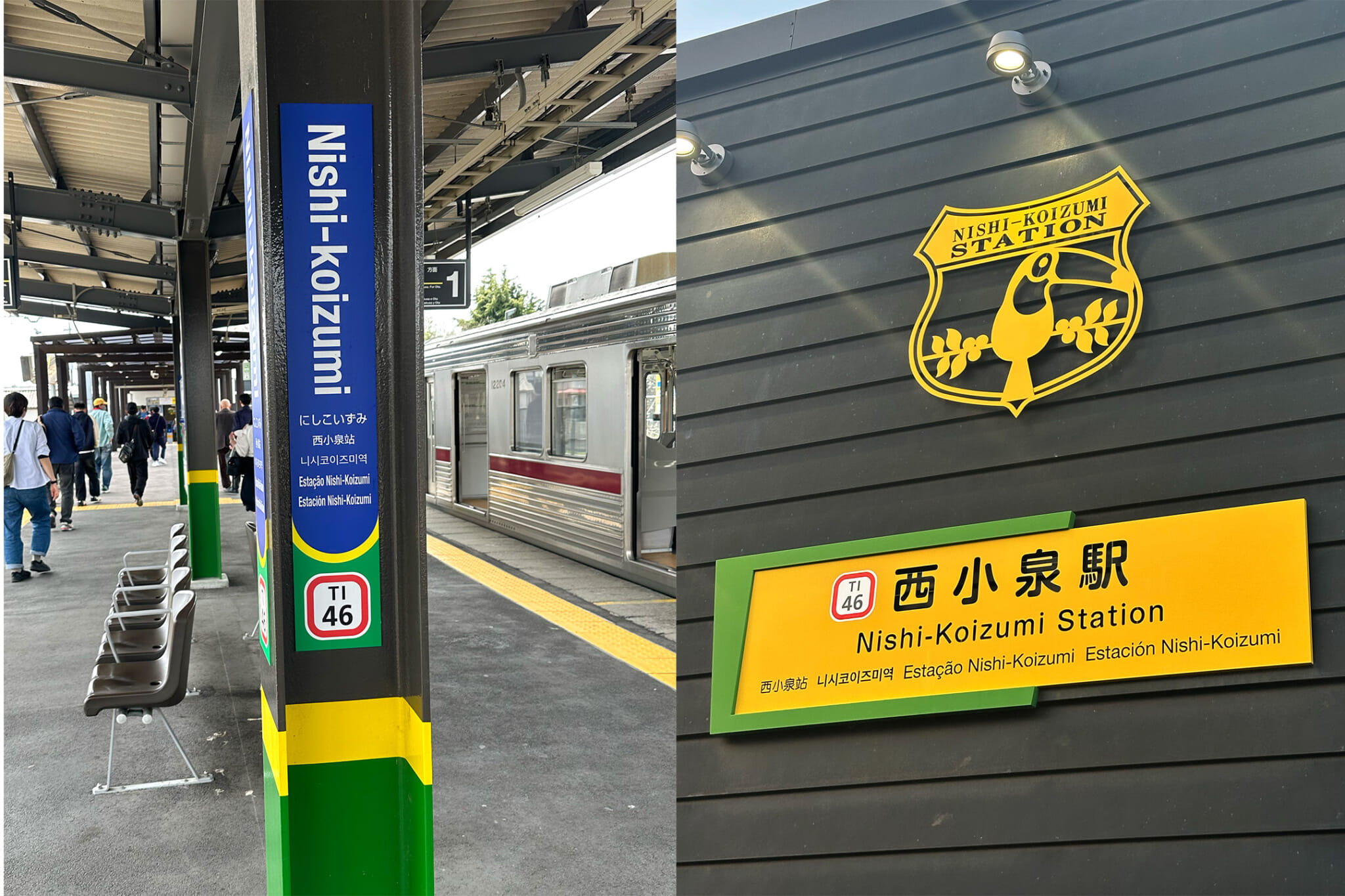
These initiatives are clearly reflected in the town’s design, something that’s apparent the second you step off the train at Nishi-Koizumi Station: The train platform features a yellow and green color palette, and toucans and floral motifs decorate the walls. Outside the station, Portuguese storefront signage abounds. As you venture into the surrounding neighborhoods, you start to forget that you’re still in Japan.
One of Oizumi’s can’t-miss places is Super Mercado Takara, a supermarket with all kinds of imported goods for homesick Brazilians and curious visitors alike to enjoy, including a huge selection of spices, snacks, sweets, canned goods and frozen foods. Takara also has a butcher shop and an in-house bakery with fresh, irresistible bread. Another market, Kioske Cibrasil, is just a one-minute walk away. Here, you’ll find more grocery offerings and the shop’s own cafeteria.
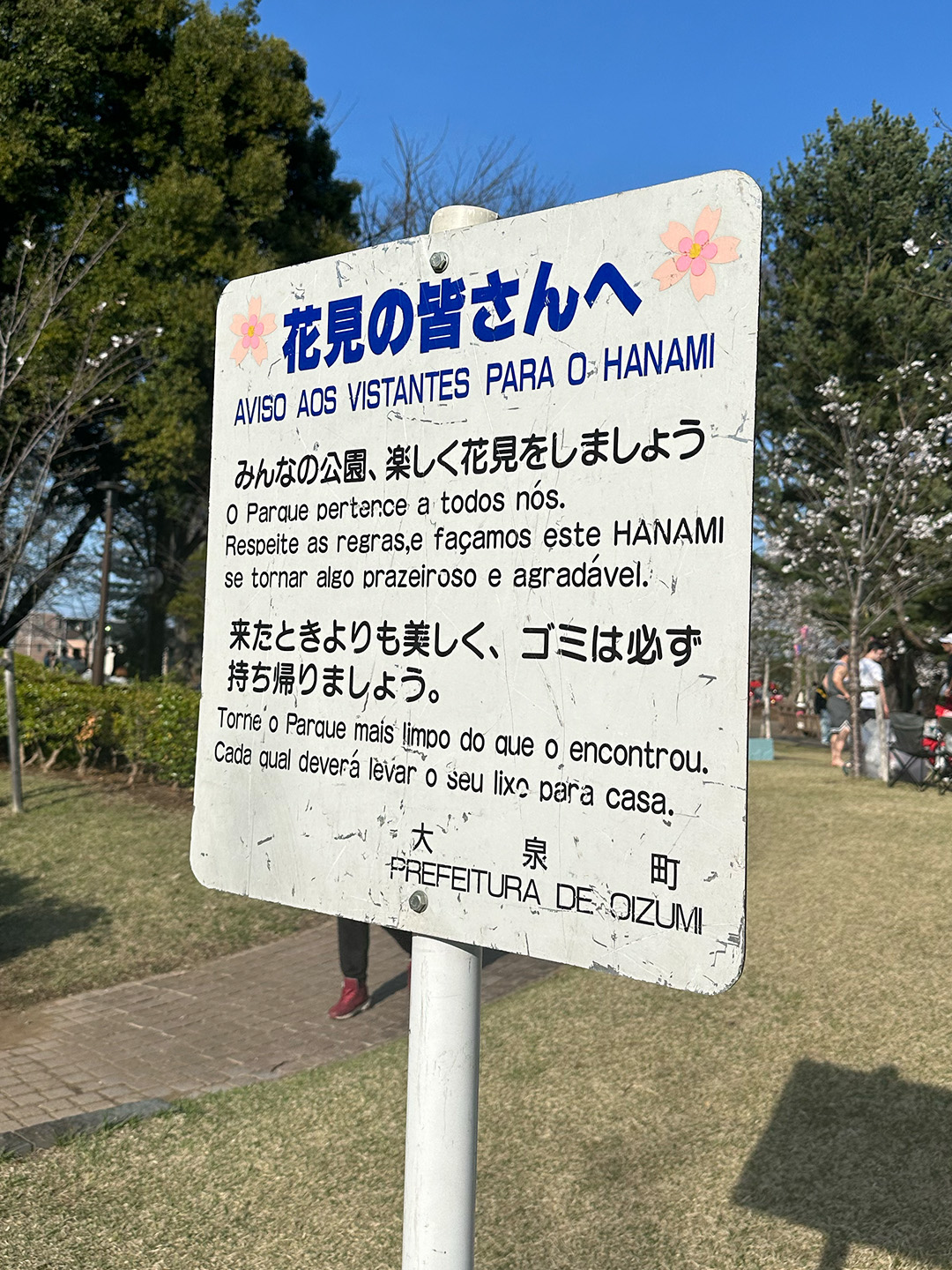
Signs around Koizumi Castle explain “hanami” culture in Japanese and Portuguese | Photos by Aya Sato
Oizumi also has plenty of sightseeing attractions, like Koizumi Castle, which serves as a beautiful venue for cherry blossom viewing in the spring. Naturally, the town’s multicultural spirit extends to the historic castle grounds, where signs explain its history and park etiquette in Portuguese. Stepping beyond the gates, even a simple stroll through the town reveals a wealth of subtle details that solidify Oizumi’s identity as a vibrant Japanese-Brazilian bubble.
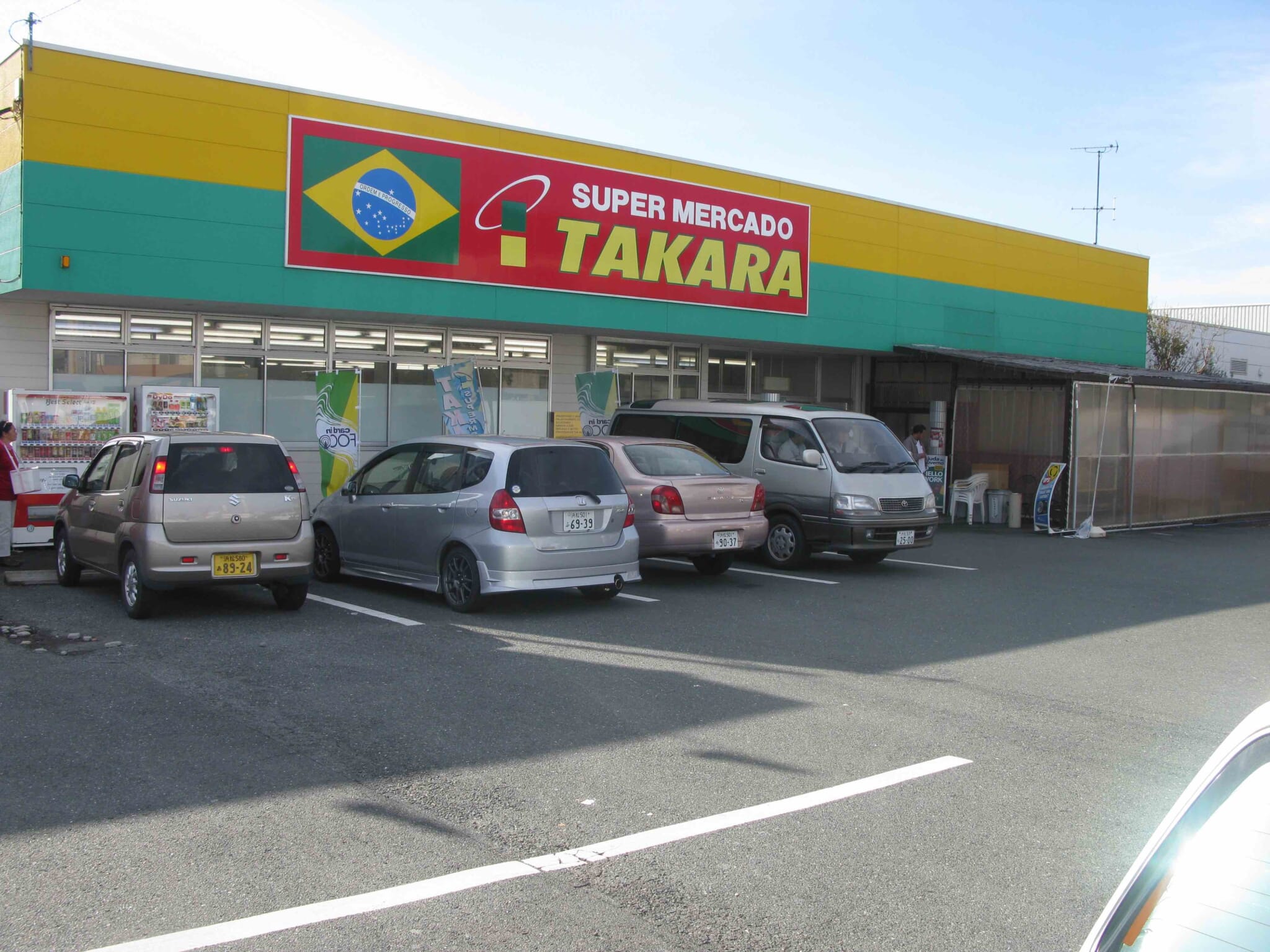
Hamamatsu and Oizumi both have a Super Mercado Takara market
Hamamatsu, Shizuoka Prefecture
Shizuoka’s Hamamatsu is well known for its automobile and motorbike manufacturing. Home to industry giants, the city offers visitors unique activities, such as Honda factory tours and visits to Suzuki’s theme park-like plaza. Supporting this industrial lifeblood are thousands of Brazilians.
During Japan’s era of rapid economic growth spanning the 1950s to the 1970s, the domestic workforce was insufficient to keep up with labor demands. To fill these vacancies, major manufacturers turned to overseas workers from Latin America, particularly from Brazil and Peru.
Today, Hamamatsu is home to over 9,000 Brazilian residents. Much like in Oizumi, the local community is geared toward assisting these residents in their daily lives, helping them adjust to life in Japan without losing touch with their roots. As a result, the city features a wealth of specialty grocery stores, restaurants, Portuguese-speaking medical clinics and multilingual support services, marking it as yet another vibrant destination to experience Brazilian culture in Japan.