What does luxury mean to you? For some people,it’s glitzy opulence; for others, a cocoon of privacy and exclusivity, sheltered from the rest of the world. The minds behind FHG Hotels have
a more subtle understanding of the concept — to them, luxury is the feeling of arriving somewhere and feeling seamlessly, effortlessly at home.
At times, checking in to a high-end hotel can feel paradoxically restrictive. Staff rush to greet you, and every interaction seems carefully orchestrated to ensure the perfection of your stay. FHG Hotels aims to move away from that model through what they call “self-hospitality,” an approach that gives guests greater autonomy over their experience and allows for more room to breathe.
“FHG diverges from conventional hospitality by shifting control back to the guest,” explains David Miskin, the brand’s chief creative director. “Traditional models are built around layers of service and constant interaction. The experience is often highly managed. Our approach removes a lot of that friction and allows guests to move more freely.”
The Brand Philosophy: Clarity, Intention and Restraint
The seed that would become FHG Hotels started with Fav, launched in 2020 by Kasumigaseki Capital. The properties were designed to cater to groups of travelers, with stylish and spacious rooms. In 2024, the company launched Seven x Seven as a high-end evolution of the larger brand.
Today, FHG Hotels operates over 21 hotels throughout Japan. The properties fall into several different categories: Fav for group stays; Seven x Seven for luxury resorts; Edit x Seven, which is more stripped-back and lifestyle-oriented; Base Layer Hotels, a new kind of urban business hotel; and the newly opened Fork & Knife, a boutique hotel focused on local food and culture.
A stay at an FHG Hotels property will begin with a self check-in, done by QR code. Rooms are equipped with a variety of high-end amenities, often including kitchen supplies; most properties have a gym and at least one sauna. “We design environments where everything is available, but nothing is imposed,” explains Miskin. “Guests can engage as much or as little as they want — whether that’s by cooking, hosting, relaxing, or using shared spaces.”
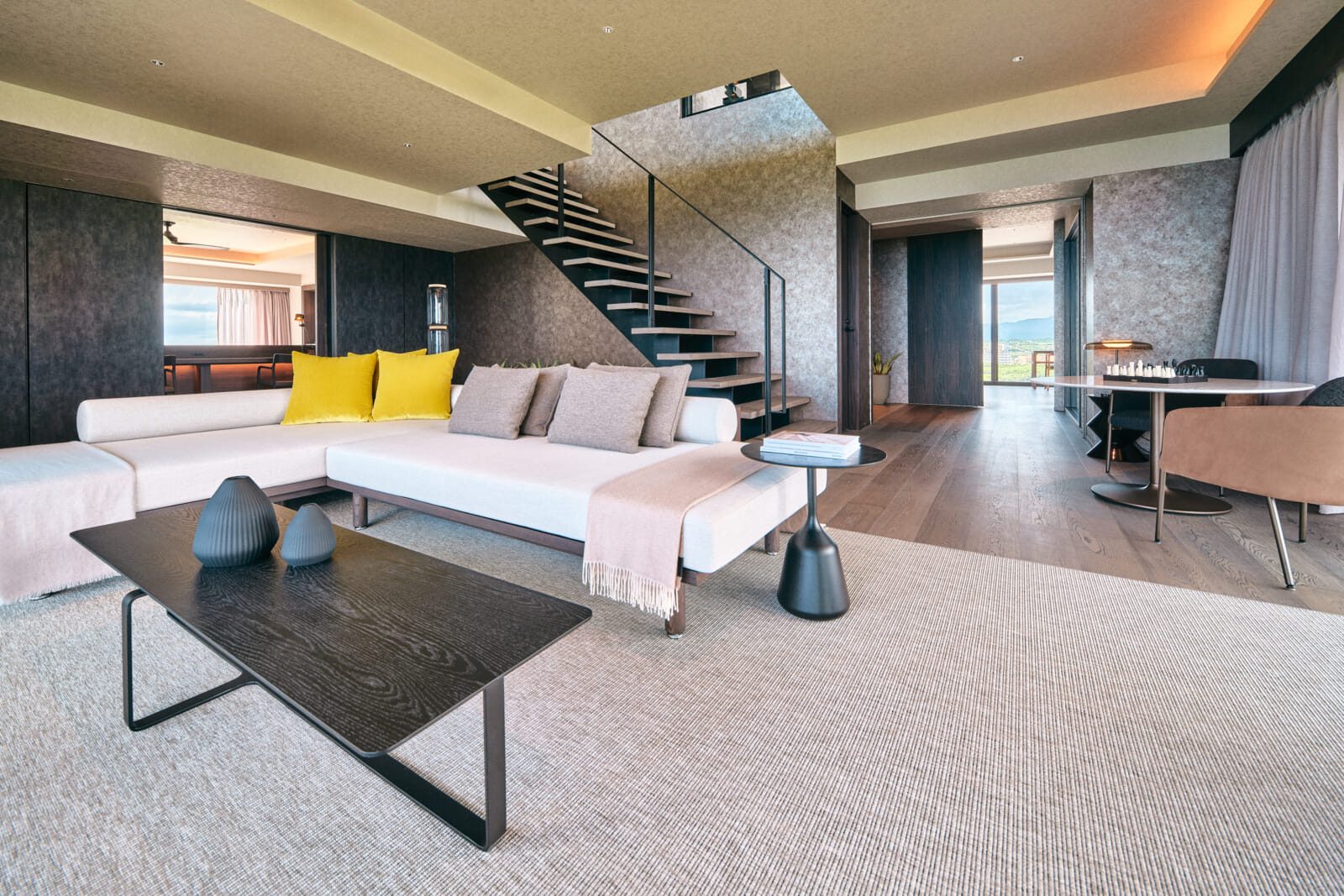
That philosophy extends beyond convenience into the design language itself. “Across all of our properties, the shared sensibility is of clarity, intention and restraint,” explains Miskin. “Behind the scenes, there’s a high level of structure and discipline, but what the guest feels is ease. That balance between control and freedom is what connects everything we do and what defines the FHG approach.”
Read on for an introduction to three FHG properties — Seven x Seven Ishigaki, Edit x Seven Setouchi Shodoshima and Hotel Fork & Knife Miyajima — each of which epitomizes this approach in its own way.
Seven X Seven Ishigaki: Where Luxury Goes To Play
Set on the subtropical paradise of Ishigaki Island, within walking distance of the beach, Seven x Seven Ishigaki is sleek and minimalistic, standing in striking contrast to the island’s lush greenery and cerulean waters. Yet despite its serene setting, the hotel is less about quiet seclusion than connection and spontaneity.
“Seven x Seven is the core expression of FHG Hotels’ philosophy,” says Miskin of the brand. “It’s energetic, social and built around self-hospitality, giving guests the freedom to shape their own experience.” That ethos is woven throughout the property in Ishigaki — from its breezy, seating-filled lobby to its expansive communal areas, dual saunas and multiple bars. Guests can mingle freely or retreat into rooms that feel intentionally designed for gathering; even the standard accommodations feature spacious couches and layouts suited to entertaining.
Rooms and Amenities at Seven x Seven Ishigaki
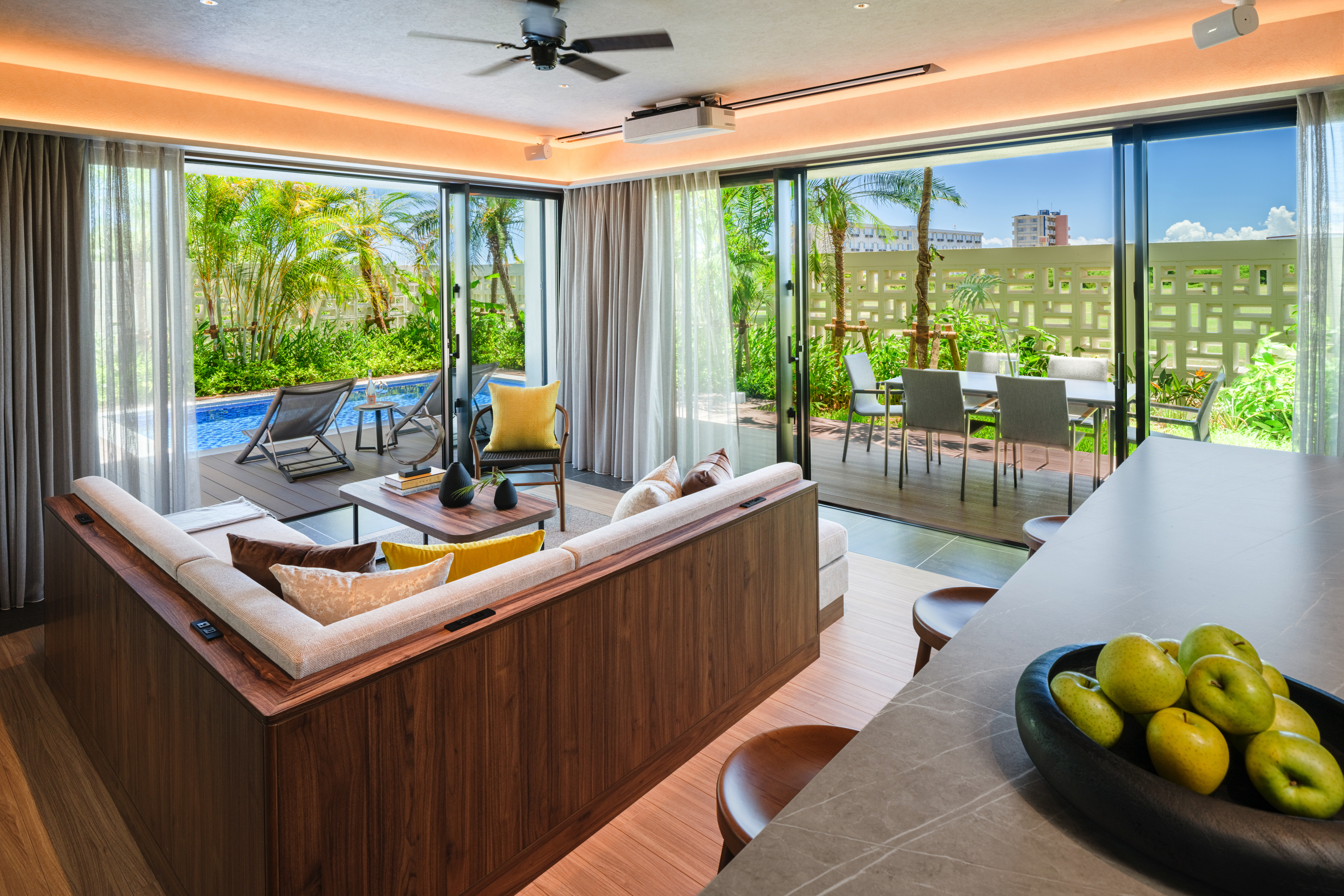
The rooms at Seven x Seven Ishigaki are modern and sophisticated, each featuring its own private balcony. The standard rooms can accommodate up to four guests, while the deluxe
rooms are spacious and elegantly appointed, some featuring private hot tubs and others tatami areas. The hotel also offers four suite categories, including a sprawling two-story penthouse complete with its own sauna, minibar and wine cellar, as well as the aptly named Pool Suite, which comes with a private pool.
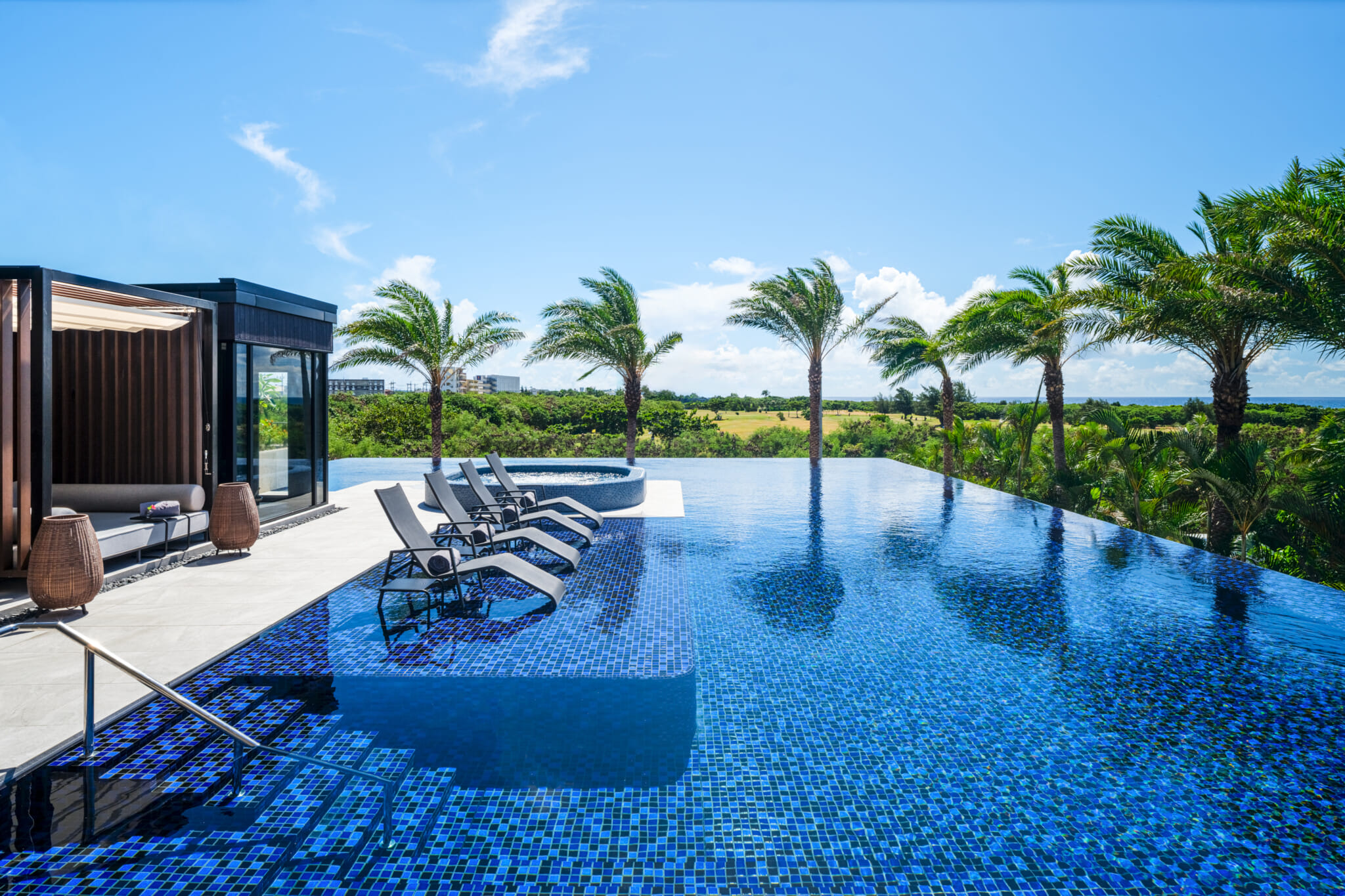
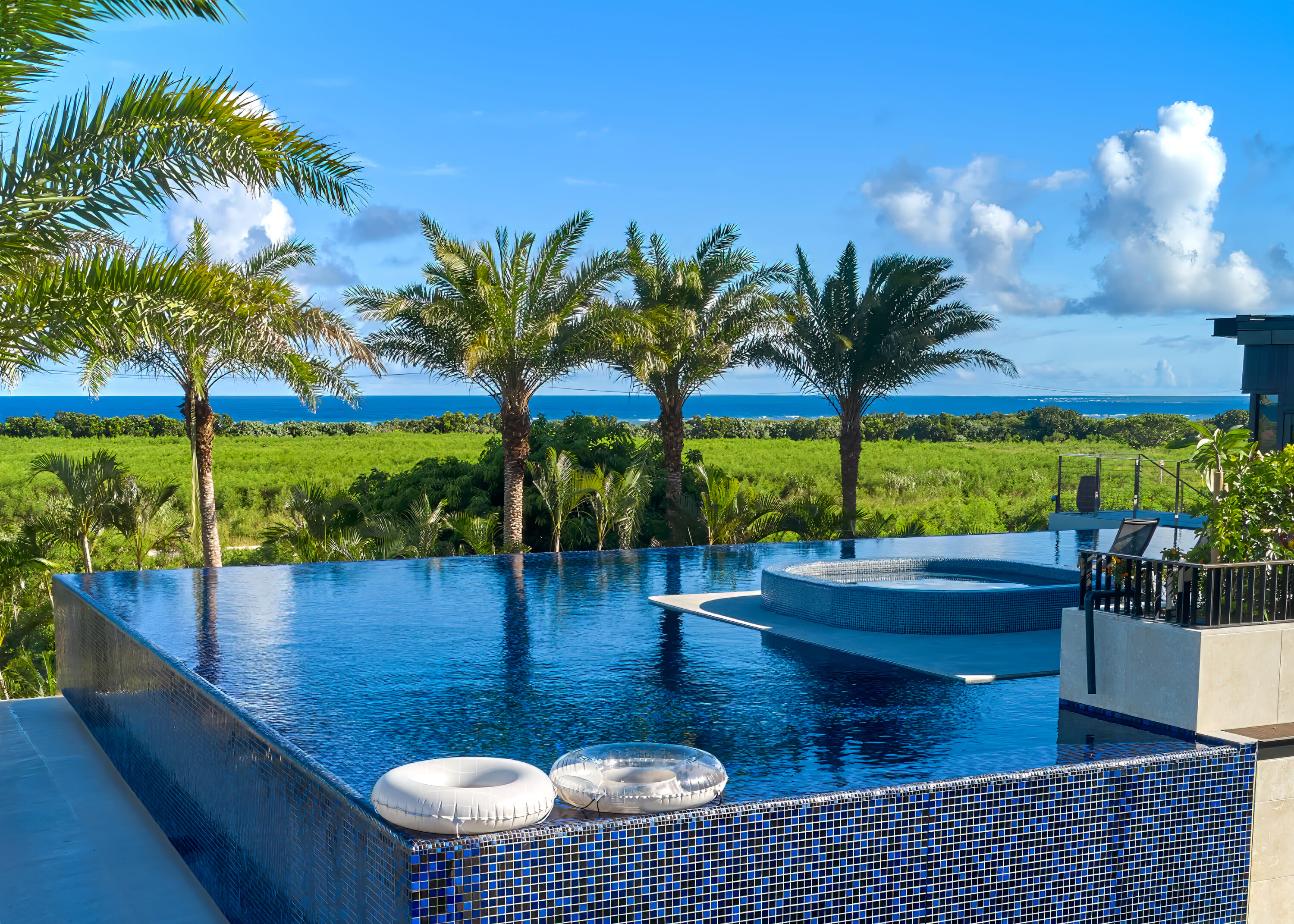
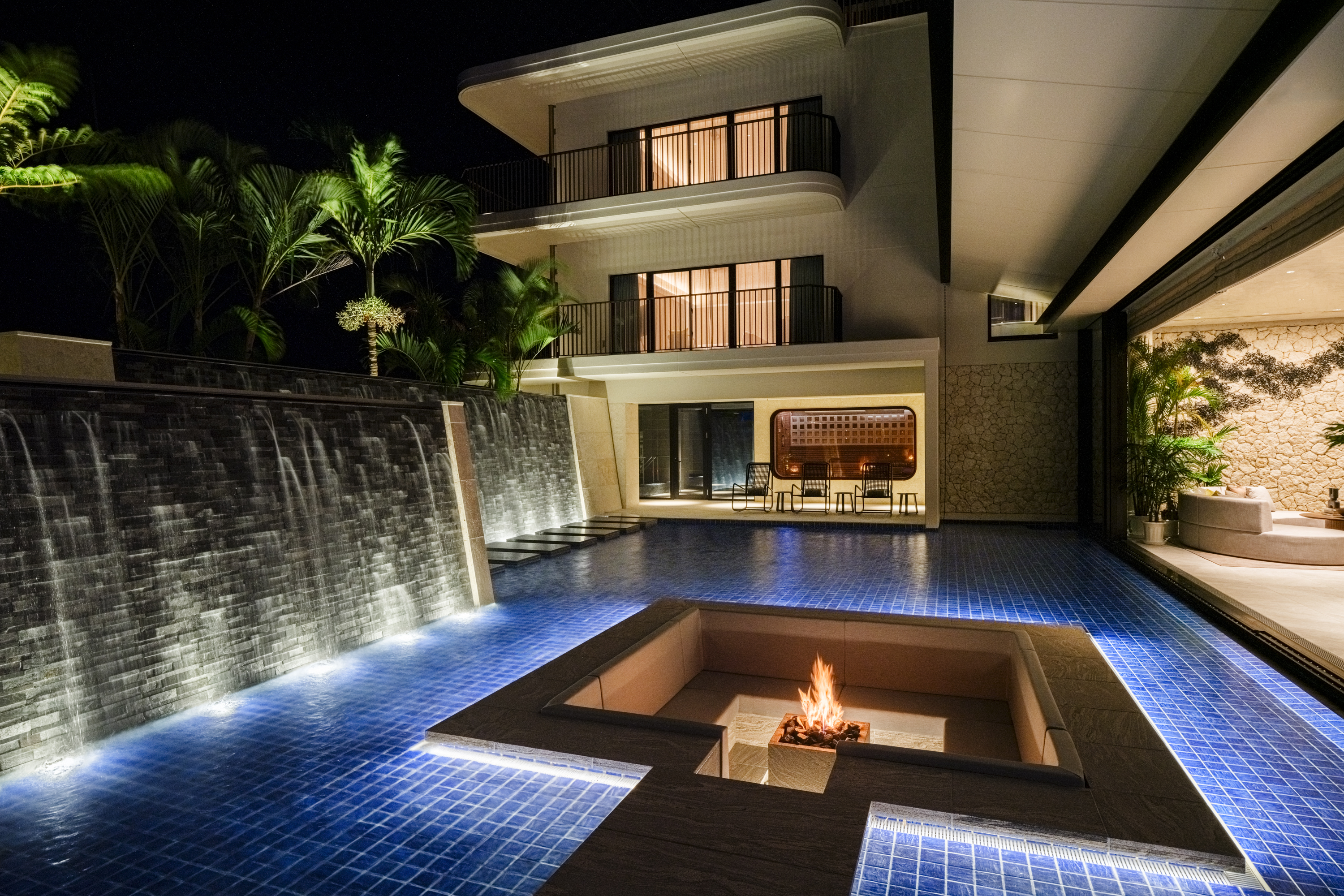
Its main lobby opens onto the first-floor family pool, ornamented with two waterfalls, a stone walking path and a floating conversation pit centered around a fireplace — another example of the property’s emphasis on communal experiences. Upstairs, a rooftop infinity pool fringed by palm trees overlooks the ocean, while an adjoining swim-up bar serves cocktails and shisha against sweeping sunset views.
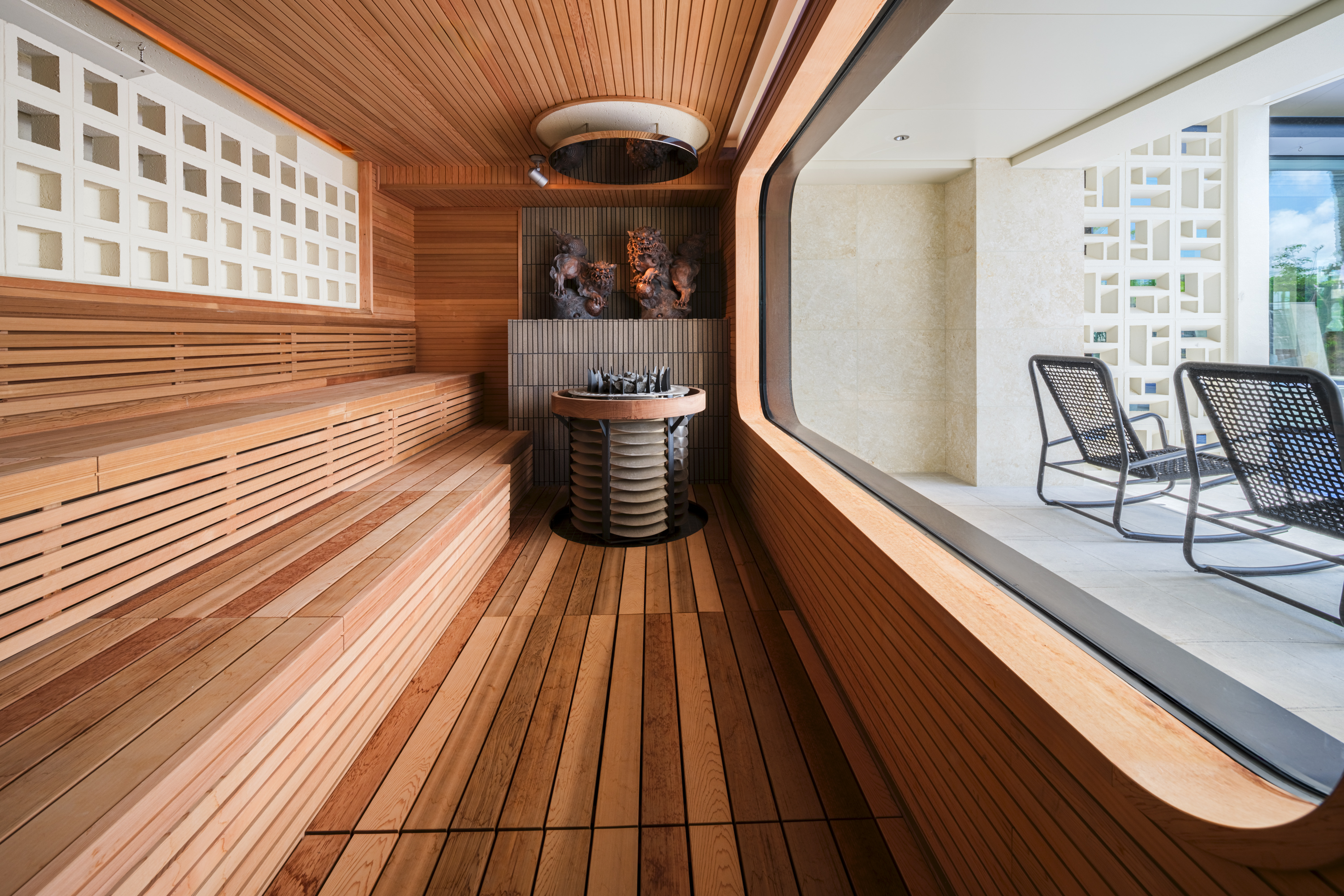
Both levels also feature their own public sauna. The ground-floor sauna is especially distinctive: an authentic Finnish sauna adorned with statues of shisa — traditional Okinawan talismans resembling a cross between a lion and a dog. Adjoining the sauna area are an indoor hot tub and cold plunges set to two different temperatures.
Restaurants and Bars
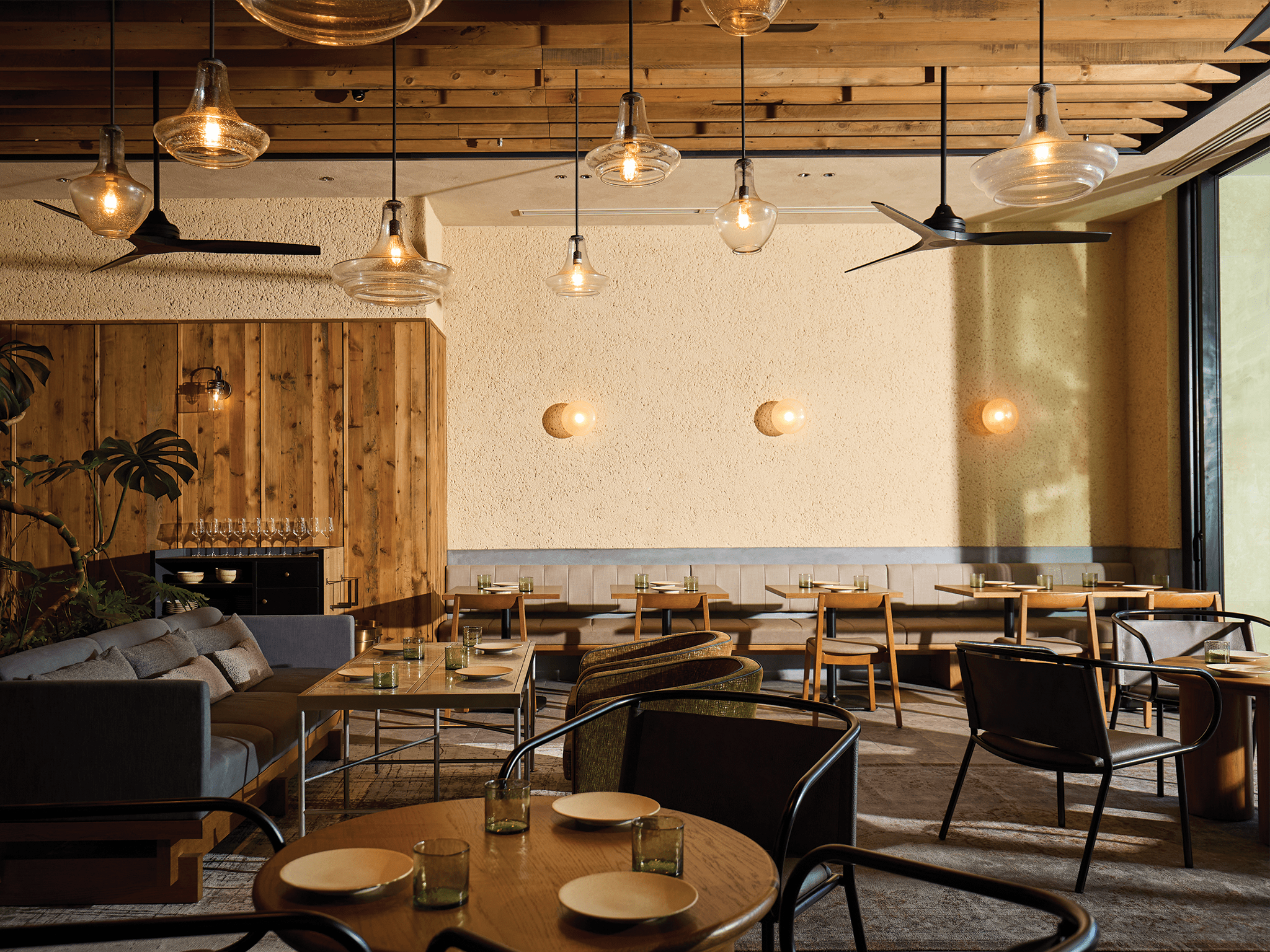
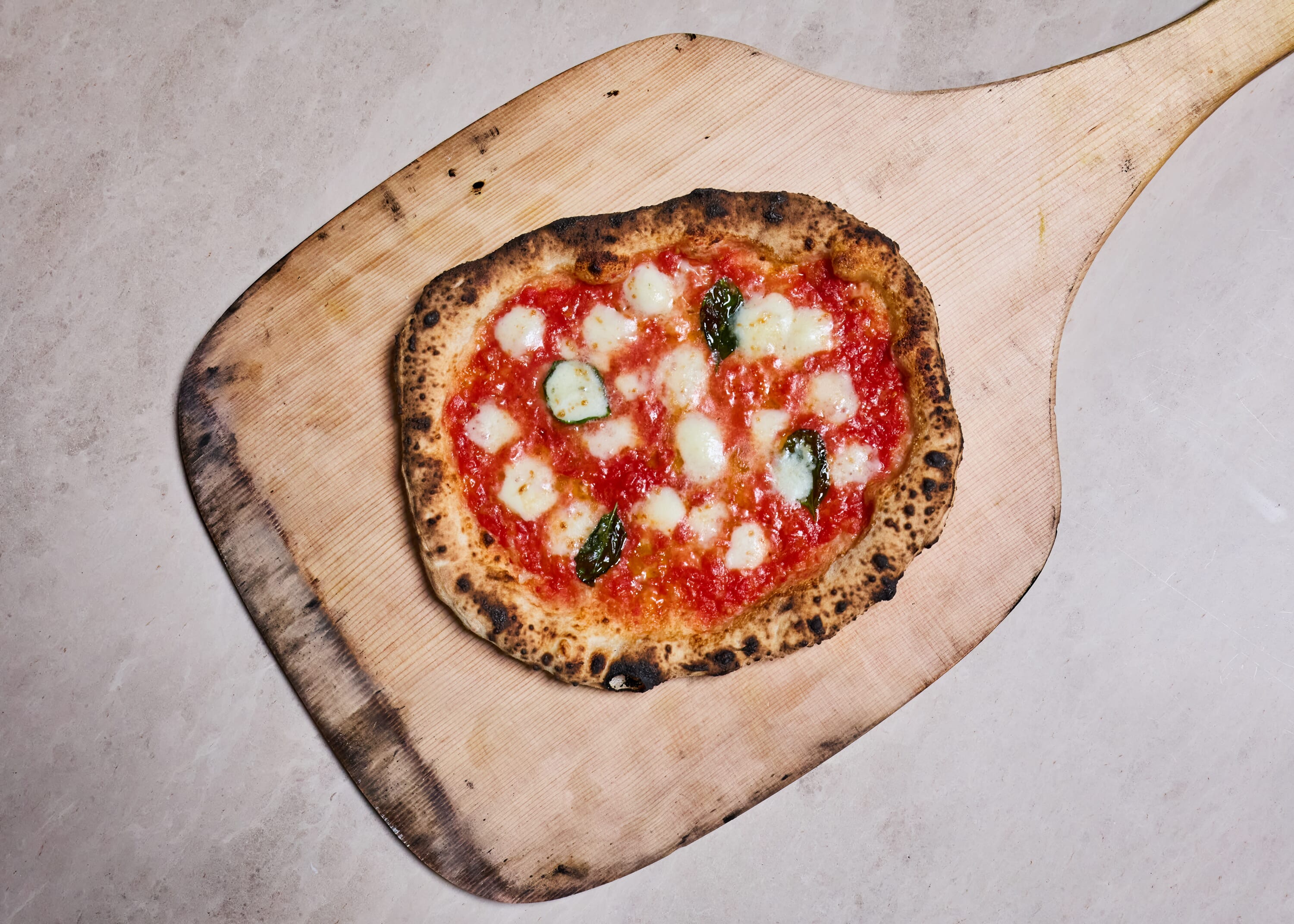
As night falls, the hotel’s social atmosphere becomes even more pronounced. Batida, the lively signature restaurant, serves “Latin Italian” cuisine — a fusion of comforting Italian classics, Spanish tapas and Mexican flavors layered with herbs and spice. The concept feels particularly suited to Ishigaki’s tropical atmosphere, balancing warmth, conviviality and playfulness.
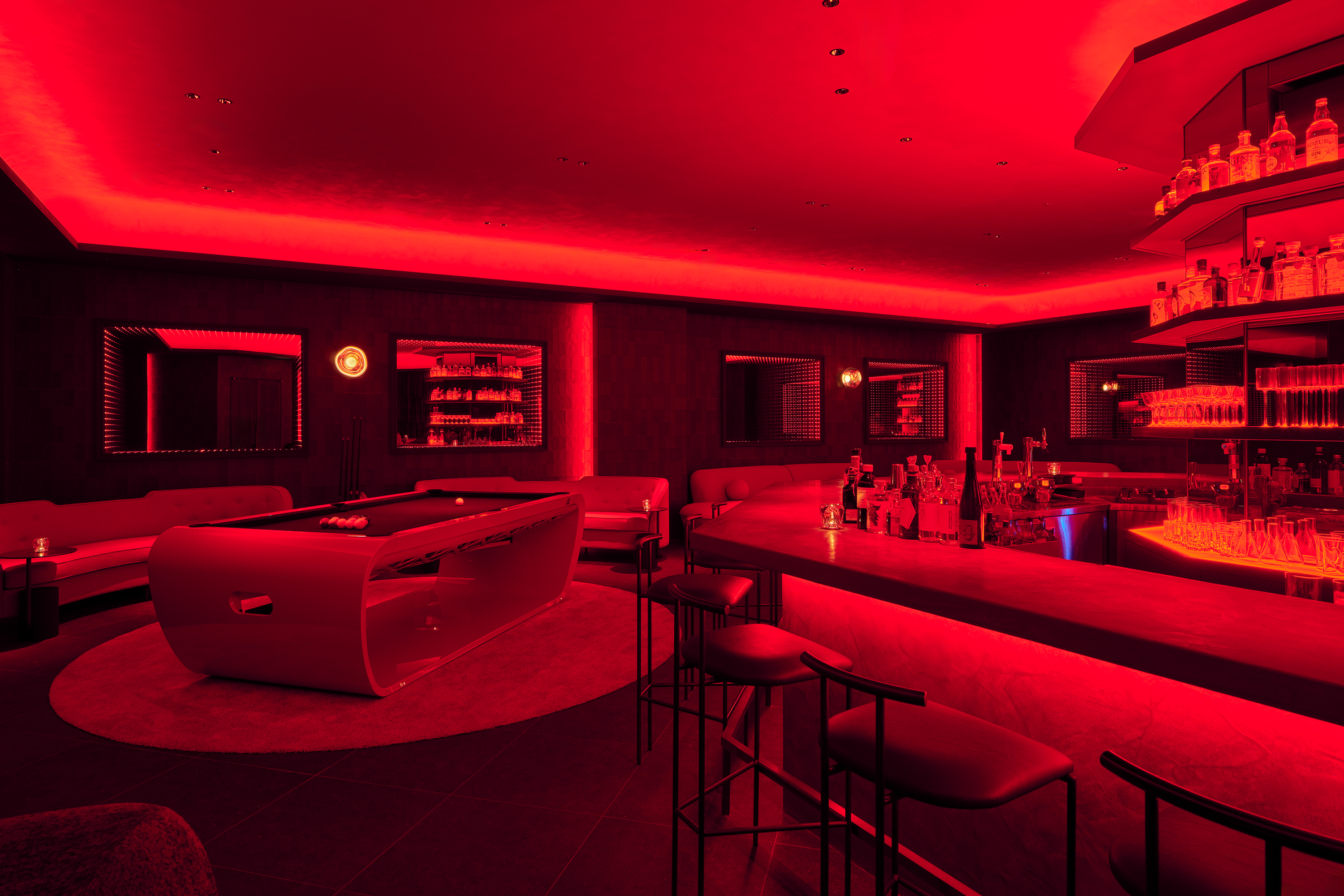
After dinner, guests can descend into Bar Red, the hotel’s atmospheric basement lounge. Illuminated by crimson LED lights, the space feels like a sensual neon hideaway, complete with billiards, private karaoke rooms and a collection of more than 200 varieties of gin. With its eclectic music and moody ambience, it’s the kind of place where the evening easily stretches late into the night.
Edit X Seven Setouchi Shodoshima: An Edenic Island Retreat
There’s something almost surreal about Shodoshima. The second-largest island in the Seto Inland Sea, it’s known for its Mediterranean-esque climate, rugged coastlines and sweeping mountain scenery. As one of the main venues of the Setouchi Triennale — Japan’s world-famous contemporary art festival — the island is also punctuated by monumental outdoor artworks, adding to the dream-like atmosphere.
Earlier this year, Edit x Seven Setouchi Shodoshima opened its doors, set directly on the coast — the first large-scale hotel to open on the island in more than three decades. Compared to Seven x Seven, Miskin explains, Edit x Seven offers “a more focused and intentional stay.” The experience is pared down to focus on essentials — hospitality distilled to its purest form.
“On the ground, that translates into cleaner design, simplified programming and a quieter environment that allows guests to engage more thoughtfully,” he says. The space is suffused with a distinct sense of serenity, designed to enhance the beauty of the surrounding landscape rather than compete with it. This is another key point of Edit x Seven properties: As Miskin puts it — in all-caps for emphasis — these hotels are about “LOCATION, LOCATION, LOCATION.”
Staying at Edit x Seven Shodoshima
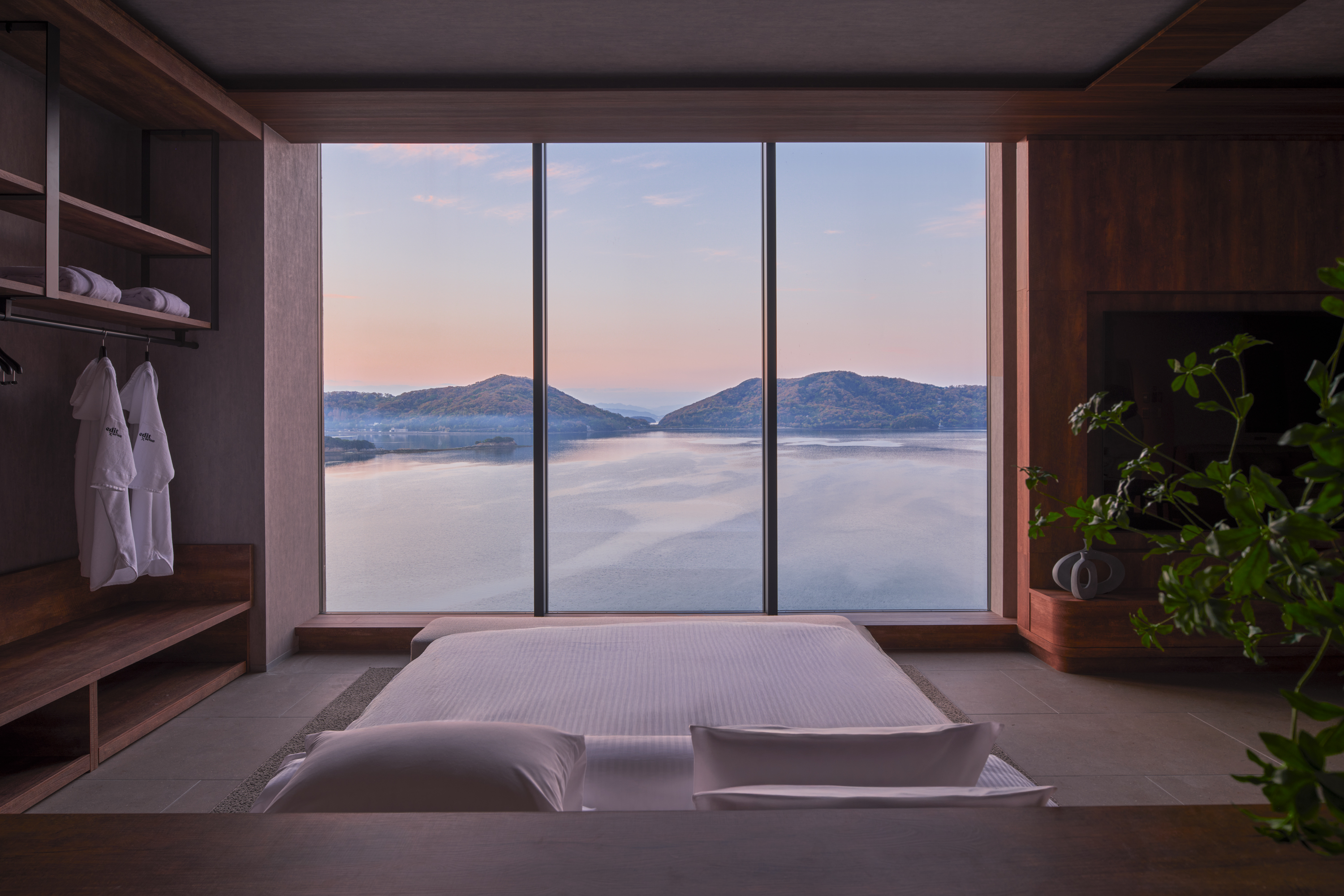
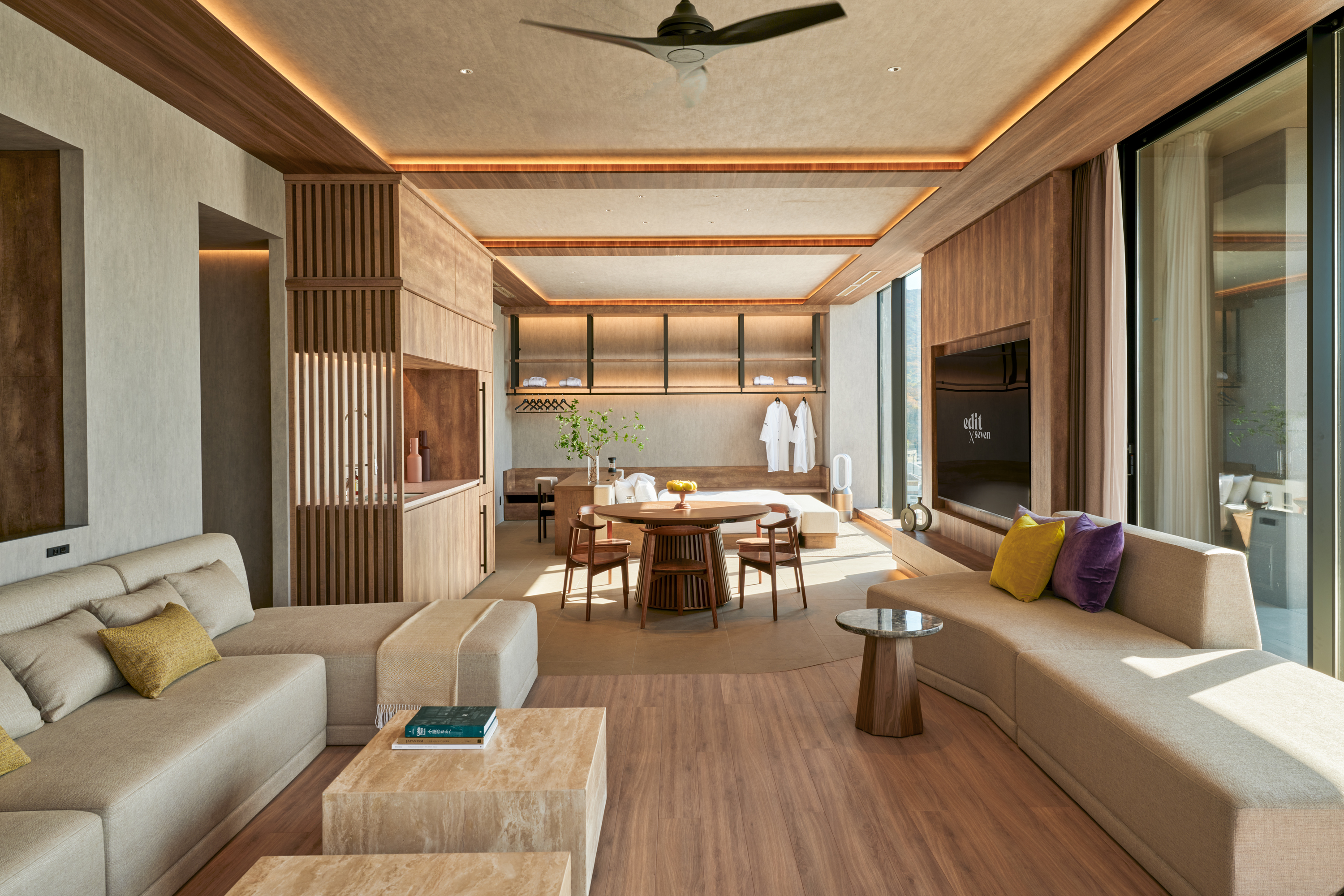
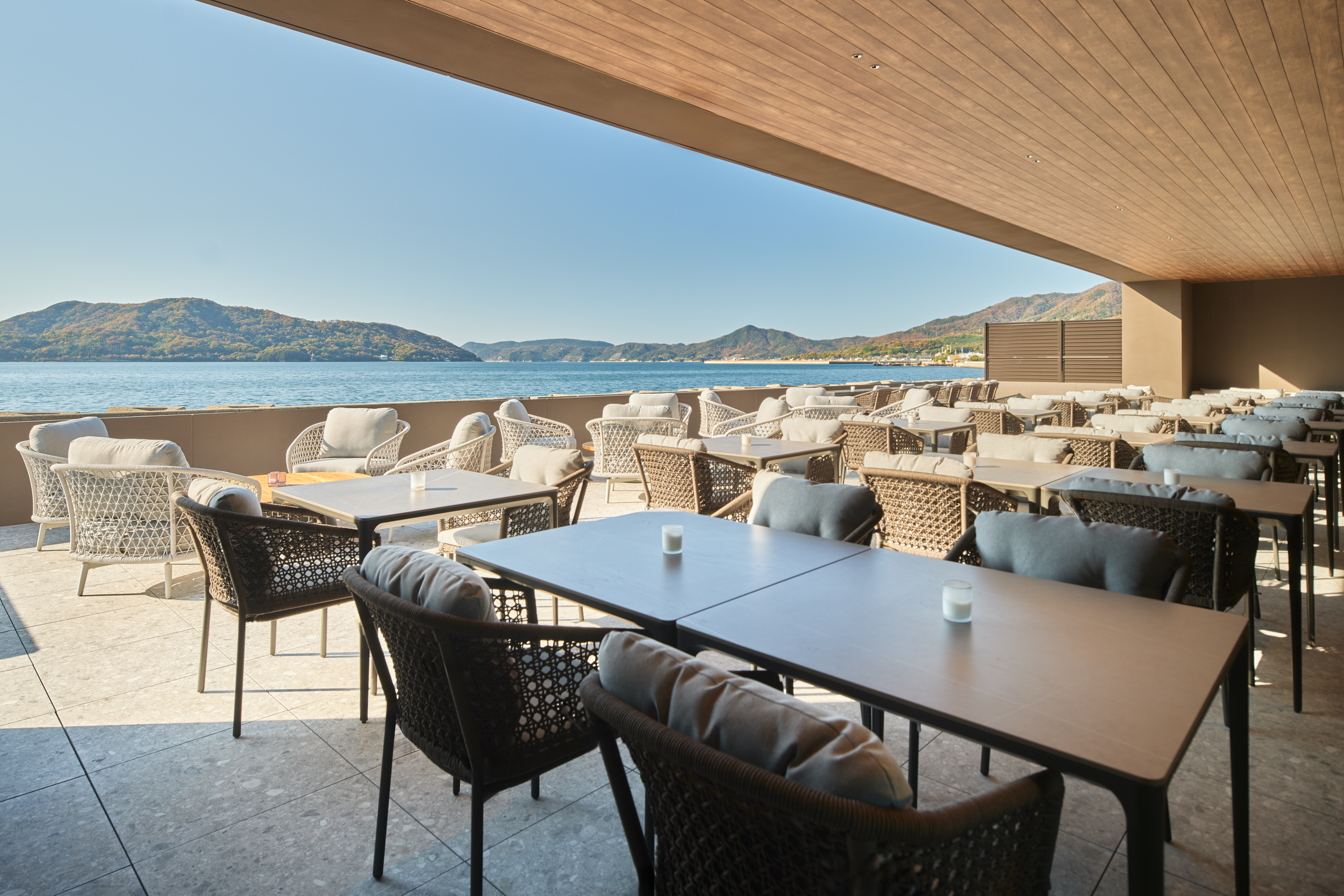
The hotel’s 45 rooms are bright and spacious, gazing out over the sea. Layouts vary, from twin rooms with a chic, residential feel to bunk-bed-style lodgings ideal for families. Each one is equipped with a washing machine and kitchen facilities.
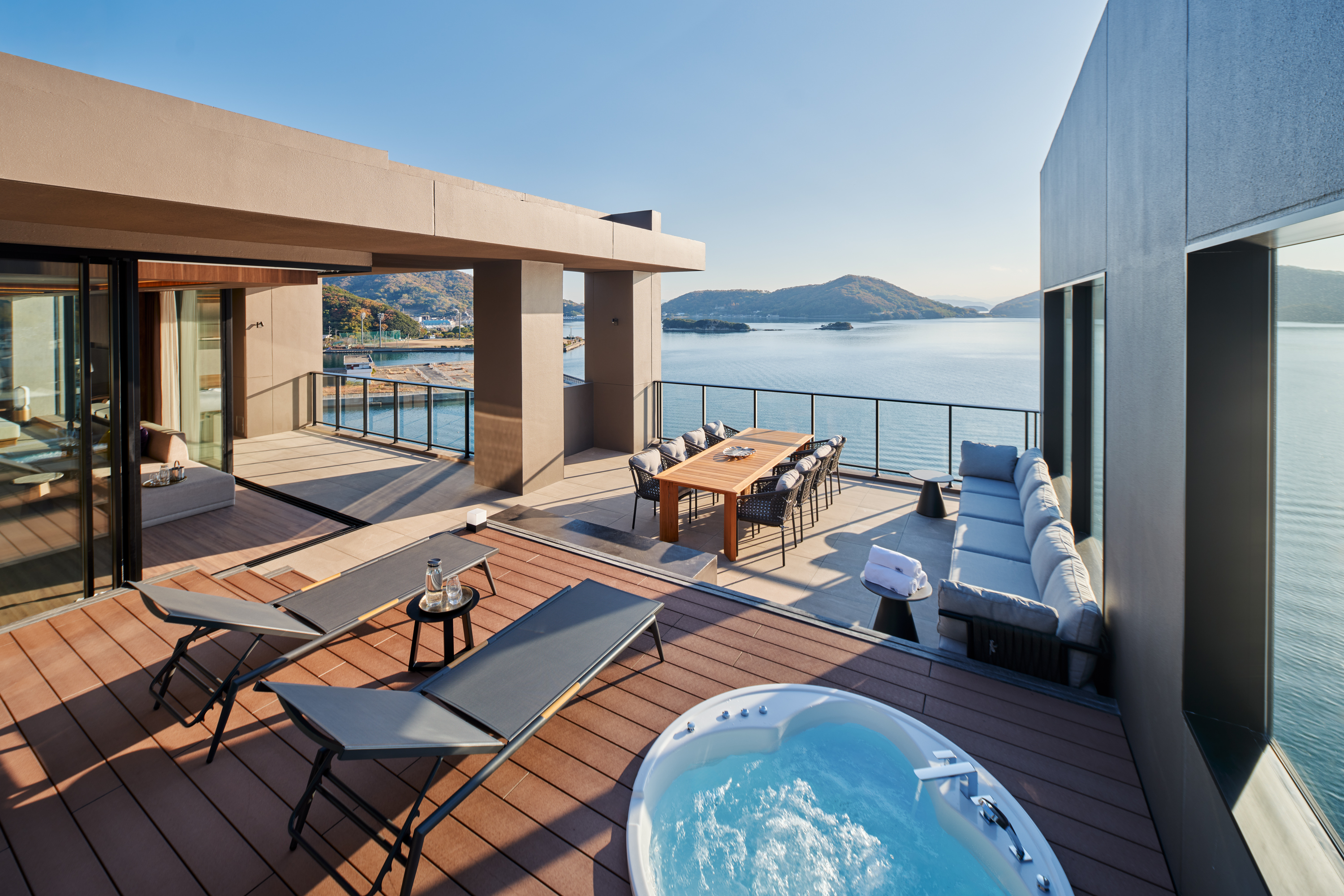
The suites feel especially attuned to their surroundings. The penthouse features floor-to-ceiling windows that frame the sea like an ever-changing artwork, along with an expansive deck complete with a private hot tub and sauna. Meanwhile, the Garden Suite weaves local greenery into the experience, pairing a lush outdoor space with its own private plunge pool.
The Spa and Restaurant
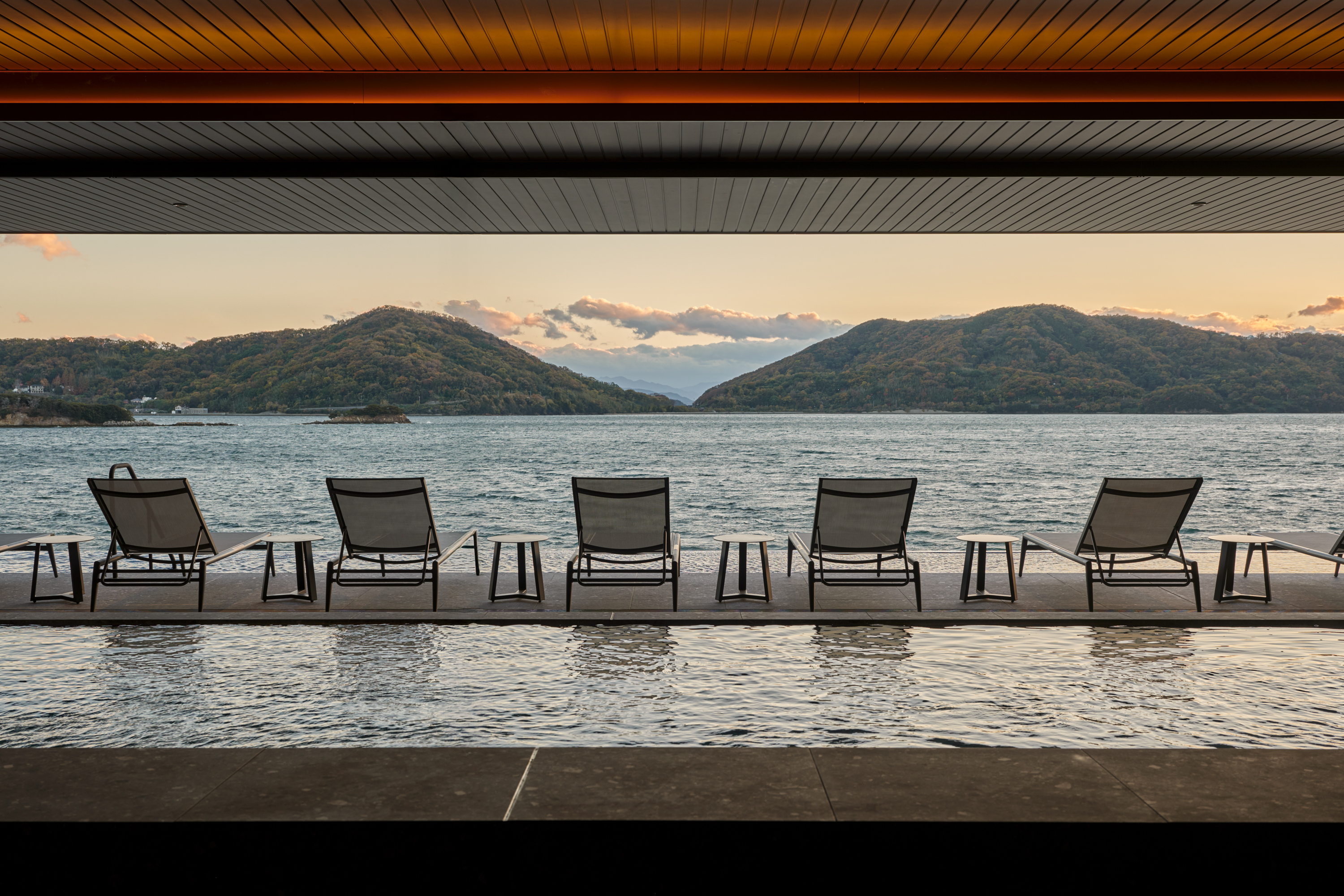
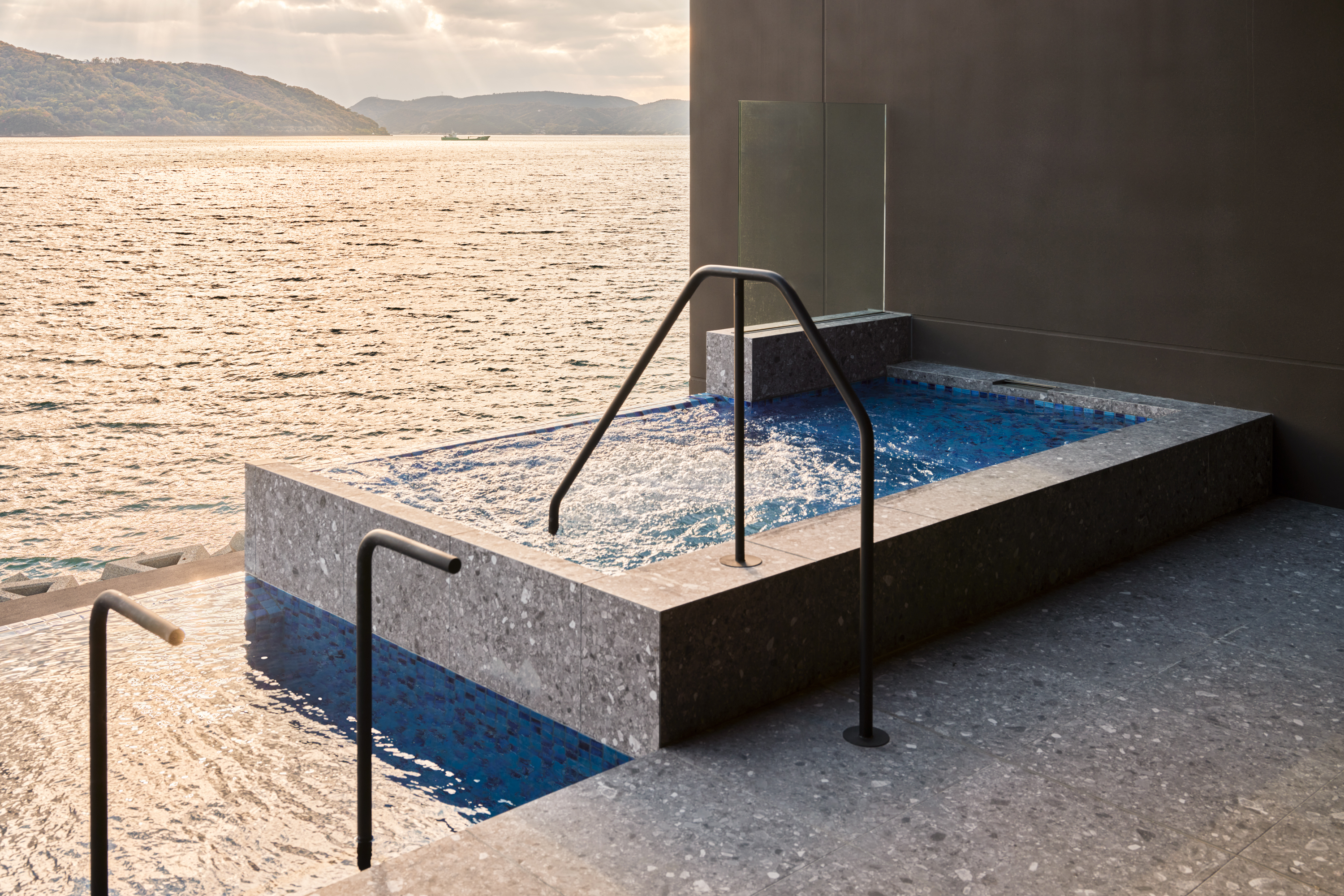
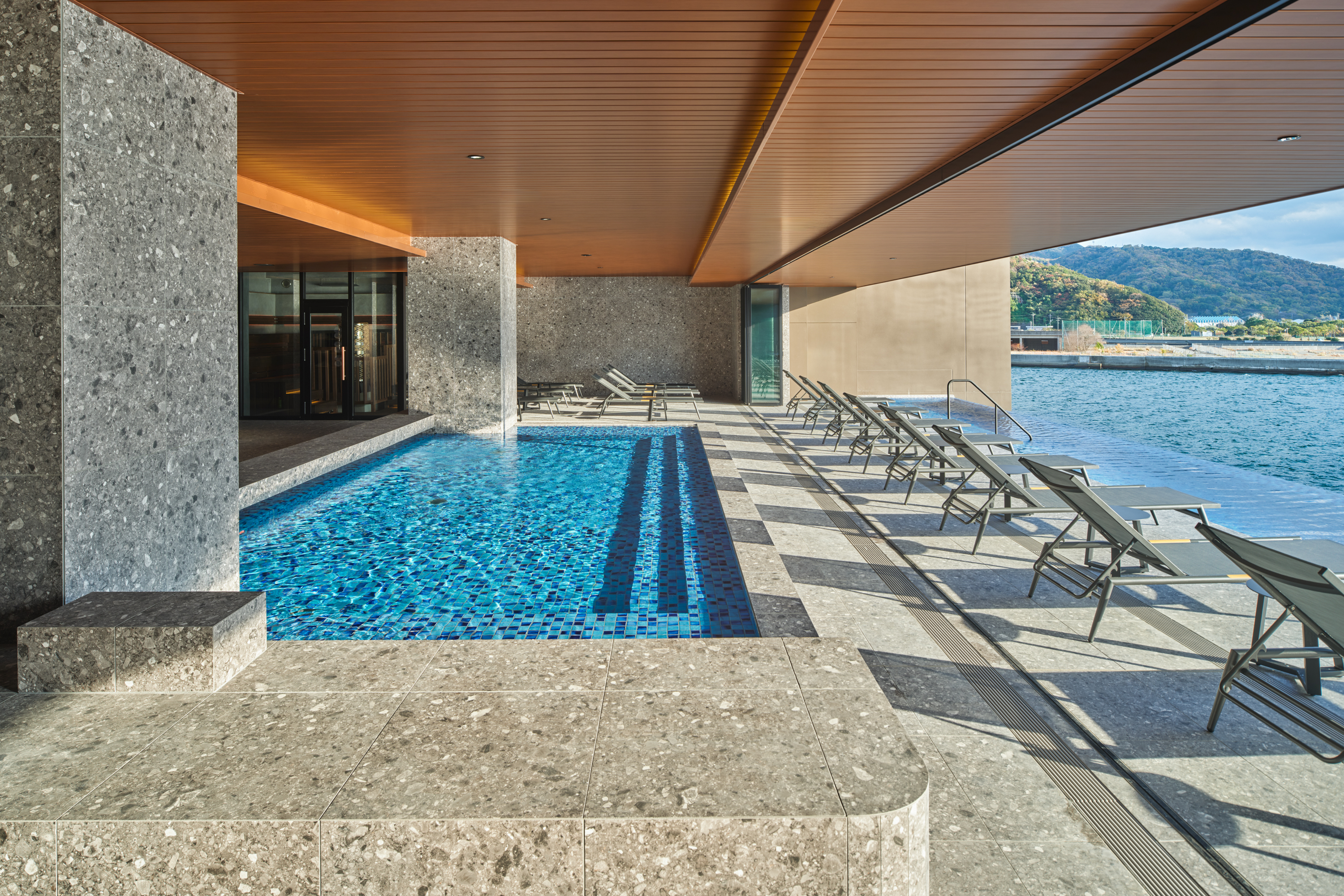
One of the hotel’s standout features is Edén Setouchi: the first full-scale thermal spa on Shodoshima. Looking directly out across the Seto Inland Sea, the space includes an infinity pool that seems to dissolve into the horizon, along with a cold plunge, indoor bath and hot tub. At its center is a large Finnish-style sauna equipped with an automatic loyly system and spacious enough to accommodate up to 20 guests. The mood throughout is one of understated tranquility, with the sea never quite disappearing from view.
That same sense of intentionality carries over to the restaurant, which is open from breakfast through dinner, serving dishes that highlight ingredients sourced from Shodoshima and the surrounding Setouchi region. Seasonal seafood, island vegetables and Shodoshima’s famed soy sauce and olive oil all appear throughout the menu, presented with a contemporary touch that allows the flavors themselves to remain the focus.
Hotel Fork & Knife Miyajima: Savor Local Culture and Cuisine
All the FHG Hotels properties are deeply shaped by their surroundings. When building a new hotel, the group looks for locations that already have a strong identity, whether they’re known for natural beauty or unique local culture and history.
With Fork & Knife Miyajima, the focus is distinctly cultural and culinary — bringing local identity to the forefront not just through design, but through gastronomy as well. “Fork & Knife is rooted in culture,” emphasizes Miskin. “It centers around food, tradition and a strong sense of place.”
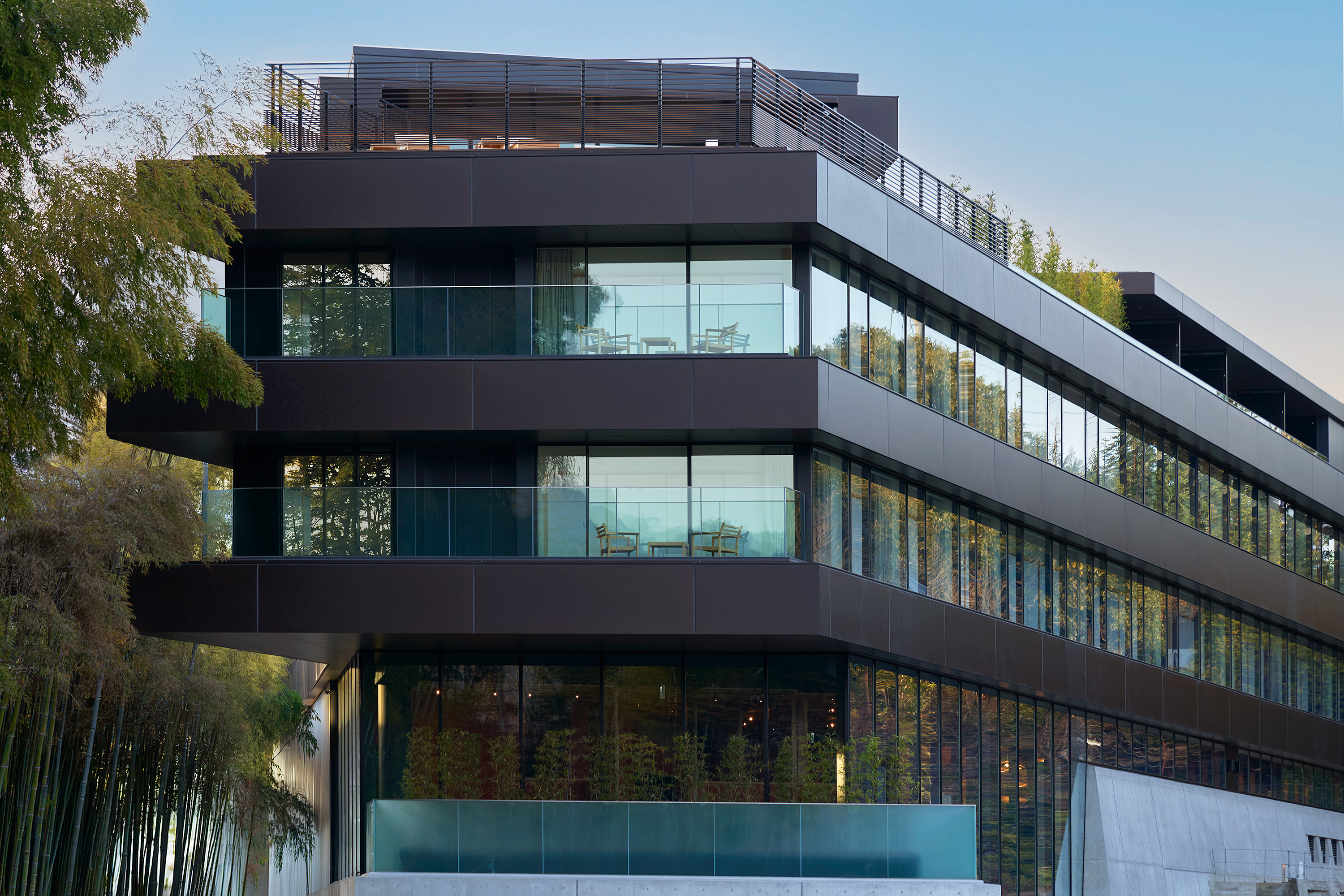
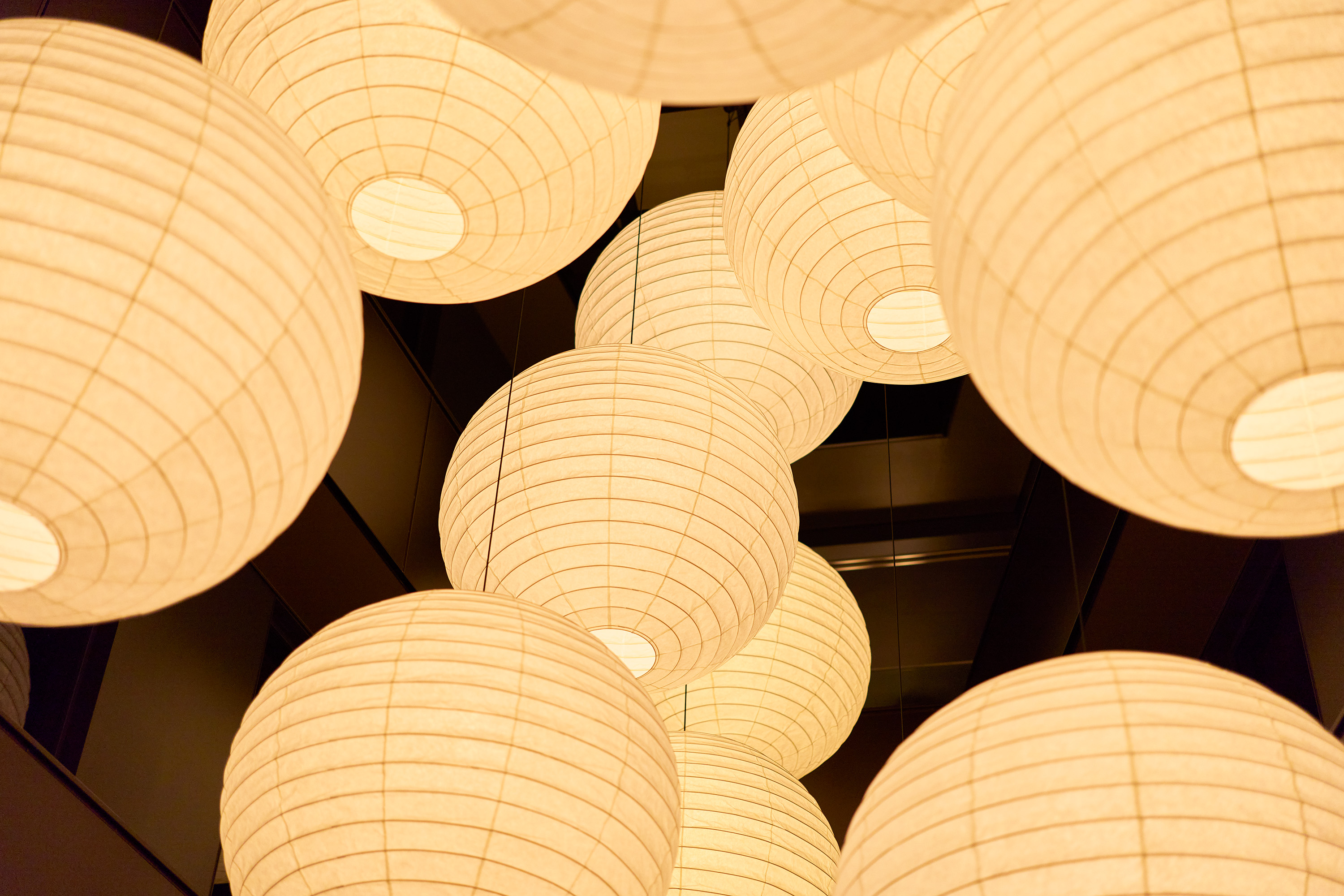
Location is one of the main draws: The hotel sits on the coast of Hiroshima, right across from Miyajima Island, which is home to the iconic Itsukushima Shrine — one of Japan’s most revered and visually recognizable sacred sites. Design flourishes throughout the space pay homage to the area’s crafts and history; most immediately striking is a profusion of large, softly glowing Hiroshima lanterns in the lobby.
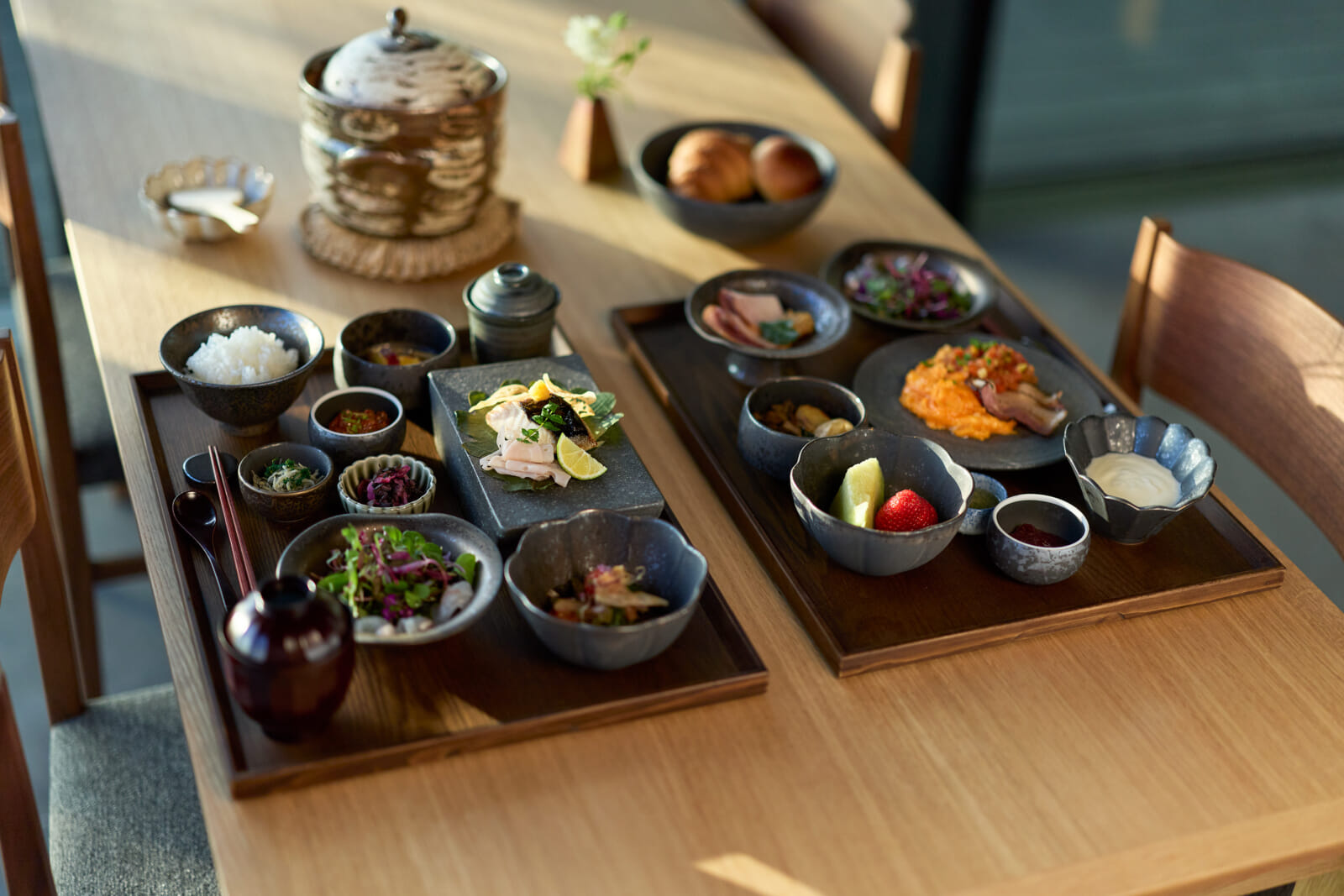
At the heart of the stay, though, is the dining experience: a sumptuous 11-course tasting menu that foregrounds the prefecture’s ingredients and traditional cooking methods.
Staying at Hotel Fork & Knife Miyajima
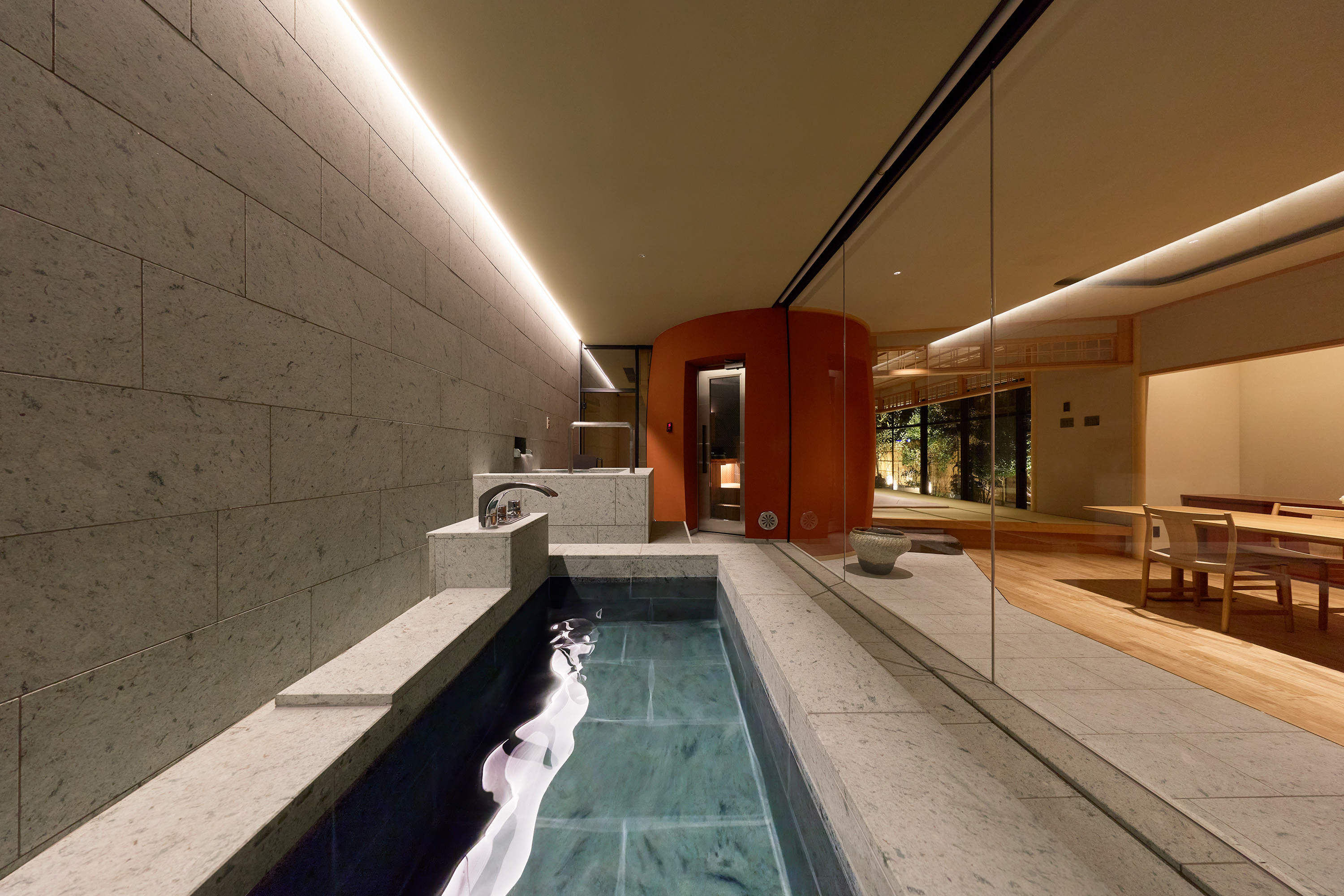
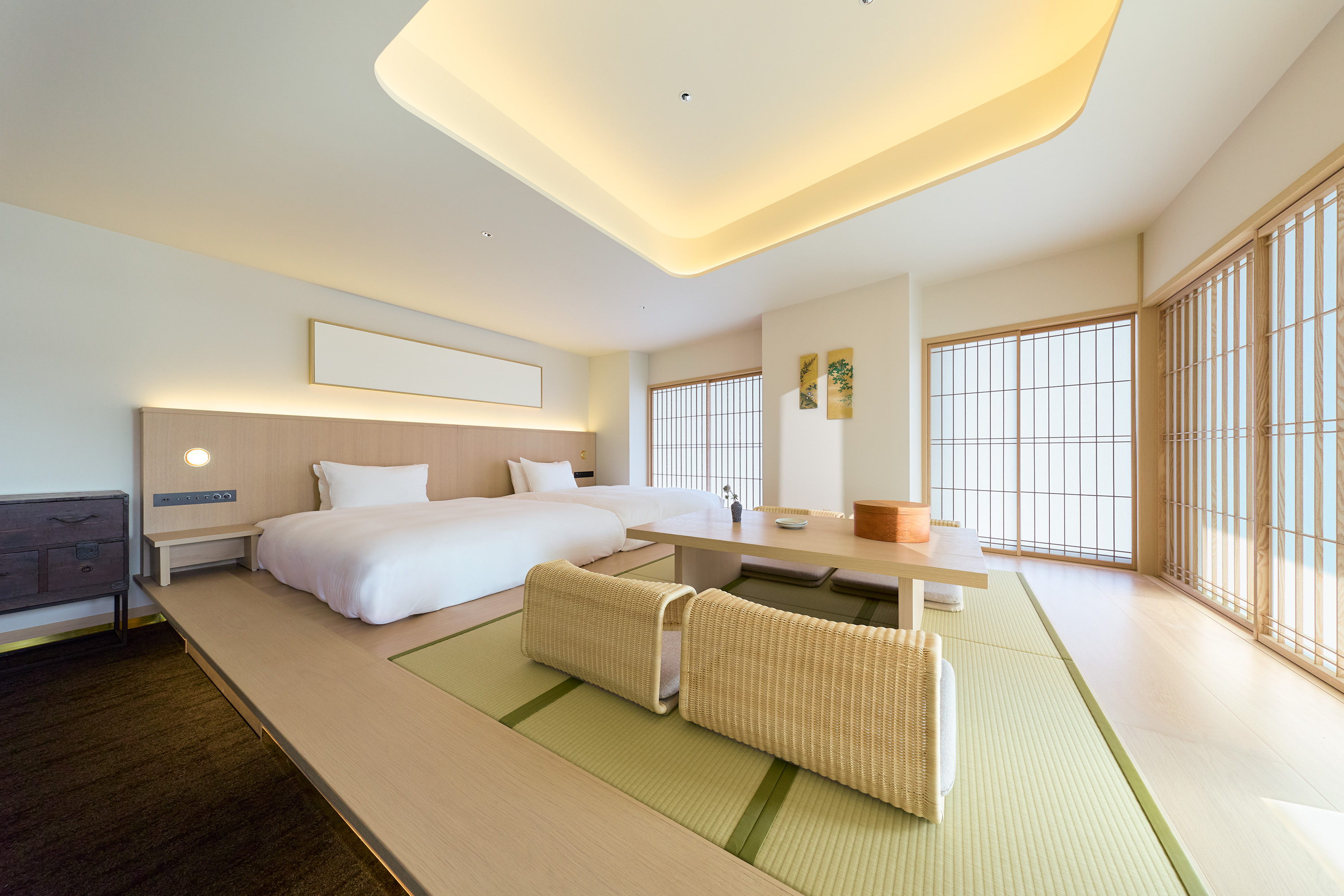
The hotel’s 34 rooms are understated and deeply calming, designed around natural wood tones, soft light and views of the Seto Inland Sea. Some feature koagari-style raised tatami seating areas and sliding shoji screens; others have private balconies overlooking the water. For a more elevated stay, the expansive Premium Suite Midori includes a private sauna, open-air hot spring bath and a chef’s kitchen counter designed for bespoke in-room dining experiences.
On the top floor is a serene spa area with indoor and outdoor baths filled with natural hot spring water transported from Miyahama Onsen. The open-air bathing area looks out across the ocean, and a sauna completes the space.
Seasonal Dining
At Fork & Knife Miyajima, food is treated as one of the emotional centers of the stay — a way of understanding Hiroshima through flavor, technique and atmosphere. Overseen by Ryo Ishihama, former sous chef at the Michelin-starred seafood restaurant Abysse, the restaurant’s 11-course dinner acts as a meditation on the region itself, moving from mountain produce to seafood from the Seto Inland Sea.
Central to the experience is wood-fire cooking, which lends the dishes a subtle smokiness while drawing out the natural depth of the ingredients. Hiroshima is often described as a microcosm of Japan for its varied landscapes and abundance of produce, and the menu reflects that richness without ever feeling overwrought. Instead, the approach is restrained and deeply ingredient-focused, allowing each component to speak for itself.