Nostalgia is a strange thing. It’s often a warm feeling, yet there’s an undeniable sadness that lingers around it. The word itself originates from the Greek words “nóstos” (meaning “homecoming”) and “álgos” (meaning “pain” or “longing”) — literally, “the pain of coming home.”
It’s often associated with somewhere we wish to return: a fond, distant memory, a place we once called home, a safe space. But what if a feeling of nostalgia arose from something not connected to the past, but instead pointed toward the future? Now that would be a strange sensation indeed.
This is one of the things I find so interesting about Frutiger Aero.

Example of the frutiger aero aesthetic | c/o @anannyarao878 via Medium
What Is Frutiger Aero?
You may not be familiar with this term, but if you grew up in the late 90s or early 2000s, you were almost surely exposed to the aesthetic in some capacity: early Windows screensavers of rolling grassy fields, video game backgrounds with flowing, pixelated waterfalls, futuristic mockups of shiny office spaces.
Despite its ubiquity, the design style didn’t officially have its own name until 2017, when Sofi Xian of the Consumer Aesthetics Research Institute coined the term. “Frutiger” comes from the Frutiger typeface, which was widely used in branding and signage during the era, whereas “Aero” comes from Windows Aero, the glossy, glass-like interface introduced by Microsoft in the mid-2000s.
Frutiger Aero graphic design gestures toward a bright, technicolor, hopeful future. It doesn’t see technology as something dull and inorganic. Instead, it blends it with nature: blue skies with fluffy clouds and green fields swaying in the wind alongside futuristic skyscrapers with smooth surfaces, glossy finishes and sleek glass windows that allow sunlight to pour through.
How To Spot Frutiger Aero
Here are a few things to look out for that fit the Frutiger Aero aesthetic:
- Glossy, rounded surfaces
- Aquatic motifs (fish, dolphins, water, bubbles)
- Transparent glass, reflective materials
- Nature integrated with technology (grass + skyscrapers)
- Vibrant blues, soft greens and warm skies
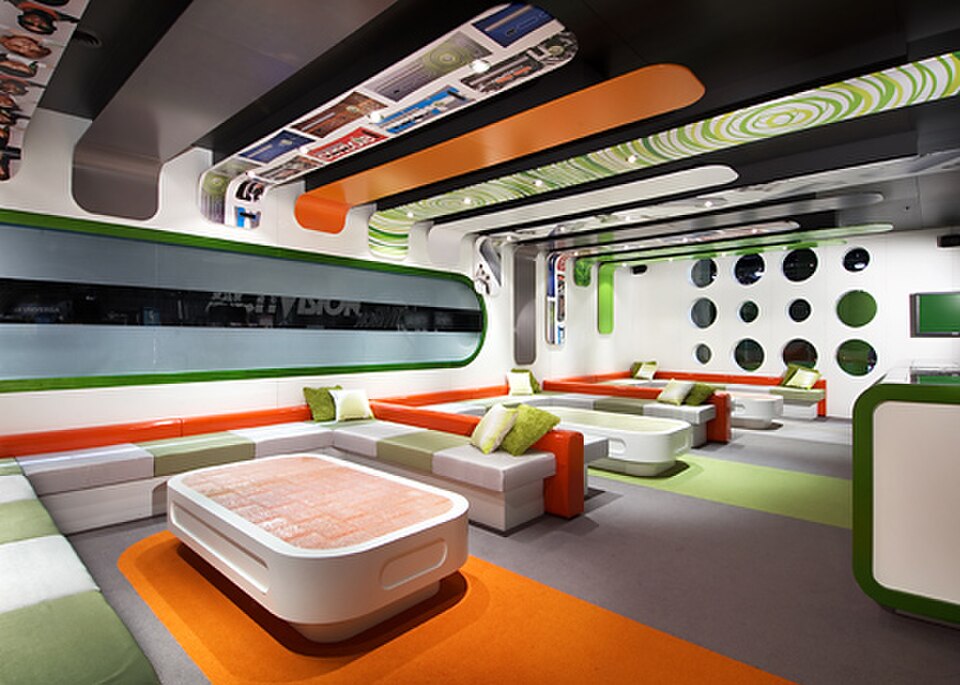
The Xbox 360 booth at the Electronic Entertainment Expo on May 18–20, 2005 at the Los Angeles Convention Center. One example of Frutiger Aero design.
A Future That Never Came
To me, what makes Frutiger Aero special is not just how nostalgic it feels — the way it immediately transports you back to a time when the internet was first emerging and there was this nervous excitement about the unknown potential of the web — but also the way that it captures a lost sense of optimism. Buildings intertwined with plant life and fresh water. Colored glass illuminated by soft natural light. Contrast that with the world we now live in, where water is turned into contaminated waste for AI centers and huge swaths of land continue to be cleared to make way for industrialization.
Whatever your personal opinions on Frutiger Aero may be, and however disconnected it might feel from the reality of today, its place in the world of aesthetics is undeniable. And while the world may not have turned out as Frutiger Aero as I would have hoped, there are still some hidden gems out there for those with the eyes to see.
In Japan, in particular, there are many spots that still retain much of their charm from the early 2000s. Though this is partially due to the economic stagnation of the past 20 years, it has at least made the country a fantastic place to search for Frutiger Aero aesthetics. Below, some locations across the country that capture that contradictory feeling of nostalgia — one that brings hope for a future that might’ve been.
Frutiger Aero Spots in Japan
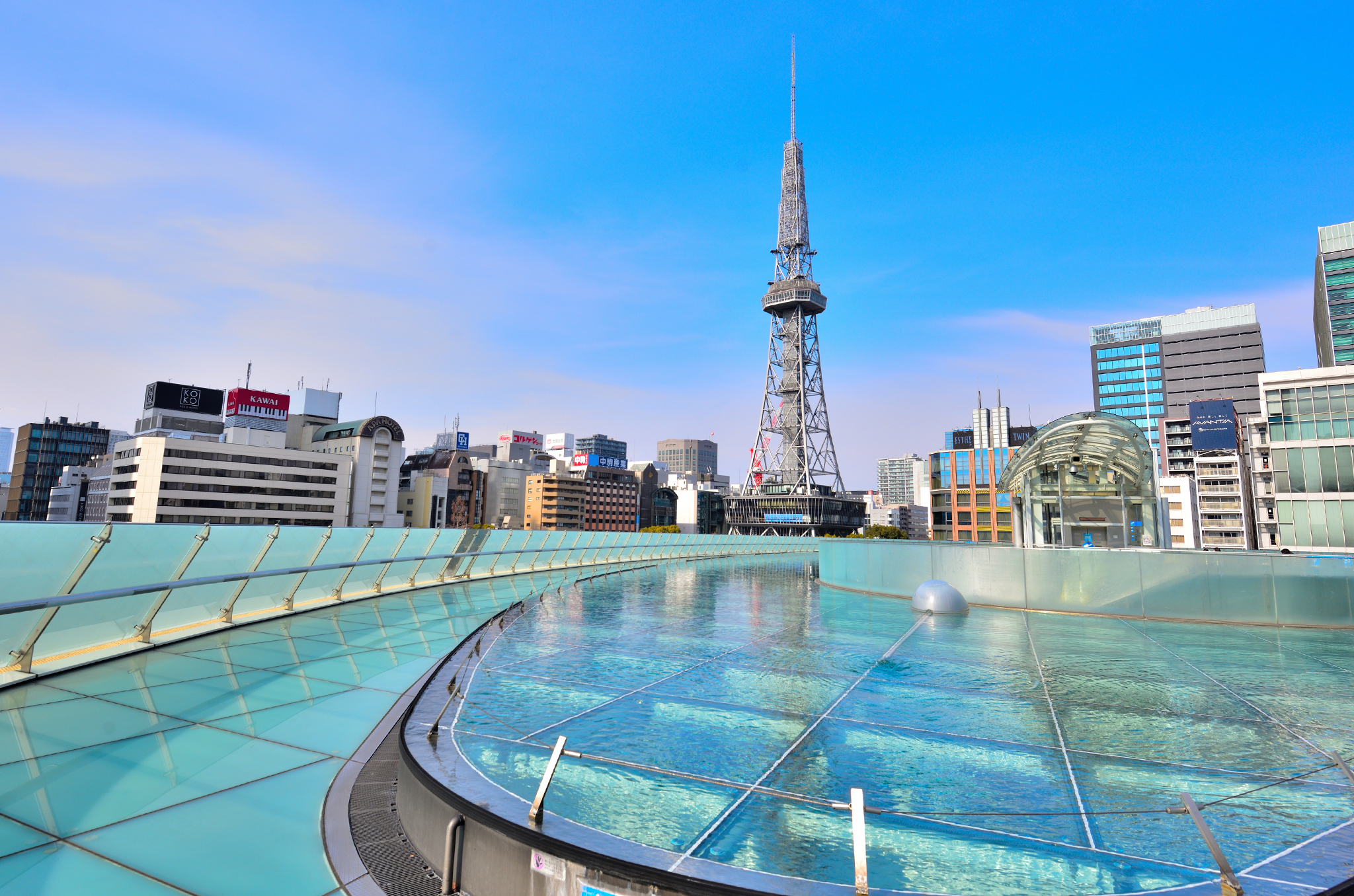
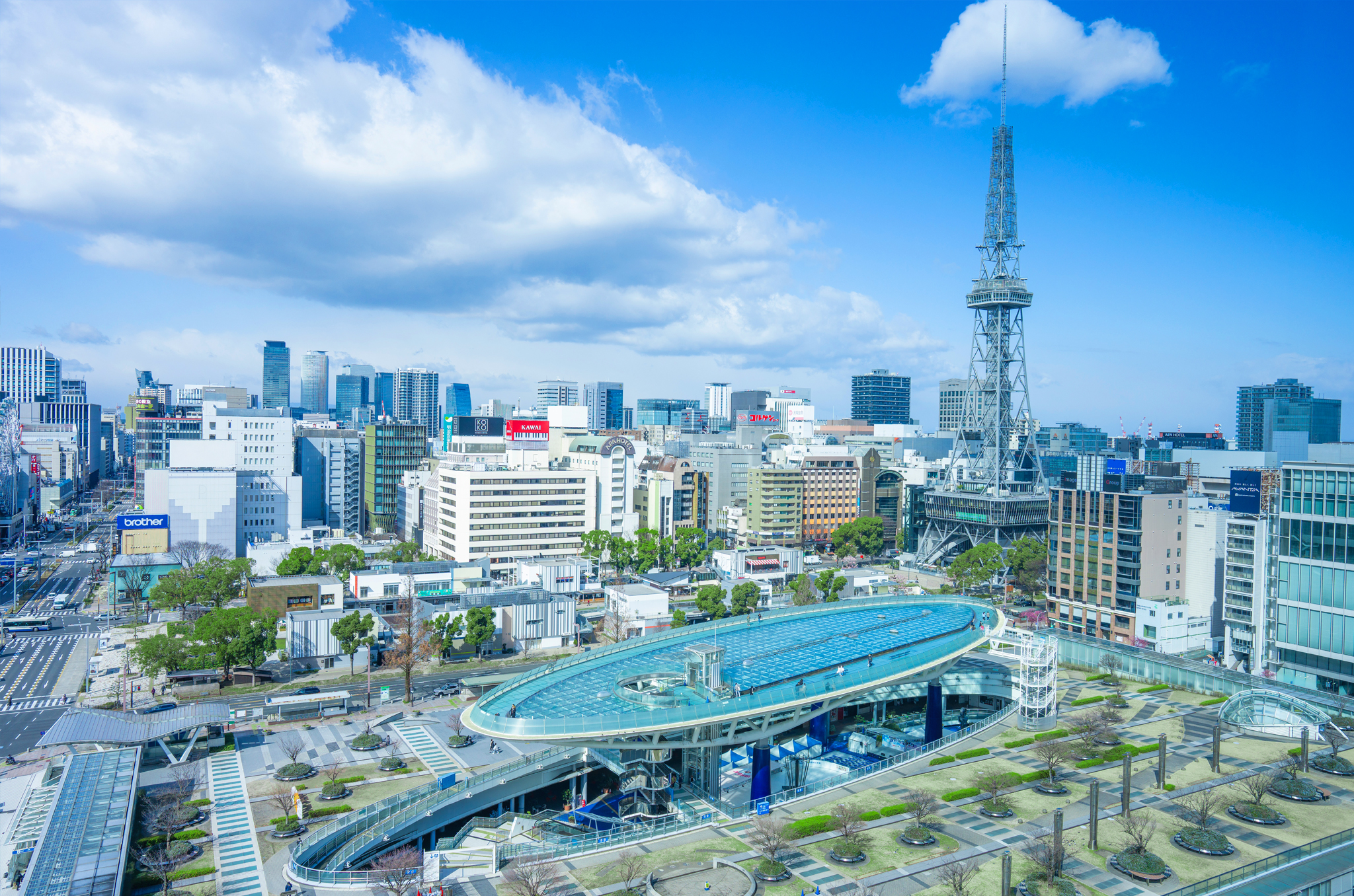
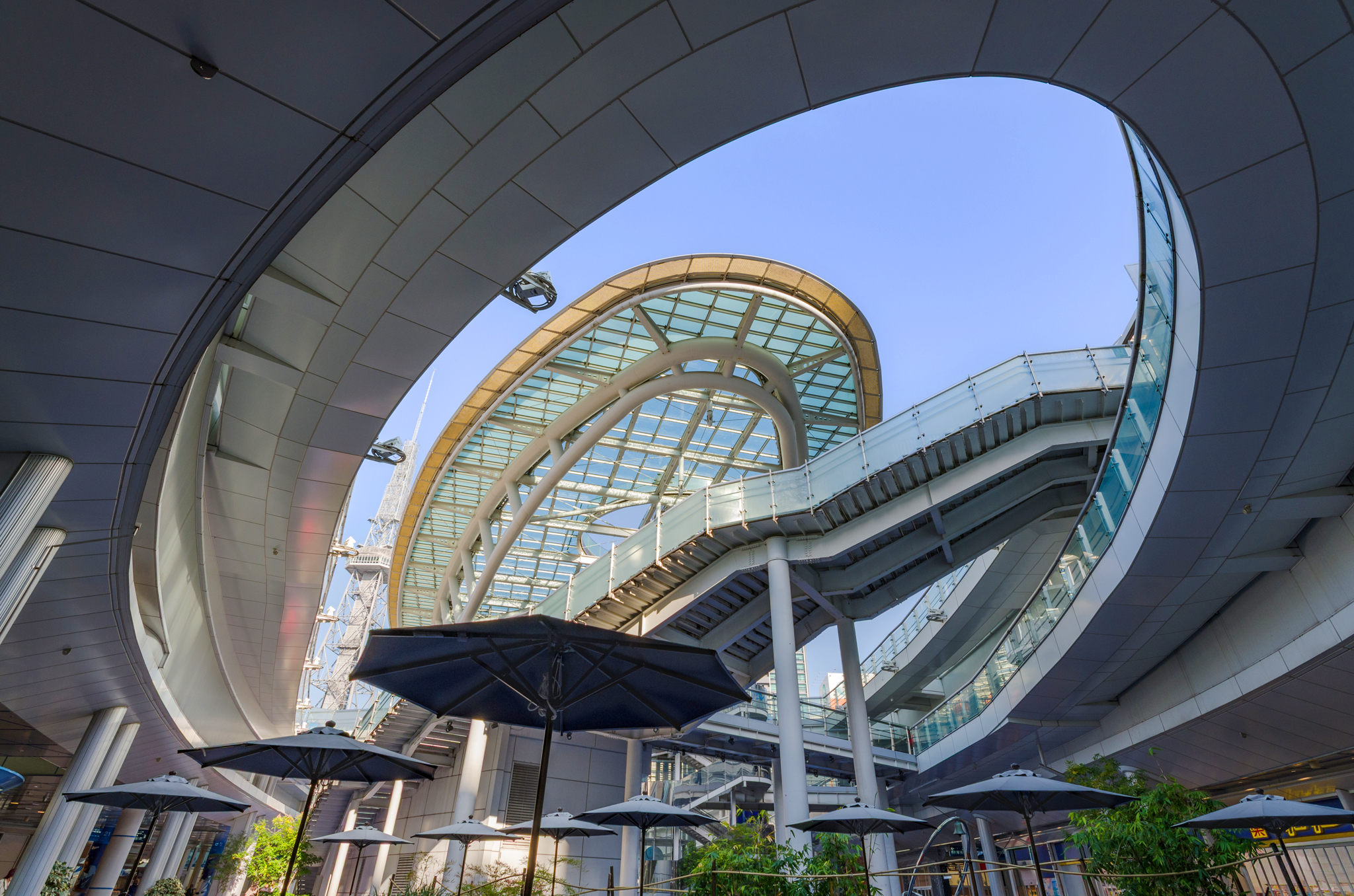
Oasis 21’s Spaceship-Aqua (Nagoya, Aichi)
Originally opened to the public in 2002, Nagoya’s Oasis 21 is a sprawling public facility containing restaurants, shops and event spaces. While the structure is located primarily underground, its crown jewel is undoubtedly Spaceship-Aqua, a literal floating oasis with a large, shallow pool at its center. It towers over the ground-level event area, enveloping it in dancing, swirling shadows from the water above.
Though it’s stunning when viewed from below, Spaceship-Aqua’s true Frutiger Aero essence can only be appreciated from the top. After taking the stairs or elevator to its main deck, which rises 14 meters above ground, visitors will be met with sweeping views of Sakae, Nagoya’s entertainment district — verdant parks, the glittering heart of the city and Nagoya’s radio tower in the background.
While midday is arguably the best time to visit for fellow Frutiger aficionados — billowing clouds and blue skies really round out the experience — nighttime offers an equally stunning view. The entire structure of Spaceship-Aqua lights up in vivid colors, giving a sensation of floating in the middle of a glittering city while walking on Mario Kart’s Rainbow Road.
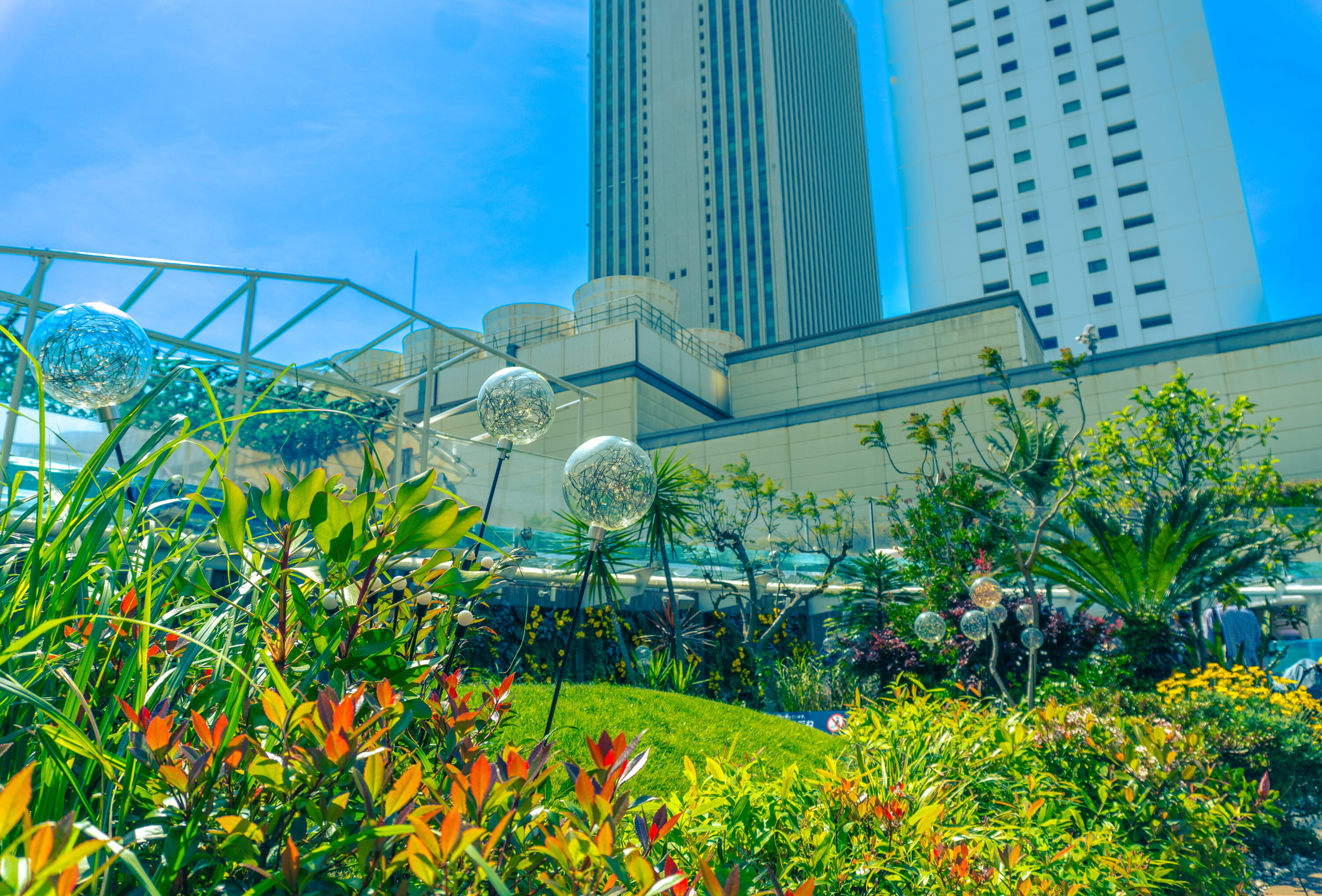
Sunshine Aquarium (Ikebukuro, Tokyo)
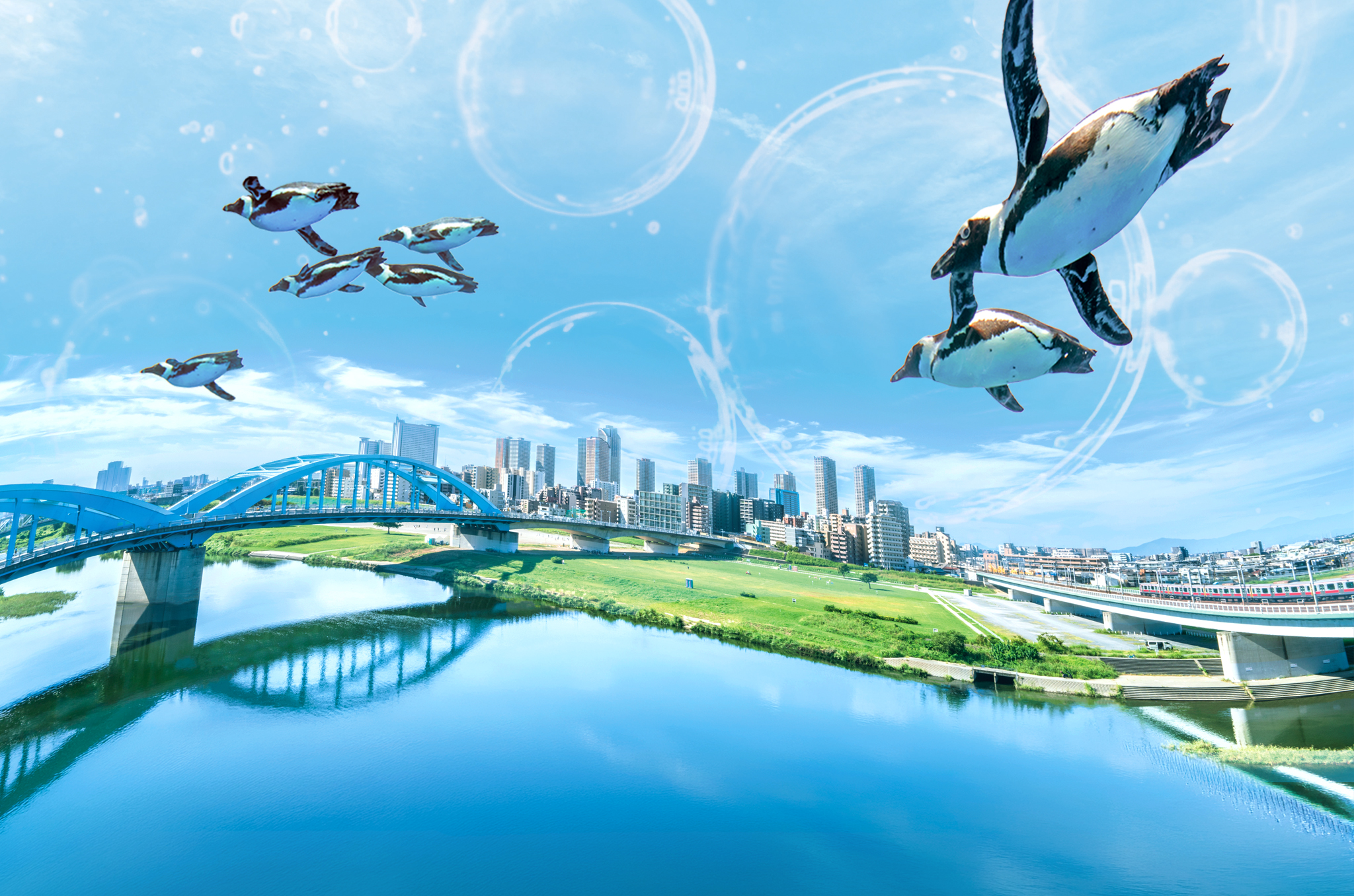
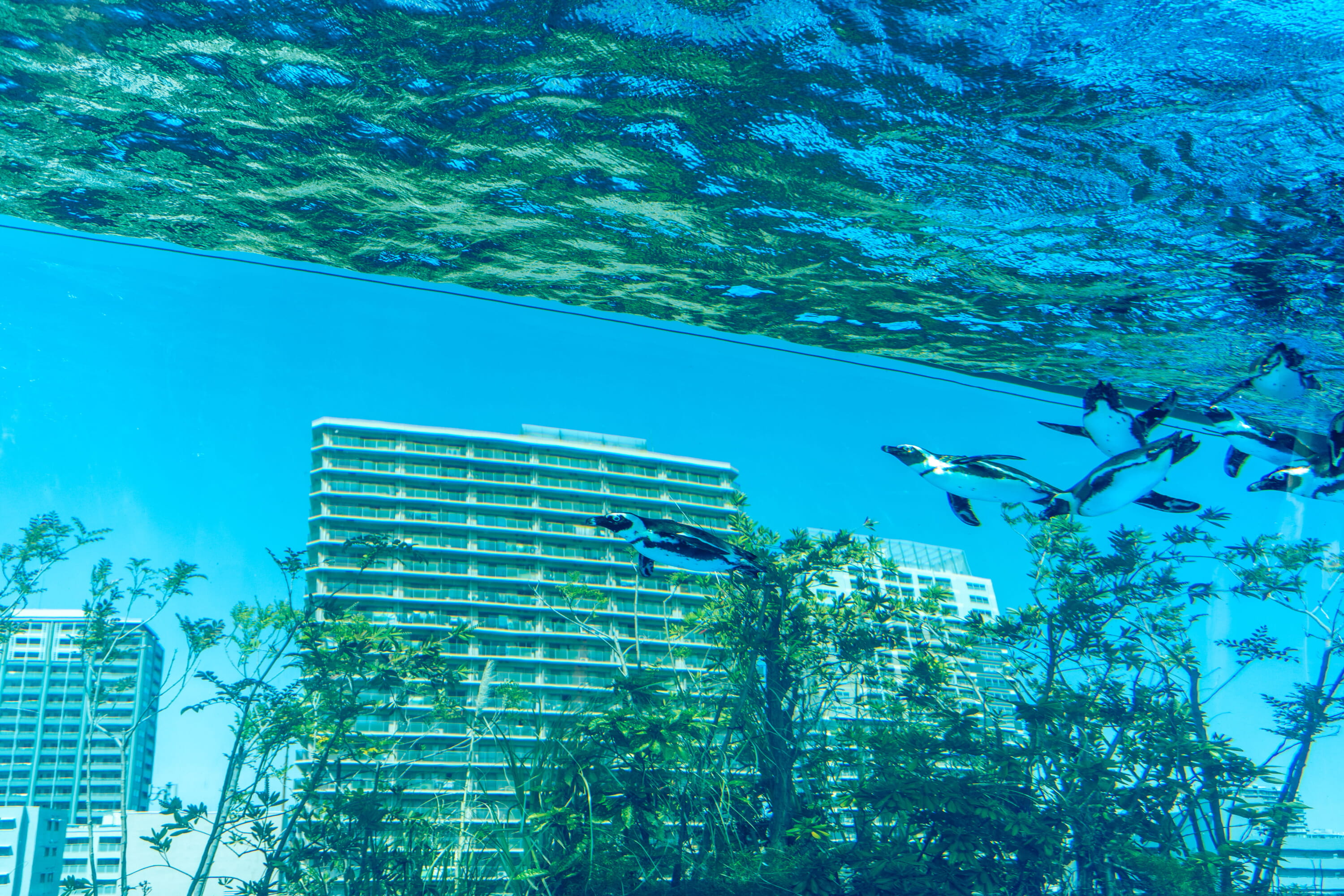
One often-seen trope of Frutiger Aero involves something that you’d typically never find in reality: floating aquatic animals. Google “Frutiger Aero” and you’re likely to come across a pair of dolphins jumping over a rainbow in front of a grassy field or a bubble filled with tropical fish, floating in front of a city on a clear day. These are things that you just cannot experience in real life, unfortunately. But what if you could?
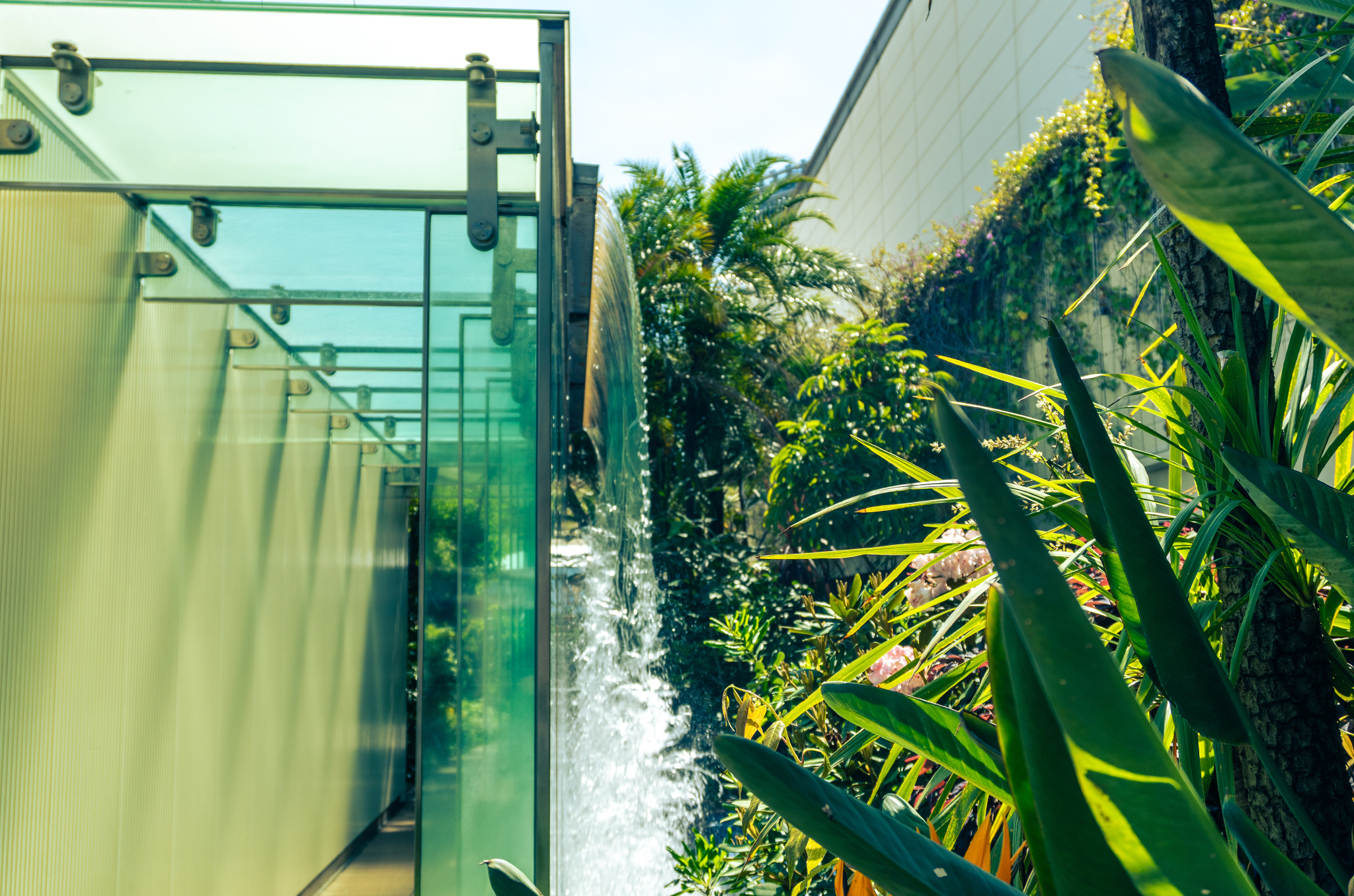
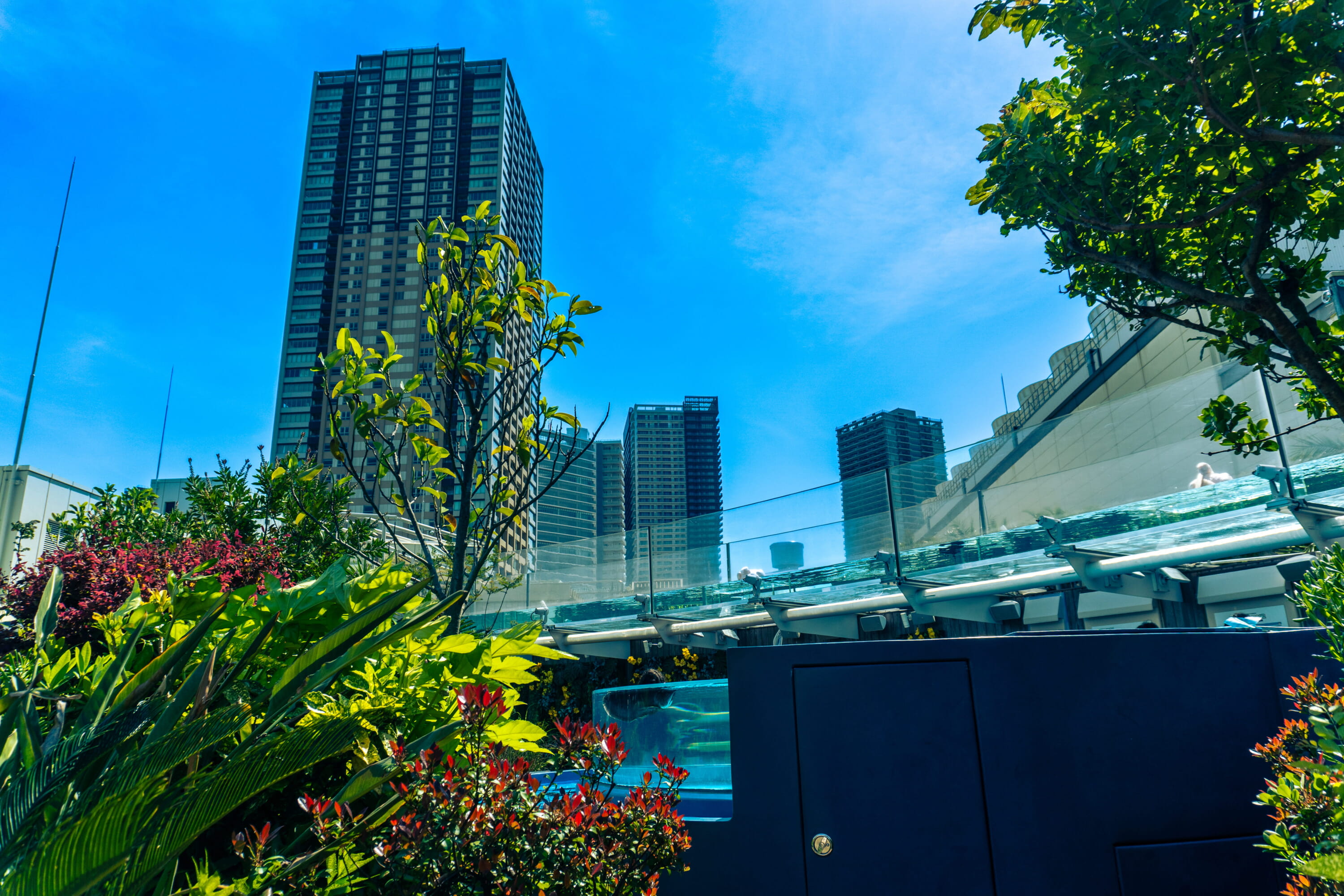
I’m here to tell you there is a place where you can see such sights — Ikebukuro’s Sunshine Aquarium. While the facility is mostly what you might call a “normal” aquarium, its outdoor marine garden, Sky Journey, is something quite unique. Here, in the very heart of one of Tokyo’s largest urban hubs, you’ll find green palm trees, shimmering blue waters and flying sea life.
Sunshine Aquarium has numerous tanks that hover above visitors’ heads, giving animals the appearance of swimming — or flying — in front of Ikebukuro’s skyline. In the Sky Path and Sunshine Aqua Ring areas, you can catch glimpses of penguins, sea lions, pelicans and even an occasional jumping fish. If the sight of a penguin flying above your head through the city doesn’t satisfy your Frutiger Aero itch, I’m not sure what will.
Sunshine 60 Observatory Tenbou-Park (Ikebukuro, Tokyo)
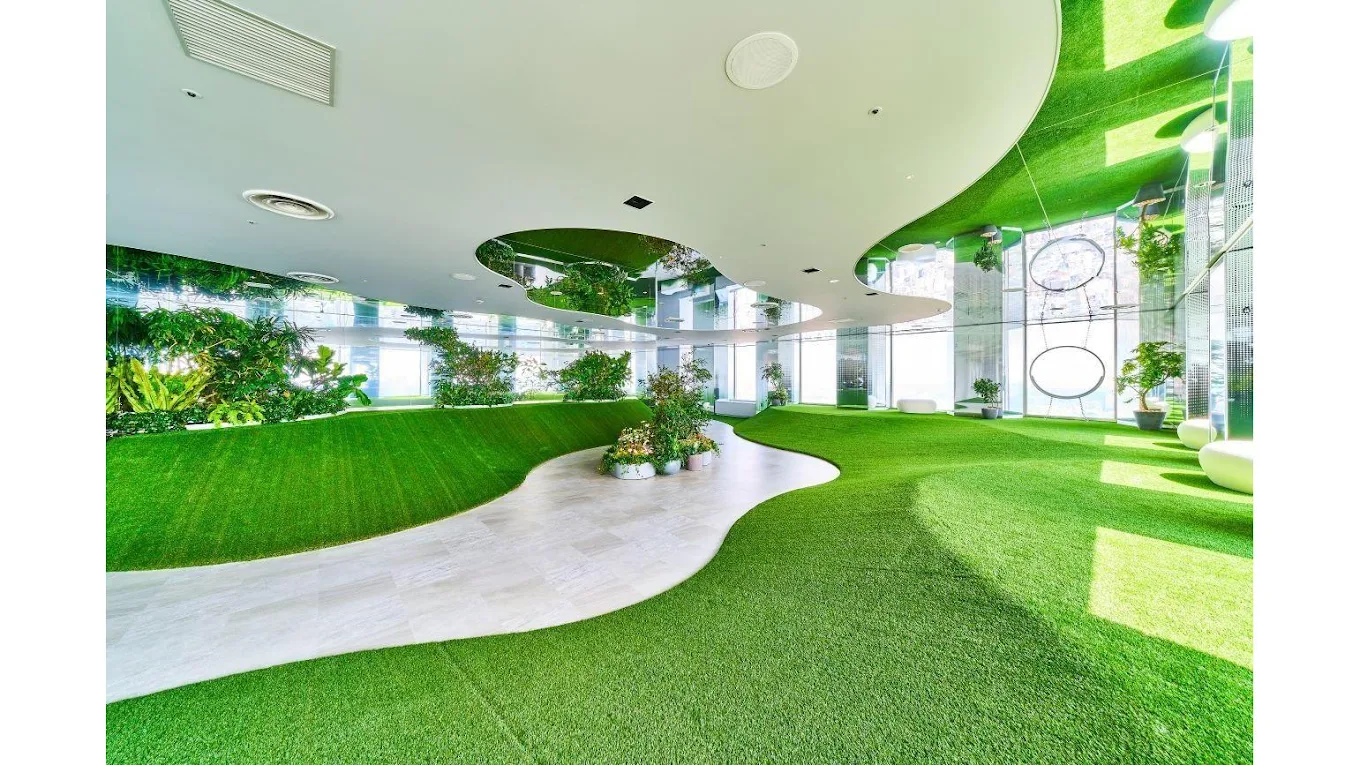
Another Ikebukuro spot hidden in the sky, Sunshine 60 Observatory Tenbou-Park is Frutiger Aero concept art come to life. Located on the 60th floor of Sunshine City, this lookout features relaxing hills of grass felt and smooth, liquid-like architecture all while sporting some of the best views in the city. A perfect spot for both families and couples, the deck features a full 360-degree view of the surrounding area and has several areas for photo spots, allowing visitors to enjoy the feel of the outdoors while staying cool and protected inside.
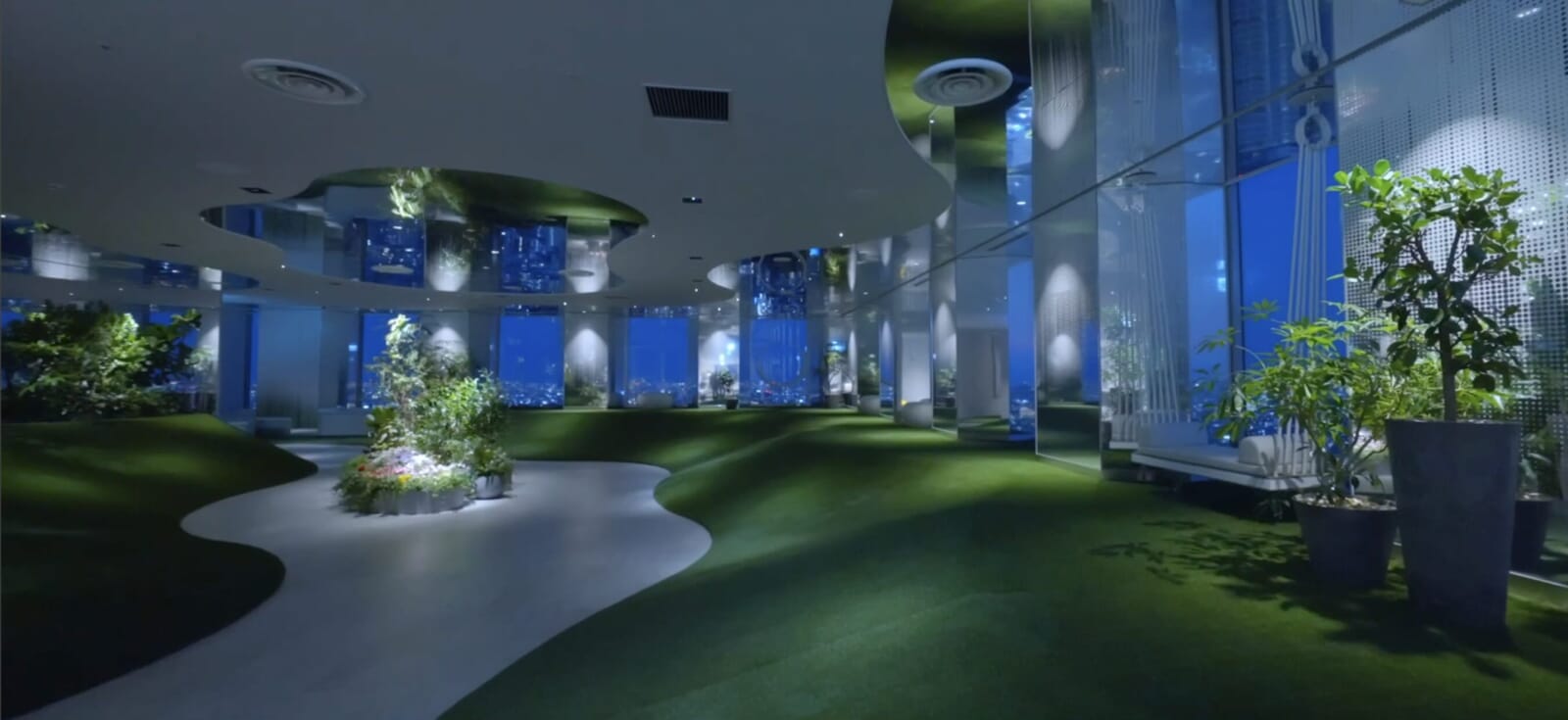
Tenbou-Park’s eternally green grass ensures that visitors can enjoy a wholly Frutiger Aero experience regardless of the season. While a midday visit is recommended for timing blue skies, this area is also lit up at night, providing a chance to experience a rare Frutiger Aero “after dark” aesthetic in real life.
The observatory often hosts various collaborations and special events, so check ahead on the official website before making a visit.
Bonus Tip: In Spring, the deck transforms into a cherry blossom park, making it an ideal back up to enjoy the pink petals even if you’ve missed the blooming season or experience bad weather.
Tamagawa Sengen Shrine Lookout (Ota, Tokyo)
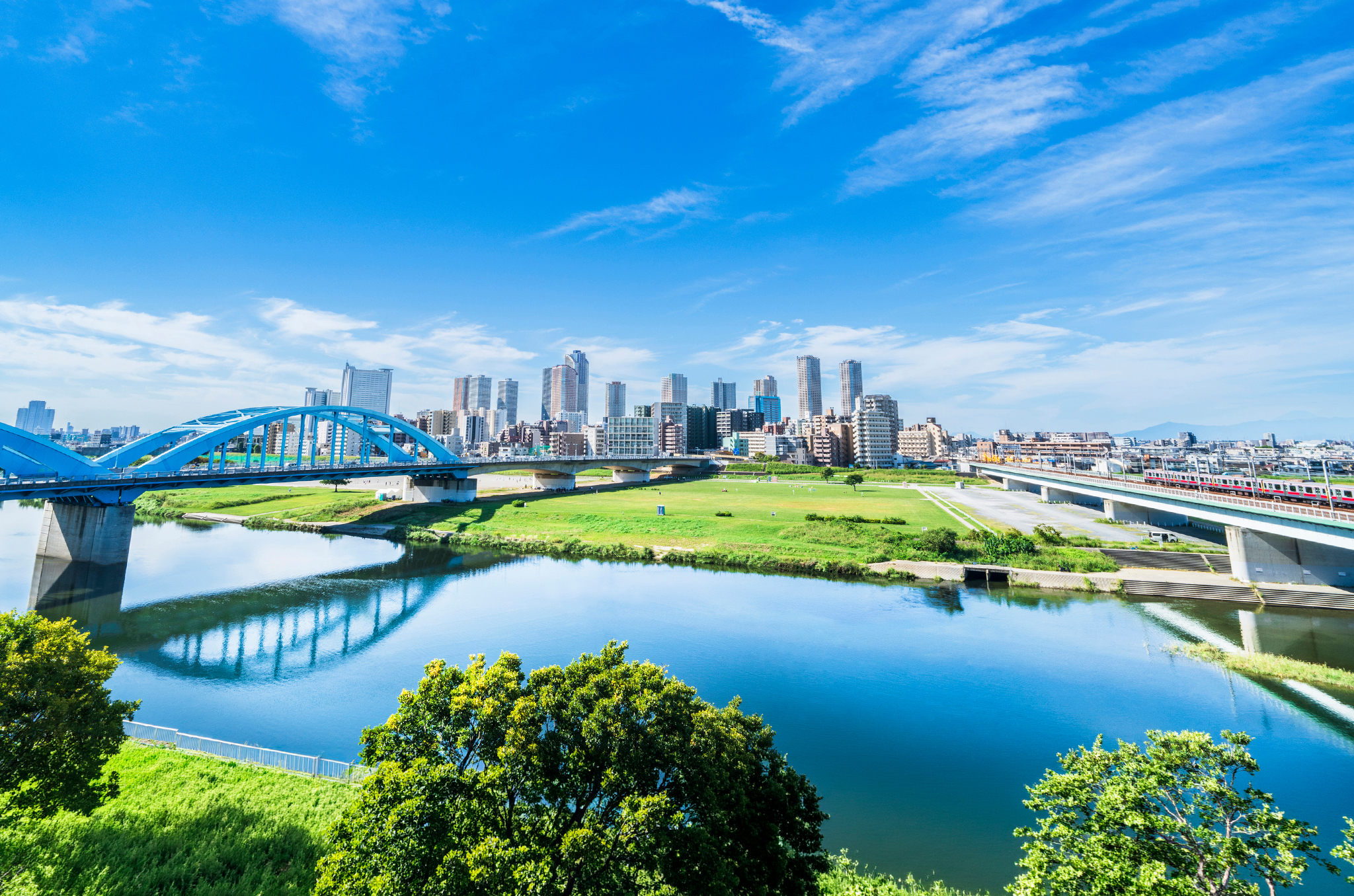
Likely one of the lesser-known spots on this list, this lookout spot is situated a comfortable three-minute walk from Tamagawa Station’s South Exit. Here, you can find something akin to the Holy Grail of Frutiger Aero design: the original Windows wallpapers, which are arguably some of the first examples of the aesthetic that were ever made.
This viewpoint has it all: sweeping views, flowing water from the Tama River, vibrant grass on the banks and an ample dash of technology, with trains rolling by on your right and cars passing on the bridge to your left. To tie it all together is a mini cityscape in the background. What’s more, the lookout deck is embroidered with traditional shrine detailing, giving this already immaculate view a sense of spiritual harmony, too.
While the middle of the day is recommended for peak Frutiger Aero vibes, don’t hesitate to stop by in the evening or at night, when you can see spectacular sunsets or an amazing night view of the city.
Hama-rikyu Gardens (Chuo, Tokyo)
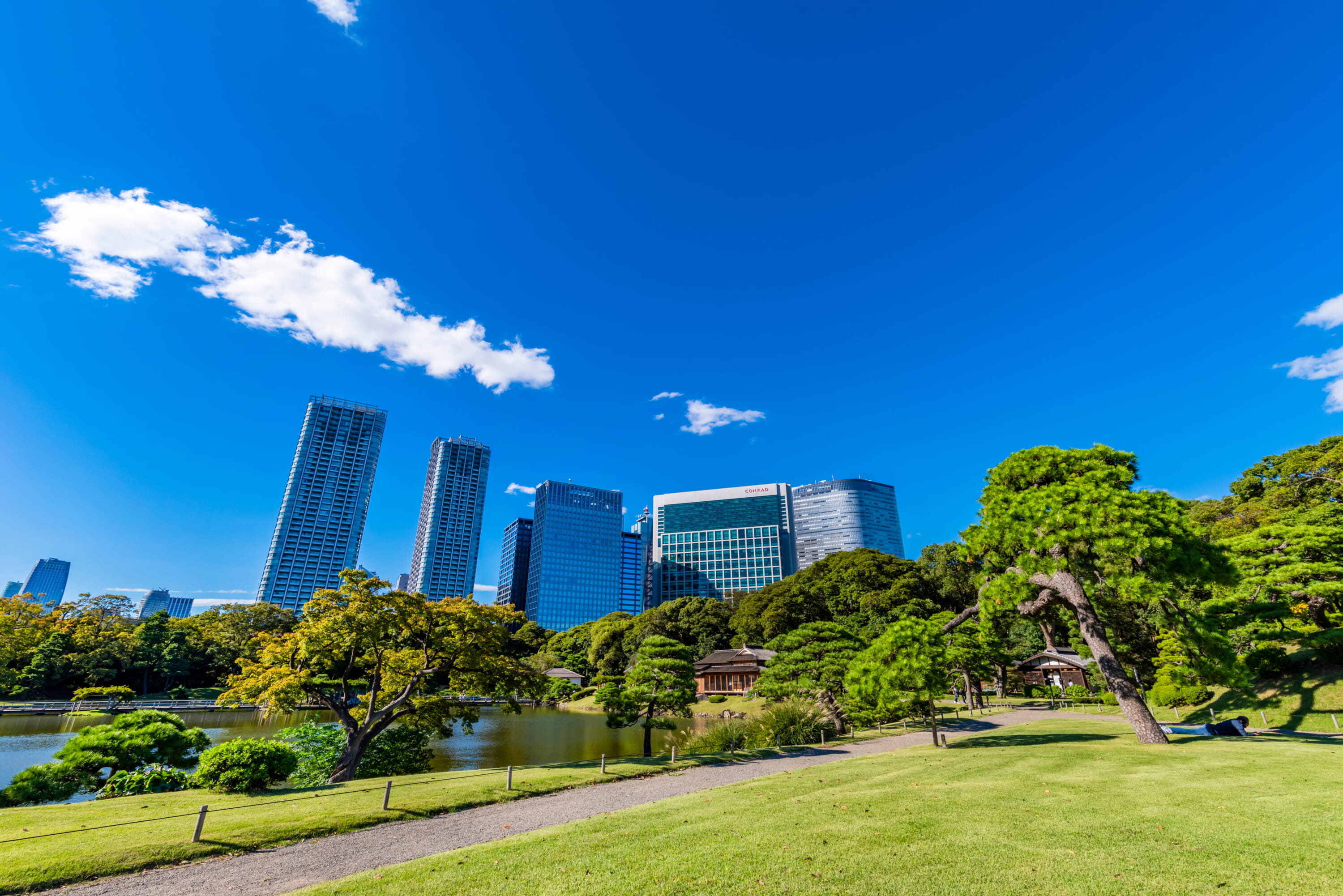
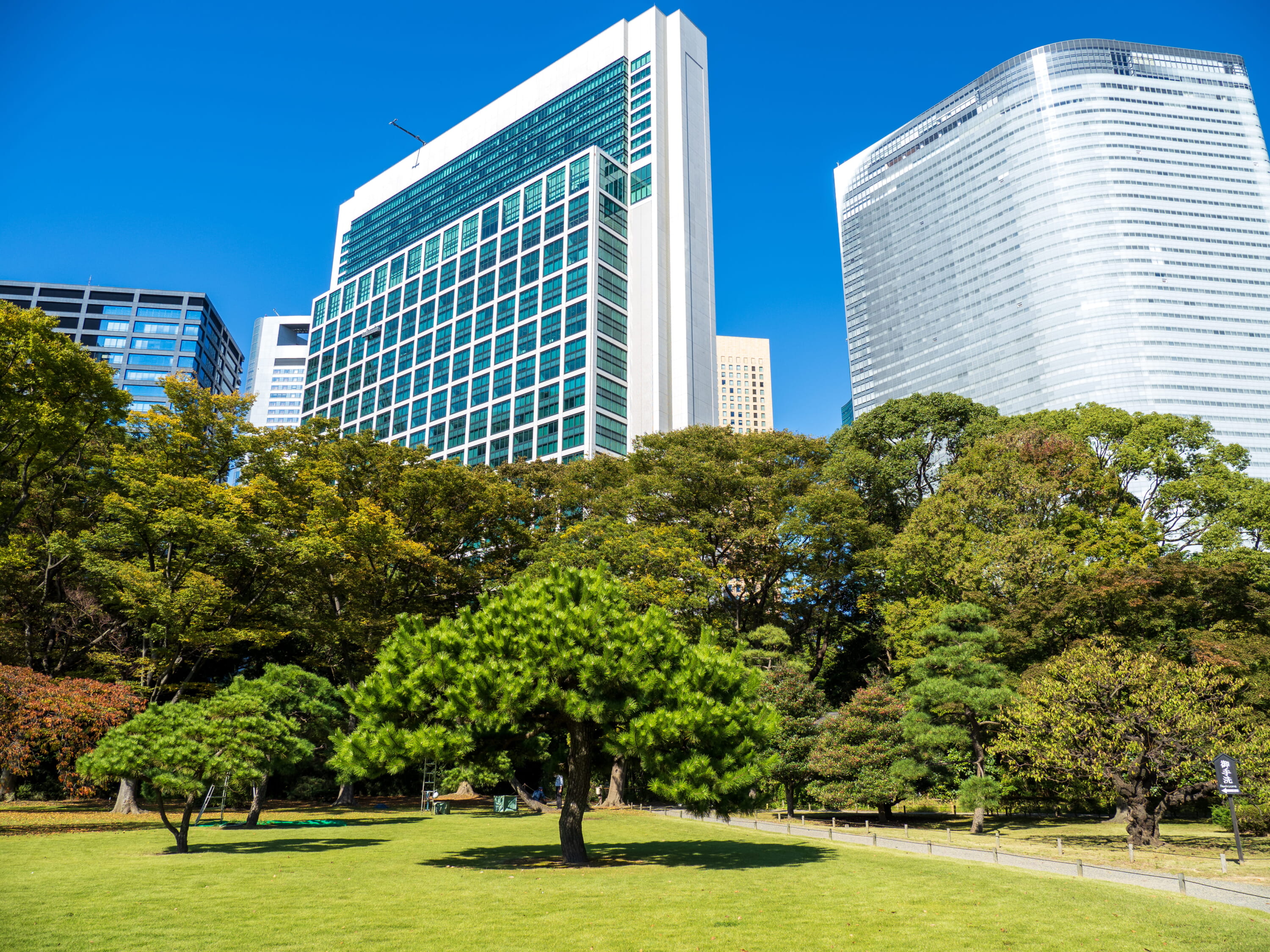
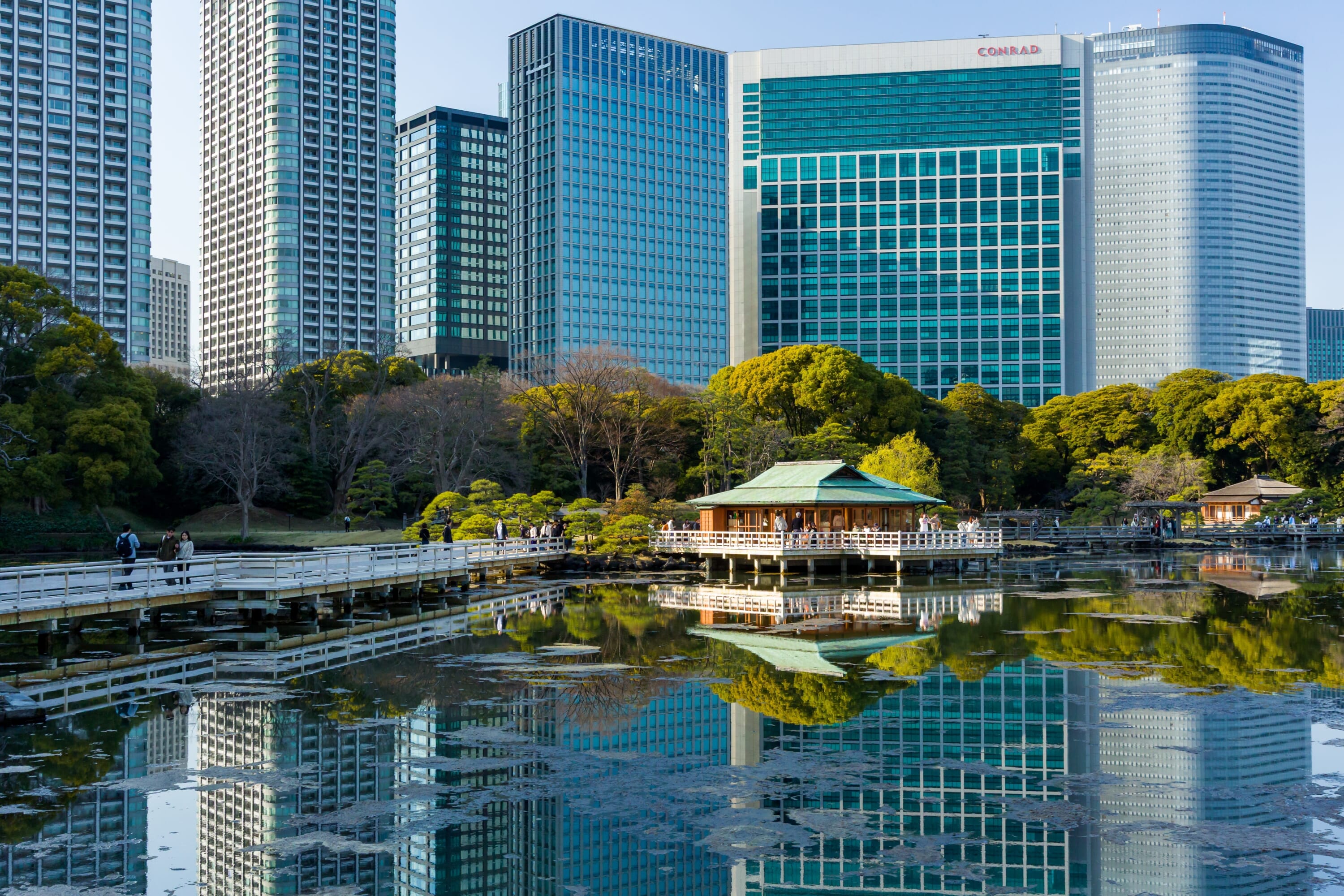
Hama-rikyu Gardens is a historied green oasis surrounded by a seawater moat fed from Tokyo Bay. The towering, sleek office buildings of the Shiodome district dot the background, creating a sharp contrast that gives the garden its Frutiger Aero aesthetic. Originally serving as a private villa and hunting ground for the ruling Tokugawa family during the Edo period, the area was remodeled into a park and opened to the public in 1946. The garden is known for its seawater pond, Shioiri no Ike, which changes level with the ocean tide, and its teahouse where visitors can enjoy matcha and traditional Japanese sweets.
Bonus Tip: This garden charges a fee for entry which can make it a bit less crowded than other popular, free parks in Tokyo. There’s also a rare abundance of grassy fields here, making for a great picnic spot to enjoy the sweeping views.
Miraikan — The National Museum of Emerging Science and Innovation (Odaiba, Tokyo)
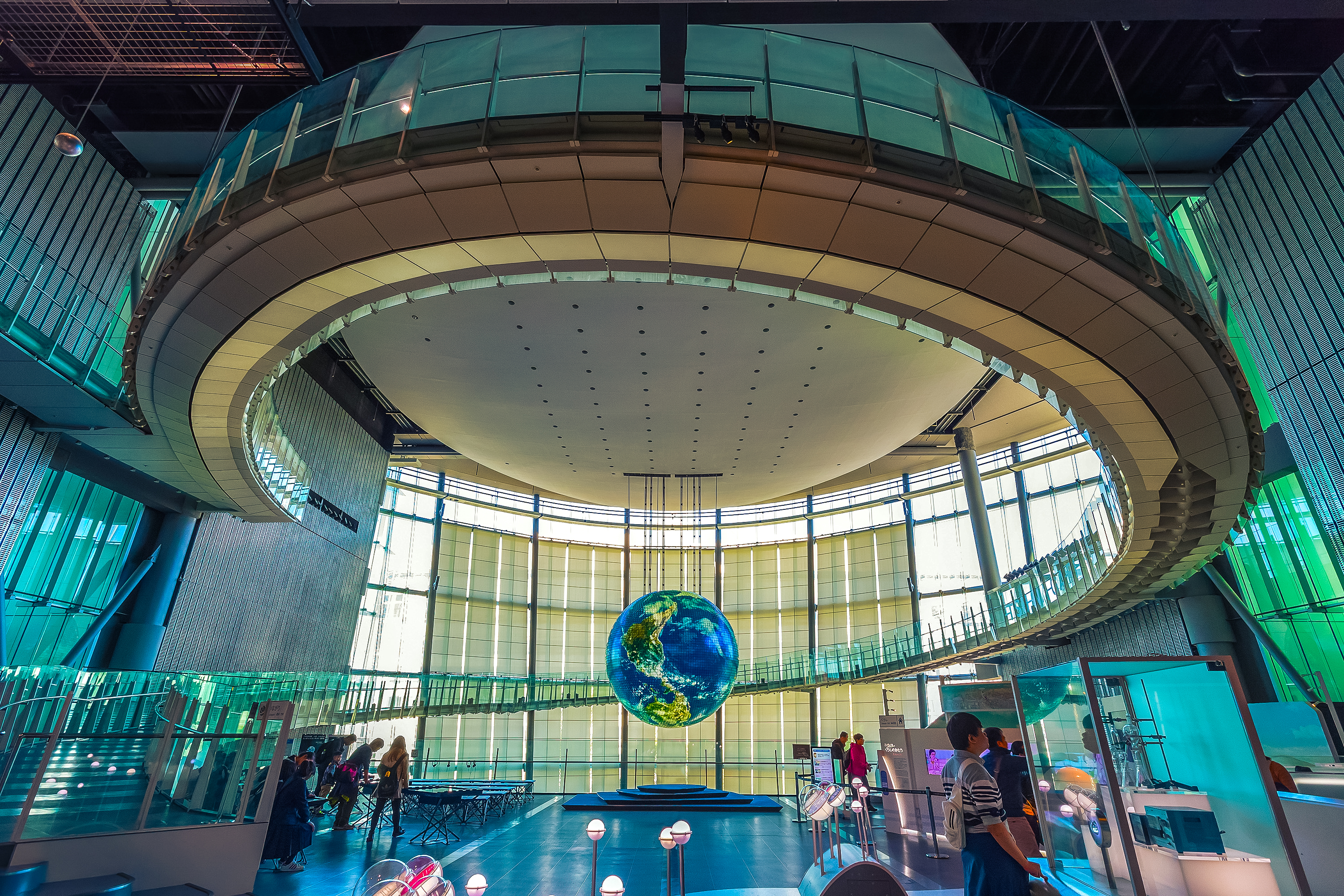
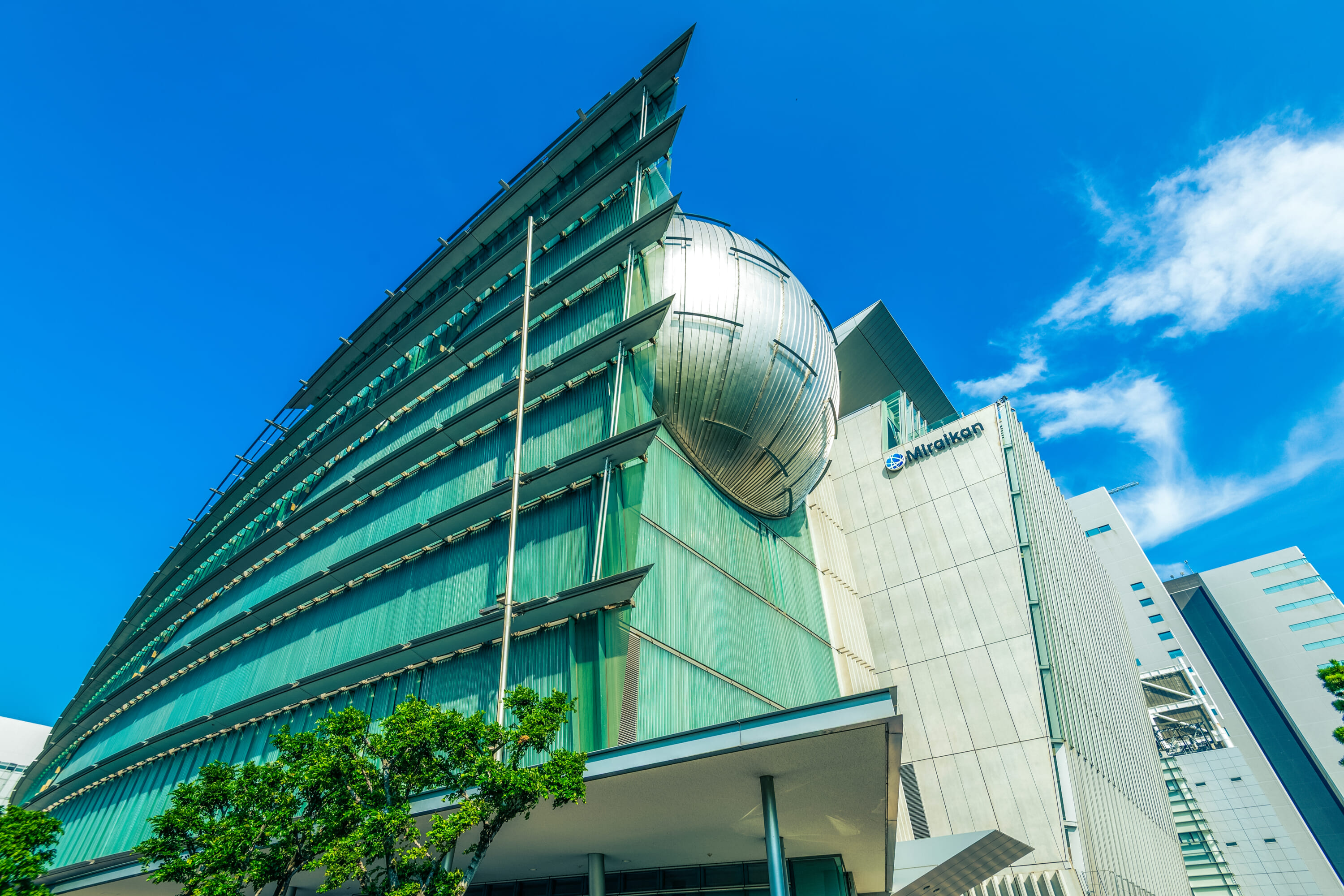
If any single building in Japan was designed to embody the Frutiger Aero aesthetic before it had a name, it’s Tokyo’s Miraikan. Opened in 2001, the museum is dedicated to emerging science and technology and features an iconic centerpiece — the Geo-Cosmos, a suspended six-meter LED sphere displaying real-time global environmental data, floating above a spiral walkway. Alongside the many hands-on displays and exhibitions, visitors can find glass exteriors, curved forms and aurora-like LED gradients throughout the interior. The building itself is a physical manifestation of the “future that never came.”