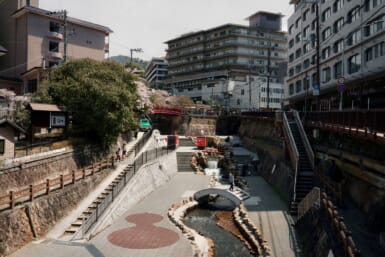
Overview of Kansai
Kansai occupies the southern-central part of Honshu and serves as Japan’s cultural and spiritual heartland. The region contains the Keihanshin metropolitan area (Osaka, Kobe, Kyoto), which is Japan’s second-largest metro area after Greater Tokyo. With a rich, layered history stretching back to the establishment of Japan’s first permanent capital at Nara in 710, Kansai is where many of Japan’s defining cultural traits took shape, and the region holds six of the seven top prefectures by number of designated National Treasures.
Kyoto, the imperial capital for more than 1,000 years until 1868, is the cultural centerpiece of the region. Its 17 UNESCO World Heritage temples, shrines and castles along with the iconic vermillion torii tunnels of Fushimi Inari Taisha and the preserved geisha districts of Gion draw millions of visitors annually. Nara, Japan’s oldest permanent capital, is famed for Todai-ji’s giant Buddha, Kasuga Taisha Shrine and the free-roaming deer of Nara Park. Osaka, Japan’s third-largest city and commercial heart of the west, is famous for its food culture — takoyaki, okonomiyaki, kushikatsu — plus the neon chaos of Dotonbori, reconstructed Osaka Castle and Universal Studios Japan.
Hyogo, to the west of Osaka, encompasses Kobe and the magnificent Himeji Castle — Japan’s finest surviving original castle and the first site inscribed as a UNESCO World Heritage property. Shiga, to the east of Kyoto, is dominated by Lake Biwa, Japan’s largest freshwater lake and one of the oldest lakes in the world, along with the historic castle town of Hikone. Mie, on the Pacific coast, is home to Ise Jingu — Japan’s most sacred Shinto shrine complex, rebuilt every 20 years for over 1,300 years — as well as the ninja town of Iga Ueno.