
Dotonbori Overview
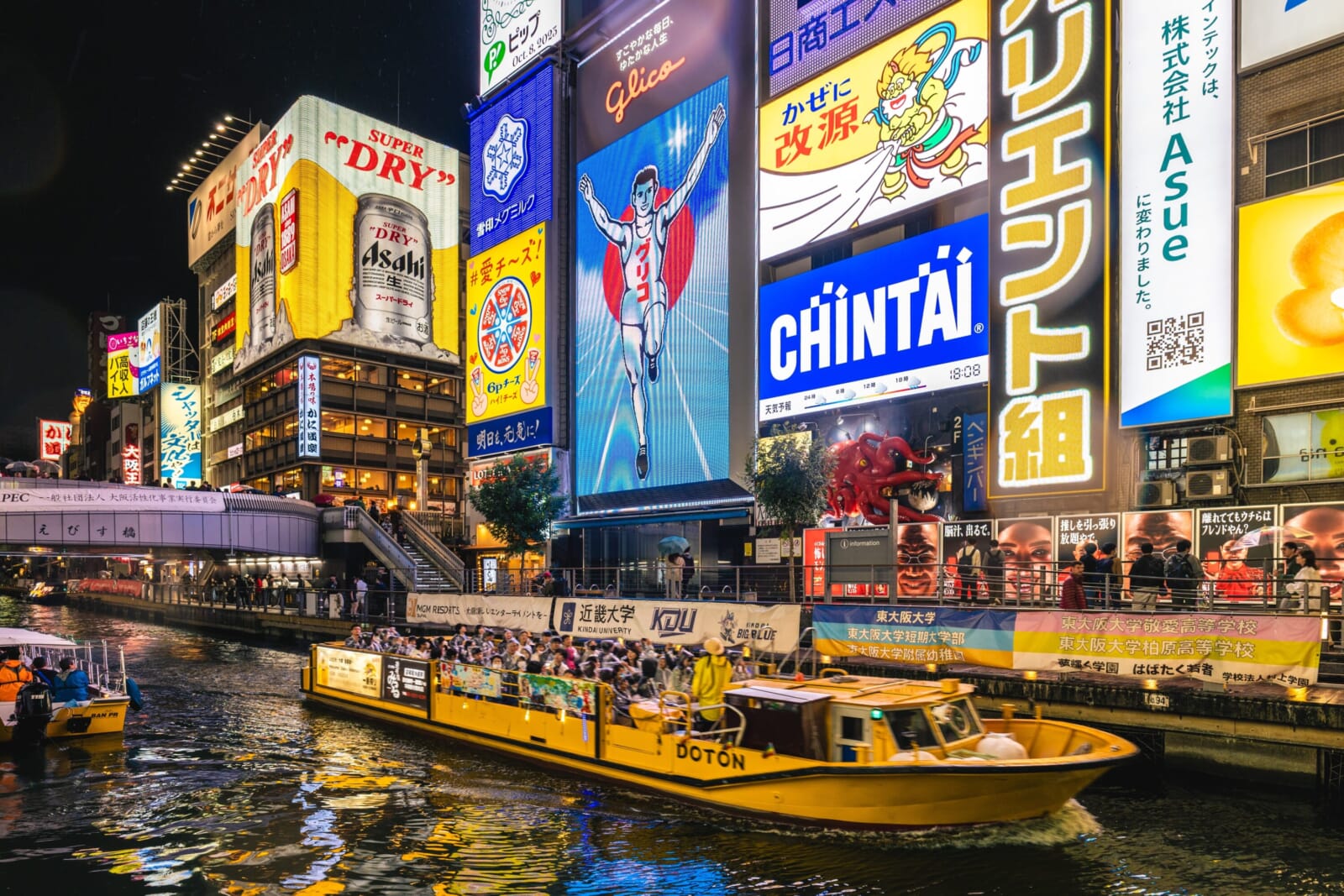
Dotonbori is Osaka’s most famous entertainment district, a dazzling strip of neon lights, street food vendors and bustling crowds that runs along the Dotonbori Canal in the Namba area. Named after Yasui Doton, who financed the canal’s construction beginning in 1612 (completed in 1615), this vibrant quarter has been the heart of Osaka’s nightlife and food culture for over 400 years.
The district is instantly recognizable by its iconic Glico Running Man sign, which has become synonymous with Osaka itself. Flanking the canal are towering billboards and mechanical displays, including a giant moving crab at Kani Doraku and an enormous pufferfish lantern, creating a sensory overload that embodies Osaka’s energetic spirit.
Dotonbori is the ultimate destination for experiencing Osaka’s famous street food culture. The area is packed with restaurants and street vendors serving local specialties like takoyaki (octopus balls), okonomiyaki (savory pancakes), kushikatsu (deep-fried skewers) and ramen. The pedestrian-friendly Dotonbori Street and its side alleys offer endless opportunities to eat, shop and soak in the electric atmosphere that defines Osaka’s reputation as Japan’s kitchen.
Beyond food, the district features shopping arcades, entertainment venues and theaters. The nearby National Bunraku Theatre in the Namba area harks back to Dotonbori’s roots as an entertainment quarter during the Edo period.
Best Times To Visit Dotonbori
Dotonbori is bustling year-round, but evening visits offer the most spectacular experience when the neon signs illuminate the canal and crowds reach their peak. The area is particularly vibrant on weekends and holidays.
For comfortable weather and fewer crowds, visit during spring (March to May) or autumn (September to November). Summer can be hot and humid, while winter offers a different charm with fewer tourists. The upcoming 2025 World Expo in Osaka will likely increase visitor numbers from April to October, so plan accordingly if you prefer a less crowded experience.
Avoid visiting during major Japanese holidays like Golden Week (late April to early May) and Obon (mid-August) when crowds can be overwhelming.