Kyoto Prefecture covers about 4,612 square kilometers and is home to roughly 2.5 million people — more than half of whom live in Kyoto City itself. Founded in 794 as Heian-kyo, Kyoto served as Japan’s imperial capital for over a thousand years until the capital moved to Tokyo in 1868, and the prefecture remains the cultural anchor of the country, with influence on everything from religion and architecture to cuisine, craft and etiquette.
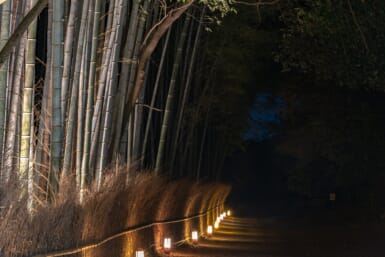
Kyoto City is the undisputed centerpiece, with 17 temples, shrines and Nijo Castle collectively inscribed as the UNESCO World Heritage Site “Historic Monuments of Ancient Kyoto” in 1994. Highlights include Kinkaku-ji (the Golden Pavilion), Ginkaku-ji (the Silver Pavilion), Kiyomizu-dera, Ryoan-ji’s Zen rock garden and Nijo Castle, built by the Tokugawa shoguns. The vermillion torii tunnels of Fushimi Inari Taisha — not part of the UNESCO listing but one of Japan’s most photographed sites — wind up Mt. Inari in southern Kyoto. The Gion district preserves Kyoto’s geisha culture, and Arashiyama on the western edge of the city draws visitors for its bamboo grove, the Togetsukyo Bridge and Tenryu-ji.
Beyond Kyoto city, the prefecture rewards slower exploration. Just south of the city, Uji is Japan’s matcha capital and home to the UNESCO-listed Byodo-in (the “Phoenix Hall” pictured on the ¥10 coin) and Ujigami Shrine, said to be Japan’s oldest surviving Shinto shrine. In the north, a region often branded “Kyoto by the Sea” centers on Amanohashidate, a 3.6-kilometer pine-covered sandbar in Miyazu Bay that’s ranked among Japan’s Three Most Scenic Views alongside Matsushima and Miyajima. The nearby fishing village of Ine, famous for its rows of traditional funaya boat houses built directly over the water, offers a glimpse of old rural Japan. Other worthwhile stops include the tea fields of Wazuka in the south and the quiet castle town of Fukuchiyama.