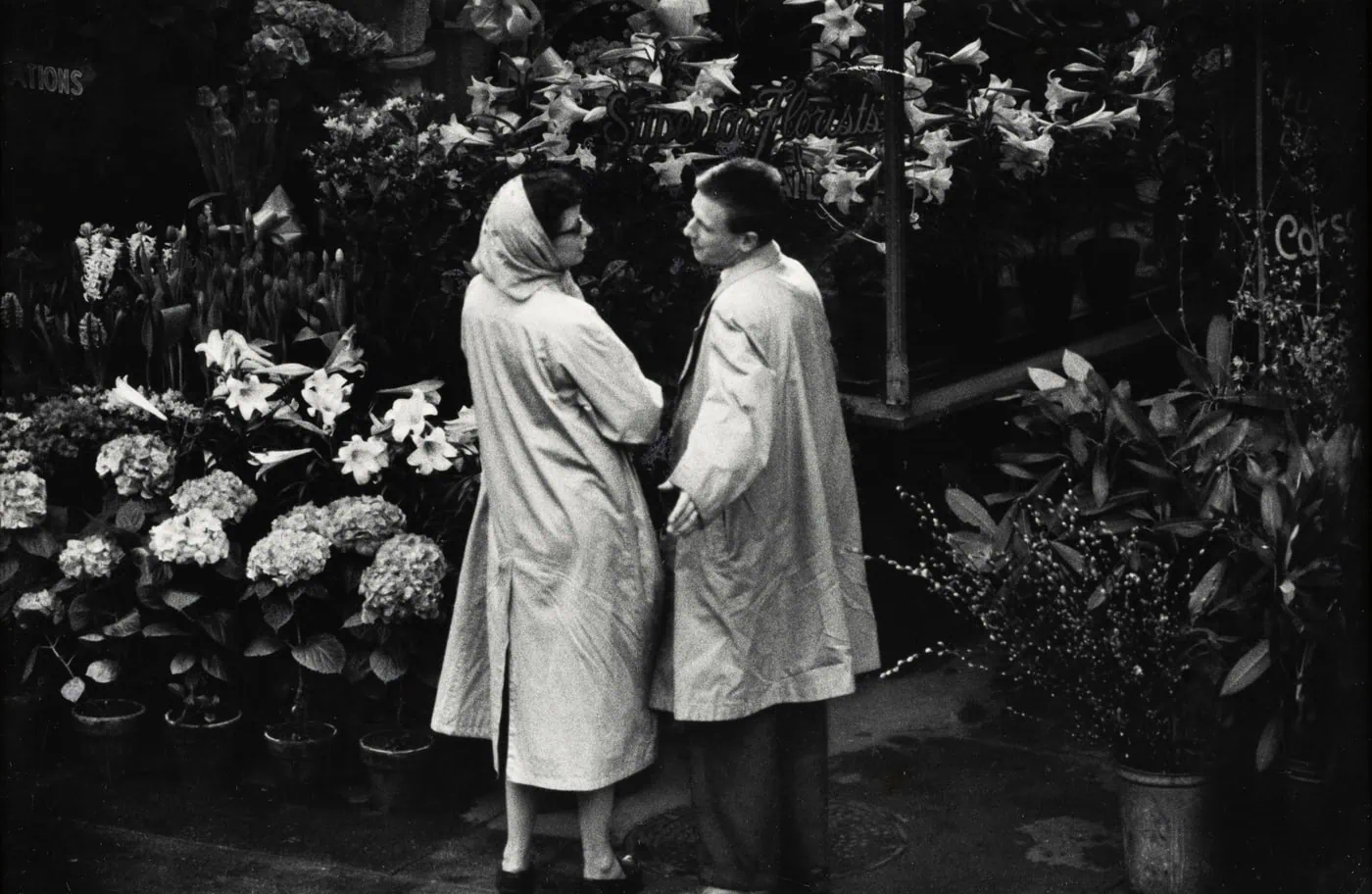
The Evolution of W. Eugene Smith, A Pioneer of the Photo Essay
A towering figure in 20th-century American photography, W. Eugene Smith produced a body of work that redefined the impact of a single image. While Smith is best known for his assignments as a World War II correspondent for Life magazine, his career actually traces a much broader technical evolution. Venturing beyond traditional news reporting, he was a pioneer of the photo essay — a format that uses a sequence of images and short text to build a complex story. Following his work from the 1940s to later projects like Minamata, the exhibition highlights Smith’s effort to fuse raw journalism with deliberate artistic composition.
A major part of the collection covers Smith’s transition away from mainstream news after 1954, specifically his years living in a Manhattan loft. This space became a creative crossroads for jazz legends like Thelonious Monk and artists such as Salvador Dalí. During this era, Smith’s style shifted: he began using the camera as a tool for artistic exploration rather than as a recording device. Capturing the atmospheric, late-night jam sessions that unfolded around him, Smith moved beyond the conventions of his earlier work.