Overview of Kyushu
Kyushu is Japan’s third-largest main island and the southwesternmost of the four main islands. Kyushu accounts for roughly 10% of Japan’s population, with most residents concentrated along the northwestern corridor from Fukuoka through Kumamoto down to Kagoshima.
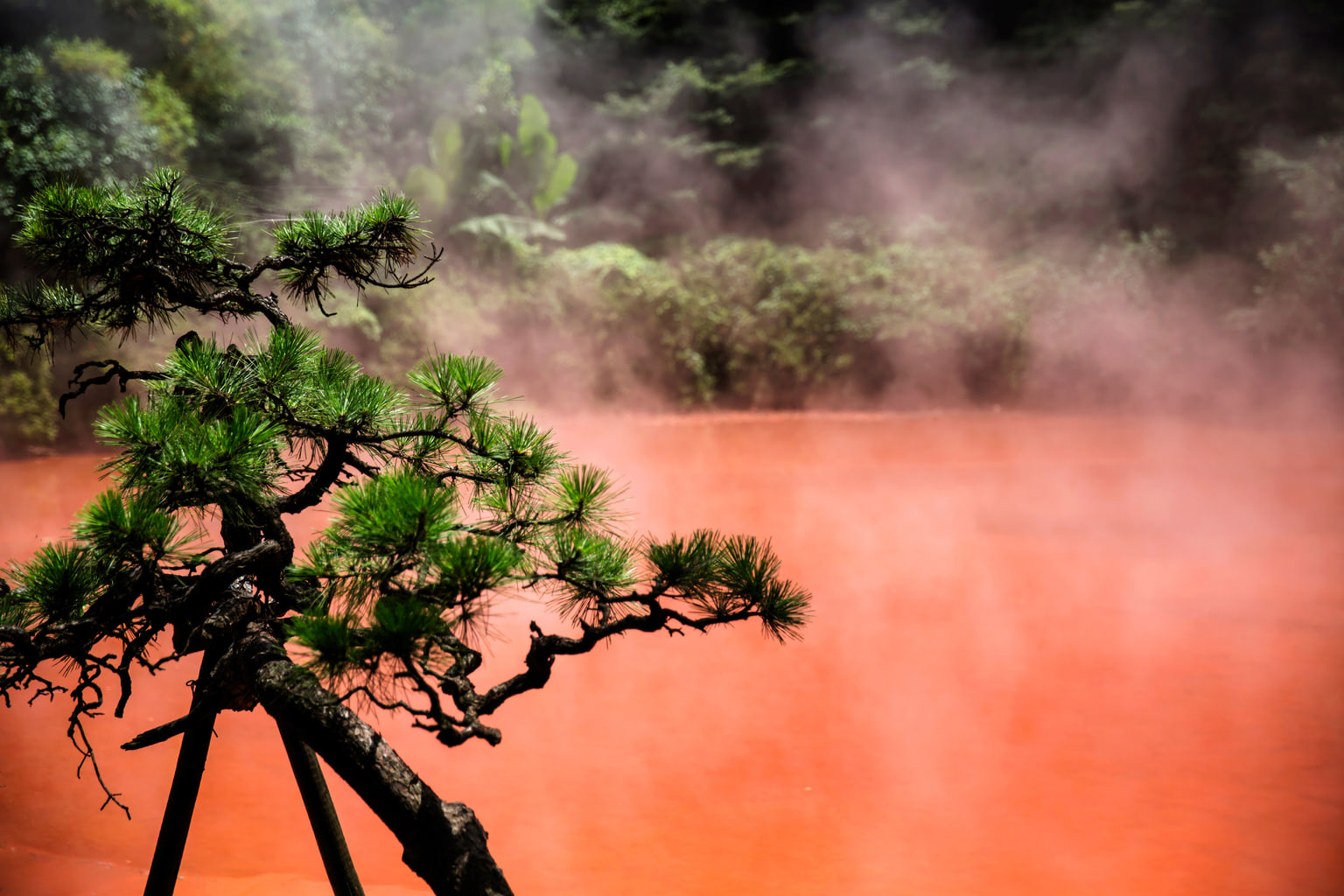
Kyushu’s defining feature is its volcanic geology. Mt. Aso in Kumamoto boasts one of the world’s largest calderas, stretching roughly 25 km north to south, and its central cone includes the active Nakadake crater. Sakurajima, rising from Kagoshima Bay, is Japan’s most active volcano, erupting almost daily and depositing ash on nearby Kagoshima city. The island’s volcanic activity also fuels Japan’s greatest concentration of hot springs, making Kyushu the country’s onsen capital. Beppu in Oita Prefecture has more than 2,000 hot spring sources and is famous for the Seven Hells of Beppu, vividly colored thermal pools that draw visitors for viewing rather than bathing. The nearby mountain resort of Yufuin offers a more refined onsen experience, while Kumamoto’s Kurokawa Onsen is one of Japan’s most atmospheric traditional hot spring towns. Kagoshima’s Ibusuki is uniquely famous for its naturally heated sand baths.
Fukuoka city, Kyushu’s largest urban center and the terminus of the Kyushu Shinkansen, serves as the region’s main gateway. Fukuoka’s Hakata Station, modern shopping districts and famously good tonkotsu ramen anchor the prefecture. Nagasaki, the former sole port open to foreign trade during Japan’s Edo-period isolation, carries a uniquely layered history visible in its Glover Garden colonial quarter, Oura Cathedral (Japan’s oldest Christian church), Chinatown and the Atomic Bomb Museum and Peace Park commemorating the August 1945 bombing.