
Beppu Jigoku Overview
The Beppu Jigoku is a sightseeing route through seven of Beppu’s most spectacular geothermal hot springs — known collectively as the Hells of Beppu. Unlike the onsen that have made Beppu famous, these springs are not for bathing. Temperatures reach close to 100°C, and the pools churn with boiling mud, mineral-stained water and billowing steam. They are purely for viewing — and for the past millennium, that has been more than enough reason to visit.
The word jigoku (hell) has applied to these springs for over 1,000 years. In ancient times, the erupting gases, boiling mud and steaming fissures were so unsettling to locals that they came to regard the area as cursed and left it uninhabited. Today, that same uncanny energy makes it Beppu’s most popular attraction.
The seven hells on the official tour are split between two districts: five in Kannawa and two in the nearby Shibaseki district. Each has a distinct character:
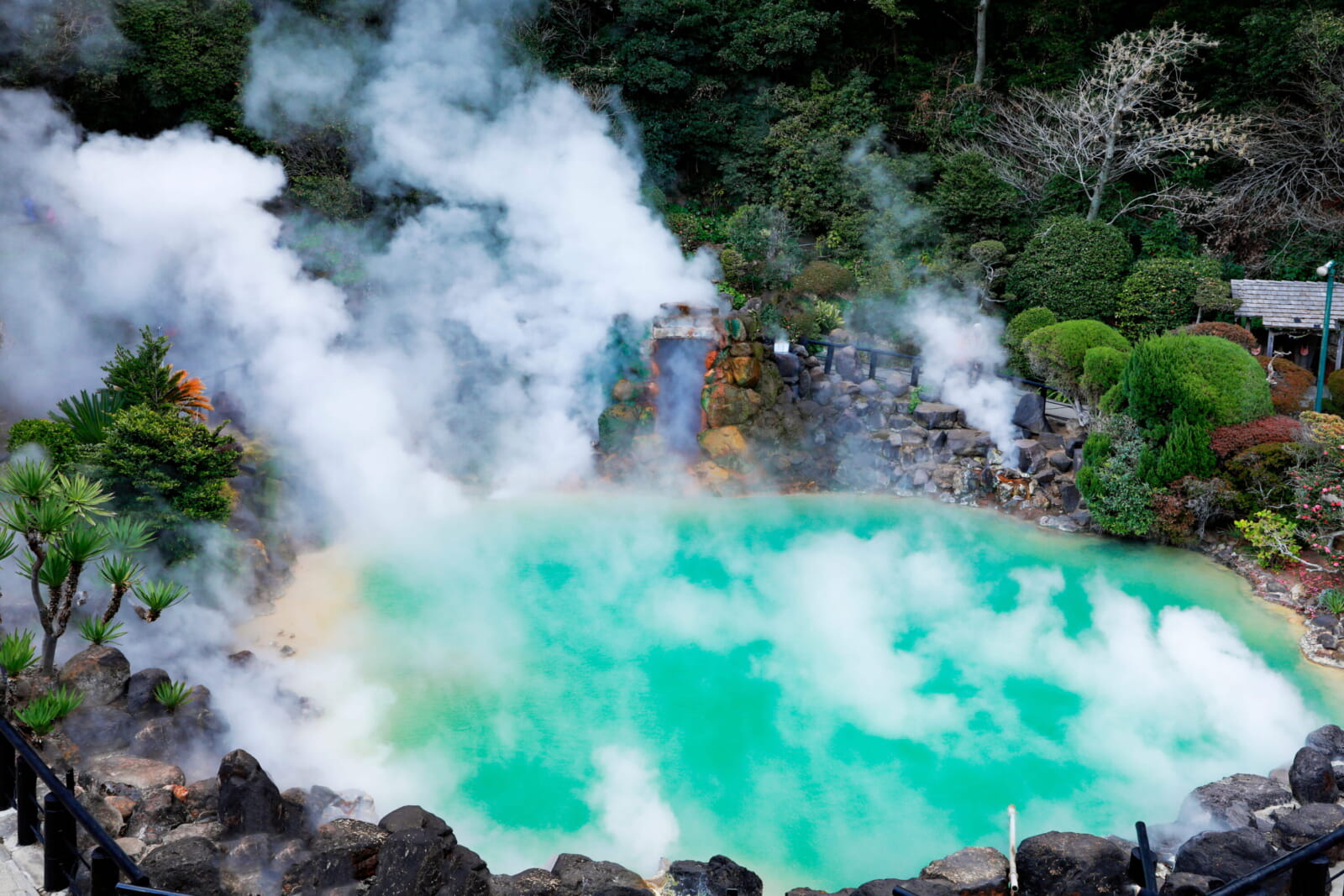
umi jigoku
Umi Jigoku (Sea Hell) — The largest and most photographed, with cobalt blue water 200 meters deep, caused by iron sulfate. Footbath, cafe and lotus greenhouse on-site.
Oniishi Bozu Jigoku (Bald Monk Hell) — Grey bubbling mud whose surface pops rhythmically, said to resemble the shaved heads of Buddhist monks.
Kamado Jigoku (Cooking Pot Hell) — Six distinct mini-hells in one site, including blue, red and grey pools, plus a footbath and drinkable onsen water. Named for its historical use in cooking festival offerings.
Oniyama Jigoku (Devil Mountain Hell) — Home to around 80 crocodiles, kept using the site’s geothermal heat.
Shiraike Jigoku (White Pond Hell) — A milky-white pond in a tranquil Japanese-style garden with a small tropical fish aquarium.
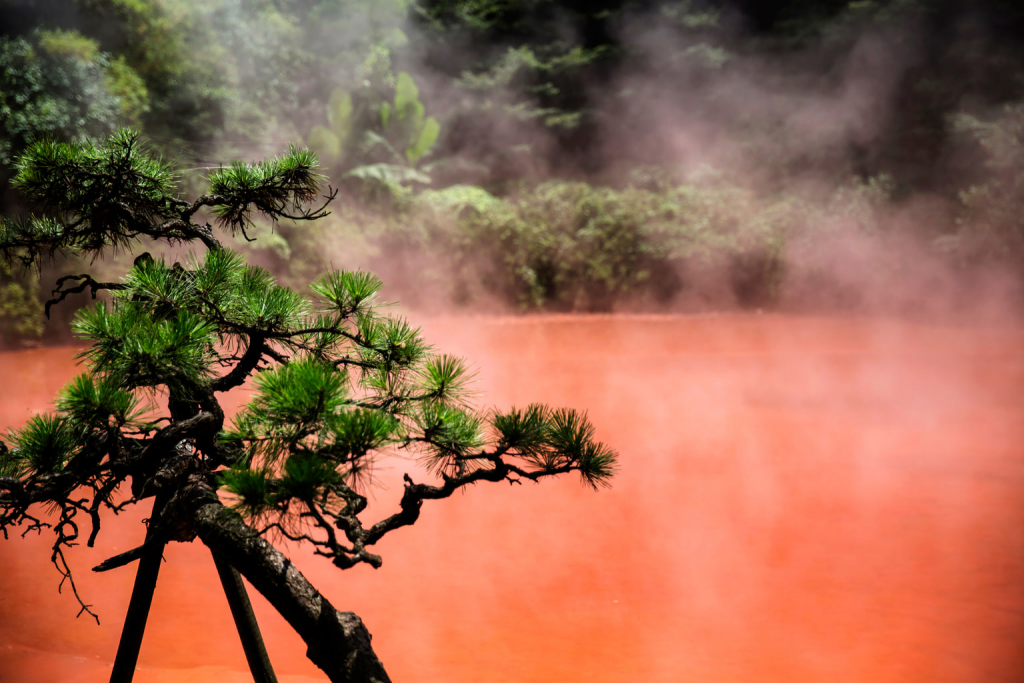
Chinoike Jigoku (Blood Pond Hell) — The oldest hell in Japan, with deep red water and clay caused by iron oxide. Famous for its skin-care ointment made from the red clay.
Tatsumaki Jigoku (Spout Hell) — A geyser that erupts every 30–40 minutes. A countdown clock at the entrance helps visitors time their arrival.
Four of the seven — Umi, Chinoike, Tatsumaki and Shiraike — are designated National Places of Scenic Beauty. Most hells sell jigoku mushi (hell-steamed) snacks: eggs and pudding prepared using geothermal steam, a cooking method dating to the Edo period.
Best Times To Visit Jigoku Meguri
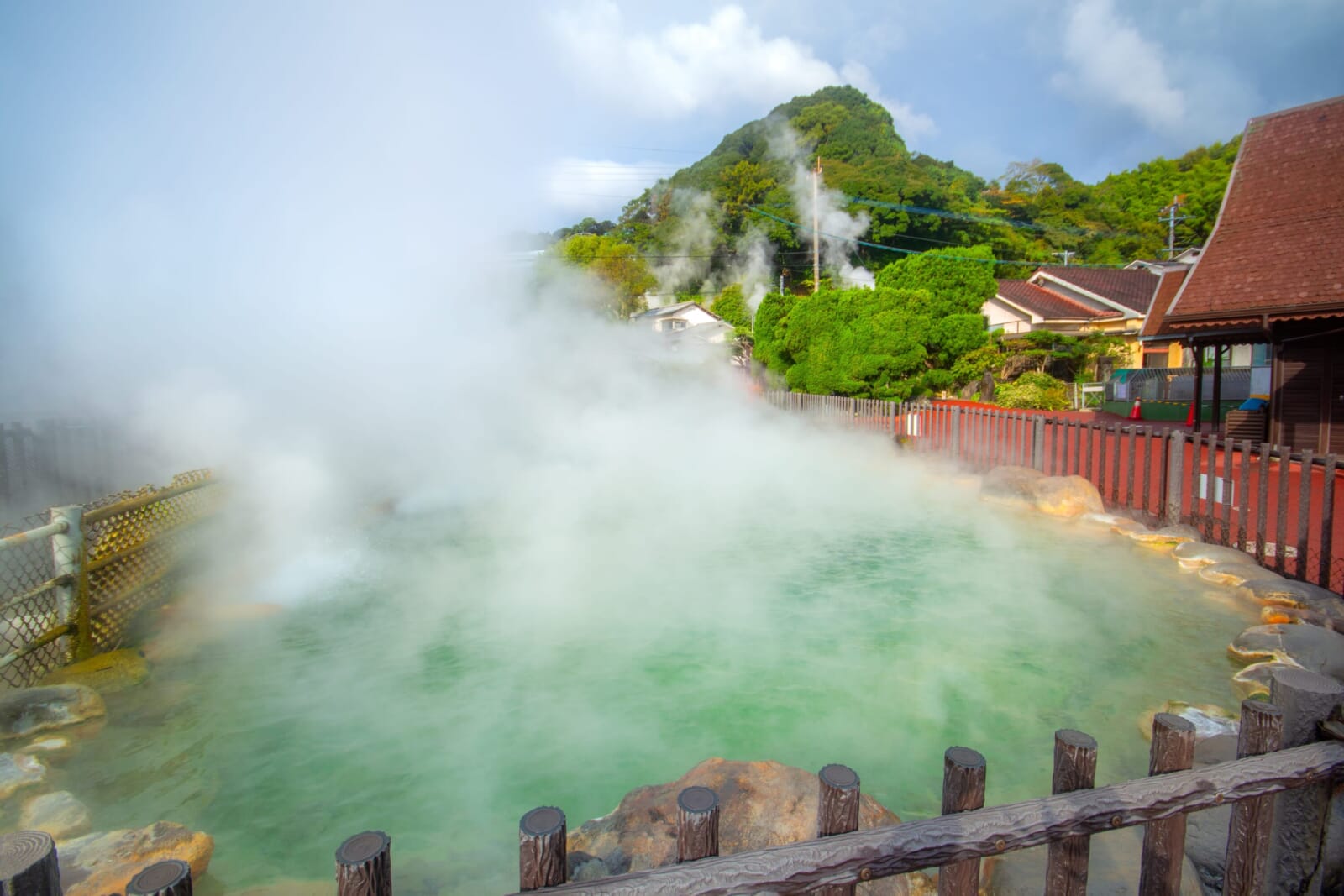
The hells are open year-round, and each season brings different atmospheric conditions. Winter mornings produce the most dramatic steam, as cold air intensifies the visual contrast with the boiling pools. Summer heat can be punishing — early morning arrival is strongly recommended. The Tatsumaki Jigoku geyser erupts every 30–40 minutes, so checking the countdown clock upon arrival helps plan the circuit efficiently. Weekday mornings tend to be less crowded than weekends, and the Kannawa five can be done on foot without transport.