Nagasaki Peace Park & Atomic Bomb Museum Overview
Nestled in the Urakami district, several kilometers north of Nagasaki city center, Nagasaki Peace Park and the Nagasaki Atomic Bomb Museum form one of Japan’s most significant and sobering historical sites. The complex commemorates the atomic bombing of Nagasaki on August 9, 1945 — the second and final use of nuclear weapons in wartime history — when a bomb detonated at 11:02 a.m. over the Urakami district, killing or injuring an estimated 150,000 people and leveling much of the surrounding area.
The complex comprises several distinct areas. The Hypocenter Park marks the precise epicenter of the explosion with a simple black monolith, while a preserved column from the destroyed Urakami Cathedral stands nearby as a testament to the blast’s power. Visitors can also peer into an exposed layer of soil still containing broken roof tiles, bricks, and glass from that day.
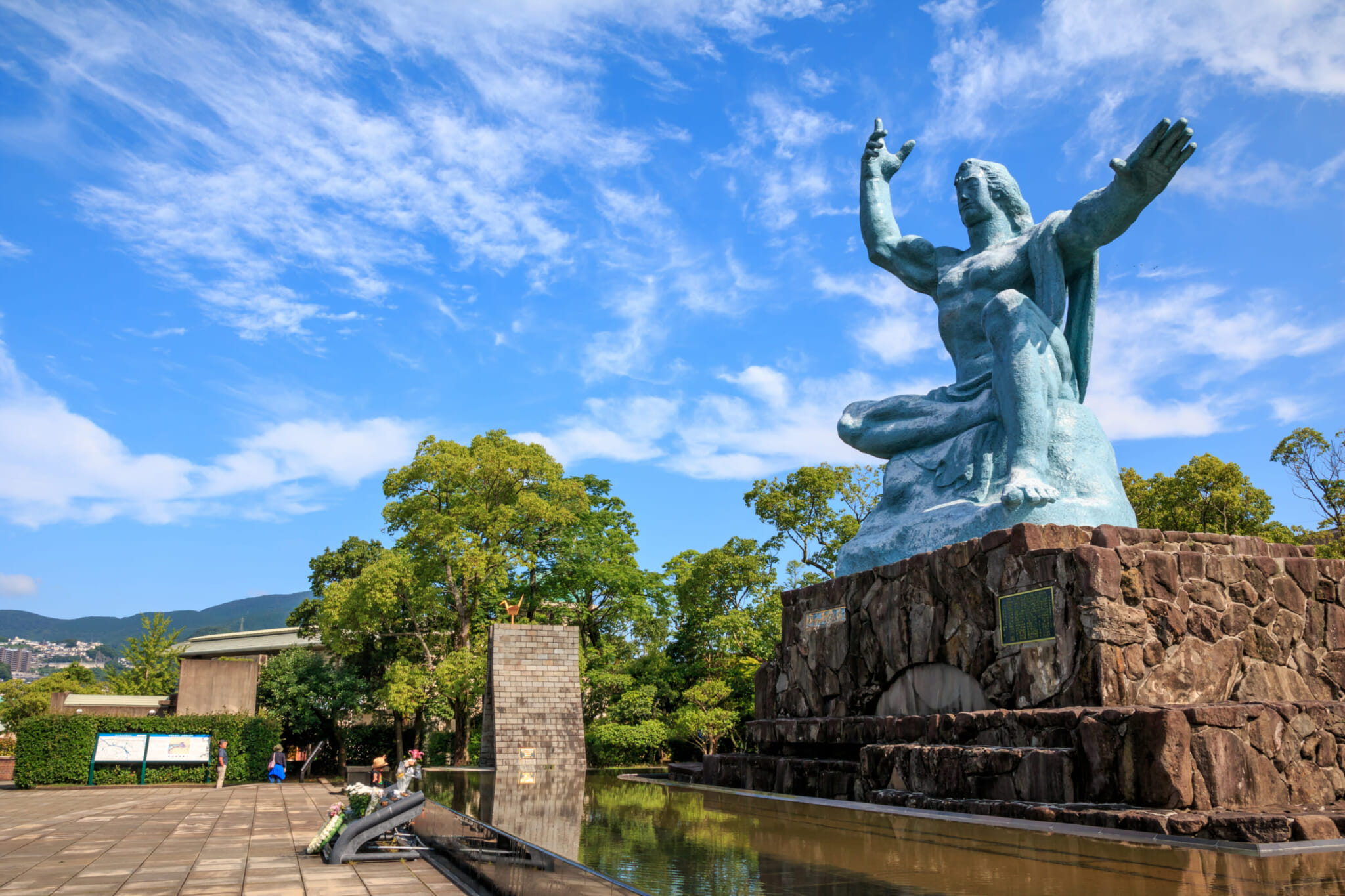
Uphill from the hypocenter stands the dome-shaped Atomic Bomb Museum, which opened in 1996 and houses over 1,500 artifacts, photographs and survivor testimonies. Exhibits chronicle Nagasaki before the bombing, the events of August 9, the reconstruction effort and the global history of nuclear weapons development. A stopped clock — frozen at 11:02 — greets visitors at the entrance and sets the tone for the entire experience. Across the street lies the Memorial Park, home to the iconic Peace Statue and a collection of monuments donated by countries around the world.
Best Times To Visit Nagasaki Peace Park & Atomic Bomb Museum
The park and museum can be visited year-round, but August is particularly significant. Every year on August 9, the city holds the Nagasaki Peace Ceremony at the park, drawing dignitaries, hibakusha (atomic bomb survivors) and visitors from around the world for a moment of silence at 11:02 a.m. While deeply moving, the site is also considerably more crowded during this period.
Summer outside of the August memorial period can be very hot and humid, so early morning visits are recommended. The museum extends its opening hours during August to accommodate increased visitor numbers.