Tucked between Fukuoka and Nagasaki on the northwest coast of Kyushu, Saga is Japan’s smallest prefecture on the island. Facing both the Ariake Sea to the south and the Genkai Sea to the north, it is a prefecture shaped by water, trade and centuries of contact with continental Asia — a history that gives it a distinctly different character from the rest of Japan.
Saga’s most famous contribution to the country is its ceramics. The pottery towns of Arita, Imari and Karatsu form the historic heart of Japanese porcelain and stoneware traditions. Arita is credited as the birthplace of Japanese porcelain, with production dating back to the early 17th century when Korean potters introduced the craft to the region. The delicate, color-glazed style known as Imari-yaki was once exported across Europe. Karatsu-yaki, by contrast, is celebrated for its rugged, earthy beauty and remains deeply tied to the Japanese tea ceremony.
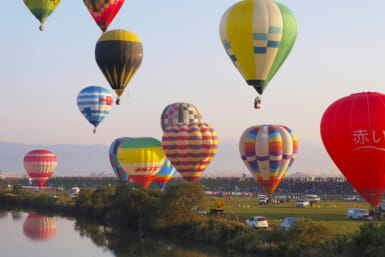
Other highlights include the Yoshinogari Historical Park — home to one of Japan’s largest Yayoi-period archaeological sites — Yutoku Inari Shrine, one of the three great Inari shrines in Japan attracting over 3 million visitors a year and the scenic hot spring towns of Ureshino and Takeo. The Saga International Balloon Fiesta, held each November along the Kase River, is one of the largest hot air balloon events in Asia and draws teams from around the world.