

Yutoku Inari Shrine Overview
Perched dramatically on a forested hillside in Kashima city, southern Saga Prefecture, Yutoku Inari Shrine is one of Japan’s three major Inari shrines — alongside Fushimi Inari Shrine in Kyoto and Kasama Inari Shrine in Ibaraki Prefecture. Drawing around 3 million visitors a year, it is one of the most-visited sites in all of Kyushu.
The shrine was founded in 1687 during the early Edo period by Manshihime, wife of Nabeshima Naotomo, lord of the Kashima domain. A descendant of the Nabeshima family still serves as chief priest today, preserving a direct link to the shrine’s origins. Dedicated to Inari, the Shinto deity of harvests, prosperity and foxes, the shrine draws worshippers seeking blessings for business success, family fortune and safe travel.
What sets Yutoku Inari Shrine apart visually is its magnificent main hall, the gohonden, which stands roughly 18 meters above the valley floor on a system of tall wooden stilts — an architectural style reminiscent of Kyoto’s Kiyomizudera temple. The vivid vermilion lacquerwork against the surrounding greenery has earned the shrine the nickname “Nishi no Nikko” (the Nikko of the West). An elevator is available for those who prefer not to climb the stairs to the main hall.
Beyond the main hall, a trail winds up through cedar forest, passing rows of red torii gates and smaller subsidiary shrines before reaching the okunoin inner sanctuary at the summit. From here, visitors are rewarded with sweeping views over Kashima city and the Ariake Sea. The shrine grounds also include a Japanese garden with seasonal flowers, and the bustling Yutoku Monzen shopping street lines the approach with over 30 souvenir shops and restaurants.
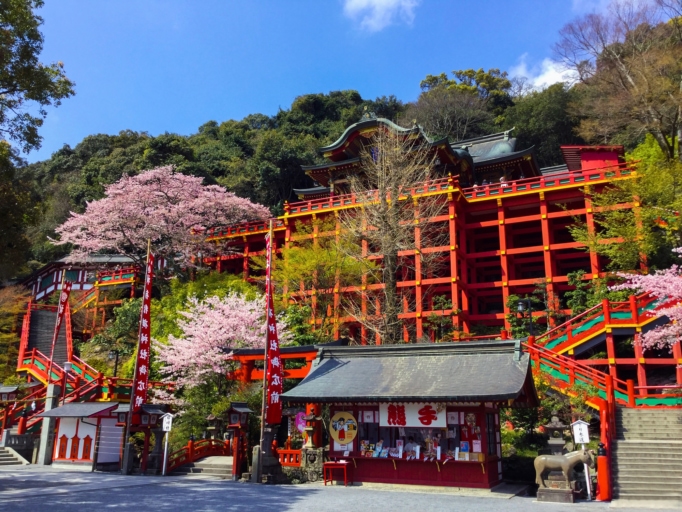
Best Times To Visit Yutoku Inari Shrine
The shrine rewards a visit in any season. Spring brings plum and cherry blossoms along the approach, while summer sees vivid greenery and morning glories. Autumn is particularly striking, when the surrounding maples turn deep red — the nearby Higashiyama Park is especially popular during this time. Winter brings quieter crowds and, from autumn through winter, the shrine hosts evening illumination events and the theatrical Fox Wedding Procession, a nighttime ceremony where participants in fox masks process through lantern-lit pathways to the accompaniment of traditional gagaku music. The New Year period is the busiest time of year, when pilgrims flock to the shrine for hatsumode (the first shrine visit of the year).