
You can travel all the way to Japan for a ski holiday and end up surrounded by Australians. At some of the country’s best-known resorts, après-ski now looks a lot like Verbier, with DJs and cocktails at Aspen prices in place of the time-honored routine of a soak, a bowl of soba and an early night. It’s entirely possible to spend a week at one of these resorts without ordering anything in Japanese — which is either the appeal or the problem, depending on who you ask.
The mountains themselves, to be fair, are excellent. The problem is that a few names have come to stand in for skiing in Japan, a country with hundreds of ski areas. But some of the best riding near Tokyo happens on hills you’ve never seen on Instagram. Here they are, sorted by how far you’re willing to go.
Day Trips
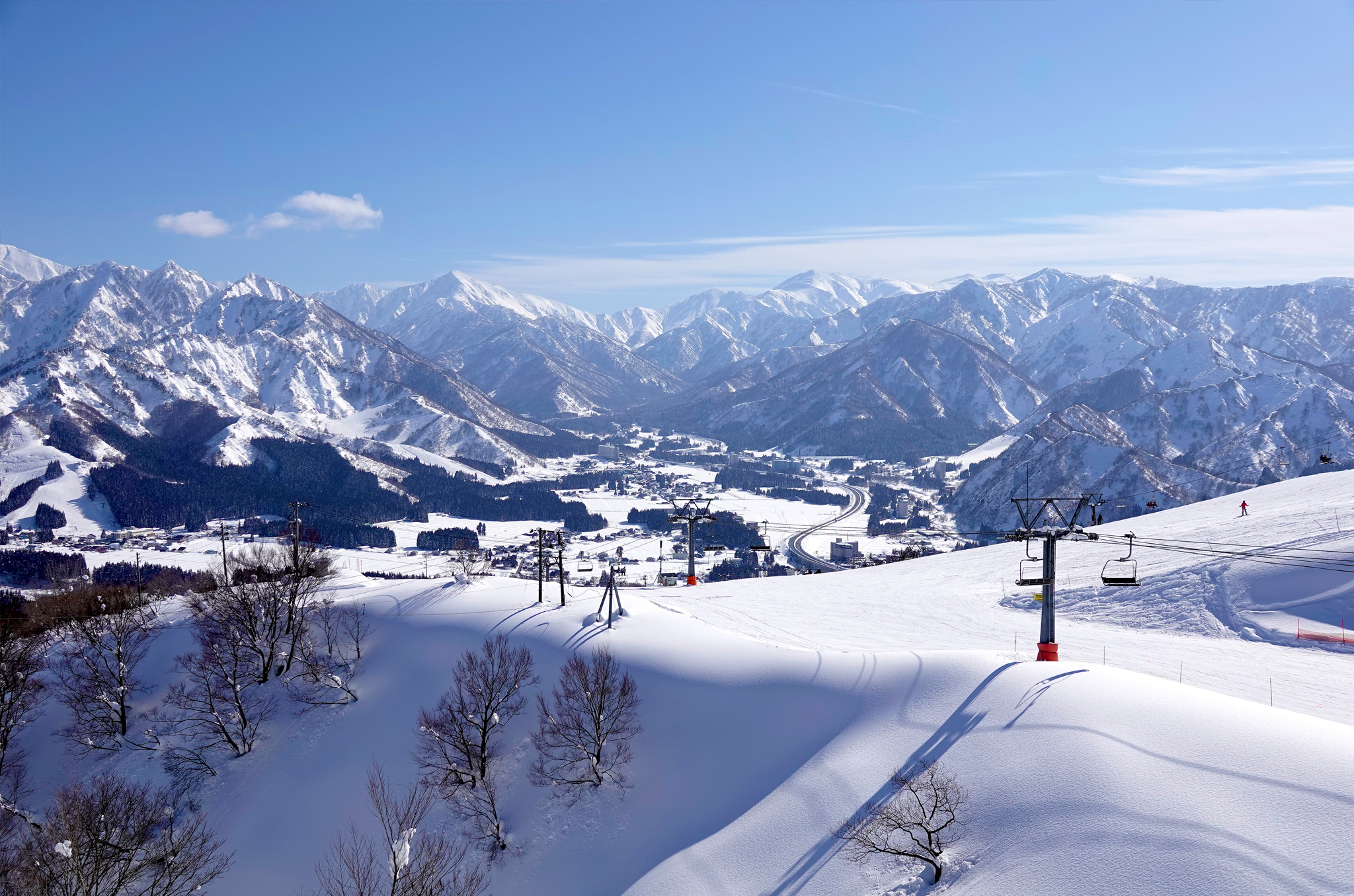
View of the Yuzawa plateau
Yuzawa, Niigata
Heavy snows and hot springs are the calling cards of many a Japanese ski resort. Yuzawa has an extra, literary claim to fame as the setting for Nobel Prize-winning author Yasunari Kawabata’s Yukiguni (Snow Country). One of the main hubs of Japan’s ski boom of the 1980s and 1990s, Yuzawa has, in the years since, seen many of its resorts close. Not all, though — it still boasts around a dozen, including Gala, introduced below.
Gala Yuzawa Snow Resort
At Gala, the Joetsu Shinkansen pulls into a station built into the resort’s Cowabunga ski center, where you can rent gear, change and board the gondola without a transfer. The fastest trains take 71 minutes from Tokyo, which makes Gala the obvious pick for beginners, anyone without a car and anyone who wants first chair at 8 a.m. and dinner back in the city. Slopes run from December 19 through May 5, and with the South Area closed this season, the 16 open courses skew friendly. Check JR East’s Skiski packages before booking the train and lift ticket separately.
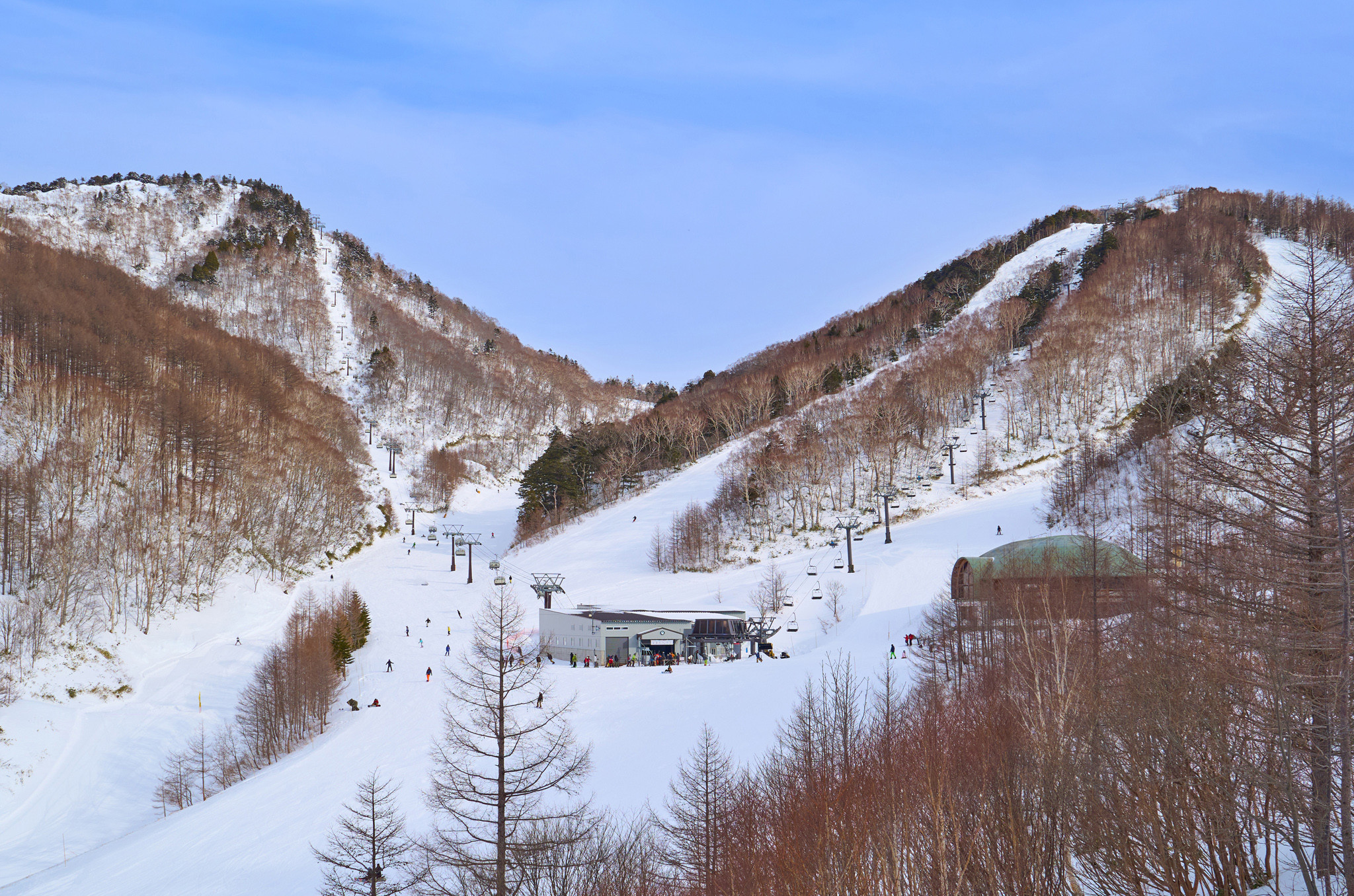
View of the northeastern slopes of Kawaba Ski Resort
Minakami and Kawaba, Gunma
Gunma almost never makes the international ski lists, and the people who ride there every weekend are mostly fine with that. The hub is Minakami, a hot spring town a little over an hour from Tokyo on the Joetsu Shinkansen via Jomo-Kogen Station, with several very different resorts within reach. Having them this close together means you can choose based on the forecast, the state of your legs and how ambitious you feel that morning.
Mt. T by Hoshino Resorts (Tanigawadake Tenjindaira)
Still called Tenjin by most people, Mt. T now runs under Hoshino Resorts on Tanigawadake, a 1,977-meter peak with a reputation among climbers that should make anyone take it seriously. A ropeway lifts you to 1,319 meters and a handful of natural-snow runs, but the real draw is the backcountry gate at the top, which requires climbing registration and full avalanche gear. If you don’t already know how to use it, book a guide.
Hodaigi Ski Resort
Hodaigi is the biggest resort in Minakami and the most dependable one. It tops out at 1,400 meters with mostly north-facing slopes, so the snow holds up well through the season, and it’s where people tend to head when a storm shuts the ropeway at Tenjin. There’s pleasant sidecountry for those who want it and plenty of mellow terrain for those who don’t.
Kawaba Ski Resort
Kawaba sits just outside Minakami near Numata, but it’s too good for snowboarders to leave off. About 65% of its visitors ride, drawn by parks like Flux, with its 10-meter kicker and rainbow rail, and a mogul course that has produced a long line of national team skiers. It also has a multistory parking garage.
Weekend Trips
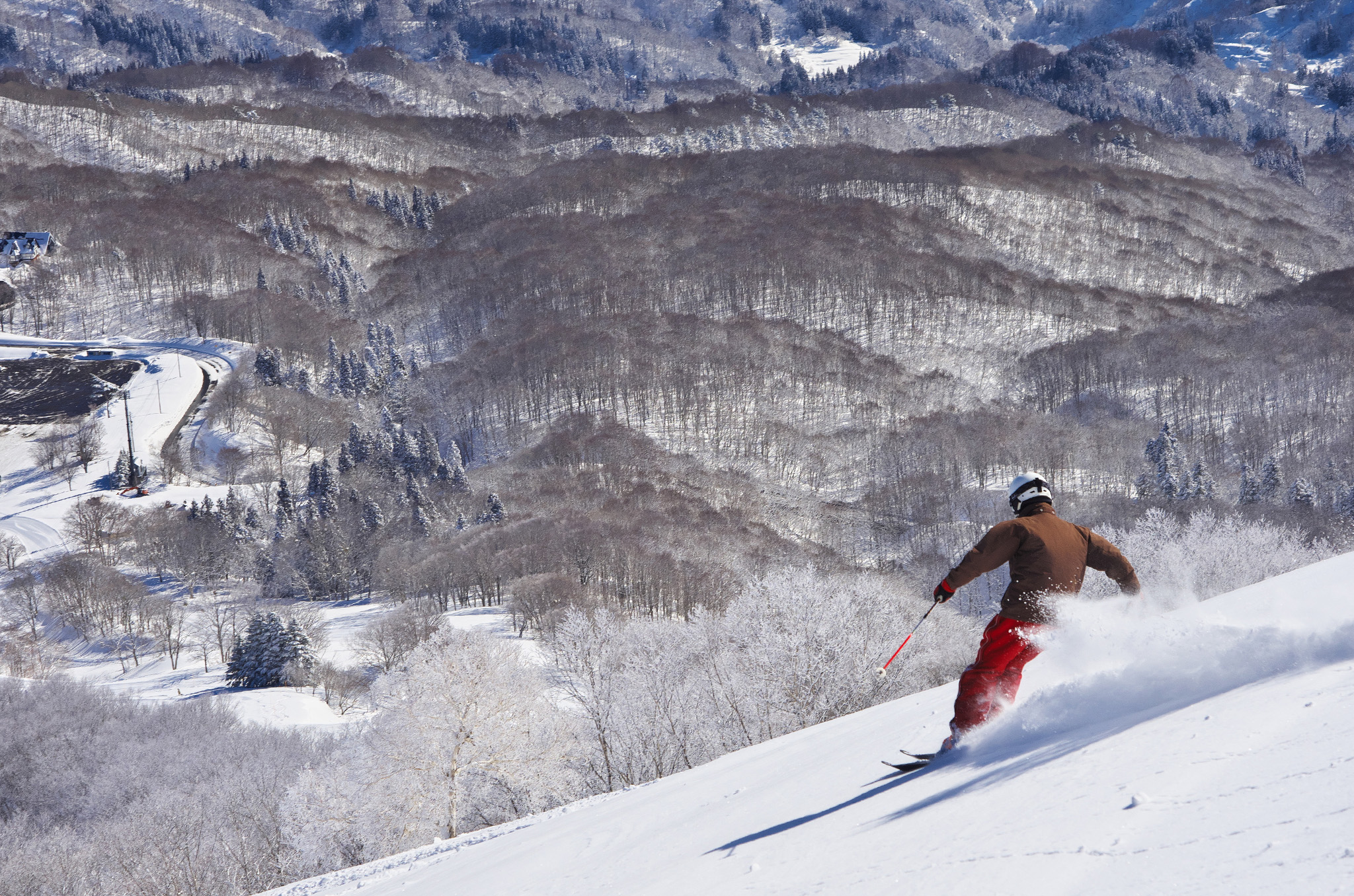
The Giant Course at Madarao Ski Resort
Iiyama, Nagano
Kita-Shinano in northern Nagano is a well-known winter sports destination, famous for its heavy snowfall. Though Nozawa Onsen and Shiga Kogen steal the spotlight, they’re not the only ski resorts in the area. Nearby, the city of Iiyama hosts two smaller, quieter resorts, one of which has become a haven for tree skiing.
Madarao Mountain Resort
Ask a Japanese snowboarder where to find trees and there’s a good chance they’ll say Madarao. On the Nagano-Niigata border, it leaves roughly 60% of its courses ungroomed, claims more official tree runs than any resort in Japan and, unlike many Nagano resorts, actively encourages riding off the groomers. The bowl-shaped mountain collects 10 to 13 meters of snow a season, and Lift No. 13, a creaky single chair, leads to Powder Theater and Powder Wave 2, which stay good long after the main runs are tracked out. Take the Hokuriku Shinkansen to Iiyama, then a 20- to 30-minute bus ride to the resort. Madarao is now on the Ikon Pass.
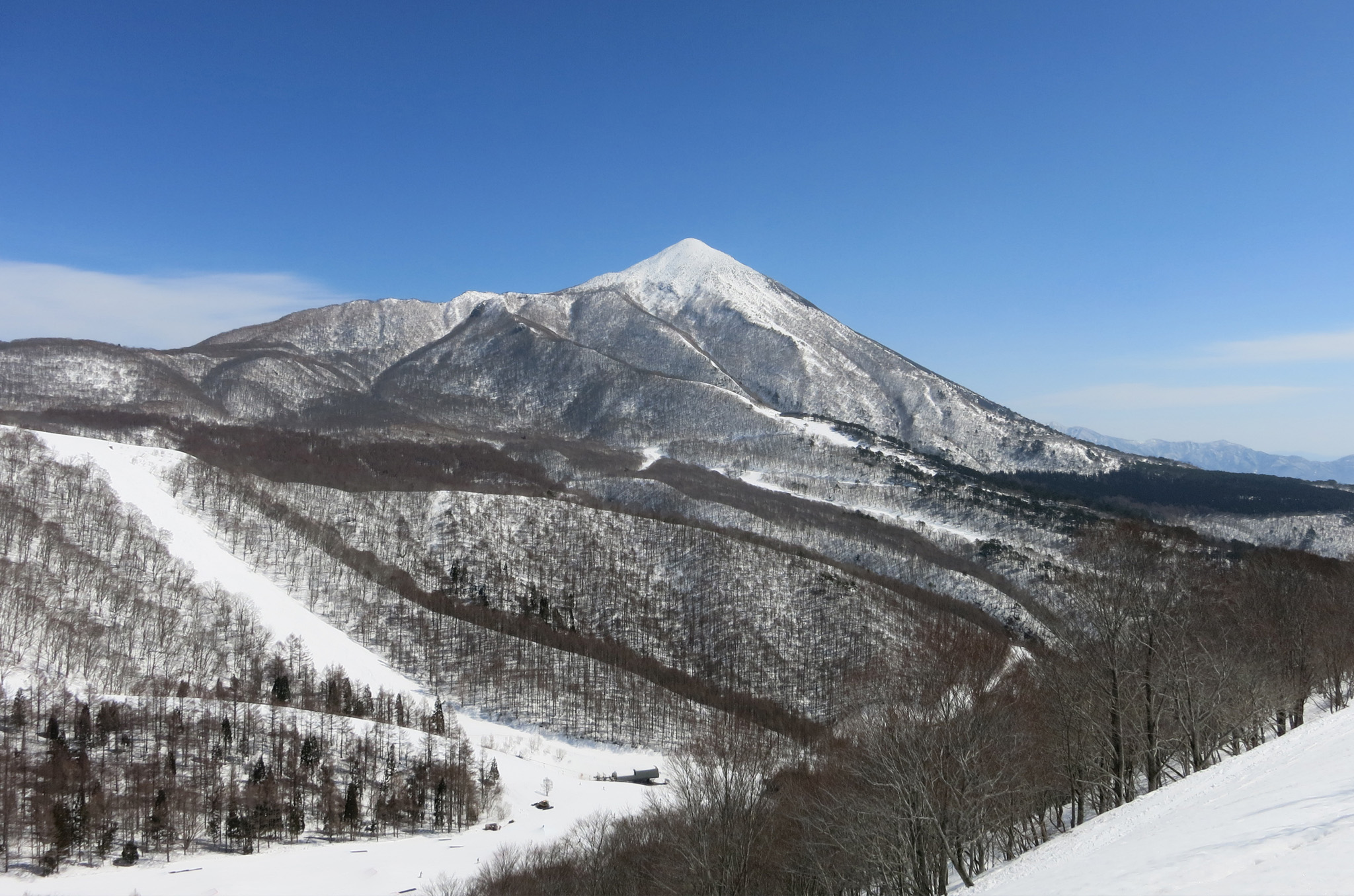
View of Mt. Bandai at Urabandai, Fukushima
Urabandai, Fukushima
Fukushima tends to get skipped on the way to somewhere else, which is good news for anyone who stops. Known for deep powder and long seasons, the prefecture offers plenty of terrain to explore. Koriyama, the region’s commercial and transportation hub, is served by both the Tohoku and Yamagata Shinkansen, putting it roughly 80 minutes from Tokyo.
Hoshino Resorts Nekoma Mountain
Just west of Mount Bandai, Hoshino Resorts has merged two old ski areas on opposite sides of the 1,404-meter Mount Nekomadake into Nekoma Mountain. Long, scenic runs above Lake Inawashiro define the southern slopes, while powder rules the north. This season, it expands to five tree-run zones and plans to stay open from November 28 to May 9 (North Area) and December 12 to April 4 (South Area). Stay overnight and enter through the North Gate for the quickest route to fresh snow. From Koriyama, a reservation-only bus will take you to the resort in roughly 70 minutes.
En Resort Grandeco
Nearby Grandeco is smaller, with south-facing slopes and mellow tree riding through beech forest. Free shuttles connect it to Nekoma and Urabandai-area hotels. Take the Ban-etsu-West Line from Koriyama to Inawashiro Station. A free 40-minute shuttle bus ride connects the station to the ski area (reservations required).
Zao Onsen, Yamagata
This hot spring town nestled in the mountains straddling Yamagata and Miyagi prefectures has a history that stretches back 1,900 years. Its ski hill is also historic, if considerably younger. Founded in 1925, it’s one of Japan’s oldest, and it was just the second to install a lift, way back in 1951.
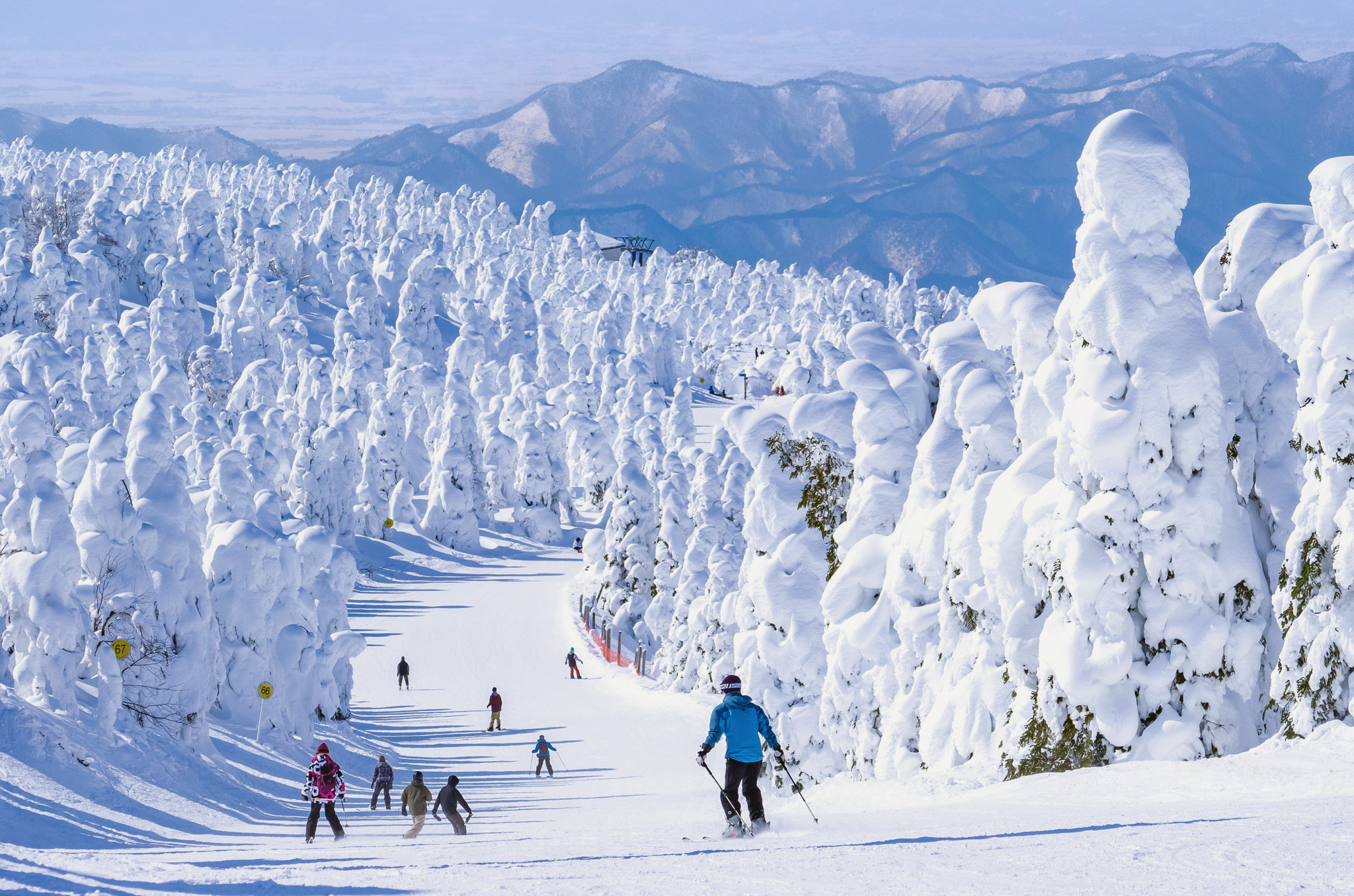
Zao Onsen Ski Resort
Every winter, Siberian winds coat the firs near Zao’s summit in so much rime that they swell into hulking shapes known as juhyo, or snow monsters, and you can ride straight through them. They peak in February. Ride the ropeway all the way to Jizo Sancho Station at 1,661 meters, since the lower ropeway line runs below the main field, then take the roughly 10-kilometer descent back toward town. Finish in the sulfur-scented onsen village below, and on 31 set nights between December 26 and February 23, stay for the ropeway’s light-up of the monsters. Board a Yamagata Shinkansen for Yamagata Station. From there, Zao Onsen is about 40 minutes by bus.
Worth the Long Ride
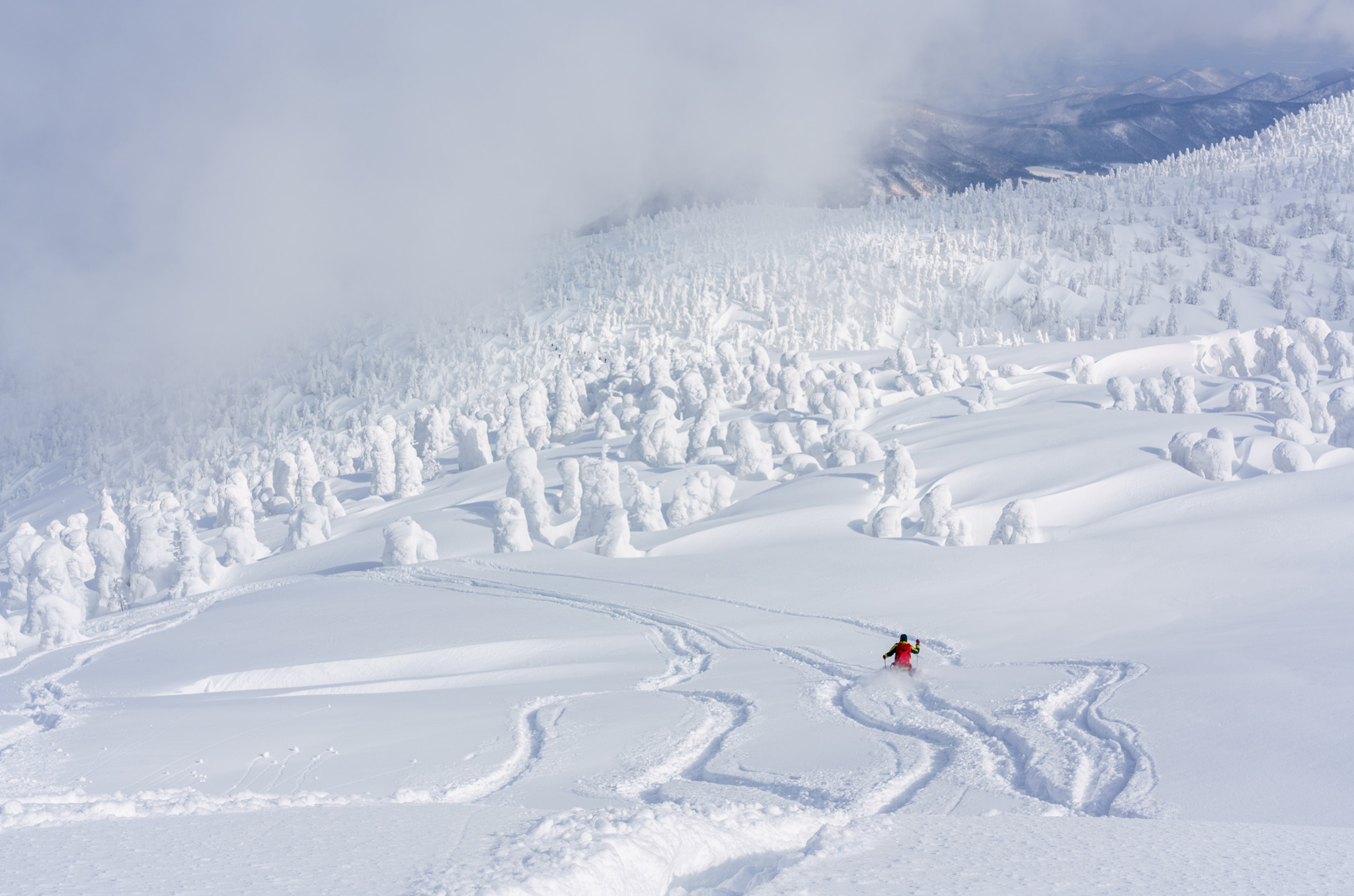
Hakkoda Ski Area
Northern Tohoku
The trip may be long, but you’ll be well rewarded for your time and effort in northern Tohoku, where the snow is deep and soft, the season is generous and the crowds are on the sparser side.
Appi Kogen Ski Resort
Appi is the least secret place on this list, but Tokyo riders still overlook it. The Iwate resort is Tohoku’s largest, with a 5.5-kilometer longest run and the longest average run length in Japan, on snow so dry that locals call it “aspirin snow.” If Niseko is where Japan’s ski gentrification began, Appi may be next, with World Ski Awards wins, an Ikon Pass listing and three ANA-branded hotels at the base. For now, the crowds are a fraction of Hokkaido’s. Take the Tohoku Shinkansen to Morioka, then the direct bus (about one hour).
Hakkoda Ski Area
Appi is the far north at its most polished; Aomori’s Hakkoda, meanwhile, is the far north with almost nothing added. A single ropeway carries you to around 1,324 meters and leaves you to find your way down through rime-crusted firs on terrain nobody grooms. Nearby Sukayu Onsen averages about 17.6 meters of snow a year, the most of any inhabited place on Earth, so go with a guide. Afterward, soak in Sukayu’s huge cypress bath of milky sulfur water (¥600 for day visitors). Travel by Tohoku Shinkansen to Shin-Aomori Station, then it’s about 60 minutes by bus (reservations required).
Before You Go
Season dates, lift prices and ropeway hours change year to year, so check each resort’s site before you travel. Weekdays are worth the effort everywhere on this list.
Related Posts
- How To Get Around Hakuba Valley Without a Car
- The Kimono-Wearing Snowboarder Carving a New Path for Japanese Crafts
- Winter Wonderlands: Ethereal Winter Landscapes To Explore in Japan
Updated On November 26, 2026