
In this week’s news roundup, we have the latest on record rainfall in Chiba. Russian President Vladimir Putin visits the disputed Kuril Islands. Australian Prime Minister Anthony Albanese rejects opposition demands to apologize over a double entendre involving melons and Japanese counterpart Sanae Takaichi. The University of Tokyo’s Institute of Social Science finds that 56.3% of respondents oppose accepting more foreigners in Japan. The government examines how Japan should manage its growing foreign population. And a Mexican man is arrested for allegedly smuggling around 200 lizards into Japan.
Four Dead Following Record Rainfall in Chiba
According to Narita Airport operators, around 6,600 people were stuck at the airport as of 1 a.m. on Friday. Trains and buses were also suspended after Chiba experienced record rainfall. The Japan Meteorological Agency (JMA) issued a Level 5 warning — the highest on its scale — for more than one-third of the municipalities in the prefecture. Just after 5 a.m. on Friday, the warning was downgraded to Level 4. The Level 5 emergency landslide warnings covering six cities were also downgraded to Level 4.
Four people are confirmed to have died following the downpour. One person remains unresponsive and another is missing. More than 25,000 households were without electricity as of 7:30 a.m. on Friday, Tokyo Electric Power Company said. JR East, meanwhile, is suspending Narita Express services from the first train until approximately 3 p.m. today. Passengers are advised to check for updates before traveling, as further disruptions are possible depending on weather conditions. Other train services across Chiba could also face delays throughout the day.

Image: Dimitrije Ostojic / Shutterstock
Putin Visits Disputed Kuril Islands, Drawing Fury From Japan
Sanae Takaichi criticized Russian President Vladimir Putin on Thursday over his visit to the disputed Kuril Islands. The Japanese prime minister called it “absolutely unacceptable,” adding that the trip “has worsened Japanese sentiment towards Russia.” She told reporters the island chain was “a unique territory of [Japan] historically and under international law.” Known in Japan as the Northern Territories and Russia as the Southern Kurils, the islands were seized by the Soviet Union at the end of World War II and remain at the center of a territorial dispute.
It was Putin’s first visit to the territory, which is claimed by both Tokyo and Moscow. He was seen on the island of Etorofu, or Iturup in Russian, one of four islands in the Kuril chain. According to Russian media, he visited a fish-processing plant and was given caviar. He also spoke to locals. Approximately 20,000 Russians currently live on the islands, located between the Sea of Okhotsk and the Pacific Ocean. Before the postwar Soviet takeover, around 17,000 Japanese citizens lived there.

Australian Prime Minister Anthony Albanese | Wikimedia
Albanese Refuses To Apologize Over Melon Joke About Japan’s Takaichi
On Tuesday, Australian Prime Minister Anthony Albanese rejected opposition demands to apologize over a double entendre involving melons and his Japanese counterpart, Takaichi. The controversy stems from a July episode of the online comedy program Bush Deep. Asked about the worst gift he’d received overseas, Albanese mentioned melons from Takaichi. Elaborating, he appeared to make hand gestures in front of his chest, saying, “She brought two, as you do.” Albanese then laughed along as host Nikki Osborne quipped that the Japanese prime minister “came in looking like Pamela Anderson.”
The conversation, which largely flew under the radar in Japan, became a hot topic in Australia this week after Tokyo’s former ambassador to Australia, Shingo Yamagami, labeled Albanese’s comments “sexist” and “insulting” in an opinion piece published in The Australian. That same day, Australia’s opposition leader Angus Taylor demanded that Albanese issue a personal apology. In parliament’s question time on Tuesday, Liberal MP Mary Aldred asked Albanese if he would apologize for the “foul-mouthed, classless comments about women,” to which he replied that he “rejected the assertion of the question.”

Grzegorz Kaliciak / Unsplash
56% in Japan Now Oppose More Foreign Settlement, Up From 36% in 2024
As Japan’s population shrinks and ages, questions about how the country should respond to its changing workforce are becoming increasingly difficult to ignore. While some argue that more foreign workers are needed to address labor shortages, a new survey suggests that opposition to accepting more foreigners may be growing. The University of Tokyo’s Institute of Social Science found that 56.3% of respondents opposed allowing more foreigners to settle in Japan — a 20.7 percentage-point increase from 2024. The rise was especially pronounced among younger generations.
The survey follows selected respondents over time, regularly asking about changes in their lifestyles and other aspects of their lives. Questions about accepting foreign nationals are included roughly once every two years. Professor Shin Arita of the institute pointed to the broader social climate as a possible factor behind the shift in public attitudes toward immigration. “Opposition may have intensified as people were exposed to more negative discussions regarding the acceptance of foreign nationals, driven by anxiety and dissatisfaction with society,” he said.
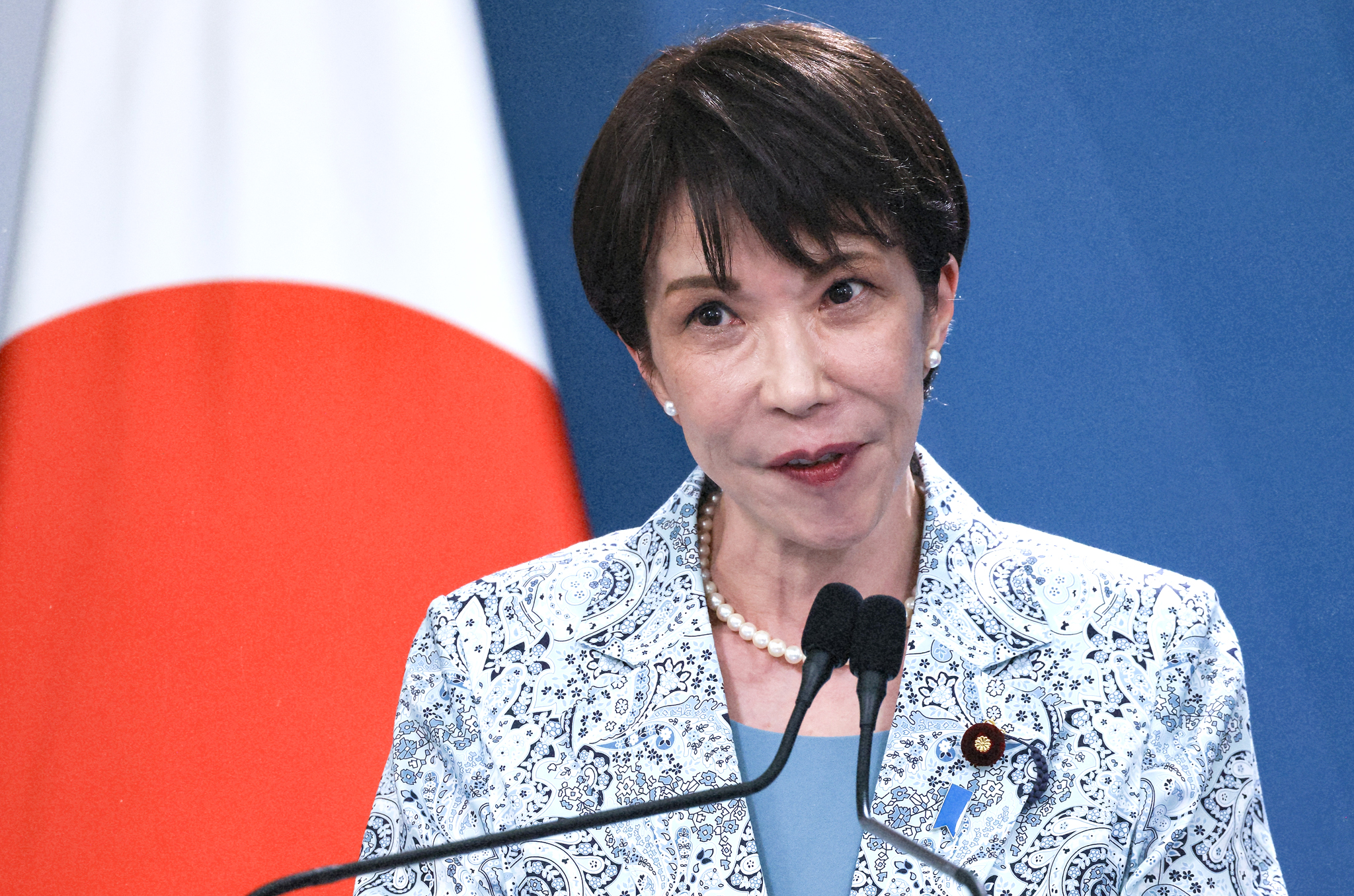
PM Sanae Takaichi’s governmental working group debates establishing a cap on foreign visa numbers | Image: Shutterstock
Japan Begins Planning New System To Cap Number of Foreign Residents
The findings come at a sensitive time for Japan’s immigration debate. The number of foreign residents and foreign workers in the country has reached record levels, while the government has continued to expand programs allowing foreign nationals to work in Japan. At the same time, questions about how many foreigners Japan should accept have become increasingly prominent. The debate entered a new phase last Friday, when a high-level working group convened for the first time to examine how Japan should manage its growing foreign population.
Currently, there is no blanket cap on foreign residents. Policymakers are still weighing their options, with the government aiming to establish a basic policy by the end of fiscal 2026. Proposals include setting a target or limit for the proportion of foreign nationals in Japan’s overall population, as well as introducing numerical caps for specific residence statuses. The debate is being framed around what policymakers call “quantitative management.” The term, which deliberately leaves the precise mechanism open, has been backed by LDP member Kimi Onoda.
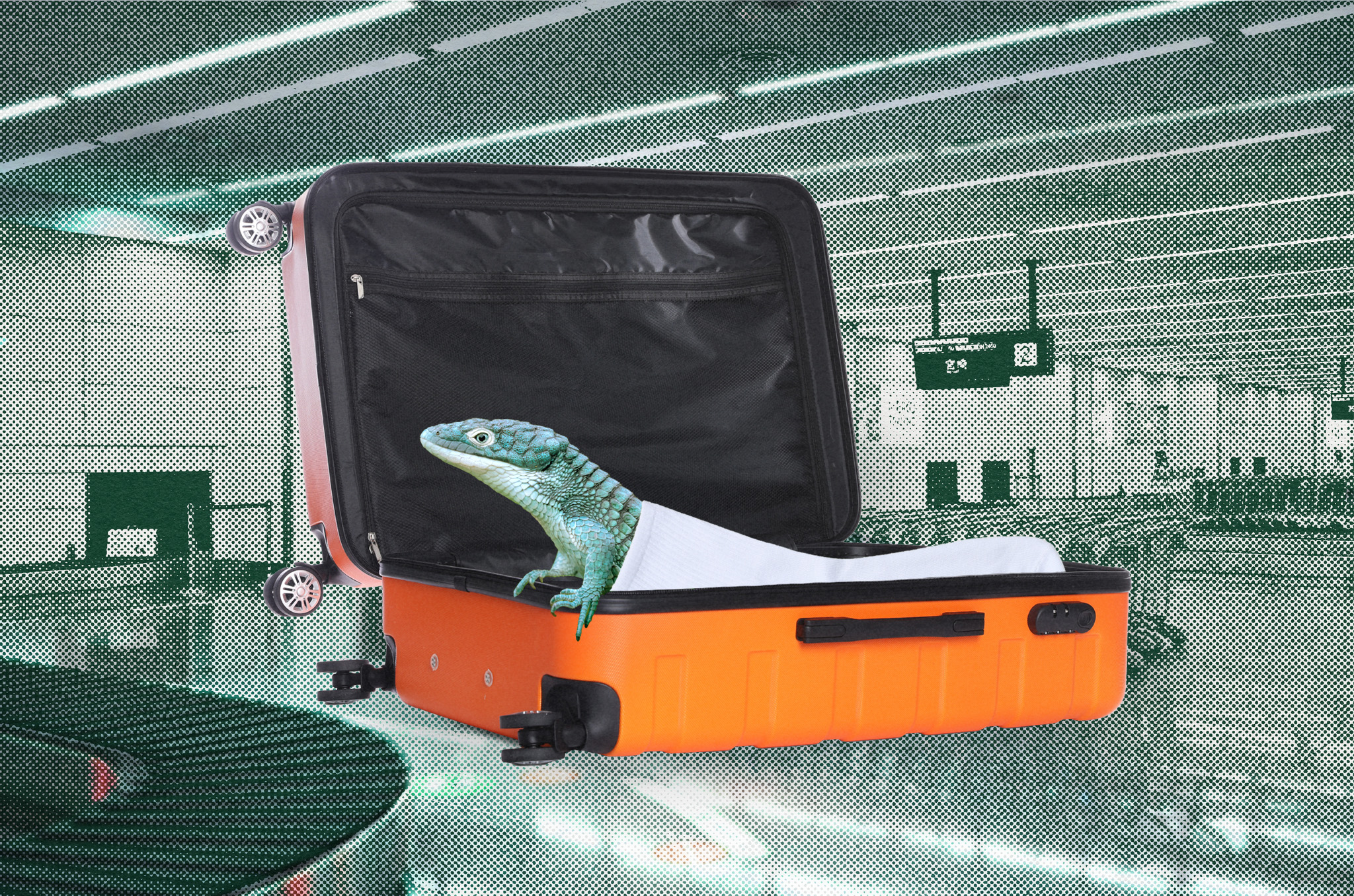
Traveler Caught Smuggling 200 Lizards Hidden in Socks at Haneda Airport
On Wednesday, Tokyo’s Metropolitan Police Department announced that it had arrested a 23-year-old Mexican man who allegedly tried to smuggle around 200 lizards, including nine arboreal alligator lizards, into Japan from South Korea. One lizard died during the attempted smuggling operation. The suspect, Daniel Isaac Velasco Baltazar, reportedly hid the cold-blooded reptiles inside socks in a suitcase. He is accused of violating Japan’s Customs Act by attempting to bring them through Tokyo’s Haneda Airport without government authorization on August 8.
Government permission is required to import the lizards, which are endemic to the highlands of Mexico. International trade in alligator lizards is restricted under the Convention on International Trade in Endangered Species of Wild Fauna and Flora. Tokyo police reportedly received an anonymous tip in late July that a Mexican national had been trying to smuggle lizards and customs officials were subsequently alerted. Baltazar, who admitted to the offense, told police he bought the animals in Mexico for about $3 to $5 each.