
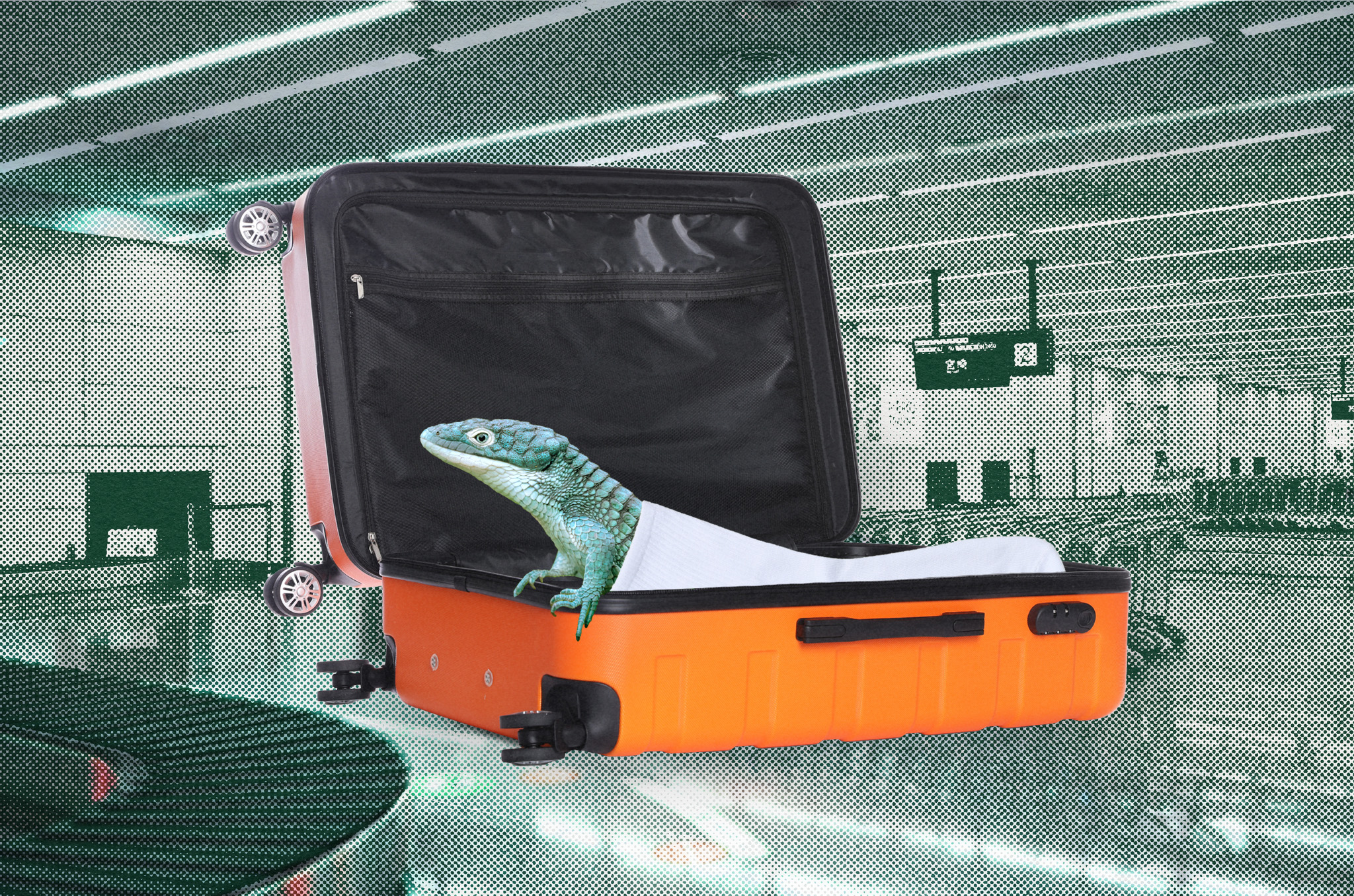
On Wednesday, Tokyo’s Metropolitan Police Department announced that it had arrested a 23-year-old Mexican man who allegedly tried to smuggle around 200 lizards, including nine arboreal alligator lizards, into Japan from South Korea. One lizard died. The suspect, Daniel Isaac Velasco Baltazar, reportedly hid the cold-blooded reptiles inside socks in a suitcase. He is accused of violating Japan’s Customs Act by attempting to bring them through Tokyo’s Haneda Airport without government authorization on August 8.
Government permission is required to import the lizards, which are endemic to the highlands of Mexico. International trade in alligator lizards is restricted under the Convention on International Trade in Endangered Species of Wild Fauna and Flora. Tokyo police reportedly received an anonymous tip in late July that a Mexican national had been trying to smuggle lizards. Baltazar, who admitted to the offense, told police he bought the animals in Mexico for about $3 to $5 each.

Exotic Animal Smuggling in Japan
The incident is not an isolated example of people attempting to smuggle exotic animals into Japan. In 2019, Australian authorities arrested a 27-year-old Japanese woman at Melbourne Airport after finding 17 shingleback lizards and two blue-tongued lizards in her luggage as she prepared to board a flight to Tokyo. The incident followed two similar arrests involving Japanese nationals in Sydney and Perth, who were also accused of attempting to smuggle native Australian reptiles out of the country.
Australian authorities have also intercepted reptiles being sent to Japan by mail. In 2023, officers reportedly found dozens of lizards and a turtle concealed inside socks in postal packages bound for the country. A 2025 WWF Japan report found that the nation ranks among the world’s top five importers for six of nine reptile species examined, suggesting that demand for exotic reptiles extends well beyond the smuggling cases described above.