For the past few years, Japan has been expanding opportunities for people from overseas to work in the country. In 2019, the government introduced the Specified Skilled Worker (SSW) system to address shortages in sectors such as construction, nursing care and food service. The number of foreign employees has since reached a record 2.57 million.
Now, policymakers are considering whether that growth should be subject to a numerical limit. The debate entered a new phase last on August 7, when a high-level working group convened for the first time to examine how Japan should manage its growing foreign population and what impact it could have on the economy, social security and local communities.
Currently, there is no blanket cap on foreign residents. Policymakers are still weighing their options, with the government aiming to establish a basic policy by the end of fiscal 2026. Proposals include setting a target or limit for the proportion of foreign nationals in Japan’s overall population, as well as introducing numerical caps for specific residence statuses.
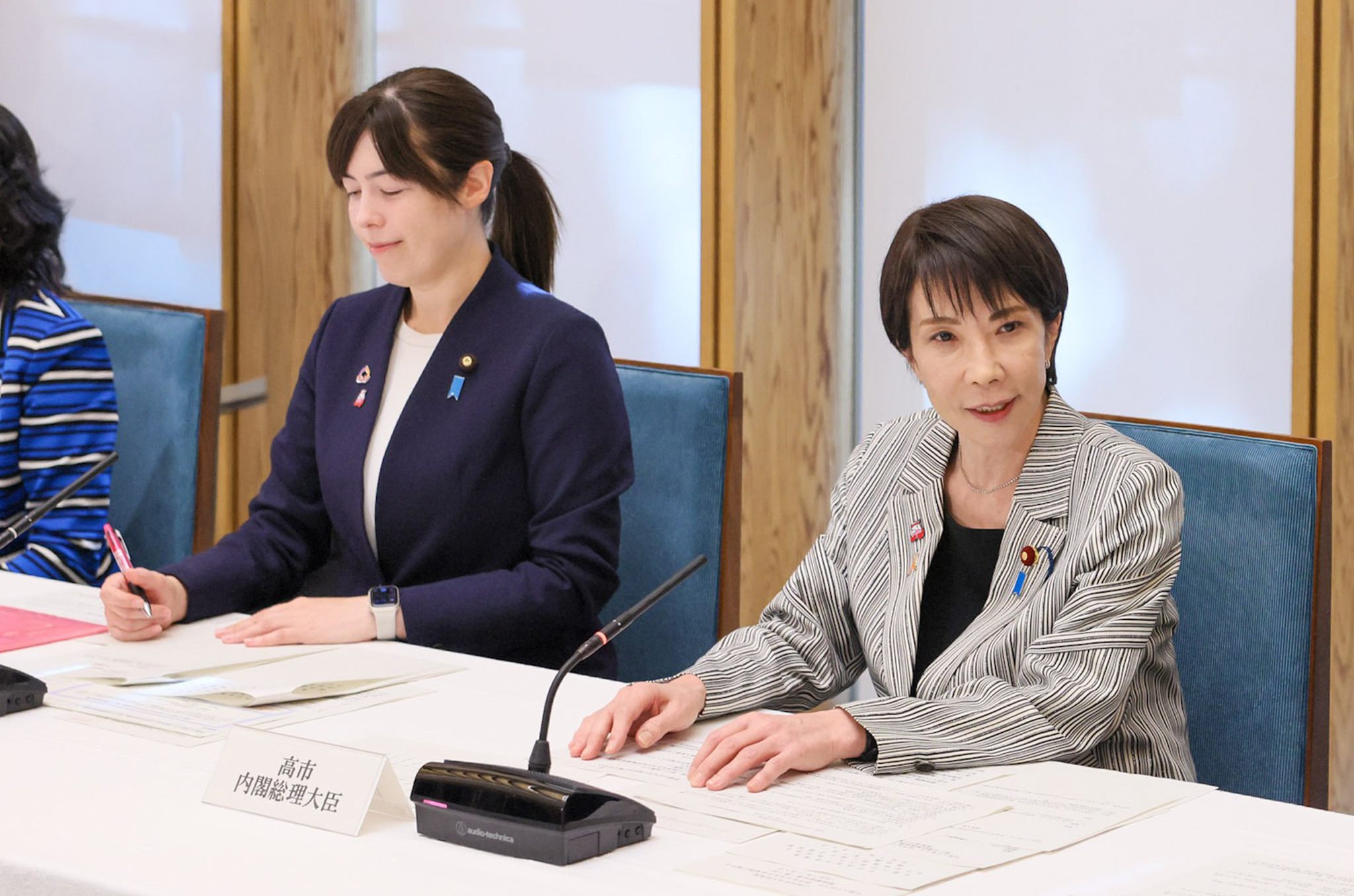
Japan’s Minister for the Promotion of a Society of Harmonious Coexistence with Foreign Nationals (left) with Prime Minister Sanae Takaichi (right) | Wikimedia
Kimi Onoda Backs ‘Quantitative Management’ Approach
The debate is being framed around what policymakers call “quantitative management.” The term, which deliberately leaves the precise mechanism open, has been backed by Kimi Onoda, the minister in charge of a Society of Well-Ordered and Harmonious Coexistence with Foreign Nationals. Last month, she said it would be included in the government’s basic policy on foreign nationals.
The approach, however, is likely to face resistance within the ruling Liberal Democratic Party (LDP), particularly from businesses that rely heavily on overseas hires. Japan’s labor shortage remains severe, with foreign employees increasingly filling gaps in industries ranging from construction and nursing care to hospitality, food service and other essential sectors.
What Could Change for Foreign Residents?
So, how could such a policy affect the people already living and working in Japan? While the government has yet to settle on a specific system, any numerical controls could have different implications depending on a person’s residence status, occupation and reason for coming to Japan. Not all foreign residents would necessarily be treated the same way.
While some foreign-worker categories already have intake ceilings, such as those within the SSW system, others do not. The Engineer/Specialist in Humanities/International Services status, for instance, covers a variety of professional roles but currently has no comparable numerical limit. Extending this kind of control to larger residence categories is one of the possibilities now being considered.

Japan’s Demographic Shift
The debate comes as Japan’s demographic picture continues to shift. Last year, the number of Japanese citizens living in Japan fell below 120 million for the first time in four decades. The foreign-resident population, meanwhile, increased by 353,696 to 4.03 million, the highest level since record-keeping began in 2013.
As Japan weighs how best to address its changing workforce needs, policymakers now face the challenge of balancing those needs with calls to manage the pace of foreign population growth. For the country’s international community, the outcome could shape who is able to live and work in Japan in the years ahead.