A Survey of Western Influences on Japan’s Architectural Identity
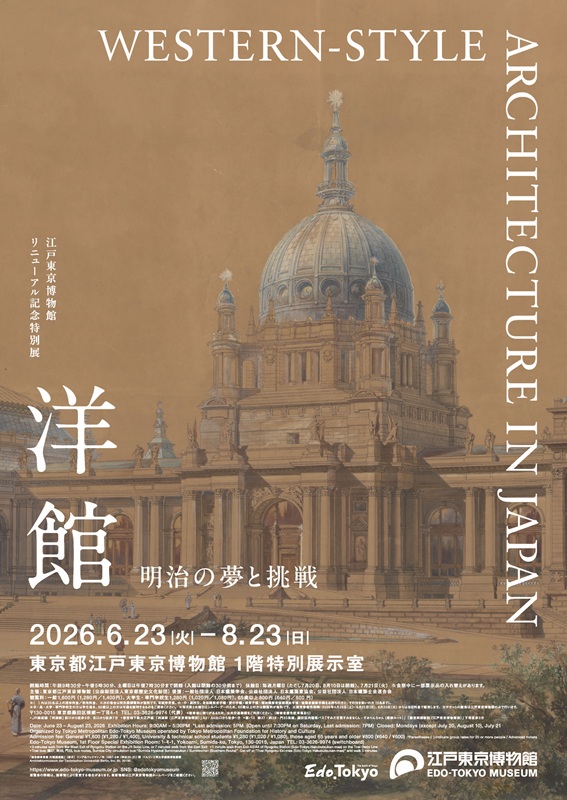
The opening of Japan’s long-closed borders in the final years of the Edo period sparked a torrential influx of Western culture that fundamentally altered the nation’s identity. The exhibition’s narrative begins with the early giyofu (pseudo-Western) architecture of the Meiji era, where Edo-period master carpenters built delightfully idiosyncratic, hybridized structures — like the iconic Tsukiji Hotel — by mimicking foreign styles based largely on observation. This experimental phase soon shifted as the government demanded academically precise engineering, inviting foreign experts like English architect Josiah Conder and German duo Hermann Ende and Wilhelm Böckmann to introduce the monumental brick-and-stone landmarks that would reshape Tokyo’s urban landscape.
The exhibition then explores how the mantle was passed to the first generation of homegrown Japanese architects, including Kingo Tatsuno and Tokuma Katayama. As pioneering graduates of the Imperial College of Engineering, they spearheaded massive national projects, leaving behind structures like Tokyo Station and the Bank of Japan. Finally, the exhibition looks at the sprawling, opulent private mansions crafted for the Meiji elite. Featuring over 200 items, including blueprints, rare woodblock prints, historic photographs and period furniture, it’s a comprehensive survey that illustrates how Japan folded foreign influences into a grand architectural identity of its own.





-25J469_高解像画像なし(20260604入庫)-1-1024x742-1-385x257.jpg)