It’s close to midnight in New York when Jakarie Whitaker joins our video call, though he insists the hour doesn’t feel late to him anymore. “I’m used to Tokyo time now — my perception of time is gone,” he says, laughing. The 25-year old designer had just wrapped up a successful meeting with a Dover Street Market representative, on top of a busy few days presenting his new collection at a showroom.
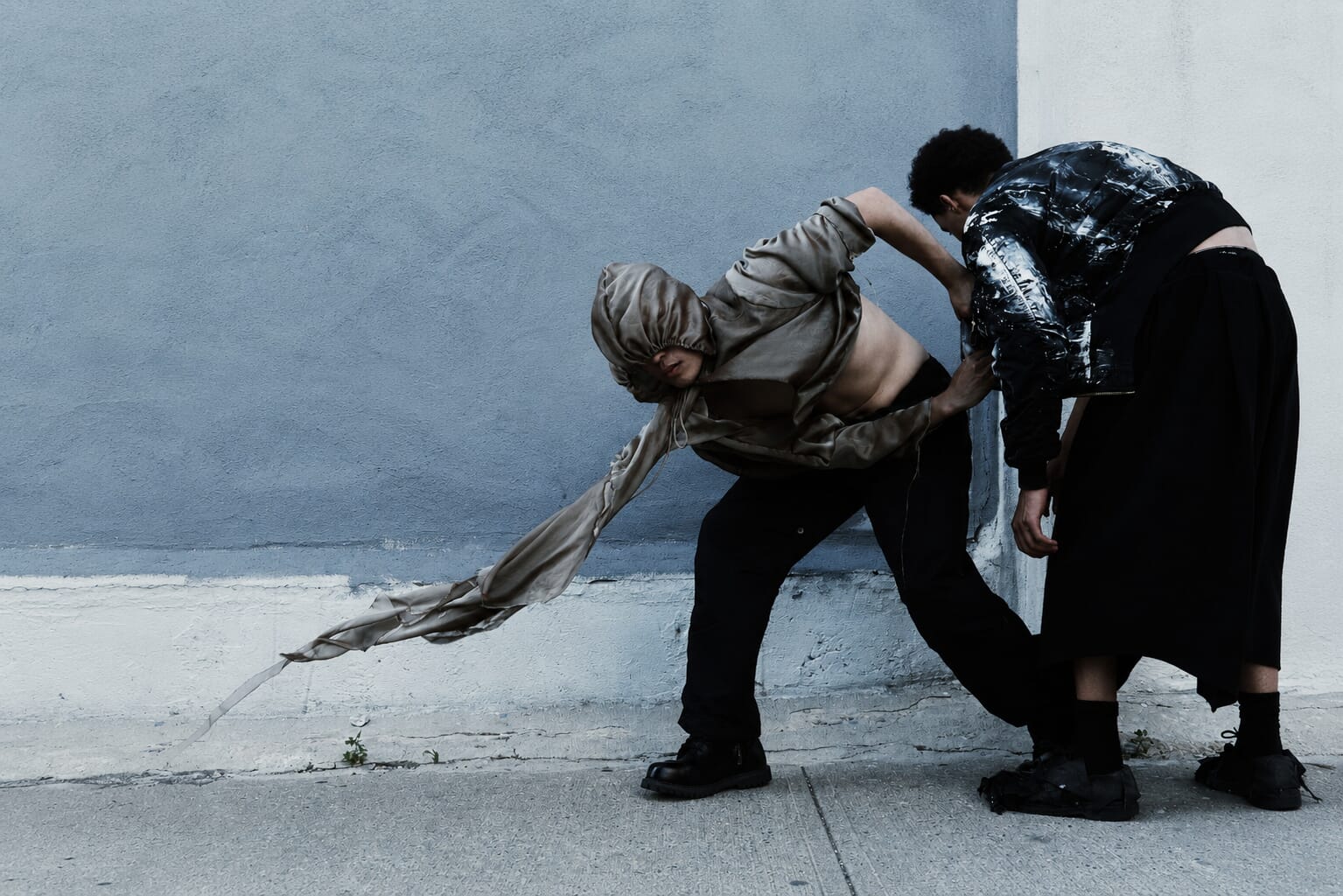
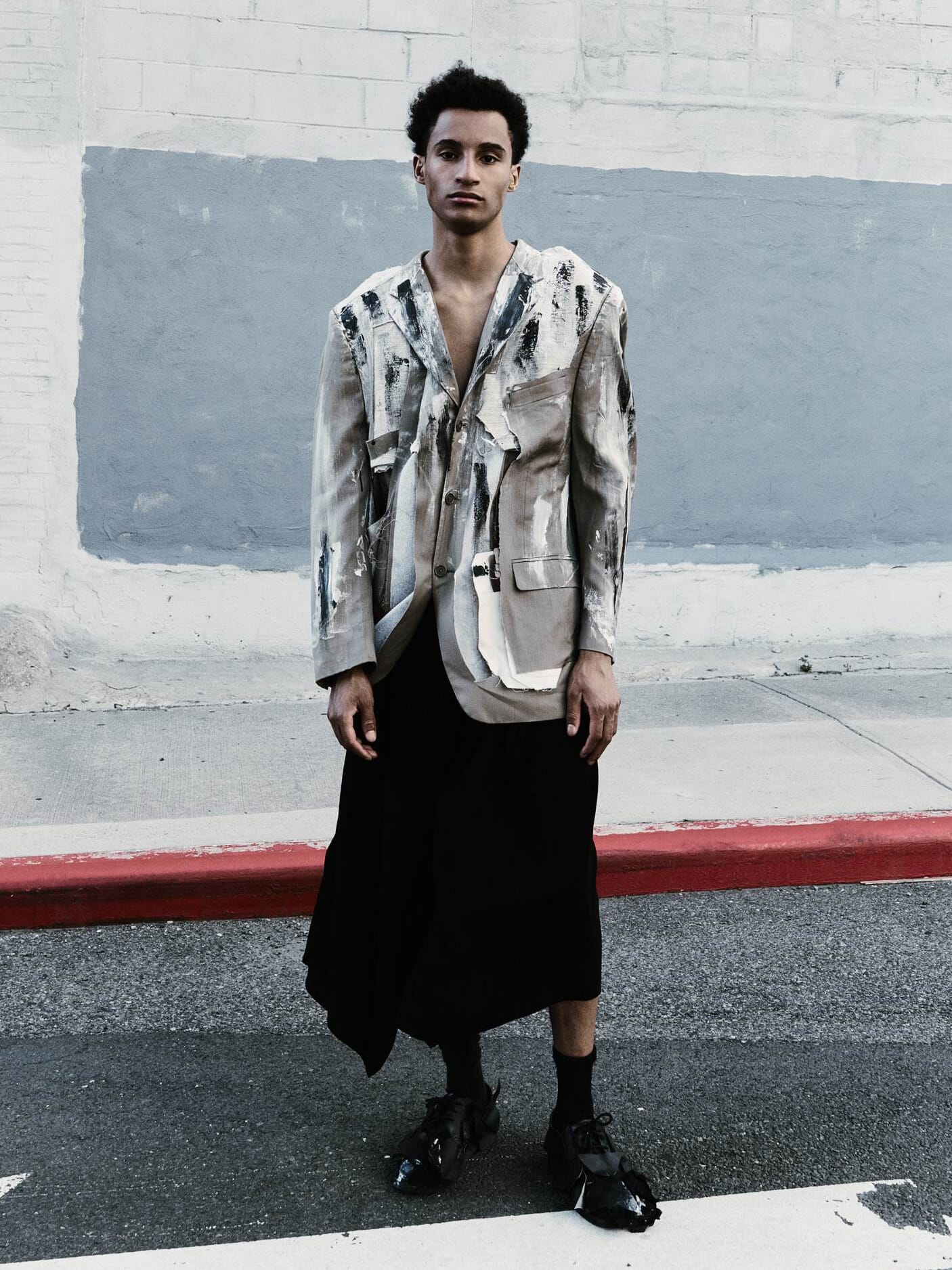
Whitaker splits his time evenly between the two fashion capitals where his brand, Hikari no Yami, is based. He founded the avant-garde streetwear label in 2020; its name translates to “darkness of light.” The brand has quickly caught momentum for its conceptual approach to upcycling — a combination of reverse tailoring, patchwork and hand-painting that creates one-of-a-kind works of deconstruction. The pieces feel confusing and haphazard at first glance, yet strangely magnetic in their inconclusiveness.
A four-time recipient of the Virgil Abloh “Post-Modern” Scholarship and a Fashion Trust US finalist, Whitaker has exhibited his collections across showrooms and runways during Milan, Paris and New York fashion weeks. Recently, his designs were spotted on Chance the Rapper during his Jimmy Fallon performance, and in Hypebeast Magazine’s feature on Joji.
Just a few years back, Whitaker had plans to pursue pre-med in college. Growing up in Flint, Michigan, he had always consumed art and film voraciously, but it was only when he encountered the late Virgil Abloh’s work that he began considering a career in design. “I really loved the way he blended together the concepts of art, philosophy and fashion into one thing,” he says.
A whirlwind of hands-on apprenticeships around the world followed once he switched his major to fashion design. Deeply fascinated by pioneers of conceptual design like Rei Kawakubo and Yohji Yamamoto, Whitaker moved to Tokyo in 2023 for an internship at Yamamoto’s namesake brand — his first time out of the US, funded by scholarships and competition winnings. After an internship with Off-White in Milan and a semester in Florence, he returned to Tokyo for a study-abroad program while interning at Fumito Ganryu, the eponymous label launched by the elusive Kawakubo protégé.
“On my last day, the designer sat down with me. He didn’t speak English, so we had my iPad and were literally typing back and forth,” he recalls. “He was asking me, ‘What is your brand about? What is your philosophy?’ — all these questions to help me build and stay consistent with my brand. I really appreciated it.”
Although his Japanese was “not fluent at all” at the time, Whitaker dove head-first into a fashion circle known for its intimidating insularity and succeeded in forming a network that would later help his business take root across Tokyo, Seoul and Shanghai. Speaking with the designer, it’s not hard to see how he managed this feat. Chatty and disarmingly honest, his sunny disposition feels like the opposite of what you’d expect from the mind behind the brooding, monochromatic universe of Hikari no Yami.

Jakarie Whitaker | Photo: Andrew Morales
A New Kind of Japonisme
“The thing that really drew me to Japanese aesthetics is their philosophies. I love the idea of wabi-sabi and kintsugi,” says Whitaker. “When American designers do ‘West meets East,’ the biggest thing they do is simplify; if they want a Japanese-themed brand, they’ll do Japanese denim, shibori, sashiko stitching, throw some kanji on a graphic tee. It’s very surface-level.”
What he’s describing isn’t a new phenomenon. Western fashion has been romanticizing and appropriating Japanese art and design for what feels like forever, dating back to mid-19th century Japonisme. In 2007, John Galliano built an entire Dior collection around exoticized geisha portrayals, and Margiela’s tabi — derived from the split-toe shoes worn by Japanese construction workers — remains one of Western street style’s biggest clout symbols.
There’s an irony in Whitaker’s own reference points, too; wabi-sabi and kintsugi have often been reduced to wellness-industry marketing terminology in the past decade, misused in every avenue from social media graphics to actual books. But closer insight into his intentions and process dispels my initial skepticism. Embracing imperfection, avoiding wastefulness, and repair-as-expression are tangibly embedded in Hikari no Yami’s every step and finished product.
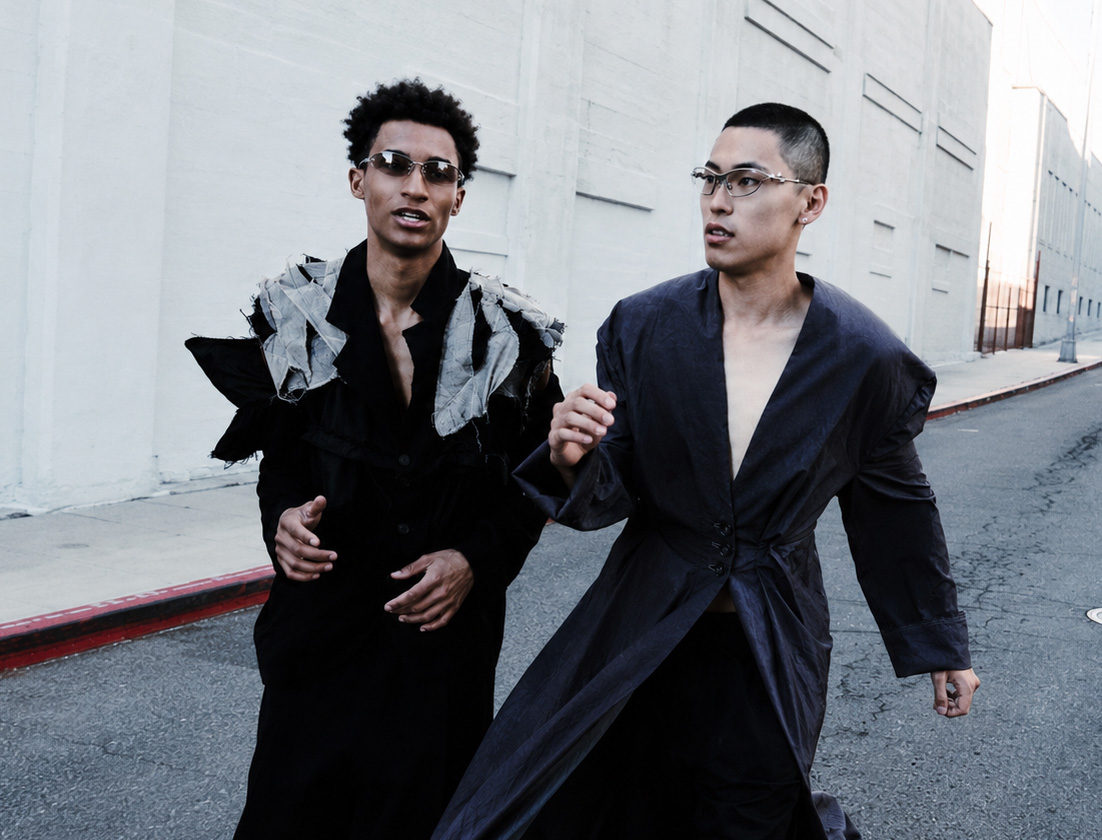
“To create a collection, I start by going to 2nd Street or Bingo to collect the garments I’m going to upcycle for my main line, then to Nippori [Tokyo’s fabric district] to get fabrics and buttons,” he explains. “I get back to the studio, wash everything and start dissecting. I don’t do mood boards or sketches.”
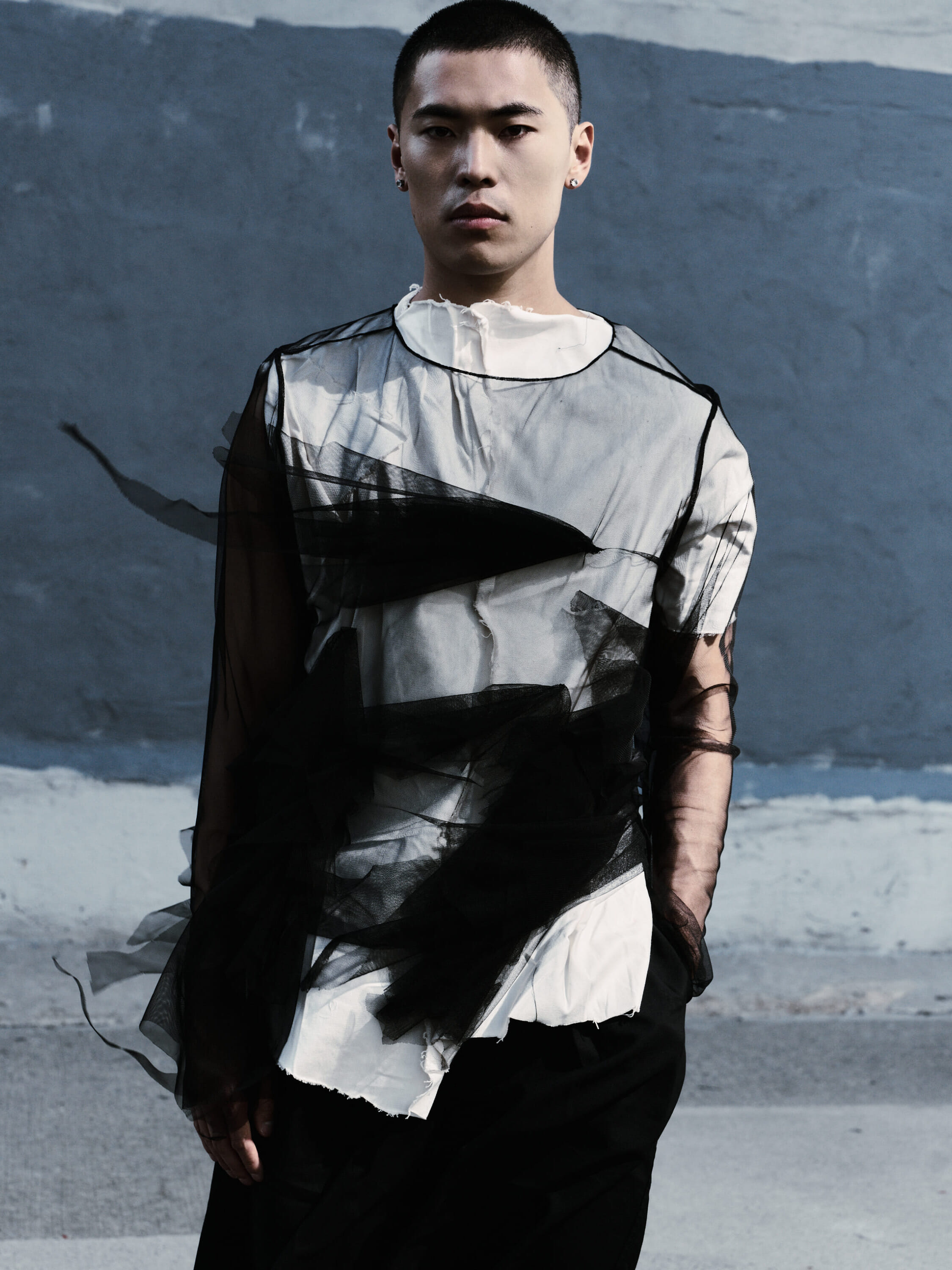
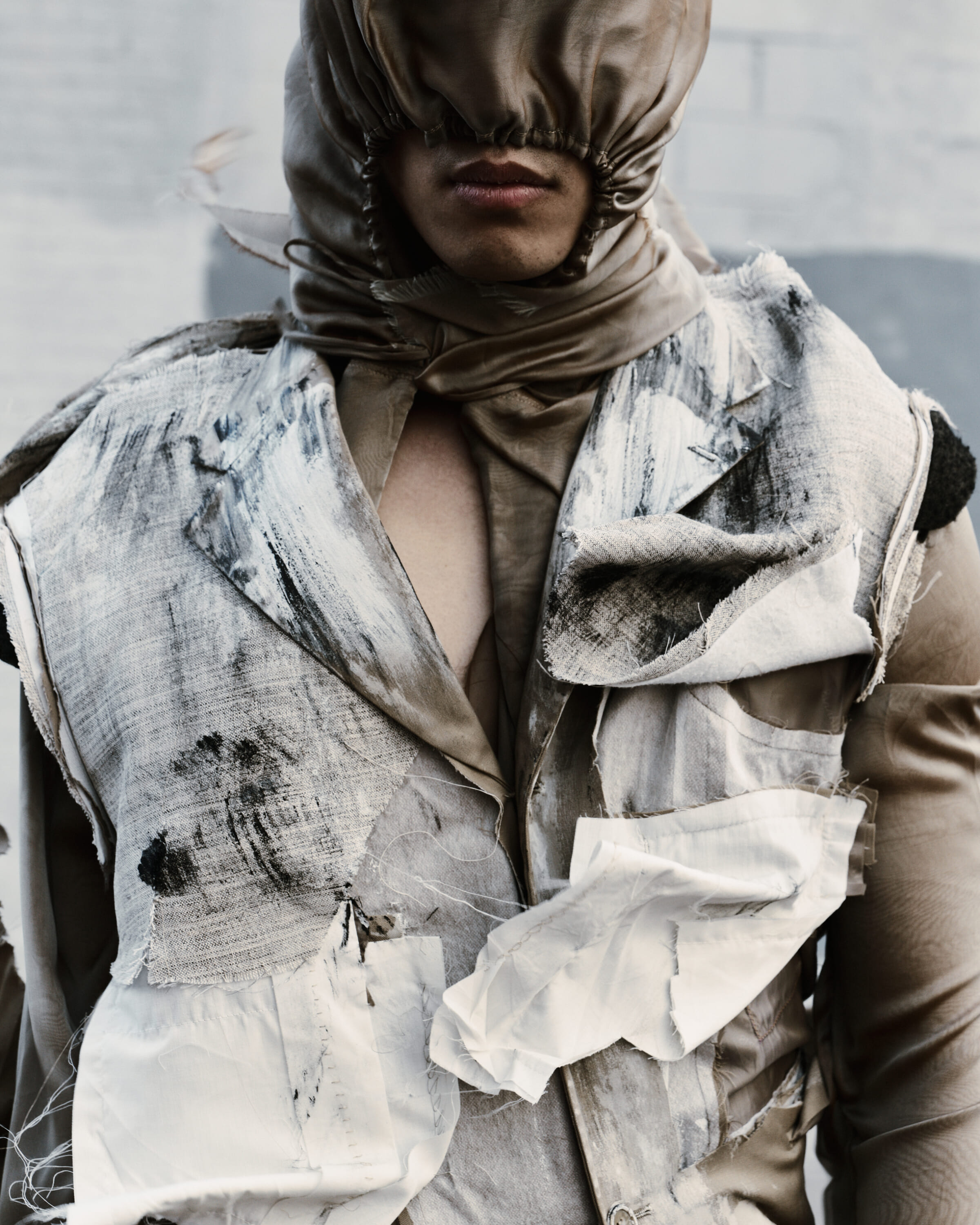
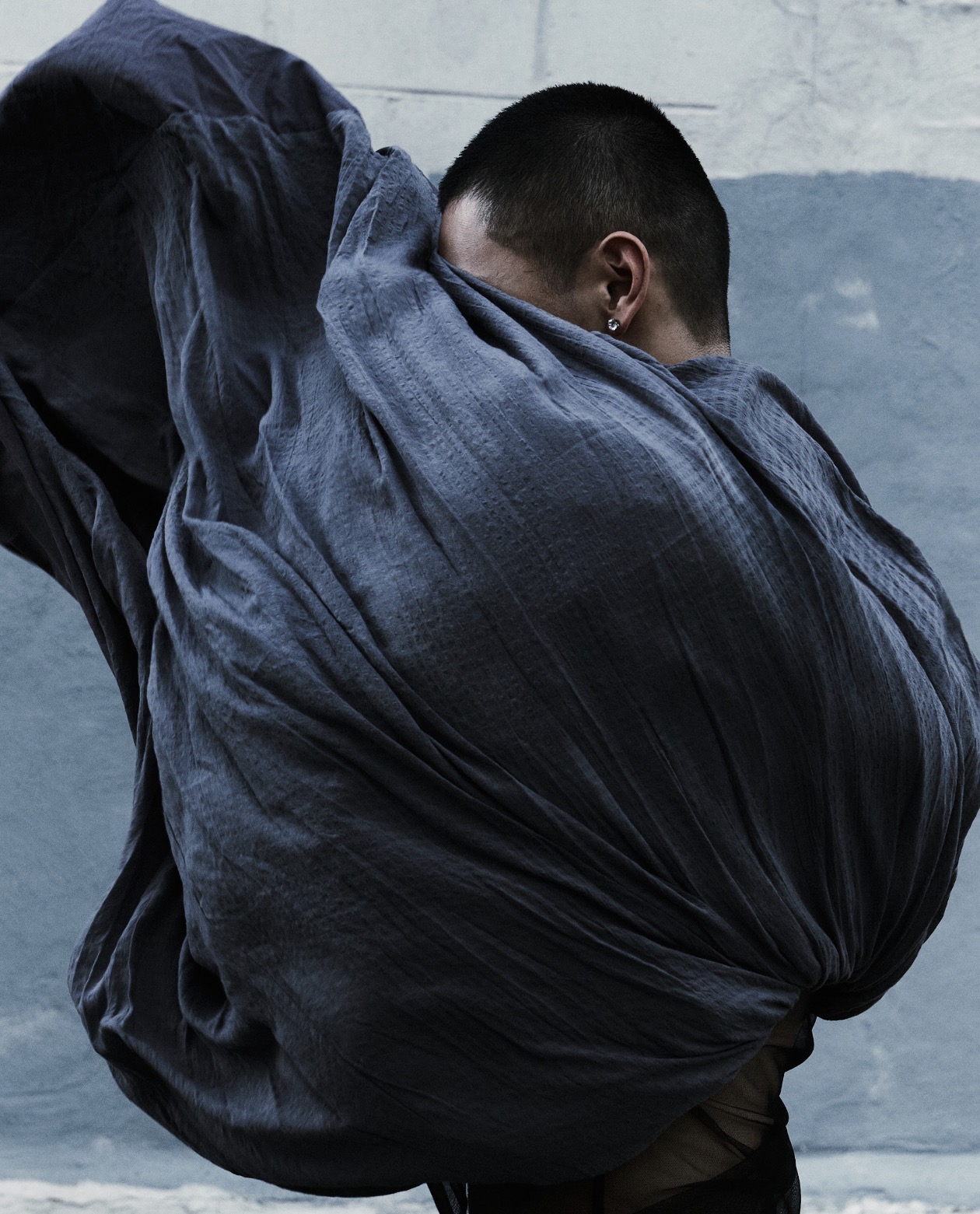
It’s an intuitive approach to upcycling and reconstruction that defines not only Hikari no Yami’s conceptual core but also its aesthetic one: Full of raw hems, illogical patchwork, tangles and frays, the pieces feel industrial yet organic. The designer’s most recent collection, “Chapter 11: Parasite,” pairs his signature sense of starkness and alienation with airy, windswept materials — nylon mesh, hand-painted cotton and flowing silk.
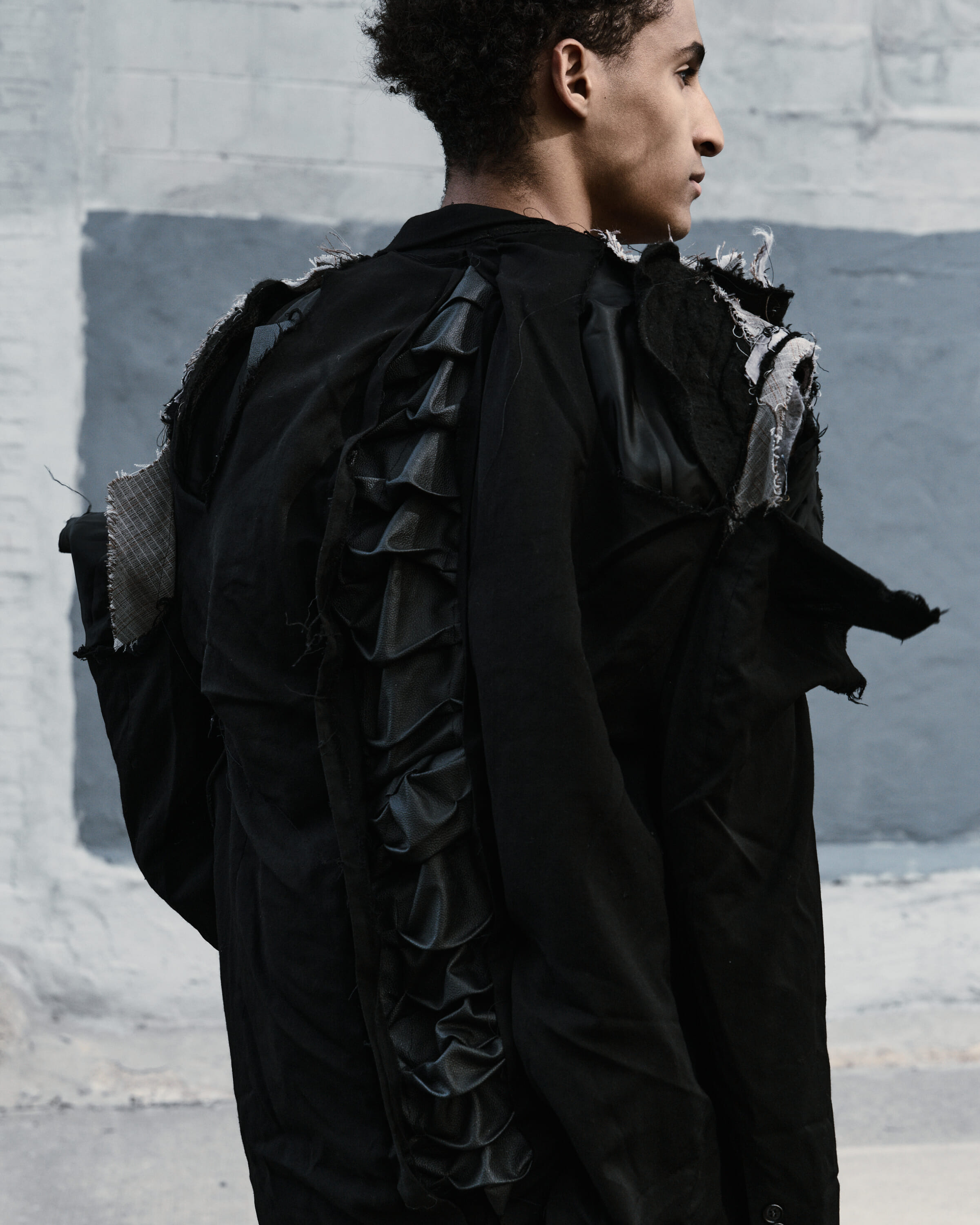
“It’s about human consumption, sustainability and the act of us becoming parasitic toward fashion as a whole,” he notes. “That’s where you see the spines in the collection, the extra molds and different fabrications.” He also cites Theseus’ paradox — which asks whether a ship retains its essence after all its pieces have been replaced — as a source of inspiration for the collection’s ethos: questioning whether a garment retains its essence once it’s been reworked beyond recognition.
Method to the Madness
These are words that might sound somewhat confusing and maybe even a bit pretentious when read on a page, but Whitaker delivers them to me so plainly and effortlessly that I’m certain he is just a philosophical person by nature; it’s not posturing. He really does read Osamu Dazai books and Junichiro Tanizaki’s In Praise of Shadows for fun, but is equally inspired by pop culture (recently, he designed a leather gourd bag referencing Gaara’s iconic gourd in Naruto).
Actually, Whitaker proposes, he wants people to be confused. “Confusion and confidence” are the two emotional pillars he thinks everyone, including himself, should stand between when wearing his pieces. “Confusion because ‘I don’t even know if I look good in this,’ but confidence because ‘I’m confident enough to wear it out and I don’t care what people think.’”
For Whitaker, there’s also a deeper purpose to encouraging said confusion. “Starting the brand as a Black man, the one thing I saw lacking in the avant-garde space was that a lot of people didn’t dress like me,” he says. It’s clear that he sees his designs as more than just clothing; to him, fashion is a form of community-building. “With Hikari no Yami, I wanted to create cool avant-garde clothes that other Black people could wear and see that a Black person made this.”
Ultimately, this is what gives Whitaker’s work depth and distinguishes him from designers who merely skim the surface of Japanese culture — not just his love for Japanese aesthetics, but his relationship with the community that wears his creations.
“Moving to Tokyo and seeing my audience really love the brand was the signifier to keep pushing,” Whitaker reflects. “Meeting people who followed me on Instagram, or kids in Kyoto doing videos styling the pieces, or people at Dover Street Market loving what I was wearing — it’s validation that what I’m doing is working.”

More Info
Find Whitaker’s works at hikarinoyami.com and on Instagram at @hikarinoyamii and @jakariewhitaker.