
Fashion literacy is hard to prove in an age where niche brands and underground references are no longer gatekept. It’s not enough now to flaunt the logos and queue for the drops; if anything, wearing something worn-in and elusive, something that evokes immediate curiosity, has become the ultimate flex. This is exactly the zeitgeist Proleta Re Art appeals to.
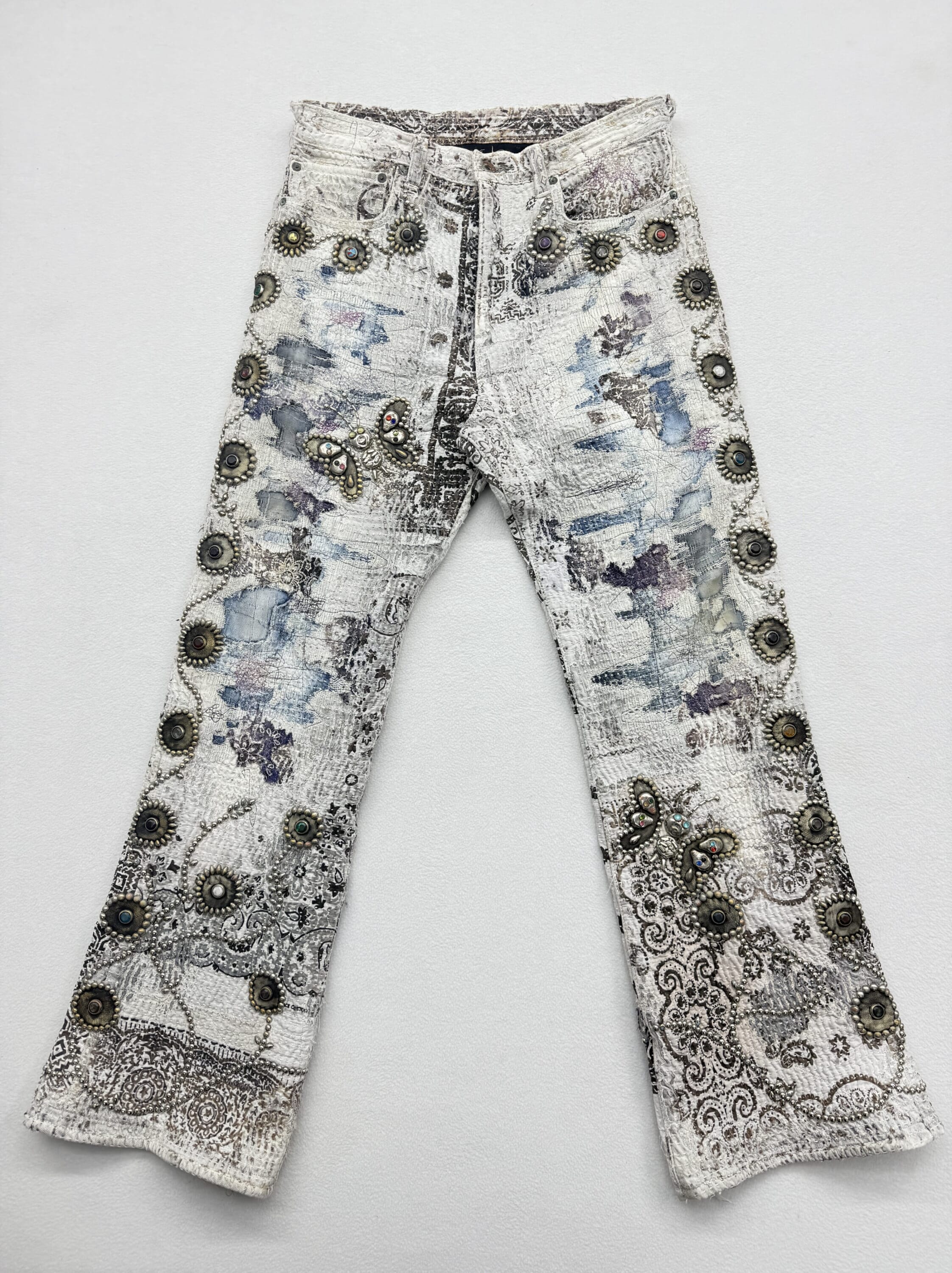
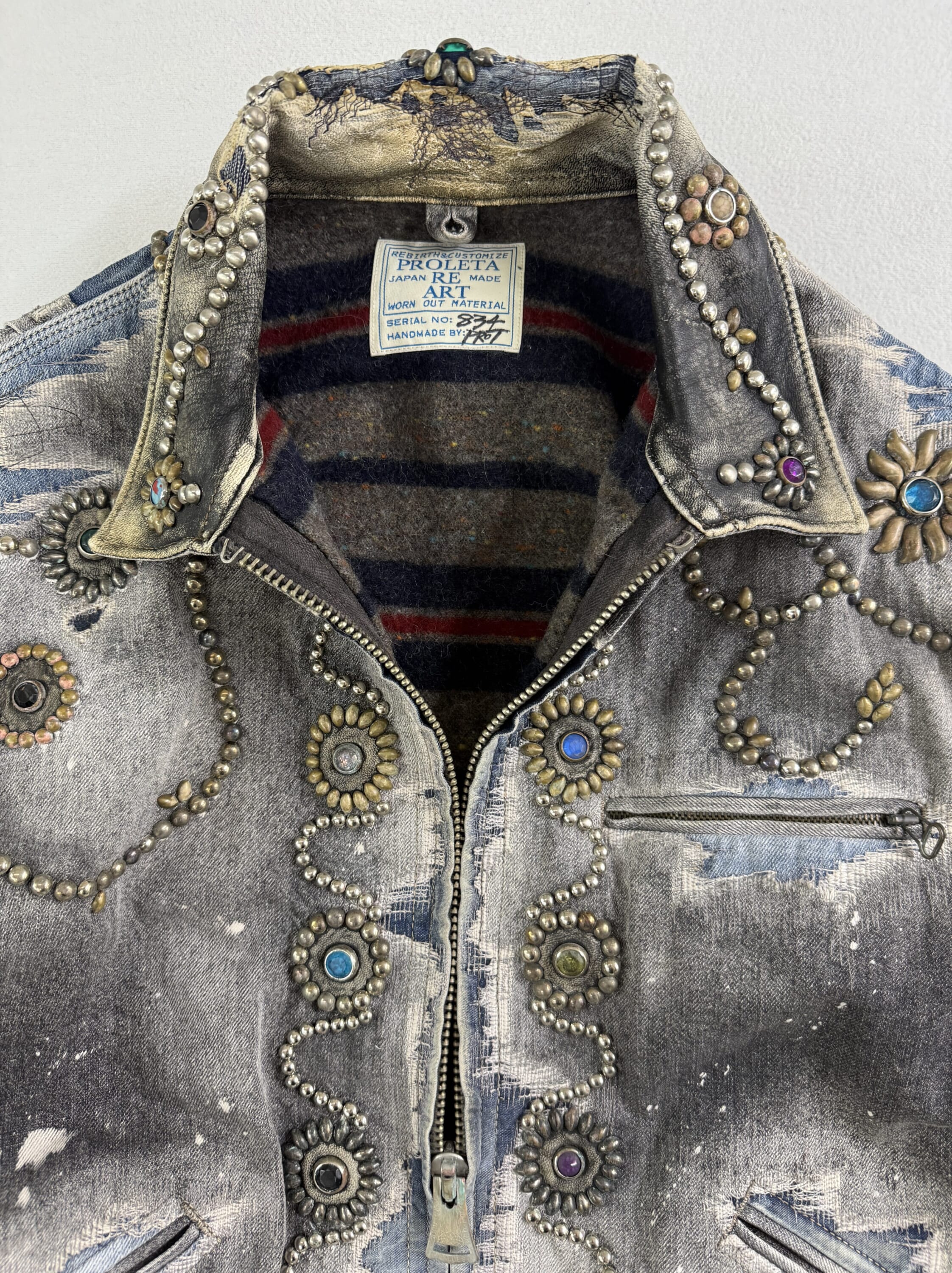
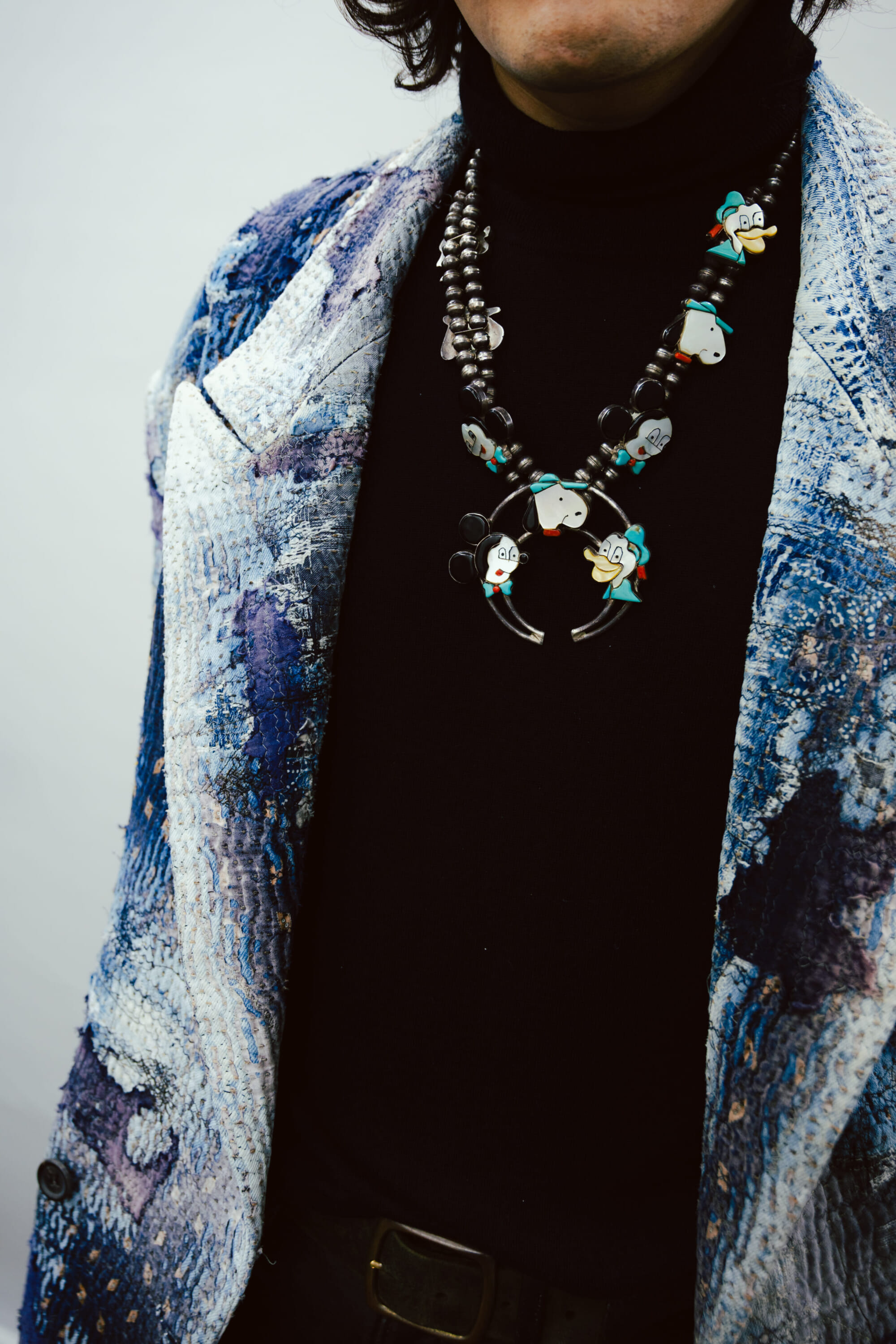
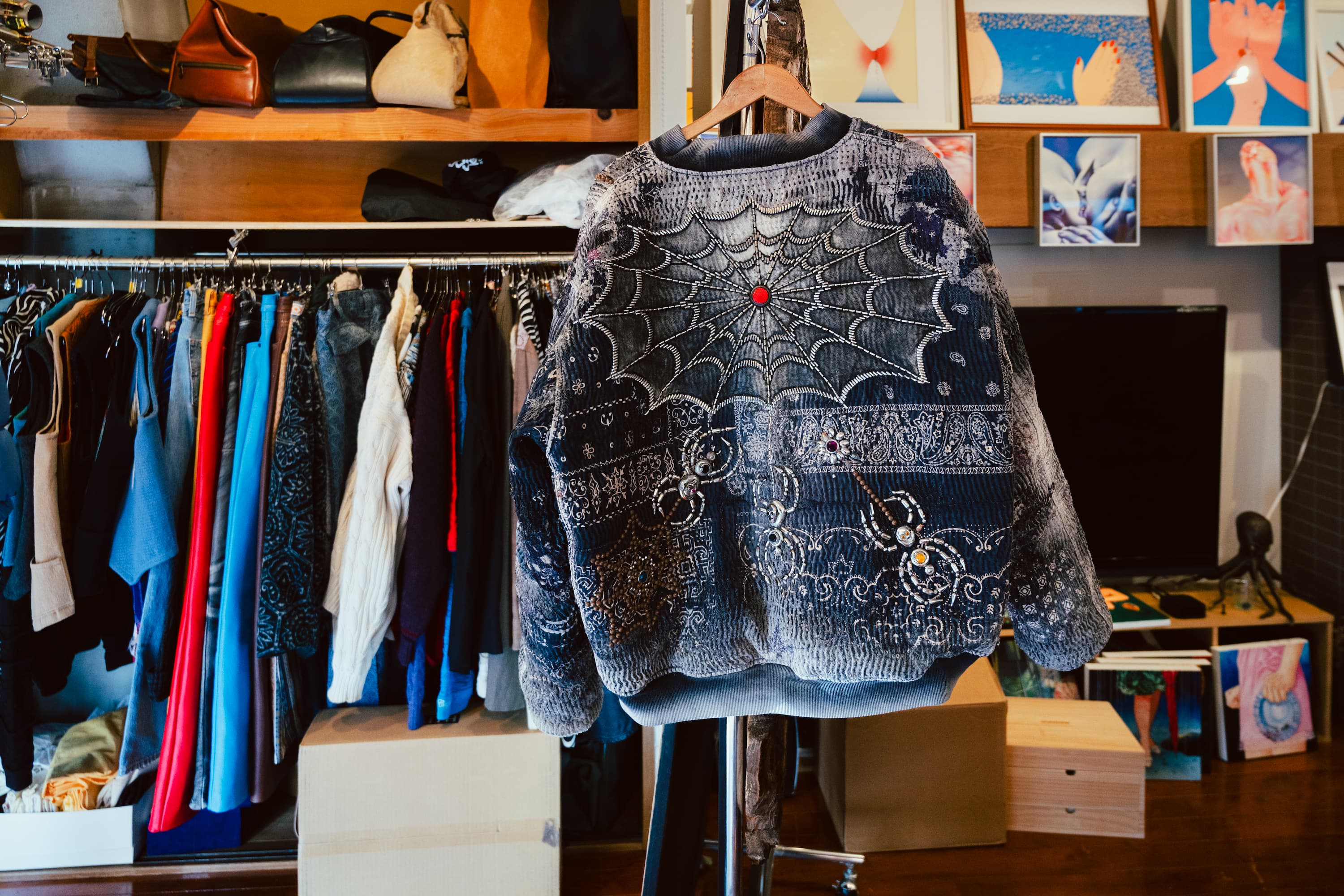
Even within the illustrious history of Japanese streetwear, the brand’s reworked denim pieces are a radiant, glitchy anomaly. Patterns melt together like watercolors, grungy studs punctuate retro paisley fabrics and playfully embroidered characters meet intense distressing. Meticulously customized and entirely singular, each garment is more like a collectible to keep in your wardrobe forever, with steep prices to match: One jacket can cost up to $18,000 or more.
Baroque, pop-infused and industrial at once, these made-to-order garments have caught the attention of A-listers like Travis Scott, Rihanna and Kendrick Lamar. The brand’s eclectic blend of textures has been seen in collabs with Gucci Vault, Yohji Yamamoto and recently on a runway in Florence alongside Soshiotsuki, one of today’s most sought-after menswear designers. To put it mildly, Proleta Re Art has garnered a level of hype and credibility that any young artist would kill for.
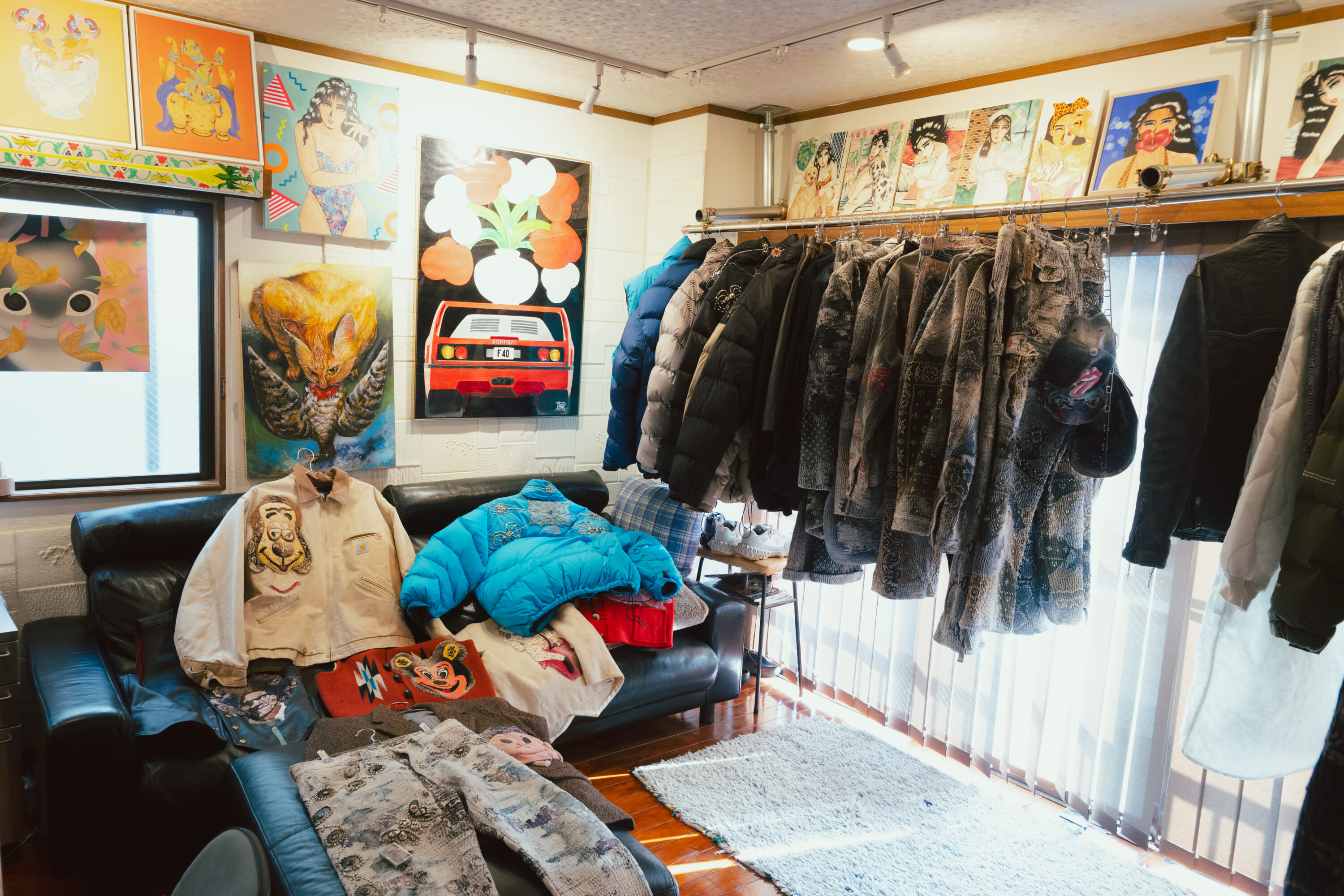
But the designer behind this sensation, who goes by the alias “Prot,” chooses to stay out of the spotlight and let his work speak for itself. Alongside his collaborator, an embroidery artist known only as Eri, he works in a tiny atelier, hidden in a quiet residential street in Tokyo. The space is almost unbelievably unassuming — a dusty studio with a makeshift gym, a no-frills floor dedicated to sewing and a living space packed with eccentric art.
The Man Behind the Mask
Much like his creations, Prot possesses an aura that’s difficult to pin down. His nonchalance is partly ingrained, partly measured; he’s a man of few words, but could probably write a manifesto about his design philosophy.
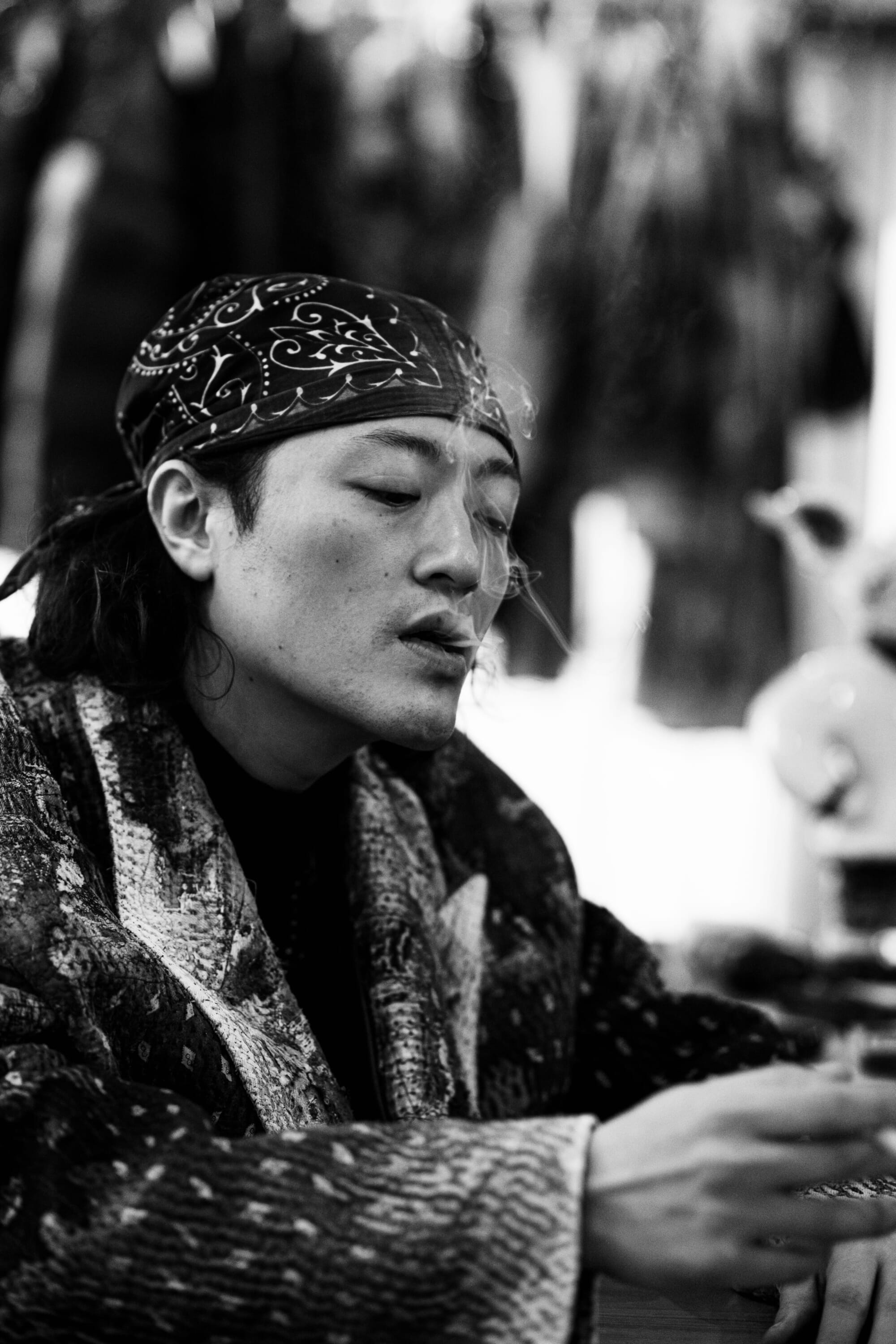
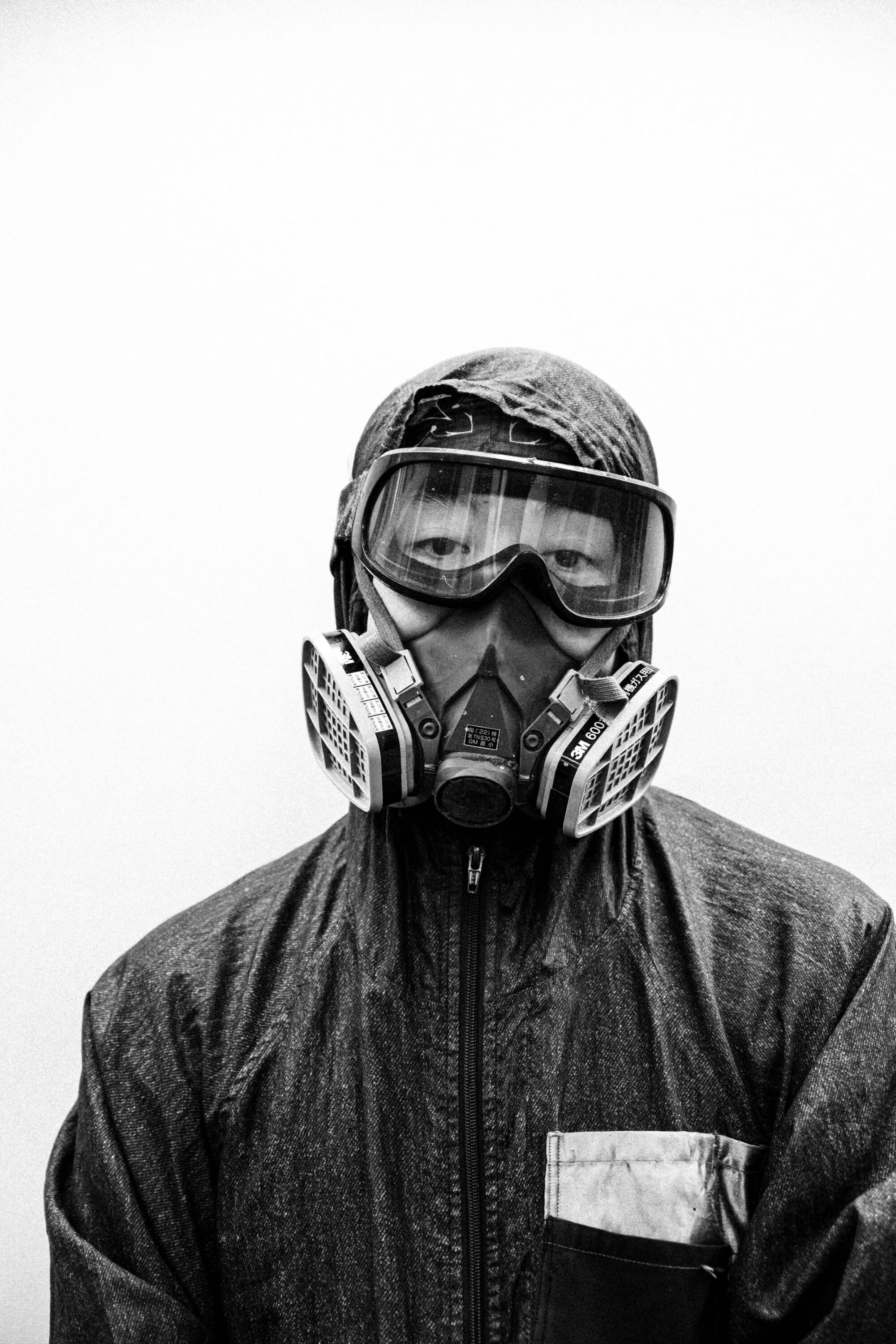
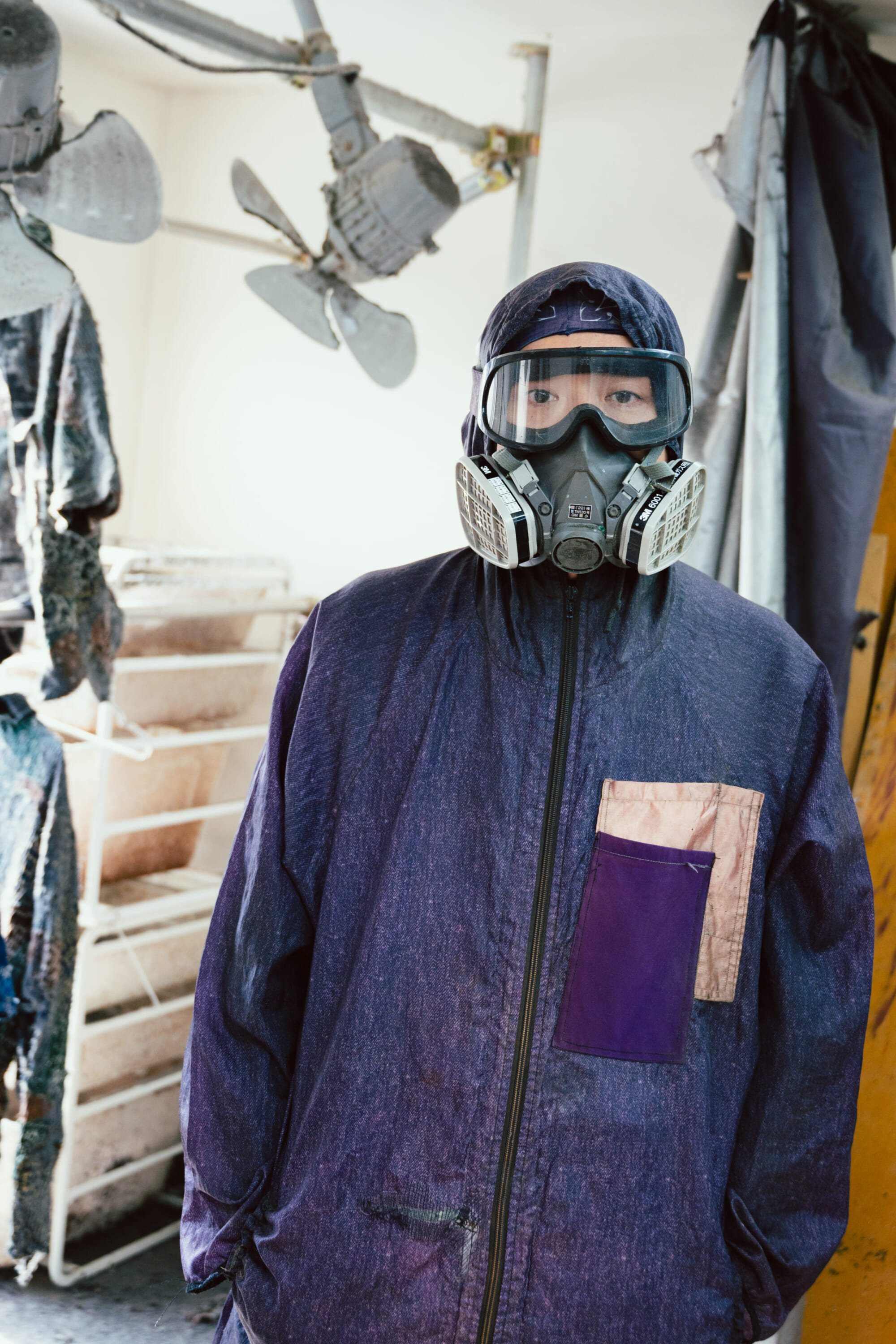
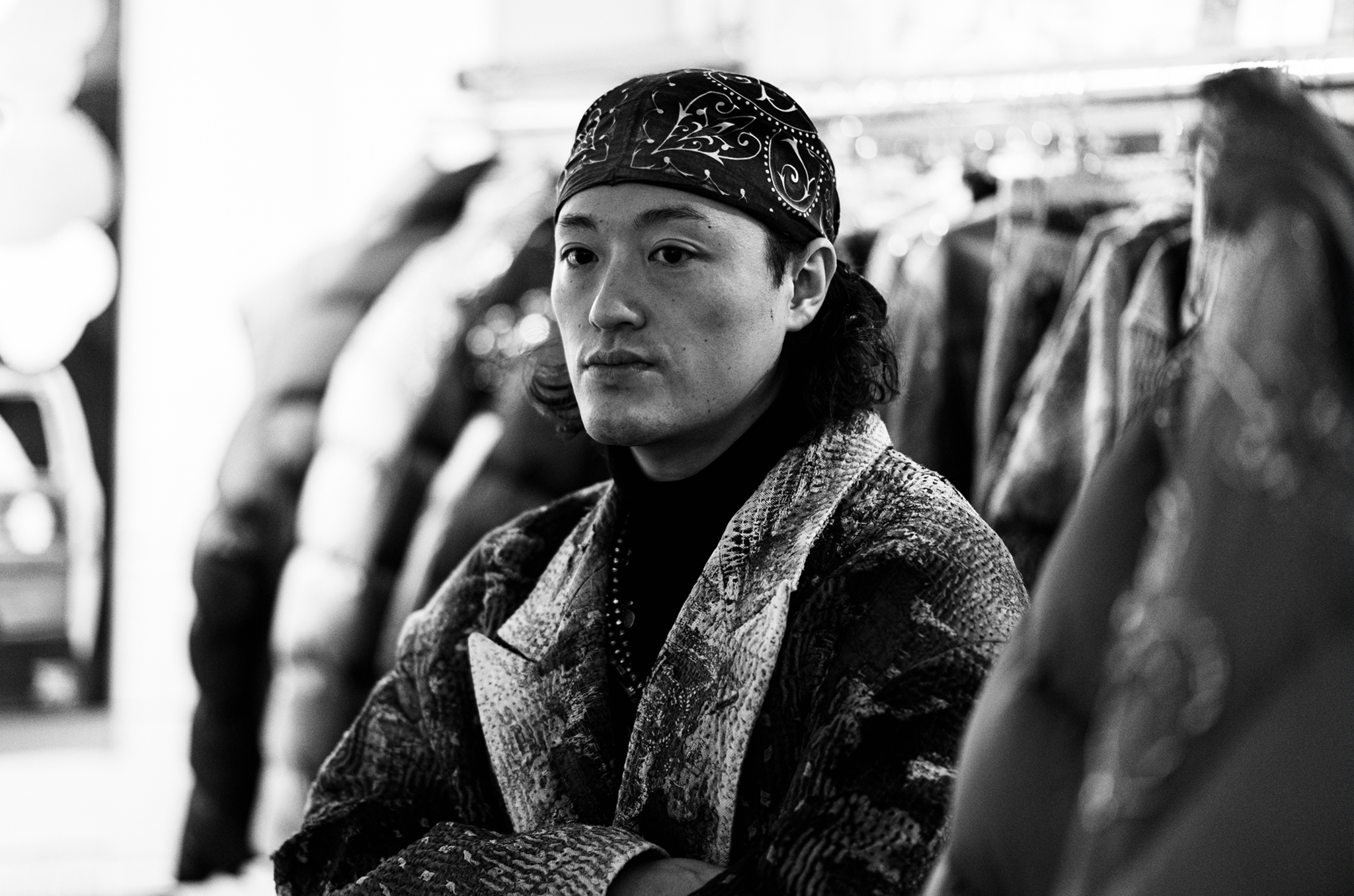
Lighting a cigarette and dressed in a black turtleneck, leather pants and a bandana, Prot exudes the effortless charisma you’d expect from a seasoned designer. But as he prepares to vigorously distress a jacket, his sleek outfit and demeanor disappear under nondescript workwear. “I’m always in this getup when I’m distressing or bleaching,” he says, pulling on an industrial-grade mask over his face like a graffiti artist about to tag.
For Prot, the choice to work behind a literal and figurative mask is rooted in a deep-seated desire for anonymity. “I love fashion, but I’ve never wanted people to look at me,” he notes. He seems to view himself as a specialized laborer rather than a glitzy creative director — a mindset hammered into the brand’s very name (a play on the word “proletariat”), which represents “the worker.”
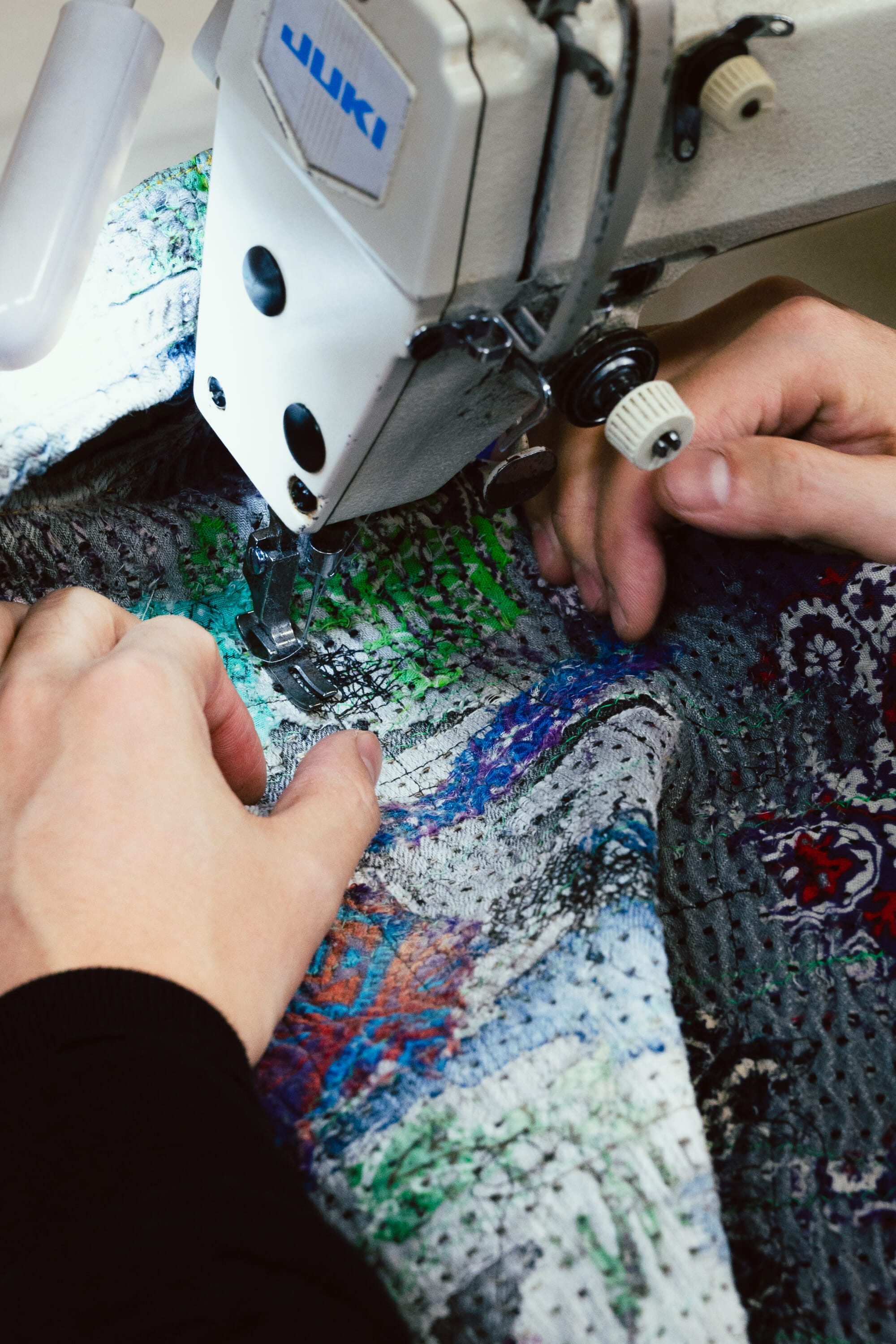
There’s an undeniable irony in a brand paying homage to the working class producing garments that cost thousands of dollars, but for Prot, the name is less about the consumer and more about the sanctity of the craft itself — a multistep procedure that can take up to 300 hours for a single piece.
“I take old clothes, rags and vintage materials that have finished their ‘labor’ as garments, and reincarnate them through exhaustive repair, customization and vintage processing,” he explains.
Before establishing Proleta Re Art in 2021, Prot worked as a designer for a denim brand in Okayama, the birthplace of Japanese jeans. He had 10 years of vintage processing experience under his belt when he quit for health reasons, and somehow ended up in Tokyo. Isolated and lost, with no connections to the city’s fashion scene, Prot began customizing his own vintage clothes and listing them on Yahoo! Auctions under a blank profile. “I didn’t write that I customized them,” he recalls. “I only provided the measurements, product photos and details about the base vintage garment.”
One of these creations suddenly went viral when a fashion Instagram account posted a photo captioned “Unknown 70’s Levi’s Jacket,” sans permission. Hundreds of messages asking for similar pieces began flooding his inbox, prompting the serendipitous launch of Proleta Re Art.
His first famous client was none other than A$AP Rocky. The rapper now owns several designs, including boro baby blankets custom-made for his children with Rihanna. Prot’s star-studded clientele is not just limited to musicians and other celebrities, either. “I can’t give specific details, but I’ve received multiple orders from the head of state of a certain country,” he reveals.
Everything New Is Old
If you look at any Proleta Re Art piece, you’ll grasp what Prot calls “hacking.” As a 90s kid, he was obsessed with “ROM hacks” — the culture where fans would edit the data of old Famicom games, tweaking effects and character designs into something fresh and exciting, just for fun. The idea that an amateur intervention could out-intrigue the original stuck with him and came to define his vintage-processed clothing — pieces reworked to look beaten-up and storied.
“Some purists look down on vintage-processed clothing, calling it ‘fake vintage,’” Prot explains. “But I think that when vintage processing techniques are pushed to their limit, a piece can take on an aura that surpasses the character and feel of actual old clothes … if something is cool, it shouldn’t matter if its ‘vintageness’ is authentic or manufactured.”
This same mindset explains the brand’s signature incorporation of embroidered cartoon characters like Mickey Mouse or Sailor Moon. In coming up with these designs, Prot takes inspiration from memes. Yes, memes — stray images plucked from the void by an anonymous source, then layered with meanings until they take on a new life.
It all sounds kind of abstract, but Prot’s love for stacked references actually makes perfect sense when coupled with his enduring love of denim, a blank canvas that welcomes every whim and inspires endless interventions.
“It’s been about 16 years since I began seriously approaching denim as a canvas, but I still find it difficult to fully understand it,” he expresses. “It’s a living thing that I need to engage with on a daily basis. Depending on temperature and humidity, its fade and character change constantly.”
Life in the Lab
As you can imagine, Prot’s signature combination of intensive processing and embellishment requires nonstop care and attention. Despite being one of today’s hottest streetwear figures, he leads a routine and confined life, by his own admission. Each day starts with a 5-kilometer run on the treadmill in his studio, a shower, a smoothie and a cigarette. He doesn’t take many breaks, and often works into the night.
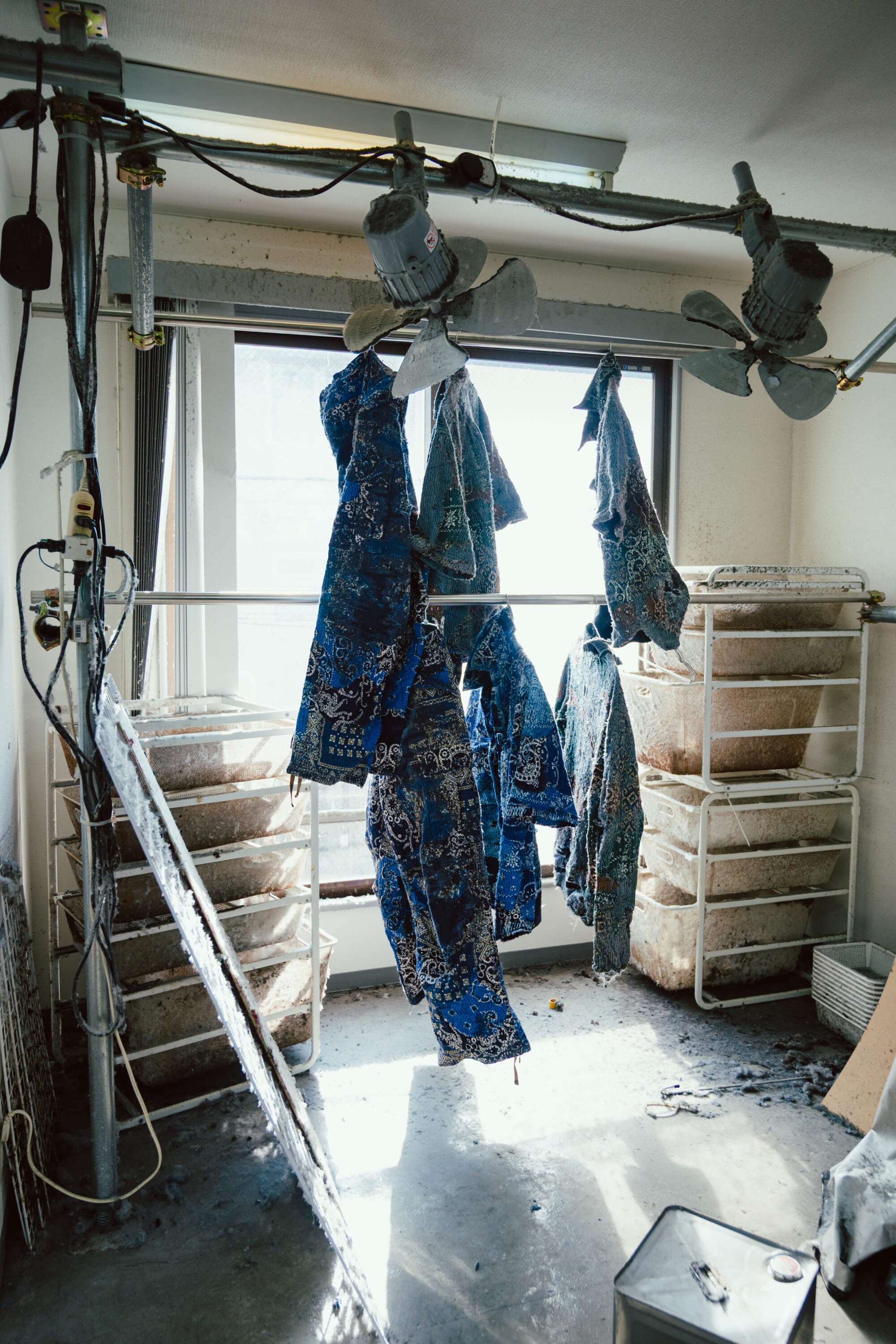
“On days when I do vintage processing, my body gets covered in dust and bleach, and I take a hot bath afterward,” he says. “In that same bathroom, I neutralize and wash the pieces I processed that day, and hang them to dry using the room’s built-in air dryer.”
On some nights, he’ll share films and music videos he’s watching on Instagram, and end up chatting about them with followers for hours on end until morning. “Since I’m basically cooped up in the atelier all the time, interactions like that are some of my few pleasures,” he notes.
To many, Prot’s routine may seem surprisingly unexciting, maybe even ascetic. To me, it’s apparent that, much like a ceramicist or a woodworker, Prot sees fashion design as a lifelong craft rather than a means to an end. Like most crafts, vintage processing requires a certain rhythm that can feel repetitive and tedious — but it also develops a hyper-niche skill set to take pride in.
As business and recognition grow, Prot admits that his current system of doing everything by hand isn’t efficient. Improvising and making minuscule adjustments until he’s satisfied, he often can’t predict how long it will take to finish a single piece. But Prot has no plans to significantly expand the scale of production if it means sacrificing the extreme attention to detail that makes his designs so special.
“I set a meaning and story for every detail, so I could talk about them for hours if asked,” he says with a laugh. “I think this obsession with quality — my ‘otaku nature’ — is probably what people overseas find so interesting.”
More Info
Find Prot’s designs on Instagram.
Related Posts
- The Secret World of Japan’s Indigo Artisans
- Happy Victims: Inside the Homes of Tokyo’s Fashion Obsessed
- Tradman’s Bonsai and the Future of Japanese Cool
Updated On April 22, 2026