
When Japanese designer Rei Kawakubo launched Comme des Garçons, she challenged the global fashion establishment with asymmetrical silhouettes, unfinished hems and endless interpretations of the color black. Decades later, her rebellious vision continues to turn casual fans into lifelong devotees — among them Octavius La Rosa, a Melbourne-based collector-turned-archival dealer.
Better known in fashion circles as dot Comme, La Rosa has spent nearly two decades amassing a world-renowned vault of over 4,000 garments from Comme des Garçons. Now, as La Rosa prepares to relocate his entire operation from Australia to a new permanent address in Paris, he is teaming up with London’s Kerry Taylor Auctions on September 15 to place 265 of his rarest runway pieces on the block. It’s an unprecedented opportunity for collectors and casual fans alike to inherit a fragment of fashion history for their closets.
View this post on Instagram
Who Is Octavius La Rosa?
Octavius La Rosa’s entry into fashion archiving began when he was just 18 years old, during a trip to Tokyo. While making his way through the city’s boutiques and thrifts, he encountered vintage Comme des Garçons for the first time and was immediately taken by its structural oddities and disregard for traditional tailoring.
He returned home with a suitcase stuffed to the brim. “When I began collecting 20 years ago, you could buy [Comme des Garçons pieces] at really cheap prices in Japan,” he told WWD in a recent interview. “So I saved money, did research on which items had historical significance, and started building my collection. Looking back now, I think it was really great timing.”
As La Rosa suggests, there wasn’t the same fascination with archival fashion — especially for the mainstream consumer — back then. Today, you can scroll through your Instagram explore page and immediately come across Lily-Rose Depp sporting an ornate Chanel gown from the vault, or a carousel telling you where to score the rarest vintage couture in Paris.
Trading under the name dot Comme, the Australian collector has built a formidable 4,000-to-5,000 piece vault that spans the house’s entire lineage. Over the past fifteen years, dot Comme has grown from a packed personal space into an online storefront, a brick-and-mortar venue near Melbourne’s Chinatown and a series of pop-ups across Europe.
As he prepares to open a new space in Paris’ Saint-Germain neighborhood, dispersing a curated portion of his holdings serves as a practical step forward in funding that next chapter.
“Paris is the center of the fashion industry, and is also where Comme des Garçons’ headquarters are located…the move will make the archive more accessible to stylists, curators and fashion designers,” he shared with WWD. “The funds raised from this auction will be used to acquire new archives, as well as to document the collection, which we plan to exhibit publicly in the next few years.”
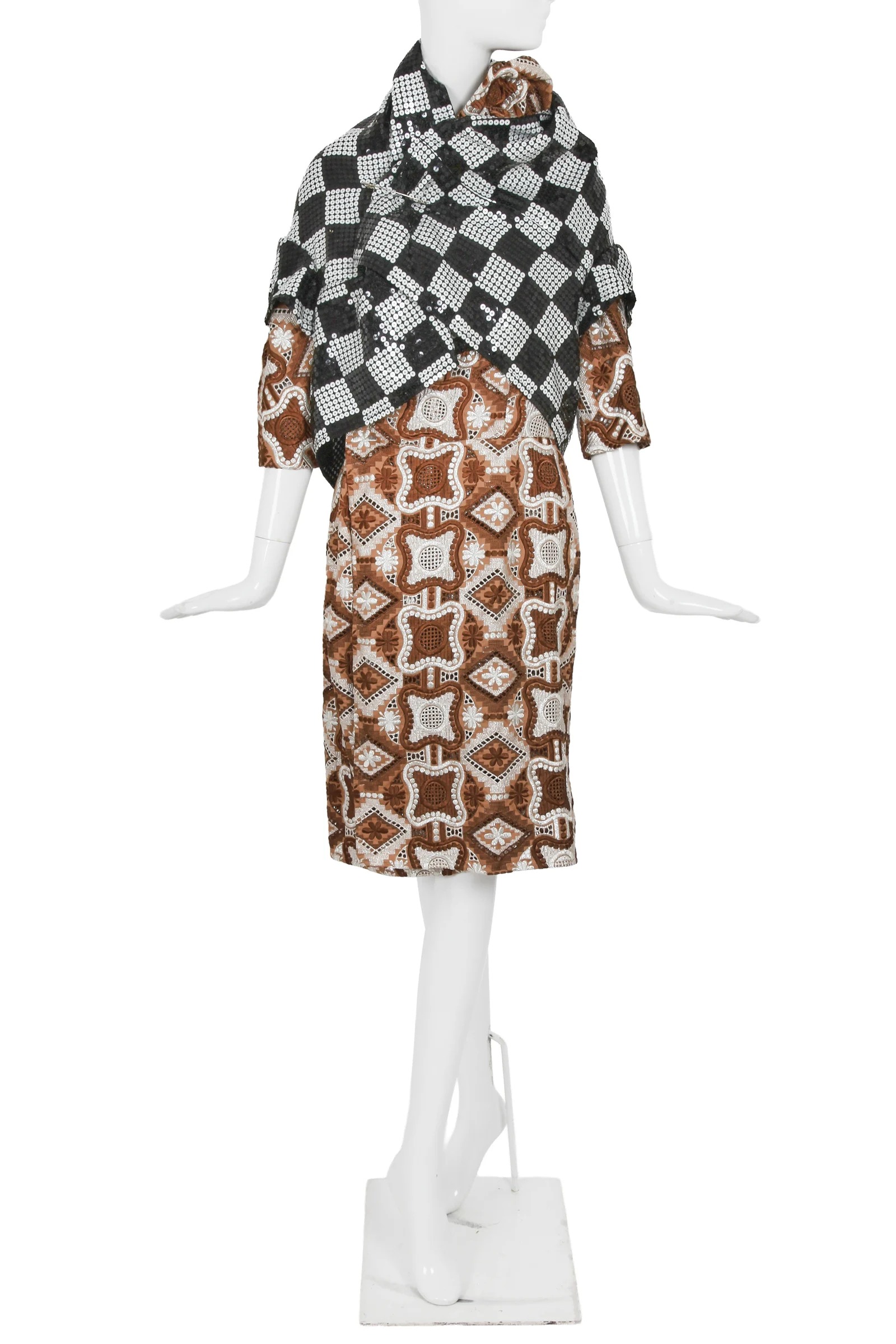
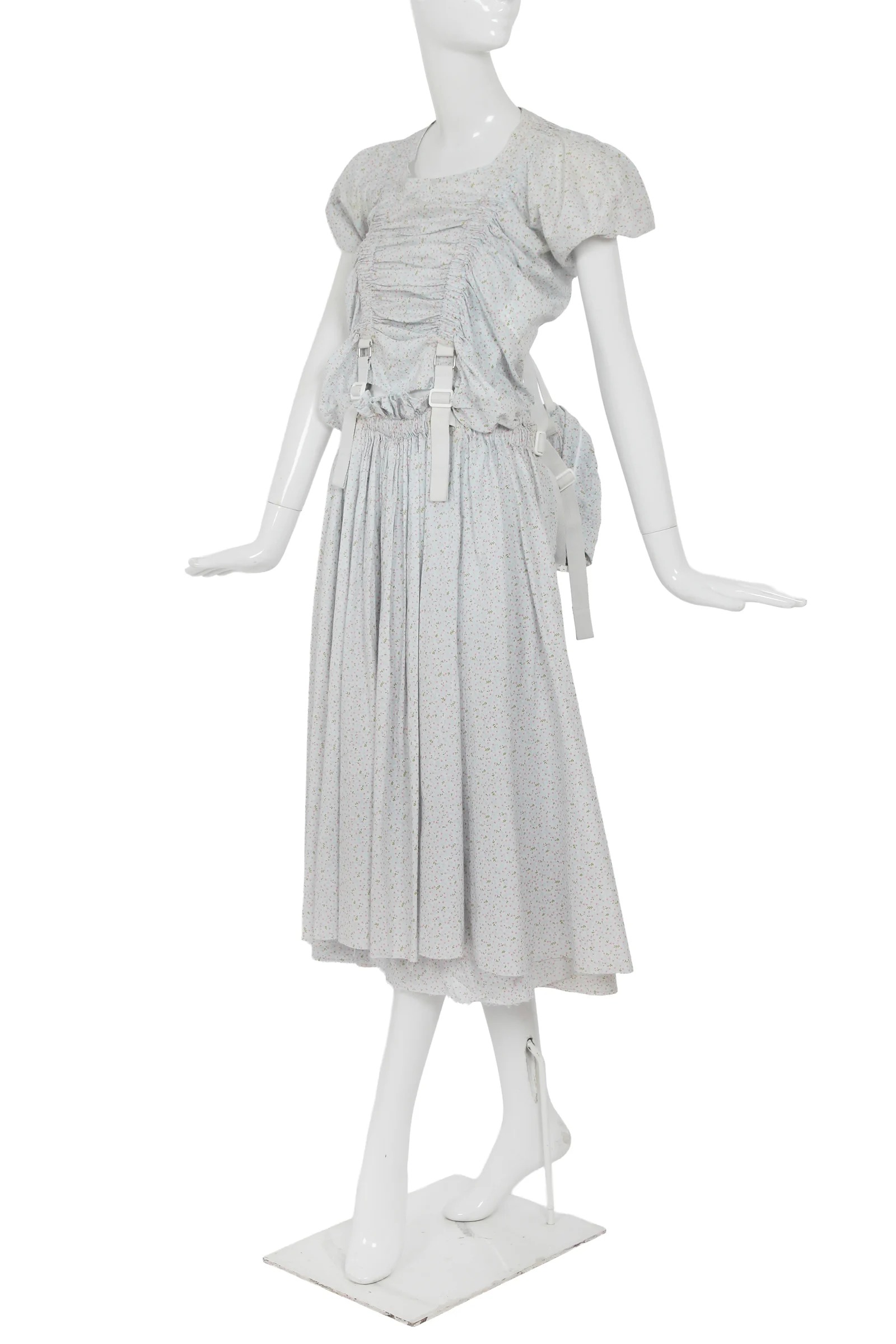
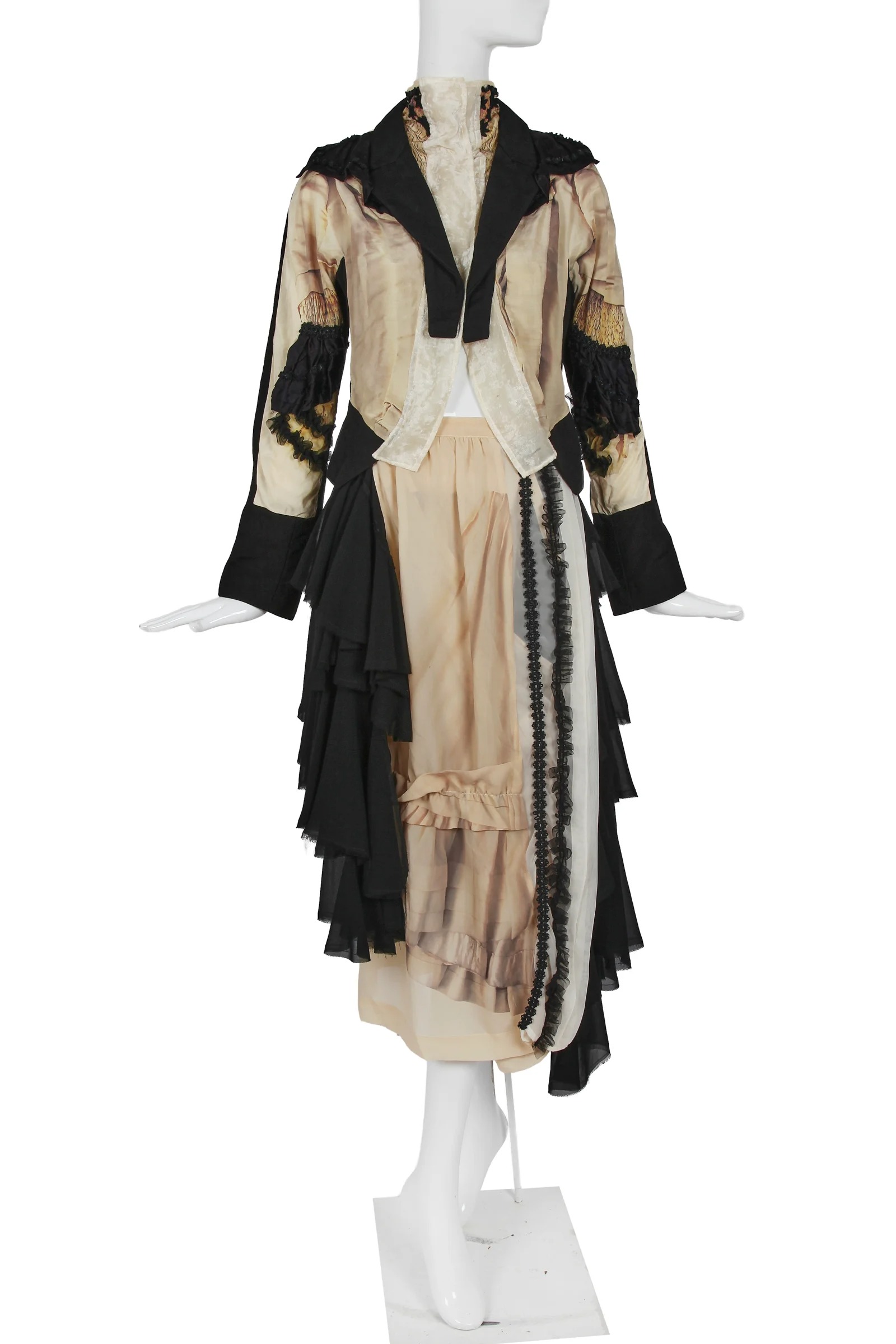
Inside Dot Comme’s London Auction
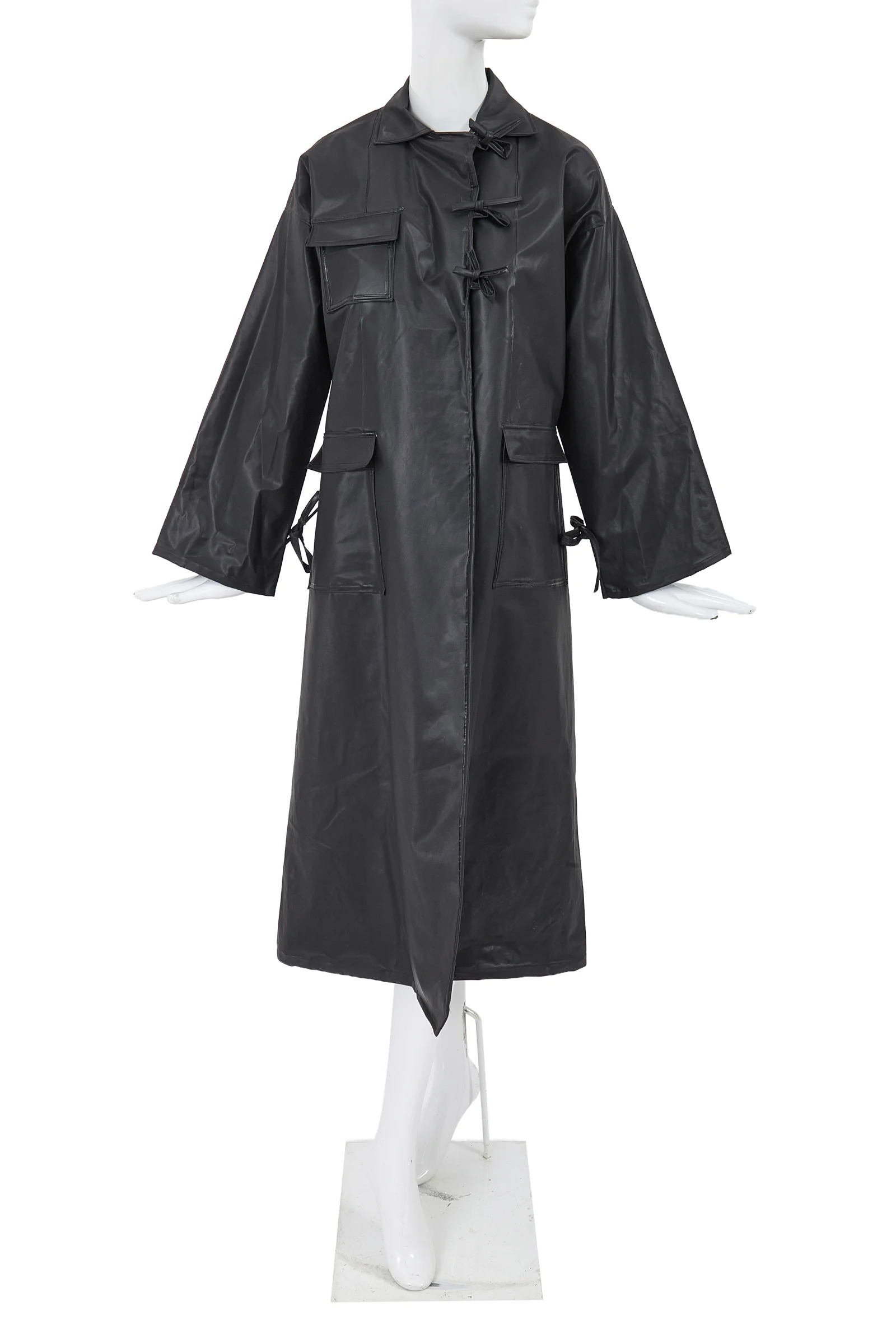
Scheduled for September 15 in London, dot Comme: the Auction brings 265 pieces to market, charting nearly half a century of runway history. The catalog covers early 1970s foundation garments alongside major 1980s collections that completely revolutionized standard clothing construction.
Among the standout pieces is the famed “bedsheet dress” (Spring/Summer 1984) with gathered armholes — a staple reference point for the Comme des Garçons fans of Tokyo in the 1980s — as well as a beautifully deconstructed, single-sleeved coat from Fall/Winter 1998-99. Visitors will also be able to see a few patchwork dresses from the Fall/Winter 1993-94 collection, which are often overlooked in terms of historical significance.
The catalogue also looks beyond Kawakubo’s personal oeuvre to highlight work by her long-time protégé, Junya Watanabe. After joining Comme des Garçons as a pattern cutter in 1984, Watanabe built a reputation for intricate, architectural tailoring. Several archival pieces from his own label are included in the sale. Beyond womenswear, the auction also features roughly 20 rare menswear looks spanning several decades.
Bringing these garments into a physical auction house rather than listing them online feels like a deliberate and necessary choice. Kawakubo’s work is inherently sculptural; its weight, strange proportions and complex draping are difficult to appreciate on a two-dimensional avenue. Staging the pieces in-person treats them as tangible artifacts to be admired under one roof before they scatter into private collections.
Related Posts
- Meet the Designer Behind Naomi Osaka’s Iconic Wimbledon Dress
- Inside Proleta Re Art, Tokyo’s Most Elusive Fashion Label
- Japanese Company Buys Original Birkin Bag for ¥1.47 Billion
Updated On August 18, 2026