
Among the polished marble furnishings of luxury hotel Janu Tokyo, three men shuffle around a pine tree, carefully placing it in a pot, painstakingly situating its branches so it perches perfectly. A DJ plays soft techno music, and a stylish audience buzzes around the live sculpture, the air punctuated by the clicking of phone cameras. The men shaping the tree move with syncopated, energized focus. They wear dark navy, almost denim-colored happi jackets with bold white lettering, their tattooed hands delicately molding the stately tree.
This is not a traditional bonsai demonstration.
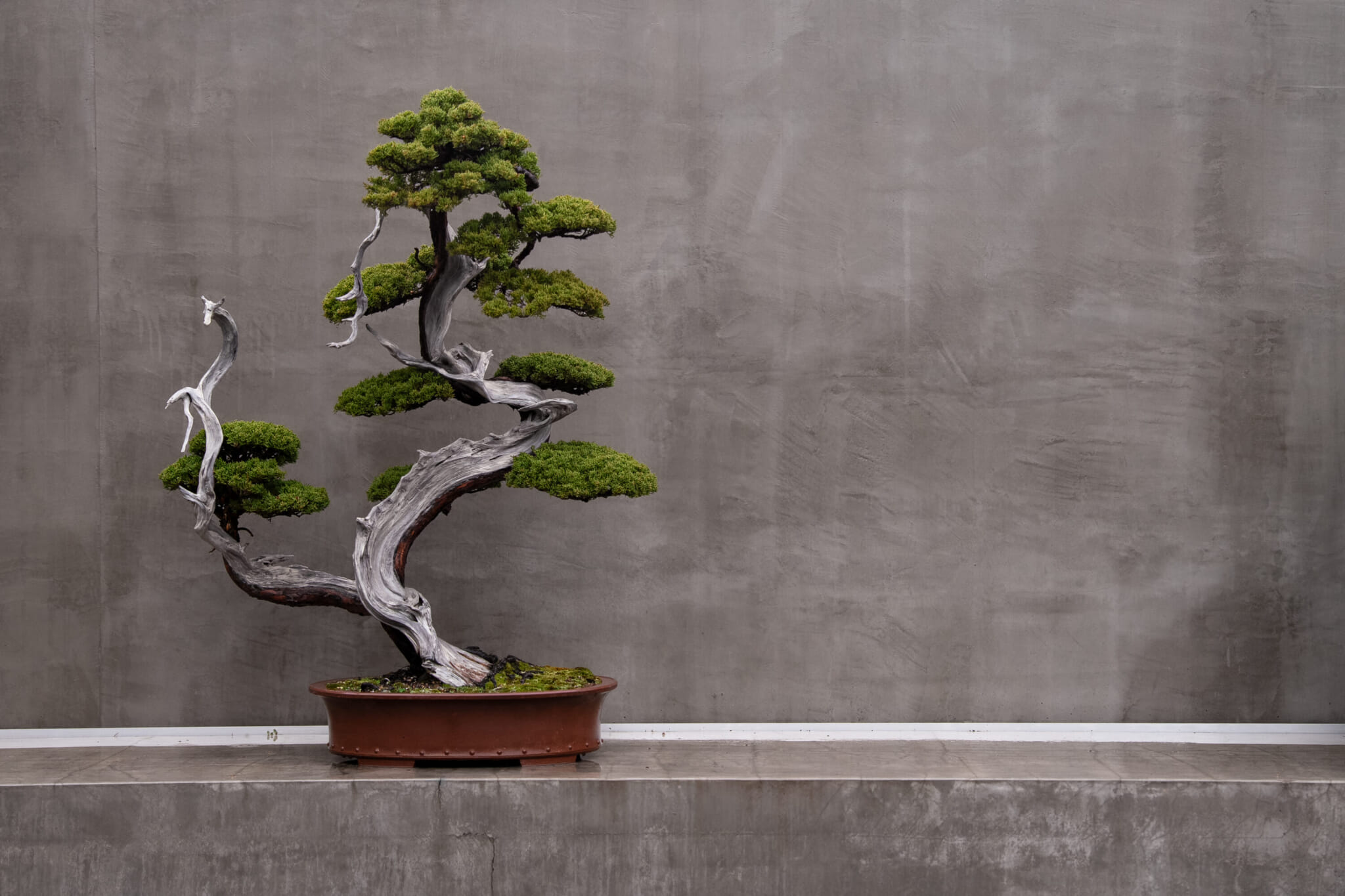
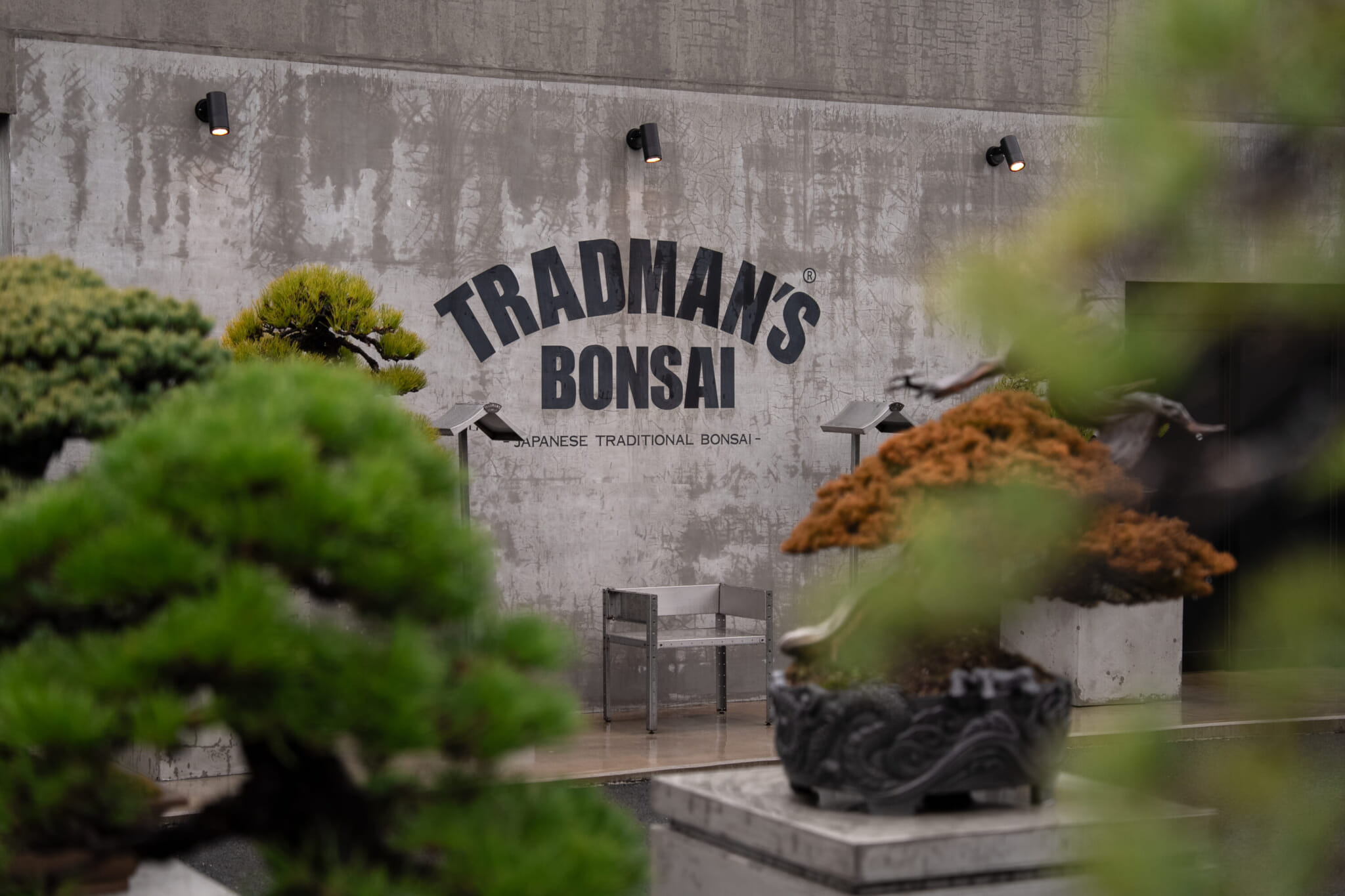
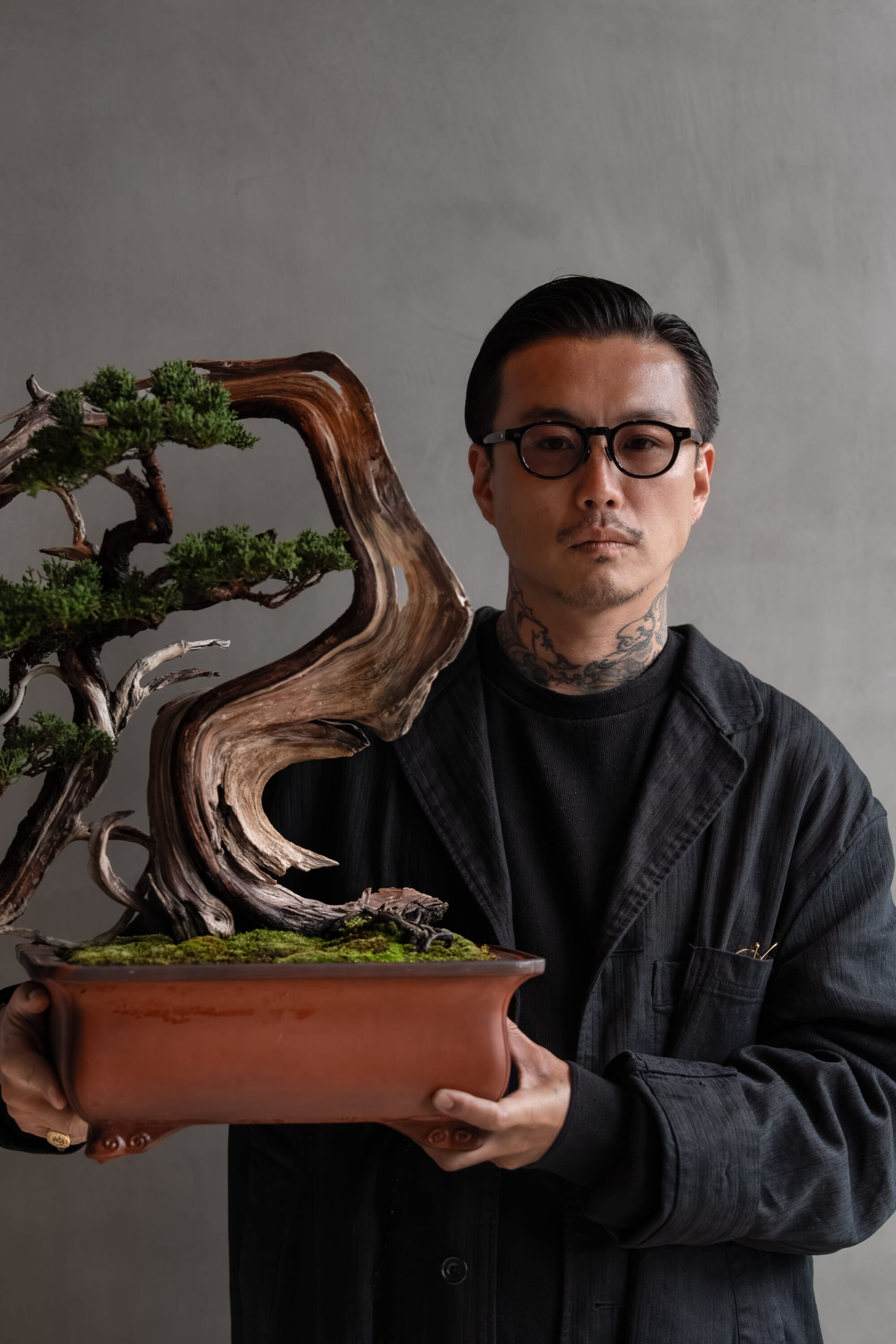
At the center of this performance stands Teppei Kojima, founder of Tradman’s Bonsai. Over the past decade, Kojima has pioneered a new way of presenting this ancient art form to the world. Collaborating with major brands including Jimmy Choo, A Bathing Ape, Cartier, Nike and Dior — just a few names from an ever-growing list — Tradman’s is positioning bonsai as a living, evolving cultural force capable of standing alongside fashion, street culture and contemporary art.
Yet the roots of Kojima’s story are far removed from luxury hotels and partnerships with global fashion brands. It all began in a children’s home in Chiba — and with a pair of hand-me-down jeans.
Back to the Beginning
In first grade, Kojima and his younger brother were placed in a children’s home. Amid the uncertainty of moving institutions and being separated from his parents, Kojima cites a memory that stands out: He remembers watching his school principal, usually strict and imposing, watering a plant with an unexpectedly gentle expression.
“When I asked him what he was doing,” Kojima recalls, “he told me it was bonsai.”
Reflecting on it now, Kojima isn’t sure if it was the bonsai itself that drew him in, or if he just wanted his teacher’s attention. “But he was the first person to teach me the basics of how to water and take care of plants.”
Kojima was eventually reunited with his family in the Matsuba-cho district of Kashiwa city, and horticulture faded, at least temporarily, into the background. But perhaps there was something fated about his career trajectory. He notes that he grew up surrounded by subtle arboreal motifs — Chiba translates to “a thousand leaves,” Matsuba means “pine leaf” and Kashiwa references the Japanese emperor oak, a highly prized tree in bonsai teachings, associated with strength and longevity.
During his adolescence, Kojima was fiercely independent and focused on forging his own path. He only attended a few months of high school before dropping out, choosing instead to immerse himself in music, fashion and tattoo culture. His parents loved vintage clothing, and one item — a pair of 1966 Levi’s jeans — sparked a particular obsession. Kojima grew fascinated with the idea that old garments can be worth more than new ones, and with how age can multiply an object’s value.
He began studying vintage fashion with near-academic intensity: stitching techniques, fabric weights, production years and the impact of wartime material shortages. He loved how denim records the life of its wearer, faded knees and frayed hems becoming a permanent personality of the fabric.
Years later, he describes bonsai in almost identical terms: “Denim changes depending on who wears it. Bonsai changes depending on who cares for it.”

Reshaping Tradition
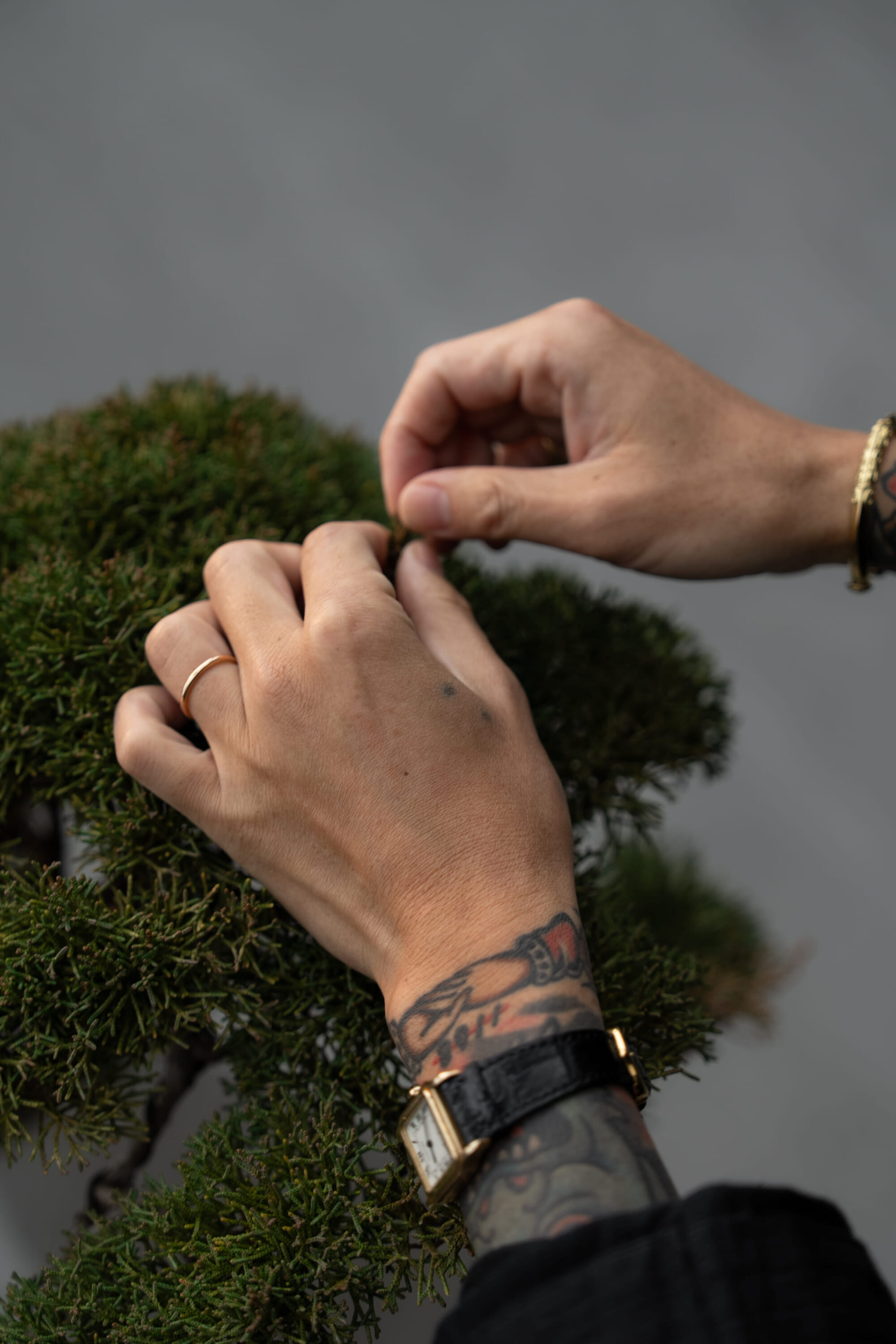
In his 20s, Kojima started a career as a buyer, traveling overseas to source garments. On one trip to the United States, a shop owner proudly showed him a “bonsai tree” displayed behind the counter, leaving Kojima feeling unsettled. “I felt uncomfortable,” he recalls. “I realized bonsai wasn’t being properly transmitted to the world.”
The tree lacked what he instinctively recognized as Japanese aesthetics — restraint, tension and unspoken spirituality. That night, back in his hotel room, he found himself unable to think about anything else.
It became a turning point. Kojima returned to Japan determined to present what he saw as truly kakkoii — effortlessly cool — Japanese bonsai to a global audience. Nearly 15 years ago, he began what would evolve into Tradman’s (short for Traditional Man), guided by a belief that still anchors the brand today: Tradition is a continuous process of innovation.
From the start, his approach was unconventional. Rather than following established norms, he drew inspiration from street culture and fashion, embracing high-contrast logos and eye-catching branding and placing works in stylish spaces to engage a younger audience. At first, he faced some resistance; protective of its conventions, the tight-knit and aging bonsai community didn’t immediately embrace tattooed young men reframing the craft as contemporary art.
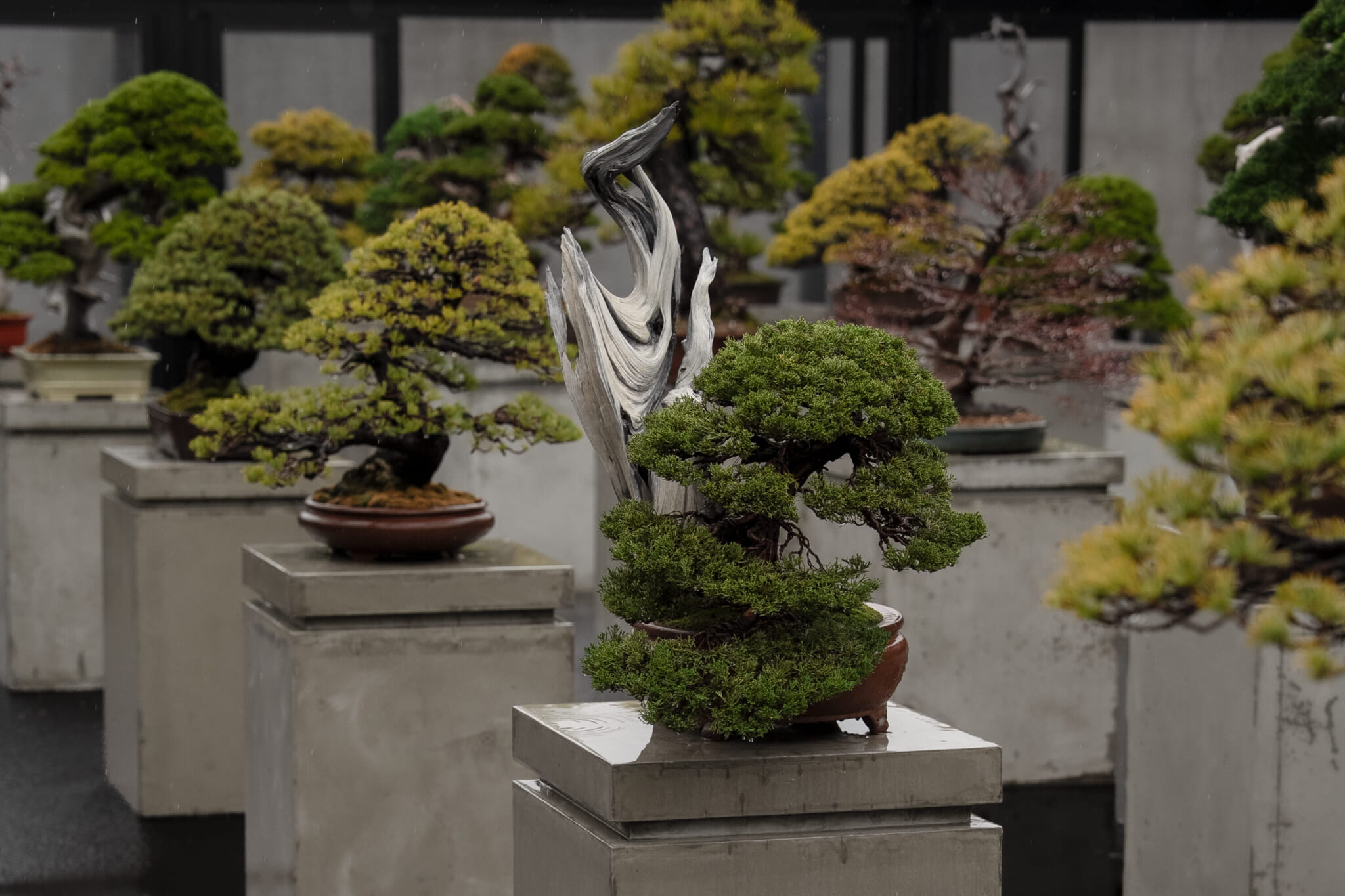
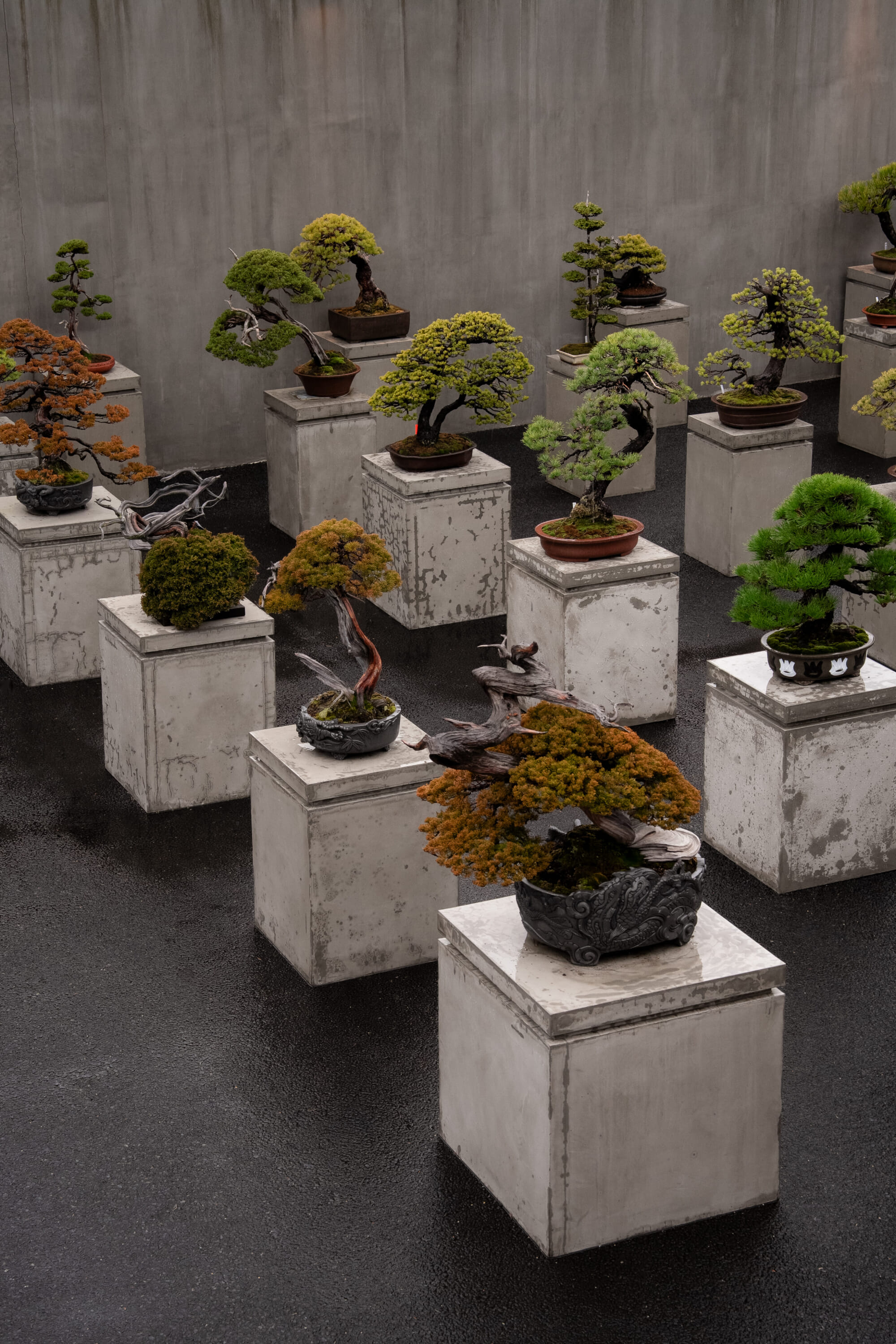
But Kojima was sure of his vision and saw no contradiction in what he was doing. “Street culture is also culture,” he says. “When different traditions mix, something new is born.” Over time, skepticism softened into support as new audiences began engaging with bonsai through Tradman’s work. Today, the brand’s trees appear in showrooms, flagship stores and installations worldwide.
Ultimately, Kojima’s desire for visibility is egoless; more than being recognized as an artist, he just wants to spread the art of bonsai. “I want as many people as possible to know about bonsai. If each household could have one bonsai tree, the world would be a more peaceful place.”
A Team of Misfits
Scrolling through the “staff” section of the Tradman’s Bonsai website, you’ll be greeted with a collection of stylish, slightly unconventional artists — with a notable member being Sho Tsuda, better known as Tackle, who recently appeared on Badly in Love, a Netflix reality dating show featuring members of Japan’s rebellious yankii subculture. The group is far from a traditional guild, and Kojima has never posted formal job listings.
“We don’t actively recruit, but somehow people naturally come knocking at our door,” he says with a laugh.
Kojima sometimes receives messages from followers, or customers will linger after events to chat. These conversations gradually evolve into collaboration, and his team has formed organically, based on shared values. “Our team is made up of people from all walks of life,” Kojima says, “but the people who can pave their own lives are the ones who stay.”
Kojima encourages individual expression rather than a unified aesthetic or brand, believing that visibility for one member amplifies the art form as a whole. The atmosphere is familial, shaped as much by late-night meals and drinks as by shared work. There’s something touching about the way they’ve all found each other — that all these people who may not fit into conventional Japanese society have come together, bonded by a traditional art form that requires patience, delicacy and discipline.
Roots, Always Roots
Ask Kojima what matters most in bonsai and he will not mention the shape of the branches or the pot. “The most important part of bonsai is the roots. They’re invisible, but without strong roots, bonsai can’t look beautiful. It’s the same for humans. You can see that someone has strong roots in how they smile and talk, and in their gestures.”
Kojima believes deeply in the emotional lessons bonsai offers and encourages beginners not to feel intimidated. His advice is straightforward: Keep your bonsai outdoors, give it sunlight and water daily. “Visit our store or join one of our workshops,” he expresses. “We’re happy to help everyone get started.”
Tradman’s Bonsai may be reinventing “Japanese cool,” but it is also doing something far more profound — connecting generations through the simple act of caring for plants. Like a pair of vintage jeans, bonsai becomes meaningful through lived experience. And in the hands of Teppei Kojima and his team of misfits, Japanese tradition is being rewired, reshaped and sent back into the world — deeply rooted, with branches always reaching.
More Info
To learn more about Tradman’s Bonsai, click here.