
Among the winding cobblestone streets of Kagurazaka lies the head school of the Enshu tea ceremony — a stately, traditional Japanese villa that seems to emerge out of nowhere as you round the corner. Waiting to welcome me inside is Sosho Kobori, daughter of the 13th-generation head of the Enshu tradition, Soujitsu Kobori, and a tea master in her own right.
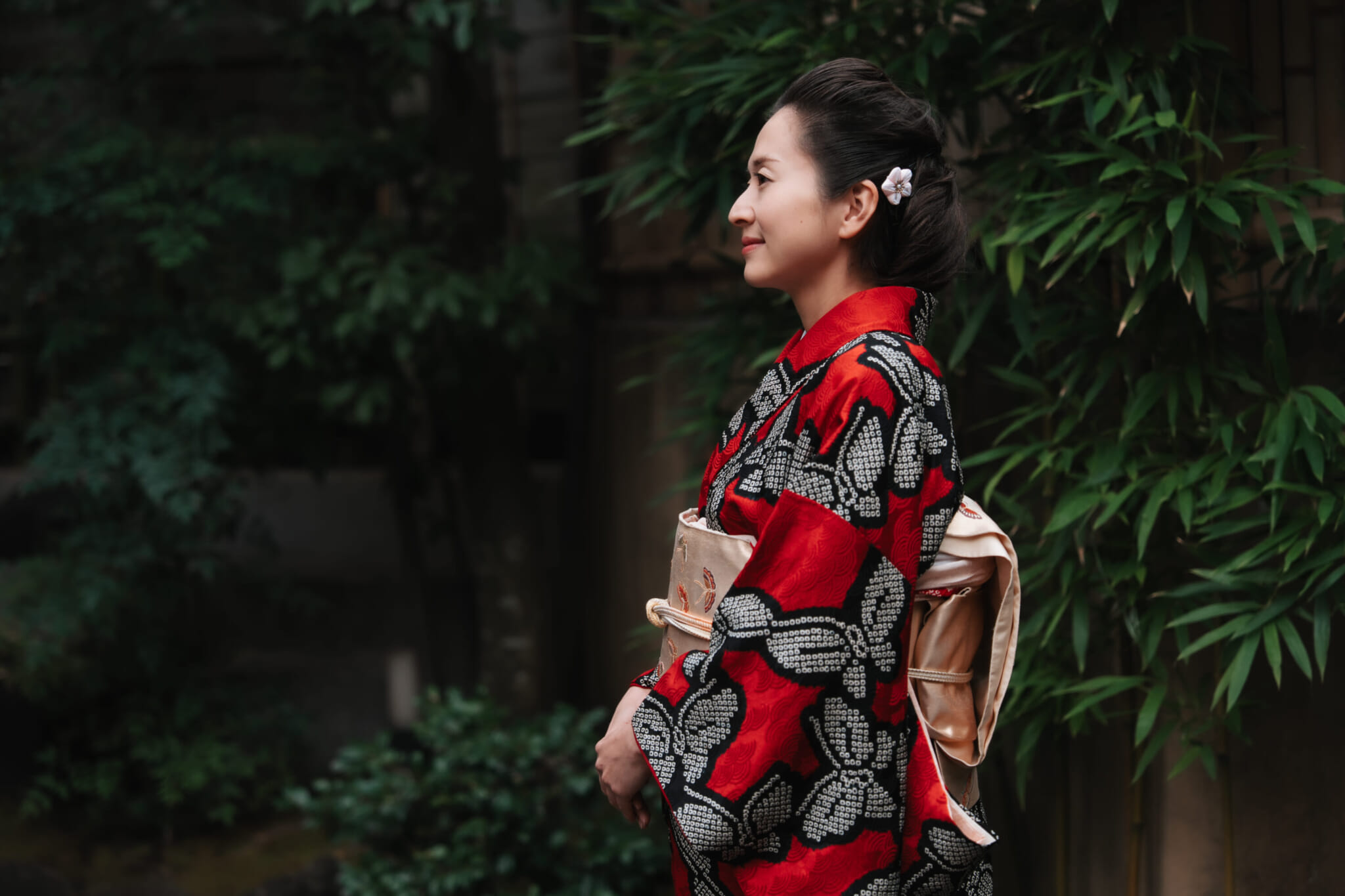
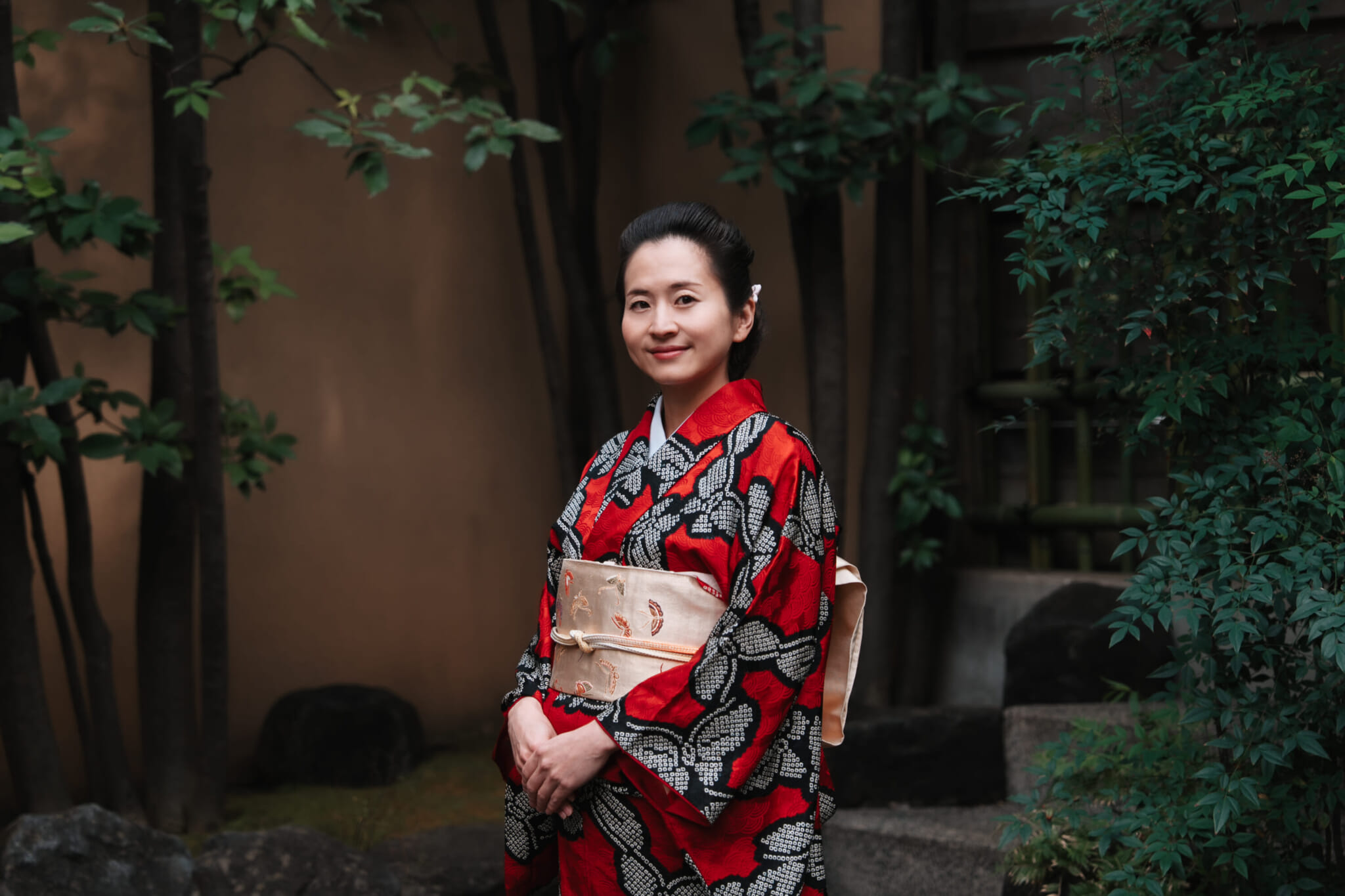
She has her hair pinned up neatly and wears a bright red, butterfly-patterned kimono. She moves with the ease of someone who’s been solely devoted to the art of the tea ceremony her entire life, but that’s actually not the case — for years, she was a professional lacrosse player.
Kobori’s life story bridges two worlds that seem, at first glance, irreconcilable: her family’s 440-year-old tea lineage and the modern world of pro sports. But the two are not so different, she argues — especially given her approach to the tea ceremony, which emphasizes freedom, flexibility and individual choice.
Graceful Simplicity
To understand Kobori’s perspective, one must first understand the Enshu school of tea. Established in the early 17th century by Kobori Enshu, the Enshu style stood in contrast to the more austere tea traditions descended from Sen no Rikyu. While the Sen schools emphasized rustic simplicity, restraint and the quiet beauty of imperfection, Enshu cultivated a more refined, open and elegant aesthetic.
The Sen schools popularized the concept of wabi-sabi — an appreciation for impermanence, subtlety and understated beauty — often conducting ceremonies in dim, intimate tearooms designed to strip away worldly distractions. Kobori Enshu, however, believed such spaces could feel severe and unwelcoming to guests. His approach instead emphasized lightness, elegance and hospitality, creating an atmosphere intended to put visitors at ease.
This philosophy of accessibility is reflected in Kobori’s own upbringing. While many heirs to centuries-old Japanese traditions undergo rigorous training from childhood, her parents allowed her the freedom to follow her own path. “I really didn’t do anything special growing up. I just grew up normally,” she recalls with a laugh.
Kobori did not begin formally studying tea ceremony until after graduating from university. That distance was intentional: It allowed her to develop a sense of self outside her family’s legacy, preserving the curiosity that eventually drew her back to the practice on her own terms.
The Athlete’s Pursuit
Kobori first discovered lacrosse in her university years, and it opened up an entirely new world to her — even the chance to represent Japan on the national team, where she played using the name Yuko Kobori. “I had this strong feeling of wanting to spread my wings and go out into the world,” Kobori explains.
That commitment eventually took her to the World Cup in Canada in 2013, where she had a humbling experience. In a practice match against the United States, the Japanese team lost by a double score. “My heart broke,” Kobori recalls. “Since college, I had this glittery vision of myself representing Japan, and the United States team looked so cool just by wearing their USA T-shirts. I felt like we were just one tiny country in Asia — that’s how shocked I was.”
It was amid this heartbreak that Kobori rediscovered her greatest strength. Physically exhausted and wrapped in bandages, she began preparing matcha for her teammates. “Athletes from all over the world joined us. They knew matcha and really respected it, and wanted to take part,” she says with a smile. “In that moment, I realized that matcha was my true weapon.”
Silence and Movement
Returning to Japan, Kobori committed to living a double life, balancing being a full-time tea master and a professional athlete. “On weekdays, I would wear a kimono and teach tea ceremony, and on weekends, I would get out on the field in my lacrosse jersey for club practice,” she says.
Ultimately, Kobori feels that lacrosse and tea ceremony are not opposing forces, but synergistic facets of her identity. “In Japan, there’s this concept of sei (silence) and dou (movement). Most people would relate tea to sei and sports to dou, but I actually think it’s the opposite,” she reflects.
“In tea ceremony, your movement and breathing flows, and you never stop. Whereas in lacrosse, even though I’m running around, there’s tension with the goalkeeper, and you’re trying to find stillness to score. Silence and movement coexist, and understanding tea ceremony and sports deepens my appreciation of both.”
The Modern Master
Today, having retired from competitive lacrosse, Kobori is channeling her formidable energy into the world of tea. Her teaching philosophy remains fluid, prioritizing mindset over rigid adherence to tradition. When guests enter her tearoom, she adapts her approach entirely to their needs. With stressed corporate executives, for instance, she asks them to remove their watches and put away their smartphones. With athletes, she frames tea as a way to cultivate mindfulness and sharpen focus during the offseason.
She also wants to dismantle the notion that tea can only be practiced on tatami mats, enclosed by shoji screens. “I don’t want to be confined to my tearoom,” Kobori says. “I really value being able to practice tea anywhere, at any time.” Armed with a beautifully designed portable tea box, she brings tea ceremony wherever she goes — hosting gatherings on stages, athletic fields and even in saunas, proving that the essence of tea transcends any particular setting.
More Info
Follow Kobori on Instagram.
Related Posts
- Yui Hasegawa Discusses Women’s Soccer on the Global Field
- 7 Places for Authentic Japanese Tea Ceremony in Tokyo
- A Day in the Life of a Japanese Tea Ceremony Host
Updated On July 27, 2026