The wedding dress arrives already finished. Worn once, photographed, returned to the rental hall with its damage intact — a stain along the hem, a tear at the seam — and quietly retired. Its occasion is over, and by most measures, so is its life.
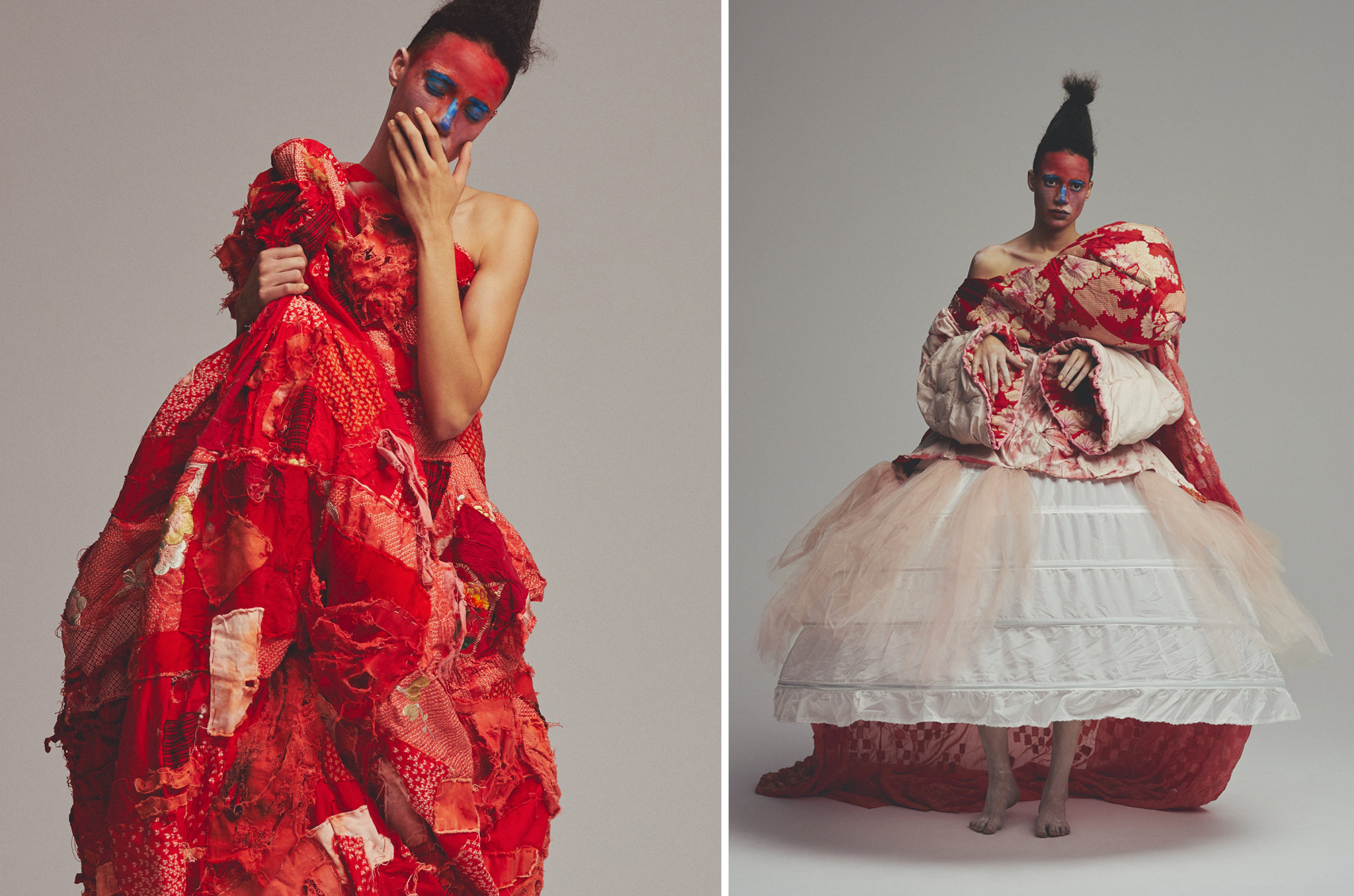
Hana Yagi sees it differently. The 26-year-old Tokyo designer collects these discarded dresses, dismantles them and recombines them into new forms. She doesn’t attempt to remove any stains, instead dyeing over them and making the flaws part of the garments.
In Japan, the white of a wedding dress has a specific subtext beyond just purity: the idea that a woman arrives as a blank canvas. “The white of the wedding dress … has also been described as the color of readiness to be dyed by the family one marries into,” Yagi tells TW. “I feel there is a patriarchal value system lurking within this tradition, one that asks women to erase their own identity and individuality.” At the heart of her work is a steadfast refusal of that erasure.
The Sanguine Brides From Hell
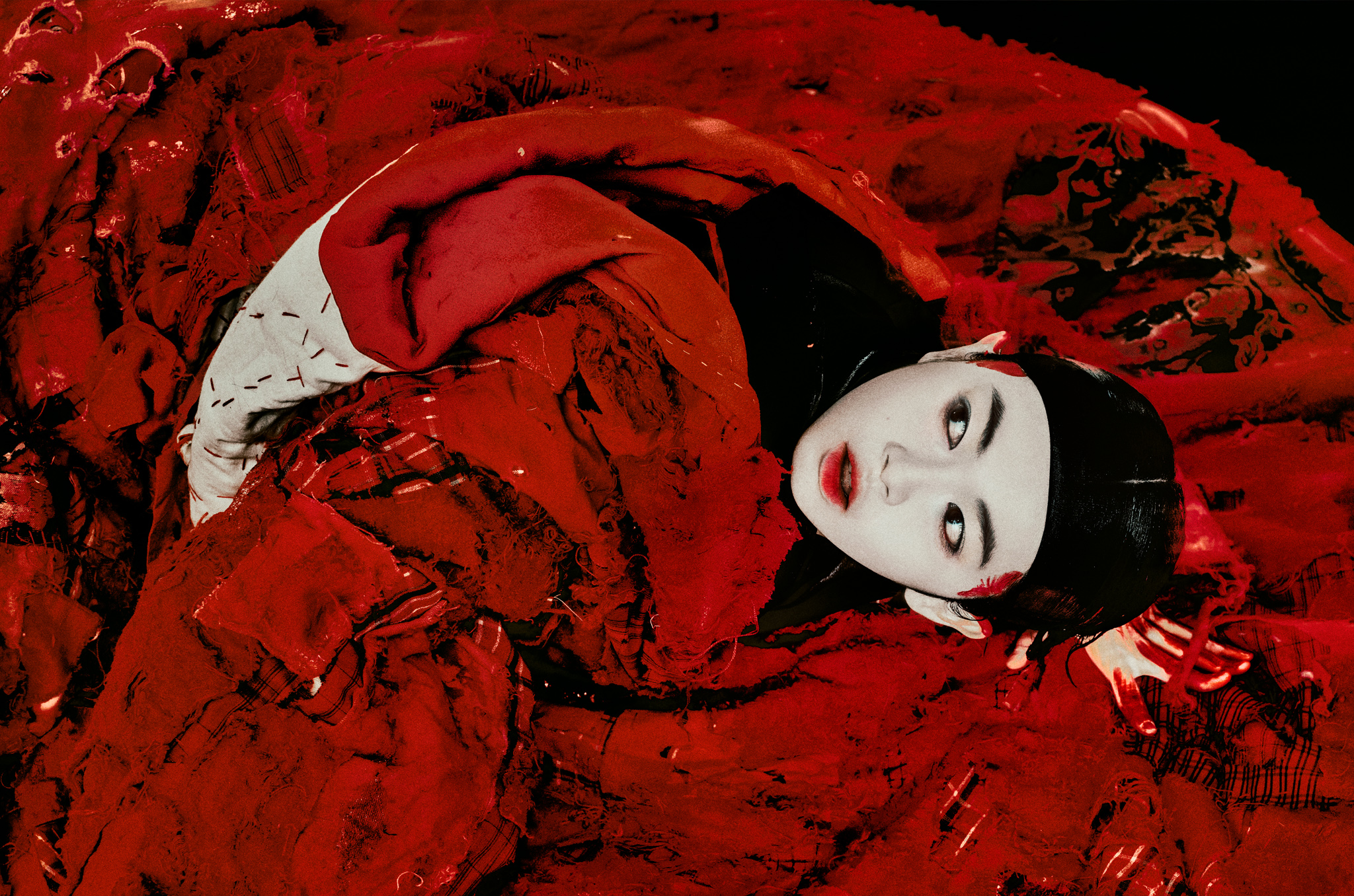
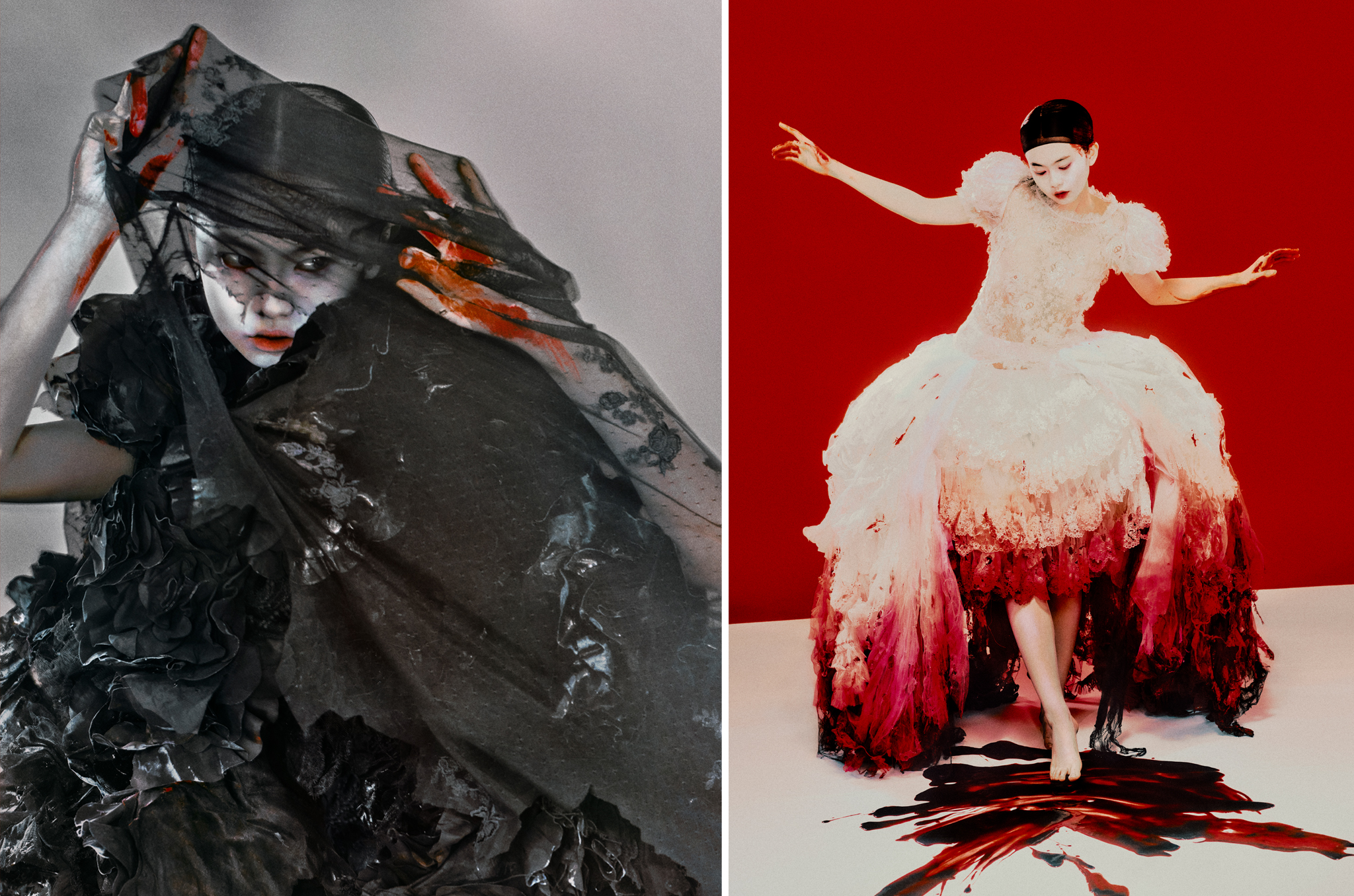
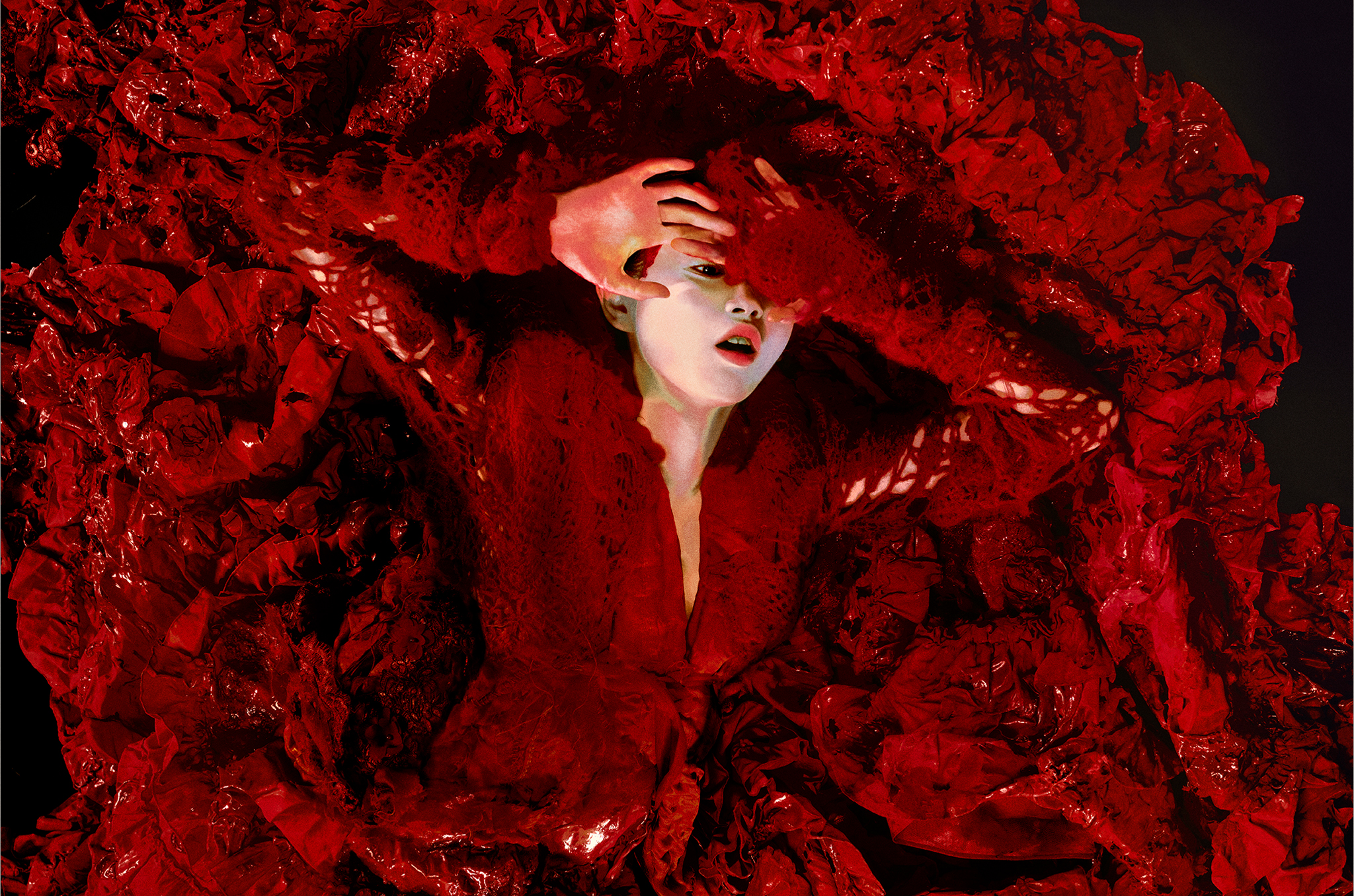
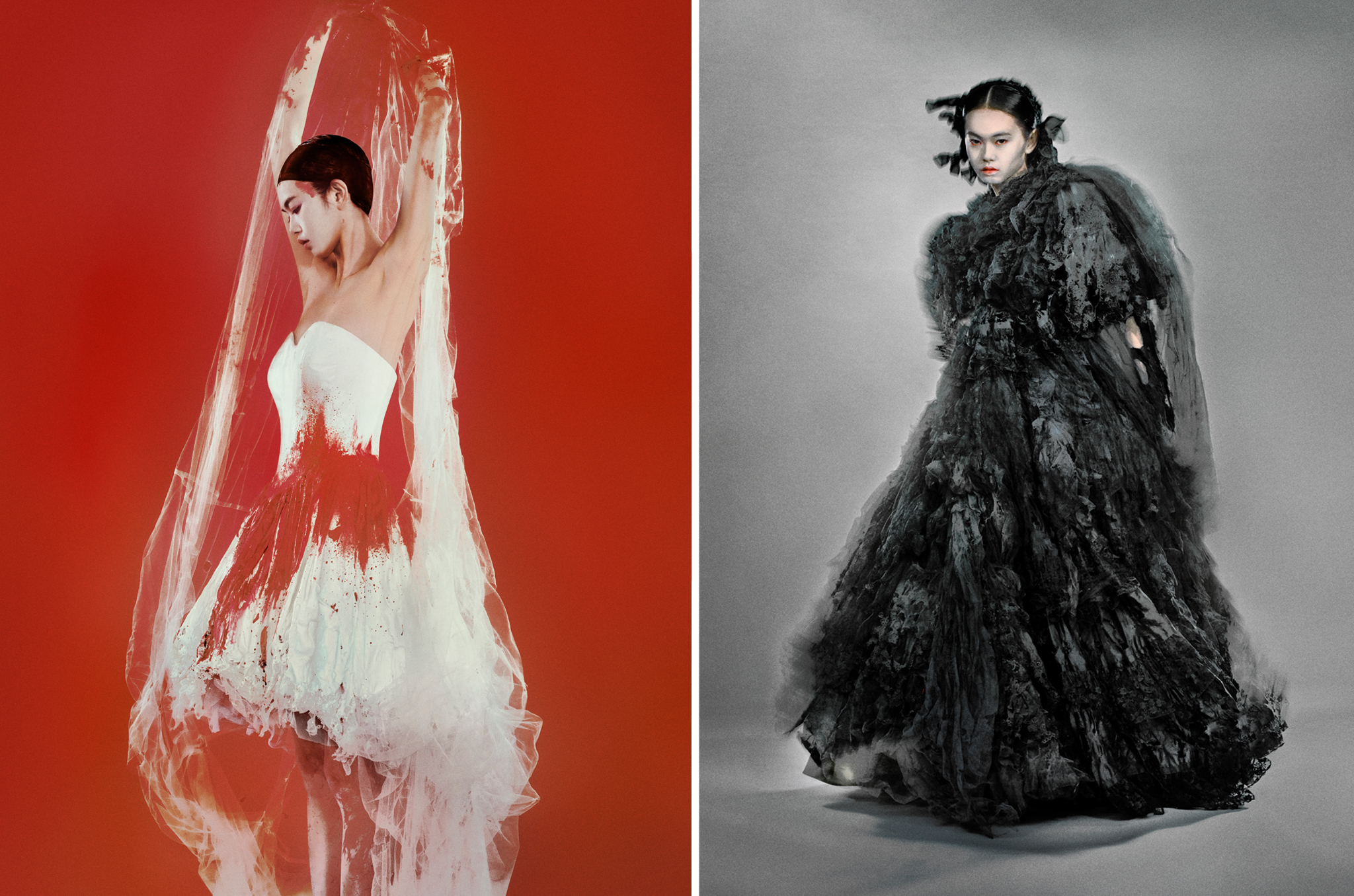
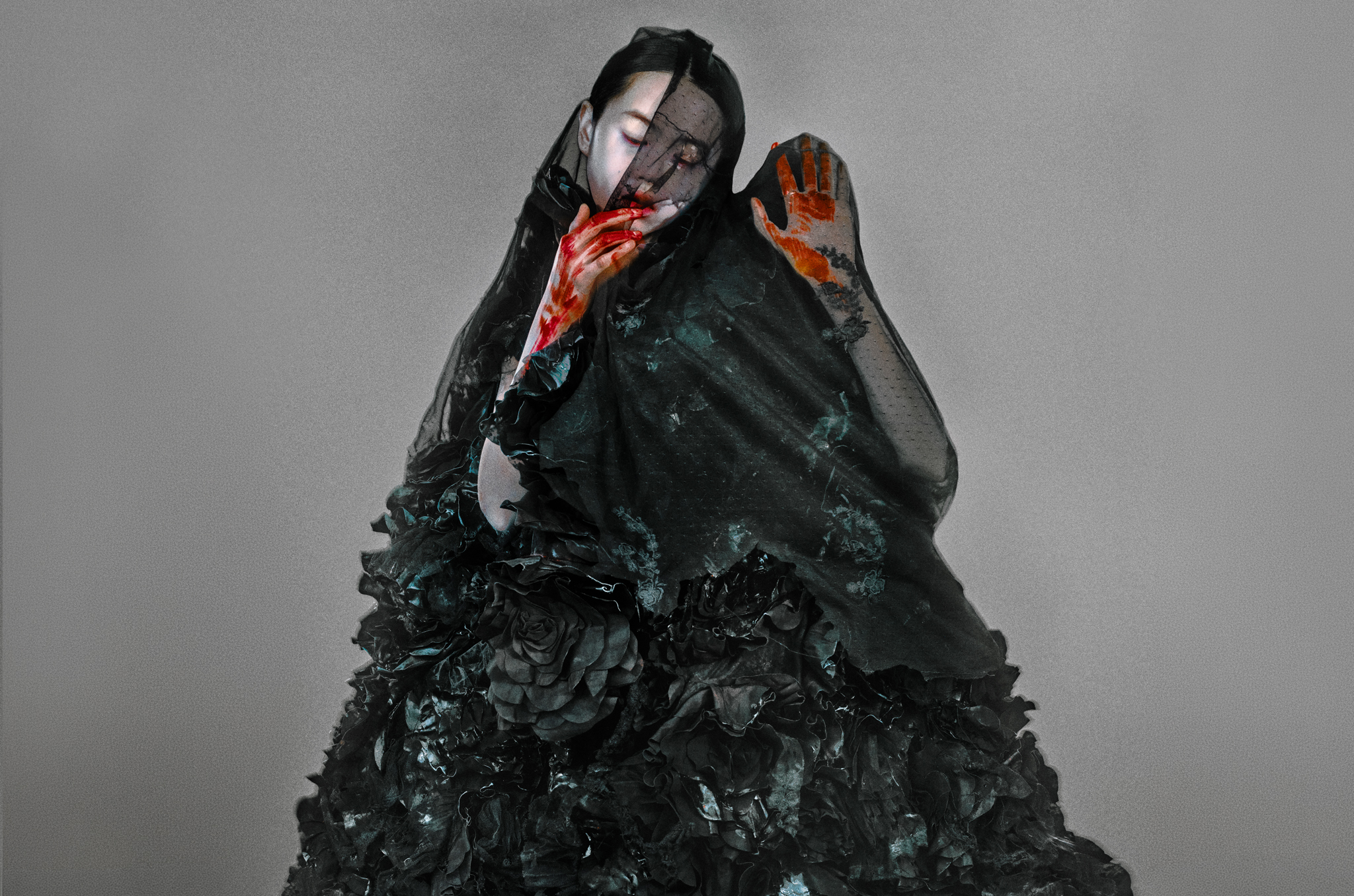
Wedding dresses are a recurrent motif across Yagi’s work. Her 2024 “Sanguine Bride” collection was the first project built entirely around them — works made from ornate gowns and white kimono that had been rented out at wedding halls, returned damaged and discarded. She deconstructed the garments and dyed them in saturated crimsons and pooling blacks, dismantling the mythology of bridal purity from the inside out. The question her work poses is an uncomfortable one: Why has female virtue always been so bound up in blankness, and in the willingness to be written on?
There is a visceral quality to her dresses: In the photos she initially released to announce the collection, a lone bride stares back at the camera defiantly, her fingers and limbs streaked in blood, as though she had just crawled out of hell. A sense of violence is palpable — Yagi is literalizing, through red paint, the self-abnegation that’s expected of women. But there’s also something moving, almost inspiring, about her creations: a bride in bright red or shades of black, not just breaking from tradition but rejecting it altogether.
That same defiance and bridal motif runs through “Brides in Hell,” a smaller capsule collection she released in 2024 with Heap, a Japanese lingerie brand. It serves as an extension of the vision behind “Sanguine Bride”: a bra made from crisp, burnt lace. A unisex, oversized jacket printed with a corset motif on the back — a garment that has historically been used to reshape a woman’s body to someone else’s ideal, now worn openly, on the outside of one’s clothes, as its own kind of disobedience.
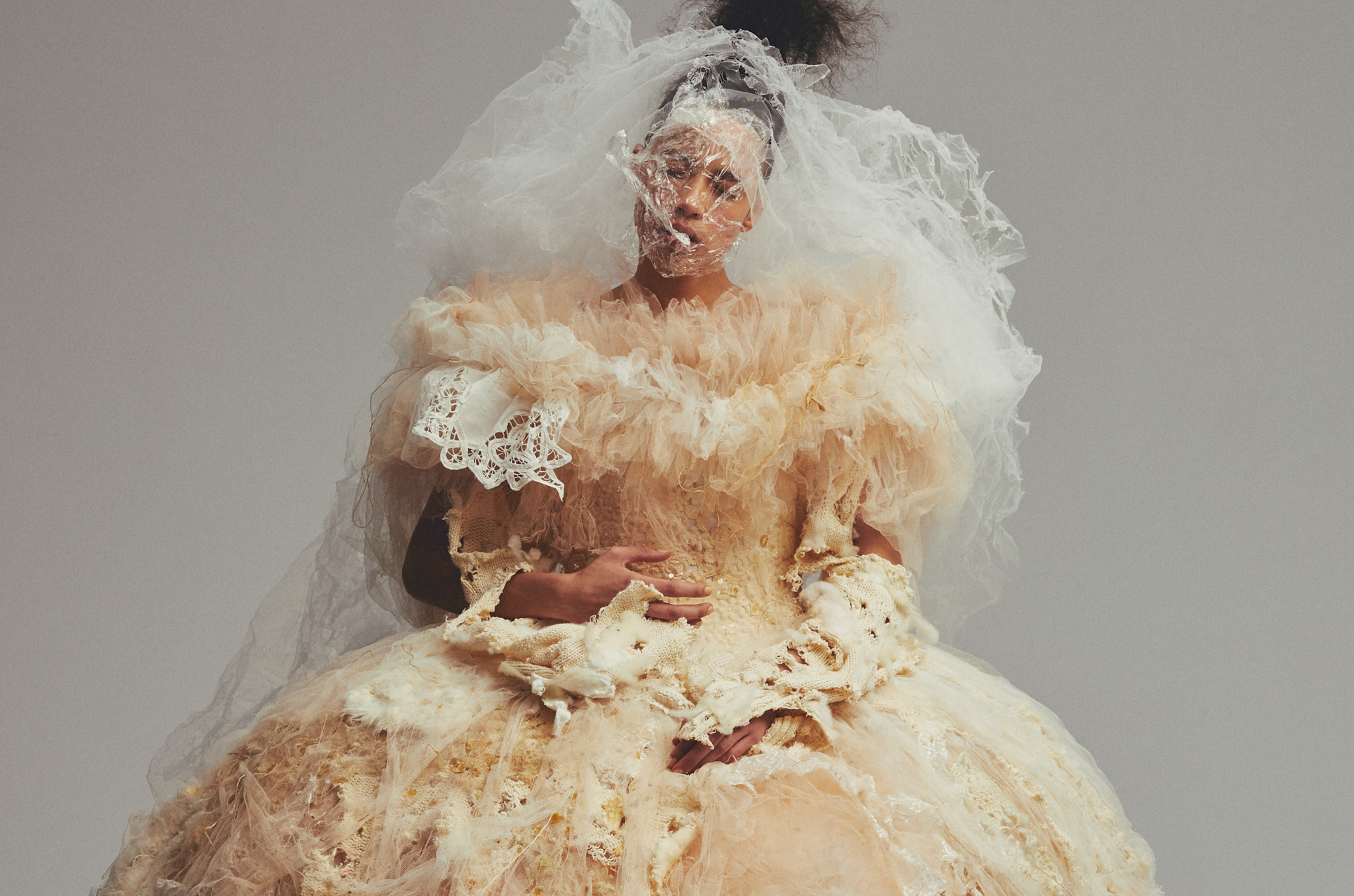
Starting From the Inside Out
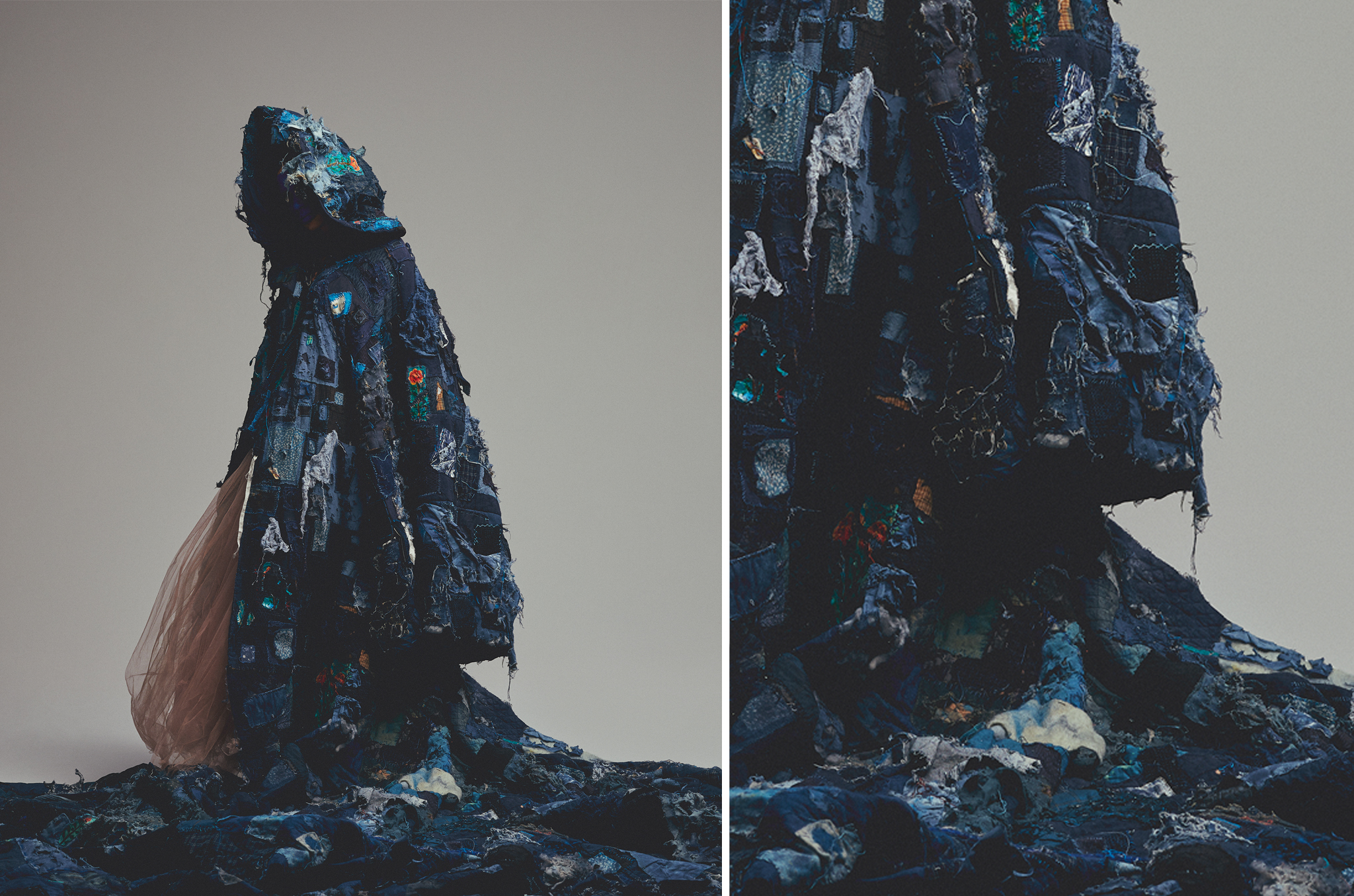
Yagi has long been drawn to reconstituted clothing. At age 19, she submitted her first-ever collection, “Repair,” to the International Talent Support (ITS) competition in the maritime city of Trieste, Italy. The line was inspired by boro, a textile tradition born in the northern regions of Japan, where cotton was scarce and winters were brutal. Rather than discard worn-out garments, families patched, mended and passed them down, layering scrap upon scrap until a single piece could contain generations of repairs. Much of this labor fell to women, who strengthened the fabric repeatedly with dense stitching, transforming clothing on the brink of disintegration into something entirely new.
It was, she admits, an anxious gamble. “I was worried about how far this domestic context would carry,” she says — would boro mean anything to people thousands of miles removed from its historical context? “But I actually felt that it did come through. That experience gave me a real sense that work rooted in your own origins and personal sensibilities can transcend national and cultural boundaries, and it became a profound source of joy in making work.” She was named a finalist.
Since then, she’s continued to transform discarded gowns and worn cloth into something lively and otherworldly, to much acclaim; last year, she was named to Forbes Japan‘s 30 Under 30 and Dazed Korea‘s Dazed 100.

Listening to Old Cloth
The reason that Yagi works almost exclusively with old cloth and pre-owned garments, she says, is that she’s drawn to the memories that linger in the fabric. Before starting work on something, she’ll ask herself: Who wore this? What social context or era does its design belong to? “Letting my imagination move through those questions is itself a creative act for me,” she explains. Deconstruction, in her hands, is less an act of destruction than of listening — pulling apart the seams to hear what’s inside and combining these stories into something completely new.
Her ideas, she says, often come from the material itself. “Rather than drawing a design and then executing it, I develop pieces gradually by looking at and touching the materials. The abstract concepts and sensations get put into words only after the work is complete.”
She is careful, too, about the Japanese traditions she draws from. The mending handiwork of boro and kintsugi, and the layering of kimono — each carries its own history, and she approaches all of them with respect, though she isn’t afraid to break from strict adherence to tradition. “If you’re too bound by history,” she says, “the work risks becoming a mere replica. It is precisely because I have reverence for these motifs that I want to expand them through my own contemporary perspective.”
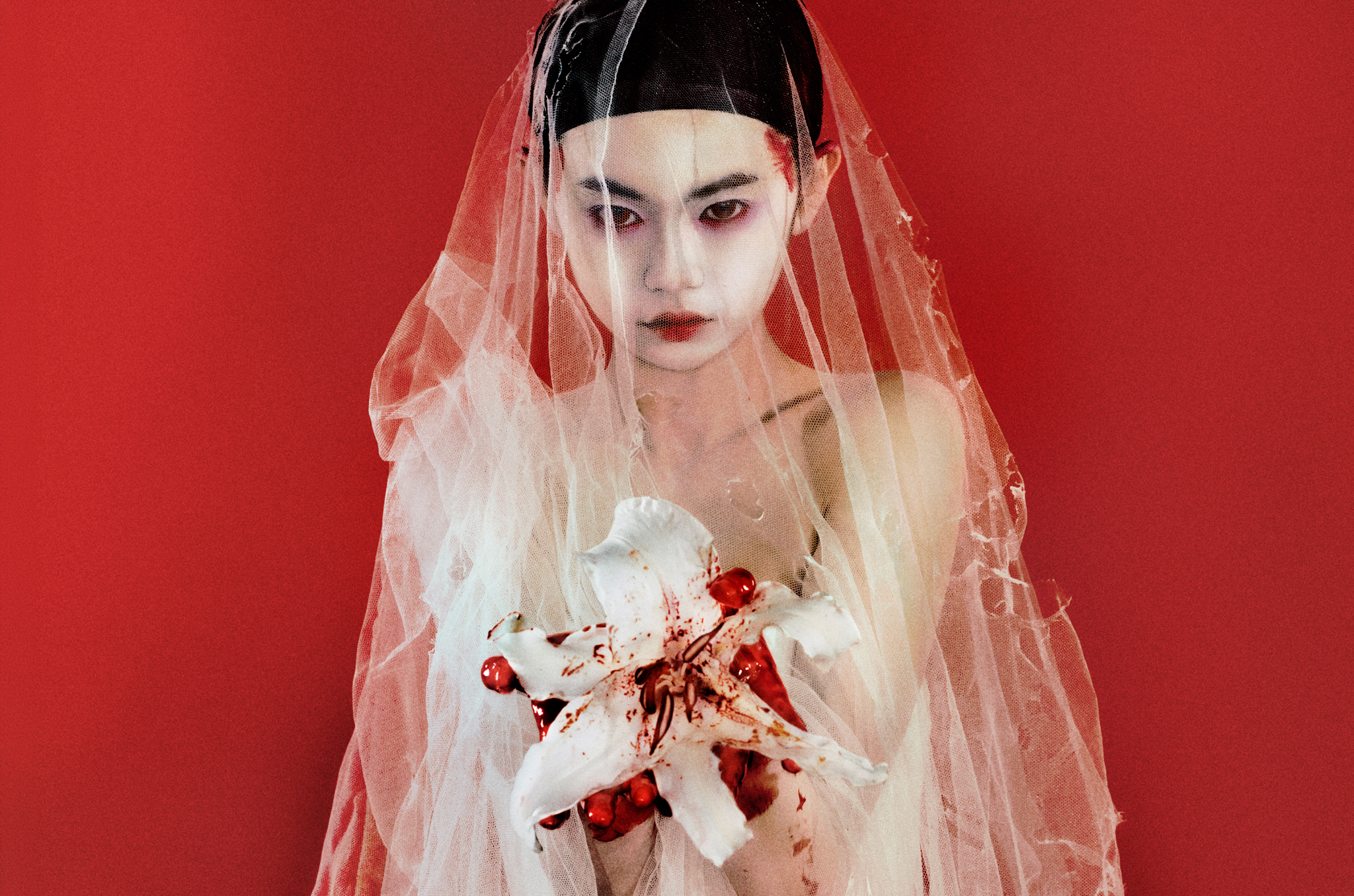
The Feeling Behind the Face
Yagi is already thinking of her next step; at the moment, she’s preparing a new collection, one that also involves reconstructing previously worn wedding dresses. But the end product this time is different: Where “Sanguine Bride” and “Brides in Hell” channel defiance outward — their politics worn on the surface, saturated in color — this new work turns inward, using the same raw material to explore the complexity of emotion itself.
She can’t reveal much yet, but her focus this time is on the faces we show the world, compared to the feelings we keep hidden beneath them. She has been preoccupied lately with a particular kind of human contradiction: the way you can be furious and find yourself laughing, the way grief sometimes looks, from the outside, like composure.
“I’m fascinated by that gap between what we feel and how we express it,” she says. “I’m experimenting with how to translate that ambiguous, contradictory feeling into something visual.”
For a designer who has spent her career working with what has been discarded, damaged or suppressed, it feels like a natural next question: not just what women have been asked to wear, but what they have been asked to conceal as well.
More Info
Follow Yagi on Instagram.