Japanese selvedge denim has long held a certain mythical glow. Woven slowly on old-fashioned shuttle looms, the durable fabric is renowned for the way it transforms over time; stiff and deep indigo at first, selvedge jeans gradually mold into patterns specific to the wearer — soft creases behind the knees, lighter fades down the thighs. These well-aged pairs are cherished as heirlooms by devotees, washed rarely, worn daily and treated with the kind of reverence reserved for vintage film cameras or handcrafted leather.
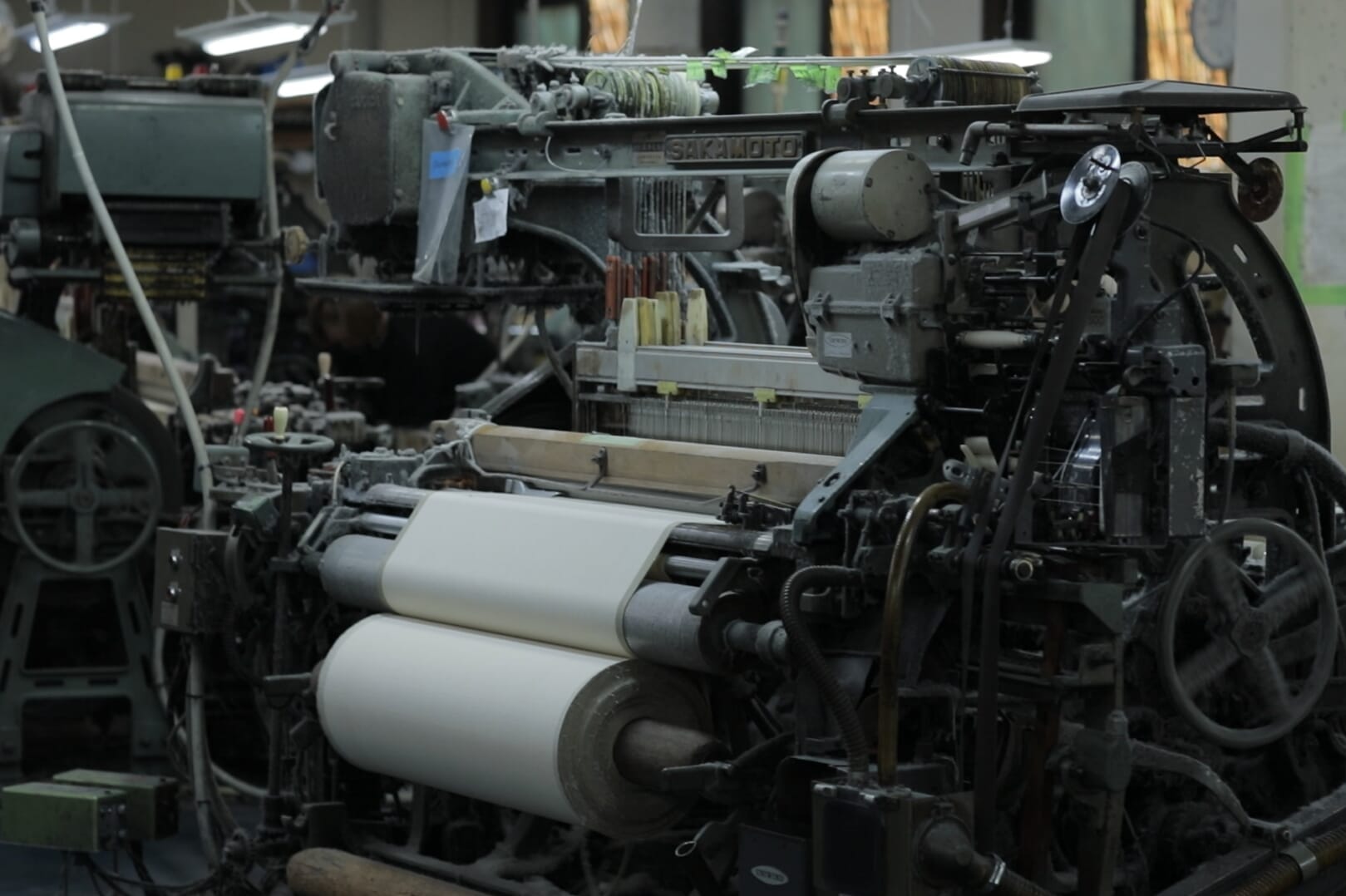
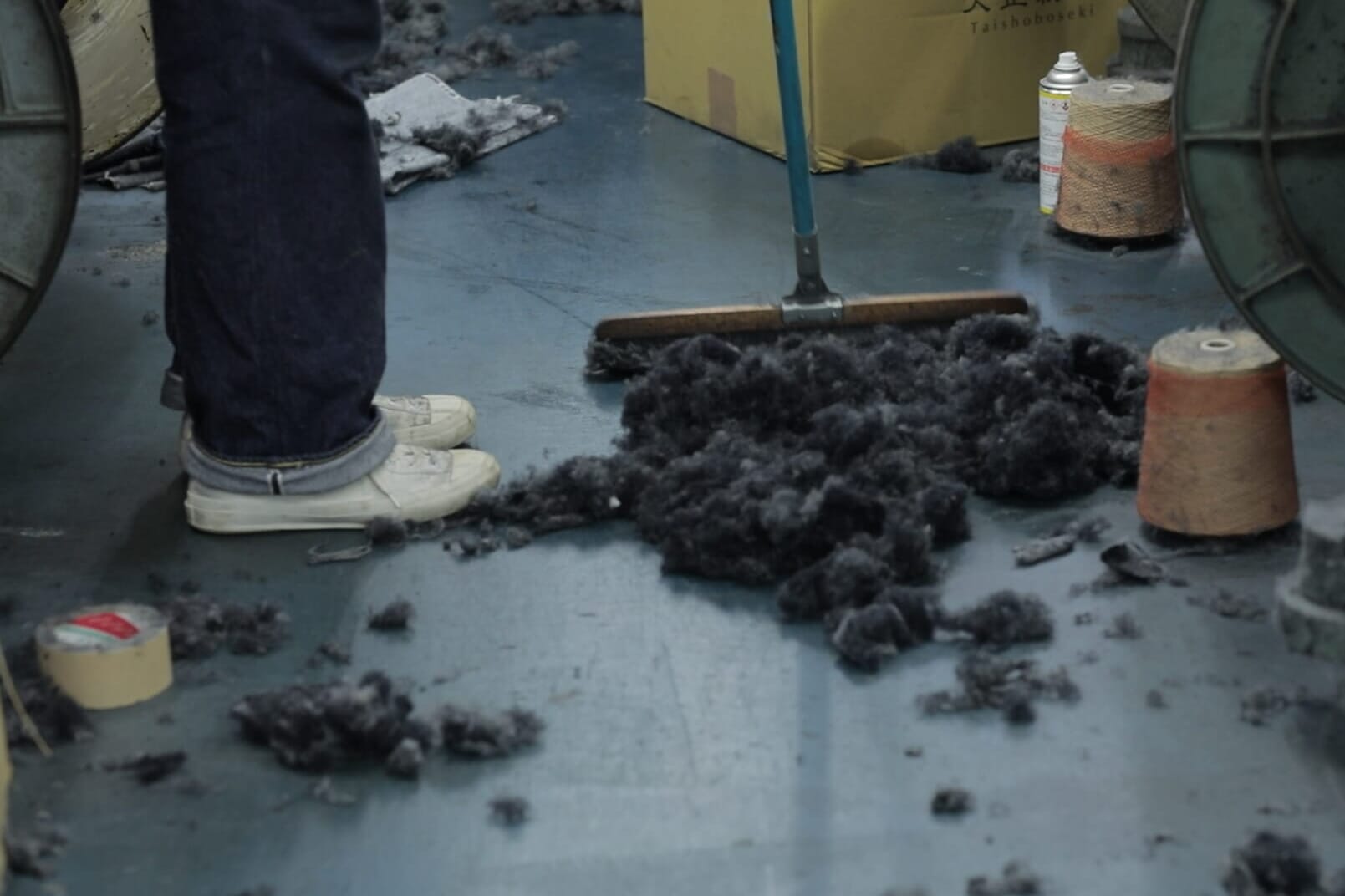
Okayama Prefecture, widely considered the birthplace of Japanese denim, is like a pilgrimage site for collectors. But the romance evaporates the moment you step inside one of the mills where the coveted fabric comes into being. Looms that are 60, 70 years old jitter in near-constant, teeth-chattering vibration. In the summer, indoor temperatures climb past 45 degrees Celsius, topped off with a dull, suffocating humidity. The work is repetitive and physically demanding, shouldered by an aging community of weavers tending to temperamental machines deemed obsolete by much of the fashion industry decades ago.
This is the world lovingly captured in Denim Legends: The Last Weavers of Japan, an independent documentary currently in postproduction. Directed, shot and produced entirely by Paris-based filmmaker Jiawa Liu, the documentary follows French denim artisan Arthur Leclercq as he becomes what may be the first non-Japanese individual ever granted apprenticeship inside a Japanese denim weaving mill.
Over two sweltering months, Leclercq entered a closed working world with no shared language, learning from veteran weavers whose knowledge base only persists through direct transmission. For Liu, what began as a personal record of a rare opportunity became something much larger: an attempt to honor the most invisible link in the denim supply chain, and to give a face to a disappearing craft largely overlooked by its most avid consumers.
Boy Meets Machine
As a teenager, Leclercq spent much of his time at his grandparents’ farm in Charente-Maritime, France, more interested in tractors than anything he was learning in school. So when his first pair of Japanese jeans started shifting color and creasing strangely after a few months of wear, Leclercq found himself fixated not on the fabric itself, but on the machines that had produced it. He wanted to know more, and ended up on an obscure Japanese website cataloging the looms once in use at Levi’s factories. “I fell in love directly with the machines,” he reflects. “My real love for jeans is [about] the mechanics behind the clothes.”
This fascination eventually led him to launch Superstitch, his Paris-based denim label, in 2020. The brand has built a cult following for its faithful reproduction of workwear from the 1930s to 1970s, crowned the “golden era” of denim. Instead of relying on ready-made fabric from suppliers, the pieces are developed from scratch in partnership with Okayama weavers working on vintage shuttle looms.
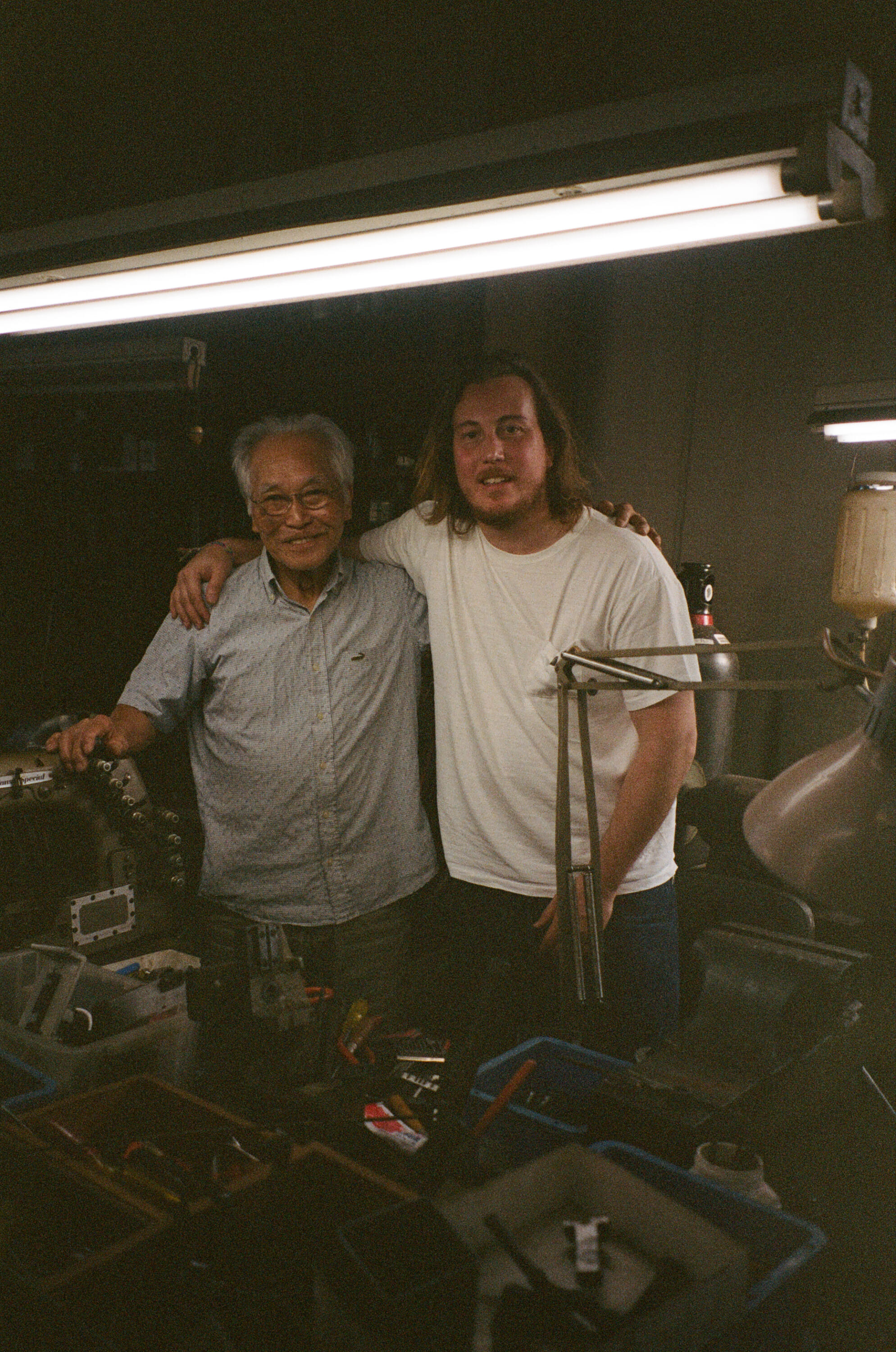
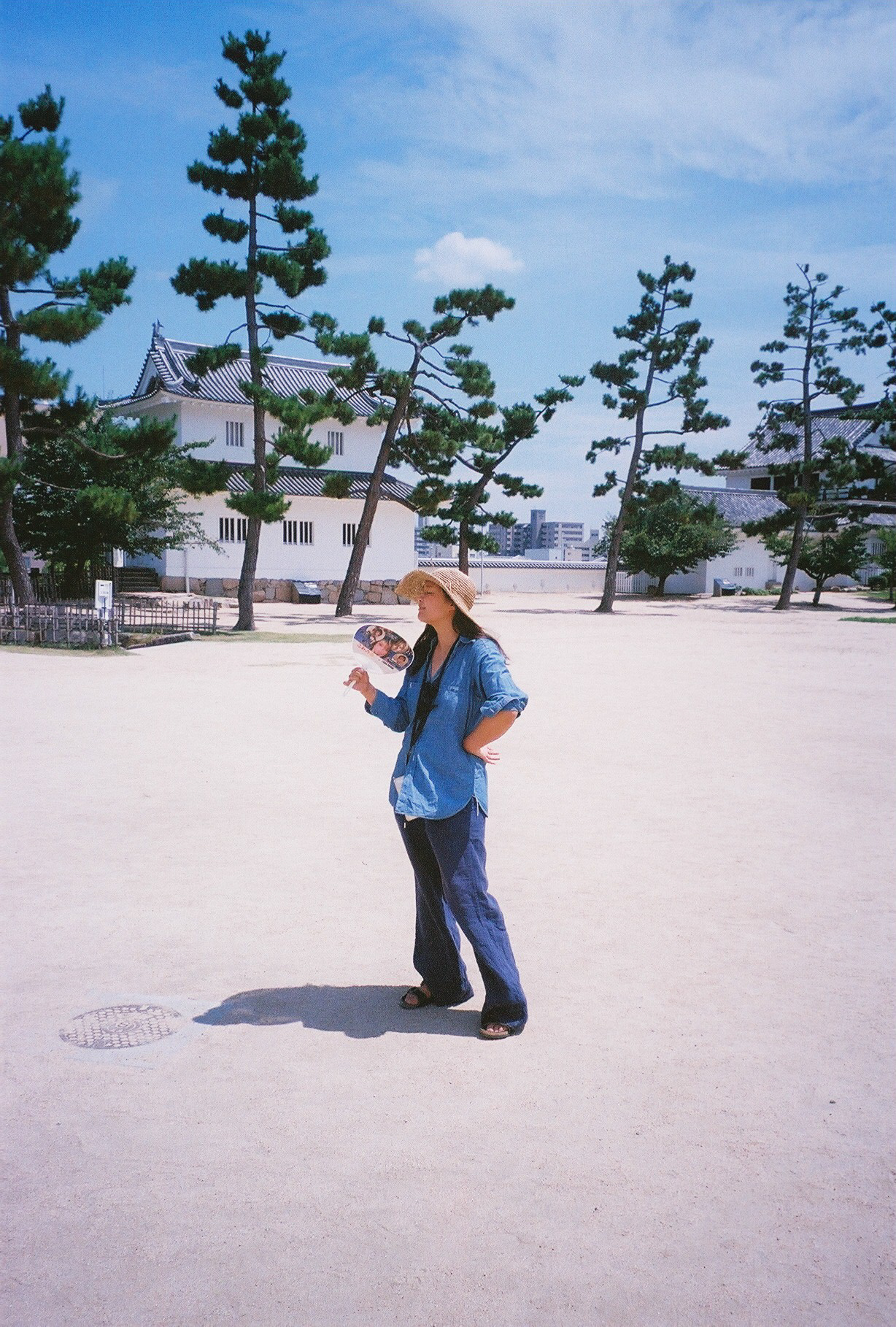
A few years ago, Leclercq and Liu traveled to Ibara city, Okayama, to meet Hideo Yamaashi — the owner of Yamaashi Orimono, a family-run mill the brand had been sourcing from for some time. Leclercq “was literally in tears, excited like a child” when they arrived on-site, Liu remembers. But Yamaashi barely said a word during their first meeting. “No expression, nothing,” Leclercq says. “Just the sound of the shuttle looms downstairs — so loud the whole building was shaking.”
Convinced he was making a bad impression after 20 silent minutes, Leclercq reached for a poster he’d brought from Paris, showing Superstitch jeans at different stages of fading — the fabric Yamaashi’s mill had woven, made beautiful by years of wear. Yamaashi’s face finally broke into a smile. “It was like he suddenly woke up. His demeanor changed completely, and he promptly led us into the workshop,” Leclercq recalls.
“It was one of the only times that Yamaashi-san would have seen his own fabric made into jeans, and see what it looked like two years later,” Liu says she later realized. “The weavers almost never get to see the end product.”
The Weaver’s Apprentice
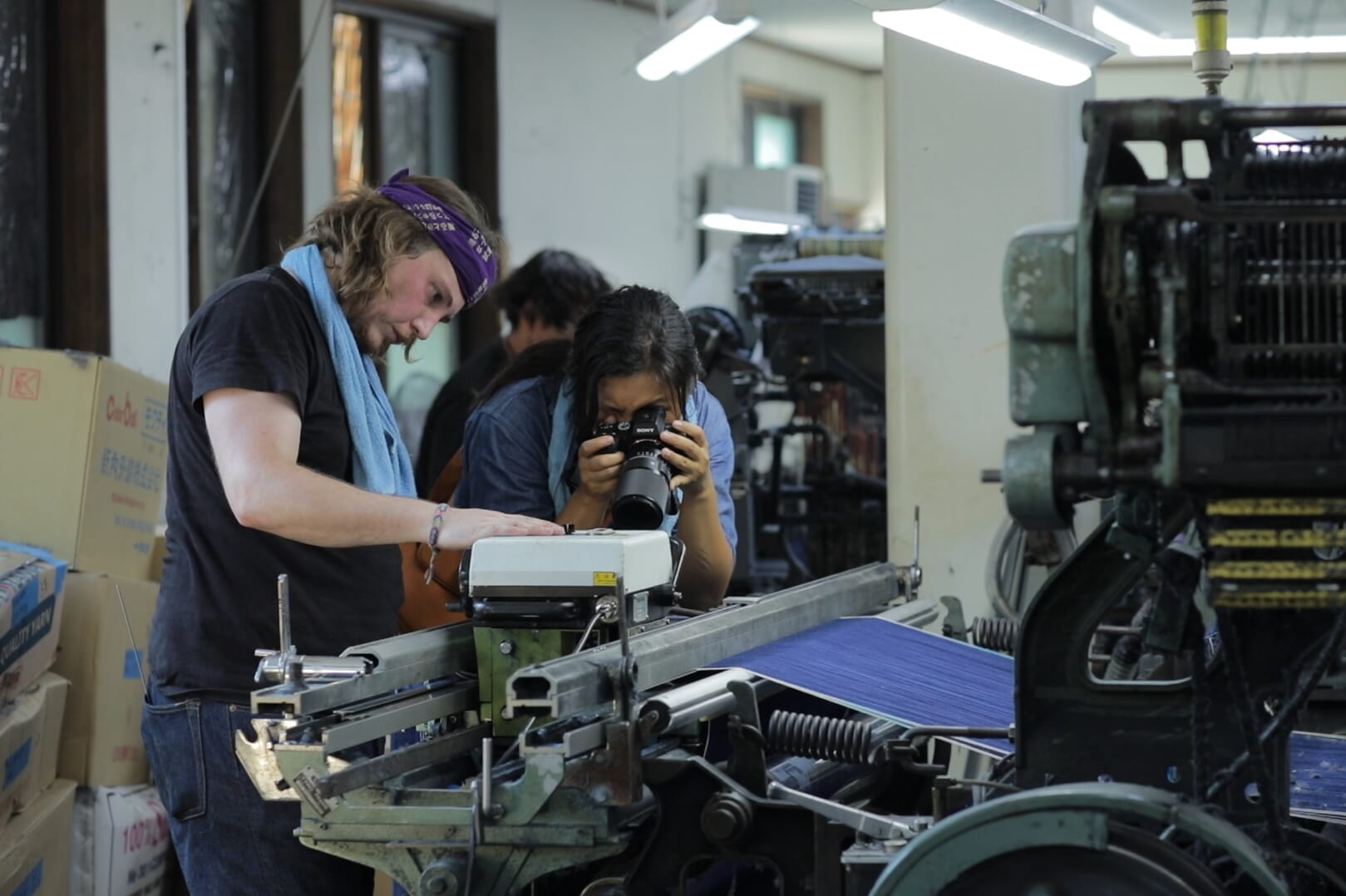
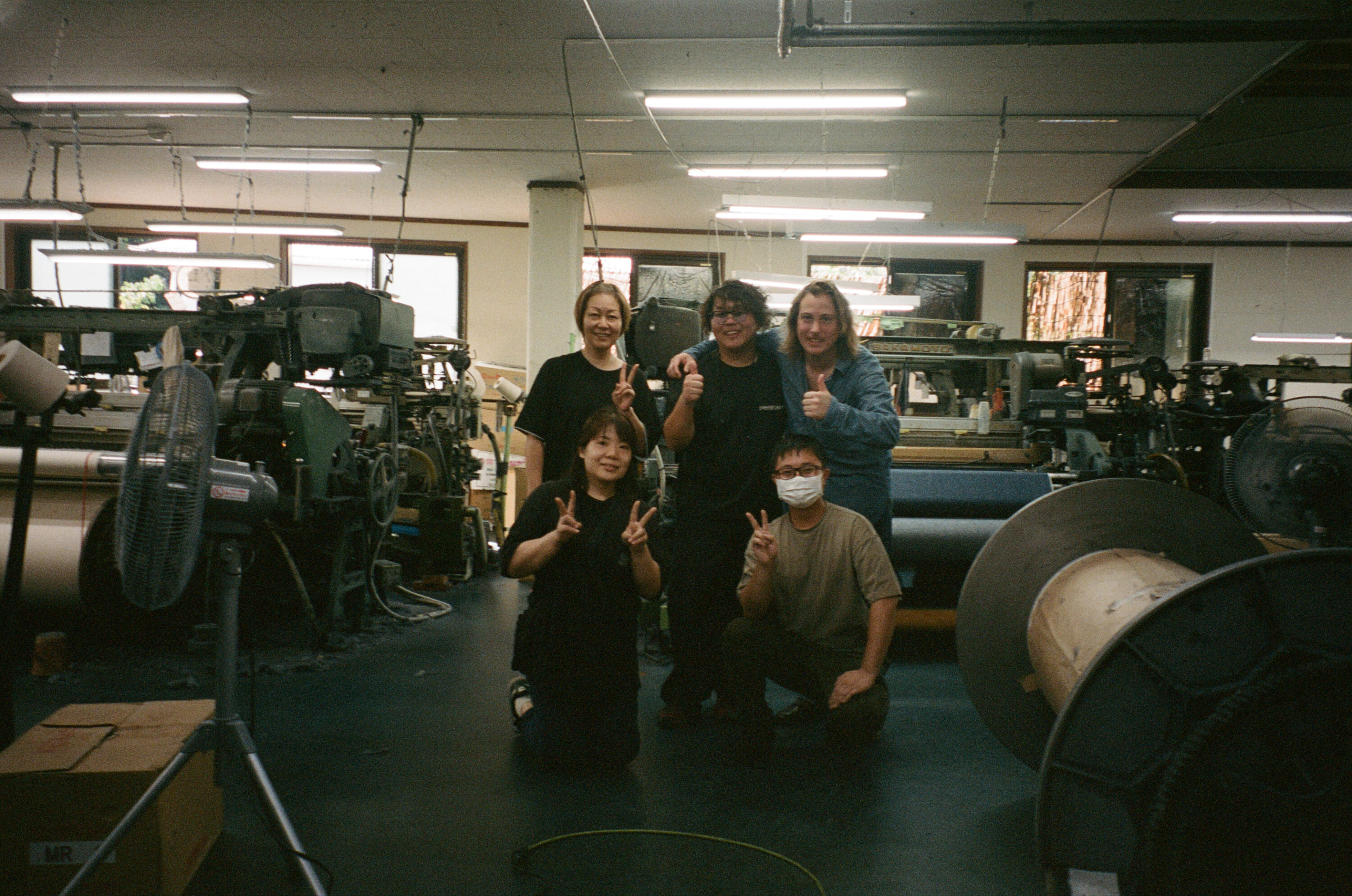
To fully understand his brand’s foundational fabric, Leclercq arranged to come back to the mill the following summer as an apprentice. He intended to stay a few weeks; instead, he was there for months. Liu tagged along without imagining she would capture the trip in a full documentary.
“I didn’t think [Yamaashi and the weavers] would let me film,” she says. “But they thought it was a great idea — I just couldn’t have a team or bulky equipment. I had to be very discreet, basically invisible.”
Each morning began with a train ride. From their home base in nearby Fukuyama, Leclercq and Liu would catch a local train that was only a single car long. The only other passengers were local students on their way to school, and Leclercq fell into their daily rhythm — konbini donut and takeout coffee in hand — as the train rattled toward Ibara. “I felt like a student, too,” he muses, “going to study something, with my breakfast from 7-Eleven.”


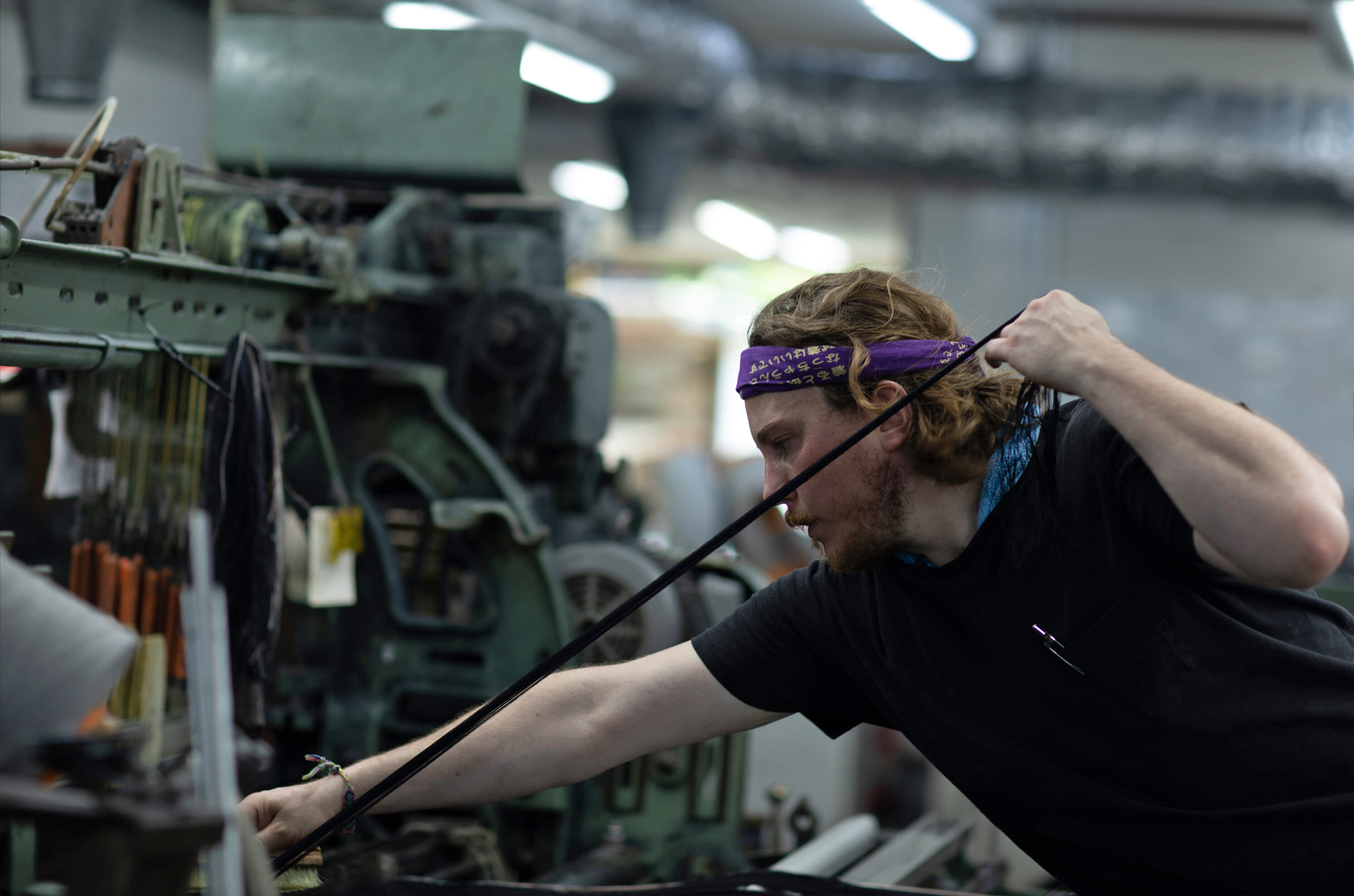
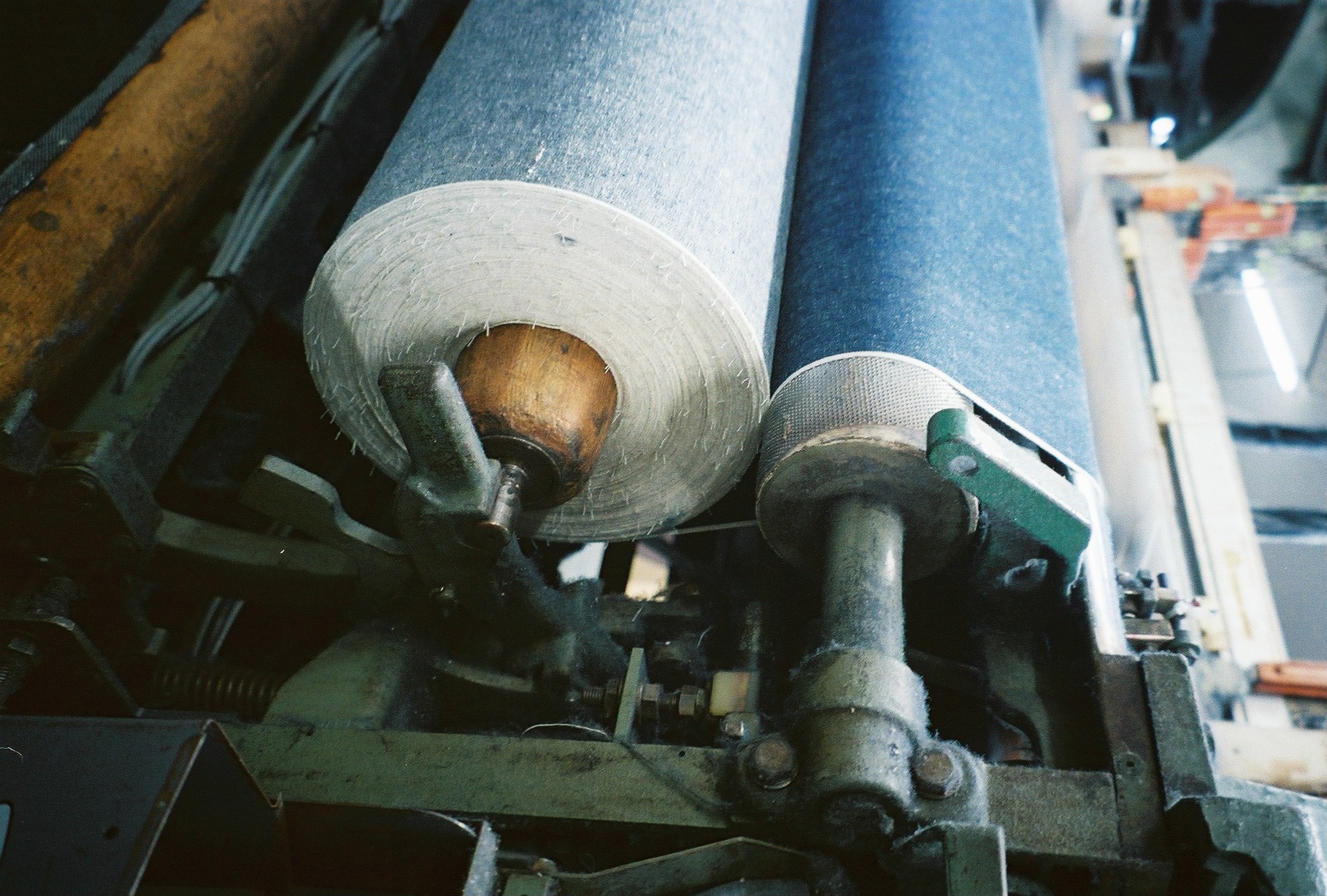
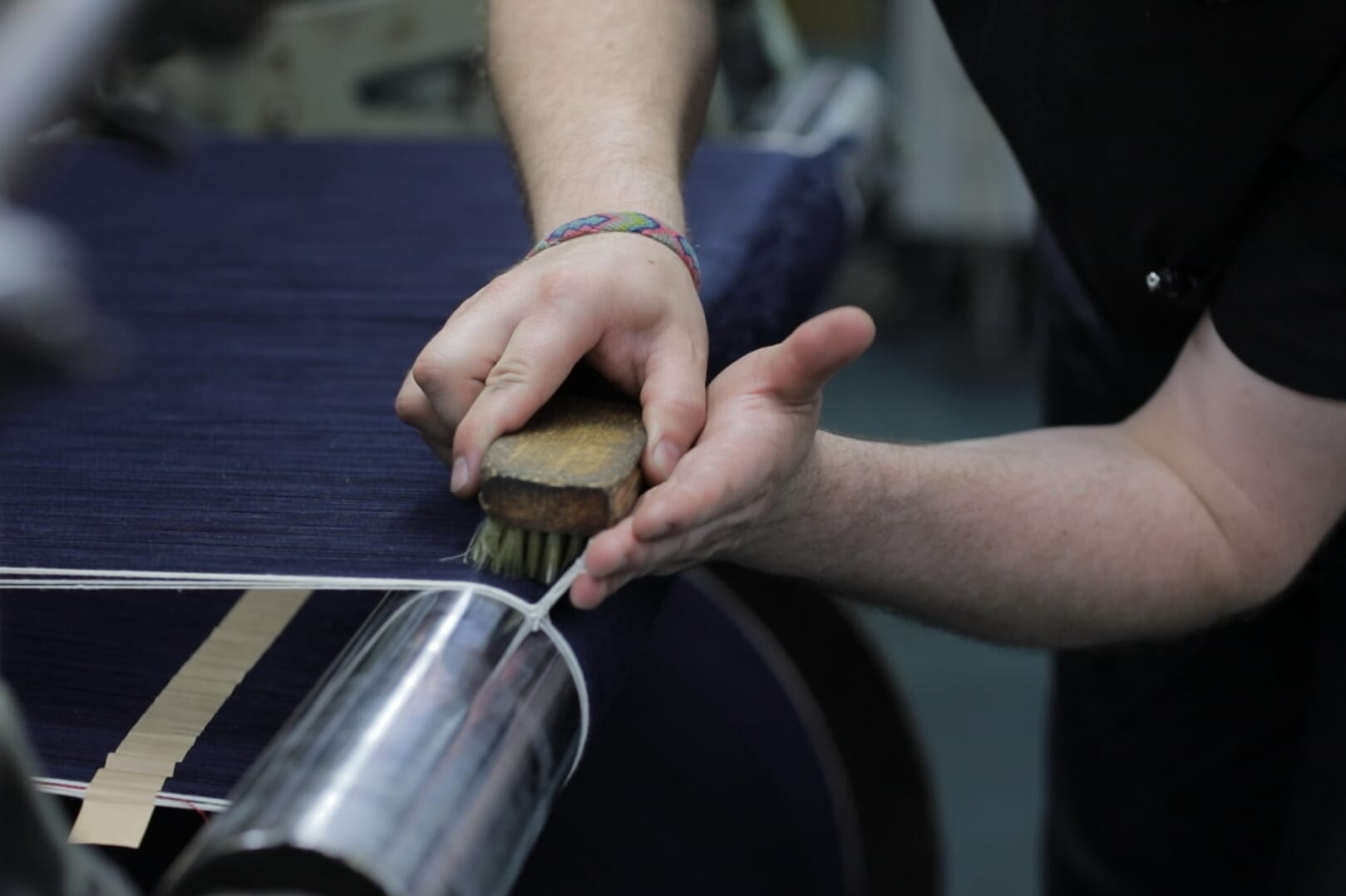
As an apprentice, Leclercq started from the ground up to grasp the intricacies of traditional shuttle looms, sweating profusely in the sweltering heat of Japanese summer. He began by learning how to tie broken threads into knots, and eventually took on complex tasks like changing the loom’s beam; the massive steel roller holds up to 2,500 warp threads, each of which must be connected by hand in precise order.
For Leclercq, the back-breaking labor was a small price to pay to get his hands on the machines he’d been dreaming about since he was 14. To him, these contraptions were more like co-workers with distinct sensitivities than mere tools. Left alone for 15 minutes, for instance, one of them could spontaneously jam or shut down.
“The machines all have different characters,” he says, with affection. “The same models made in the same year might not always run the same — some are stronger, some softer, some more fragile.”
Keeping the Looms Running
Liu echoes this sentiment — like any other craft, the machines require constant human interaction and care to thrive, though they may be lacking in mystique. “I think people are attracted to the idea of things completely done by hand,” she suggests.
Having spent the better part of her career in the fashion industry, Liu knew how craftsmanship was typically presented at ateliers: carefully staged, narrativized by the brand and mythologized for the buyer. Yamaashi’s mill had none of that. “There’s no real glamour in it, no ego,” she notes. “They just do their work, day by day — there’s no hype.”
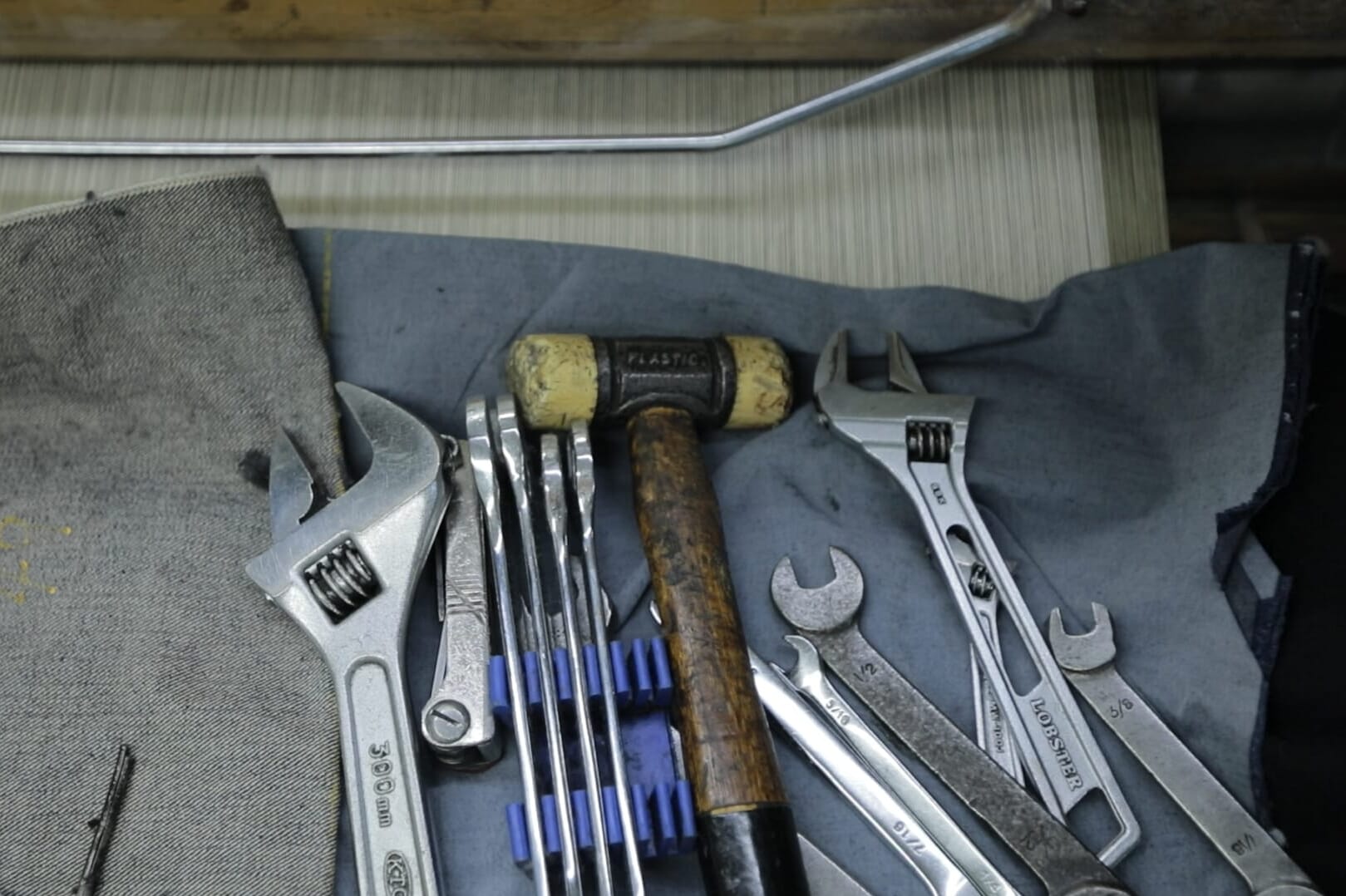
This quiet persistence is also what endangers their craft. The weavers are aging, and there are not enough young hands interested in learning from them. Every shuttle loom at Yamaashi’s mill is maintained by a single veteran technician — Takashi-san, whom Leclercq describes as “the god of the space.” When he’s out of commission, so are the machines. This predicament is common across the industry: The knowledge needed to keep these mills running lives only in longtime practitioners, with no written record and no clear heir.
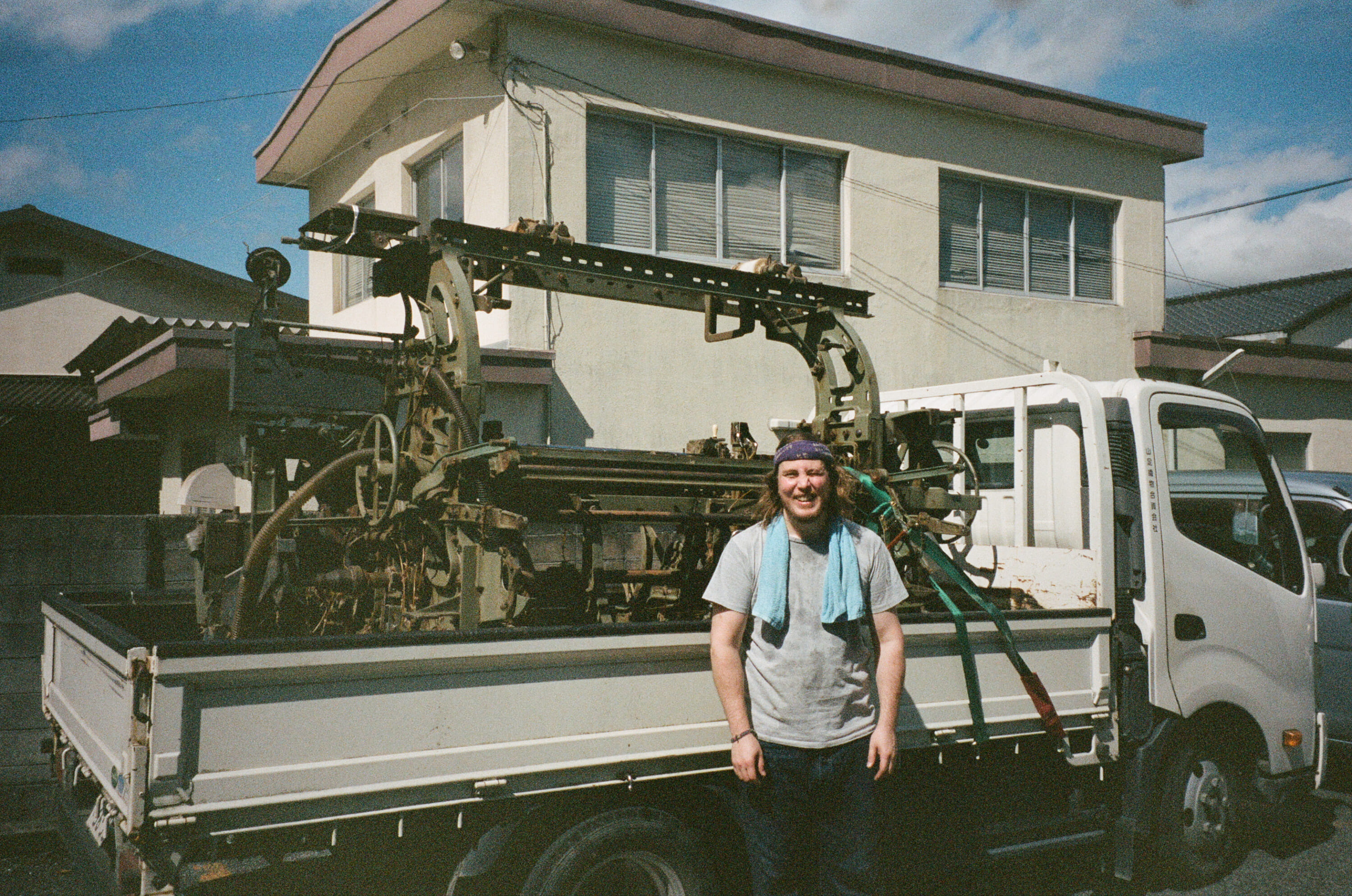
Carrying some of that knowledge forward has become Leclercq’s raison d’être. With Yamaashi’s blessing, he is slowly shipping one of the mill’s shuttle looms piece by piece back to Paris, hoping to give customers a chance to see how heritage denim is actually made. In the future, he envisions opening a small weaving workshop in the city, with exchange programs between fashion students in Paris, Okayama and Tokyo.
“I’d love for people to truly understand what they’re buying, and how much care goes into making something of quality,” he says, earnestly. “I’d love for them to care more about quality than image.”
More Info
Denim Legends: The Last Weavers of Japan is currently in postproduction and seeking cultural partners. For updates, follow @denimlegendsfilm on Instagram.
Jiawa Liu – Director, Beige Pill Productions: @beigerenegade
Arthur Leclercq – Denim Artisan, Superstitch Paris: @superstitchparismfg