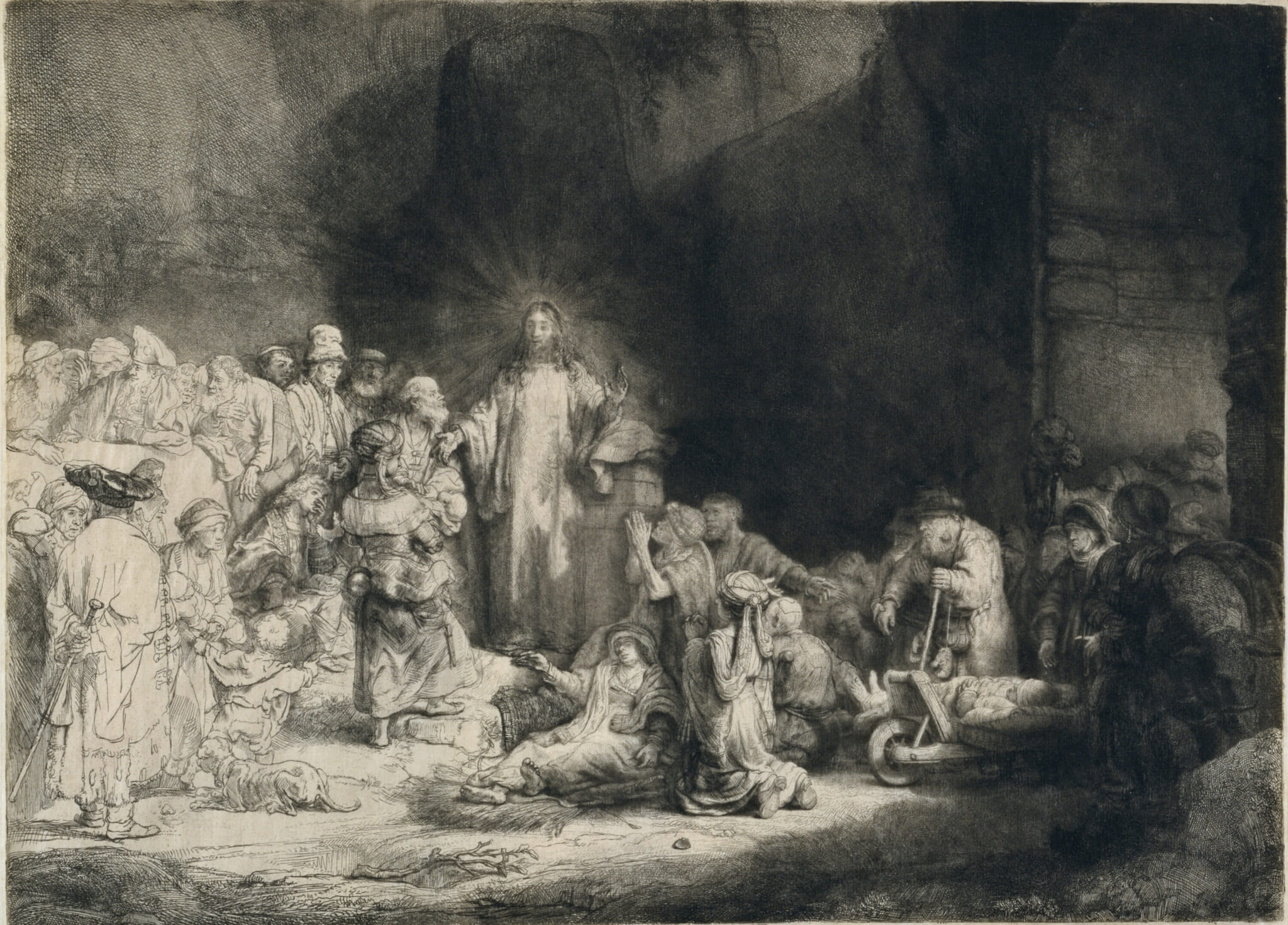
More Colorful Than Oil Paintings
Rembrandt van Rijn is enshrined in art history as a painter, but he was every bit as revolutionary with an etching needle and a copper plate. The poet and critic Théophile Gautier once judged his prints “more colorful than oil paintings” — striking praise for images rendered entirely in black ink. At a time when etching was treated as a workmanlike substitute for engraving, valued mainly for reproducing crisp, regular lines, Rembrandt seized on it as a medium for invention, drawing out the same dramatic play of light and shadow that defines his canvases.
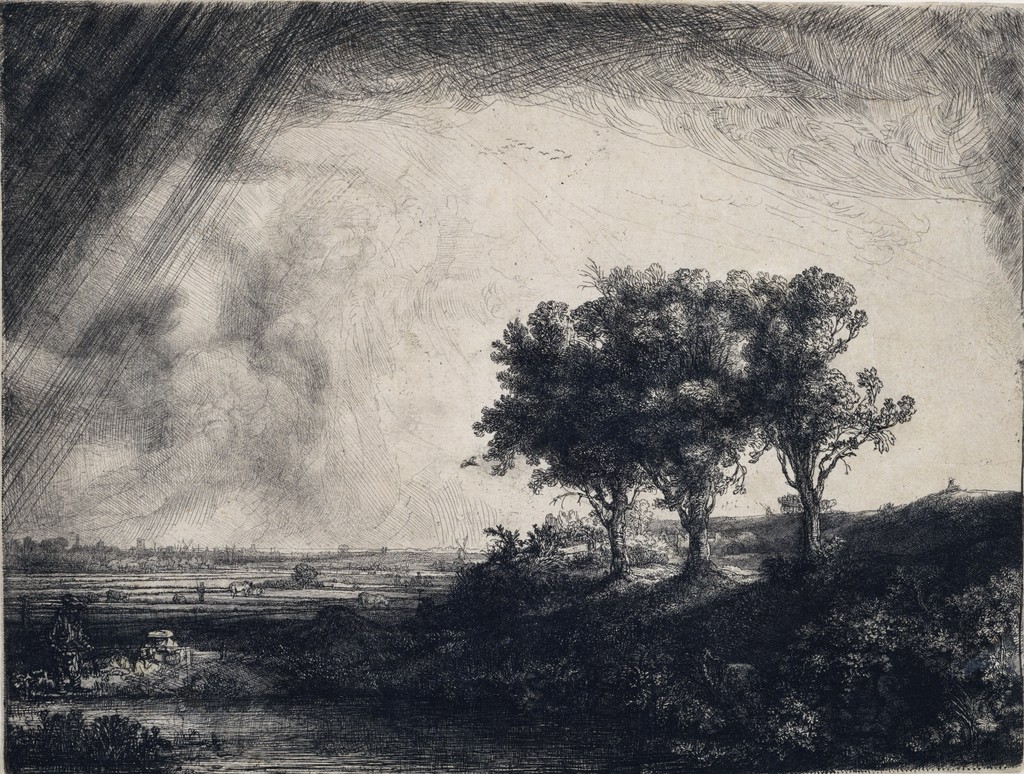
Rembrandt Harmenszoon van Rijn, “Three Trees” (1643). Etching, drypoint, burin. National Museum of Western Art.
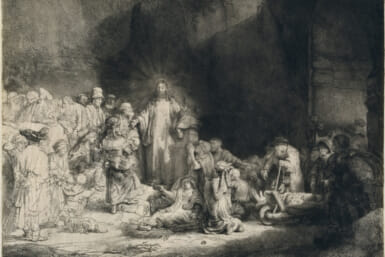
The first large-scale survey of Rembrandt’s prints to ever arrive in Japan, the exhibition follows both that breakthrough and the centuries of influence it set in motion. It’s co-organized with Amsterdam’s Rembrandt House Museum, the only institution in the world devoted solely to the artist. Some 130 works will be on display, among them the National Museum of Western Art’s own famed “The Hundred Guilder Print” and “The Three Trees.” Across the exhibition’s three chapters, you’ll see Rembrandt’s etched portraits, biblical scenes, landscapes and beyond, his impact on later masters like James McNeill Whistler and Pablo Picasso, and the fervent 19th-century etching revival that crowned him its patron saint.










-25J469_高解像画像なし(20260604入庫)-1-1024x742-1-385x257.jpg)