
June in Tokyo means tsuyu, the rainy season — but don’t let that put you off. It’s one of the city’s richest months for tradition. Neighborhoods come alive with Tenno-sai mikoshi festivals, which see portable shrines hauled through the streets, each with distinct customs and histories. Even under a grey sky, Tokyo’s vibrant festival energy ensures a little rain is a small price to pay.
Note that a few well-known June events aren’t running this year. The Ebara Shrine boat procession (Funa Togyo) is cancelled for 2026, Urayasu Sanja Matsuri returns in 2028 and the Nobori Matsuri giant-banner festival in Edogawa-ku is next held in 2027.
Here are summer festivals to check out in Tokyo in June 2026. If you decide to attend any of them, please remember to be respectful — to those participating in processions, to other attendees and your surroundings.
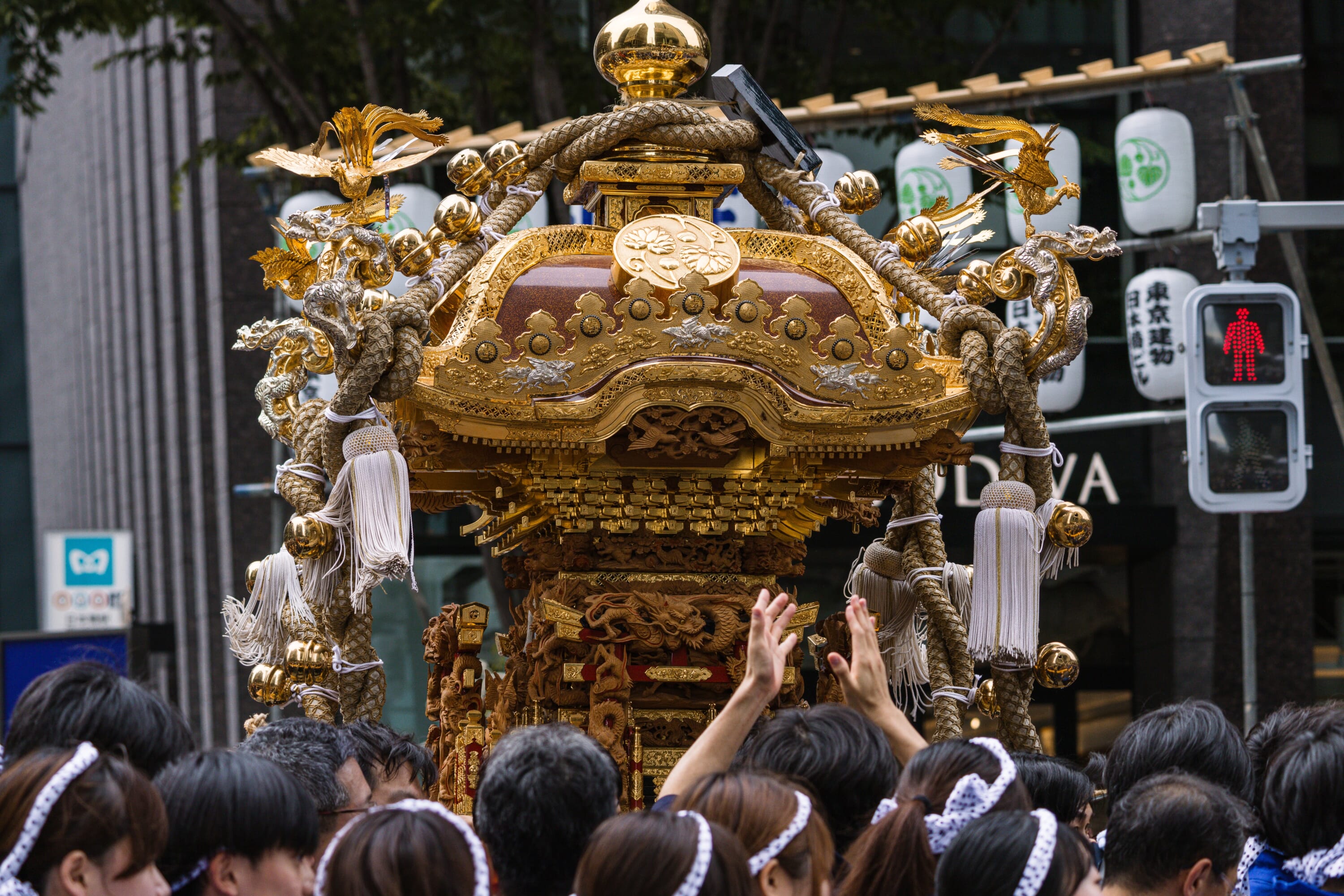
Sanno Matsuri (a major festival year)
2026 is a major year for Sanno Matsuri, one of old Edo’s great festivals, with celebrations unfolding across several days in June around Hie Shrine. The highlight is the Jinkosai grand procession on June 12, in which a column of some 500 people winds roughly 23 kilometers through central Tokyo. Dressed in Heian-era costume, the parade turns the modern city into a living picture scroll, a courtly world slipping in among the skyscrapers.
Leading the line is the Kanko-dori float, a rooster atop a drum symbolizing a peaceful land, followed by two phoenix palanquins, a sacred mikoshi, a monkey doll and the flower-decked Hana float. New for 2026 is the Ebi float, making its Jinkosai debut: the fortune god Ebisu riding atop a great prawn. Watch too for the exquisite Bishonen float, whose doll sinks into the roof by a hidden hydraulic mechanism as it passes beneath the rail viaducts at Yurakucho and Shinbashi.
The festival then moves to the neighborhood mikoshi parades — a dignified procession through the palace-side districts of Hirakawacho, Kojimachi, Bancho and Kudan on June 13, and a livelier one through Nihonbashi and Kyobashi on June 14.
When: June 7-17
Where: Hie Shrine (Location)
Nearest Station: Tameike-Sanno Station (Ginza / Nanboku Lines)
courtesy of omatsuri japan
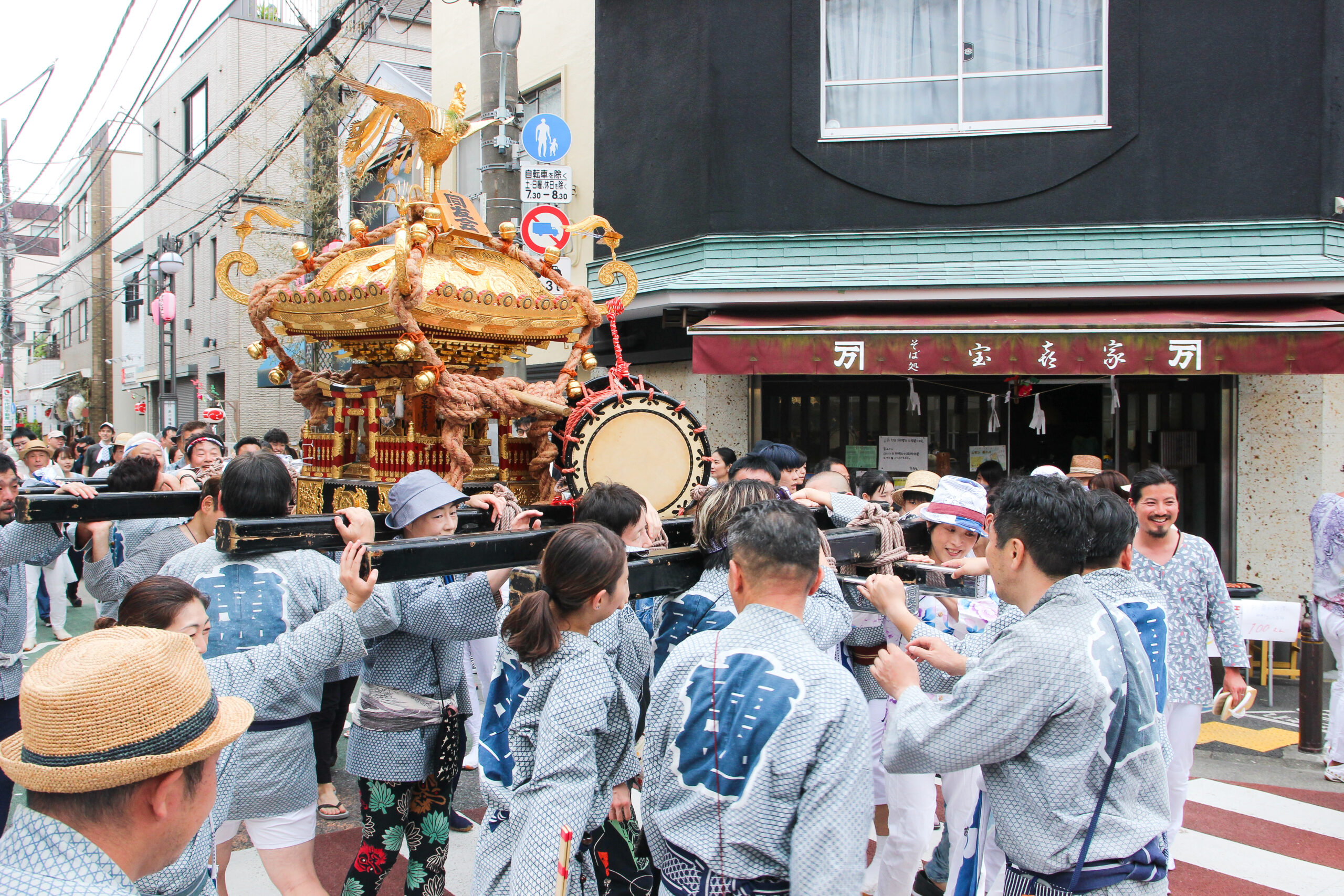
Tenno-sai of Ebara Shrine
Ebara Shrine sits on the old Tokaido highway that ran between Edo (feudal Tokyo) and Kyoto. From 9 a.m. on both Saturday and Sunday, more than 10 town mikoshi gather for a grand parade. What sets Ebara’s mikoshi apart is the mask mounted on the roof, depicting the mighty god Susanoo — legend says a fisherman found it drifting on the shore and dedicated it to the shrine. A drum attached to the mikoshi is another distinctive touch.
When: June 6-7
Where: Ebara Shrine (Location)
Nearest Station: Shinbamba Station (Keikyu Line)
courtesy of susanoo shrine
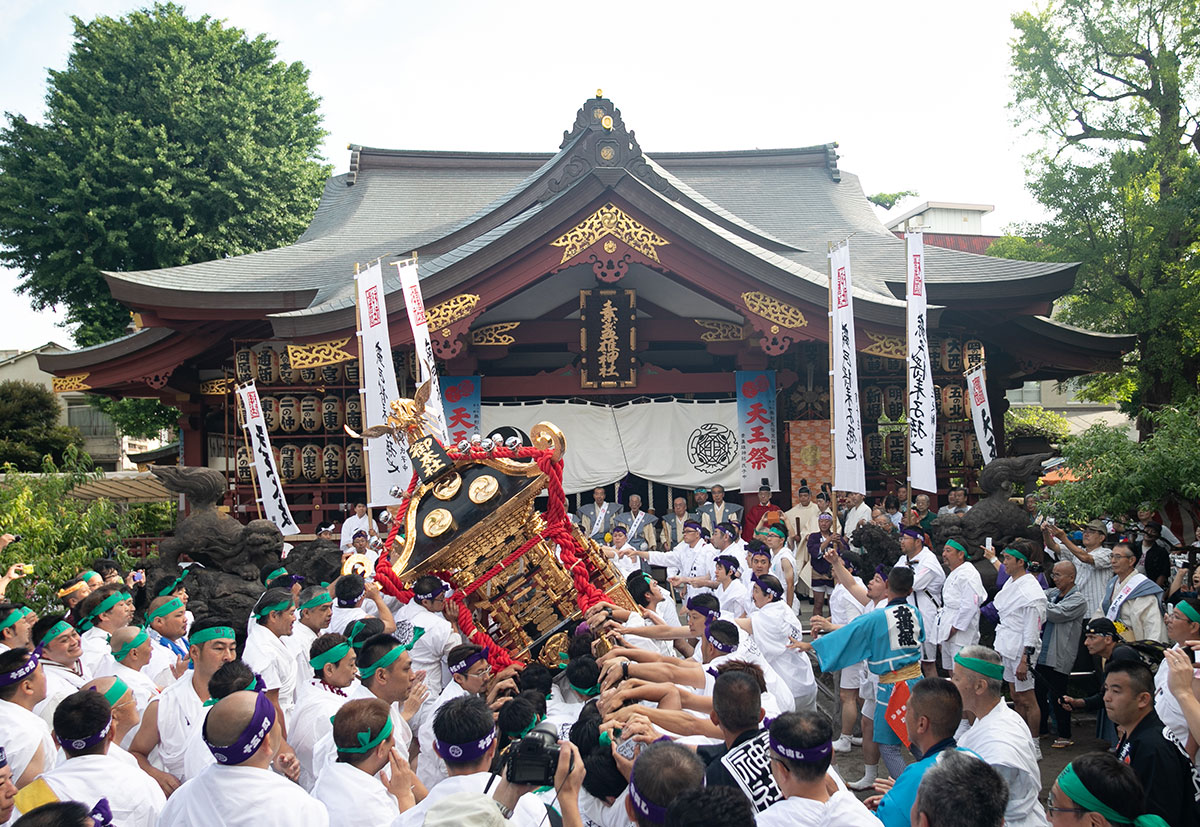
Susanoo Shrine Tenno-sai
This shrine honors Susanoo, the brave, adventurous Shinto god who slew the eight-headed dragon tormenting the people of Izumo. The festival channels that ferocity: carriers swing the heavy mikoshi violently left and right, because the more they jostle it, the more the fierce god is said to be pleased. It’s genuinely dangerous work that demands training and tight teamwork — and it makes for a thrilling spectacle. This year, the main festival — the Goshinkosai (divine procession) will take place, featuring the portable shrine of the main shrine.
When: June 6-7
Where: Susanoo Shrine (Location)
Nearest Station: Minami Senju Station (JR Joban Line / Hibiya Line / Tsukuba Express)
courtesy of omatsuri japan
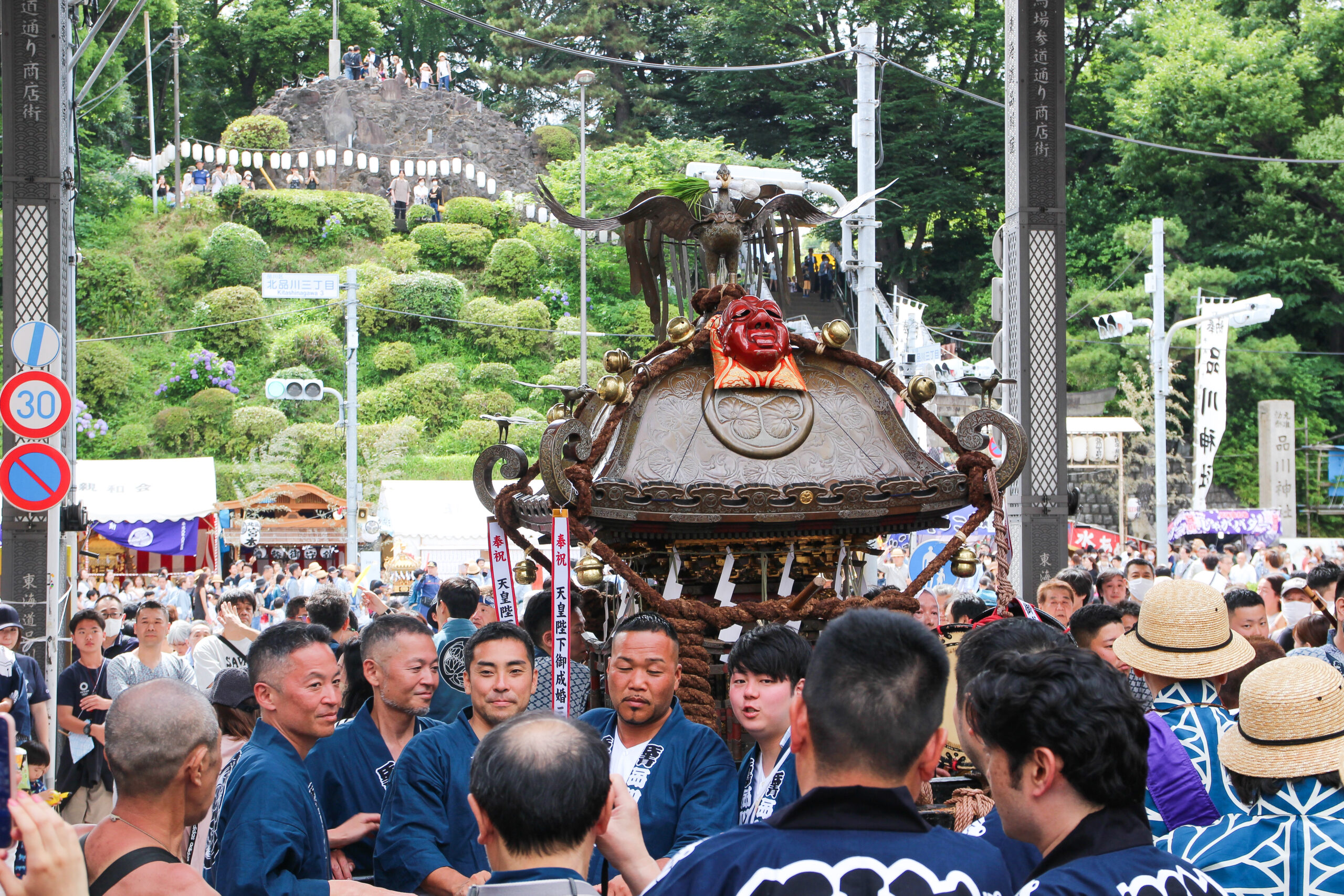
Shinagawa Shrine Tenno-sai
Held over the Friday-to-Sunday closest to June 7, this festival builds toward its climax on the shrine’s long stone staircase. Friday brings the main ritual rites, Saturday a joint procession of neighborhood mikoshi and Sunday the grand Jinko-sai, when the shrine’s own portable shrine is shouldered up and down the 53 steep front steps for the dramatic “miya-dashi” departure and “miya-iri” return.
The mikoshi is in this festival is unusual: lashed to its carrying poles with thick rope rather than slotted into the base, and topped by a sacred mask said to have been donated by Tokugawa Ieyasu. Its pace — surging forward, then lifted and lowered — is set by Shinagawa-byoshi, a rhythm of tightened drum and bamboo flute that is a designated intangible cultural property of Shinagawa Ward.
When: June 5-7
Where: Shinagawa Shrine (Location)
Nearest Station: Shinbamba Station (Keikyu Line)
courtesy of Taito Tourism (Taito Odekake Navi)
Night Festival of Torigoe Shrine
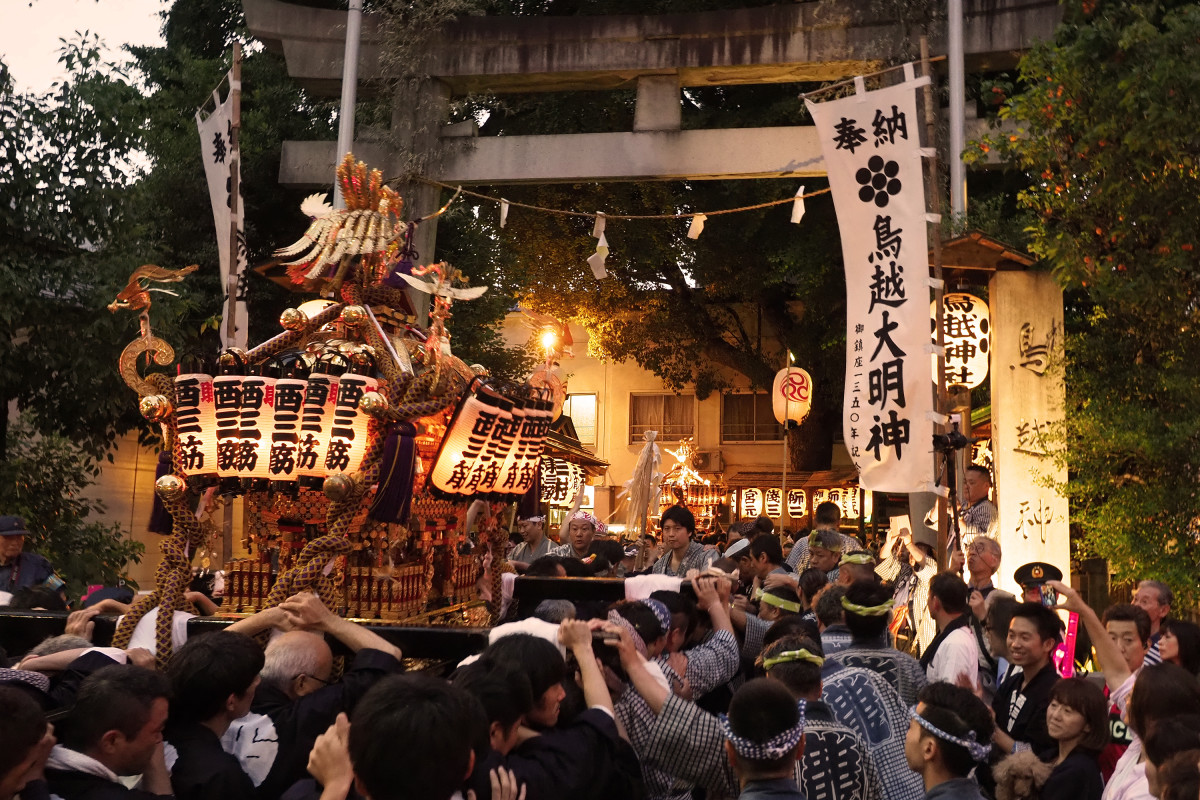
Torigoe Shrine boasts what may be Tokyo’s heaviest mikoshi — roughly 4 tons, carried by 150-200 people. The magic comes after dark, when the mikoshi’s lanterns are lit and rows of takahari chochin (lanterns held high) create an almost dreamlike air. Watch for the long-nosed Tengu and the tekomai, geisha in masculine dress walking in procession. The mikoshi leaves at 6:30 a.m. and returns at 9 p.m.
When: June 6, 7, 9
Where: Torigoe Shrine (Location)
Nearest Station: Asakusabashi Station (JR Sobu Line)
courtesy of yumatabi
Manto Mikoshi of Sumida Inari Shrine
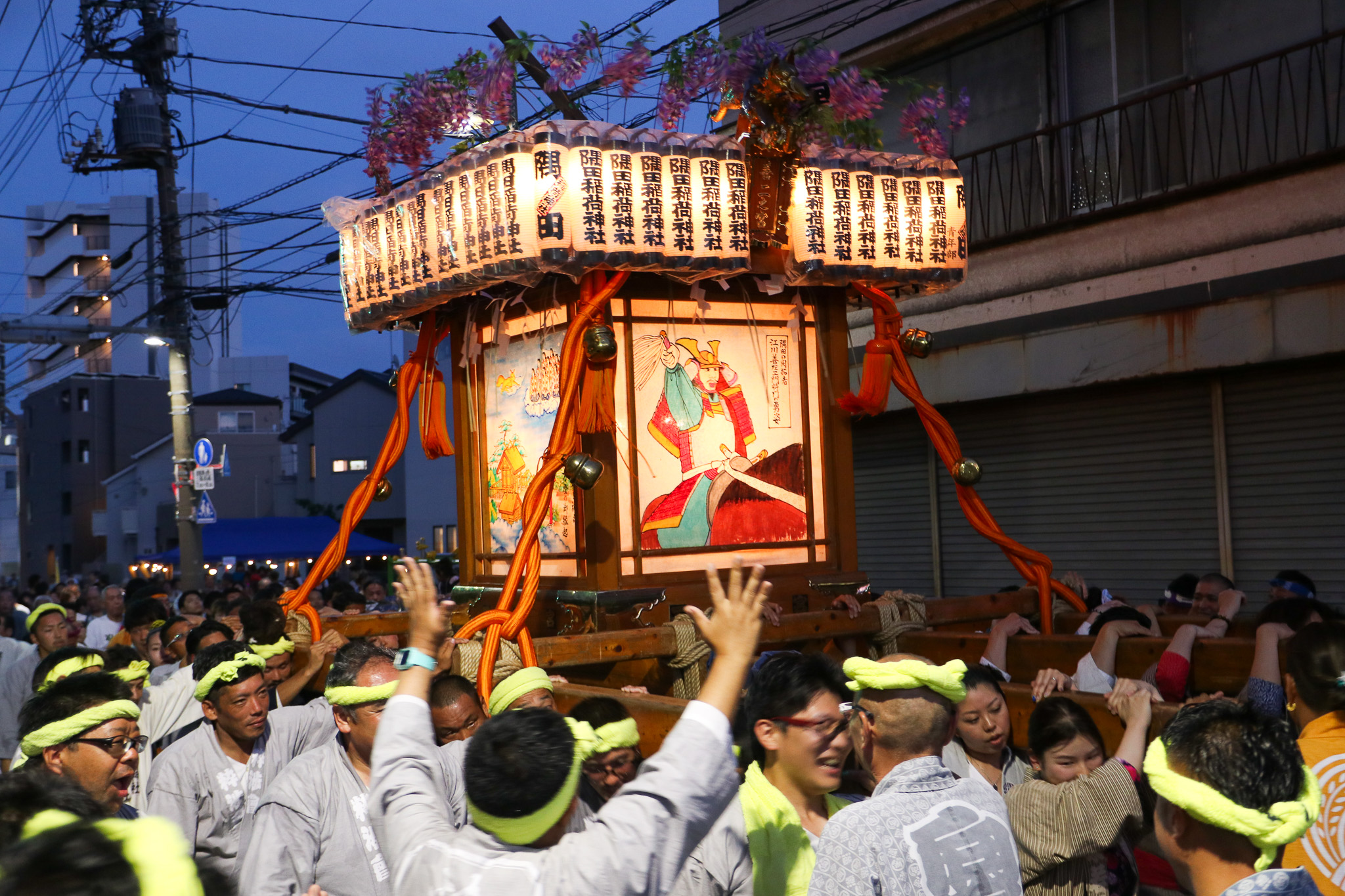
A colorful manto (lantern-lit) mikoshi parades the neighborhood from around 6:30 p.m. on both evenings. The tradition dates to the 16th century: villagers honoring the shrine’s founder couldn’t afford a fine mikoshi, so they built one decorated with lanterns instead. Today the shrine also has a proper mikoshi, carried in daylight on Sunday.
When: June 13-14
Where: Sumida Inari Shrine (Location)
Nearest Station: Kanegafuchi Station (Tobu Isezaki Line)
Tsukiji Lion Festival
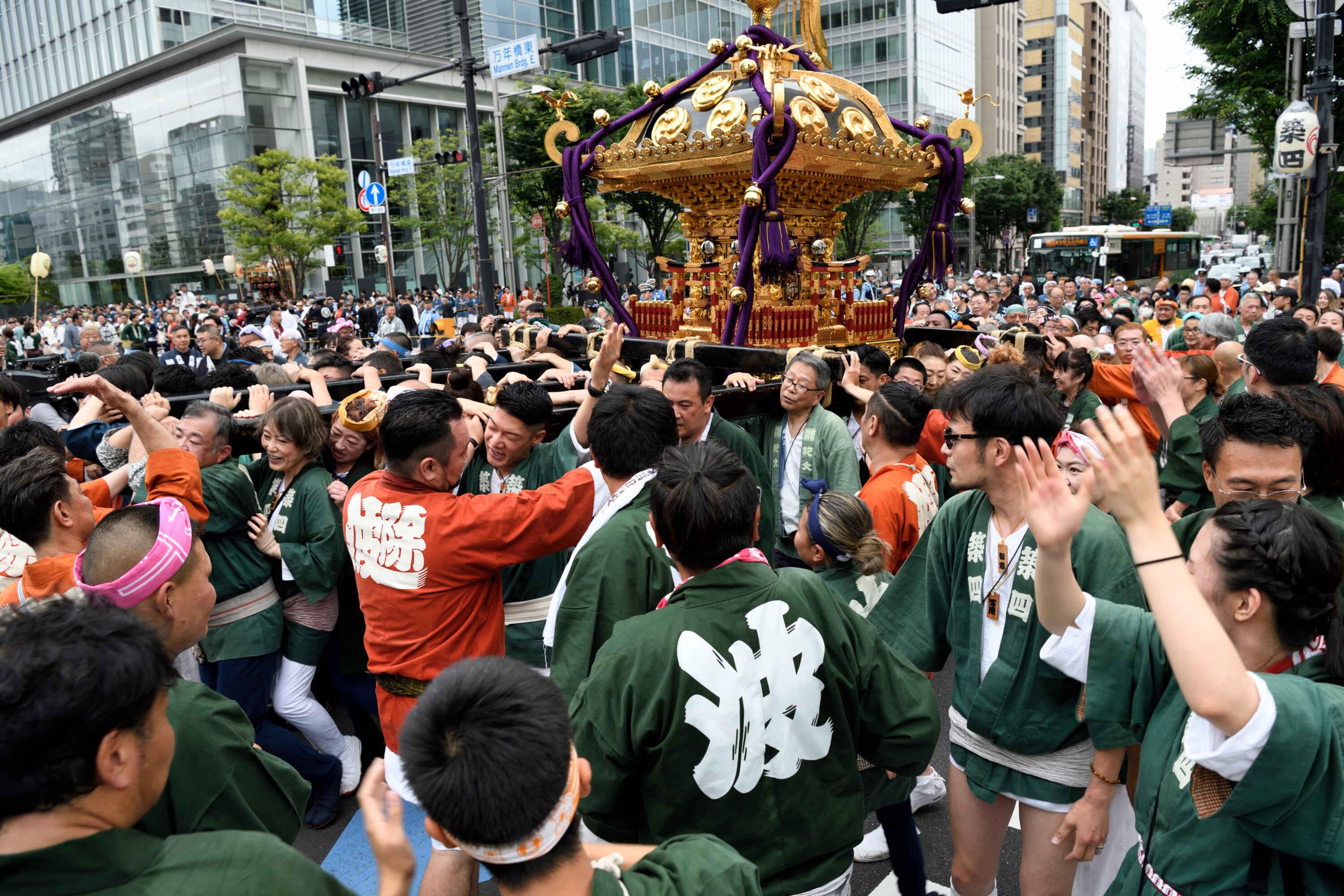
This parade of town mikoshi (the Jinkosai) winds through Tsukiji from June 10-14. The shrine is famous for its shishi — not quite lions but imaginary beasts believed to repel evil spirits and protect children. You’ll often see paired shishi statues guarding shrine gates; here they take center stage.
When: June 10-14
Where: Namiyoke Shrine (Location)
Nearest Station: Tsukiji Station (Hibiya Line)
courtesy of omatsuri japan
Thousand-Day Pilgrimage and Hozuki Festival
While Asakusa is famous for its hozuki market, the tradition actually originated right here at Atago Shrine. Historically, the wild hozuki (Chinese lantern plants also known as husk tomatoes) growing on the grounds were used as a herbal remedy to treat children’s tantrums and illnesses in women. Today, visitors can receive blessed hozuki plants and a special purification ritual inside the main hall.
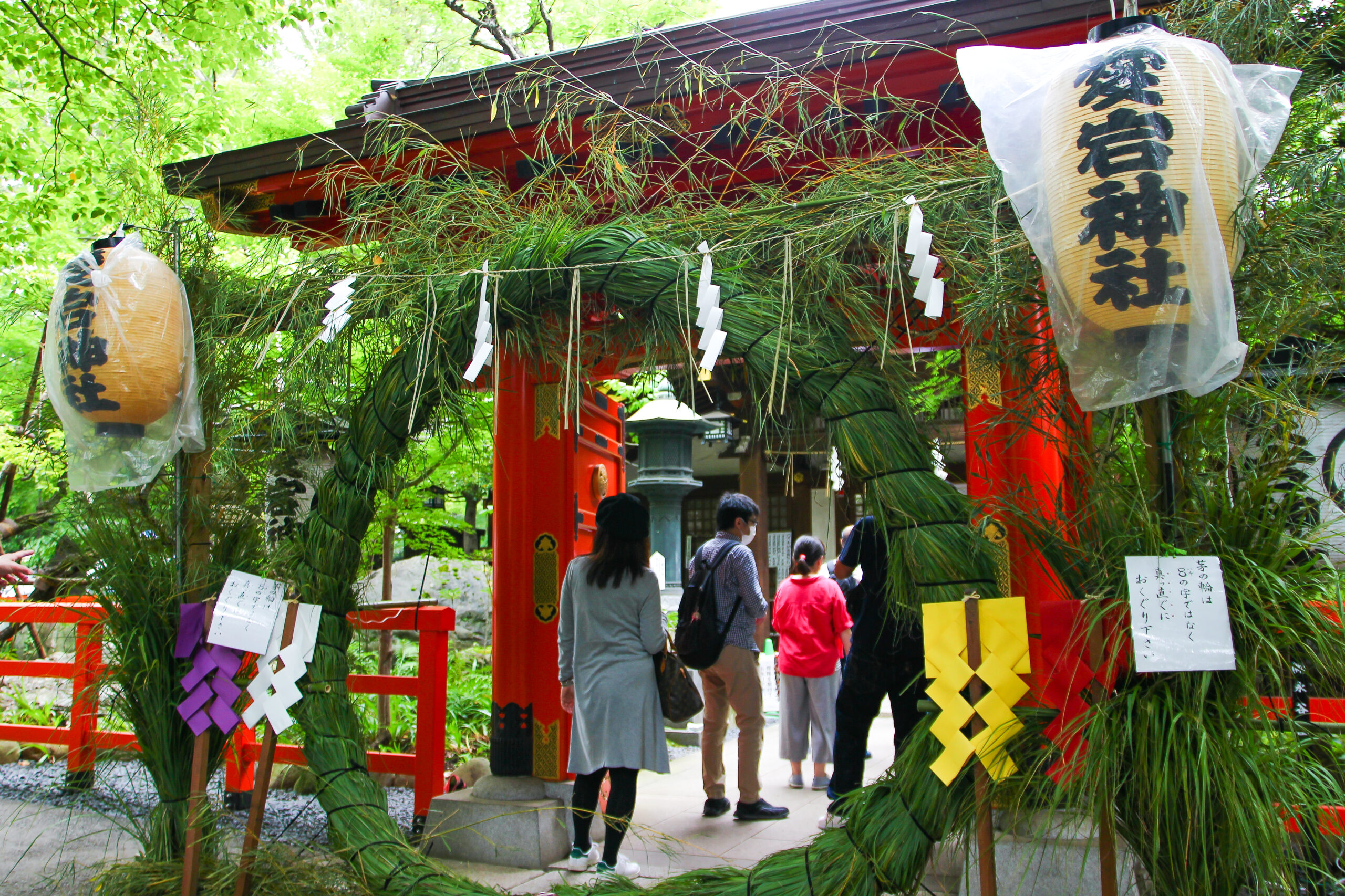
These two days mark the sennichi mairi (The Thousand-Day Pilgrimage) — it is believed that passing through the chinowa (a large sacred ring made of cogon grass) set up in front of the main shrine building during these two days grants blessings equivalent to 1,000 days of prayer. The event runs from 9 a.m. to 6 p.m.
When: June 23-24
Where: Atago Shrine (Location)
Nearest Station: Kamiyacho (Hibiya Line) / Onarimon (Mita Line) / Toranomon (Ginza Line)
courtesy of omatsuri japan
Gujo Odori in Aoyama
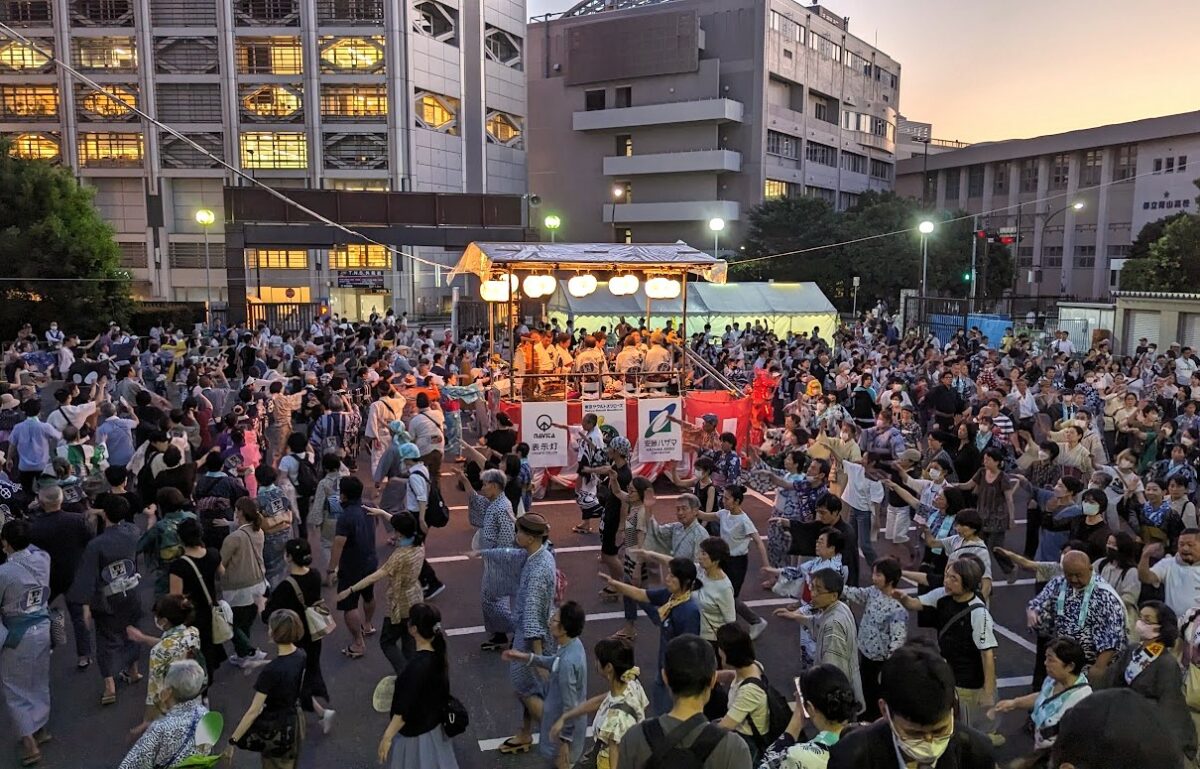
Known as the dance that heralds bon odori season in Tokyo, Gujo Odori originally descends from Gujo-Hachiman in Gifu. Complete with invited musicians and singers, it welcomes everyone to join in. It’s held at the Chichibu-no-Miya rugby ground parking lot. The dancing runs from 5-8:30 p.m. on Friday and from 5-8 p.m. on Saturday.
When: June 26-27
Where: Chichibu-no-Miya rugby ground parking lot (Location)
Nearest Station: Gaienmae Station (Ginza Line)
courtesy of taito tourism (taito odekake Navi)
Oyama-biraki (Mount Fuji Opening Ceremony)
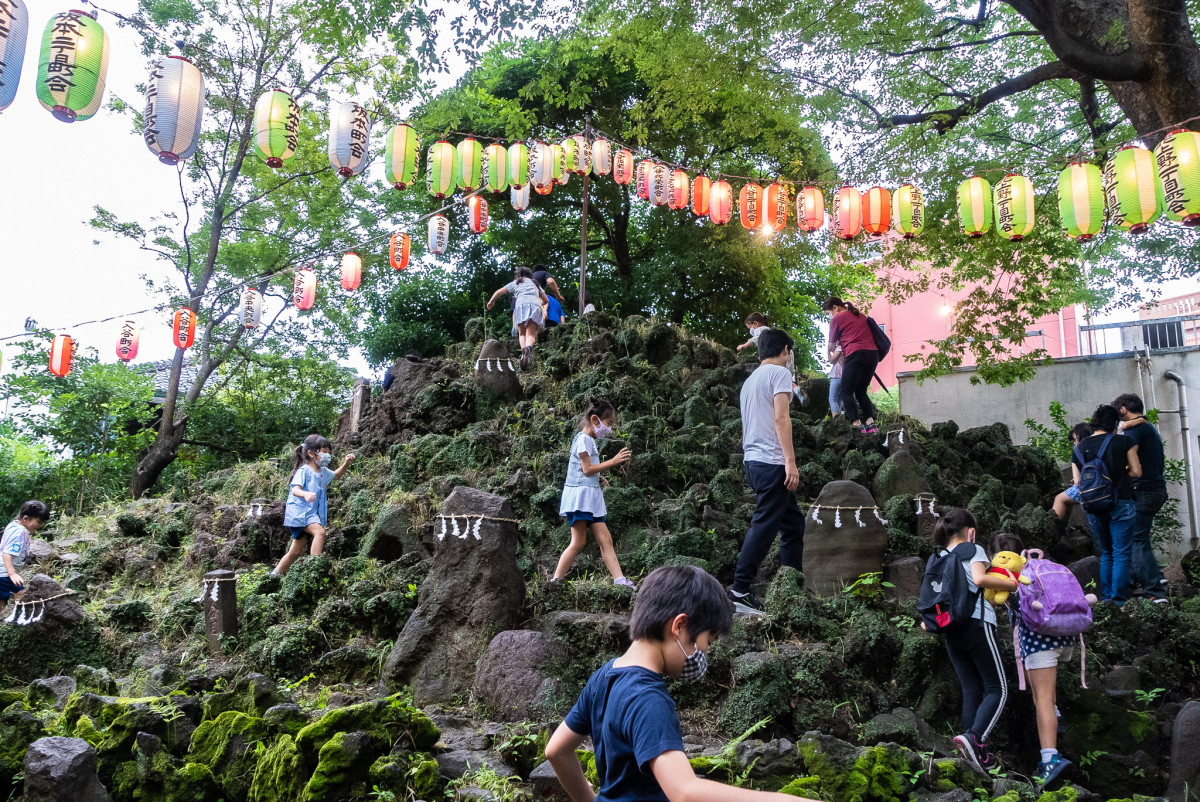
Mount Fuji is only open to climbers in July and August, so Edo-era worshippers built fujizuka — miniature Fuji mounds made from stones carried back from the real mountain. Ono Terusaki Shrine’s fujizuka, built in 1828, stands about 5 meters tall and opens to the public on June 30 and July 1.
When: June 30-July 1
Where: Ono Terusaki Shrine (Location)
Nearest Station: Iriya Station (Hibiya Line)
Related Posts
- The Ultimate Guide to Summer Festivals in Tokyo
- The Best Things To Do in Tokyo This Month: June 2026
- Enchanting Hydrangea Festivals To Visit in Japan This Summer
- Japan in June: The Best Things To Do and Places To Visit
Updated On June 3, 2026