Mastering ‘The Black Manner’
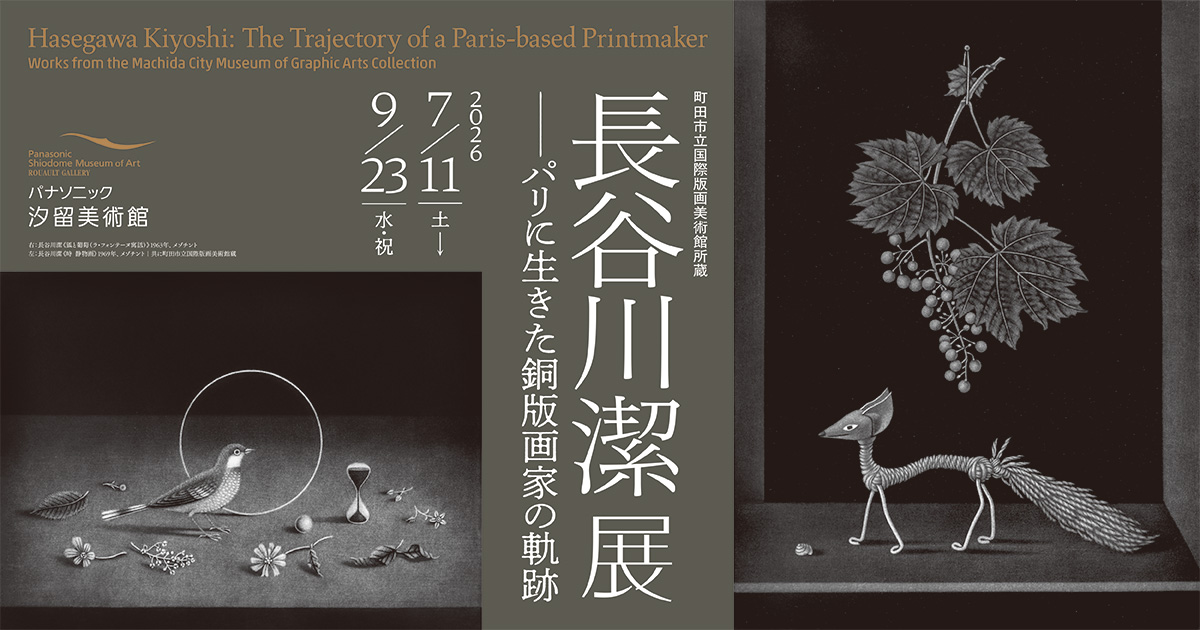
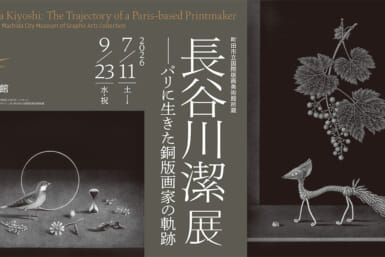
Kiyoshi Hasegawa left Japan for Paris just after World War I and never came back, spending six decades there until his death in 1980. He is most well known for reviving an intaglio technique most printmakers had abandoned: mezzotint, also known as manière noire (“the black manner”). The method creates luminous, richly shadowed images through a meticulous process of roughening and smoothing areas of a copper plate to control the amount of ink retained.
Spotting Hasegawa’s gift, fauvist painter Raoul Dufy drew him into the Société des Peintres-Graveurs Indépendants, the Paris circle of Matisse, Picasso and Chagall. As you’ll see in the exhibition, Hasegawa was also an ambassador for Japanese art, engraving the illustrations for a French edition of the 10th-century folktale “The Tale of the Bamboo Cutter.”
From the late 1950s, he returned to mezzotint, making still life works suspended in fathomless black — a vase, dried grass, a single bird. Up close, the works’ monotone backgrounds are never flat; they’re soft, grainy fields shifting from smokey grays and charcoals to the deepest velvety black. Most of these images were drawn from the Machida City Museum of Graphic Arts for the first time, and provide an overview of the artist’s long career.











-25J469_高解像画像なし(20260604入庫)-1-1024x742-1-385x257.jpg)