Since its release on April 27, the Netflix series Straight to Hell has topped the streaming platform’s charts in Japan while also performing well across Asian markets. At the same time, it has reignited a fascination with one of Japan’s most polarizing cultural icons, Kazuko Hosoki (細木数子).
Portrayed with icy charisma by Erika Toda, Hosoki was a media juggernaut who captivated audiences for decades through a mix of spiritual guidance, blunt traditionalism and a shadowy past. For viewers wondering where fiction ends and the “Hell Lady” begins, Hosoki’s real life offers a clearer answer.

Who Was Kazuko Hosoki?
Born in 1938 and raised amid the crushing poverty of postwar Tokyo, Hosoki learned early how to survive. Growing up in a period of extreme instability, she searched for food for herself and her siblings, an experience that shaped her lifelong belief in survival of the fittest.
That drive eventually led her to Tokyo’s Ginza district as a teenager, where she rose from managing coffee shops to running high-end nightclubs. By her 20s, she was known as the Queen of Ginza, navigating a world where business, politics and organized crime overlapped, providing her with the toughness and the connections that would later define her public persona.
Despite her professional success, Hosoki’s early adulthood was marred by significant turmoil. She suffered a devastating setback when a con artist allegedly swindled her out of ¥1 billion, leaving her with massive debts and facing threats from the yakuza. This period forced her to reinvent herself, shifting from hospitality to the study of Chinese divination and philosophy.
In 1983, she further cemented her status in the upper echelons of Japanese society by briefly marrying Masahiro Yasuoka, an influential spiritual advisor to several prime ministers, who played a major role in shaping Hosoki’s intellectual and spiritual outlook before his death later that same year.
By the 1980s, Hosoki had debuted her Six Star Astrology (Rokusei Senjutsu) system, transforming her into a publishing phenomenon. She eventually set a Guinness World Record for the most fortune-telling books sold, with over 34 million copies in circulation. The success of her books launched her television career.
Drawing on her experiences, she presented herself as a woman who had seen the darkest sides of life and could therefore guide viewers through their own hardships with unquestioned authority. Her dominance continued until she gradually stepped away from the spotlight in 2008 to focus on her health and her successor, Kaori Hosoki, her adopted daughter.
Kazuko Hosoki passed away on November 8, 2021, at the age of 83 due to respiratory failure. Even in her final years, she remained a figure of immense wealth and influence, leaving behind a digital fortune-telling empire that continues to thrive long after her death.
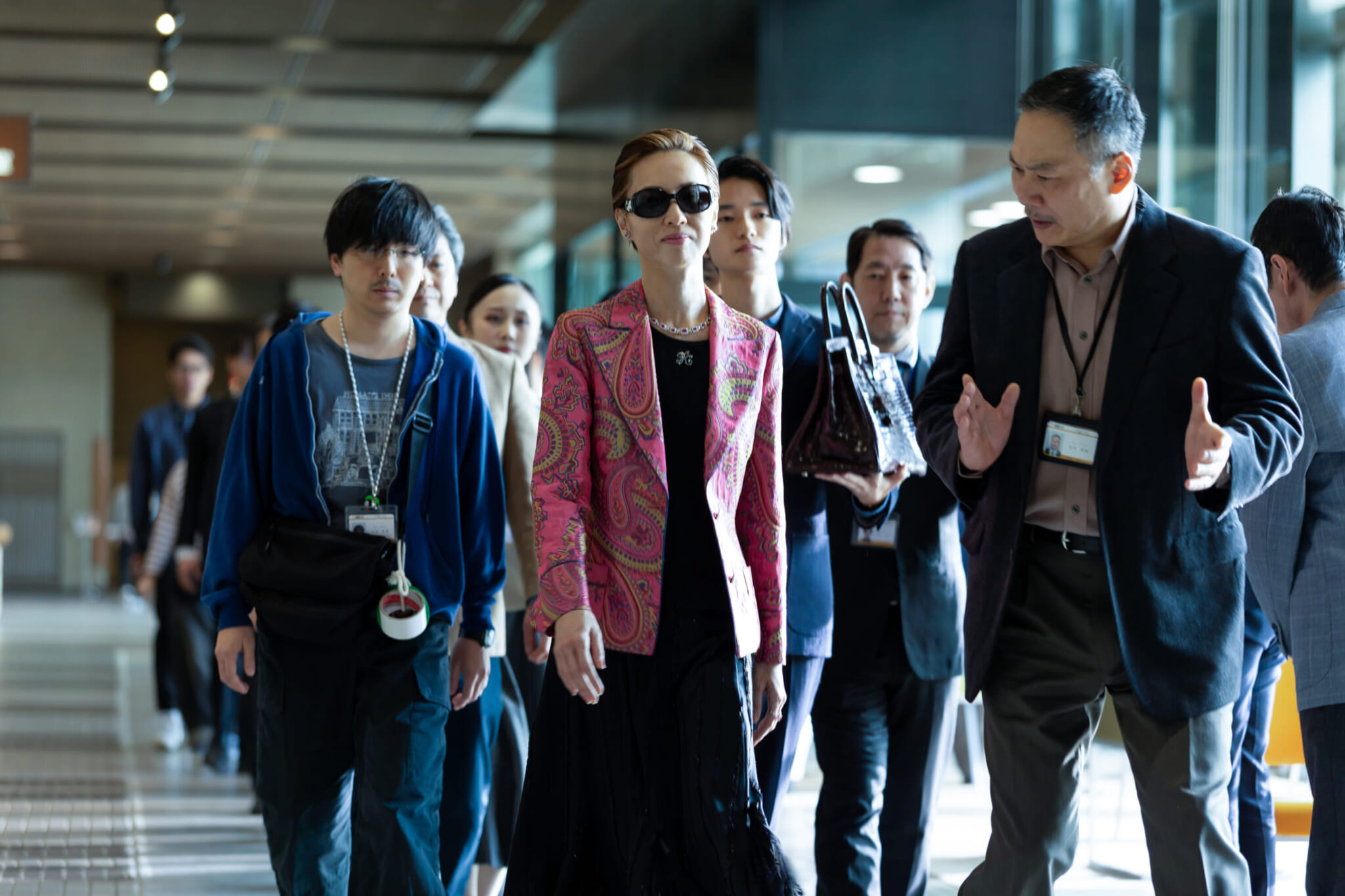
Straight to Hell: The Real Kazuko Hosoki
Hosoki generated enormous interest because she subverted the image of the gentle, grandmotherly psychic. She became famous for her signature catchphrase, “You’re going to hell,” which she delivered to anyone who dared to ignore her advice.
Her public persona was built on a foundation of brutal traditionalism, often sparking outrage by telling women their place was strictly in the home even as she herself lived as a fiercely independent and wealthy businesswoman. Throughout the early 2000s, she was inescapable, appearing as a judge on Iron Chef and hosting her own prime time shows where she essentially scolded the nation.
In comparing the real woman to the Netflix series, the show uses the framing device of novelist Minori (Sairi Ito), who is hired to ghostwrite Hosoki’s biography. While the series captures her climb from poverty and the lavish loneliness of her mansion, it takes creative liberties with her final downfall.
In the show, her secrets are exposed by Minori’s investigative digging, but in reality, her exit from the limelight was a gradual fade-out around 2008 caused by health issues and legal scrutiny over her expensive divination fees.
Straight to Hell ultimately positions her as a “dark antihero,” a woman who used her own hellish experiences to build a heavenly fortune. Whether viewed as a spiritual guide or a master manipulator, she remains a fascinating window into the post-war Japanese psyche.
Related Posts
- Papakatsu Scammer ‘Sugar Baby Riri’ Handed 9-Year Sentence
- Yami Baito: Japan’s Dark Part-Time Jobs Tied to the Criminal Underworld
Updated On May 8, 2026