
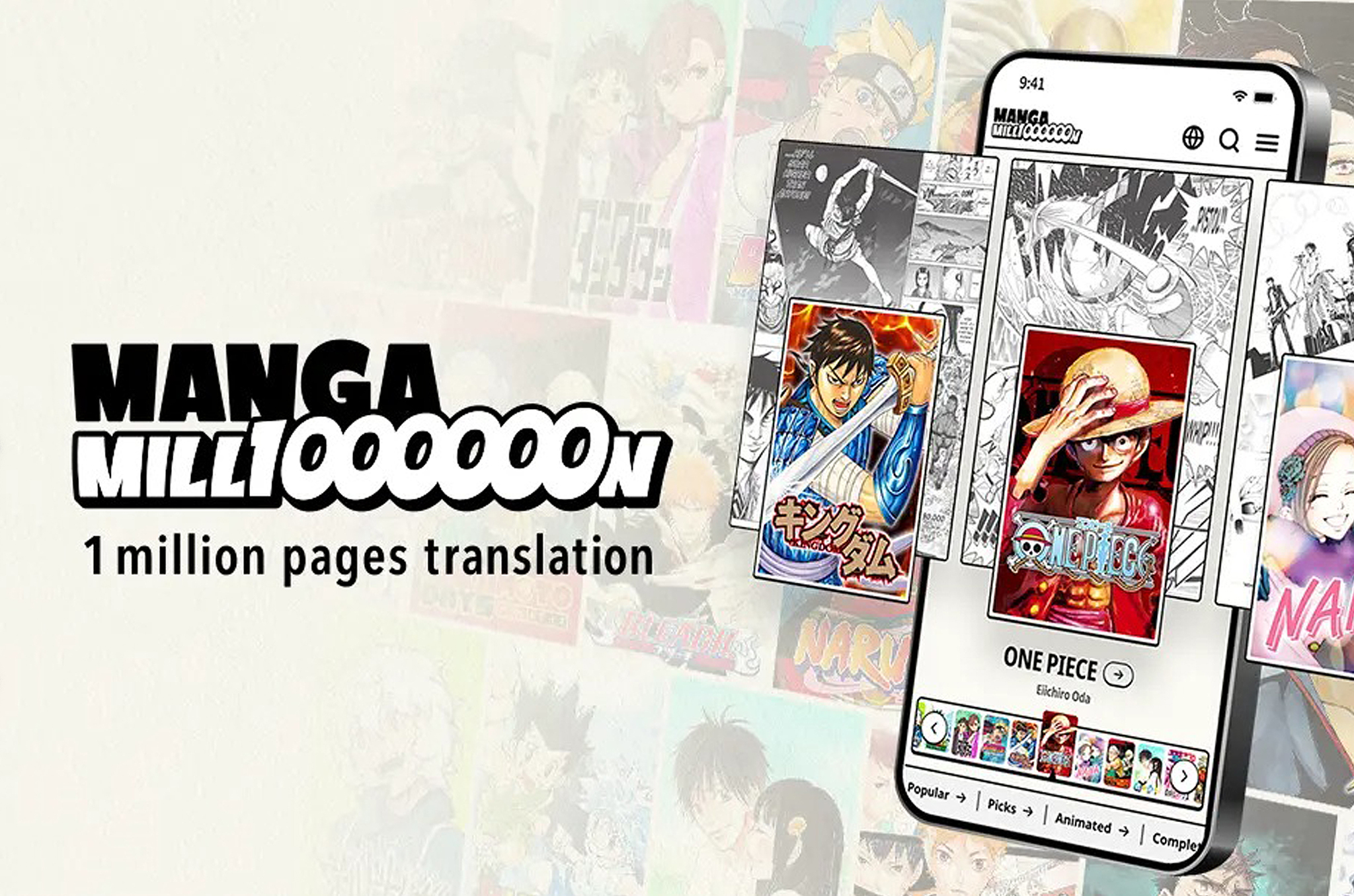
Publishing titan Shueisha officially launched Manga Million on August 6, 2026, a temporary digital platform offering free access to 1 million pages of manga translated into more than 100 languages. Created to commemorate the company’s 100th anniversary, the ambitious initiative includes nearly 400 titles — around 300 of which are receiving official translations for the first time — with no account registration required. The platform includes major shonen series such as One Piece, Jujutsu Kaisen and Chainsaw Man, alongside more than 150 shojo works, which have historically received less attention overseas.
Led by Manga Plus Editor-in-Chief Shuhei Hosono, the project took five years to develop and aims to broaden global access to manga and combat digital piracy. However, almost immediately after launch, it became embroiled in controversy. Manga fans online began questioning whether the sheer scale of Manga Million’s translations could have been completed without the use of generative AI, prompting scrutiny of Shueisha’s translation process and the company’s claims about the project.

©SHUEISHA Inc. / via PR Times
Manga Million Faces Backlash Over Alleged Machine Translation
Shortly after its launch, readers began reviewing the credits on the platform, sparking widespread discussion online. While established titles reused previously published human translations, a large portion of newly translated series cited third-party agencies. Most notably, translated chapters across dozens of languages attribute the translation, lettering and editing to Flitto Japan Inc., a company that offers both AI-powered translation tools and human translation services.
When asked directly in an interview with Anime Corner about how technology was used to execute a project of this scope, Hosono denied the use of automated translation software, asserting that “no AI was used in the translation.” Shueisha editors explained in a special one-shot chapter of Onwards! The Expendable Expedition that Manga Million has been “an endlessly boring data management project.”
Despite official statements, fans remain cautious. Because Flitto advertises both automated systems and human translation services, the company’s involvement alone does not establish that AI was used to translate Manga Million. However, the decision to contract a company with AI translation capabilities, combined with the lack of publicly identified human linguists on many titles, has left readers questioning what role, if any, machine translation played in producing the platform’s enormous volume of translated content.
The Debate Over AI in Translation
The friction surrounding Manga Million highlights the systemic challenges Japanese publishers face as they try to release manga globally. Official releases have historically struggled to keep pace with the sheer speed and volume of unofficial fan translations, leaving significant availability gaps in international markets and potentially contributing to piracy.
The controversy comes at a time when the use of AI in the arts is under intense scrutiny. Unlike standard technical text, manga relies heavily on context, character voice, regional slang and sound effects — nuances that can be difficult for AI systems to capture. When publishers swap human craft for automated processes, distinct styles can flatten into generic or even incorrect phrasing, often alienating the exact audiences these platforms set out to reach.
The debate also points to broader ethical concerns surrounding corporate practices in creative fields. Replacing professional translators with machine tools threatens the livelihoods of creative workers, while withholding individual translator credits makes it harder for linguists to build public portfolios. As Japanese publishers increasingly explore technology-assisted translation, they run the risk of appearing tone-deaf to international fanbases that remain fiercely protective of human artistry and transparent labor practices.