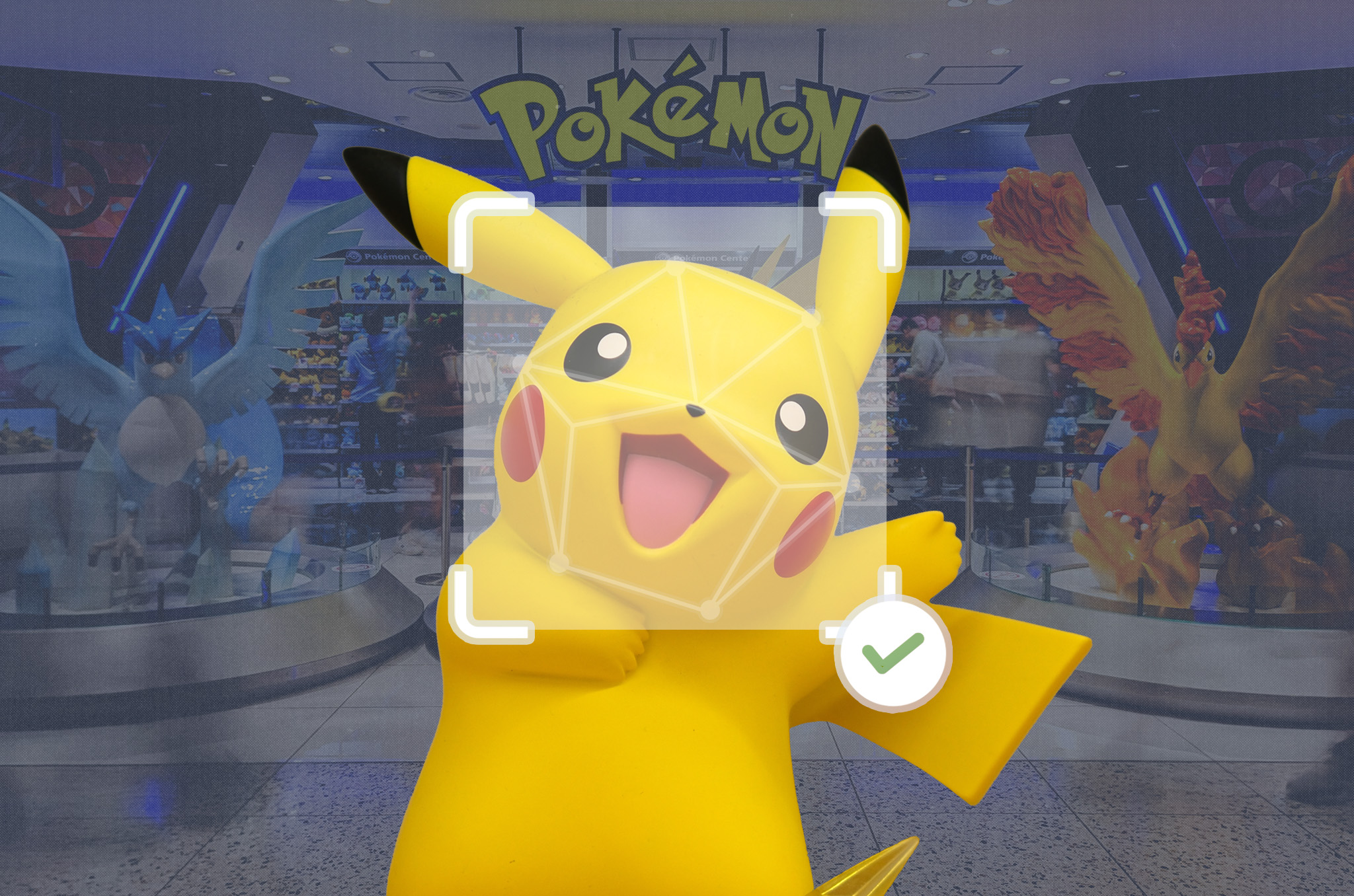

There are places where we expect to prove who we are.
An airport. A passport checkpoint. A bank.
A shop selling children’s trading cards is not usually one of them.
But since July 24, anyone aged 6 or older entering one of Japan’s official Pokémon Card Stores has been required to undergo facial recognition before walking through the door. The policy applies even to customers who are only browsing.
The system checks whether a customer has already entered the store or collected a seiriken, the numbered tickets Japanese retailers use to manage crowds during popular releases. If it has, staff can refuse entry. Customers leaving temporarily, even to use the bathroom, must notify staff so the system doesn’t mistake their return for a second visit.
The policy applies only to the smaller stores dedicated exclusively to the trading card game, not the larger Pokémon Centers. Even so, these specialty shops may now be the only places in Japan where buying a few hundred yen’s worth of booster packs begins with a biometric scan.
The Business Case for Your Face
What kind of economy produces a world where scanning your face to buy children’s trading cards feels like a reasonable solution?
The immediate answer is a speculative one.
Pokémon cards are no longer simply toys. They are collectibles, investment vehicles and, increasingly, financial assets. What was once a playground pastime now sits at the center of a domestic trading card market worth roughly ¥338 billion by fiscal 2025, nearly double its size four years earlier. Trading cards now account for roughly a third of the entire Japanese toy market, and the secondary market has grown large enough that lawmakers from the ruling Liberal Democratic Party have formed a parliamentary group, consulting with the Ministry of Economy, Trade and Industry, to examine scalping, counterfeiting and the possibility that high-value cards are being used to launder money.
Pokémon describes their new system as a matter of crime prevention and compliance with entry and purchase rules. In practice, this is anti-scalping infrastructure, designed to stop one person, or one small operation, from buying up stock and reselling it at a markup.
The Long Road to the Face Scan
Markets, like states, govern through legibility. They work more efficiently when anonymous people become identifiable customers, and identifiable customers become records that can be sorted, counted and acted upon. The question is no longer simply who wants to buy something, but who is entitled to buy it, how many times and under what conditions.
That shift has been unfolding for years. Purchase limits came first. Then lotteries. Retailers began stripping the shrink wrap from booster boxes to destroy their resale value. One Bic Camera in Ikebukuro required buyers to pass a 15-question Pokémon quiz. Government-issued ID became mandatory for some online sales. Earlier this year, The Pokémon Company announced plans to use Japan’s My Number system to verify entrants for 30th anniversary lotteries. Facial recognition follows the same trajectory. The technology has changed, but the underlying logic has not.
The Legality of Scanning Faces
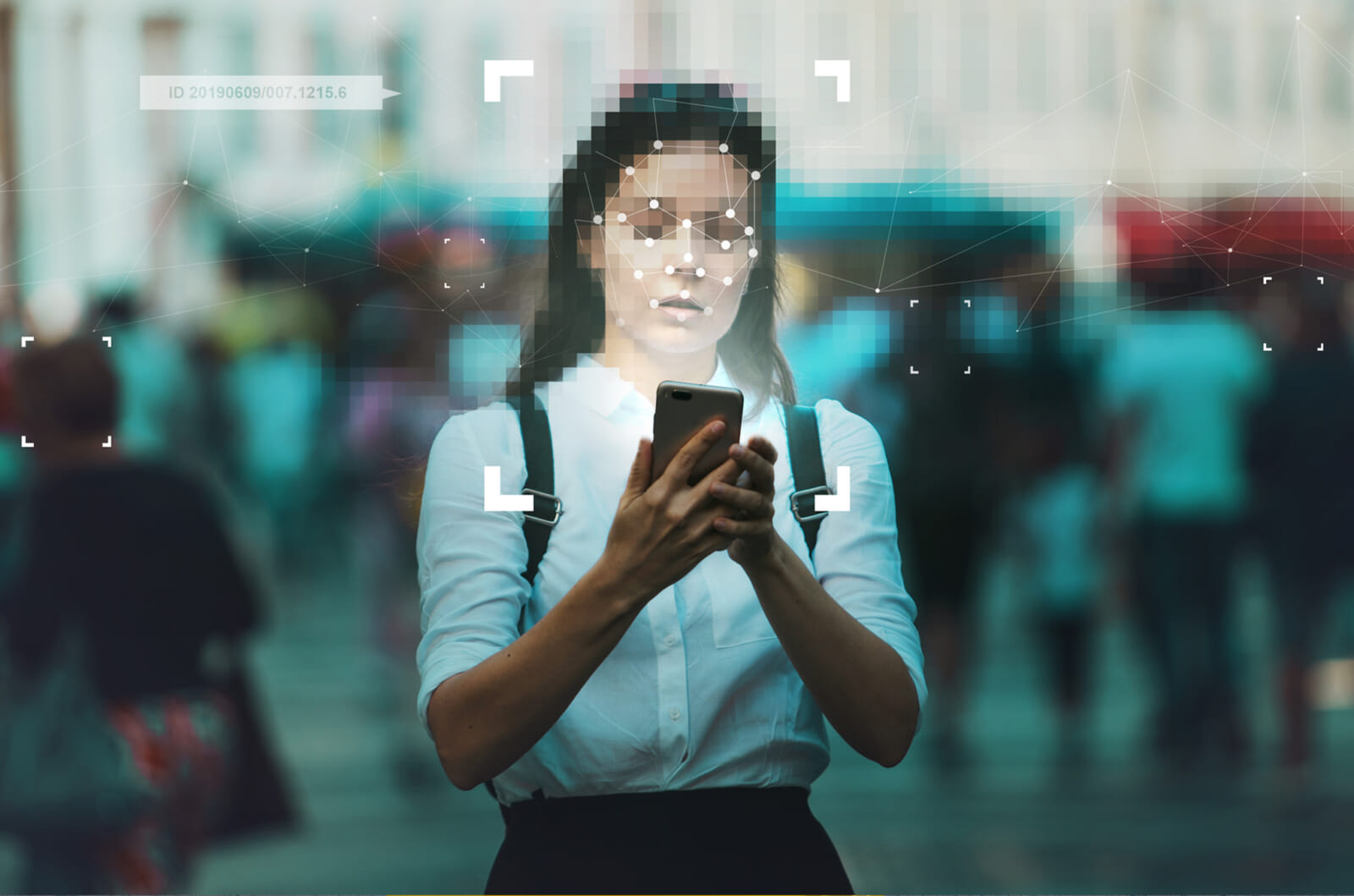
This scanning procedure has more legal room to work with than you might expect. The company says facial and visit data will be deleted “after a certain amount of time has passed,” without saying when. Under Japan’s privacy law, businesses only have to endeavor to delete personal data once it is no longer needed — not by any fixed deadline. New rules specifically governing biometric data have been approved, but they have not yet taken effect.
When supply comfortably exceeds demand, retailers have little reason to know who their customers are. Money is enough. But once access becomes scarce, anonymity starts looking less like a feature of commerce than a loophole.
The pattern extends far beyond Pokémon. Sneaker releases require raffle accounts, luxury boutiques cultivate purchase histories and concert tickets become tied to legal names. Across increasingly financialized markets, identity becomes part of the transaction.
And for many people, that feels entirely reasonable. Japanese reaction to the policy has been overwhelmingly positive, with many fans arguing that if facial recognition keeps products on shelves and out of scalpers’ hands, it’s a price worth paying. Some even questioned why the larger Pokémon Centers hadn’t adopted it too.
None of these systems announces itself as a new form of surveillance. Each arrives as an answer to a specific question. How do we stop scalpers? How do we keep the queue fair? How do we prevent fraud? The questions are ordinary. So are the solutions. It is only later, looking back, that they begin to resemble something larger.
That is, perhaps, how surveillance expands. Not through a single dramatic expansion of power, but through a slow redefinition of what counts as an ordinary request. Show your ID. Scan your face. Tell us before you leave for the bathroom. Each measure is narrow, rational and easy to defend in isolation. But together, those small concessions redraw the boundary between public life and personal identity. And the places where that redrawing happens first are rarely the ones anyone’s watching.
A trading card shop, for example.
Related Posts
- Japanese Man Arrested for Stealing Rare Pokemon Cards From Ex-Boss
- The World’s First AI Mayor is Here: Introducing Yokosuka’s Virtual Katsuaki Kamiji
- How the Sony Walkman Failed To Destroy Civilization
Updated On August 6, 2026