During a Japanese summer, it’s ultimately the humidity that gets you, but the heat still gets a few good punches in. It’s getting so bad that Japan had to create a whole new word for cruelly hot days. The country ultimately went with “cruelly hot day” (kokushobi). Simple and to the point. But it makes you wonder: In the era of samurai and no air conditioning, how did the country survive the blazing scorch of the midyear months? This is how:
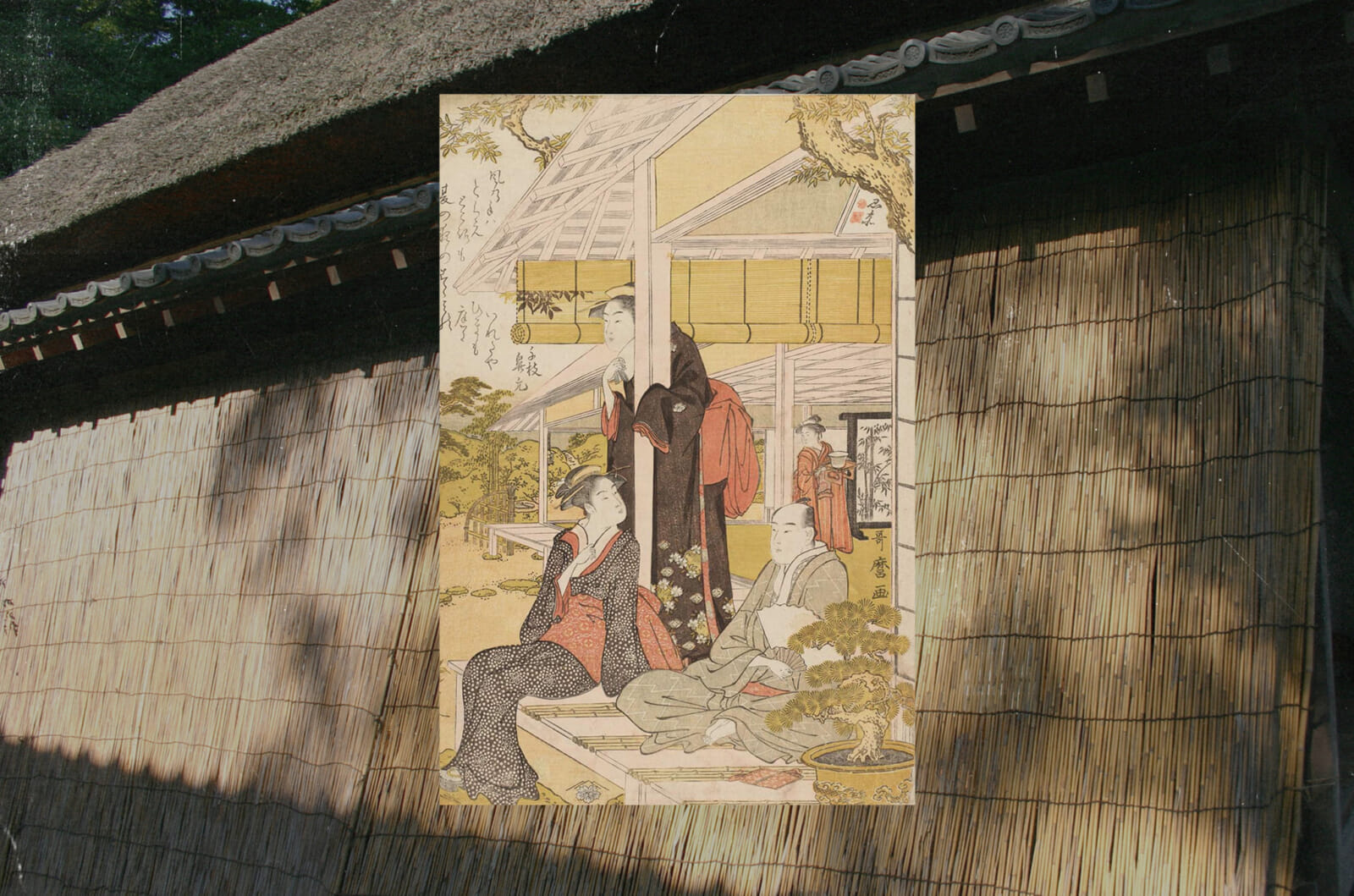
Sudare bamboo blinds, depicted in “Enjoying the Cool in a Garden” by Kitagawa Utamaro (c. 1788-1890)
Summer House Architecture
There’s a medieval Japanese saying: “Houses should be built with summer chiefly in mind.” This means places that can breathe. Open spaces and sliding doors allowed people of feudal Japan to essentially turn their houses into a raised floor and a roof supported by some walls, creating cooling airflow. This design philosophy was a kind of tactical retreat that admitted you can’t stop summer, but you can at least invite the wind in. This is still practiced in older Japanese homes today, especially in the countryside.
Deep eaves additionally created shade if you wanted to sit on the porch. And for those who preferred to stay inside, there were always sudare. They were — and actually still are in many places around the country — thin bamboo blinds hung outside the house that blocked sunlight before it could heat the building, making them superior to indoor curtains. Modern sudare are sometimes also made from plastic and hung inside the house.
A step above sudare were yoshizu reed screens. Possibly evolving from the straw canopies used in Kyoto to shade certain types of green tea, yoshizu were movable walls that leaned against houses to help cool them. Shading wasn’t the only thing these houses shared with tea plants — they also required a lot of water in the summer.
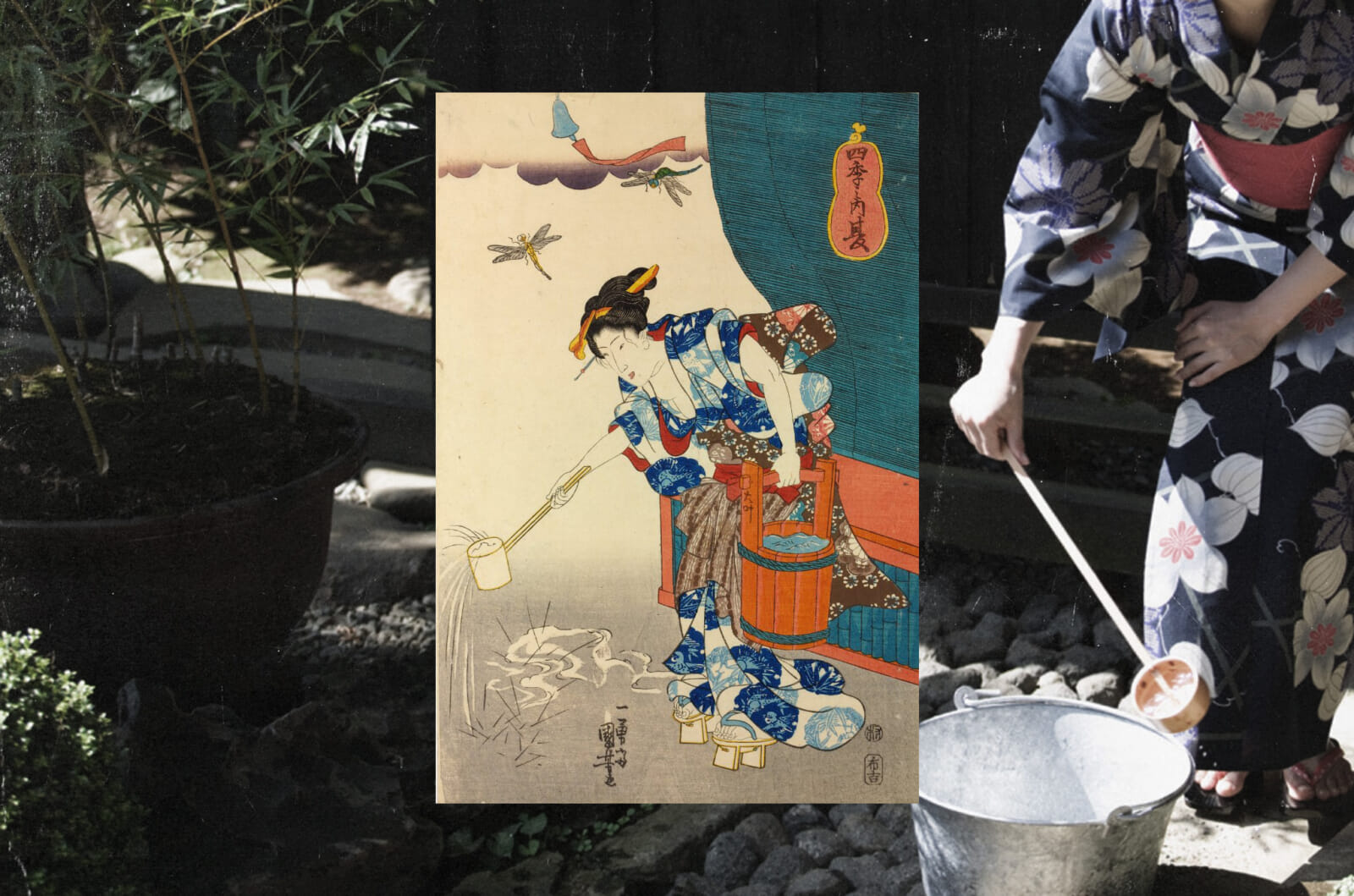
Uchimizu water pouring outside the home, depicted in “Summer (Natsu)” by Utagawa Kuniyoshi (c. 1843)
Uchimizu is the still-practiced custom of splashing water in front of a house or store, which, according to studies done in the past, can lower temperatures by as much as 6 degrees Celsius near the ground, thanks to evaporation. It may have been inspired by Shinto purification rituals, but it could just as easily have started with someone noticing that “cool water makes things cool,” because when Japan’s summer is boiling your brain, you’re rarely capable of more complex thoughts.
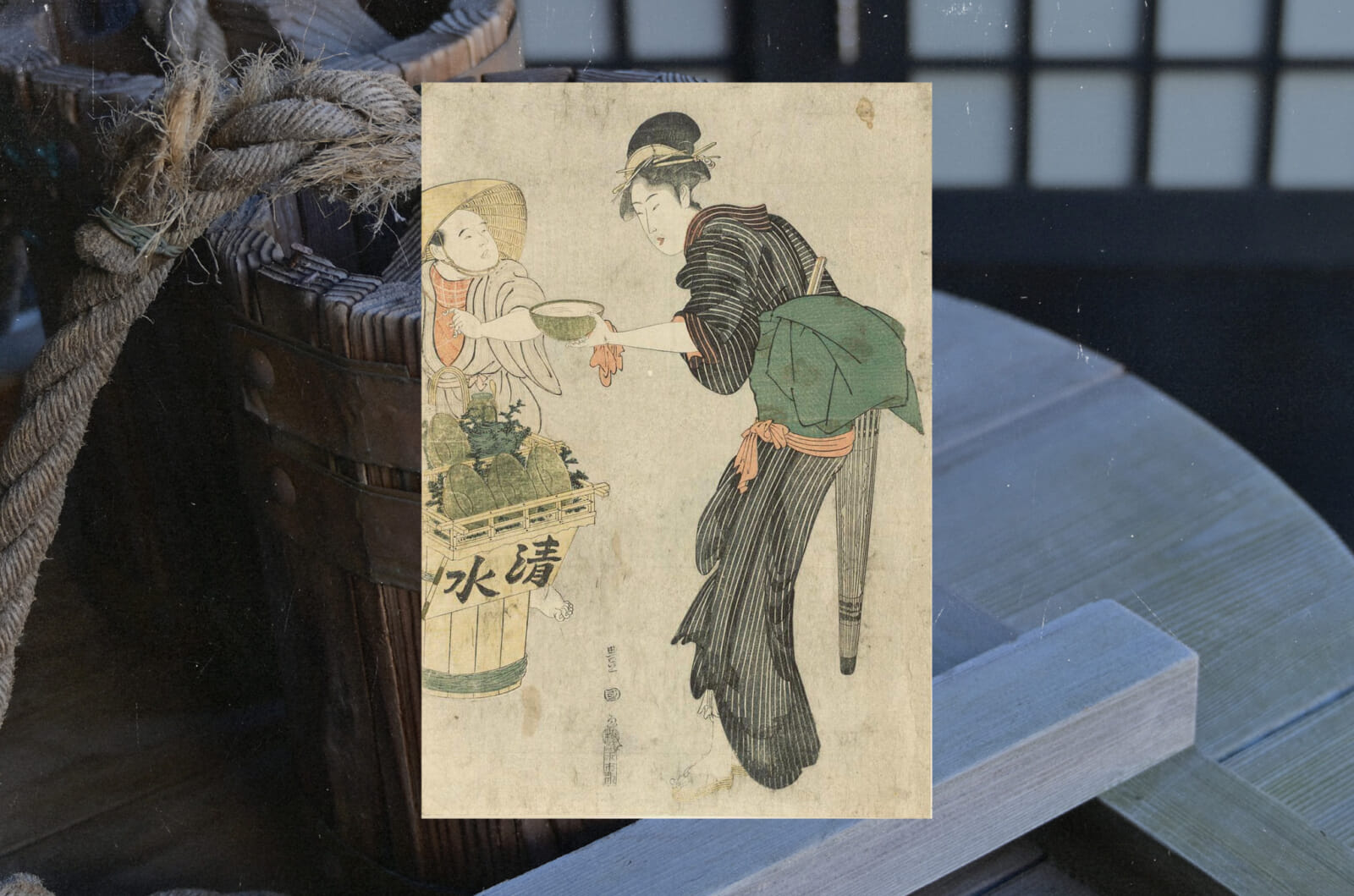
Depction of a woman buying chilled well water from a vendor, by Utagawa Toyokuni I (c. 1800s)
The Original Boba and Other Cool Foods
Between 2018 and 2019, Japan went crazy for boba tea with tapioca “pearls,” but what the country was actually doing was remembering its feudal past. During the Edo period (1603–1867), people in larger cities, but primarily the capital, could cool themselves down with chilled deep-well water that was additionally sweetened and came with chewy shiratama rice dumplings. It was mostly sold by wandering vendors or from stalls with merchants yelling “Cold!” — “Hyakkoi!”
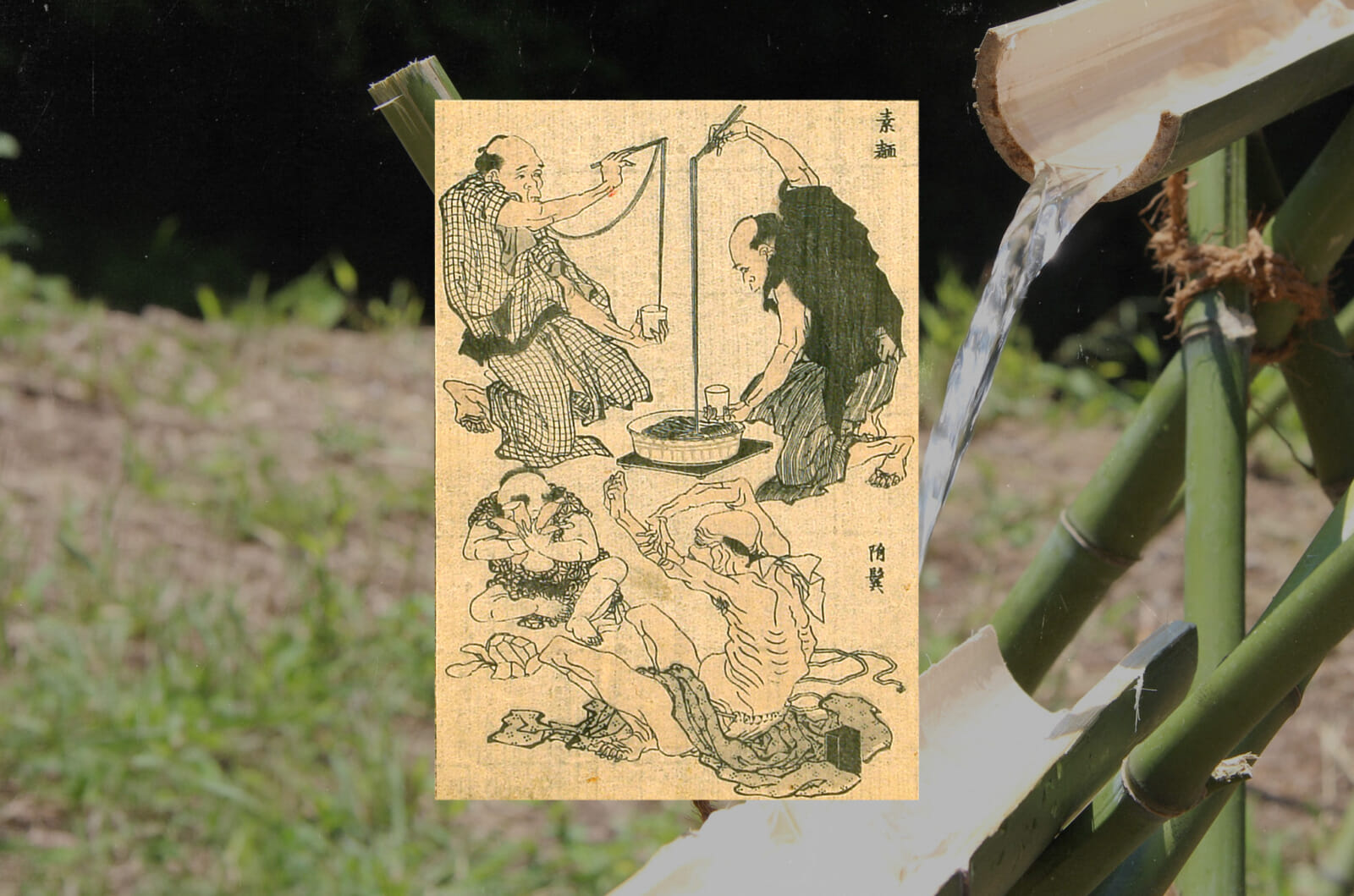
Depiction of men eating chilled summer noodles by Katsushika Hokusai (part of Hokusai’s Manga Vol.12) c. 1834
Another cooling summer food was nagashi somen, a noodle dish. It’s actually part food and part game, presumably to take your mind off the heat. Traditionally, to make nagashi somen, you would split bamboo to create flumes, which you’d run chilled water through. Then you’d slide somen down the chute, and people alongside it would catch the thin noodles and eat them with chopsticks. Many Japanese people still enjoy nagashi somen at home, and there are even restaurants serving the dish during the hotter months.
A surprising Japanese food for surviving summer, dating back to the 18th century, is grilled eel. In fact, eating eel is practically mandatory on Doyo no Ushi no Hi — Midsummer Day(s) of the Ox, falling during the hottest time of the year between late July and early August. Later, the tradition was rationalized by the idea that “cooling eels” would grant stamina to beat the heat. Why, yes! Eels were also considered aphrodisiacs during the Edo period. They still are, technically, in the form of various eel extracts that you can get in most drugstores.
But the truth is, eel became a summer staple because of one man: Hiraga Gennai, Japan’s Leonardo da Vinci, one of the country’s greatest satirists and possibly its first copywriter. Sometime in the 1700s, he apparently wanted to help out a friend with an eel-grilling business during his summer slump, and he used the folk belief that it was lucky to eat foods starting with the same “letter” as the name of a special day. “Eel” in Japanese is unagi, so he chose Ushi no Hi to promote it. And thus, a centuries-long tradition was born.
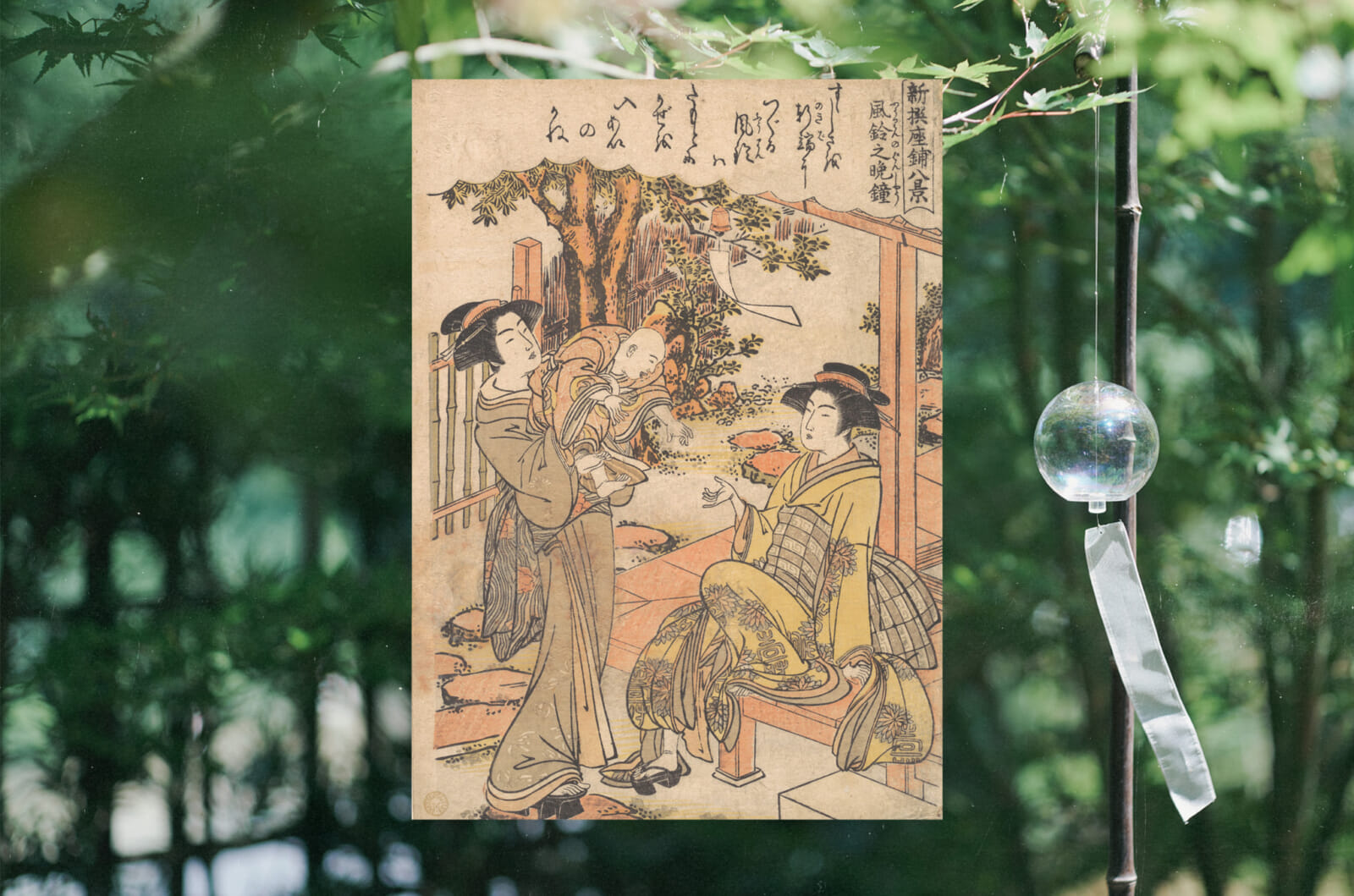
“The Evening Wind-bell” by Kitao Masanobu / Santō Kyōden (c. 1783)
Psychological Coolness
It’s kind of a joke nowadays to tell people who are hot to “think cool thoughts,” but back in the days of the samurai, it was the backbone of Japan’s whole summer culture, meant to cool the body through sight, sound and imagination. Part of it was surrounding yourself with things associated with lower temperatures.
Examples include wind chimes (reminiscent of cool breezes), goldfish (which swim in cool, clear water), fireflies (observed during the evening hours when temperatures drop) and morning glories (known for blooming during the cool hours of the day). Oftentimes, this meant actually going out to watch real animals, insects and flora, but these creatures and plants could also be used as symbolic imagery meant to trick your mind into entering cool mode. And if that didn’t work, there was always the option of scaring the heat out of you.
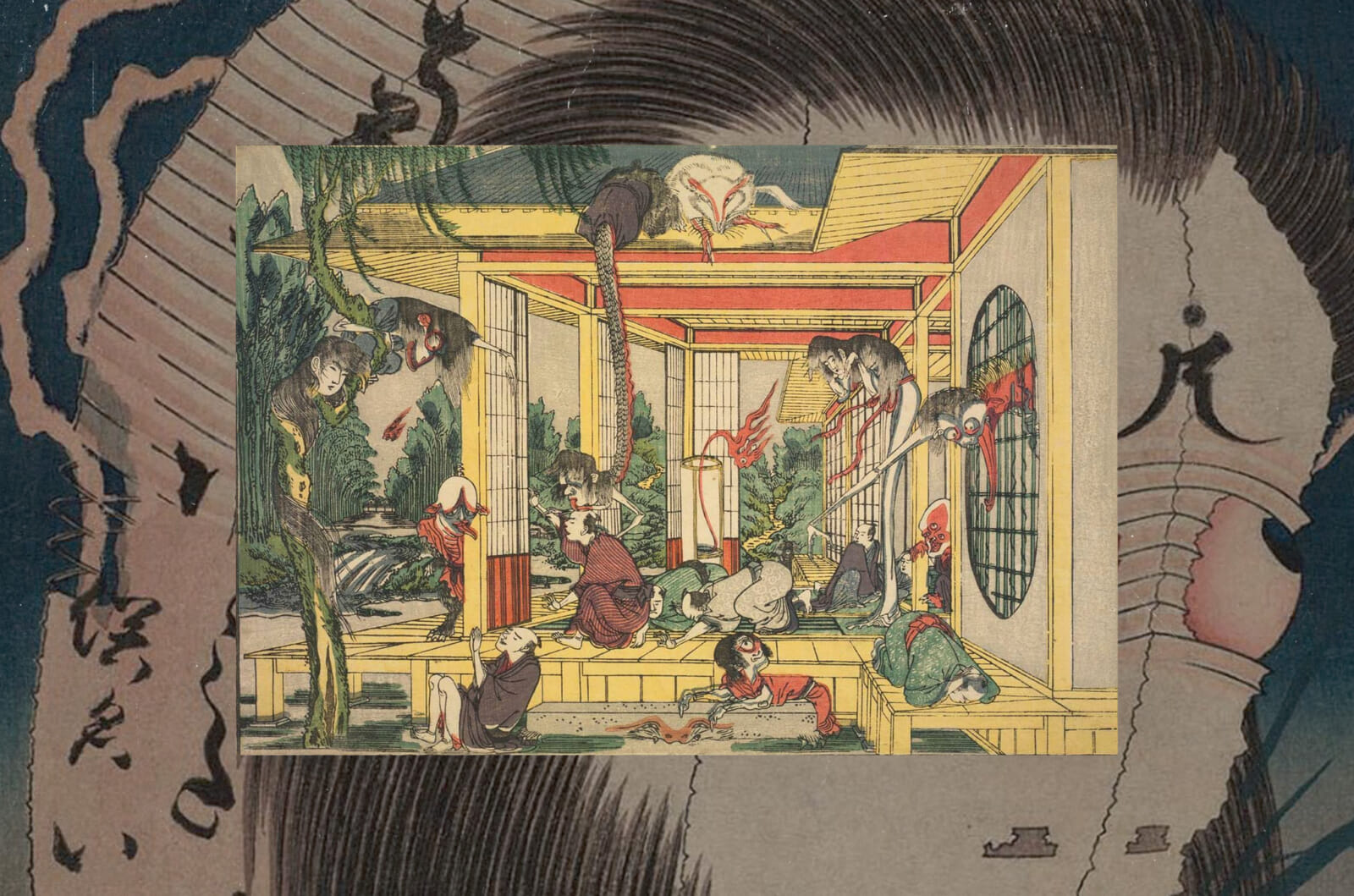
“One Hundred Ghost Stories in a Haunted House” by Katsushika Hokusai (c. 1790)
During the Edo period, summer was essentially Japan’s months-long Halloween. It was when haunted houses or circus freakshows did most of their business, as people sought spine-chilling experiences. Japan’s unforgiving summers are responsible for a lot of Japanese supernatural culture, as they also inspired hyakumonogatari kaidankai gatherings, where 100 people sat around telling ghost stories. A lot of paranormal creatures were created or refined during those proto-Are You Afraid of the Dark? sessions, when imaginations ran hot but sweat ran cold.
Since Japan survived its summers with these methods, there clearly was something to them. So, if your air conditioning breaks down during the next few months, give any of them a try as you wait for the repair people.