
For once, the price news is good: Regular beer just got cheaper in Japan.
What Changed
As of October 1, the liquor tax on a standard 350-milliliter can of beer has fallen from ¥63.35 to ¥54.25, a reduction of ¥9.10 per can. Beer makers and retailers are passing at least some of that saving on to drinkers, while supermarkets are expanding their beer sections in anticipation of higher demand.
The trade-off is that Japan’s cheaper beer substitutes are getting more expensive. Happoshu, a low-malt beer-like drink, and so-called “third-category beer” were previously taxed at ¥46.99 per 350-milliliter can. From October, that rises by ¥7.26 to the same ¥54.25 rate as ordinary beer.
Why Japan Had Three Kinds of Beer
Both categories owe much of their existence to Japan’s liquor tax system. For decades, beer was taxed according to its ingredients and malt content, giving brewers a powerful incentive to make drinks that tasted like beer without legally qualifying as it. Suntory helped kick off the race in 1994 with Hops, a happoshu containing 65% malt, just below the 67% malt-content threshold then required to be classified and taxed as beer.
As the government changed the rules, brewers found new ways around them. Third-category beer came later — rather than simply using less malt, manufacturers developed beer-like drinks using very little or no malt, sometimes based on spirits or other ingredients, allowing them to qualify for an even lower tax rate. At one point, a 350-milliliter can of beer carried ¥77 in tax, compared with just ¥28 for a third-category product.
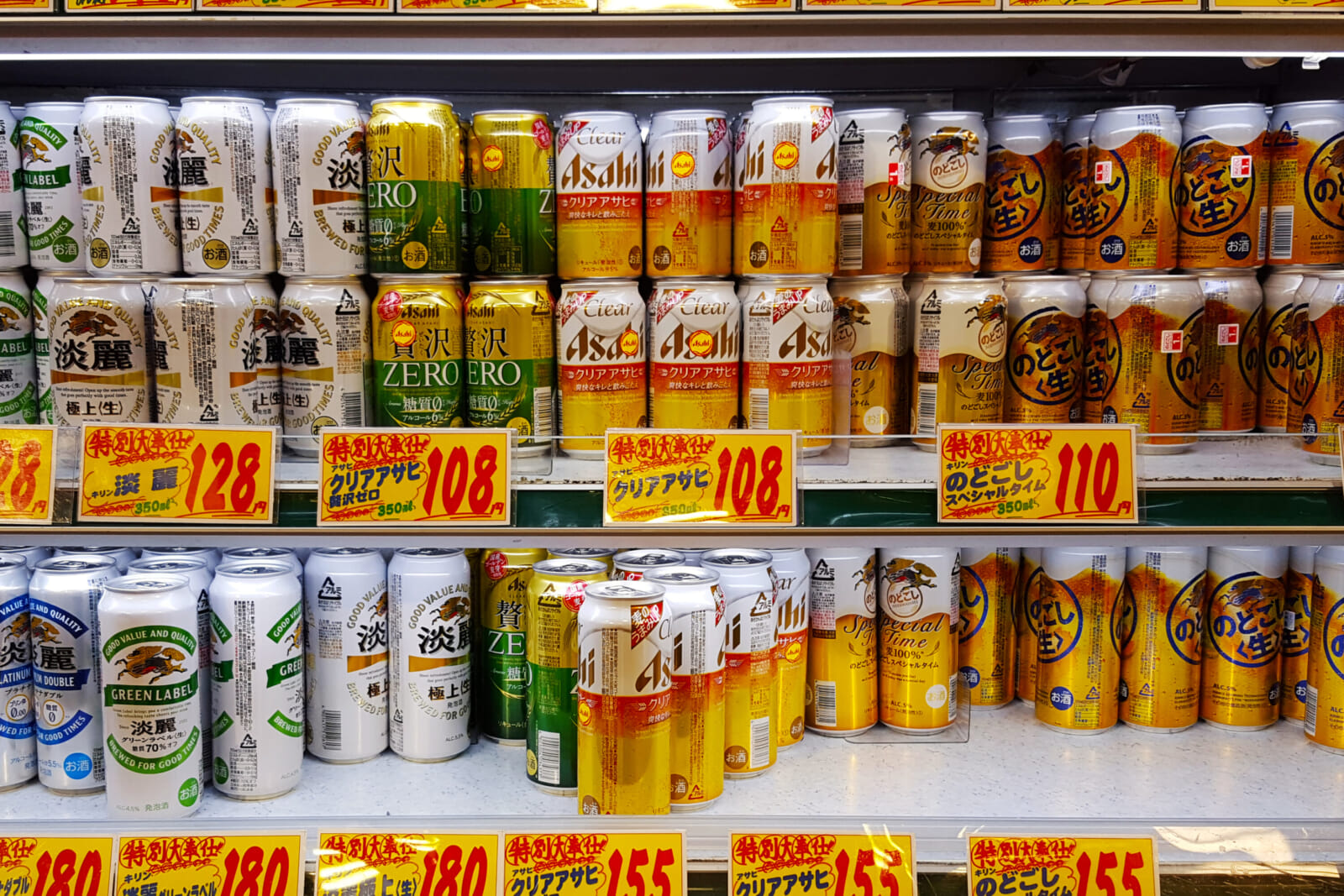
The result was the peculiar three-tier beer aisle that has become familiar in Japanese supermarkets and convenience stores: beer, cheaper happoshu and cheaper still third-category drinks, separated as much by the tax code as by what consumers actually wanted to drink.
The government decided in 2016 to gradually eliminate the tax differences between beer and beer-like products, with the changes taking effect in stages from 2020. The October 1 revision completes that process, with beer, happoshu and third-category products now all taxed at ¥54.25 per 350 milliliters.
How Brewers Are Responding
Major brewers have spent the run-up adjusting accordingly. Asahi has revamped Super Dry, Kirin has updated Ichiban Shibori, and Suntory has increased the malt content of Kinmugi, previously a third-category drink, to sell it as beer.
The wider October revision also raises the tax on other sparkling alcoholic drinks, including chu-hi, but its most visible effect may be in Japan’s beer aisle. A tax system that helped create an entire market for almost-beer has finally caught up with it, and the tax on a 350-milliliter can of beer is now about ¥9 lower than it was last month.