The body of 39-year-old Anna Yagi was discovered in a hotel in Naha, Okinawa Prefecture, on Saturday morning. Devin Ballard, a 20-year-old US Marine stationed at Futenma Air Base who was seen entering the hotel with Yagi, was arrested the following morning on suspicion of robbery and murder. Local police told news media outlets that he allegedly strangled Yagi and stole her wallet and backpack. Ballard has denied the allegations.
The case has prompted a strong reaction from the Japanese government, amid longstanding concerns in Okinawa over incidents involving US military personnel. Posting on X, Japanese Prime Minister Sanae Takaichi described the alleged crime as “brutal and heinous.” Defense Minister Shinjiro Koizumi, meanwhile, said the incident was “utterly inexcusable” and filled him with “strong indignation.” He added that “incidents and accidents involving US military personnel cause significant anxiety to the local community and must never occur.”
The case comes against a long and controversial history of crimes and accidents involving US military personnel in Okinawa. High-profile incidents have repeatedly reignited anger over the presence of American forces and their impact on local communities. Although the nature of those incidents has varied, from fatal accidents involving military aircraft to serious crimes against residents, they have often fed broader concerns about the risks and burdens associated with hosting a large concentration of US military facilities.
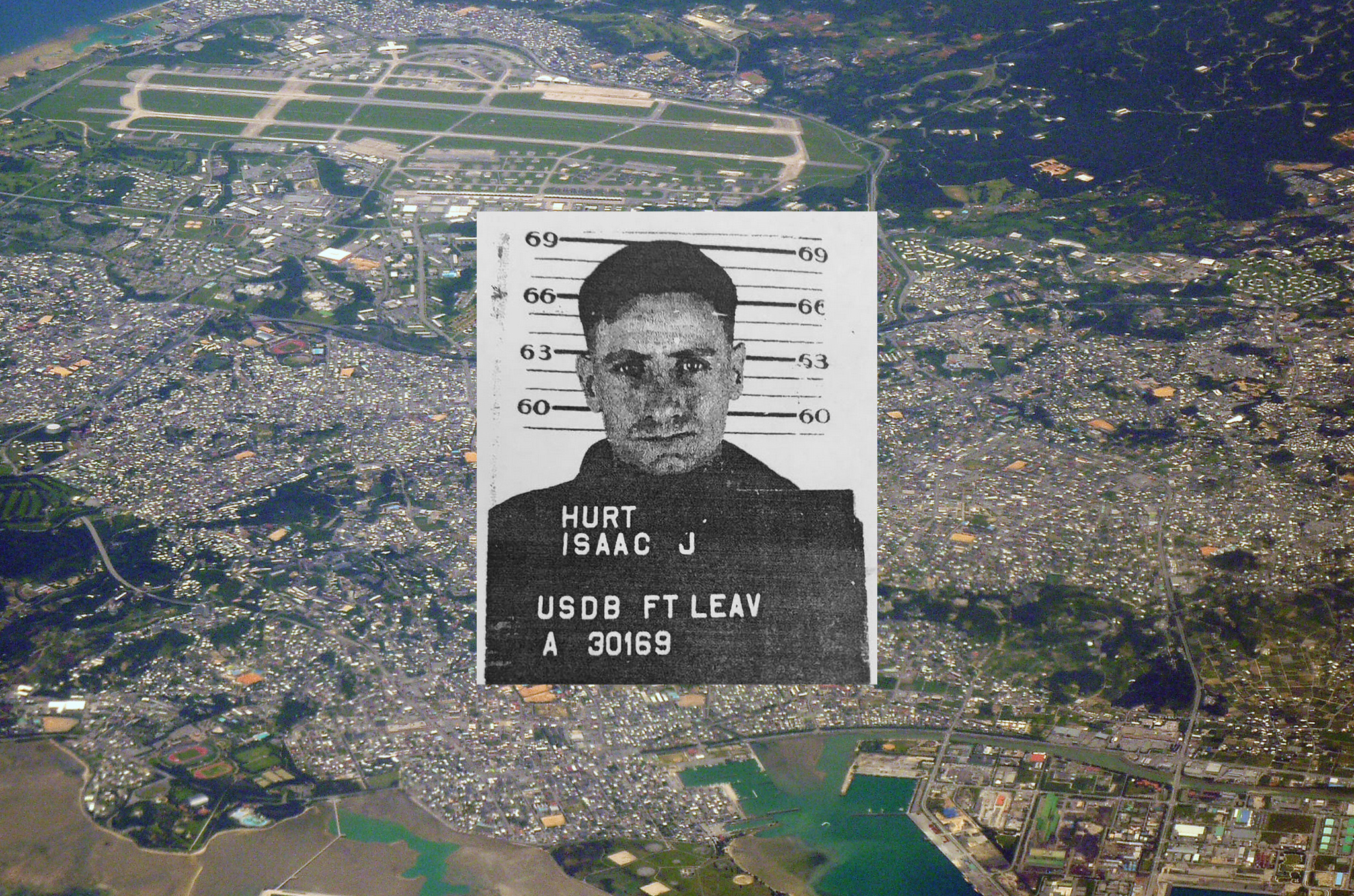
Sergeant Isaac J. Hurt (pictured 1955) and Kadena airbase, where he was stationed (seen top left) | Images: Wikimedia
A History of Military Incidents in Okinawa
Several demonstrations took place in 1955 following the rape and murder of five-year-old Yumiko Nagayama, often referred to as the Yumiko-chan incident. Sergeant Isaac J. Hurt, who was tried in a US military court rather than an Okinawan civilian court, was convicted of killing her; he was initially given the death penalty, but his sentence was later reduced. Local anger intensified when a US Air Force fighter jet crashed into Miyamori Elementary School, ultimately killing 18 people, including 11 students, and injuring more than 200 others.
The concerns were compounded by further deadly accidents involving US military activities. In 1965, a 2.5-ton military trailer fell from a US aircraft during a parachute-drop exercise in Yomitan and crushed an elementary schoolgirl to death. The incident prompted strong protests from local residents and organizations. Two years later, a four-year-old girl was struck and killed by a military crane, further fueling concerns over the dangers posed by the US military presence.
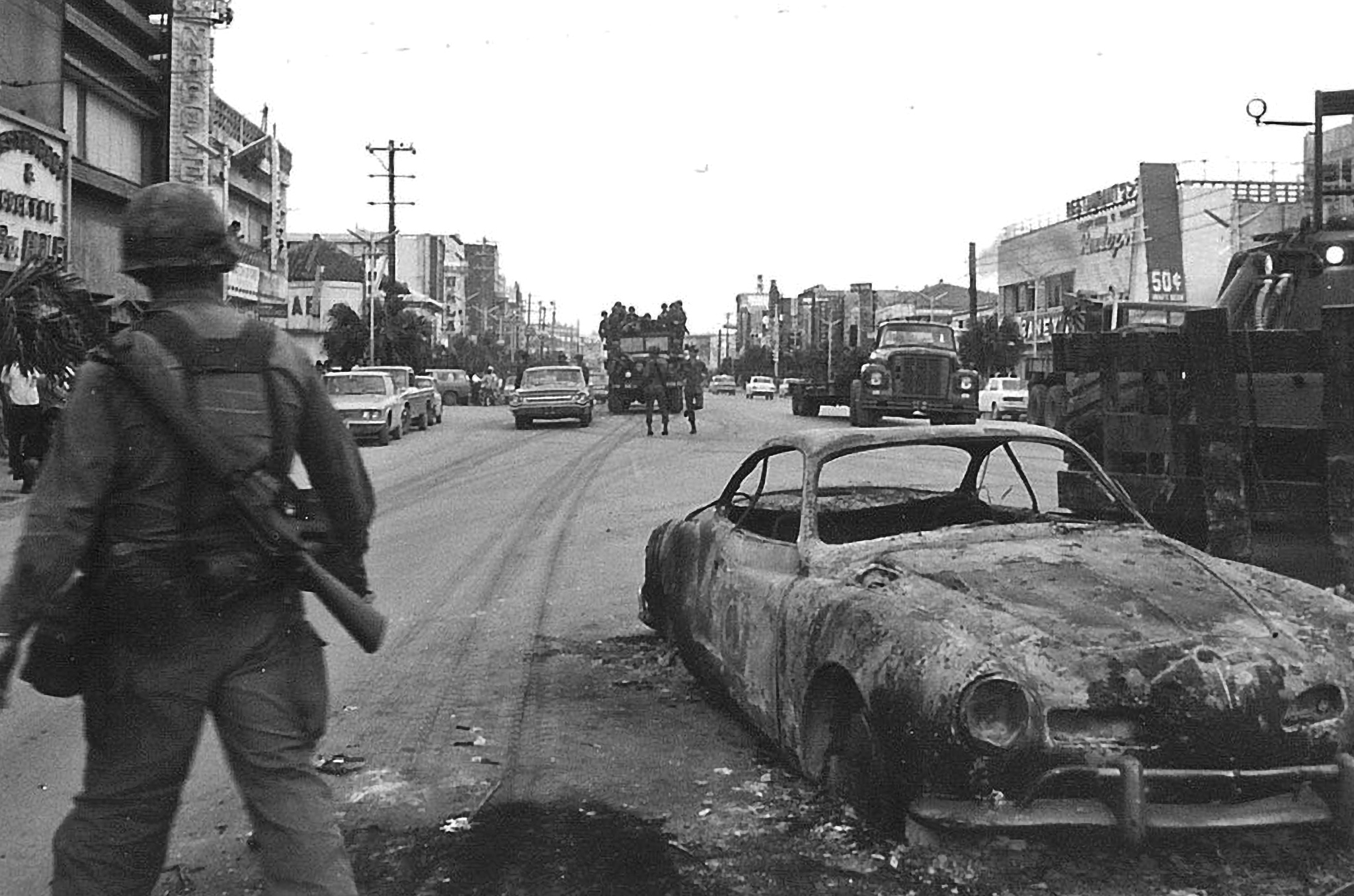
In 1970, tensions boiled over after a US serviceman struck and killed an Okinawan housewife in the town of Itoman while drunk driving. The US military court handed down a “not guilty” verdict in December. That same month, an intoxicated American soldier hit and injured a pedestrian with his car. The incidents contributed to the Koza riot, when approximately 5,000 Okinawans clashed with around 700 US Military Police officers, setting fire to and damaging dozens of vehicles that bore US military license plates.
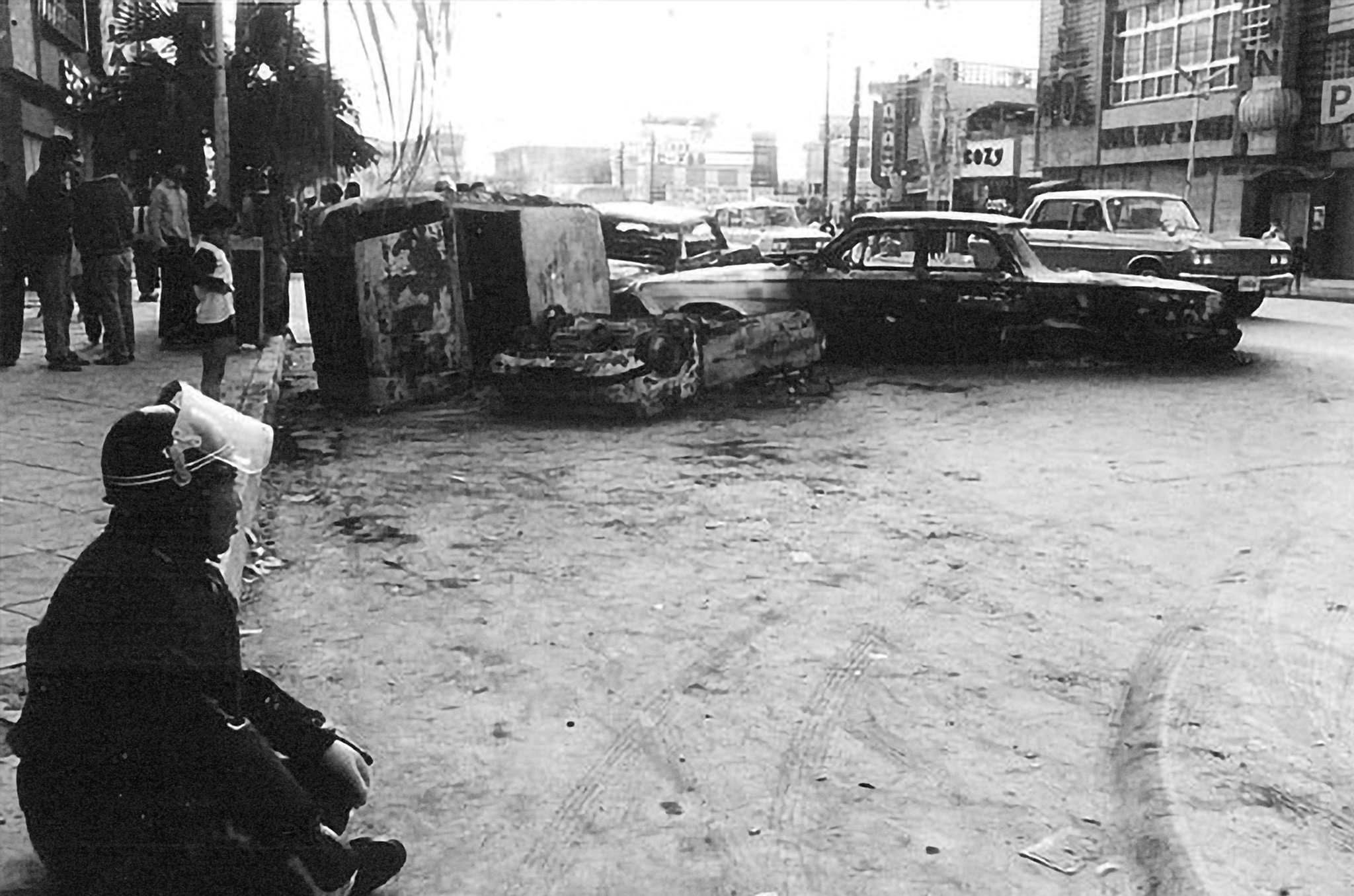
An Okinawan policeman surveys the damage done during the 1970 “Koza Riot” | Image: Wikimedia
The 1972 Handover
Okinawa was returned to Japanese control in May 1972, ending 27 years of US administration. But the handover did not end the US military presence on the islands. At the time of the reversion, 83 US military facilities covered approximately 278 square kilometers. Today, the number of facilities has fallen to 32. Yet while the size of the remaining bases has decreased, Okinawa still accounts for about 70% of the land area occupied by US military facilities in Japan.
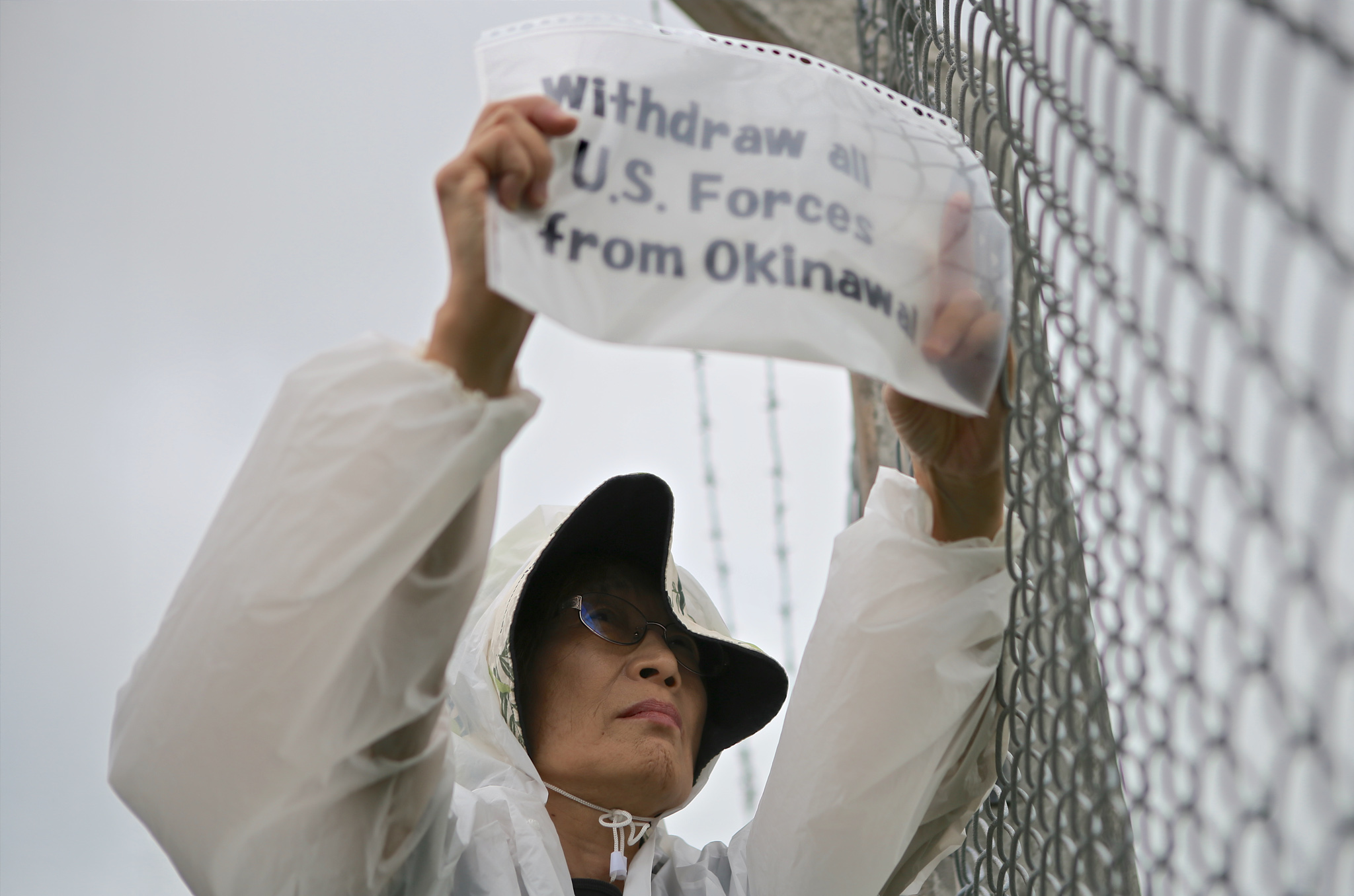
The reversion also did little to end protests against the US military presence. Demonstrations continued over the concentration of bases, accidents and crimes involving American personnel, as well as the burden placed on Okinawan communities. That anger reached a new level in 1995, after three US servicemen kidnapped and raped a 12-year-old girl in Okinawa. The case sparked some of the largest protests in the prefecture’s postwar history and intensified calls for a reduction in the US military presence.
It also prompted renewed scrutiny of the Status of Forces Agreement, under which US authorities generally retained custody of suspects until they were indicted by Japanese prosecutors. The controversy led Okinawa’s government to seek a direct expression of public opinion on the issue. A nonbinding referendum was held in 1996 on revising the Status of Forces Agreement and reducing and consolidating US military bases in Okinawa. Turnout was 59.53%, with 89.09% of voters supporting the proposal.
There are approximately 30,000 U.S. military personnel currently stationed in Okinawa | Image: Shutterstock
A Continuing Source of Tension
The controversies continued into the 2000s and 2010s. In 2004, a US military helicopter crashed onto the campus of Okinawa International University in Ginowan. Just over a decade later, an MV-22 Osprey crash-landed off the coast of Nago, while two CH-53E helicopters were involved in separate incidents in 2017, including one that dropped a window onto the grounds of an elementary school while children were present.
In 2017, former US Marine and civilian contractor Kenneth Franklin Shinzato was sentenced to life in prison in connection with the abduction, rape and murder of 20-year-old Rina Shimabukuro. Two years later, Navy Corpsman Gabriel Olivero allegedly stabbed 44-year-old Tamae Hindman to death in her Chatan apartment before turning the knife on himself. Prior to the killing, Hindman had reported Olivero to military police for sexual assault, leading to a protective order. It failed to prevent the tragedy.
The history of such incidents continues to shape the debate over the US military presence in Okinawa. The death of Anna Yagi has once again brought those concerns to the forefront. According to the BBC, there have been 6,409 arrests for criminal offenses related to US military personnel between the islands’ reversion to Japan in 1972 and 2023. In 2024, 80 military-related personnel were arrested, the highest annual figure in two decades.