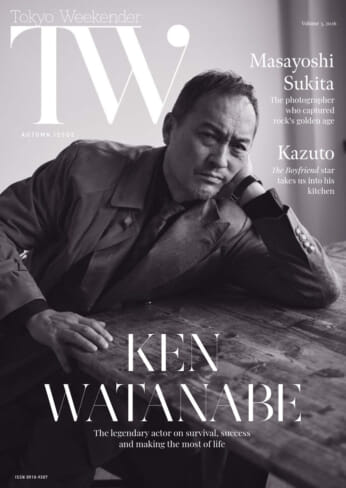

Ken Watanabe didn’t just cross the bridge between Tokyo and Hollywood; he helped build it. Today, he is one of the industry’s most recognizable Japanese stars. From The Last Samurai and Inception to Godzilla, his performances have placed him alongside some of cinema’s biggest names, making him a familiar presence to audiences around the world. Yet Watanabe’s path to international stardom was far from inevitable. Early in his career, he struggled to find his footing as an actor and came close to walking away from the profession altogether.
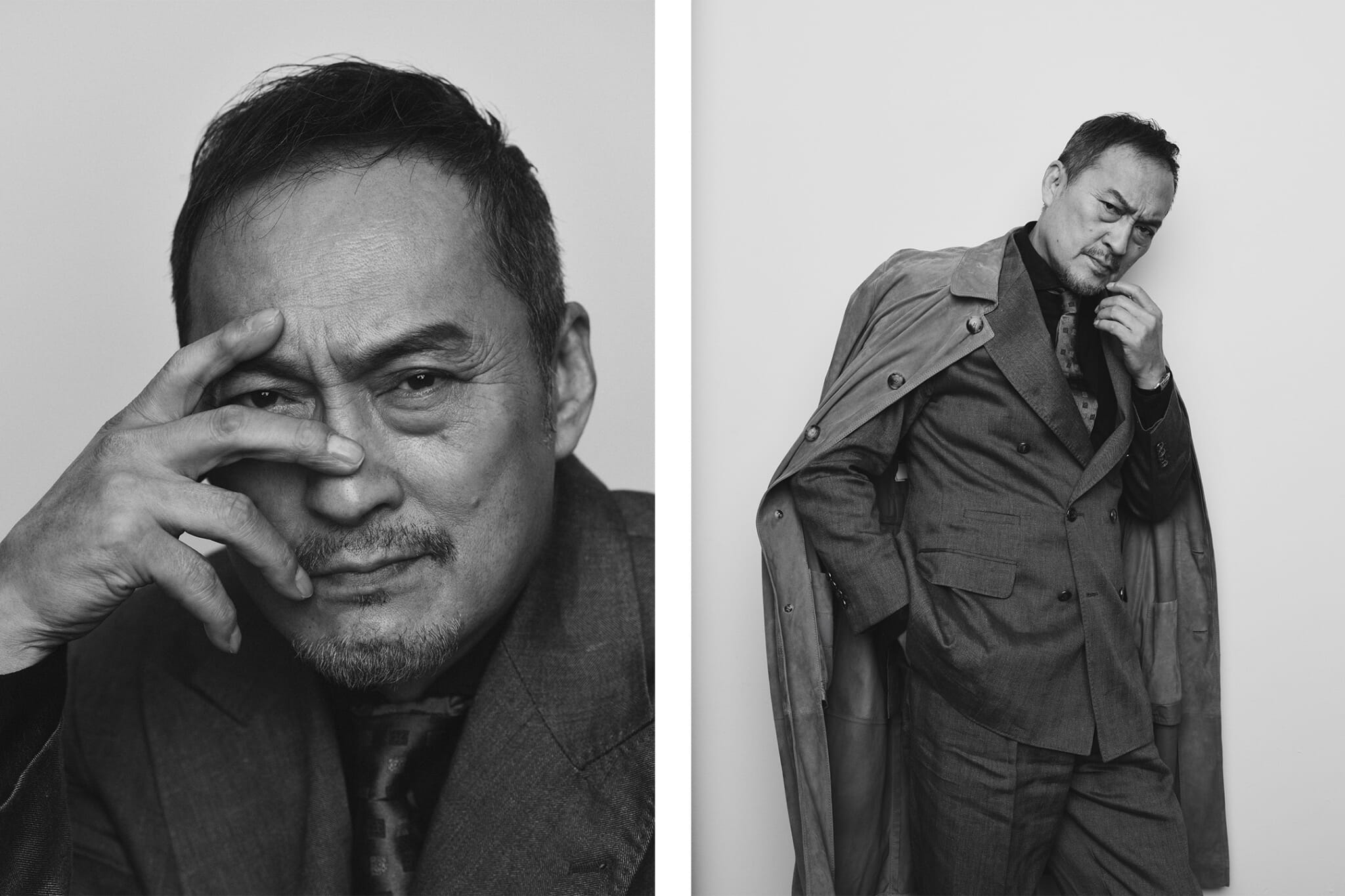
Photos by Eric Micotto
Early Career: From Doubt to National Stardom
Looking back on his early performances, Watanabe recalls an actor still trying to find his way. “I didn’t have the right skills or the mindset. I was simply desperately trying to fulfill whatever roles I was given,” he says. His film debut was in MacArthur’s Children, a 1984 period drama set in postwar Japan. At the time, Watanabe was just 24 and virtually unknown, but the production brought him into the orbit of Kazuo Miyagawa — one of Japan’s most revered cinematographers. Miyagawa took the youngster under his wing and, after filming wrapped, told him, “Ken-chan, let’s study.” Watanabe still considers those words a personal treasure.
During those early years, a disillusioned Watanabe found himself questioning whether he should continue in the profession. He recalls Japanese filmmakers at the time routinely yelling at actors and treating them poorly. A turning point came in 1985, when renowned British theater director Terence Knapp cast Watanabe in a Japanese production of Peter Shaffer’s The Royal Hunt of the Sun. Knapp encouraged him not to give up, offering him a different way of thinking about the craft.
“I don’t know if I grasped anything definite,” Watanabe says, “but he taught me that theater is ‘play’ — that it was OK to enjoy it more, and that it was OK to be freer.” The idea stayed with Watanabe, shaping the sense of freedom and playfulness he would carry into his acting in the decades that followed. Two years after working with Knapp, Watanabe landed the lead role of the legendary one-eyed warlord Date Masamune in NHK’s year-long TV historical epic Dokuganryu Masamune.
The series became the highest-rated NHK taiga drama in Japanese television history, instantly catapulting Watanabe to national stardom. Yet when he looks back on the experience, it’s the people around him who stand out most. “I learned from the wonderful performances of my costars and their demeanor on set,” Watanabe recalls. “It wasn’t just about playing the role, but about how to share that time with others. I absorbed a great deal from the experience of living as that character for an entire year.”

Surviving Leukemia, Twice
Watanabe, now one of Japan’s most sought-after actors, broadened his range following Dokuganryu Masamune, moving between samurai epics such as Oda Nobunaga, contemporary primetime dramas, social comedies and acclaimed stage productions including Hamlet. Yet just as his career was gathering momentum, a sudden, life-threatening illness brought it to an abrupt halt. At 29, he was diagnosed with acute myeloid leukemia, forcing him off set and into the hospital. At the time, the disease carried an overall five-year survival rate of just 11.5%.
Watanabe not only survived but returned to work. While film directors were reluctant to cast him for fear that his illness might flare up during production, television welcomed him back. He took on the title role in Baian the Assassin, whose protagonist is described in Shotaro Ikenami’s novels as a large, imposing, bald-headed man. Watanabe arrived on set after aggressive chemotherapy, his hair gone, closely resembling the character. Audiences were captivated by his authenticity and the psychological weight he brought to the haunted antihero.
His experience with leukemia left Watanabe with a fundamentally changed perspective. During the Gulf War, he was struck by his own reaction to televised images of missiles streaking across the night sky. “While recovering from the illness, I was desperately trying to come to terms with my own mortality. Amid all that, watching footage of missiles flying back and forth gave me a thrill, almost like watching a movie,” he recalls. “That’s when I realized I had lost sight of the many lives on the other side.”
Those thoughts eventually became the basis for an opinion piece in The Asahi Shimbun, in which he grappled with the distance between watching violence as an image and understanding its human cost. Looking back, he says he wrote it not as an actor, but as an ordinary member of society.
Yet his struggle with illness was far from over. In 1994, five years after his initial diagnosis, Watanabe was diagnosed with leukemia again, requiring further treatment. He later told CNN that, after the relapse, he felt like his life would be meaningless if he couldn’t return to acting. “It was a kind of sense of duty,” he said.
From The Last Samurai to Broadway
In the following years, Watanabe fought his way back to the silver screen, earning acclaim for his performances in films like Welcome Back, Mr. McDonald and Kizuna. In the early 2000s, that momentum carried him to Hollywood, where he landed his breakthrough role in 2003’s The Last Samurai. His portrayal of samurai leader Moritsugu Katsumoto earned him an Academy Award nomination and established Watanabe as an international star. Director Edward Zwick, though, was initially unconvinced, wary of Watanabe’s limited English and lack of international recognition.
“Of course, I was even more anxious than Ed,” Watanabe recalls. “Up until then, I’d only had experience with short scenes and lines in English, so I just kept training desperately with my coach. But once we actually started filming, even though it was challenging, I realized that language is simply a tool, and the acting behind it remains exactly the same. When using English, it’s easy to come across as exaggerated, so I delivered my lines in the same tone I use when speaking Japanese.”
The success of The Last Samurai opened the door to Hollywood productions, including Christopher Nolan’s Batman Begins and Clint Eastwood’s Letters From Iwo Jima. But with greater international exposure came a heightened sense of responsibility, “especially with Letters From Iwo Jima,” he says. “Since it’s based on real history, I felt a lot of pressure not to get anything wrong. I ordered a thick reference book called the Military Yearbook and researched the backgrounds and combat histories of officer-rank military personnel.”
As his Hollywood career continued to expand, Watanabe also began taking on new challenges on stage. In 2015, he made his Broadway debut as the King of Siam in The King and I, earning a Tony Award nomination for best actor in a musical. It was his first musical and his first time performing on stage in English. “I made sure to memorize all my lines before we even started read-throughs so that we could move straight into blocking rehearsals,” he recalls.
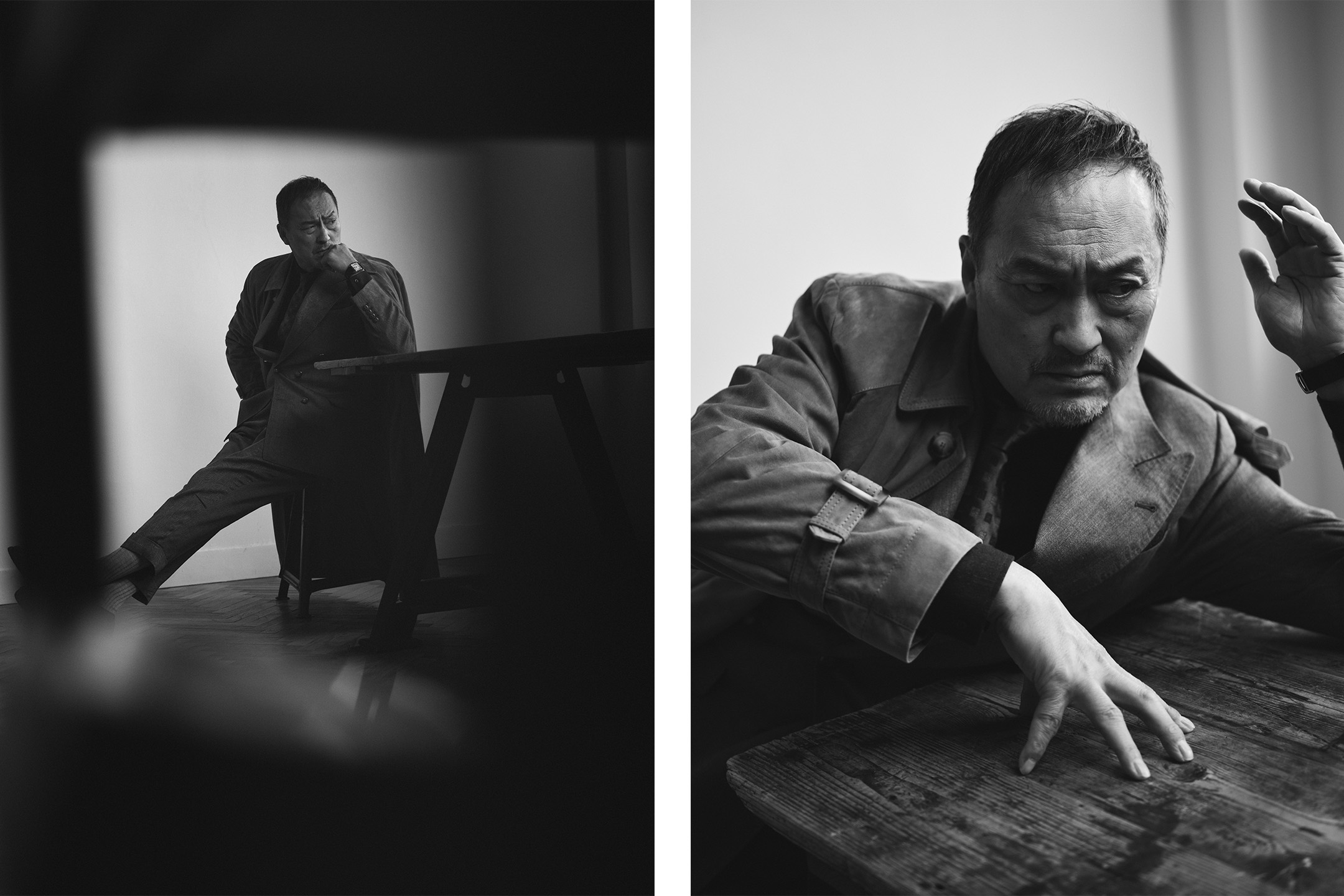
Photos by Eric Micotto
Kokuho and the Return to Japanese Cinema
Kokuho
Broadway was another chapter in a career that has taken Watanabe far beyond the Japanese entertainment industry where he began. In recent years, however, he’s increasingly returned to those roots — most notably with a role in Kokuho, Japan’s highest-grossing live-action film ever. Playing the role of legendary kabuki actor Hanjiro Hanai meant immersing himself in a world far removed from his own. “I spent four months preparing, but initially, it was difficult to imagine what kind of life kabuki actors lead and what kind of passion for their art drives them to the stage.”
Samurai Vengeance
His latest film, Samurai Vengeance, returns Watanabe to the samurai genre. It was the story’s deeper themes that attracted him, he says — its depiction of compassion enduring even within the rigid class system of Edo-period Japan, and its willingness to address “societal contradictions” through entertainment. For Watanabe, these themes of compassion and social responsibility are particularly resonant.
He reflects: “I learned early on that life is finite. Since then, I’ve thought of my life as a bonus given to me by God. But this ‘bonus’ has ended up lasting longer than expected. I hope to bring peace to as many people as possible.”
More Info
Follow Watanabe on Instagram here.
Related Posts
- Tokyo Story: Revisiting One of the Best Japanese Movies Ever Made
- Japanese Films That Influenced Quentin Tarantino | List of 7
- A Beginner’s Guide To Watching Akira Kurosawa Films
Updated On September 28, 2026