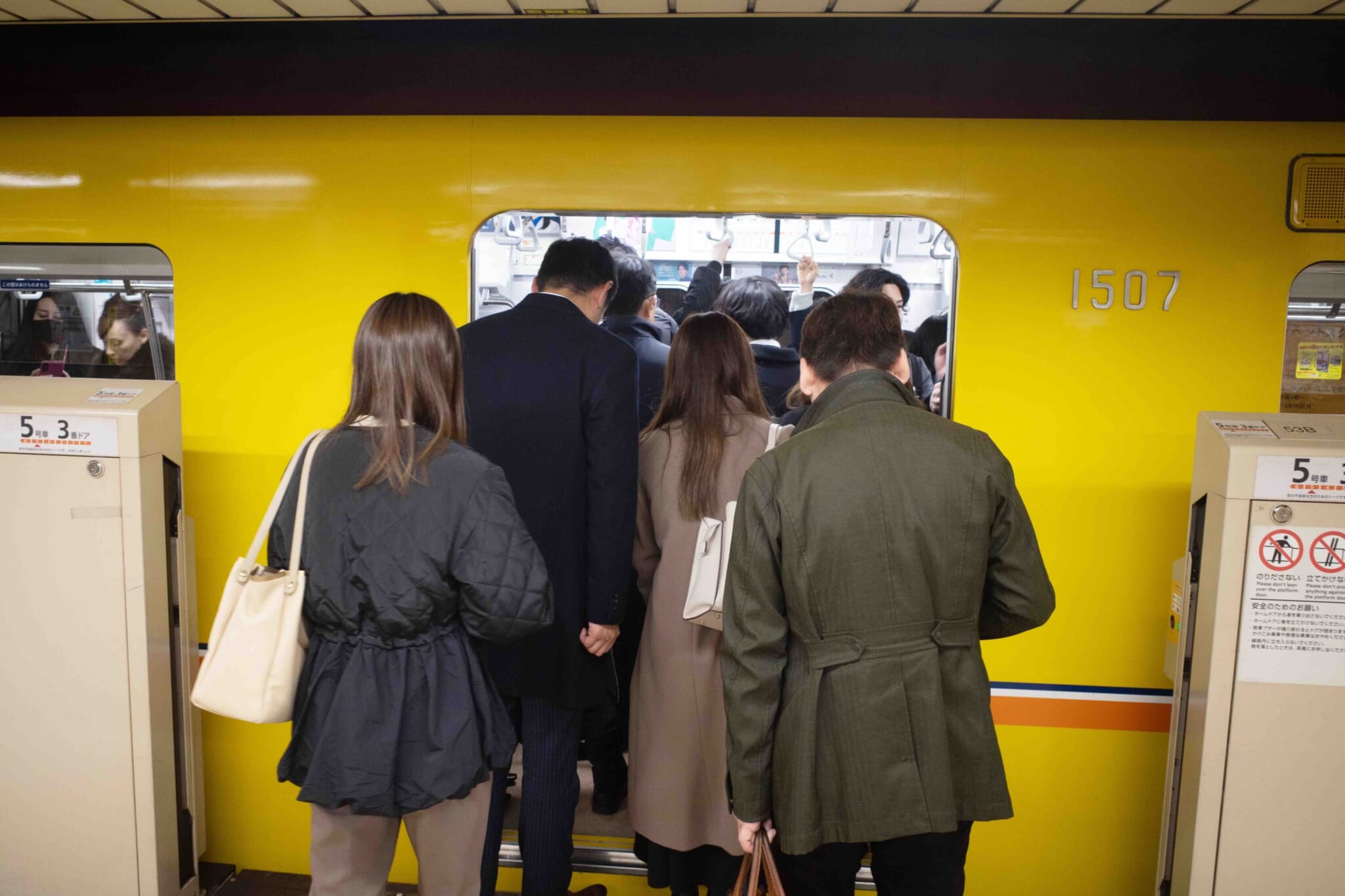
During Tokyo’s peak hours, there’s always room for one more — right when you’re certain no further human could fit on board, someone squeezes in, the doors reluctantly close and there you are with your face pressed against the glass.
Tokyo Metro thinks technology can help.
On September 9, Tokyo Metro began a trial at Kita-Senju Station, one of Tokyo’s busiest, testing whether technology can influence passenger behavior. Covering the Chiyoda Line, the trial includes a preliminary survey period to map foot traffic patterns and a later stage that will use dynamic floor projections to redirect that traffic to distribute passenger loads more evenly across train cars.
How the Technology Works
In an industry first, Tokyo Metro first debuted a train congestion measurement system at Kita-Senju Station in 2024 and then at Machiya Station in 2025, displaying real-time congestion levels for each train car on monitors alongside the station platforms.
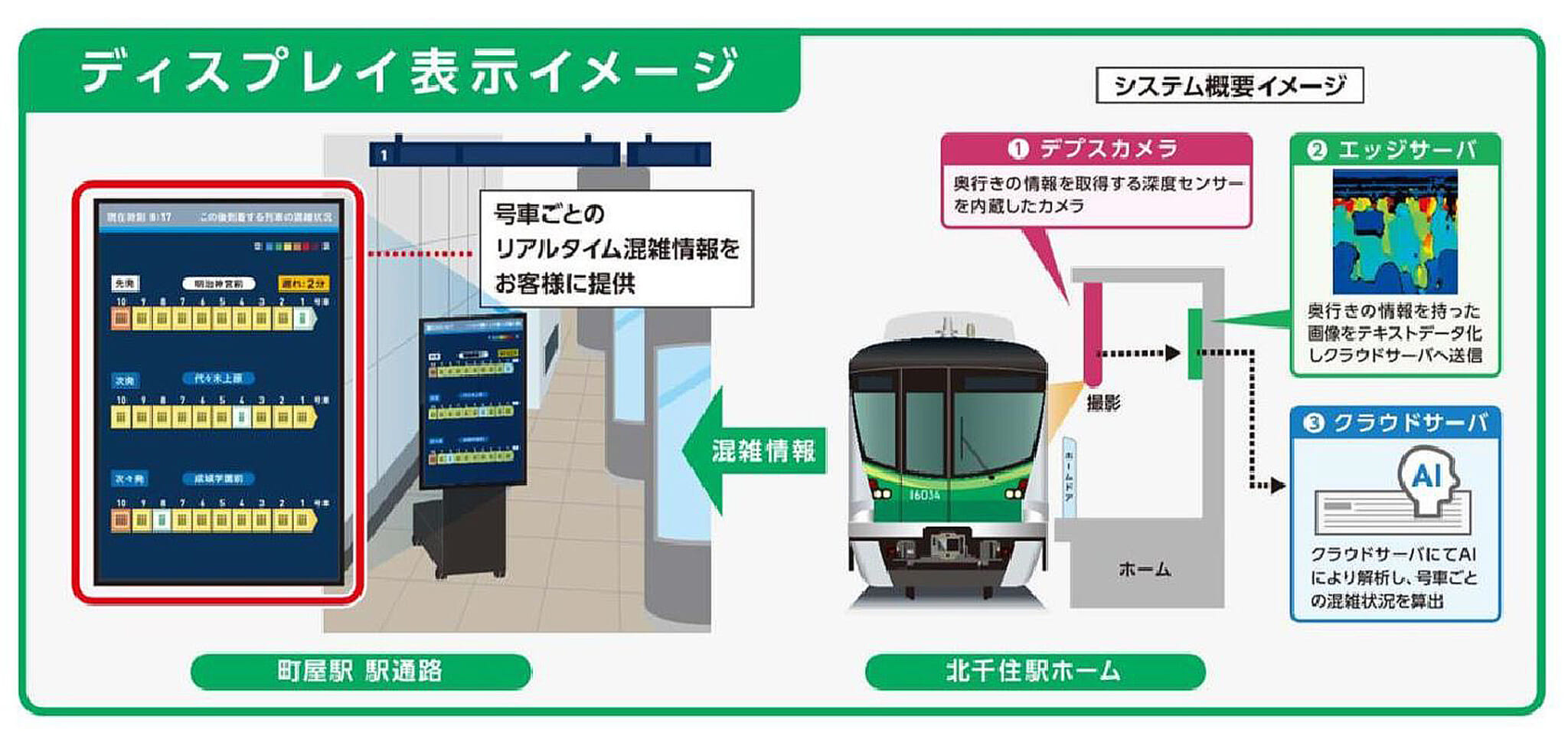
Tokyo Metro’s previous congestion display technology | Image courtesy of Tokyo Metro
The system combines depth cameras with artificial intelligence to calculate how crowded each section of the train is.
In June, Tokyo Metro also debuted the Metro CrowdNavi website, where passengers can check congestion levels across all of its rail lines. The service provides average crowding data gathered over the previous five days.
Now, Tokyo Metro is taking it a step further by partnering with Sharp Corporation and electronics supplier Restar to bring the data directly to commuters’ feet.
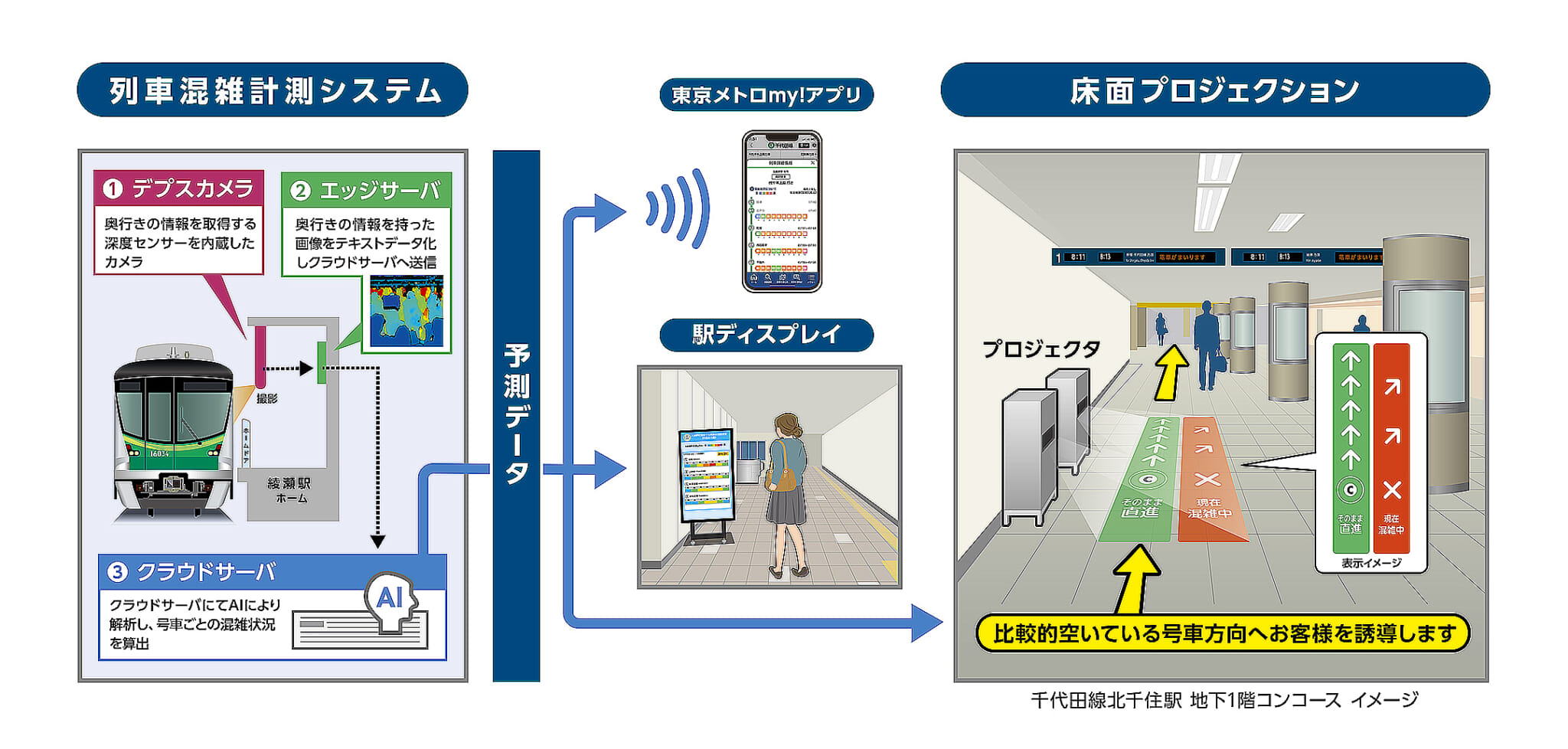
Tokyo Metro is testing out a new projection display idea at Kita-Senju Station | Image courtesy of Tokyo Metro
The new initiative leverages Sharp’s advanced Omject projection technology to beam real-time directional guidance onto the floor of the station concourse. As trains approach, these floor projections will encourage passengers to move toward less-crowded cars, leveling out passenger distribution and reducing localized overcrowding to create a significantly more comfortable transit environment.
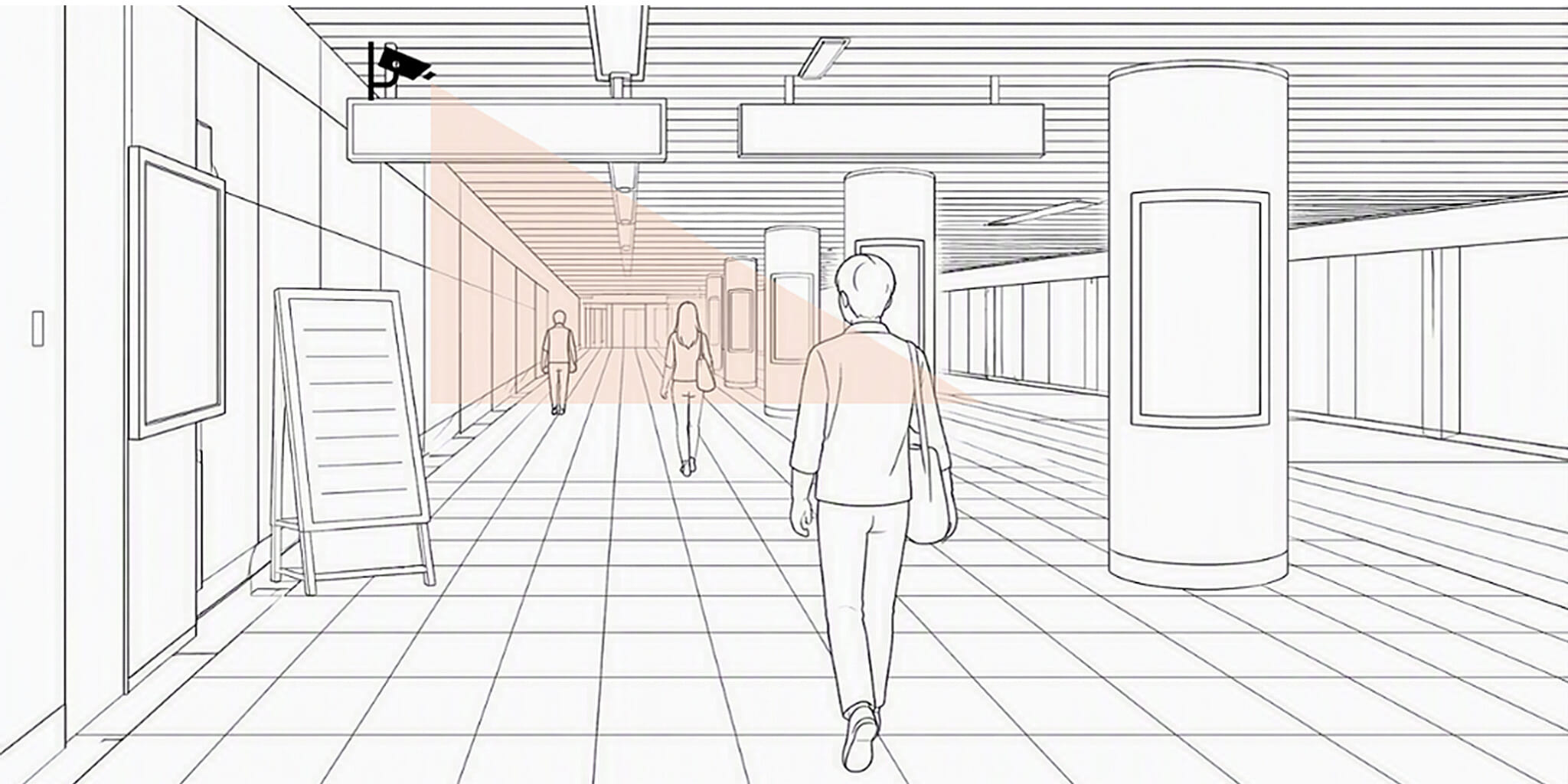
The trial uses cameras to count foot traffic in real time | Image courtesy of Tokyo Metro
Where To Catch It in Action
The trial, currently in its preliminary survey phase, is expected to remain active for several months to verify its effectiveness. Once the projection phase begins (dates TBA), you’ll be able to experience it for yourself on the station’s Chiyoda Line concourse.
Cameras will perform real-time image analysis to measure pedestrian traffic and assess whether the floor guidance successfully alters passenger behavior. Addressing privacy concerns, Tokyo Metro says camera data is instantly converted into person-count information and is not saved or transmitted externally.
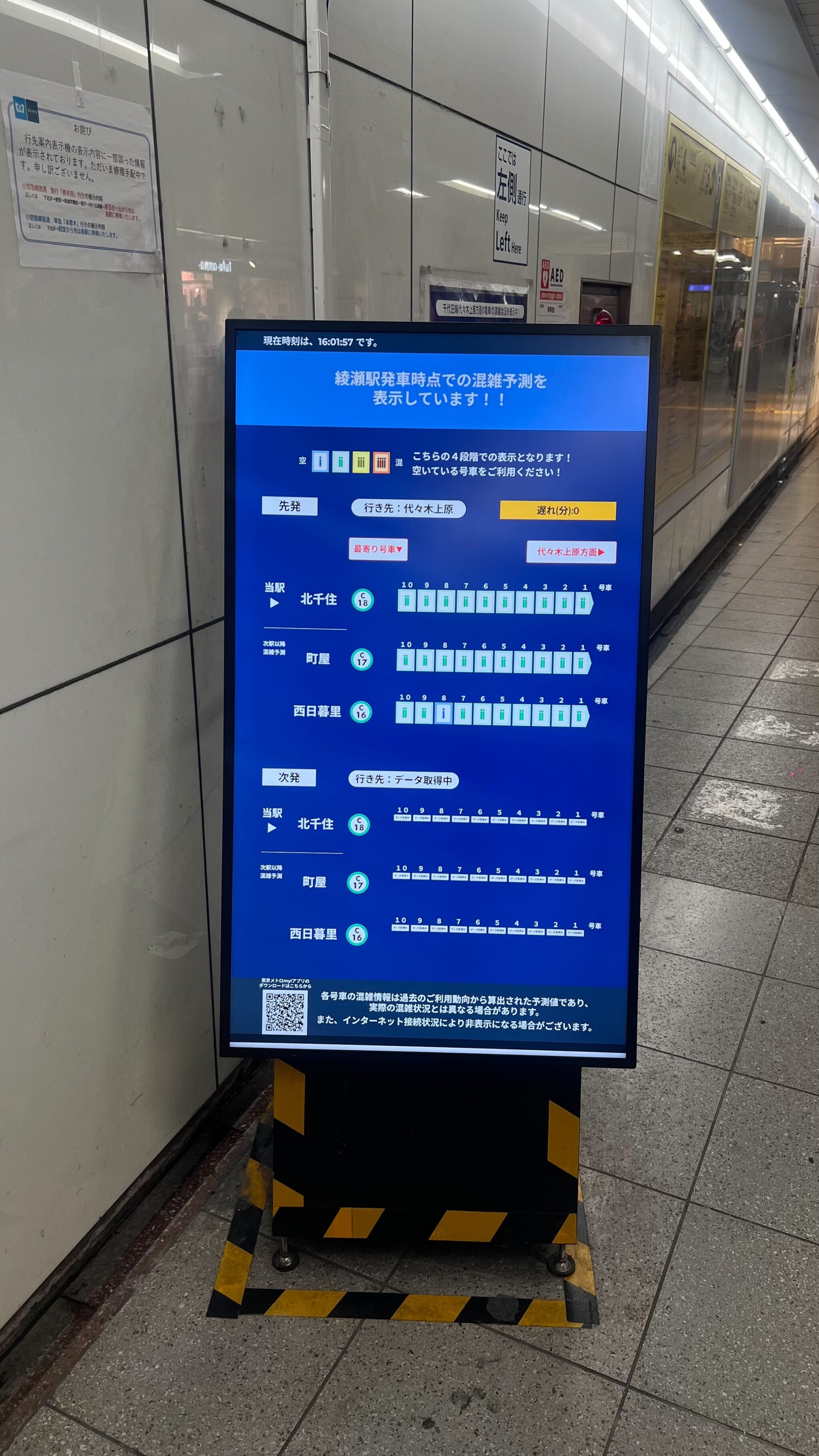
So far, Kita-Senju Station is in the preliminary testing phase and using the regular congestion displays like before | Photo by Annie Ziesmann
Some commuters are skeptical about the practicality of the service. For example, if station floors are already crowded with foot traffic, how will anyone see the projections?
“It’s a good idea, but does Tokyo ever have moments like this where there aren’t any people around?” wrote one user on X.
Another X user suggested that instead of projections, train platforms could use an LED light system to indicate crowd status, using red, yellow and green lights like traffic signals to easily show which cars have more room.
The skeptics may yet be proven right — a floor sign is only useful if you can see the floor. But Tokyo Metro has spent years learning where its passengers stand. Now it’s testing whether it can change their minds.