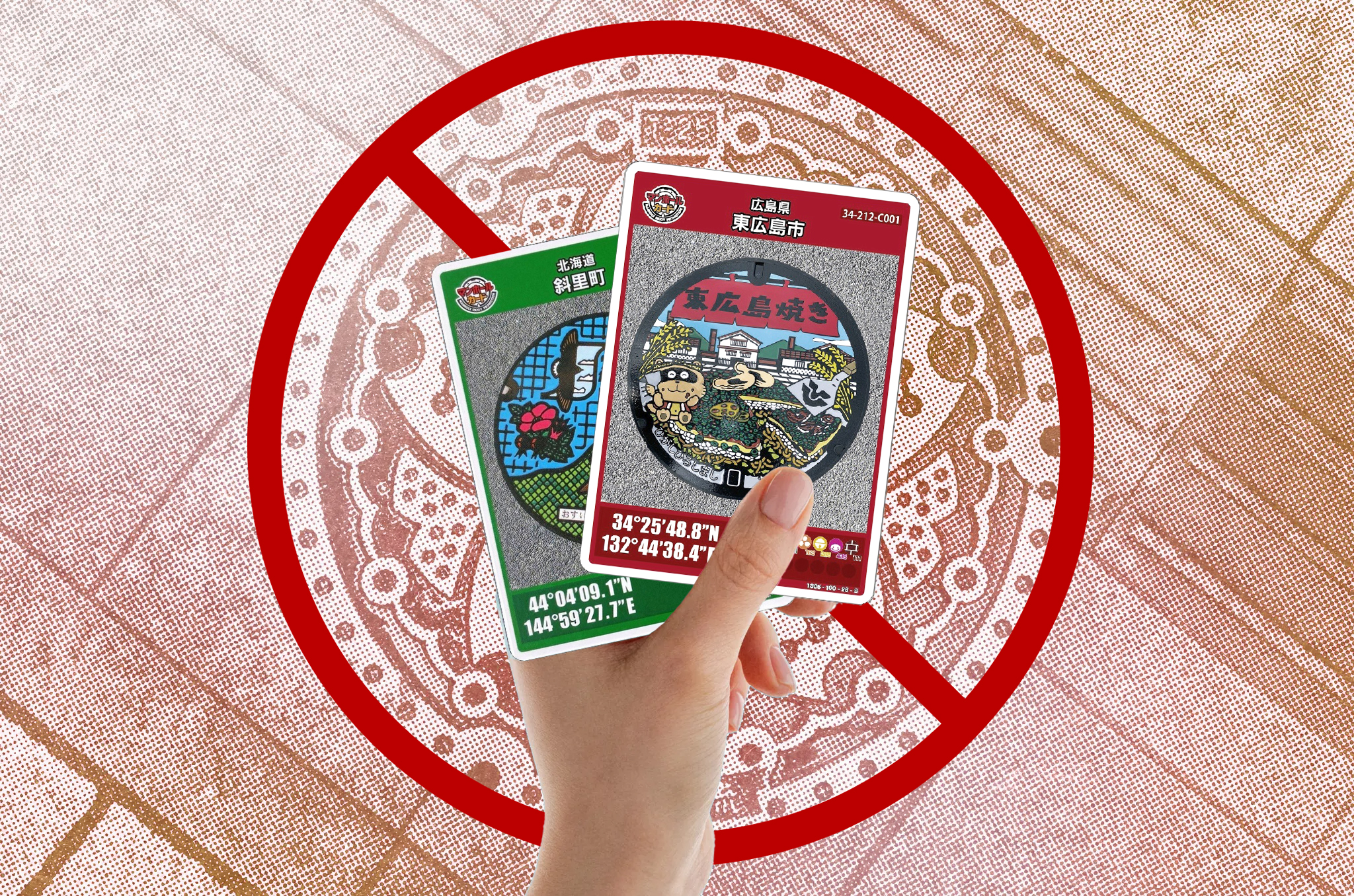
What started as a simple way for local governments to promote their sewerage systems and attract tourists has become an unlikely nationwide collecting craze. Japan’s manhole cards, featuring colorful designs inspired by local landmarks, culture and specialties, have captured the imagination of collectors nationwide.
With millions issued since they were introduced in 2016, their popularity shows no signs of fading. However, this enthusiasm has come at a cost. Reports of aggressive collectors, verbal abuse toward staff and inconsiderate parking have prompted some local governments to stop handing out the cards altogether.
The cards are distributed free of charge, one per person, at locations such as roadside rest stops (known as michi-no-eki) and tourist information centers. Their popularity has grown to such an extent that some locations have reported handing out as many as 4,000 cards in a single day.
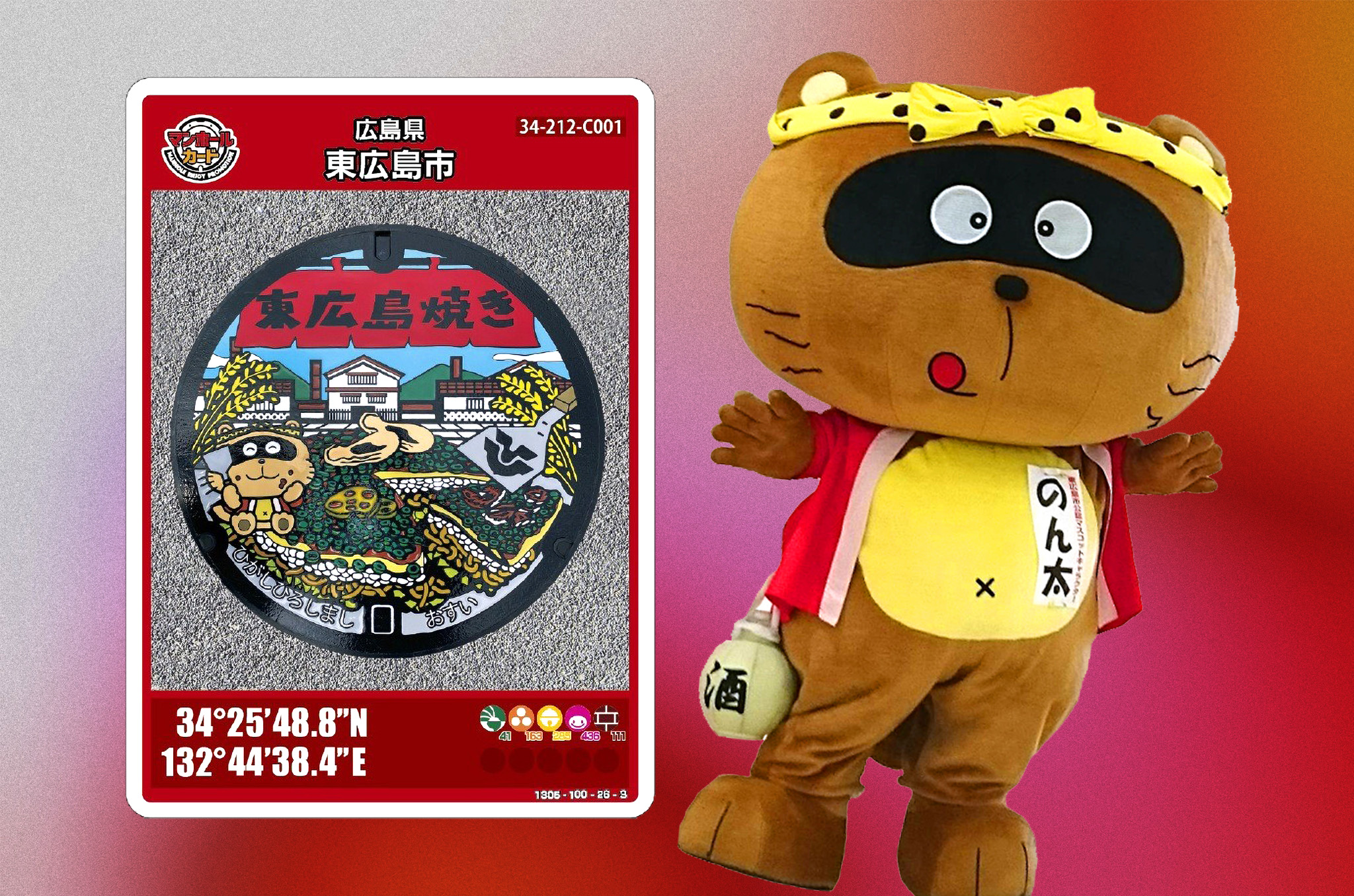
The card offered by Higashihiroshima city in Hiroshima, featuring higashihiroshima-yaki and local mascot Nonta, has been suspended
Manhole Cards: When Popularity Creates Problems
In some cases, however, the demand has proved difficult to manage. Higashihiroshima city in Hiroshima Prefecture, for example, temporarily suspended distribution at the end of September, just three months after introducing a card featuring its local specialty, Higashihiroshima-yaki.
Hirotoshi Owa, 56, head of the city’s Sewerage Management Division, which oversees the distribution, said the suspension had become necessary because of growing problems with collectors. “People were parking along the narrow road outside the tourist information center where the cards were handed out, blocking access for local residents,” Owa explained.
He added, “Staff members who were busy assisting tourists were also subjected to verbal abuse, with some collectors shouting, ‘Hurry up.'” Higashihiroshima city is now searching for a new location from which to distribute the cards, hoping to avoid similar problems in the future.
Repeated Incidents of Poor Behavior
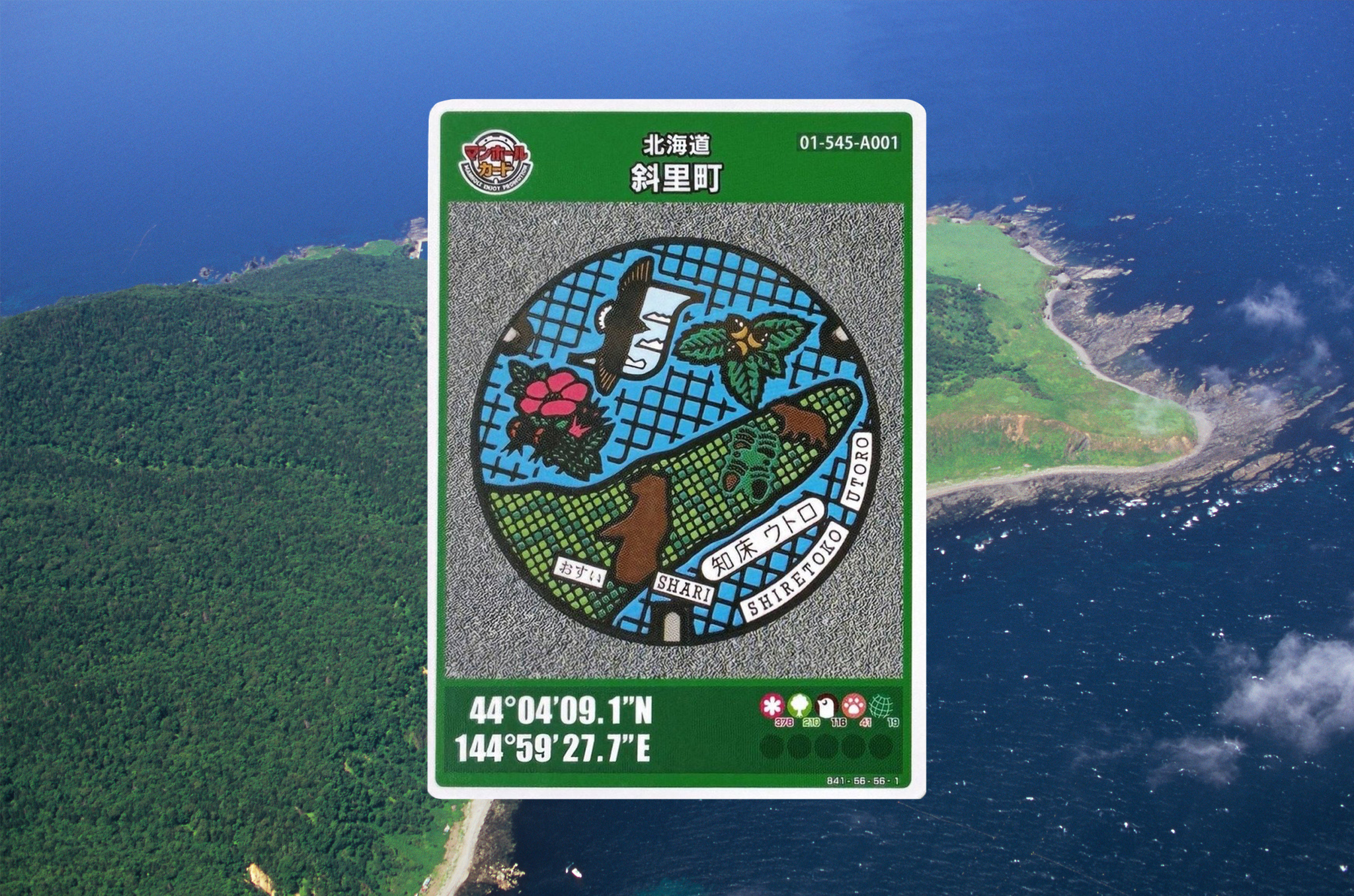
The town of Shari in Hokkaido, which distributed cards featuring illustrations of the Shiretoko Peninsula and its wildlife and plant life at a roadside rest stop, discontinued the program in February last year following complaints from collectors and repeated incidents of poor behavior. Koji Otsuma, 52, head of the town’s Waterworks Division, expressed his disappointment.
“Staff members were even yelled at by tourists who were unable to get a card,” he said. “Since the cards were distributed as a goodwill gesture, we decided we could no longer continue. Had there been no confusion, we would have considered printing more. However, we have absolutely no plans to resume distribution.”
According to the Manhole Card Promotion Foundation, other problems include collectors changing their clothes to disguise themselves and obtain multiple cards, while others have acquired them for resale. While some municipalities are still looking for ways to continue distribution, officials are urging collectors to act responsibly and respect staff and local residents.
How To Find Manhole Cards (and Collect Them Politely)
You can’t order manhole cards or have them mailed. You have to visit a designated spot in person, which is part of the appeal. The Sewerage Public Relations Platform (GKP), the organization behind the cards, runs a searchable directory on its website. It’s in Japanese only, so you’ll need to use your browser’s translate function.
- Open the search page. The GKP manhole card search page (マンホールカード検索) lets you filter by all of Japan or by any of the 47 prefectures.
- Pick where you’re headed. Choose a prefecture to see which cards are handed out there and where.
- Check the latest batch. The page links to PDFs of the newest release and a complete list of every card.
- Confirm hours and stock before you go. Distribution points include tourist information centers, roadside rest stops and sewage facilities, each with its own hours and closures. Some cards run out, so check the municipality’s website too.
- Go in person, one per person. Cards are free, limited to one per visitor and generally can’t be reserved or mailed.
If you’d rather skip the filters, search “マンホールカード” plus the city name. Once you have a card, the front shows a photo of the cover and its location, so you can find the real thing. The back explains the design.
A few courtesies make a difference. Take public transit where you can, since some distribution points have little or no parking and Kyoto City has asked visitors not to park on the street. Arrive well before closing, and don’t resell. Kyoto, Hiroshima, Kobe, and Nisshin have all asked collectors not to.
Related Posts
- Doge Gets Immortalized On Manhole Cover in Japan
- Where to Find Tokyo’s Sailor Moon Manhole Covers
- Japan Launches Custom Gundam Manholes To Boost Tourism
Updated On November 4, 2026