There’s a whole other world hidden among Tokyo’s architecture, and it’s only accessible by doing something counterintuitive in a bustling urban center: going up. Once you do, you’ll discover Tokyo’s rooftops, which, in the competitive real estate market of Japan’s capital, have been utilized to their full potential — becoming everything from shaded gardens to amusement parks. They’re rarely advertised as major tourist destinations, but they can give you a uniquely unforgettable Tokyo experience.
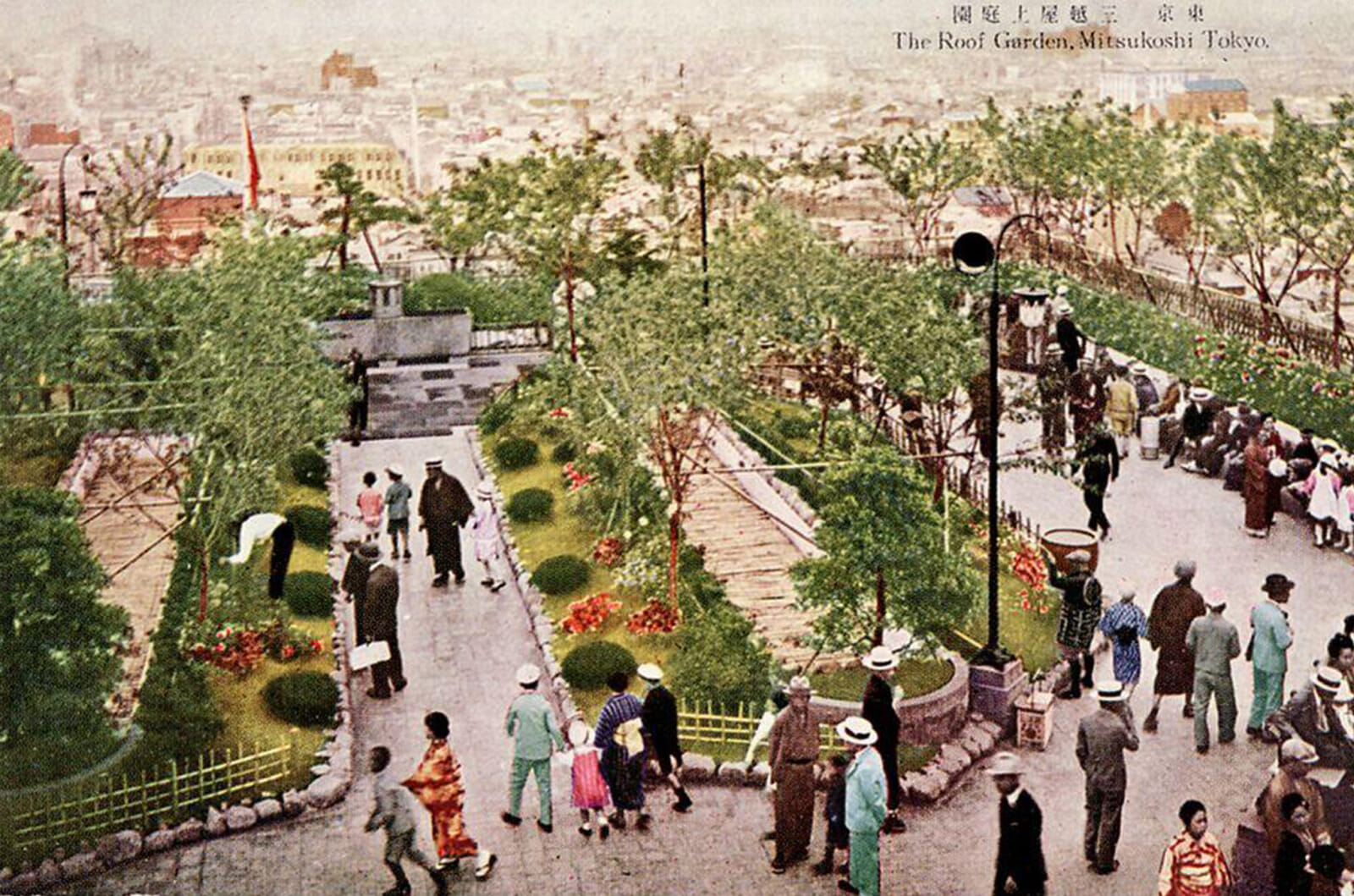
The Mitsukoshi rooftop garden | Postcard c. 1930s via Flickr
A Lofty Initiative
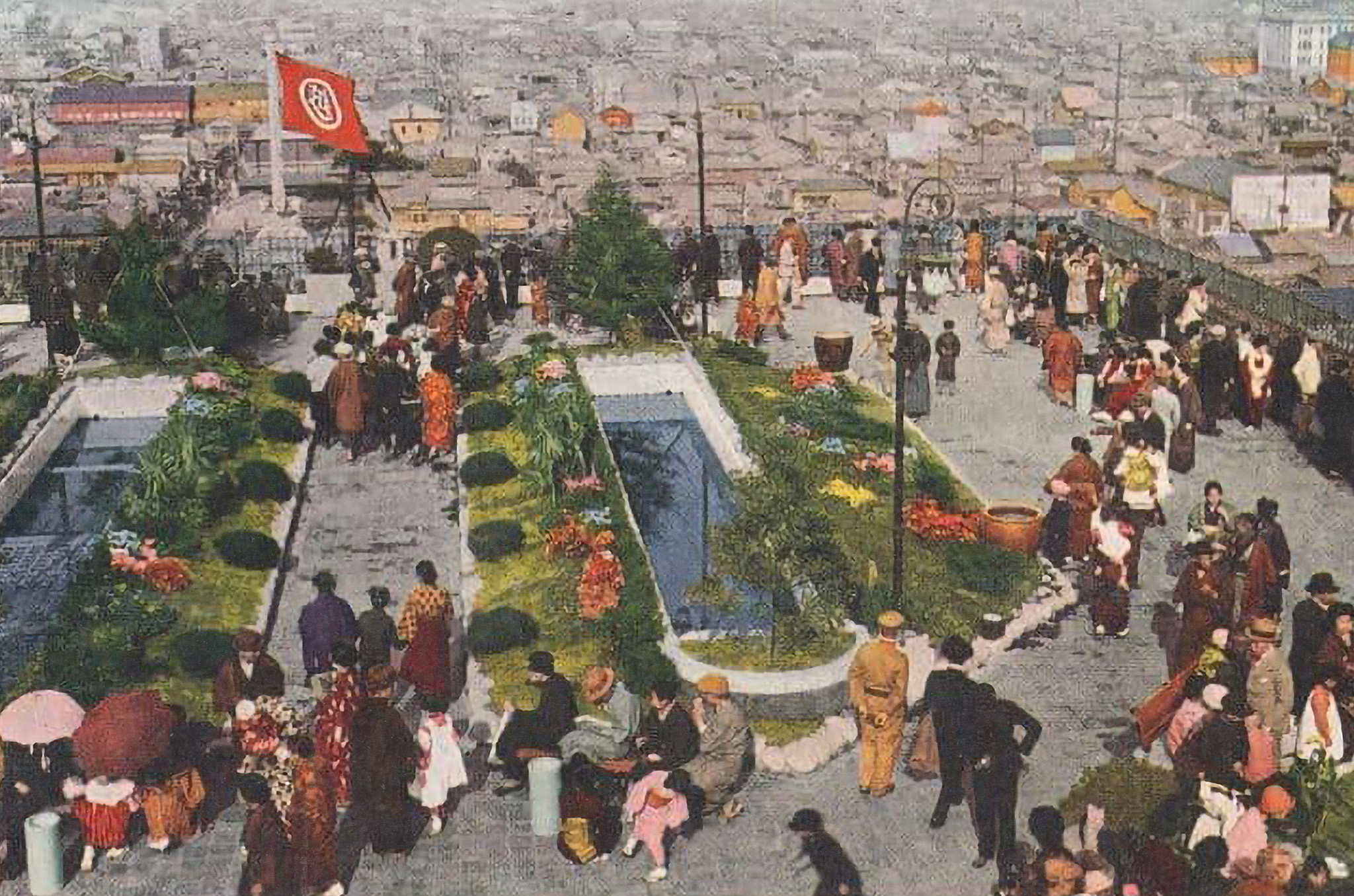
A lot of people picture Tokyo as a city of skyscrapers, but those are a relatively new addition to the capital’s skyline. (Fun fact: Their sudden appearance forced Toho to make Godzilla much bigger in later movies so that he wouldn’t be dwarfed by the country’s new megastructures.) Before the late 1960s, the biggest commercial buildings in Japan were department stores, and they were the first to see the potential in their rooftops. In 1907, the Mitsukoshi department store in Nihonbashi made history by transforming the top of its building into a garden with flower beds, fountains, rest areas and even a branch of the Mimeguri Inari Shrine.
The shrine venerates the guardian deity of the Mitsui clan (the founders of Mitsukoshi), explaining the department store’s choice to put a place of worship on the ninth floor. But through it, they tapped into something bigger and more profound: the idea that, for all their commercial possibilities, rooftops could be … more. During Japan’s later construction boom, relocating smaller shrines inside or atop buildings became very popular, perfectly illustrating Japan’s seamless integration of tradition and modernity.
Following the Great Kanto Earthquake of 1923, reinforced concrete buildings became widespread in Tokyo, leading to a department store (and rooftop development) golden age. Mitsukoshi led the trend but was also quickly joined by stores like Isetan Shinjuku and, eventually, some skyscrapers. Today, many commercially developed Tokyo rooftops are accessible to the public for free, acting as the capital’s hidden secret that offers great views with facilities like restaurants, theaters, sports grounds and much more.
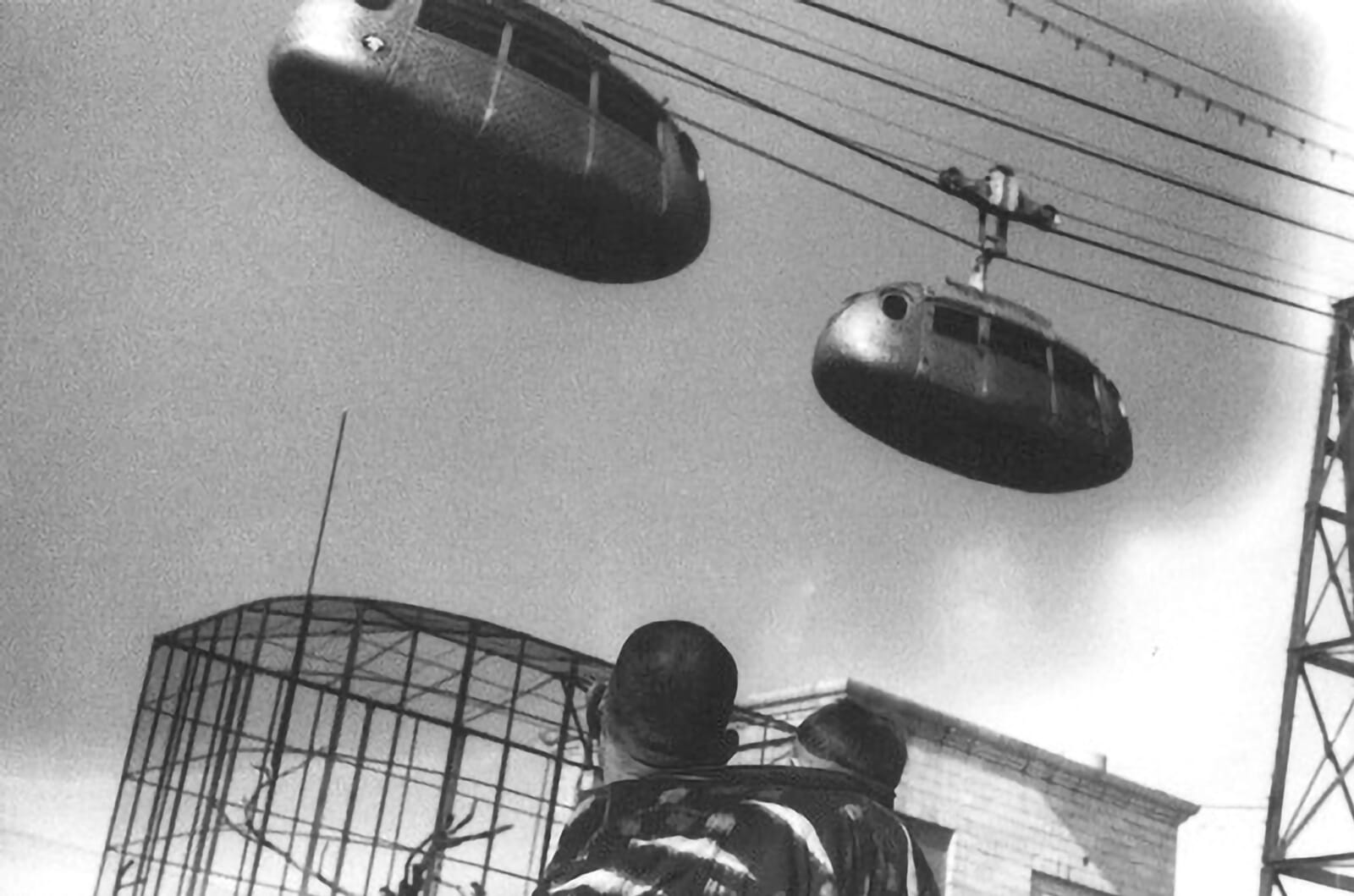
1930s photograph of the Matsuya Asakusa cable cars by Kineo Kuwabara
More Than Just a Place To Rest Between Shopping
The original idea behind department store rooftop complexes was straightforward: to make shopping an all-day family activity, because if you can get people to stay at the store longer, chances are they will buy something. Since then, elevated gardens and other third spaces have shown their worth beyond mere commercial value.
Green parks are essentially natural thermostats, self-regulating surface and ambient air temperatures and acting as insulation for buildings — or at least their top floors. This helps combat the heat-island effects that plague large cities while also improving air quality and increasing local biodiversity.
Take the Meguro Sky Garden: Built above an expressway junction, it creates a beautiful contrast between the artificial and natural world while acting as a hanging wildlife habitat with 1,000 trees, a small bamboo grove, vegetable patches and even a composting area. Other rooftops offer more contemporary comforts, mixing lush greenery with urban elegance like the Ginza Six Rooftop Garden or the Tokyu Plaza Harajuku Harakado garden, which looks like it was literally carved into the top of the shopping complex rather than just set on top.
At a time when many department stores and other large complexes are doing away with seating, as both a move toward hostile architecture and a way to get people into restaurants, it feels like a godsend to have these green spaces where you can sit down, stretch your legs and enjoy views of Tokyo without having to buy anything. That said, the Omohara no Mori rooftop garden atop Tokyu Plaza Omotesando Omokado does have a Starbucks, if that’s a relaxation requirement. Whatever your needs, there’s a Tokyo rooftop garden to meet them.
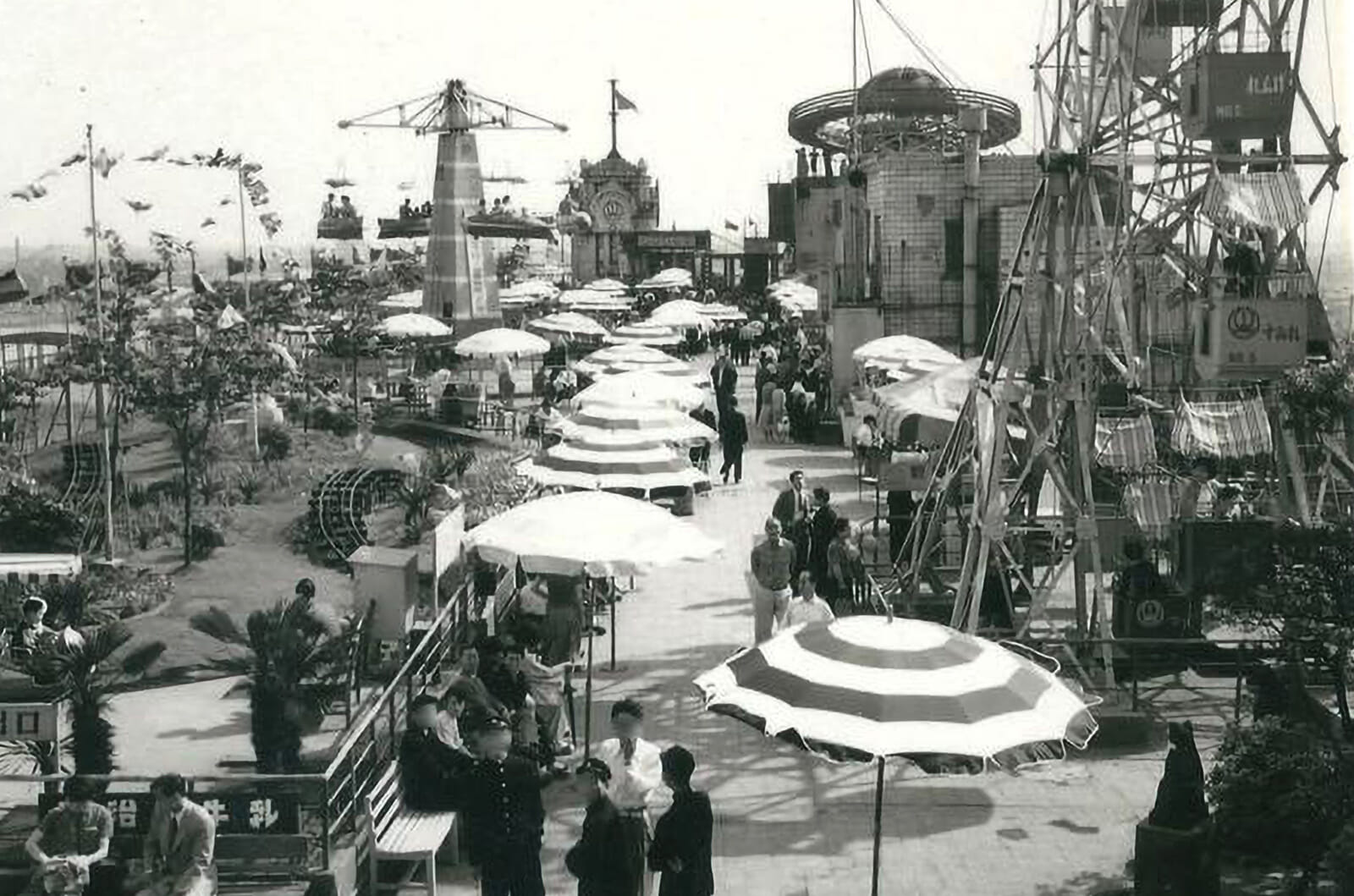
The Matsuya Asakusa rooftop amusement park, c. 1955 | Image via PR Times
A Once-Premier Destination for Play Areas and Amusement Parks
Although rooftops were first developed in Japan in the early 1900s, the first rooftop amusement park took until 1931 to come onto the scene. Opening atop Matsuya Asakusa, the sky-high playland became the model copied all across Japan, with its cable car that crossed the roof, a miniature locomotive, a small zoo, a bowling alley and even a baseball field, all of which were in operation until 2010. The space is now taken up by an observation terrace.
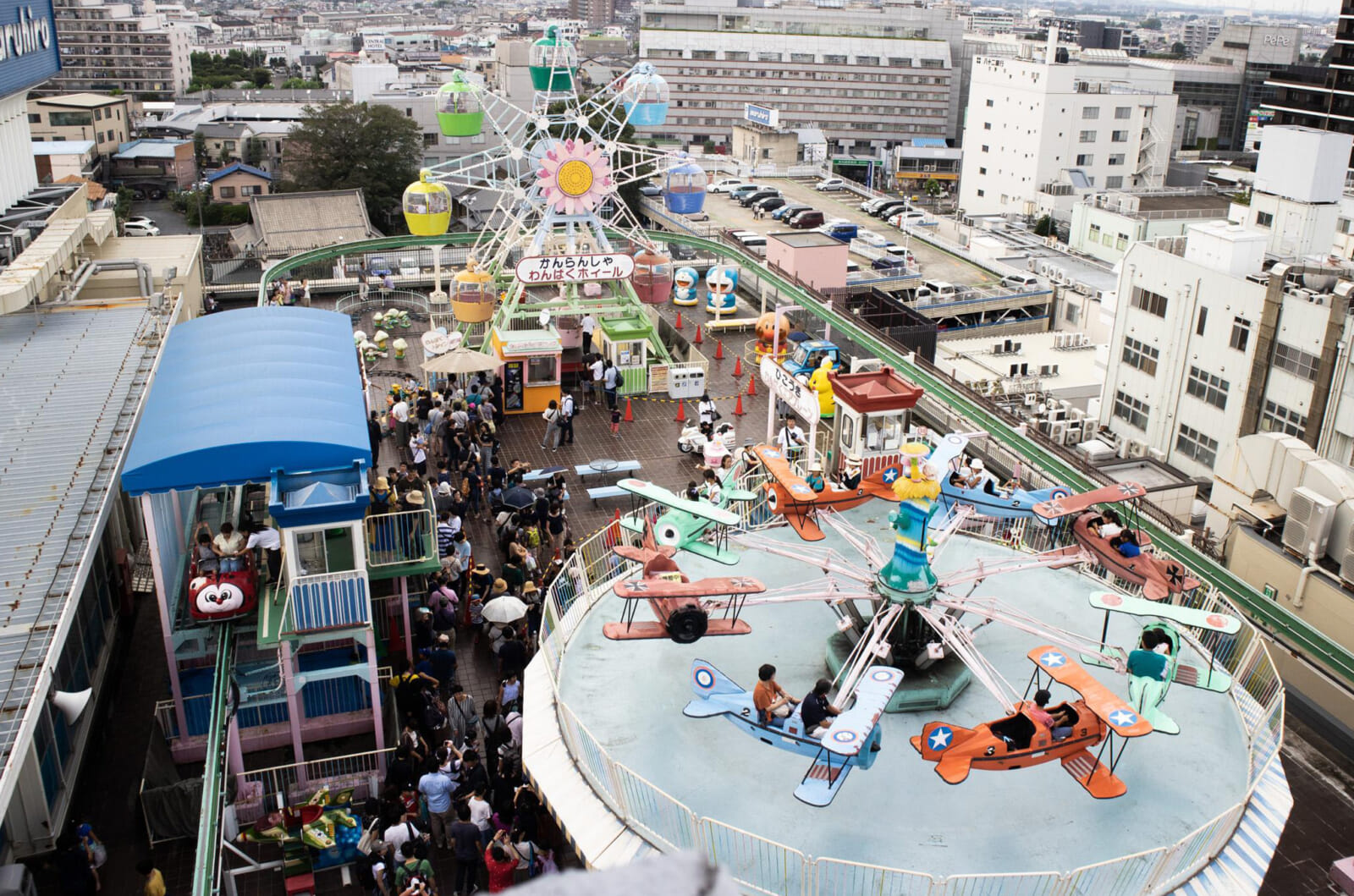
The Maruhiro Department Store’s “Wanpaku Land,” taken 2019 | Image via Fashionsnap
Another popular rooftop amusement park was Wanpaku Land atop the Maruhiro Department Store in nearby Kawagoe. This one featured a Ferris wheel, rooftop monorail and a lot of smaller rides for the kids. When it closed in 2019, thousands of former visitors returned to say farewell, leaving 7,000 heartfelt messages to their old playground.
Today, rooftop amusement parks are rare. Declining birth rates are one factor but maintenance also played into it. Most rooftop amusement parks were small, situated out in the open and featured mostly cheaper equipment that got easily damaged during bad weather. Still, across Japan, some rooftop playgrounds survive, reminding us of a fascinating chapter in the history of Japan’s rooftop development — one that’s still being written and is always ready to be discovered by those unfamiliar with the country’s oases in the sky.