From Showa-era apartment complexes to avant-garde flagship stores, Tokyo’s architectural identity is woven into every corner of the city — but few districts gather its most iconic milestones as seamlessly, and as spectacularly, as Chiyoda city.
Chiyoda is, in many ways, the heart of Tokyo, home to the Imperial Palace, the National Diet Building, the famous electronics district of Akihabara, the used bookstore haven of Jimbocho and more. As such, it holds an extraordinary collection of classic and contemporary architectural wonders. Monumental granite facades sit alongside futuristic glass-encased structures and century-old brickwork.
Exploring Chiyoda on foot is one of the best ways to get a sense of how centuries of Japanese architecture coexist with everyday life in Tokyo. For first-time visitors and design lovers, we’ve put together an itinerary composed of five of the ward’s key architectural periods: early 20th-century Neoclassicism, postwar Brutalism, Edo-period stone construction, contemporary structural glass engineering and Meiji-era red-brick revival. Read on to learn more.
courtesy of SENATE SECRETARIAT
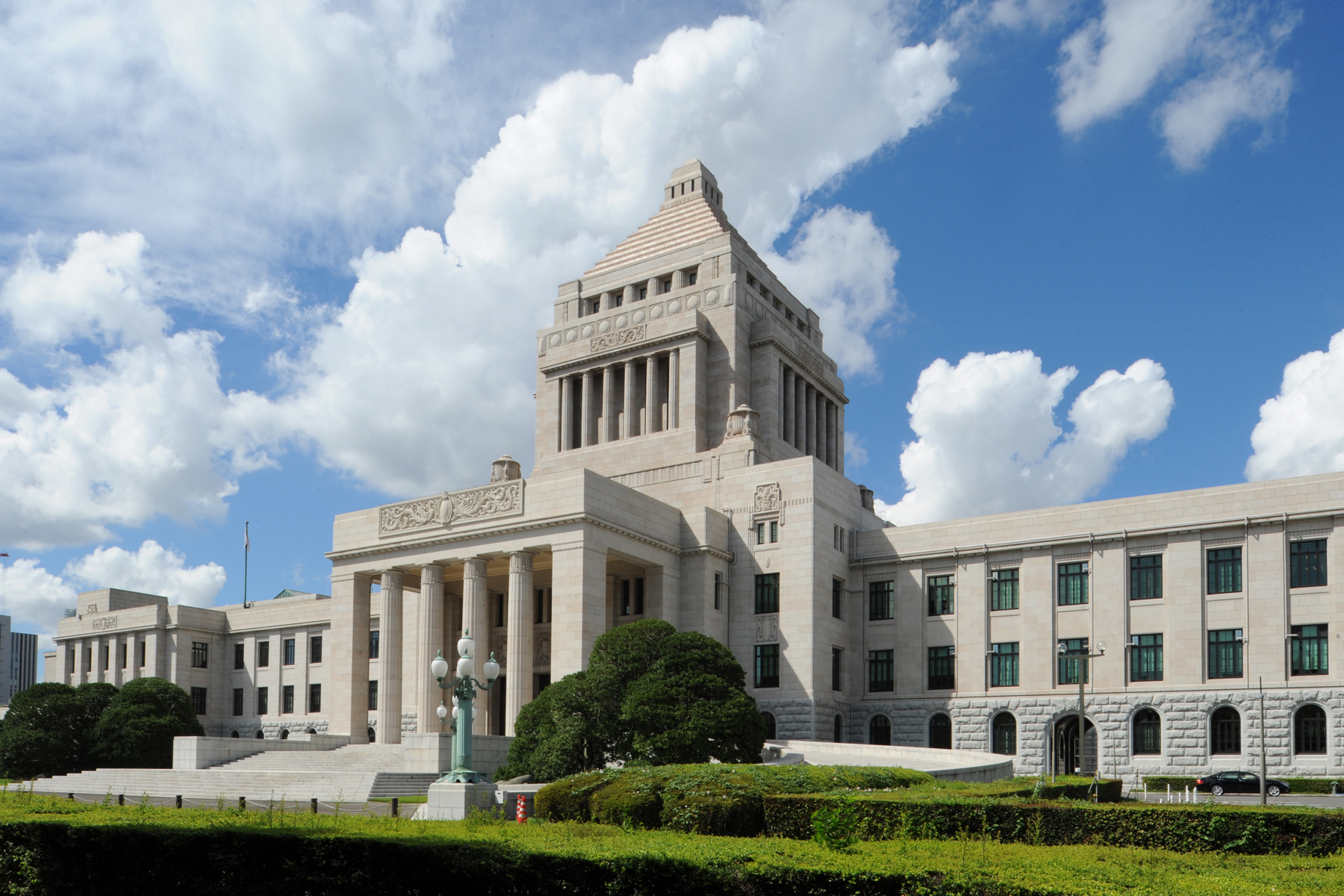
National Diet Building
Because the National Diet Building is a working seat of government rather than a public-facing venue, its beauty and grandeur often escape tourist itineraries. Most travelers might assume the building is off-limits, including scheduled English-language tours of the House of Representatives. The English tours are offered once each weekday afternoon and require advance reservation.
Standing before its granite facade reveals a fascinating stylistic hybrid — a design that borrows the imposing symmetry of Western Neoclassicism and Art Deco flourishes while remaining Japanese in its core sensibility.
Serving as the home of Japan’s parliament, its layout originated from a 1918 nationwide design competition won by Fukuzo Watanabe, before being refined by government architects to add its signature square pyramid roof. Completed in 1936, the exterior is clad primarily in domestic granite, while the interior showcases a variety of national materials: Japanese marble, a wide range of Japanese wood species and exquisite traditional lacquerwork.
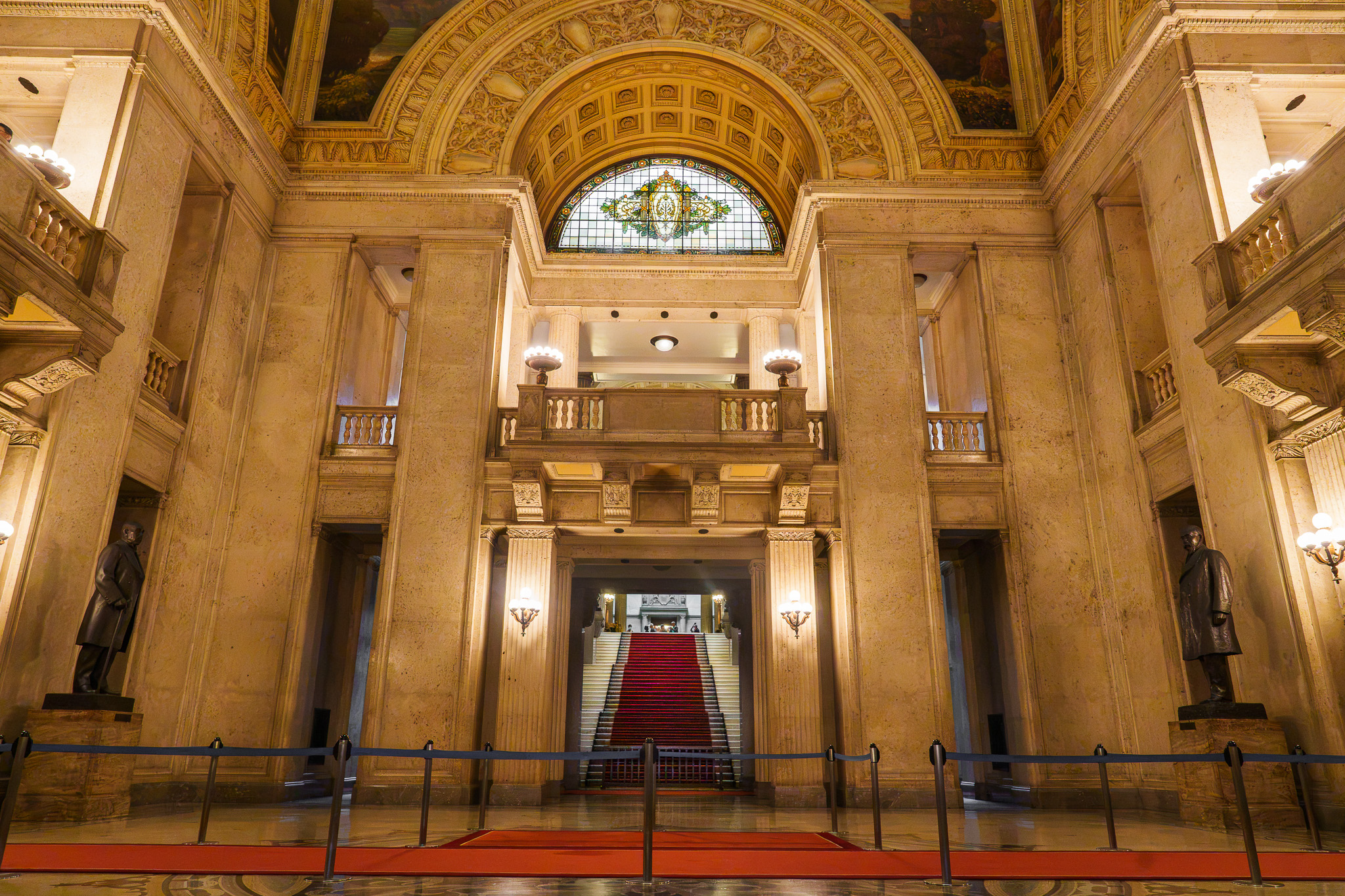
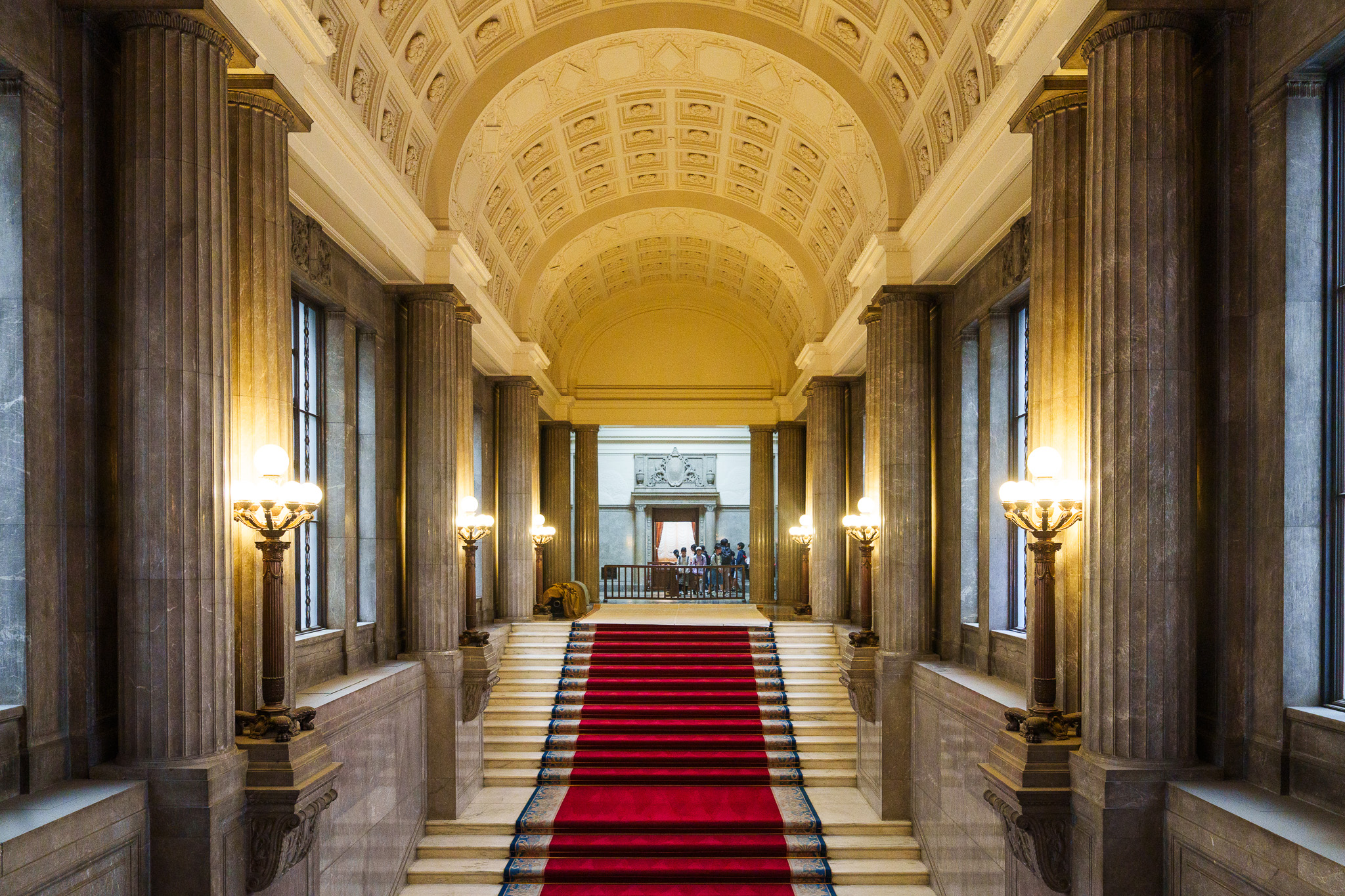
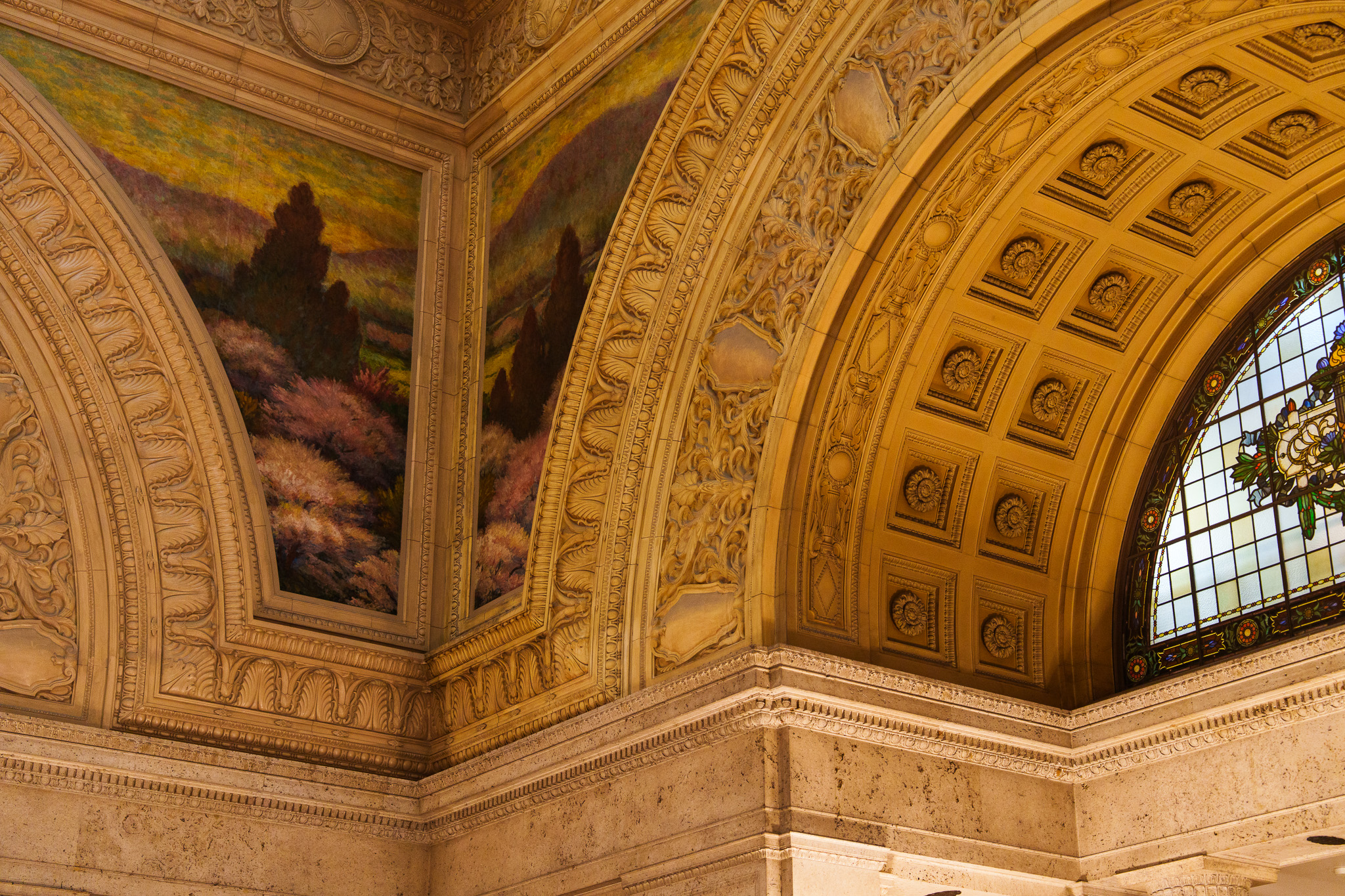
Stepping inside the Central Hall directly beneath the pyramid roof, visitors can gaze up into a gorgeous 32-meter-high chamber where European-style stained glass illuminates bronze statues of early parliamentary statesmen. You’ll also see mural paintings in the upper corners of the hall, representing the four seasons of Japan.
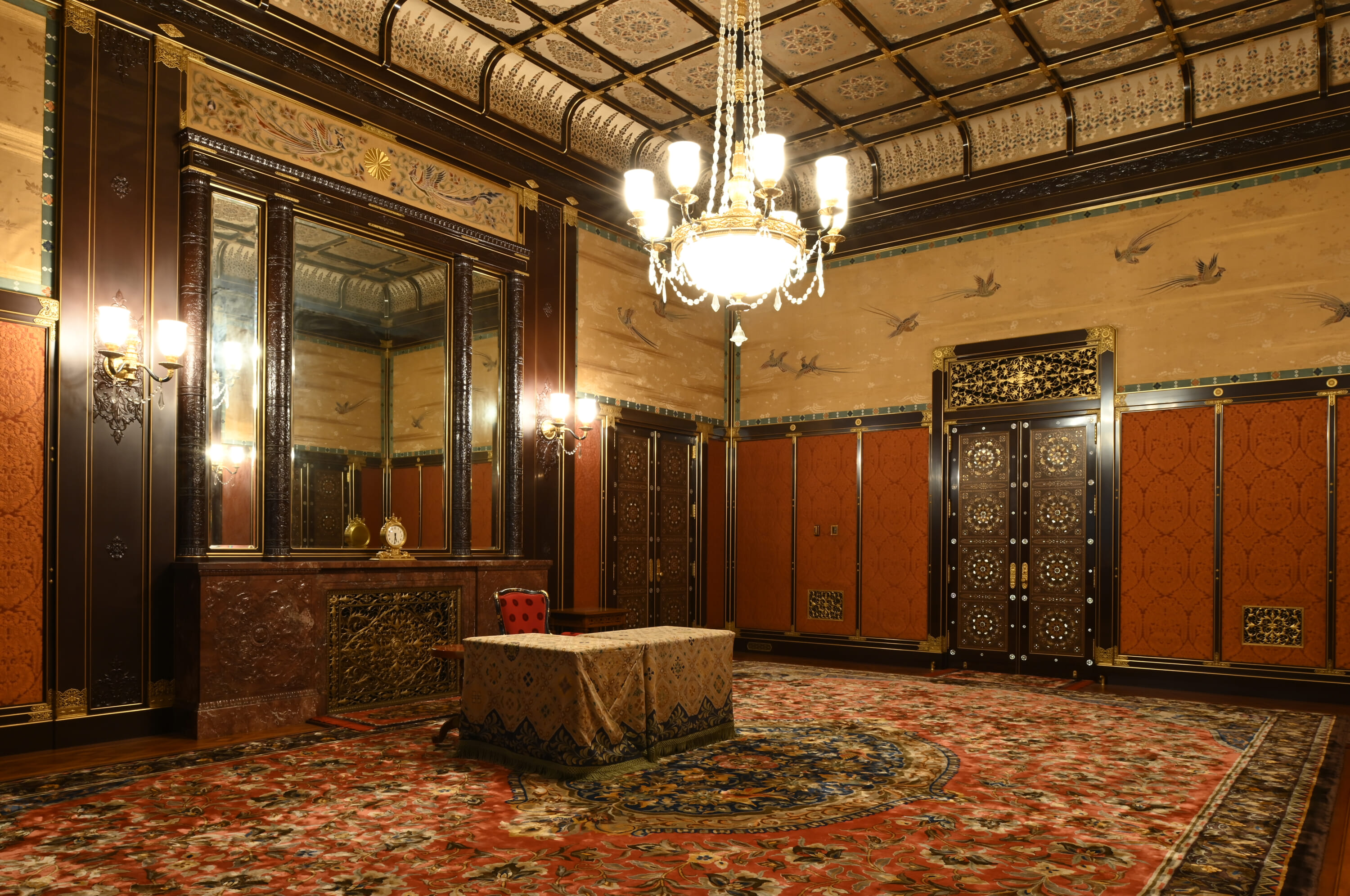
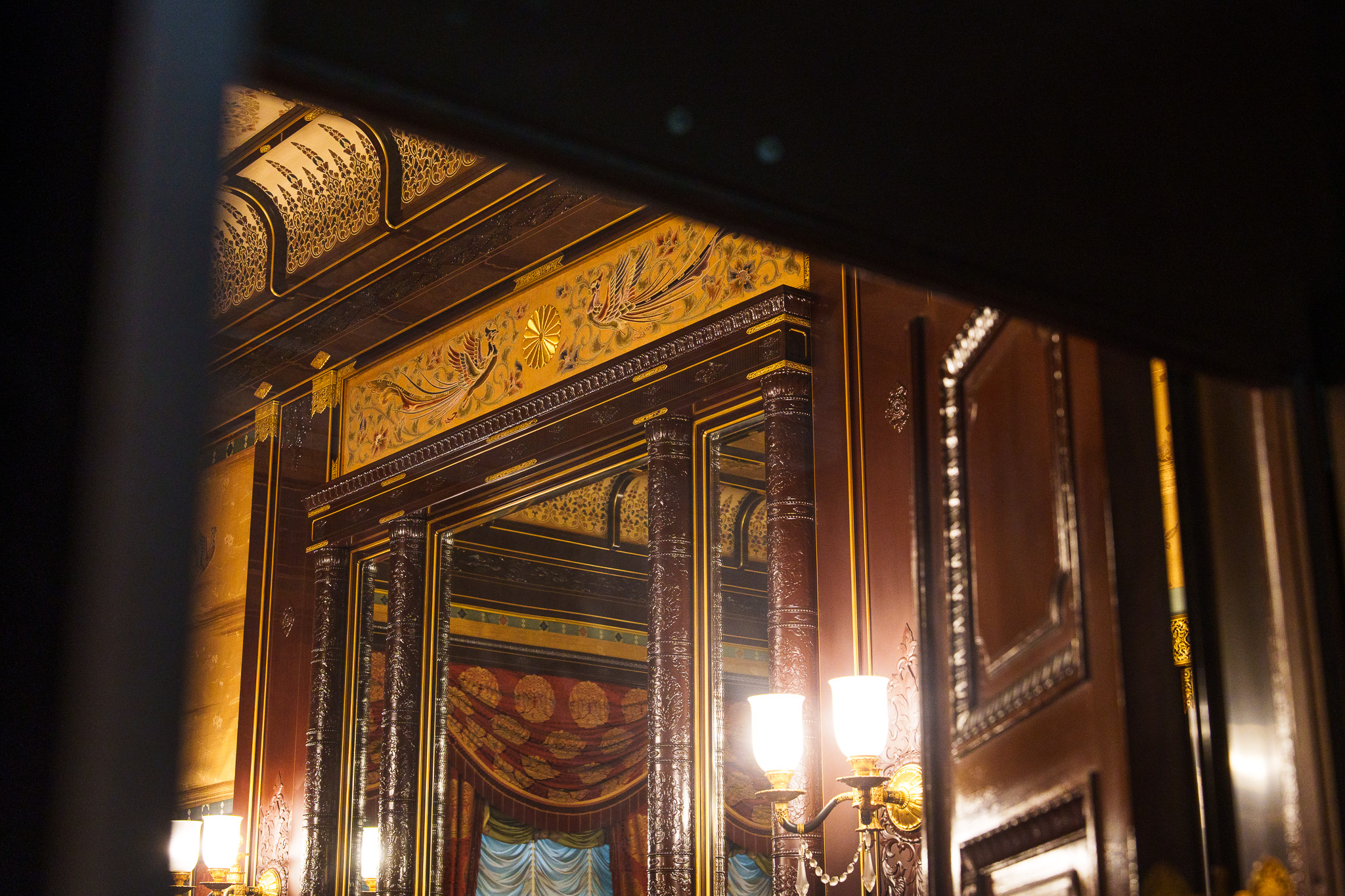
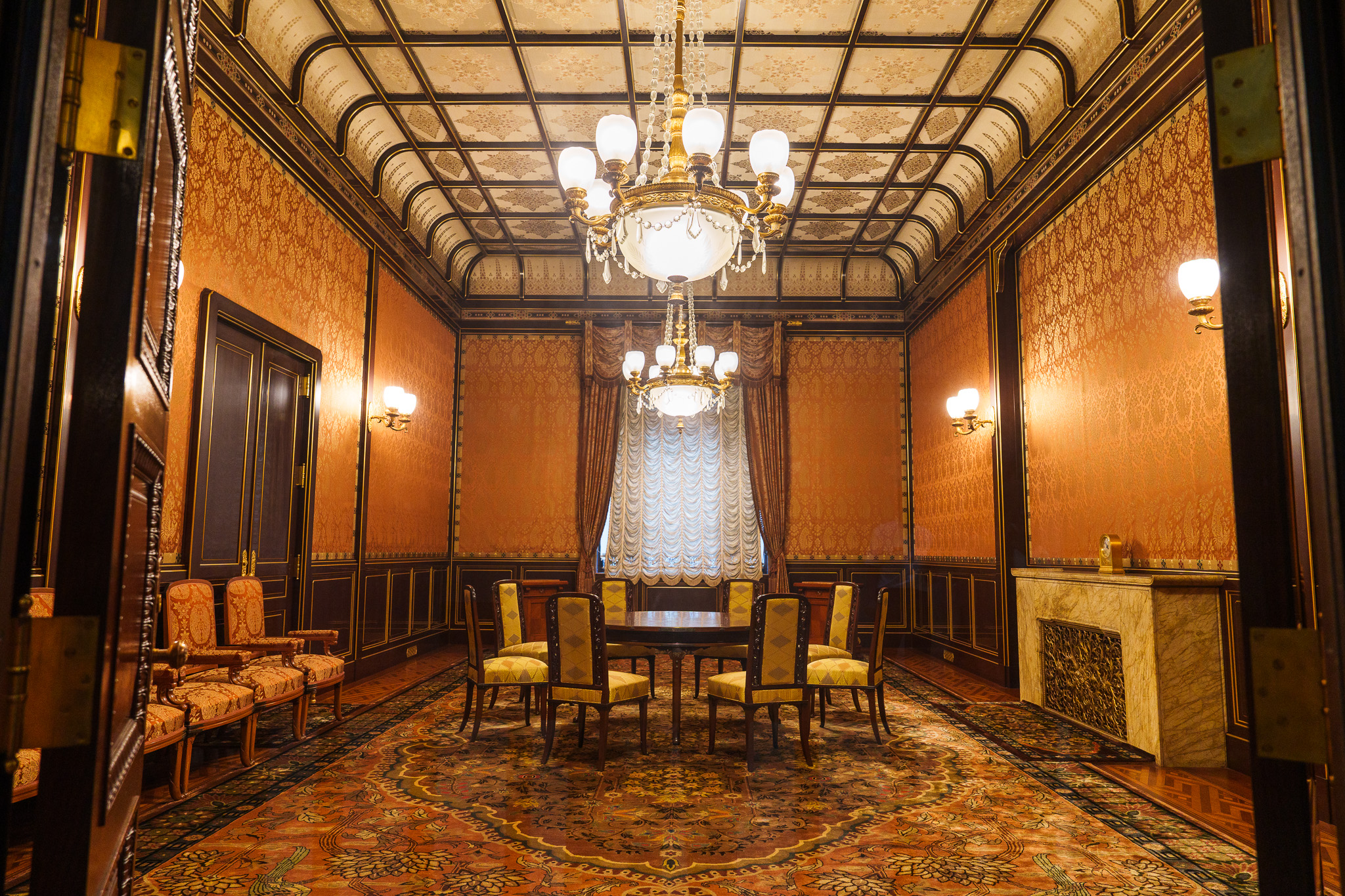
At the top of the central staircase sits the Emperor’s Room, which was built for the emperor during official visits. The building’s synthesis of styles is at its finest here — fusing intricate Japanese wood carvings and gold leaf detailing with Western furniture, a fireplace mantel and floor-to-ceiling silk drapes.
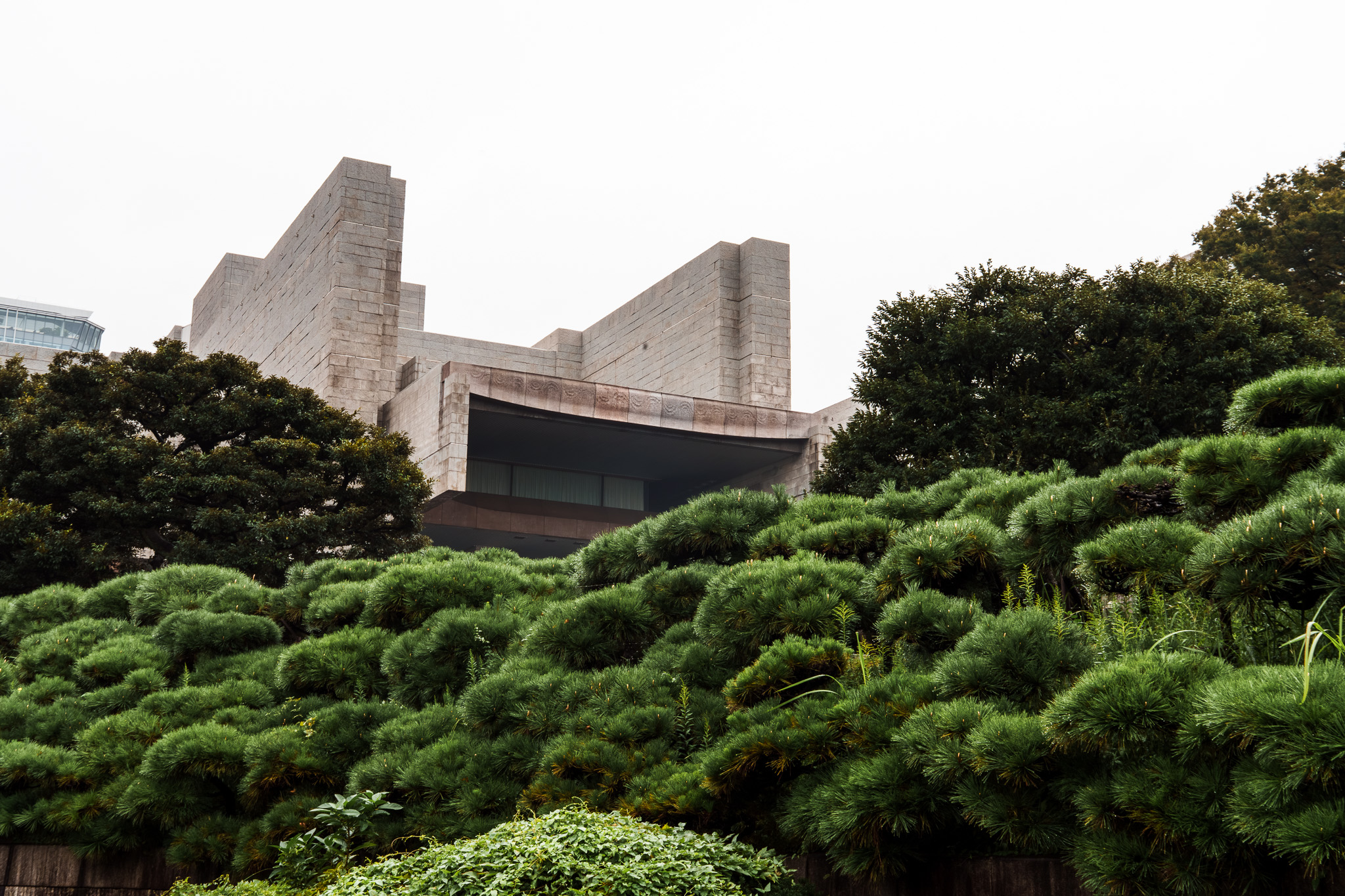
Supreme Court of Japan
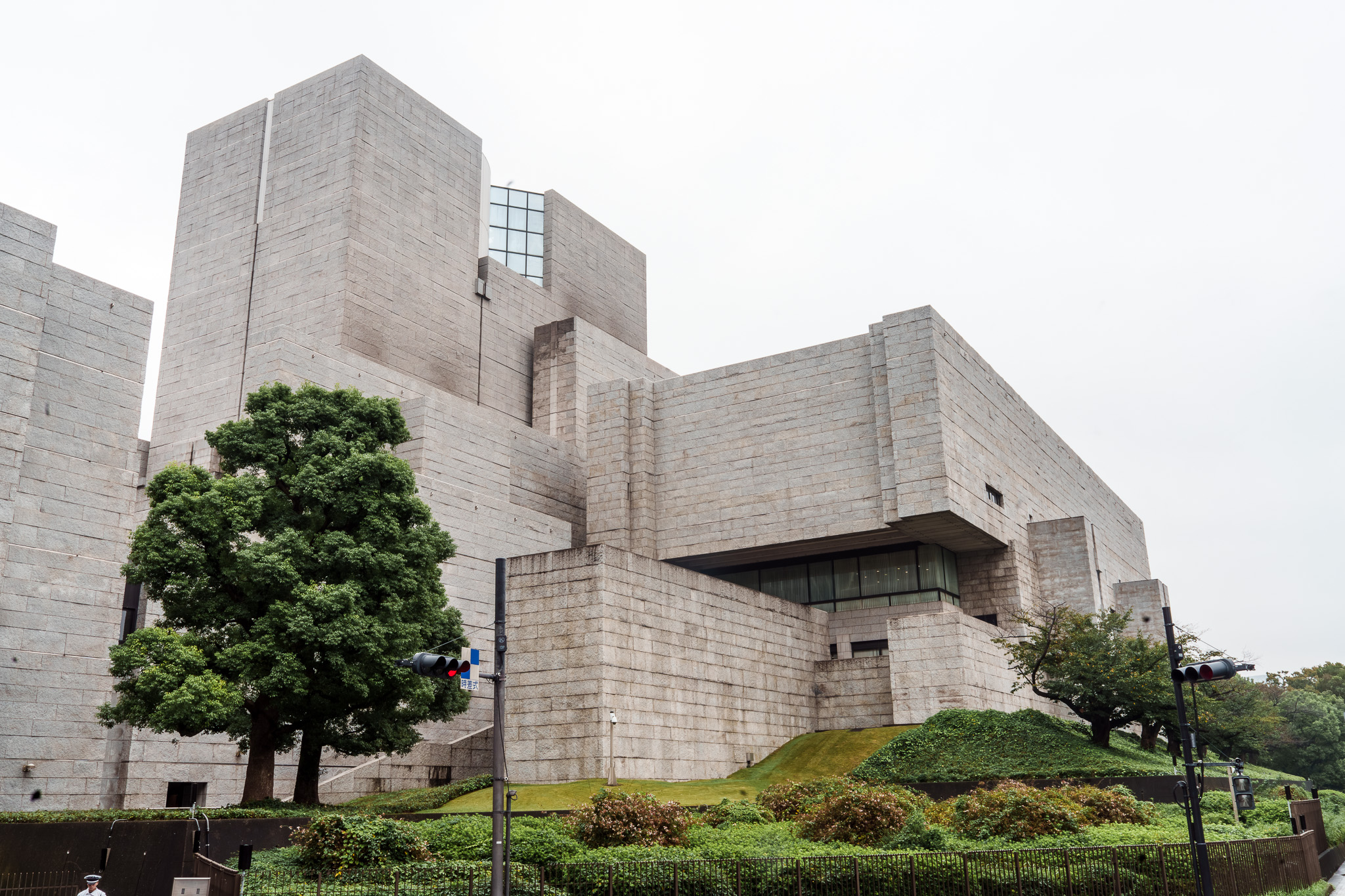
Just a short walk away from the National Diet Building, the Supreme Court of Japan presents a striking shift in architectural language. Completed in 1974, Japan’s highest court serves as a dramatic display of late 20th-century Modernism and Brutalism.
Architect Shinichi Okada, who won a national design competition for the project, ventured beyond features typical of government buildings like grand columns, decorative moldings or soaring glass facades. Instead, he built a massive, fortress-like monument with imposing walls clad in Japanese granite. Without knowing the structure’s purpose, one might assume it houses a contemporary art collection rather than administrative offices and courtrooms.
Even just viewing the building’s exterior from the street provides a fascinating study in geometric scale and shadow. Rather than a flat, continuous wall, the stepped design gives the facade a layered, dimensional quality that emphasizes the building’s sheer mass and permanence.
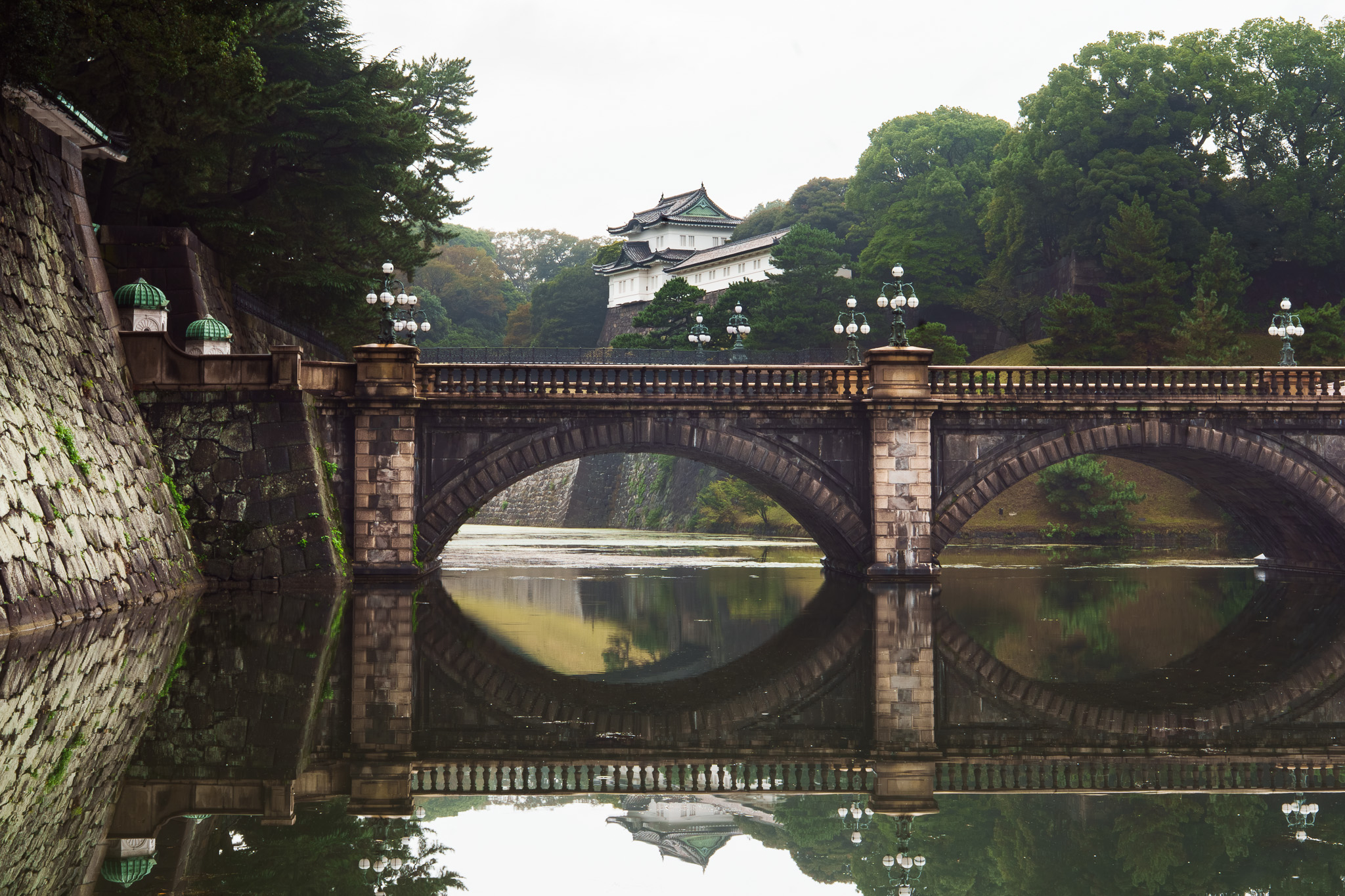
Imperial Palace
The Imperial Palace is one of Tokyo’s best-known destinations, and for good reason. Beyond its symbolic significance, it’s the perfect place to take a leisurely stroll. The palace’s wide gravel plazas and broad, lushly planted moats offer an unexpected sense of scale in a city that can often feel claustrophobic. Every detail across the grounds feels impeccably maintained, from the sculpted black pines lining the walkways to the pristine stone walls reflecting off the water.
The site occupies the historic grounds of Edo Castle, the former stronghold of the Tokugawa Shogunate. Looking across the moat from the Imperial Palace Front Gardens, your gaze is immediately drawn to Nijubashi, the pair of iconic bridges guarding the inner gate. Originally a wooden structure, it was rebuilt in iron in 1888 before undergoing an anti-rust restoration in 1964.
Behind it sits Fushimi Yagura, a two-story white watchtower with sweeping tiled roofs resting on a stone foundation. The tower is believed to have been relocated from Kyoto’s Fushimi Castle to Edo Castle sometime in the 17th century, though the exact circumstances remain unclear.
Together, the bridge and the watchtower form a view that lets you take in two distinct eras of Japanese architecture at once — Edo-period feudal castle design beside Meiji-period industrial engineering in a single frame.
Exploring the outer plaza and taking in the view across the moat is free and generally accessible year-round. The Imperial Household Agency also offers free guided tours of the Imperial Palace grounds, generally twice a day on weekdays, although tours are suspended on Sundays, Mondays, national holidays and during certain seasonal periods.
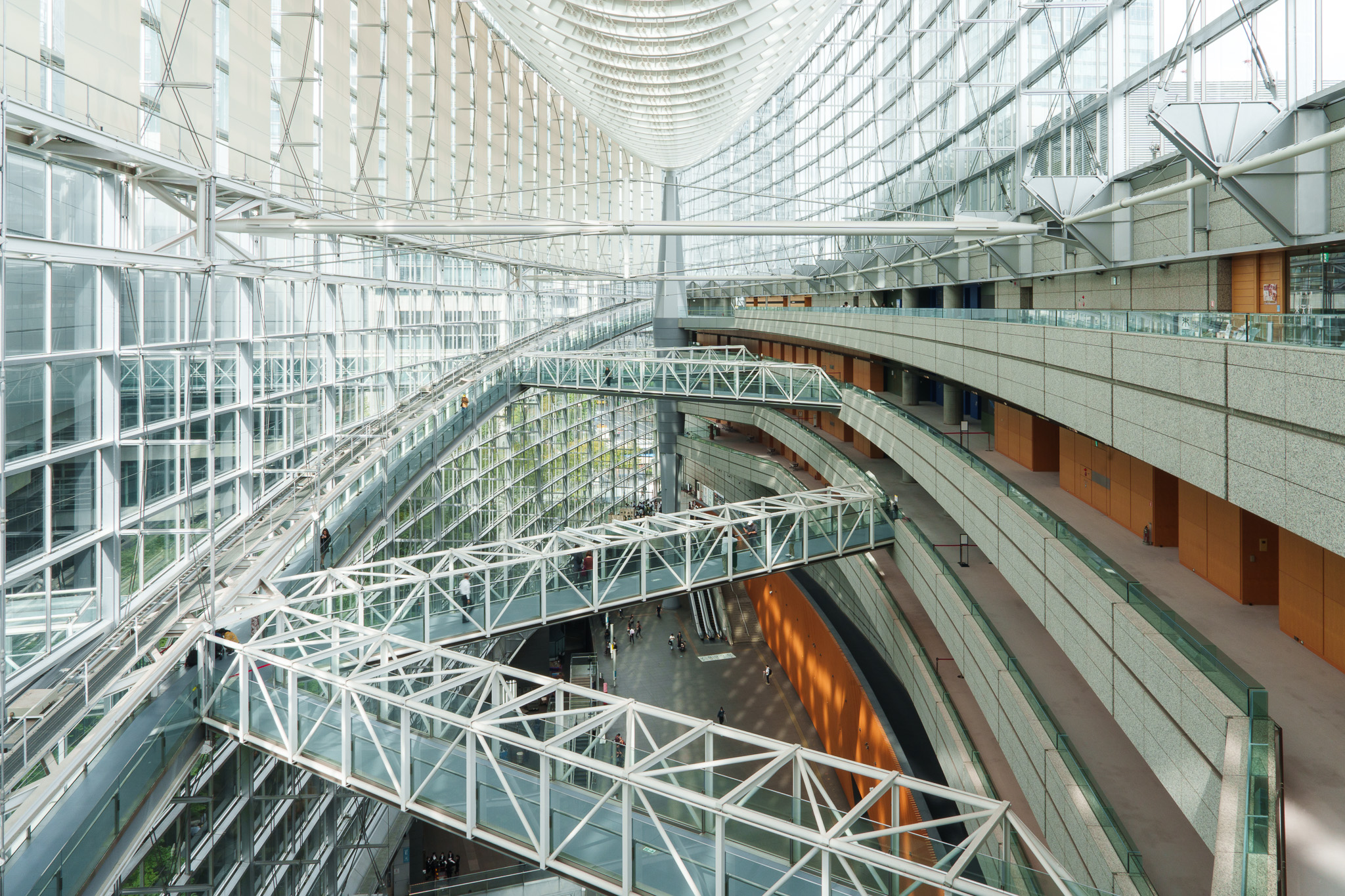
Tokyo International Forum
A short walk southeast from the palace grounds brings you to the Tokyo International Forum, where historical stonework gives way to a futuristic, sprawling masterpiece of contemporary engineering. Designed by architect Rafael Viñoly and opened in 1997, the complex serves as a multipurpose cultural venue, holding conventions, exhibitions, concerts and beyond.
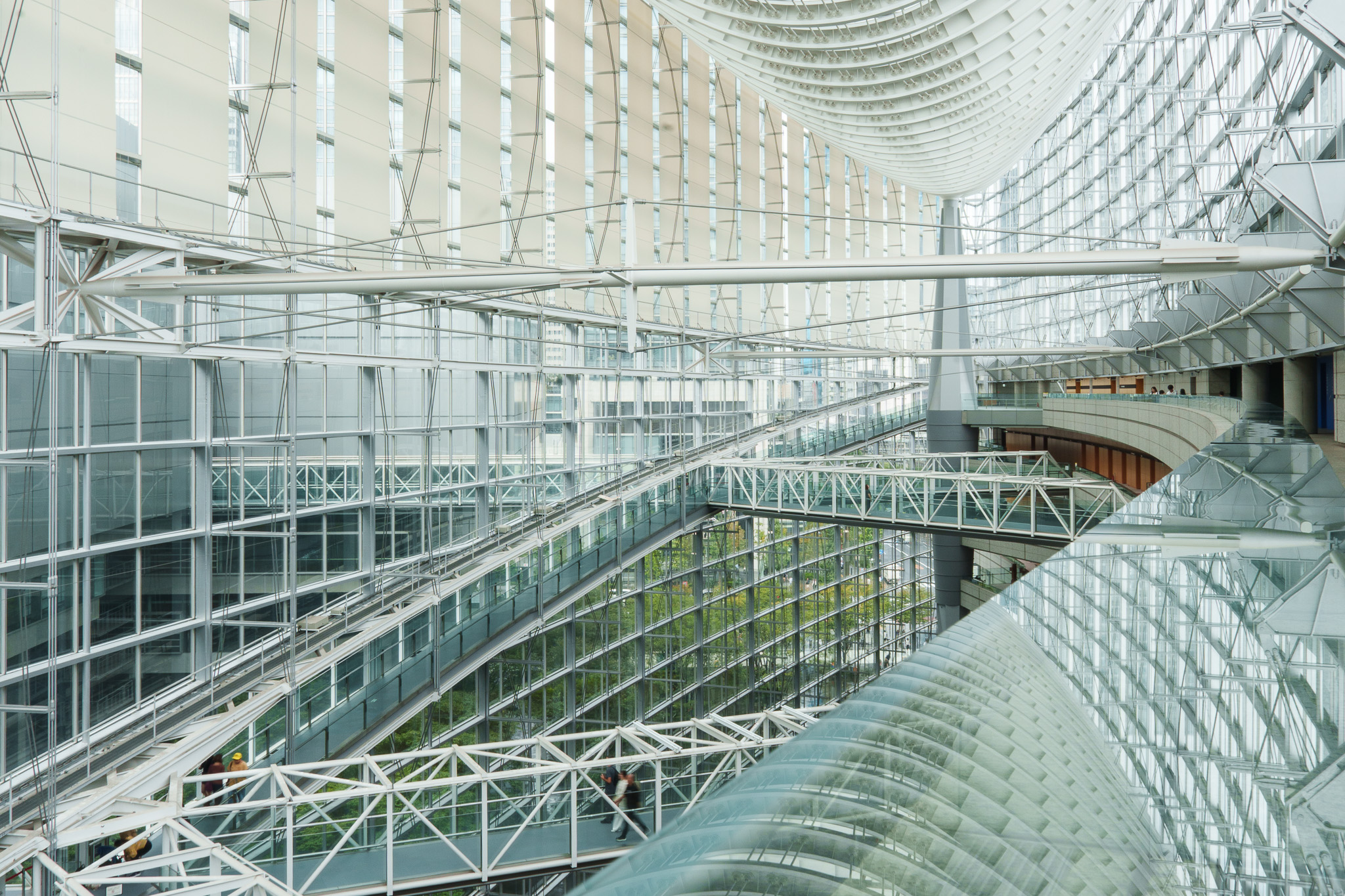
Its most photographed feature is the Glass Building, an immense atrium of glass and steel that envelops visitors in a grand, light-filled canyon. Walking into the hall feels like stepping inside the skeleton of a whale, where a canopy of curved steel ribs evokes the upturned hull of a ship.
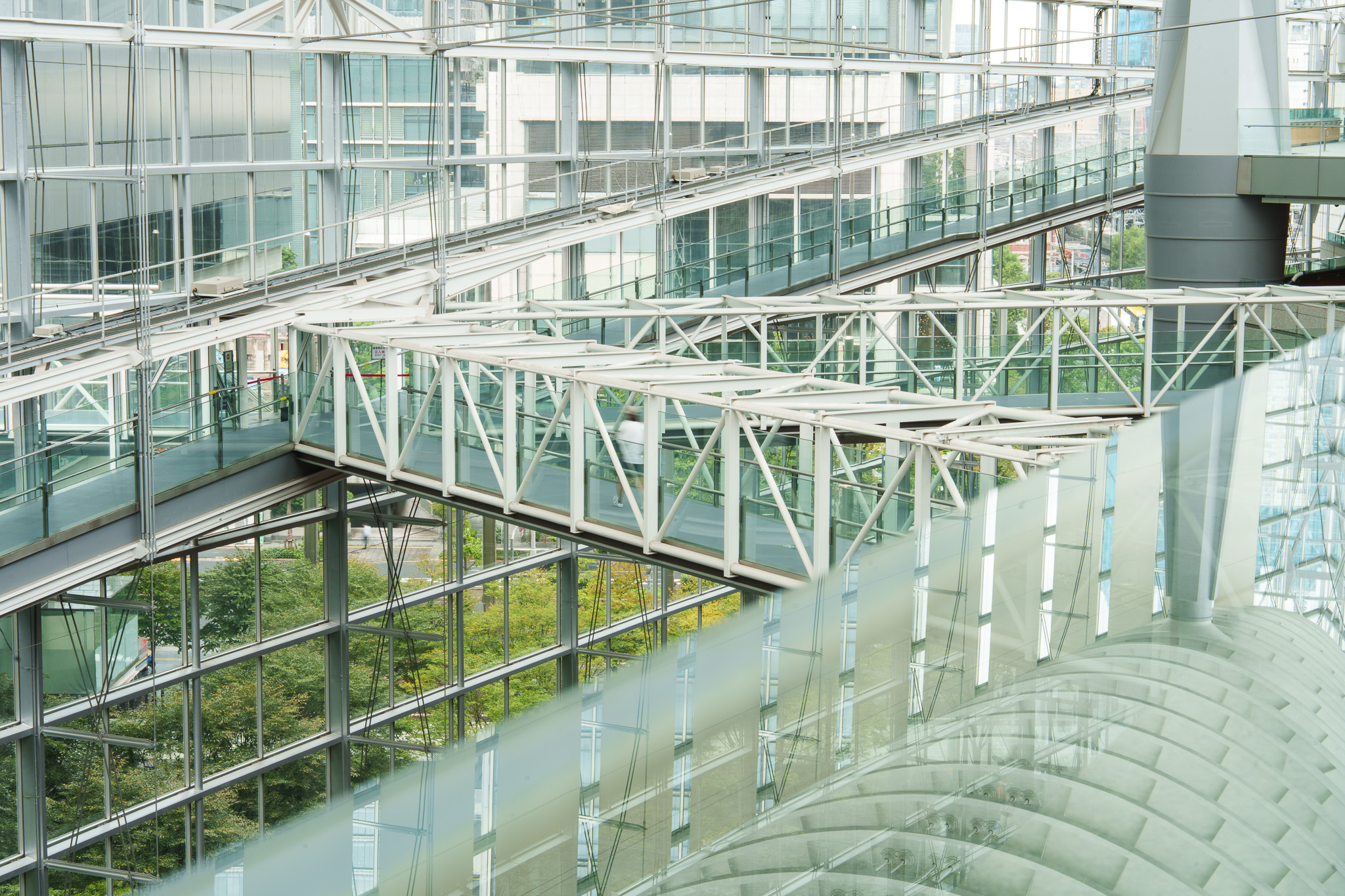
Within the atrium, elevated bridges and open corridors crisscross in the open air, offering different vantage points and casting geometric shadows as the sun descends. When night falls, internal floodlights illuminate the structure from within, turning the space into a glowing, translucent lantern amid the surrounding office towers.
The space is free to explore during its public opening hours, from 7 a.m. to 11:30 p.m., and its public areas are accessible via elevators. Please note that some areas may be temporarily inaccessible depending on event setups or schedules.
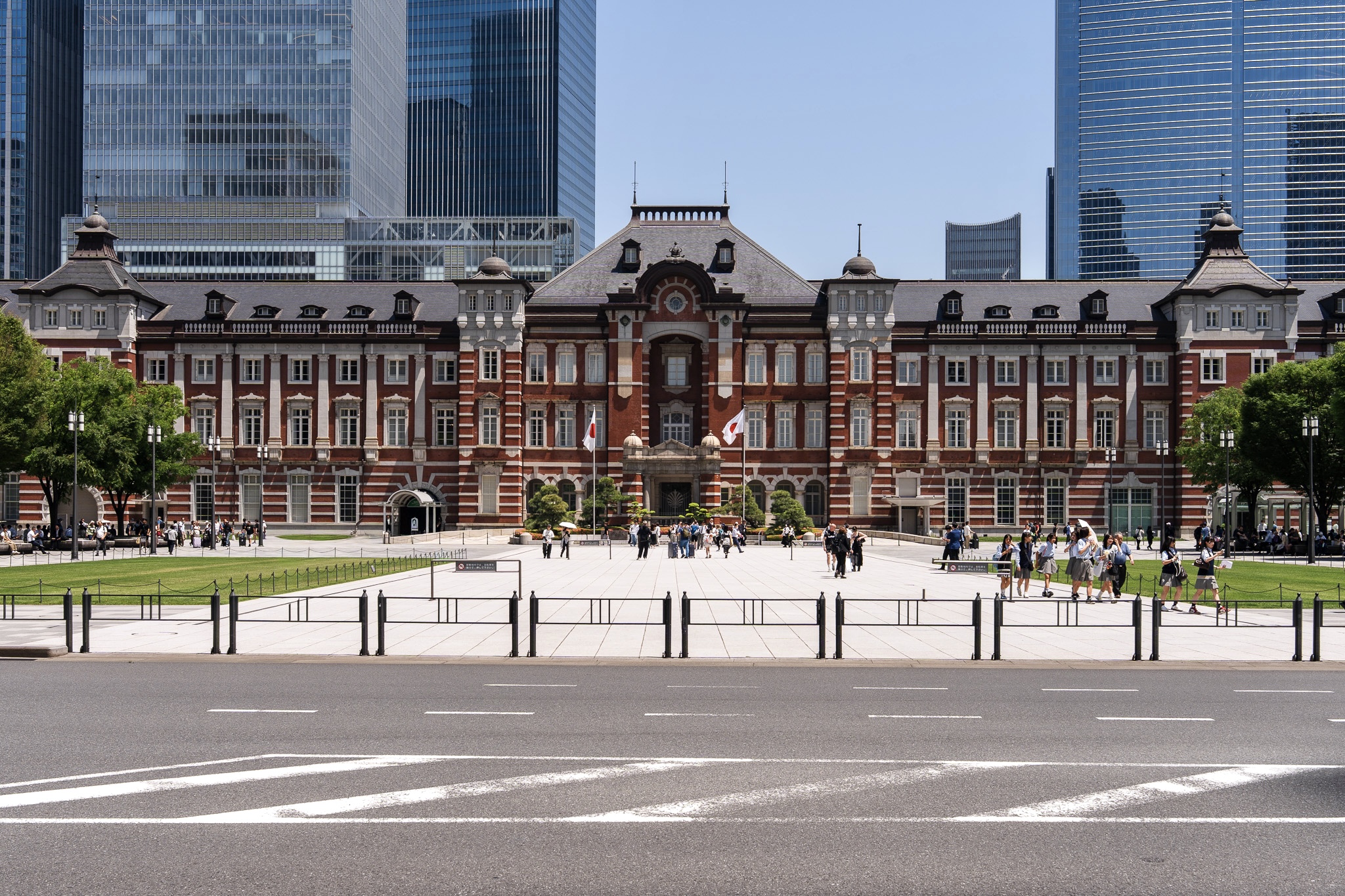
Tokyo Station
Finishing your walk directly adjacent to the Forum brings you to the Marunouchi side of Tokyo Station, the grand red-brick gateway to the capital and one of Japan’s most celebrated architectural icons. Inaugurated in 1914, the landmark was designed by Kingo Tatsuno, a pioneer of modern Japanese architecture who studied under British architect Josiah Conder.
The facade showcases the architect’s signature “Tatsuno style” — a free blend of Queen Anne and Renaissance among other European influences, with decorative white granite bands and two octagonal domes. Stepping into the concourses beneath these domes, you can look up to find restored plaster reliefs featuring eagles and Chinese zodiac motifs.
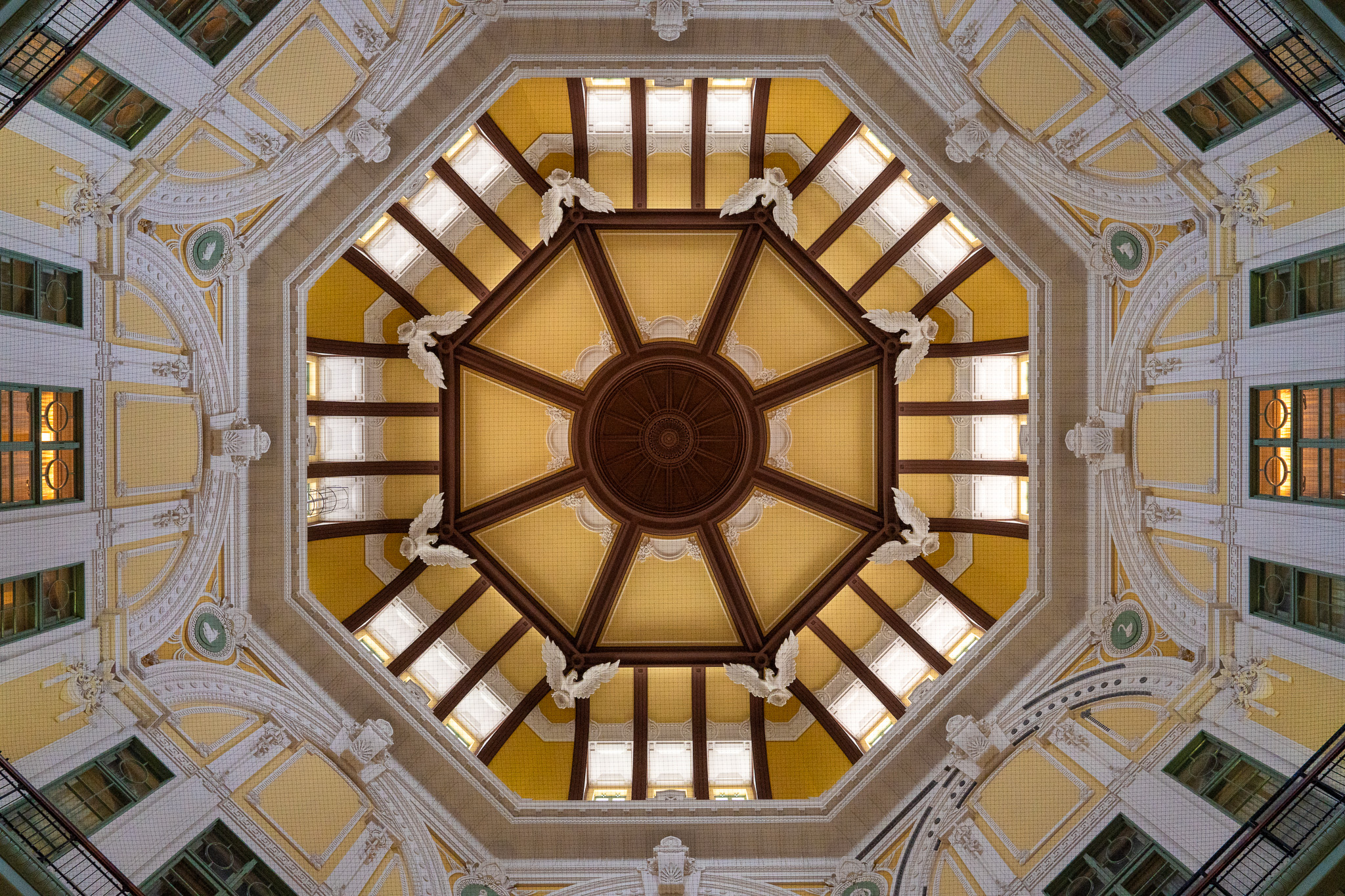
Tokyo Station suffered extensive damage during the air raids of 1945, losing its top floor and roof domes. After a major restoration that began in 2007, it was returned to its original appearance in 2012.
Beyond serving as a transit hub, the station is a destination in its own right. In the north wing, you can find the Tokyo Station Gallery, which regularly features some of the city’s best art exhibitions. You’ll also find the historic Tokyo Station Hotel, as well as a network of shopping facilities like Gransta, First Avenue Tokyo Station and Tokyo Character Street.
For an elevated vantage point overlooking Tokyo Station, take the elevator up to the free rooftop garden on the sixth floor of the neighboring Kitte Marunouchi building. Kitte Garden is open from 11 a.m. to 11 p.m. on weekdays and until 10 p.m. on weekends and holidays, weather permitting.
Updated On October 27, 2026