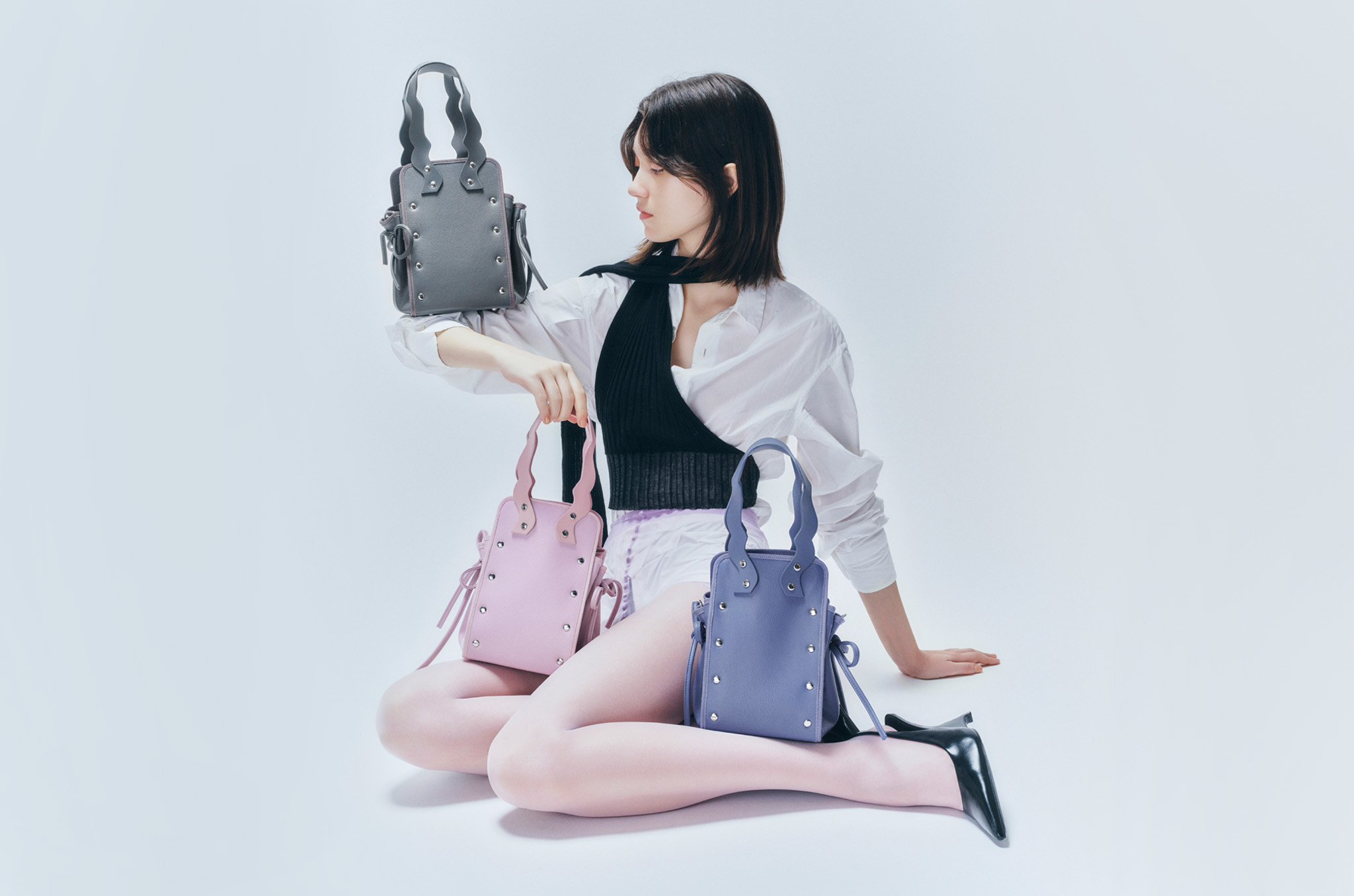
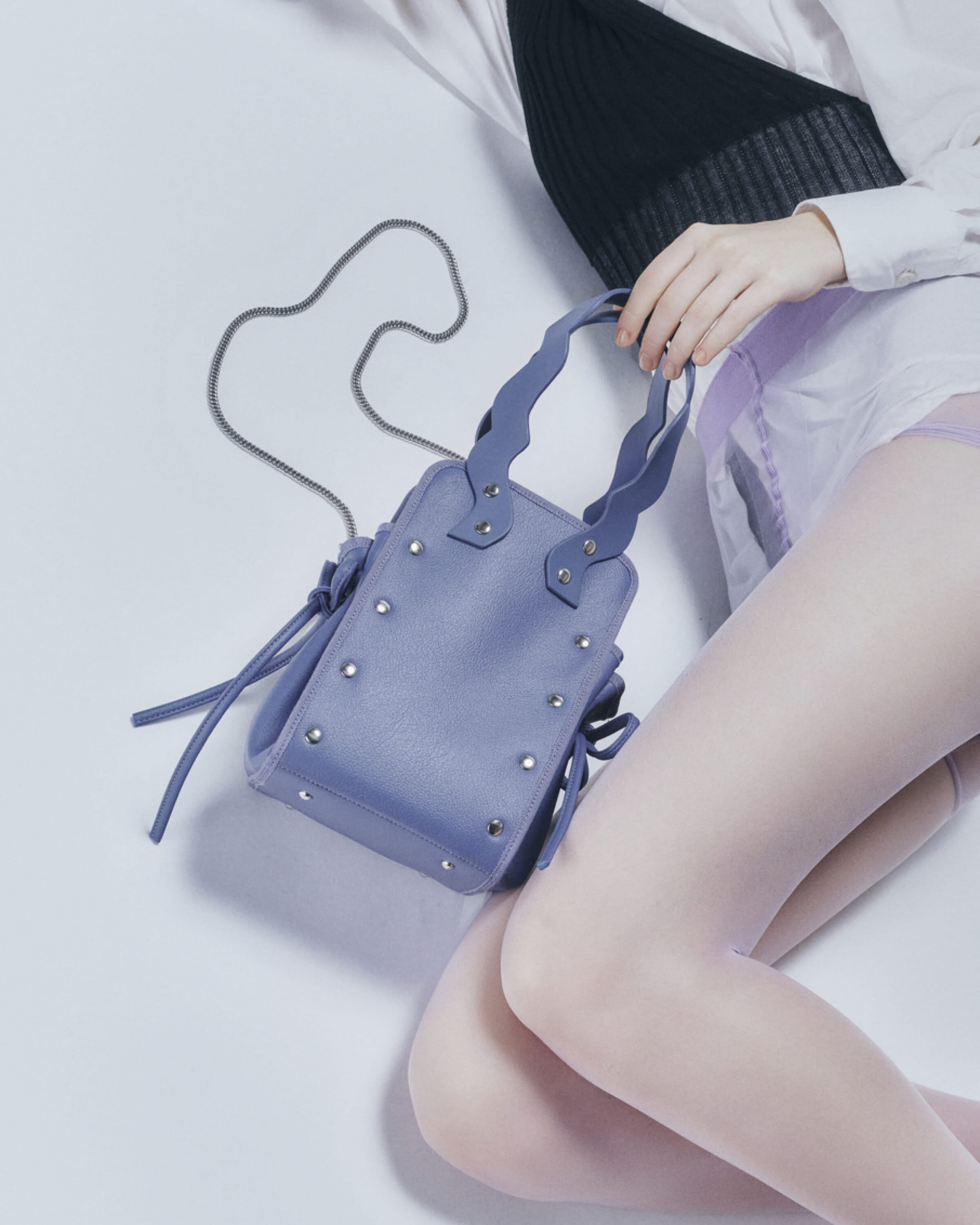
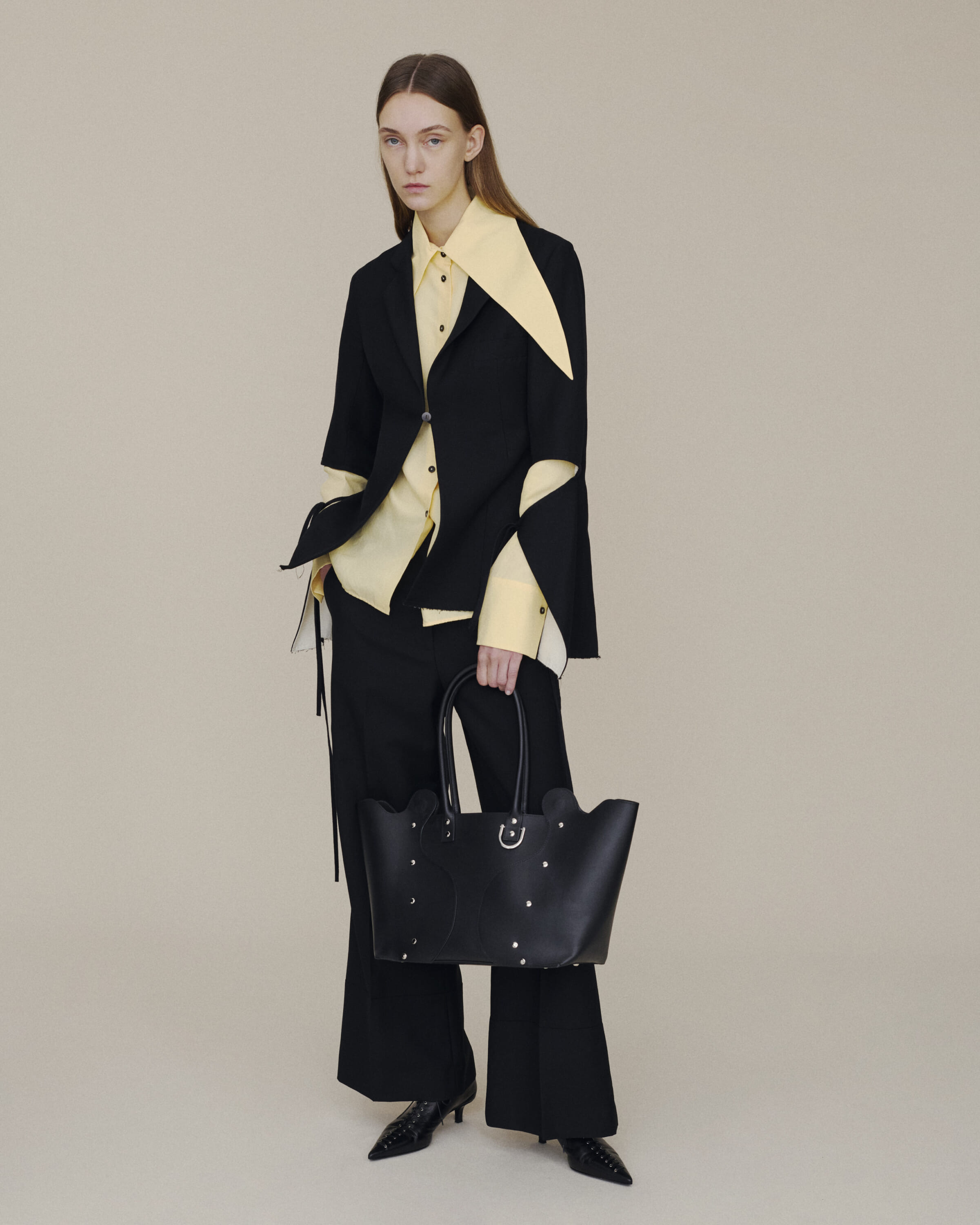
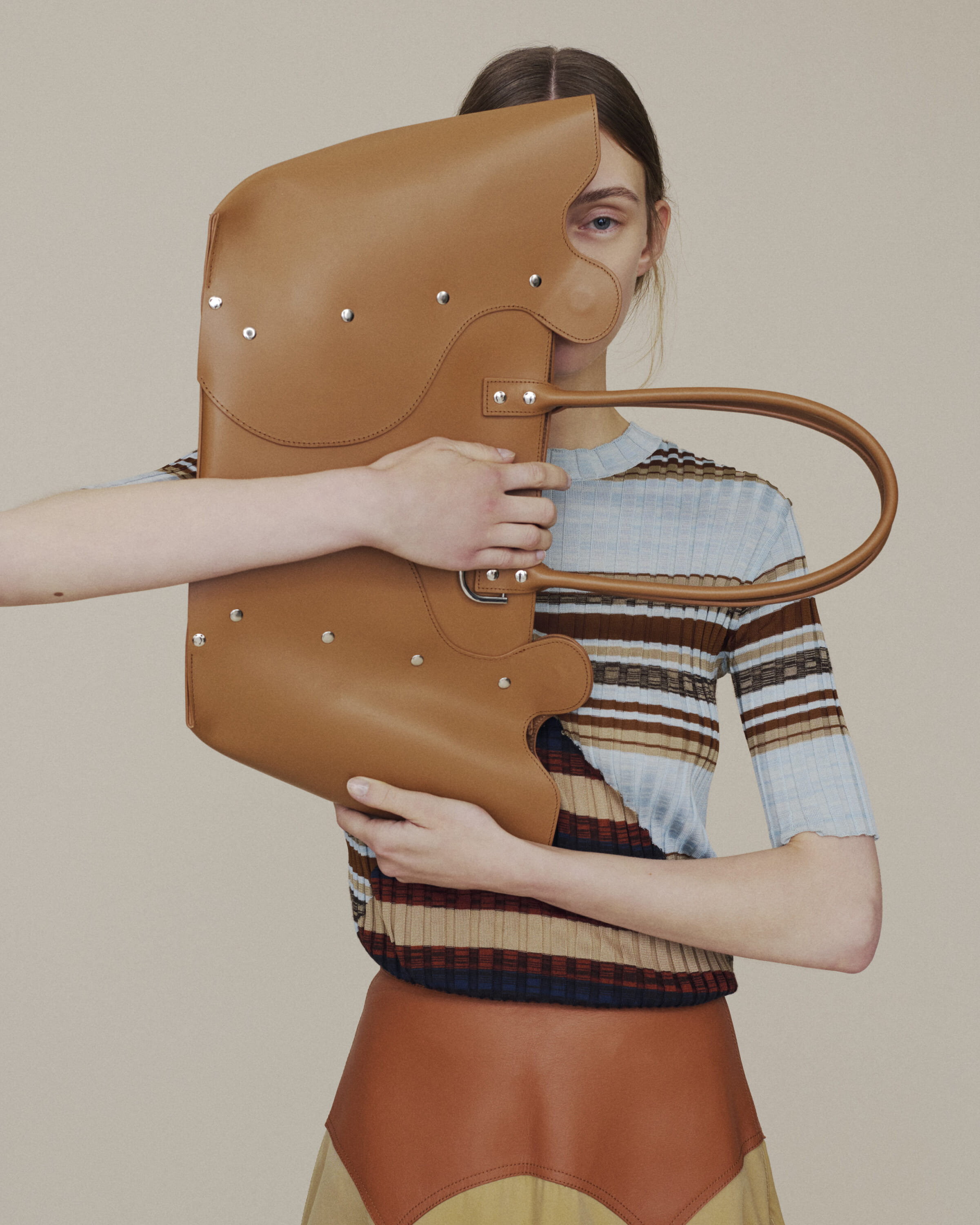
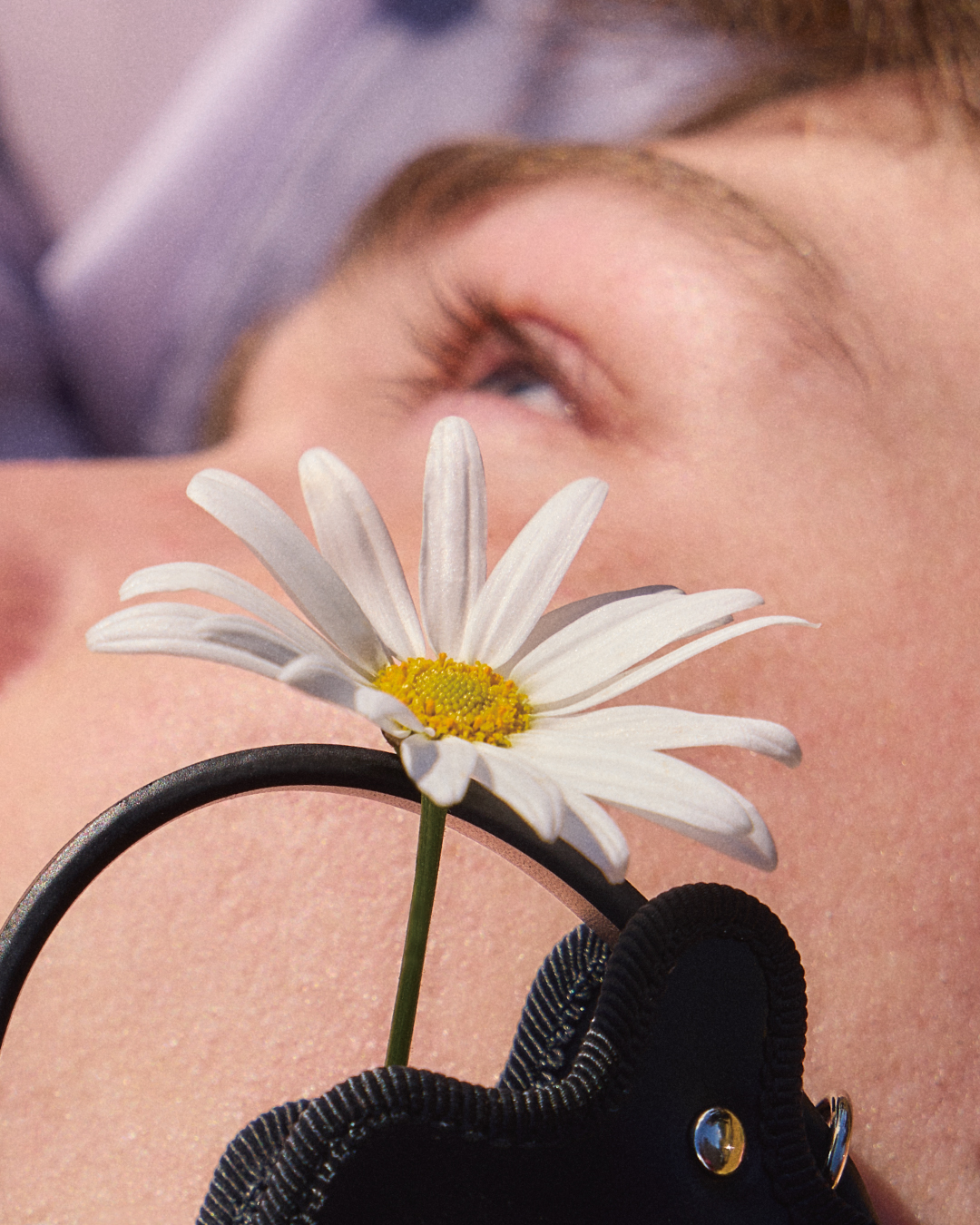
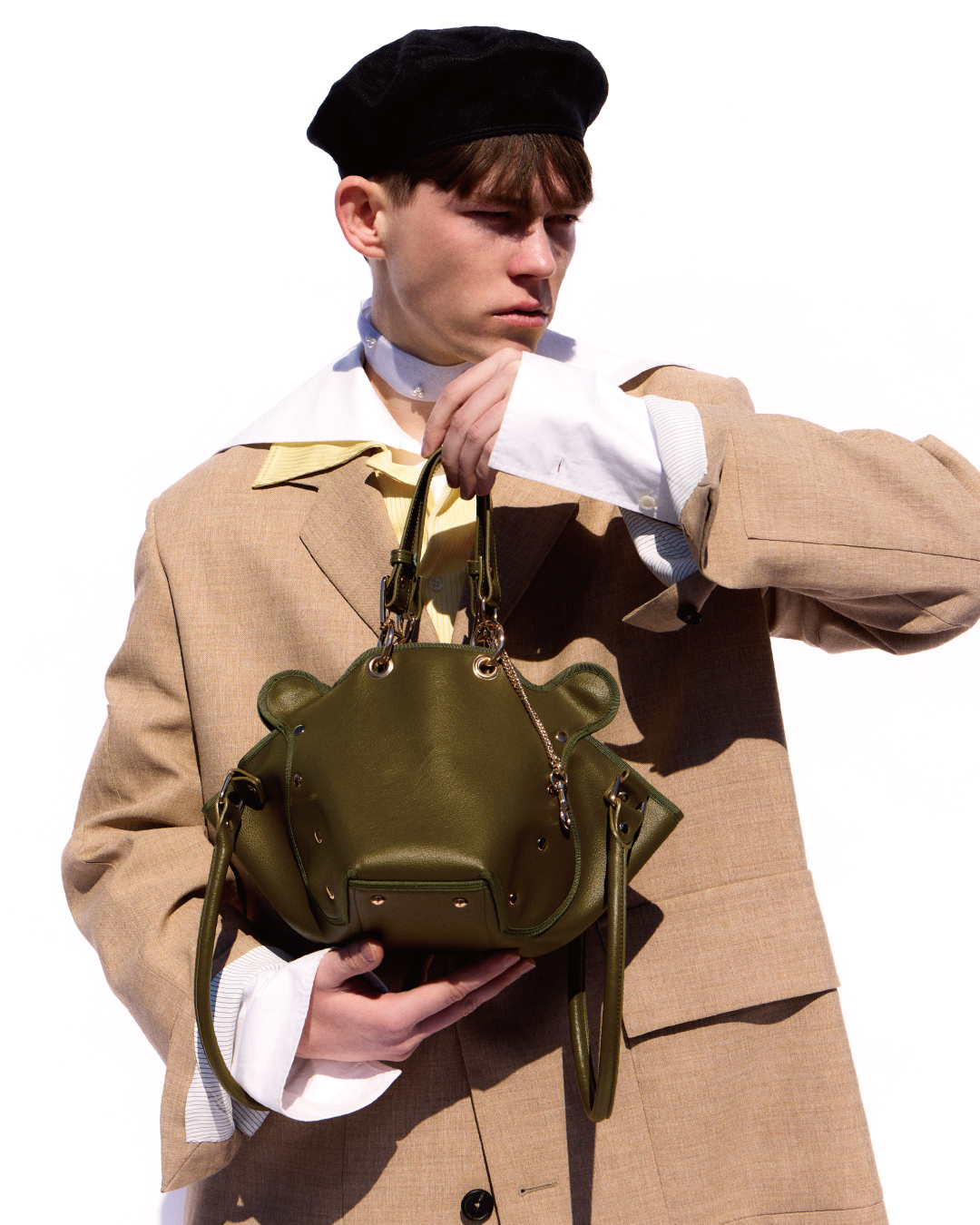
Nori Enomoto’s namesake leather goods brand is instantly recognizable for its bold, sugar-toned colors and playful, wavy silhouettes. There is a particular kind of curve that shows up again and again in her work — cartoonish yet chic, an alluring sort of wobble, unfolding along the handle of a bag or the scalloped edge of a coin purse. When asked where her inspiration came from, Enomoto points to an unexpected reference point: bent sewing pins.
“During my time at Bunka Fashion College, my tools would often bend or warp — especially my pins,” Enomoto recalls. Though many would simply toss unusable implements, Enomoto’s school provided an alternative: a traditional hari-kuyo memorial ceremony for old or damaged needles, held every year. She’d tape the bent pins to her sewing machine, collecting them until it was time to hand them in for a proper disposal. “Looking at that little cluster of bent pins, I started to find it strangely beautiful,” she says.
Enomoto didn’t set out to become a designer. She initially worked as a patternmaker, translating others’ sketches into blueprints for garment construction. To her, there was something fascinating about the unglamorous, structural part of the process, the calculations made long before the finished silhouette took shape.
“I came to believe that if the structure and making process of an object are interesting, the design naturally becomes interesting, too,” she explains. “That idea became the foundation for my work as a designer today.”
Picturesque Accessories
In 2020, while working as a patternmaker for the fashion company Rainbow Shake, Enomoto launched her own eponymous brand around a simple concept: “picturesque accessories.”
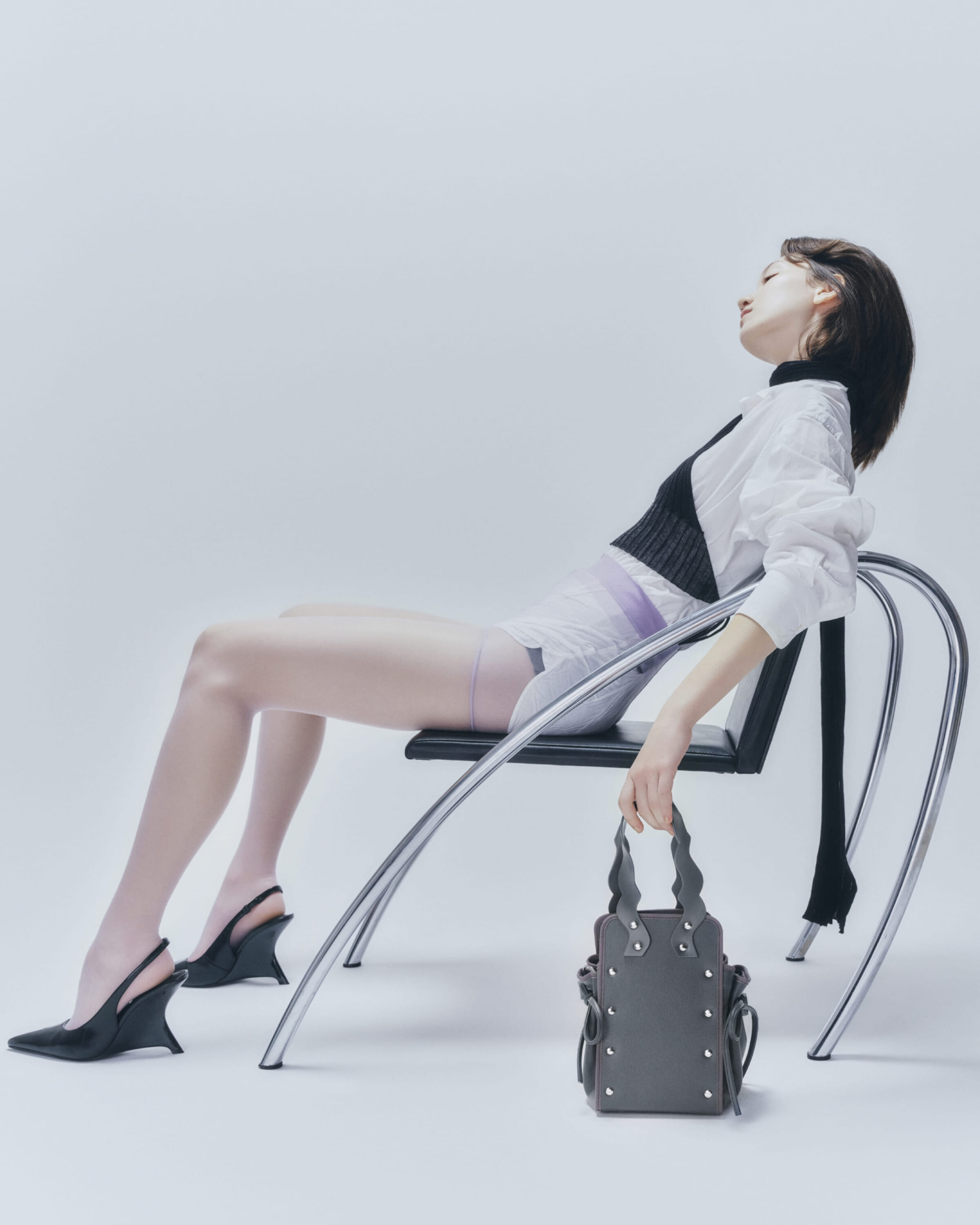
She started with diminutive pouches and accessories. Bags followed naturally, with a curved pattern becoming, in effect, the signature of her label. Many of her bags are named after days of the week in French — the Mardi Matin and Lundi Nuit handbags, the Dimanche Nuit shoulder tote — and thematically connected by a wave element somewhere in the item. Among the brand’s most coveted pieces are the one-of-a-kind Paris Special Twinkle Wave bags — pouches and phone cases hand-assembled from vintage buttons, beads and trims. Sourced by Enomoto from Parisian flea markets on work trips, some of these materials date as far back as the 1930s and 40s.
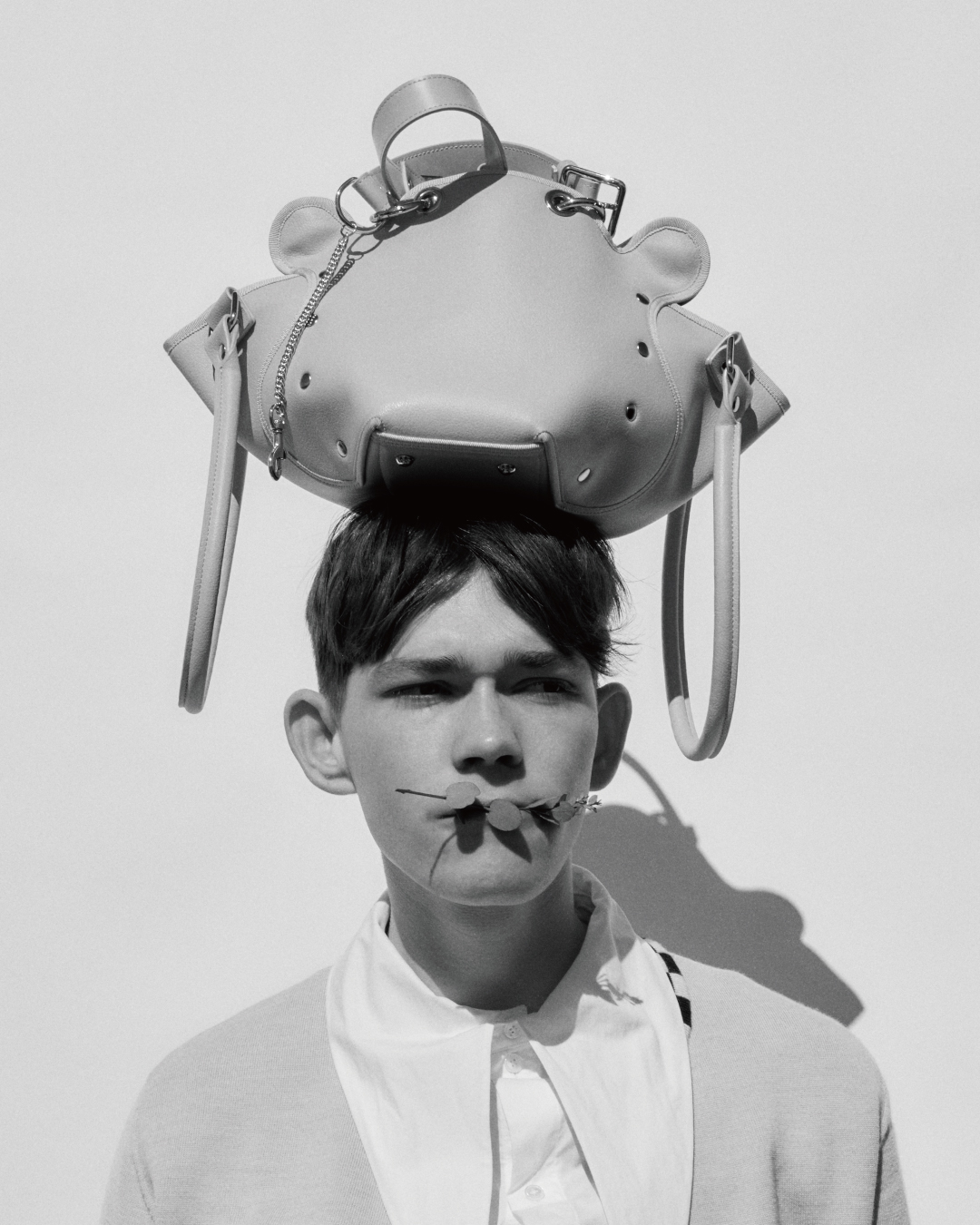
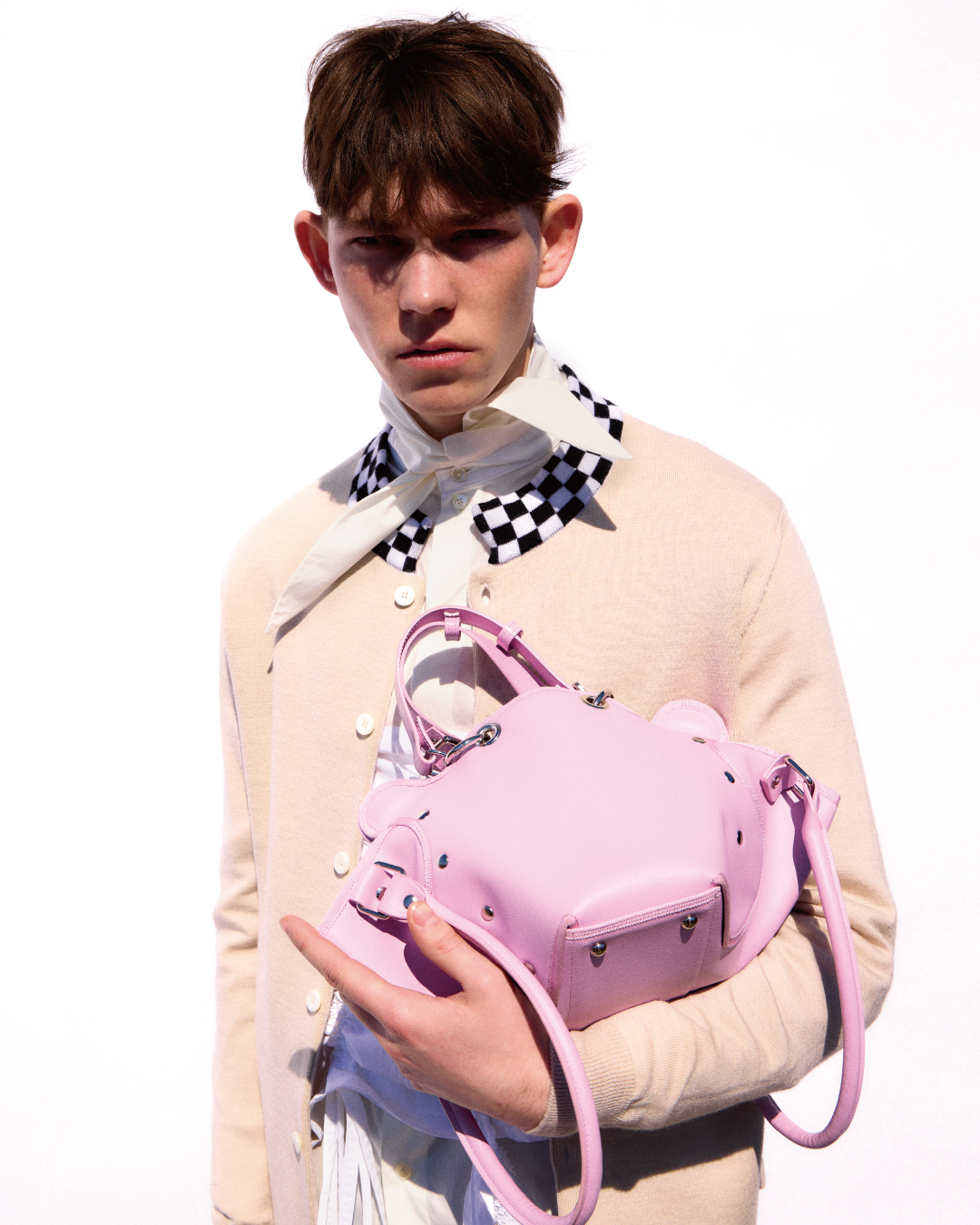
Every piece in this specific collection is still made entirely by hand and is released in limited runs online, which is a large part of why drops tend to vanish in minutes; before each release, Enomoto posts a mood board on Instagram, along with a launch date and time. Because so much of the raw material comes from one-off finds, no two Paris Special Twinkle Wave pieces are ever quite identical, a detail that only deepens the appeal. It’s easy to imagine Japanese fashion enthusiasts immediately marking their calendars, ready to cop their favorite piece the moment the drop goes live.
The brand quickly built a cult following, moving from department store pop-ups in Japan to style capitals like Paris, Copenhagen, Seoul and Taipei. Its bags and accessories have become a familiar sight on the shoulders and wrists of Japan’s most stylish tastemakers, regularly appearing in the street snaps of the country’s leading fashion magazines. And it’s not just the Paris Special series selling out immediately; even regular online drops disappear almost as soon as they go live.
Conjuring From Nothing
Running a brand and designing everything from scratch comes with plenty of challenges — chief among them, she says, the creation process itself.
“Sometimes a design doesn’t turn out the way I imagined,” she says. “While I can make it by hand myself, reproducing it consistently in production proves difficult. Other times the finished result simply doesn’t match the vision I had in mind.”
Unexpected challenges, she adds, arise more often than people might think — and it’s especially discouraging when several prototypes in a row fail to capture what she originally envisioned. “Design is about turning an idea in your mind into something tangible, so that gap between imagination and reality can be incredibly frustrating. And yet, I think creating something from nothing is work I’m genuinely suited for,” she says.
“The most rewarding moment is when my work finally reaches the people who use it. Whether it’s spotting someone carrying one of my bags in the street, or hearing customers tell me about the places they’ve taken it, or how it gives them a little more confidence when they wear it — those moments make me genuinely happy and remind me why I do this.”
More Info
Keep up with Nori Enomoto’s latest drops and creations at nori-enomoto.com and on Instagram: @norienomoto.
You can follow along with Enomoto’s day-to-day — her outfits, her travels, her process — on her personal account, @37nori.