Every major fashion capital holds a distinct place in the global ecosystem, but Tokyo is where labels new and old get to develop and evolve their identities. If Paris and Milan dominate through historic luxury houses, and New York through commercial viability, Rakuten Fashion Week Tokyo offers independent designers a chance to experiment.
Backed by local grants like the Tokyo Fashion Award and the Fashion Prize of Tokyo, the calendar often prioritizes original concepts and technical skill over mass appeal. This local support routinely leads to international momentum. Over the past decade, many designers who started on Tokyo’s runways — like Masu, Soshiotsuki and Ssstein — have successfully expanded beyond Japan’s borders, building a global presence and relationships with international stockists while contributing to Japan’s broader fashion lineage.
Rakuten Fashion Week Tokyo’s focus on creativity also draws designers from outside Japan, with the schedule regularly including international labels that choose to debut richly narrative ready-to-wear and couture collections alongside Tokyo’s local talent. Standouts from this season included Charinyeh and Anna Choi, introduced below alongside four other favorites.
Yoshiokubo
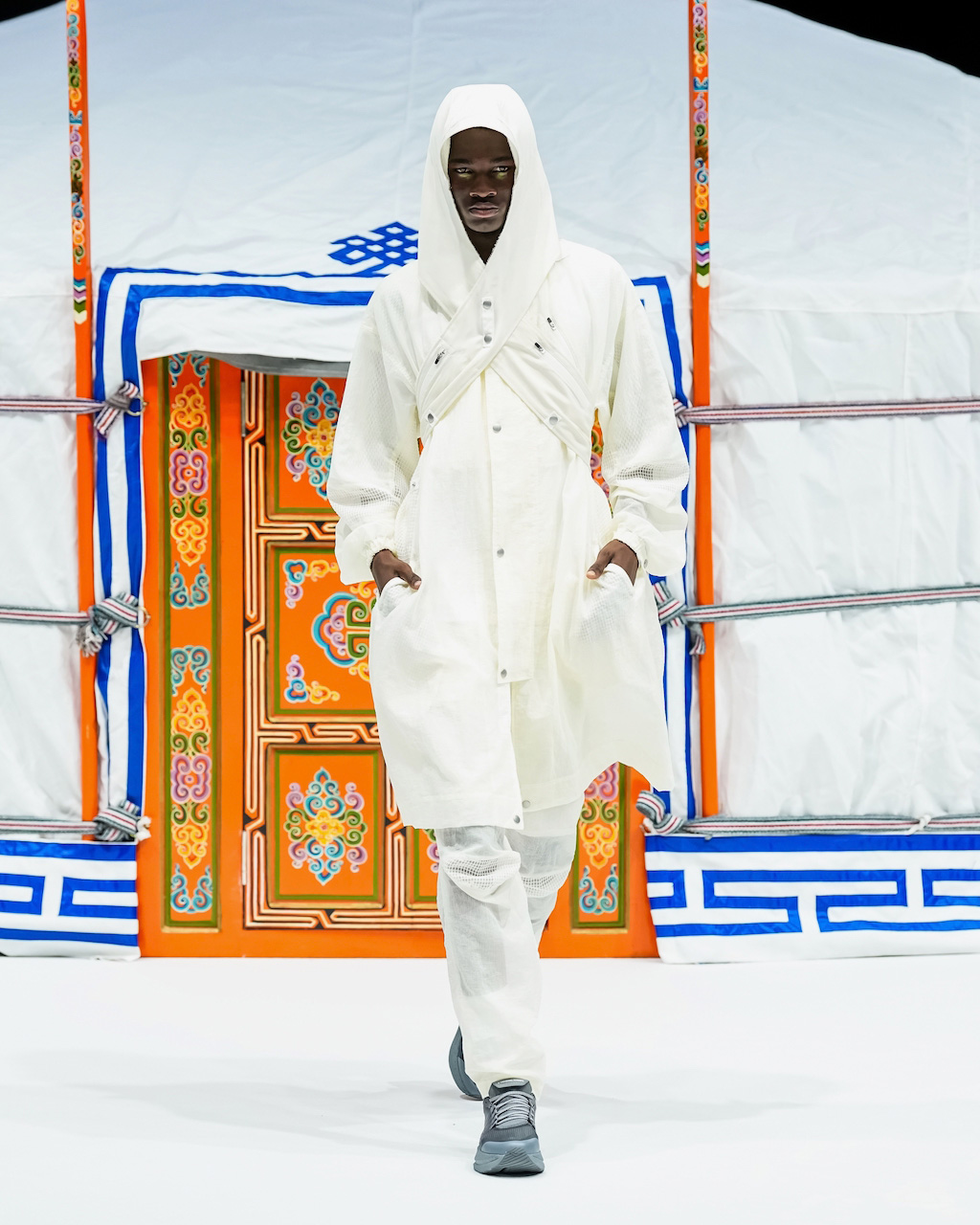
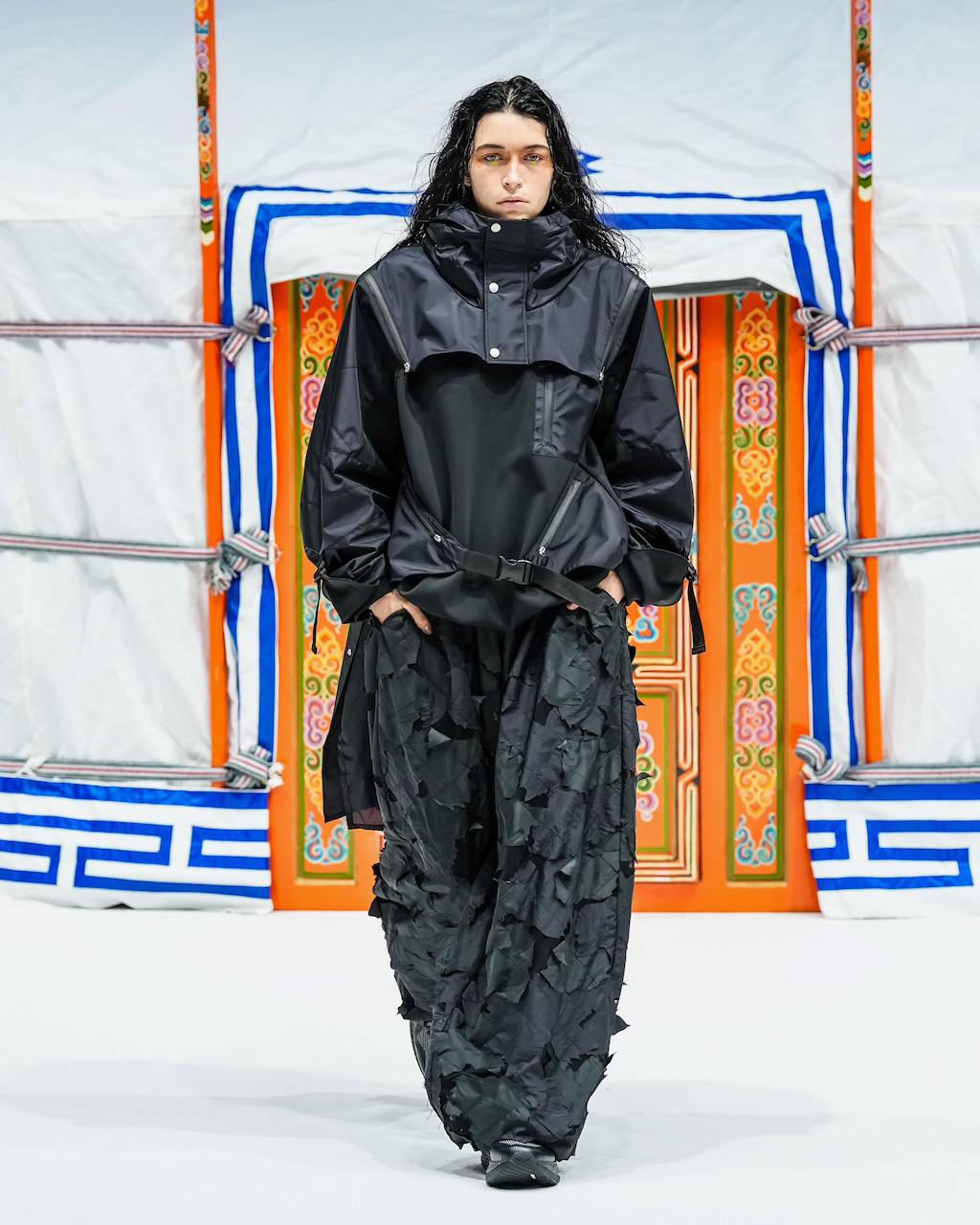
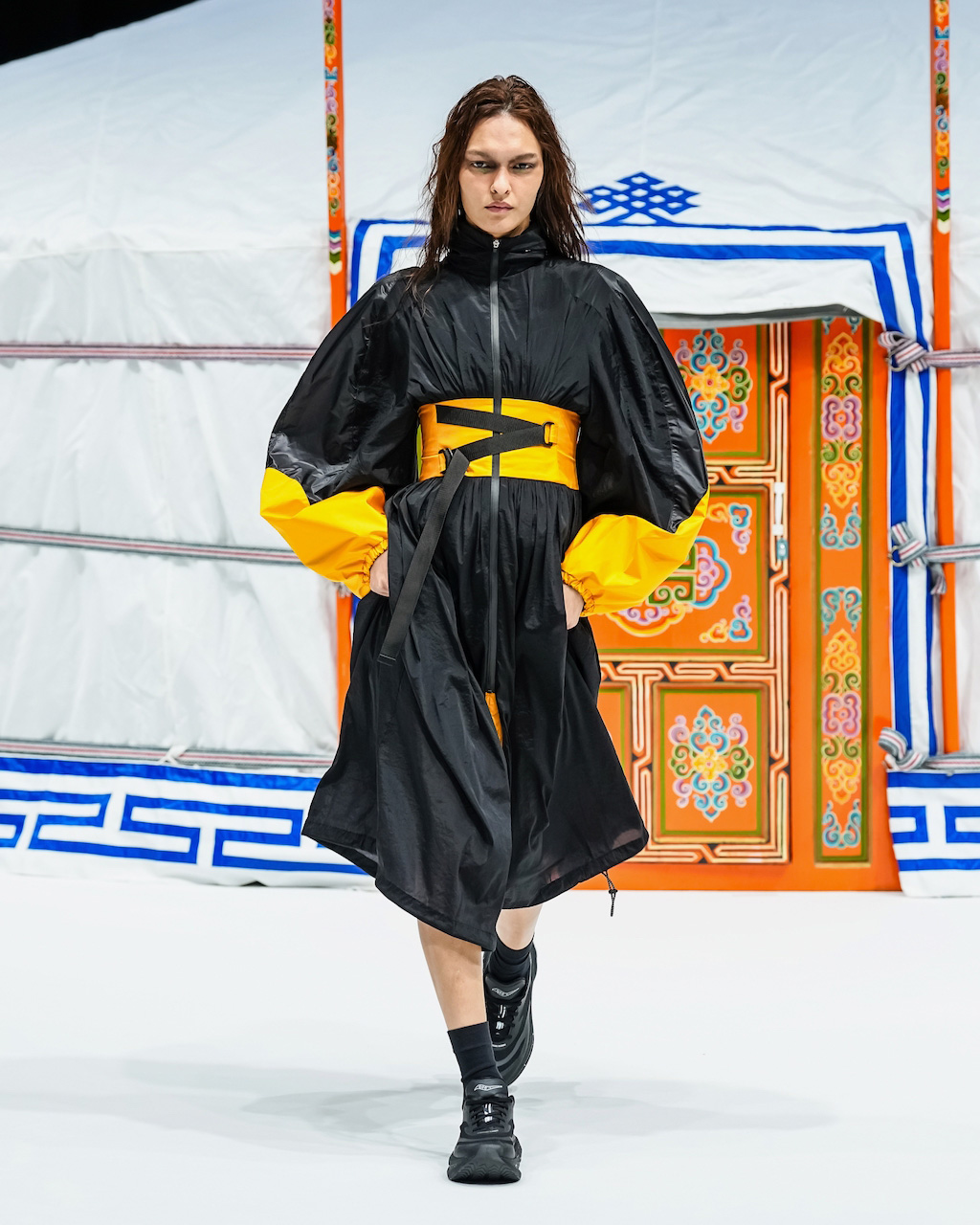
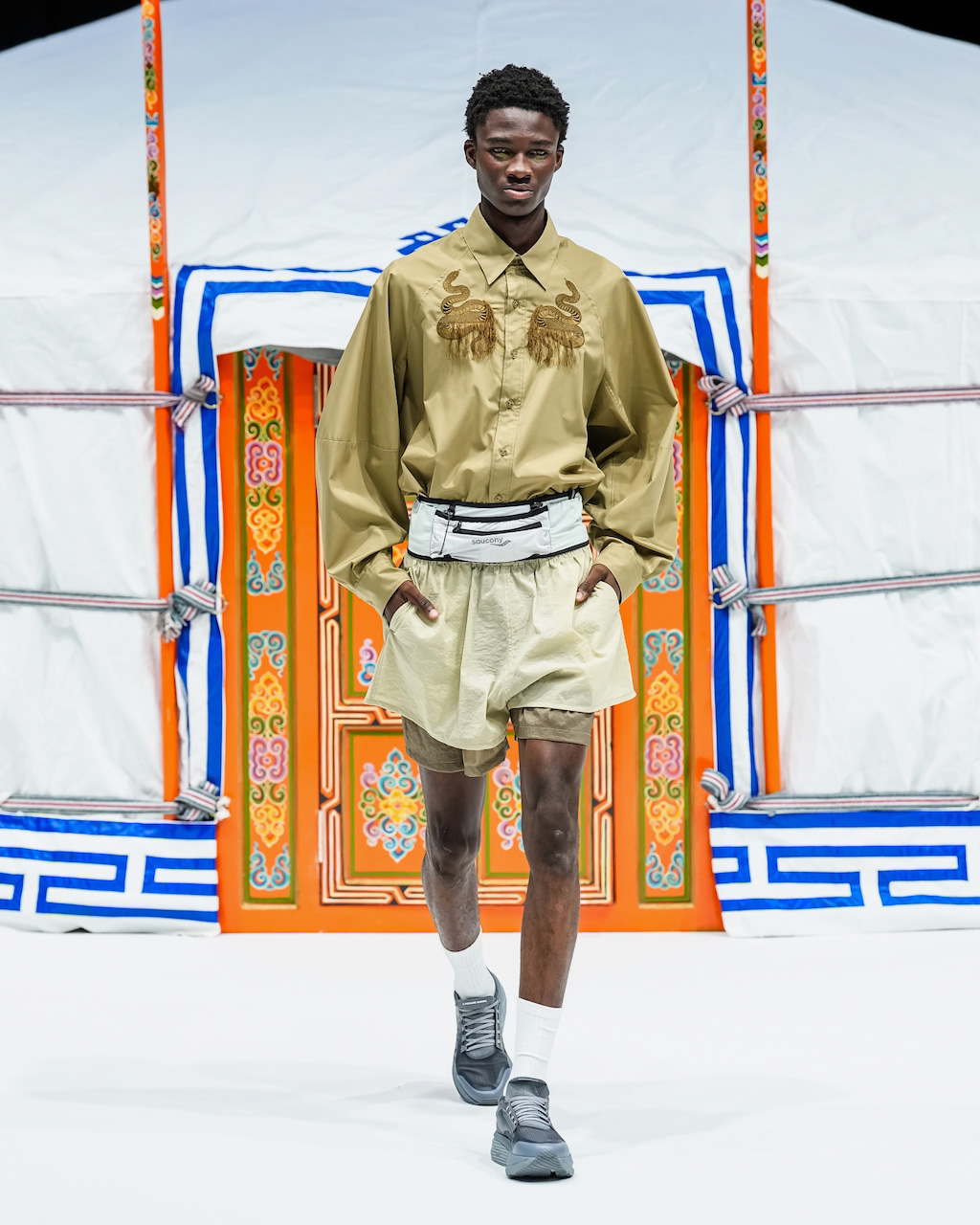
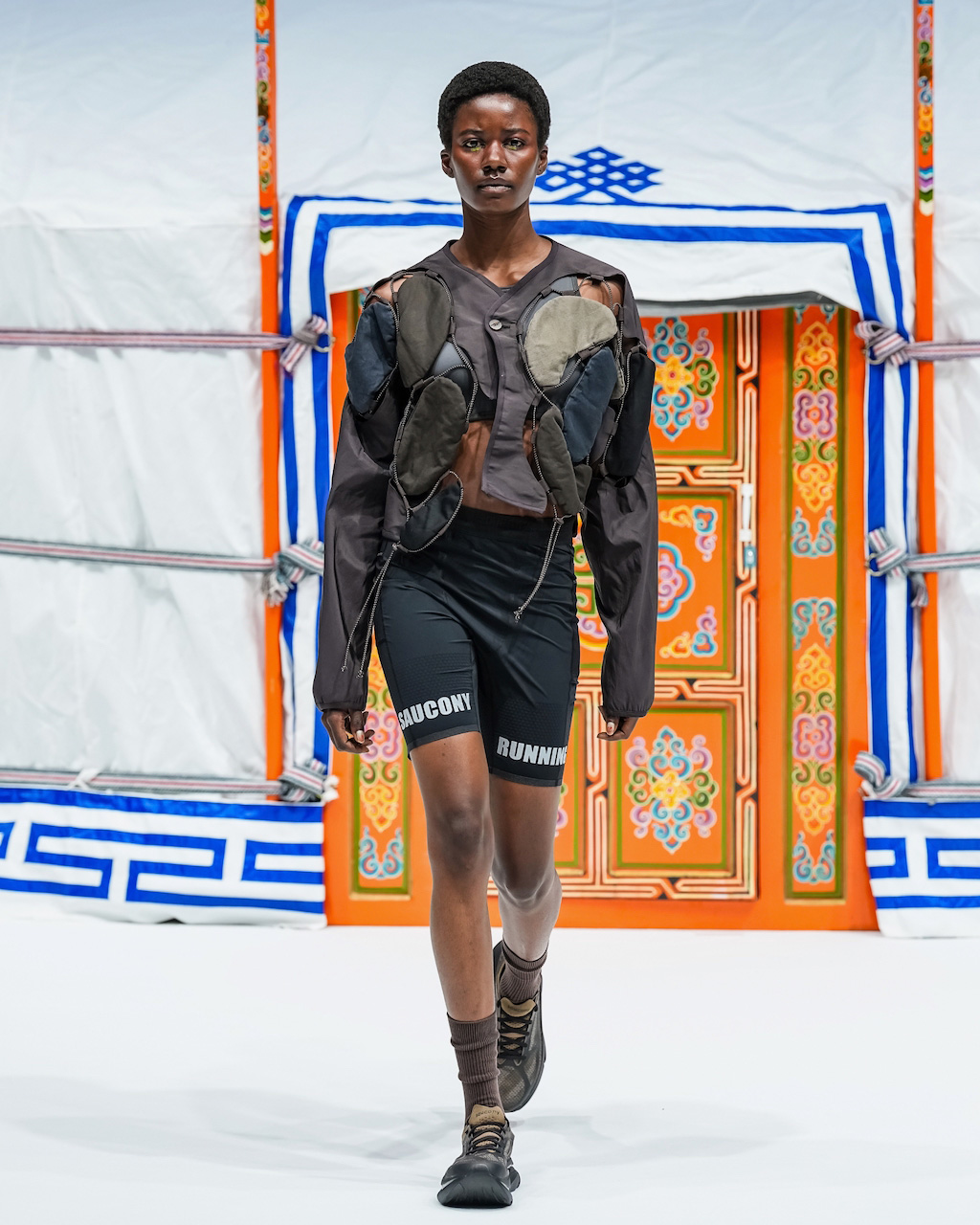
Kicking off the week with a bang, Yoshiokubo presented its newest collection on a rather poetic stage — a lone Mongolian ger (also known as a yurt), resting on a stark square white canvas. The backdrop felt minimal and even desolate as the models strutted around it, but toward the show’s end, the venue plunged into darkness to reveal glowing trails of neon footprints on the floor.
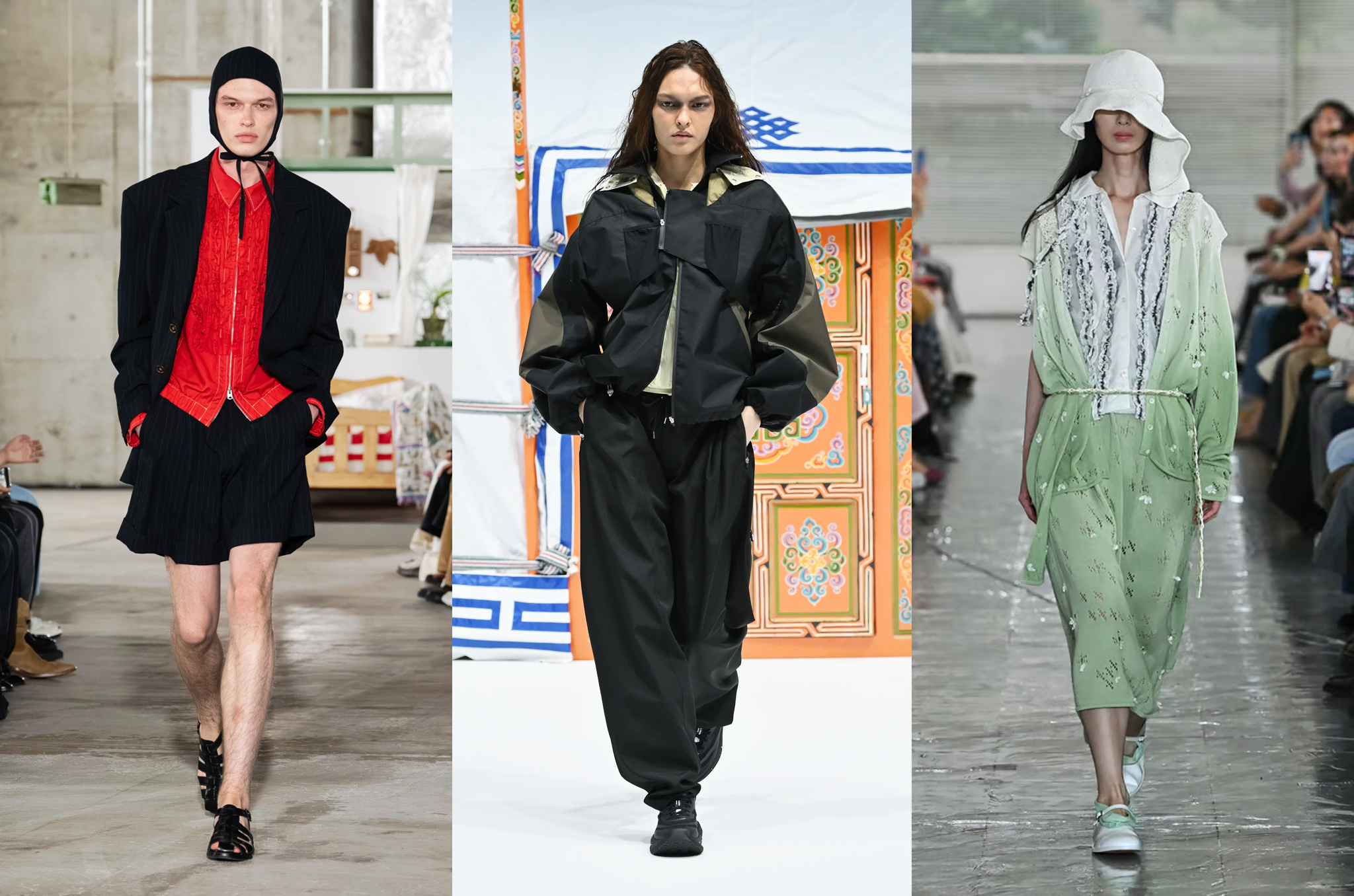
The moment set the tone for the collection, titled “Natural Born Nomads.” In it, designer Yoshio Kubo responds to the unpredictability of today’s climate with hyper-functional layering, pairing translucent fabrics with oversized utility thermals, weathered textiles, tarp capes and beyond. Net-like spindle cord pieces and tulle ponchos give his utility wear a mythical edge, reminiscent of Denis Villeneuve’s Dune.
Anna Choi
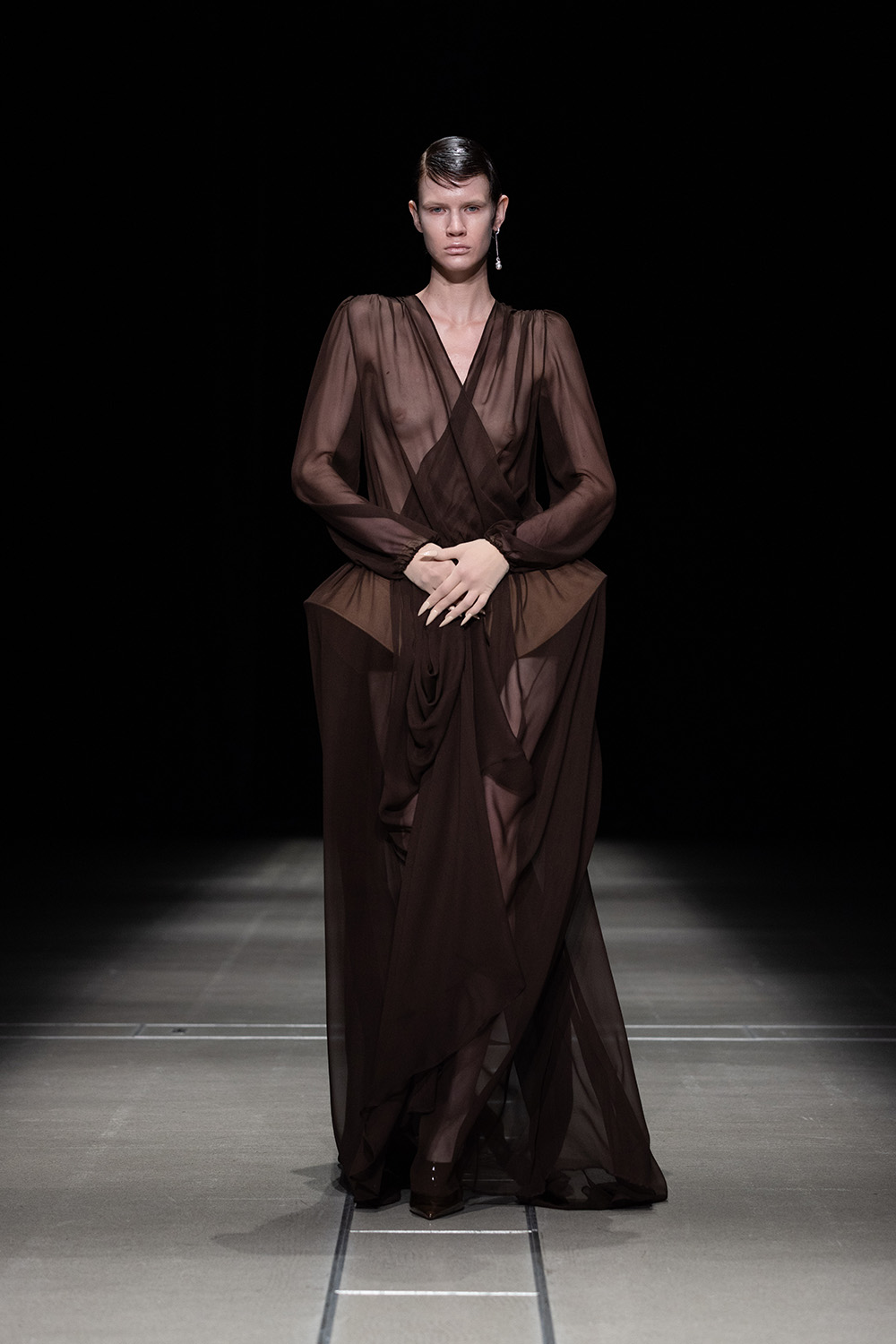
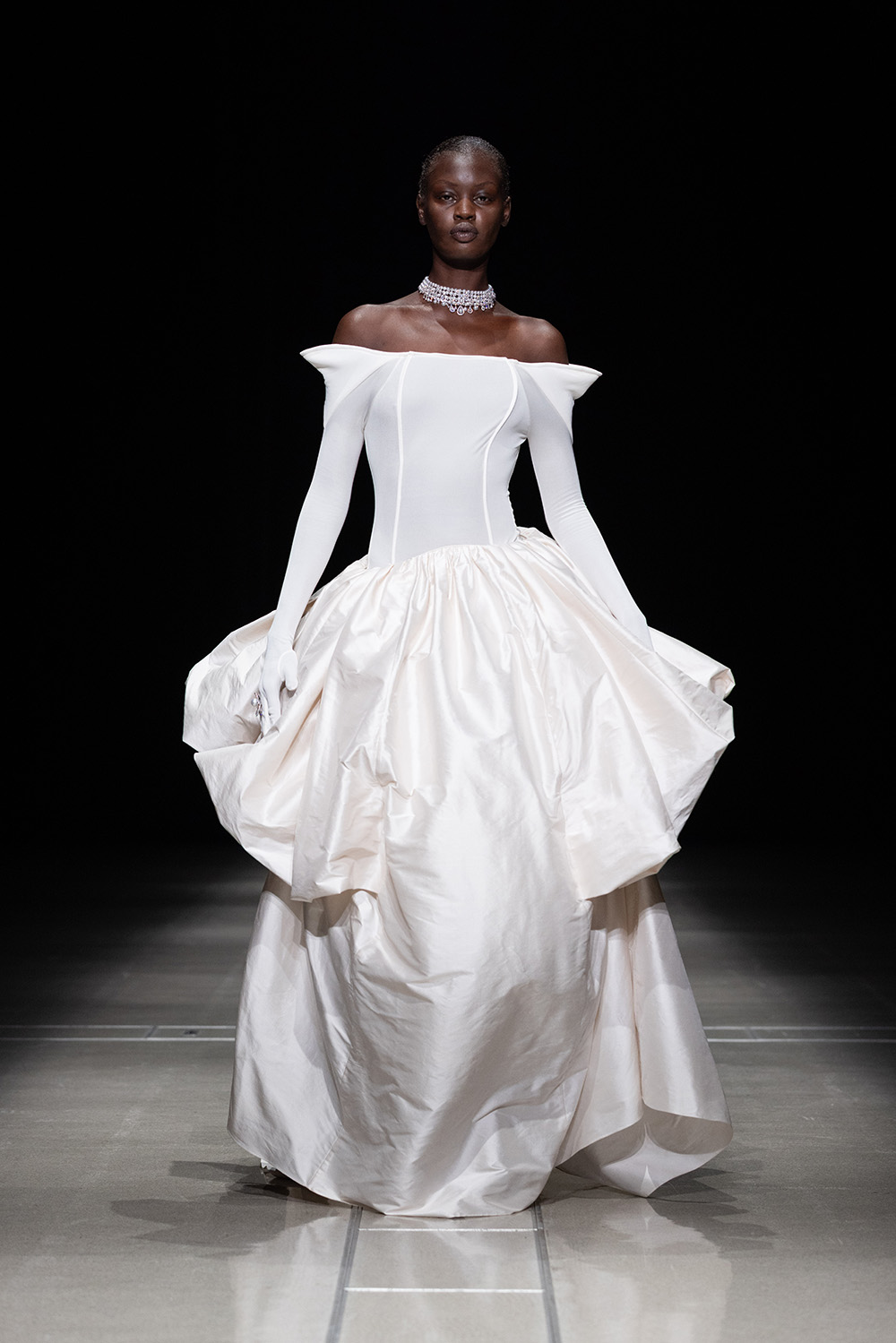
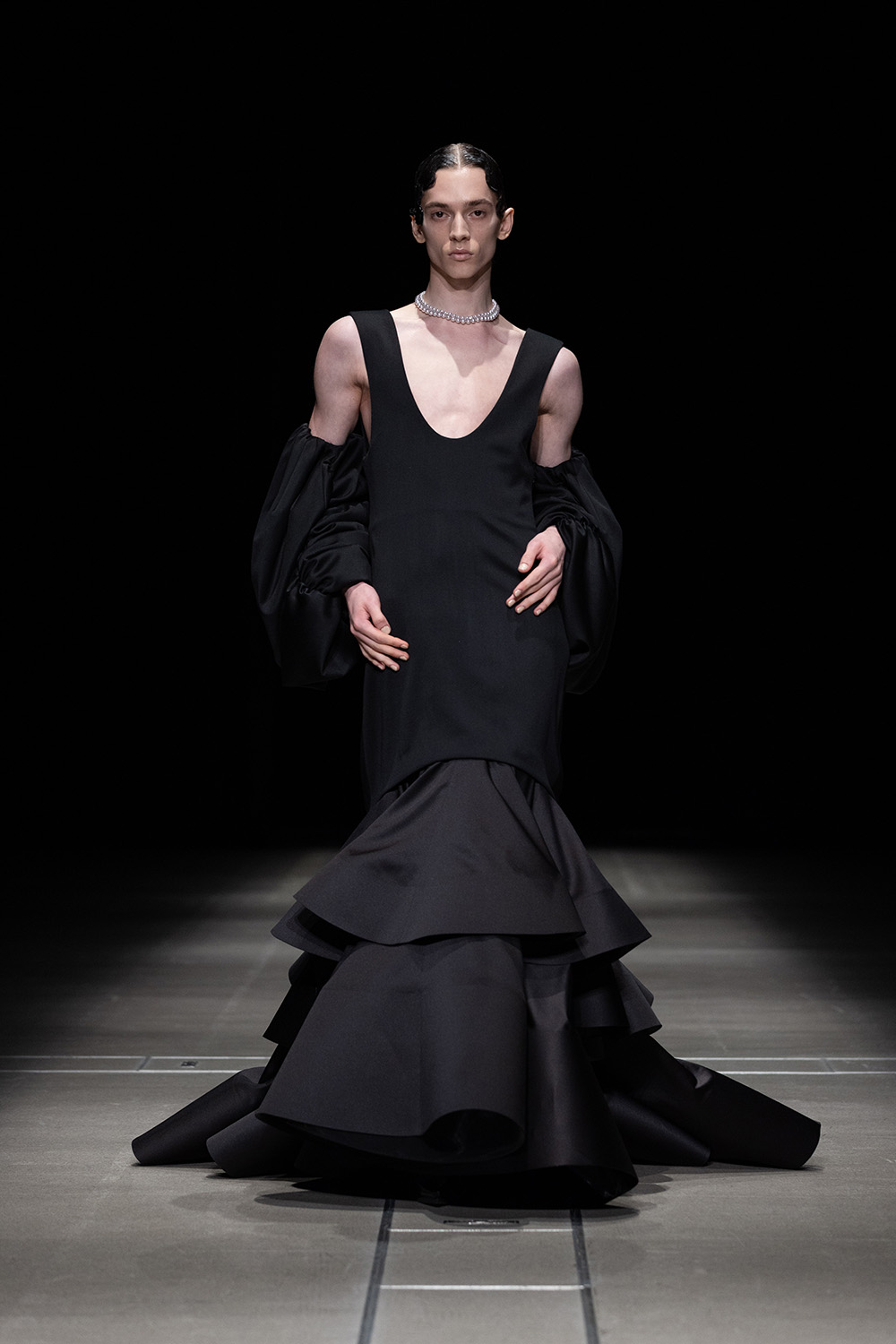
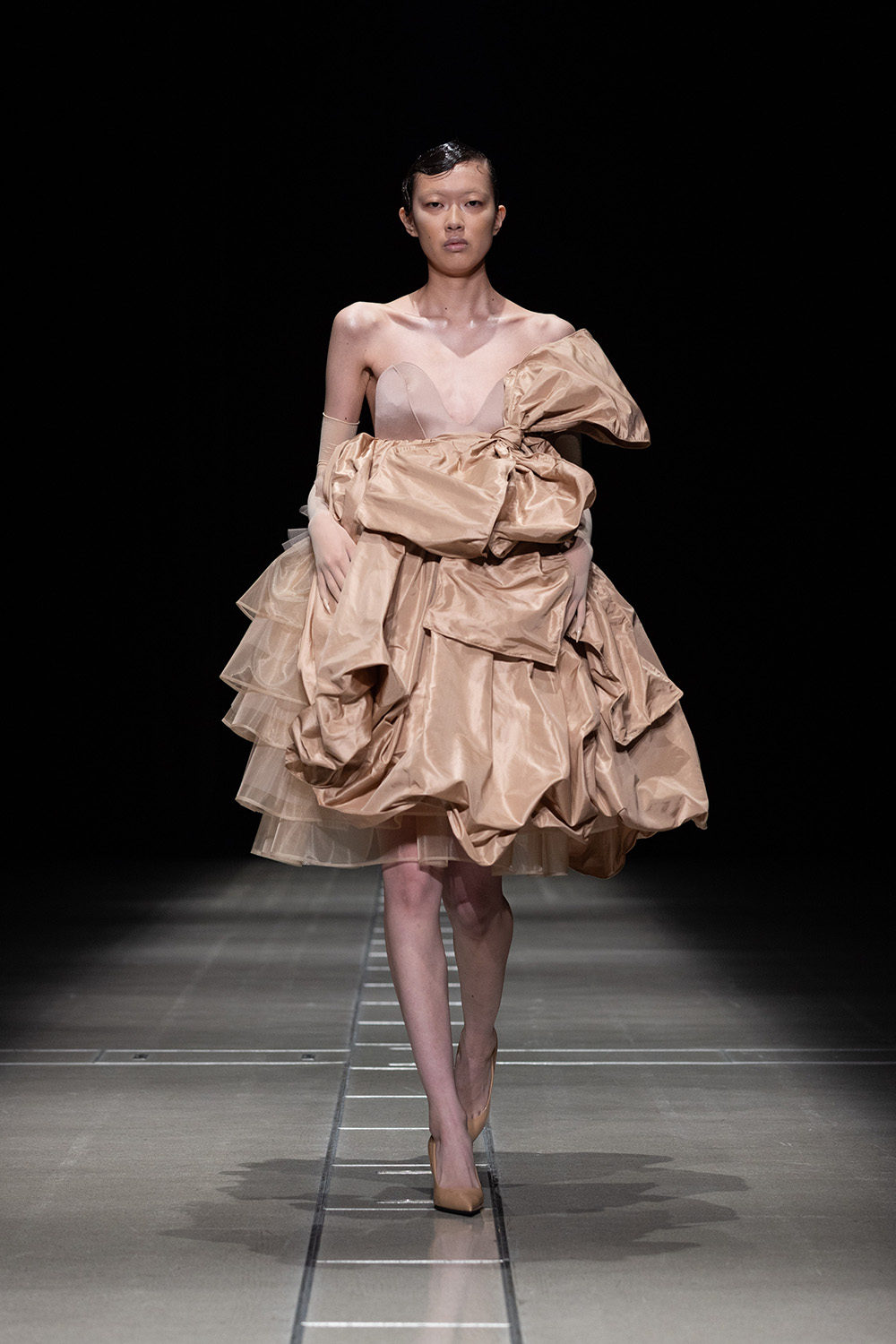
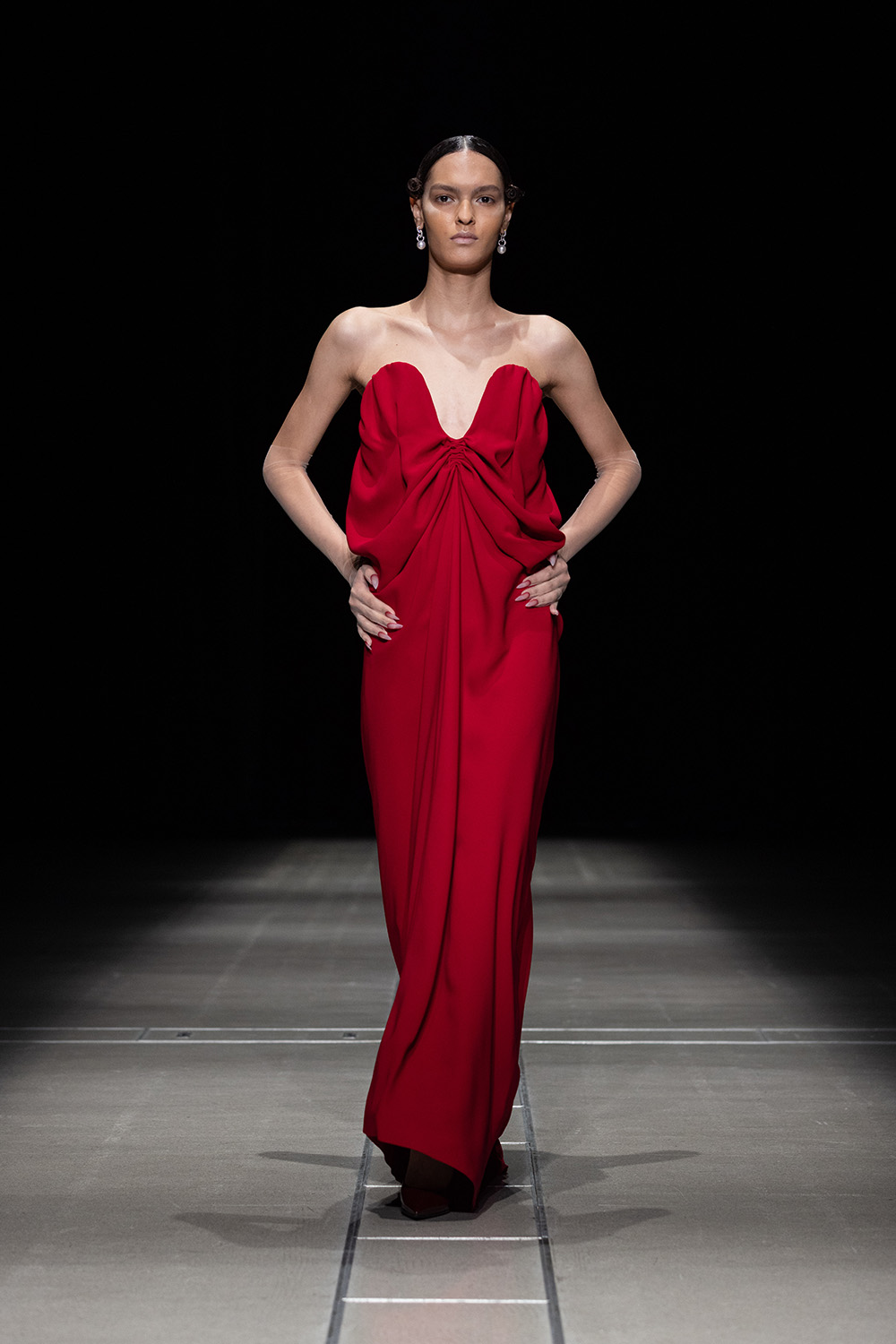
After building a devoted following in Tokyo with her previous label, Haengnae, and relocating to New York, Anna Choi returned to Rakuten Fashion Week Tokyo to launch her eponymous brand’s first showcase. Composed of just eight sculptural looks, the show was a bold statement of restraint. Inspired by Paris’ Musée Rodin, Choi turned the space into a living museum with couture-clad models concluding their walks by stepping up to the podiums lining the runway.
The collection draws on her global journey. Kobe-born and educated across Tokyo, London and New York, Choi blends European couture techniques with Japanese craftsmanship and subtle nods to Korean heritage, like empire silhouettes echoing the traditional chima jeogori. Our favorites included a velvety-brown silk chiffon wrap dress with an unexpected, intentionally visible mini crinoline and an androgynous “suit dress” made of Italian worsted wool, with a luxurious sheen and deep scoop neck. High-jewelry pearls by Mikimoto completed the looks.
Charinyeh
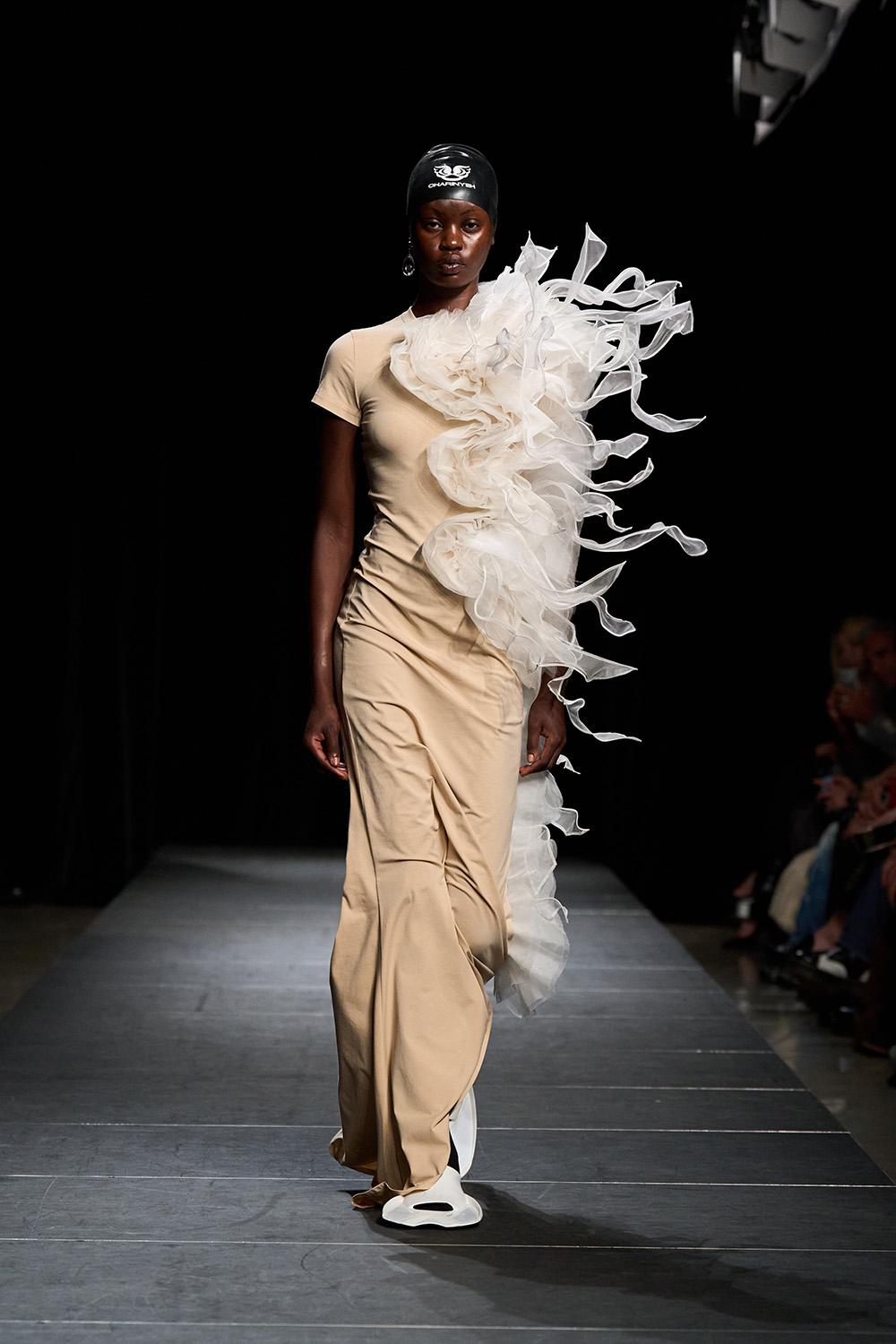
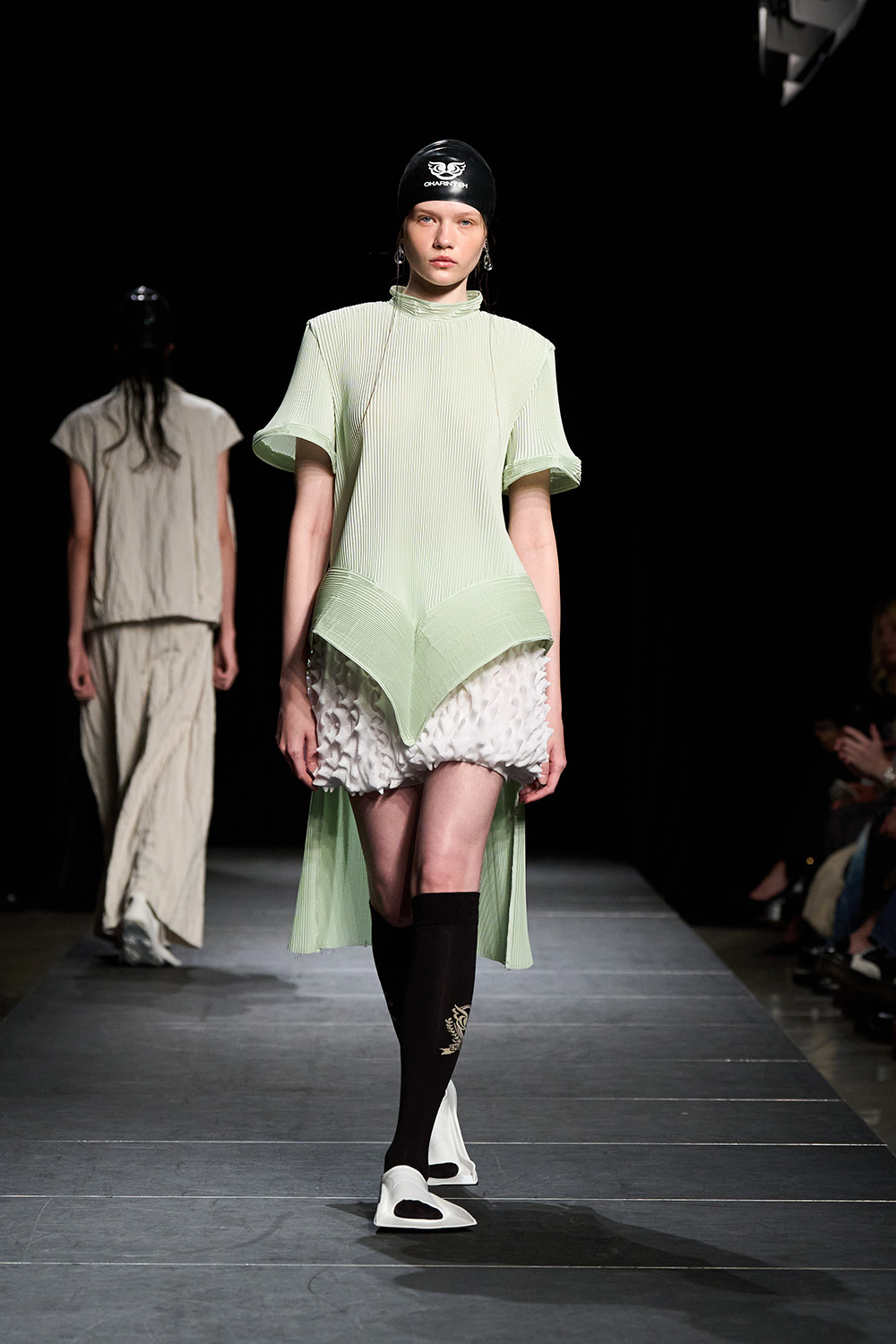
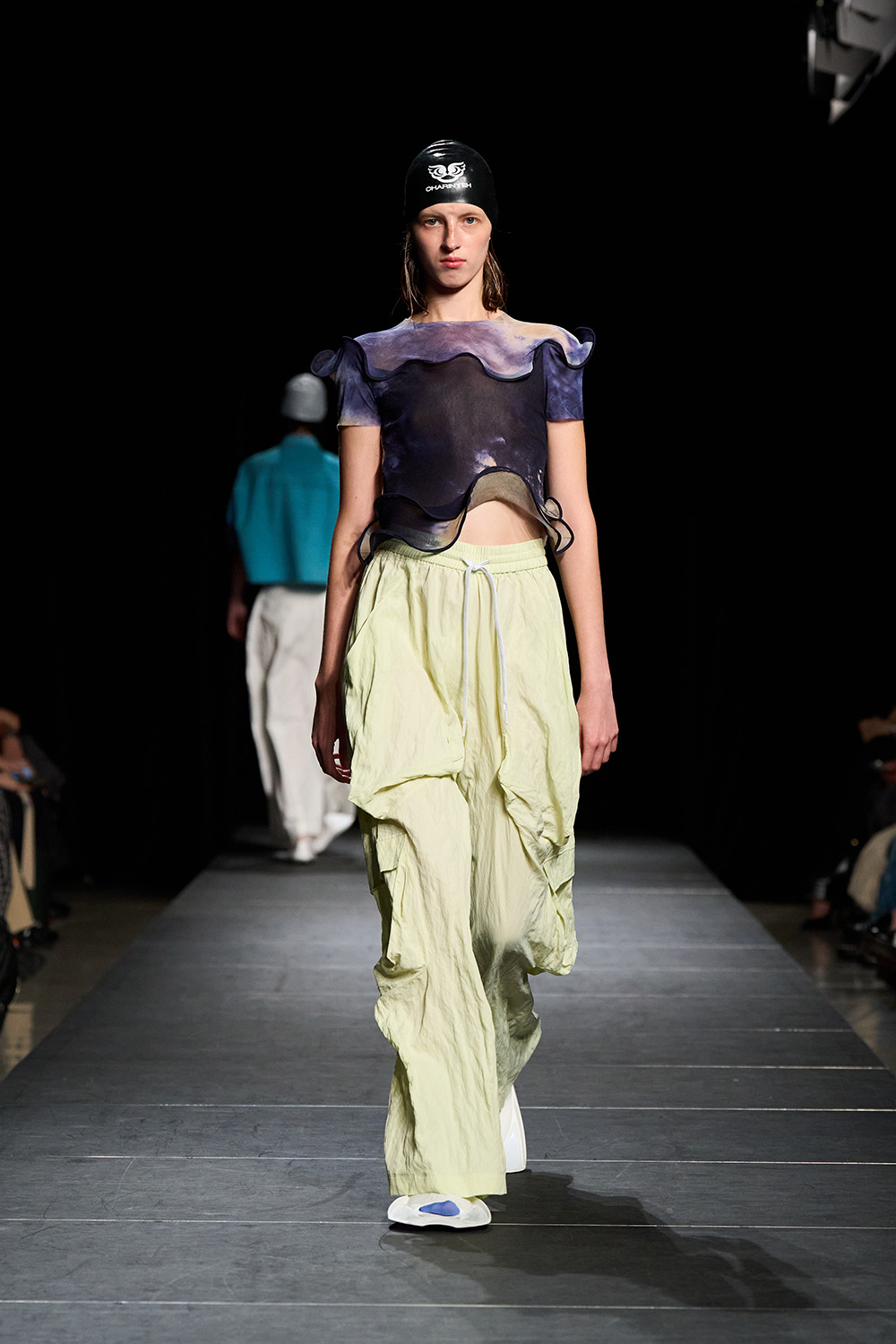
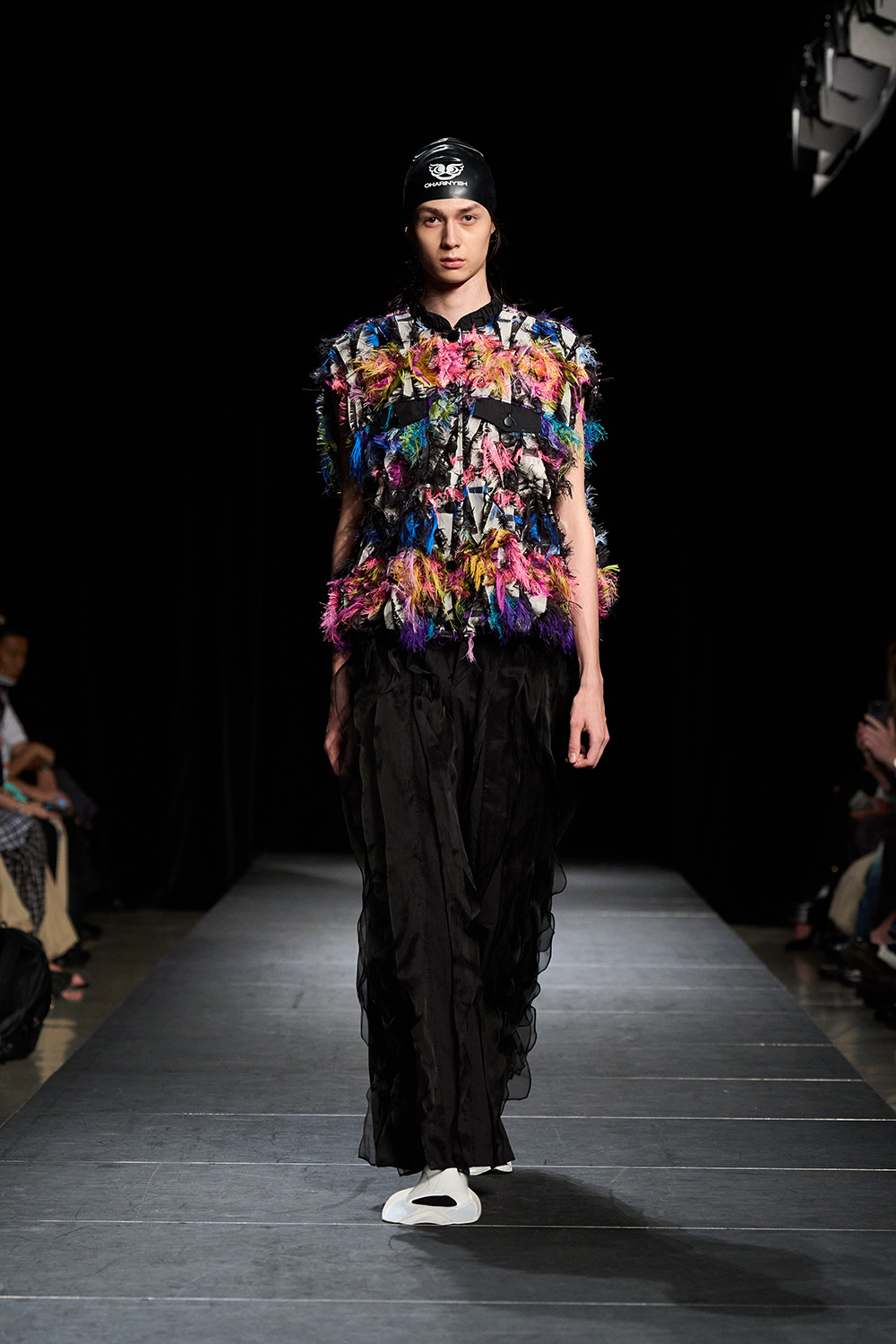
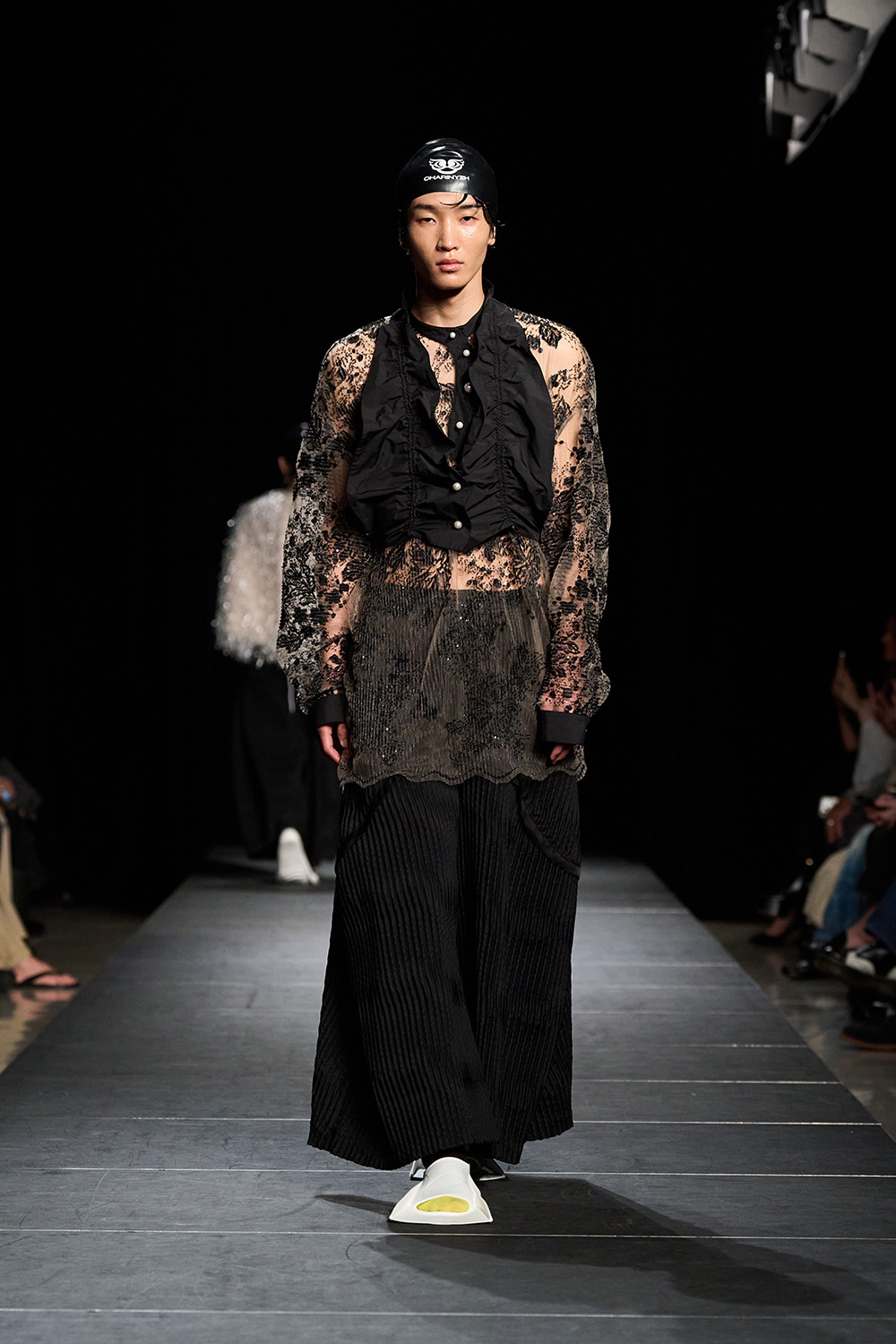
Making her Tokyo runway debut, Taiwanese designer Cha-Rin Yeh brought four decades of heritage to Rakuten Fashion Week Tokyo with Charinyeh’s SS27 collection, “Island Tides.” The collection captures the organic forms and vibrant energy of Taiwan’s surrounding marine life: sinuous, tentacle-like draping; colorful cut-jacquard tops mimicking coral reefs; asymmetrical hemlines curved like ocean currents; translucent gossamer evoking sunlight reflecting on moving water.
Accompanied by a hypnotic, magical score with muted bubble sounds that made the room feel like an underwater cave, the models seemed submerged themselves — clad in vinyl swim caps and actual diving fins. It was a statement entry into the Japanese market — playful, fresh and universally wearable.
Pillings
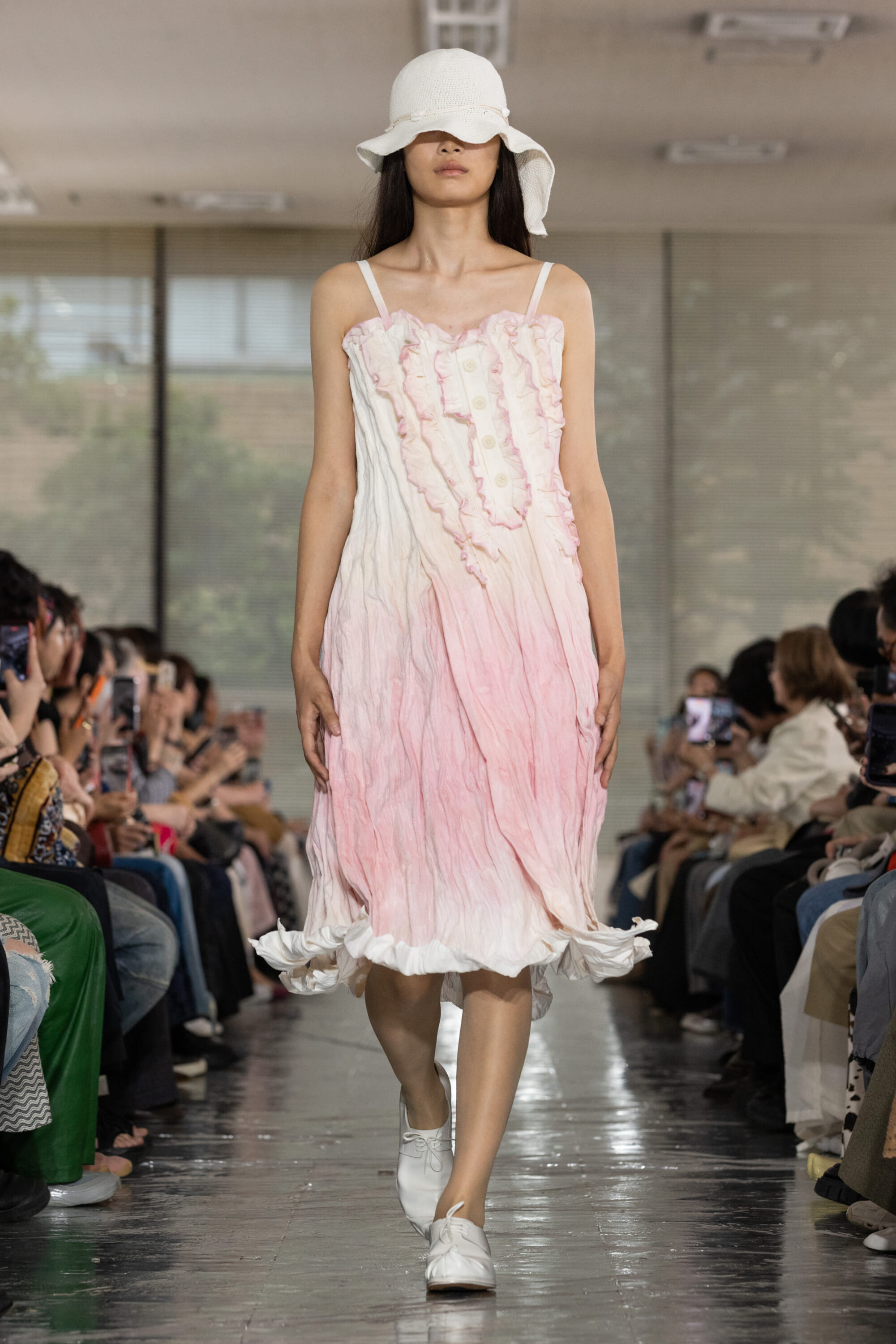
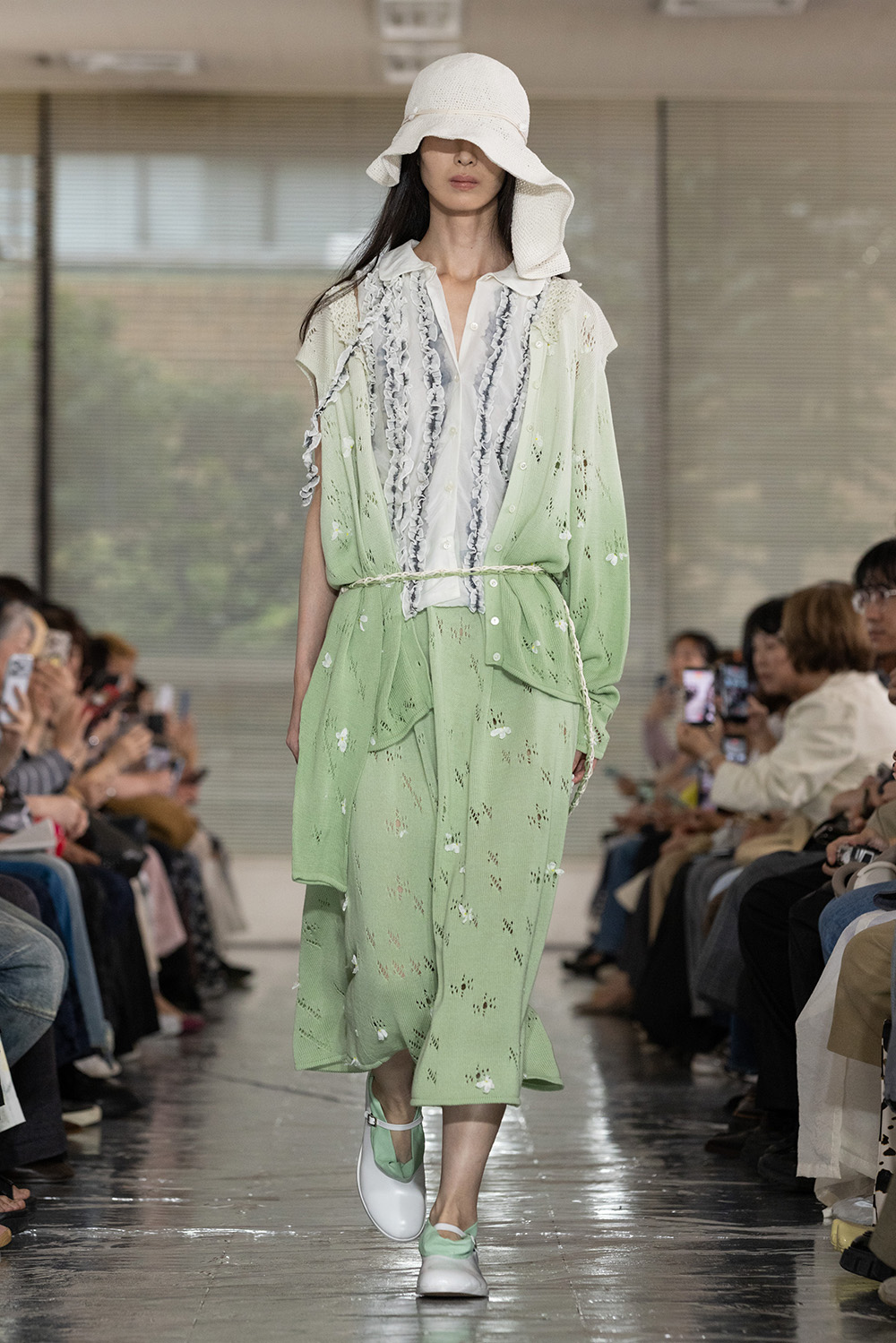
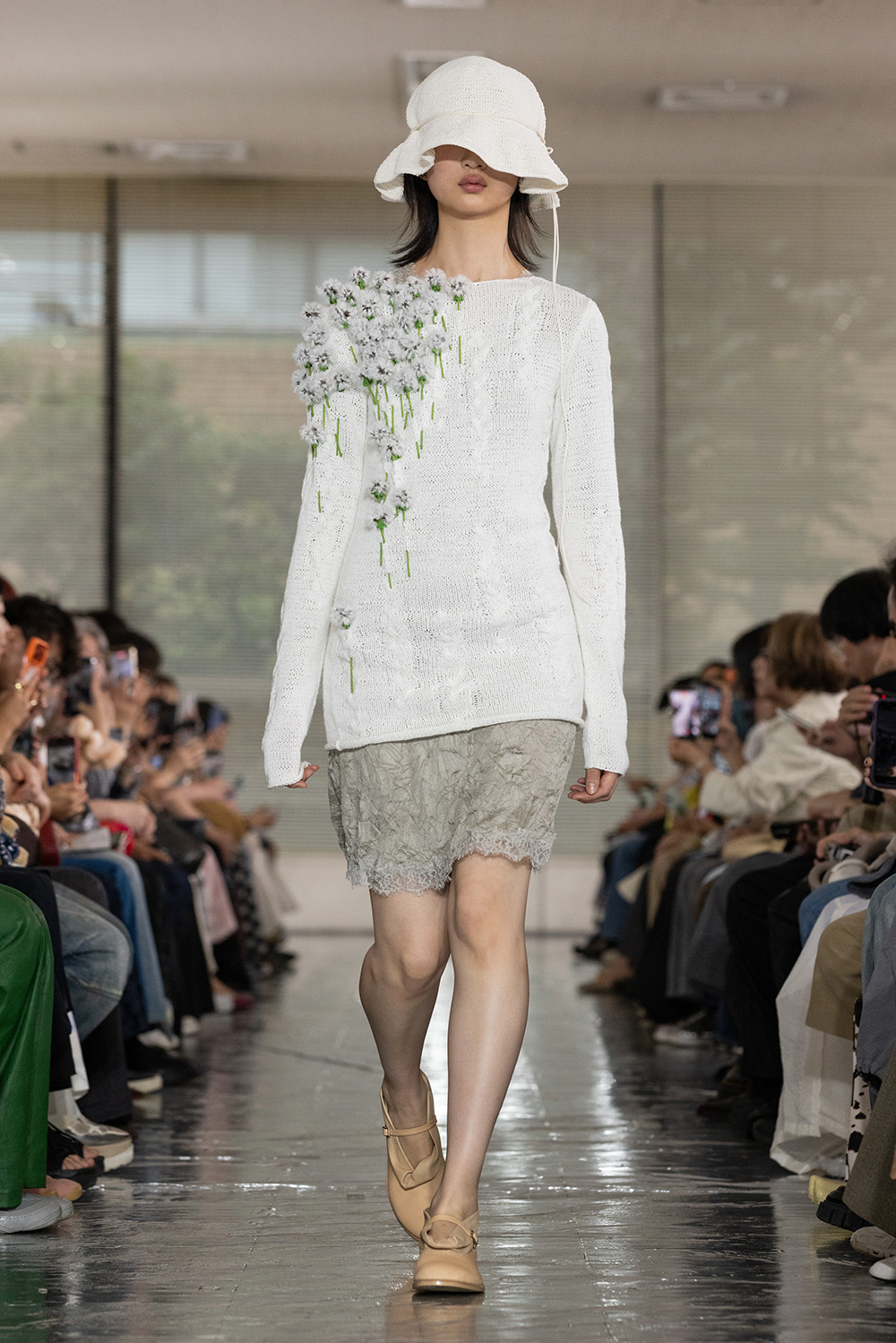
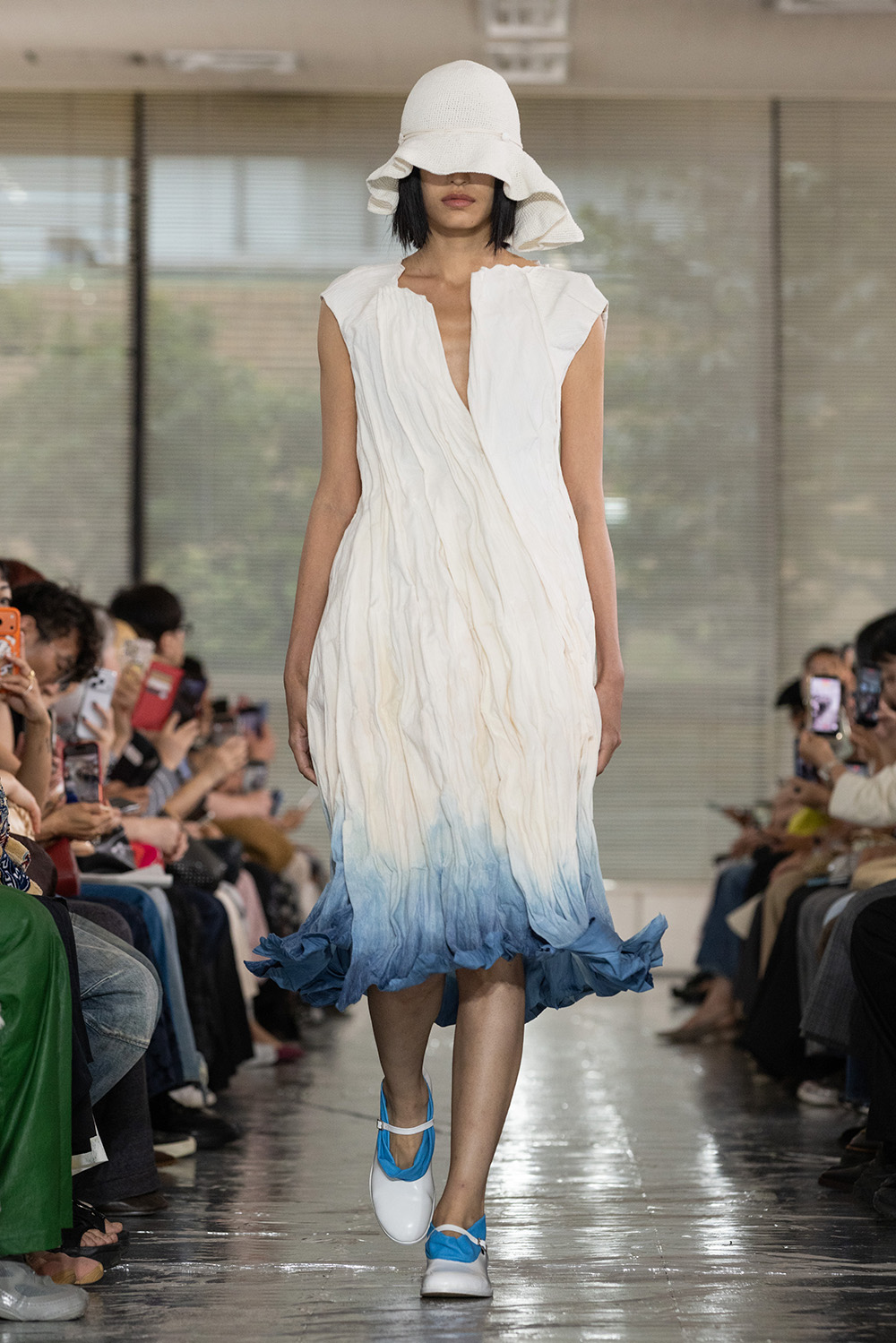
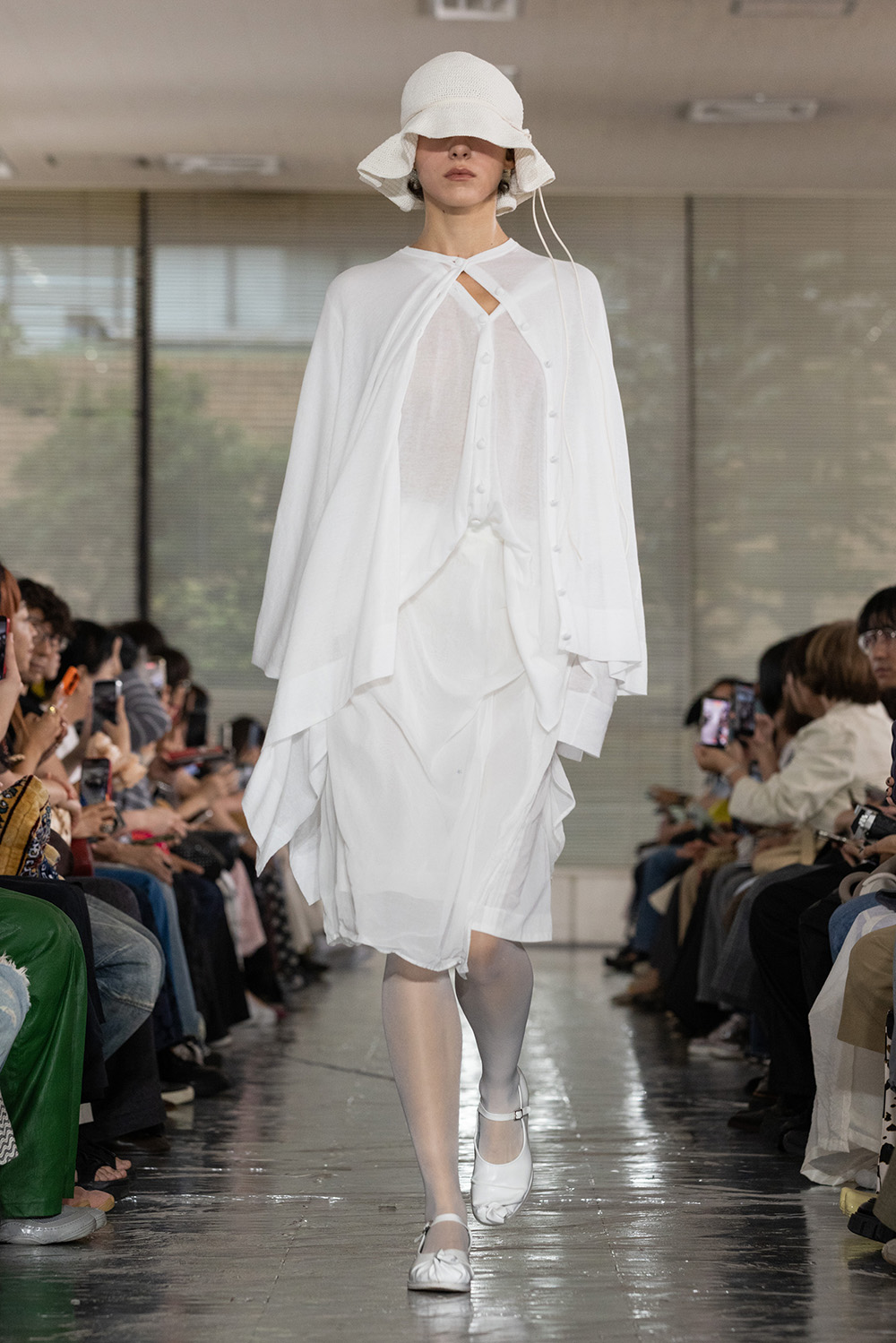
Ryota Murakami hosted his SS27 Pillings show inside a nostalgic, long-abandoned office space at The Asahi Shimbun headquarters — a fittingly ghostly backdrop for a collection that blurred real life and dreamscape. For “Landscapes 2” — a continuation of his “Landscapes” exploration from FW26/27 — Murakami took inspiration from novelist Yoko Ogawa, crafting an unsettling shift where ordinary daily wear slowly dissolves into surreal fiction.
The collection began predictably enough with classic office-adjacent staples like collared shirts, pencil skirts and slacks, warped only by signature Pillings quirks — off-center creasing, intentional slouching and asymmetrical waistlines. But as the show progressed, soft neutrals yielded to vivid morning glory hues. Vine-like ruffles, airy dresses and knits with whimsical floral details and gradient pastels appeared before crisp, all-white looks closed the show. Many of the looks were capped with tulip-shaped hats that shadowed the models’ eyes, adding to the collection’s fantastical feel.
Haute Mode Hirata
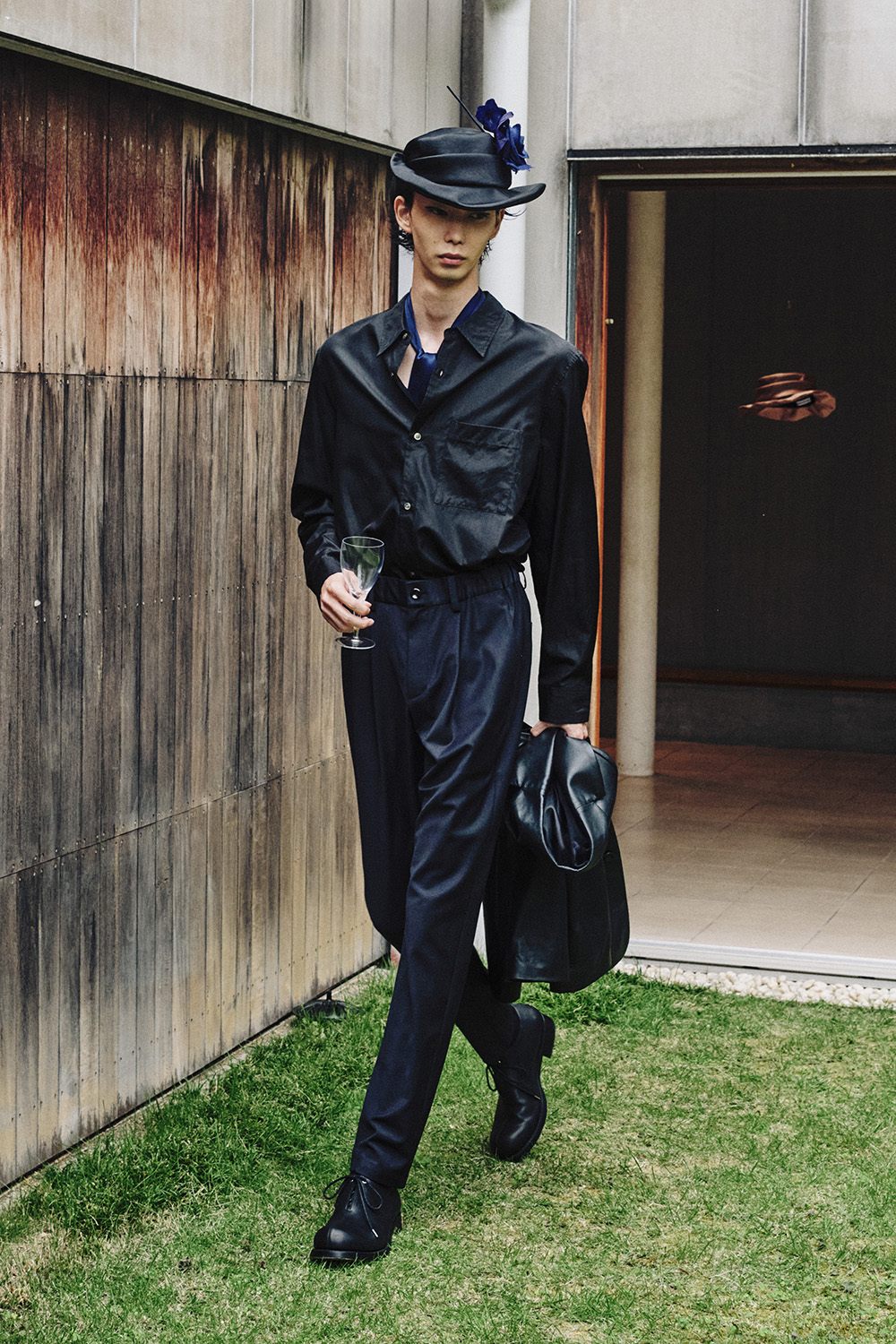
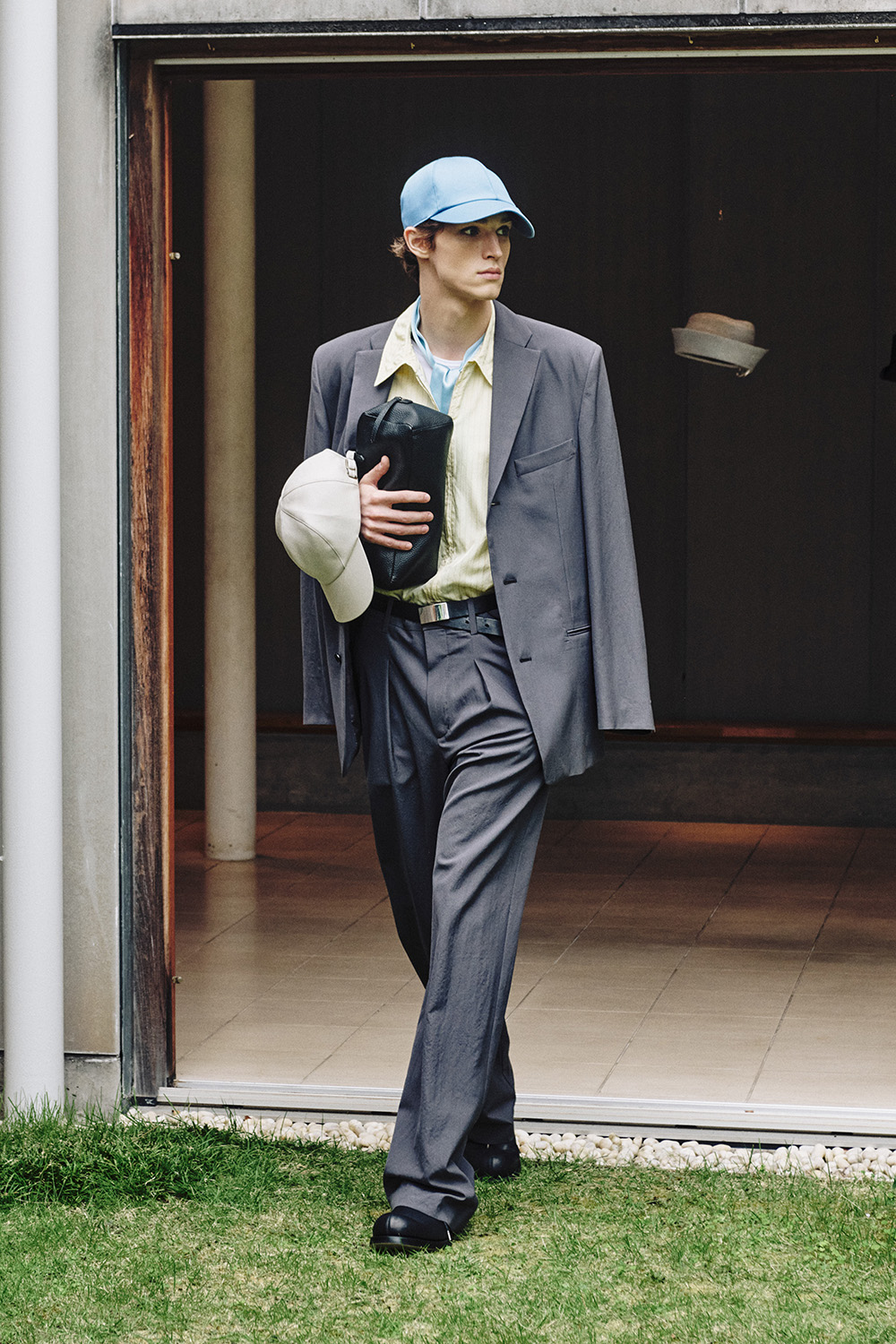
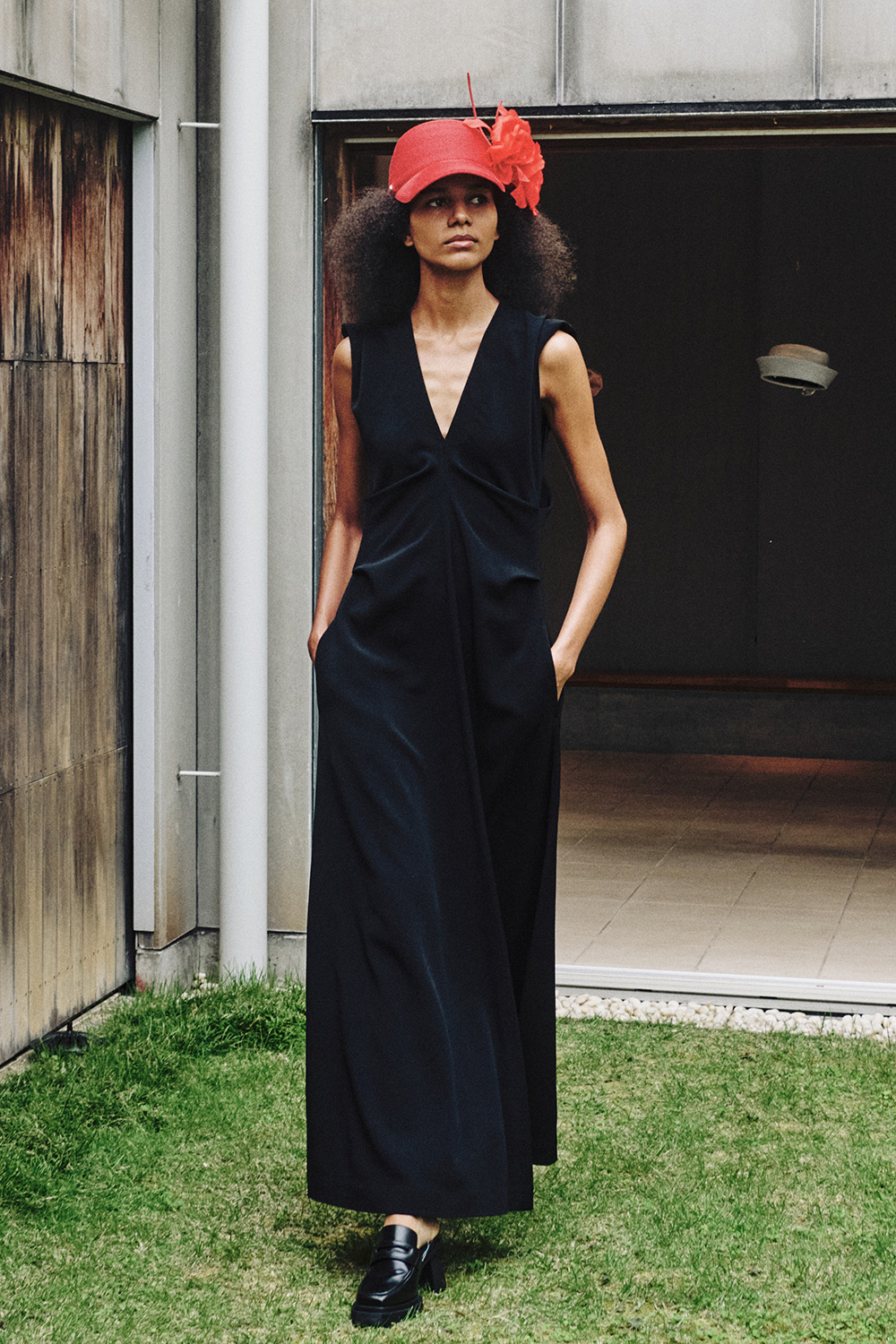
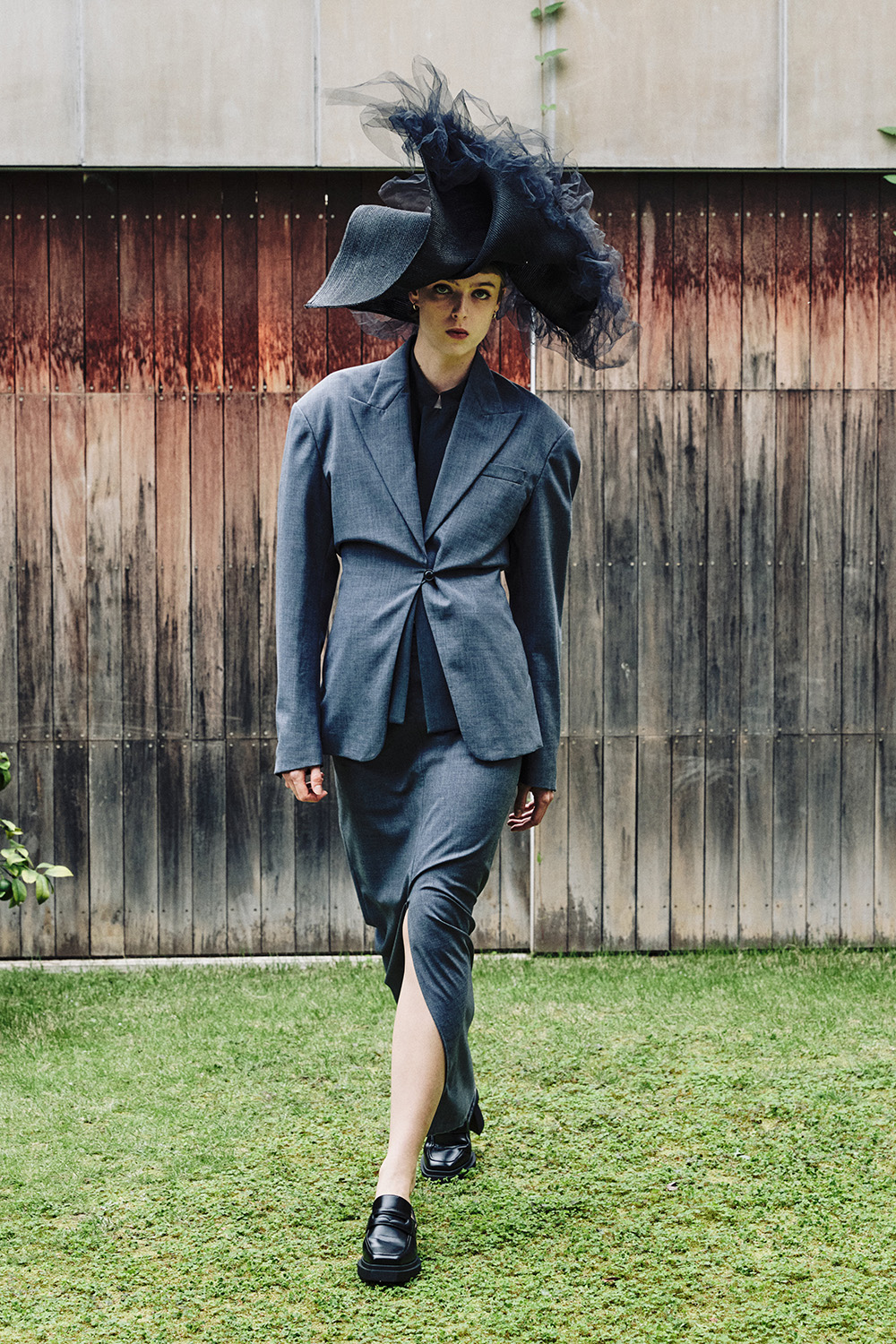
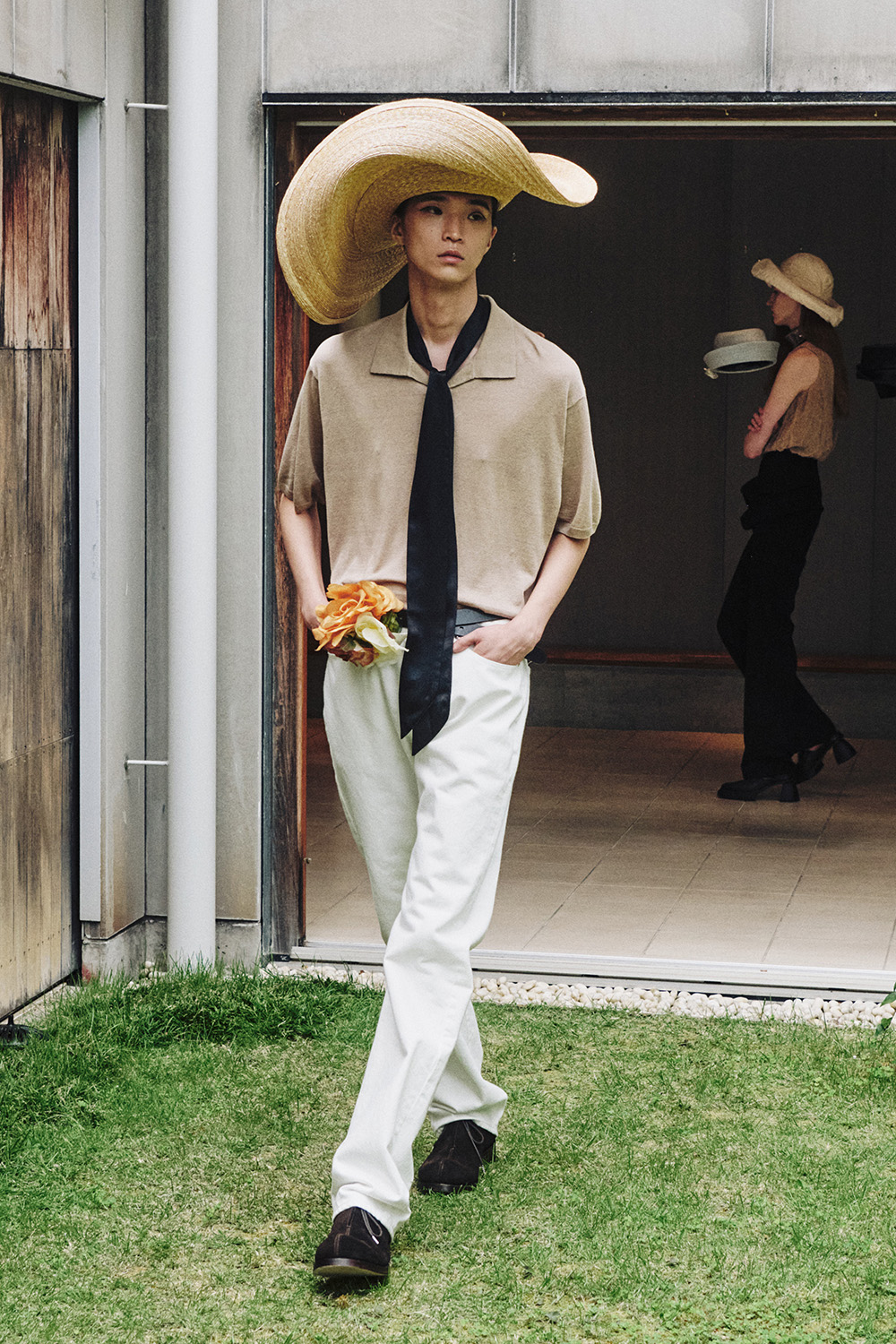
For legendary millinery house Haute Mode Hirata, hats are not mere accessories — they are transformative, highly intimate symbols of identity. A standalone hat atelier securing a slot on the Rakuten Fashion Week Tokyo schedule is rare, but the house occupies a singular place in Japanese fashion history, even crafting bespoke headwear for the imperial family. Founded in 1955 by master modiste Akio Hirata, the atelier’s legacy is now carried forward by his daughter Ohko and grandchildren Saki and Show.
The house’s SS27 presentation featured models wearing simple, neutral-toned clothing, swapping out hats between walks to highlight the dramatic shift each piece brought to their respective silhouettes and overall impressions. Haute Mode Hirata’s distinct sub-labels bridged elevated couture and everyday utility — under Show Hirata, classic caps and bucket hats received smart architectural twists, like shirt-collar cutouts that flip into sailor brims and mesh layered over organza. Meanwhile, the H.at line focused on tactility, featuring pliable, paper-straw hats with soft, wrinkled brims meant to be shaped and molded by the wearer.
Kohki
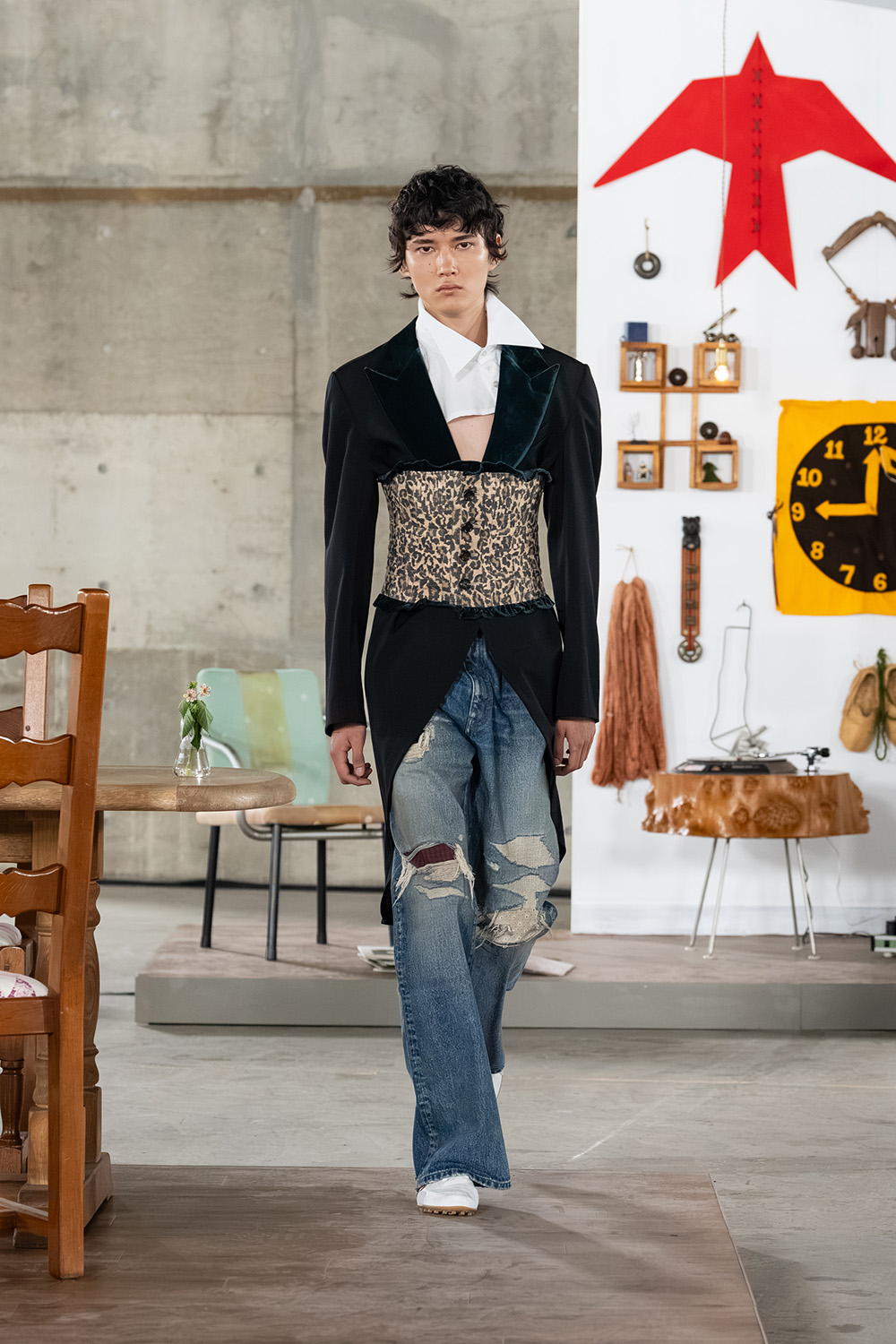
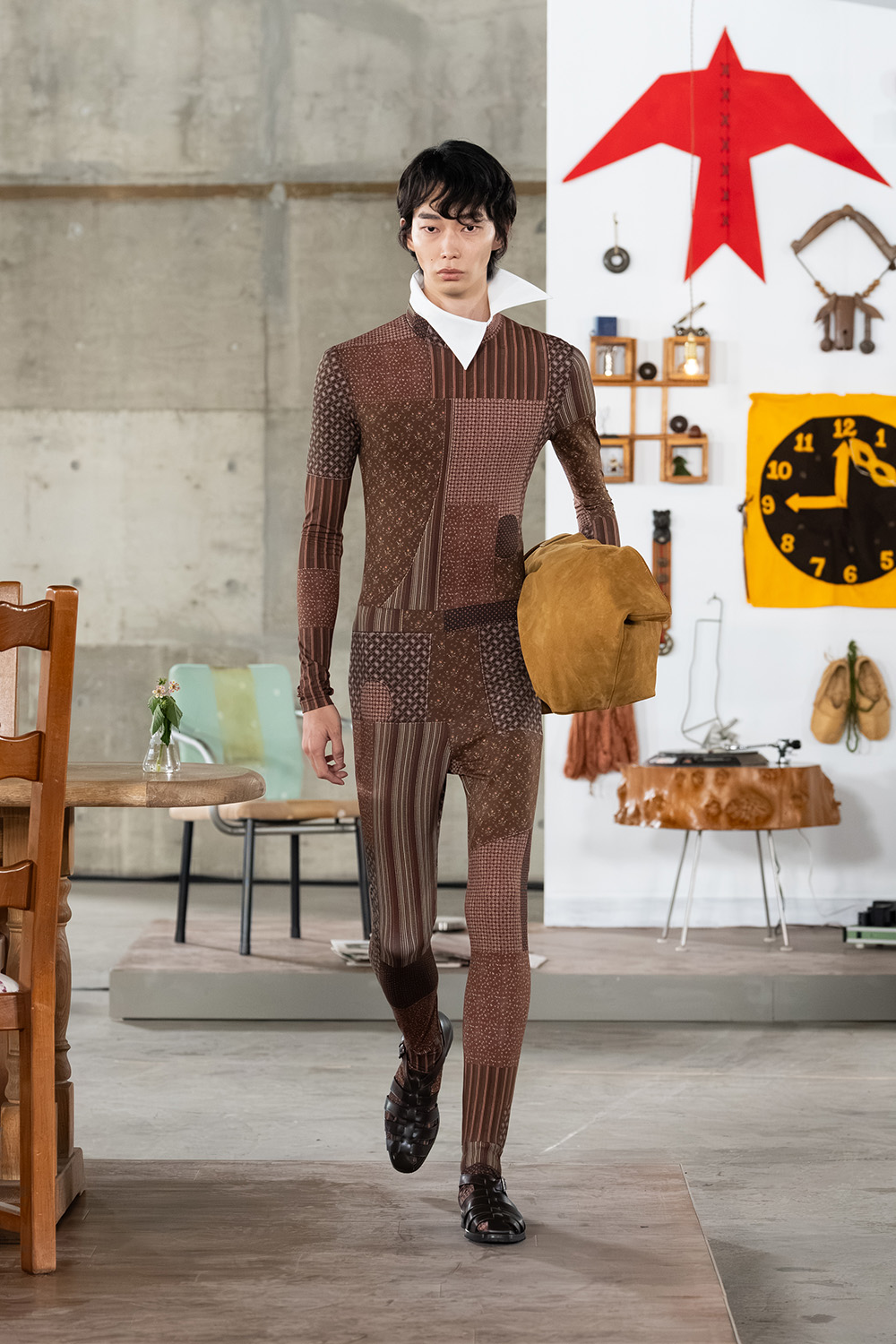
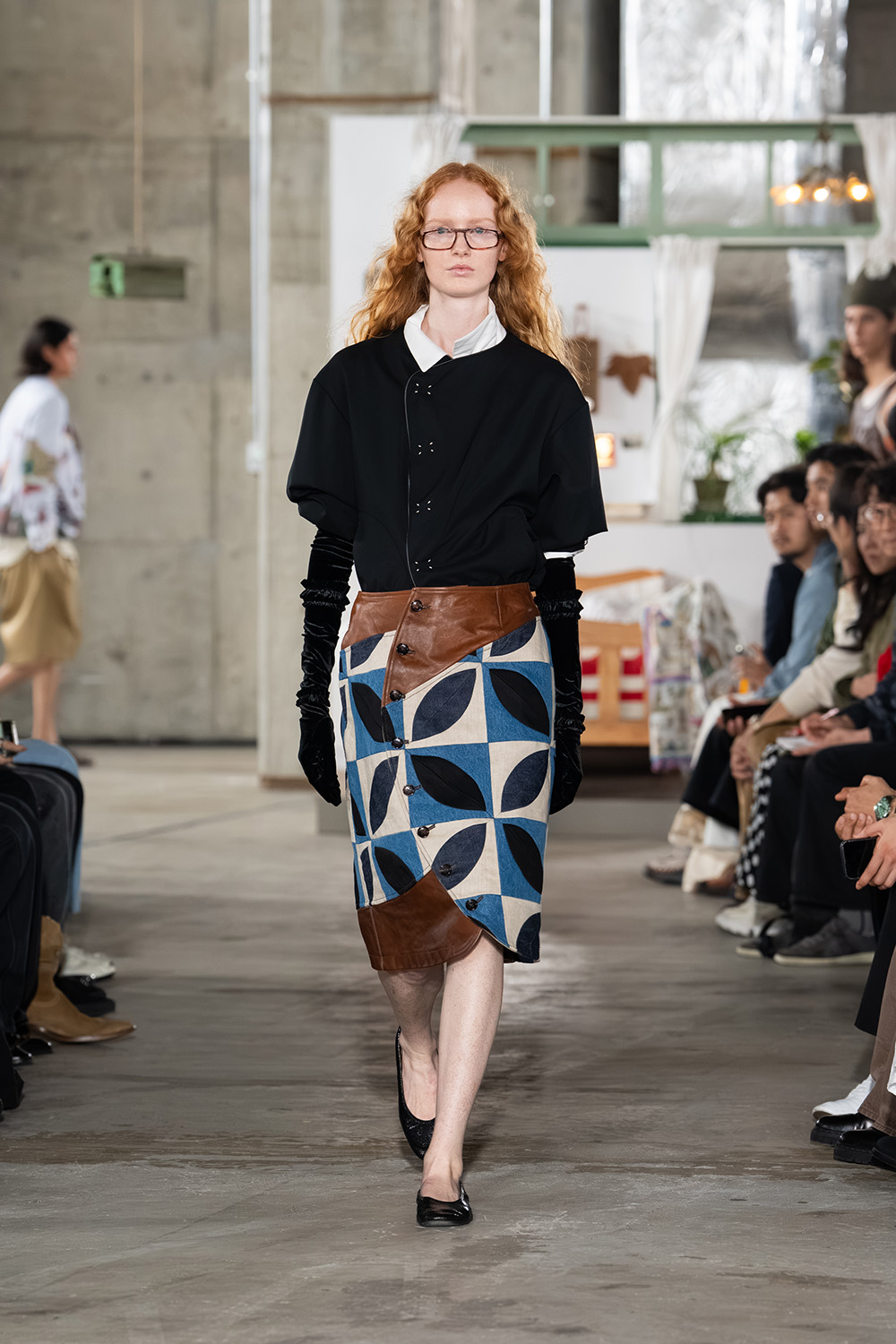
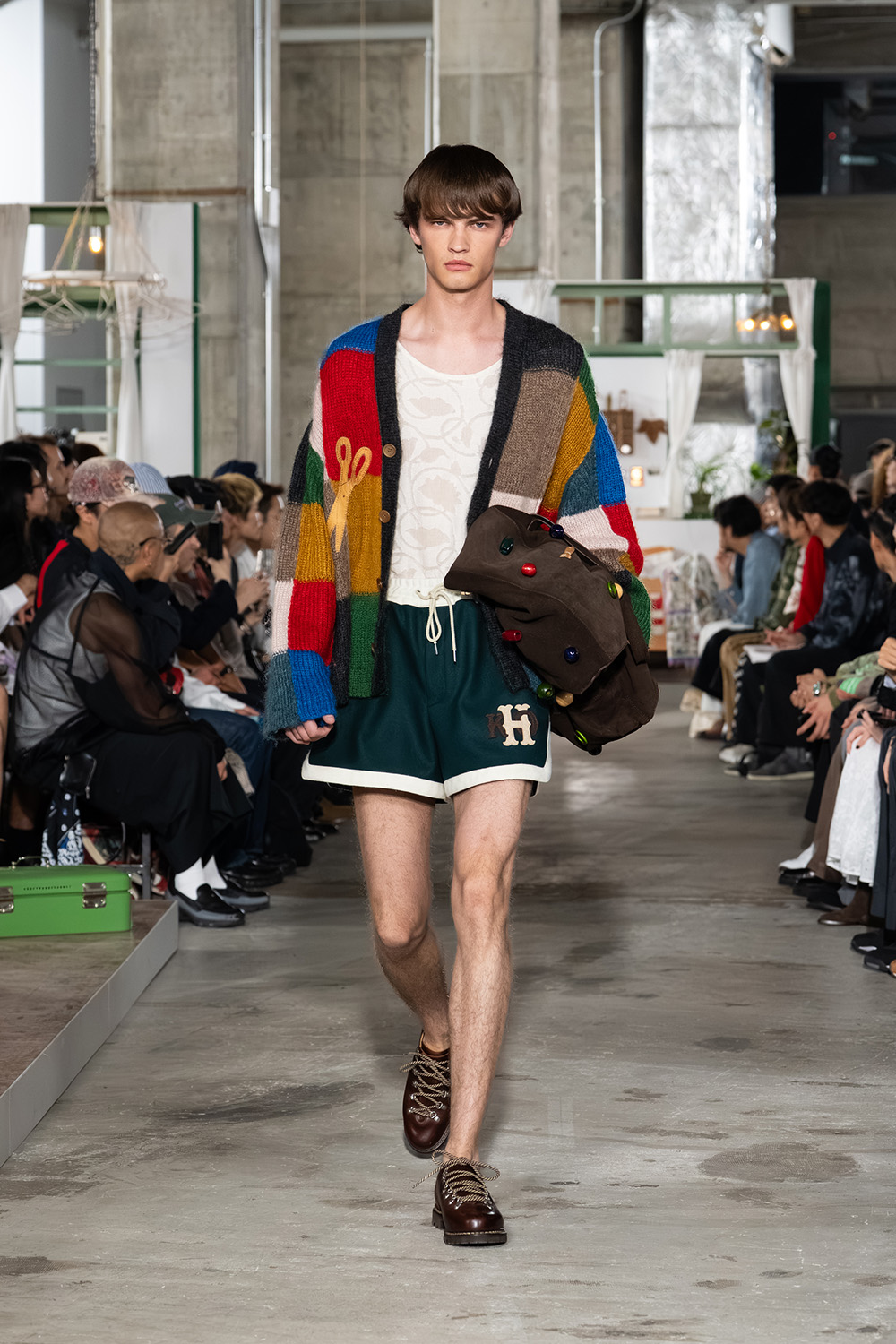
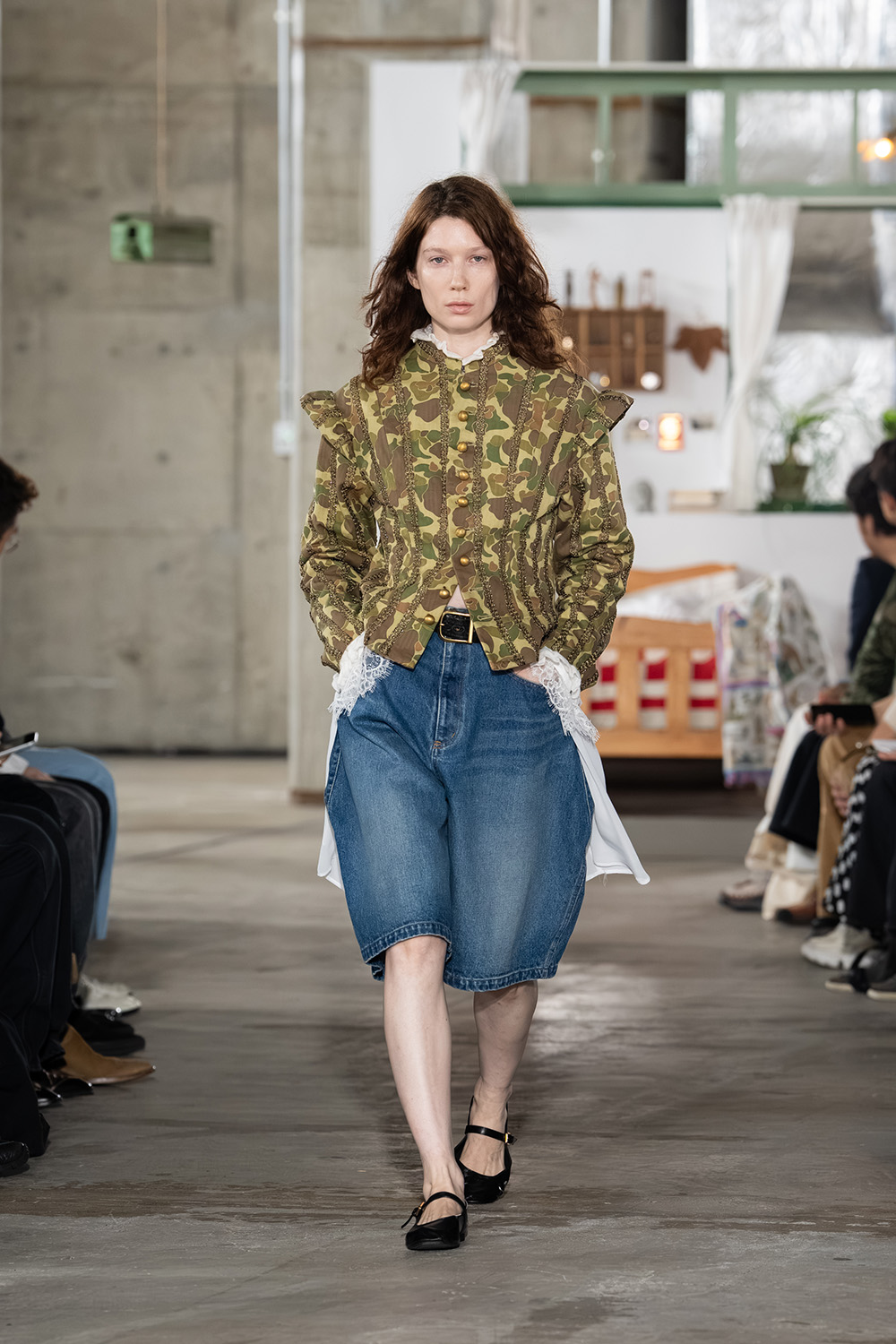
Design collective Kohki’s third runway show turned the sprawling Warehouse Terrada into an intimate replica of brand director Koki’s childhood bedroom — complete with his own bed, kitchen setups and personal mementos brought in from Yamanashi. It was a uniquely nostalgic backdrop for a collection rooted in subverted menswear, styled by Shotaro Yamaguchi to balance theatrical references with grounded daily wear.
The line opened with sharp pinstripe tailoring interrupted by a vivid red, frill-accented work jacket, establishing a dialogue between structured masculinity and traditionally feminine details. Drawing from Koki’s personal archive of vintage costumes, the collection featured military camo jackets elevated with gold thread embroidery, lace trim and shoulder ruffles, alongside tailcoats, leopard corsets and distressed denim. Thick-soled Paraboot gurkha sandals rounded things out, creating looks that fused high drama with infinite wearability.