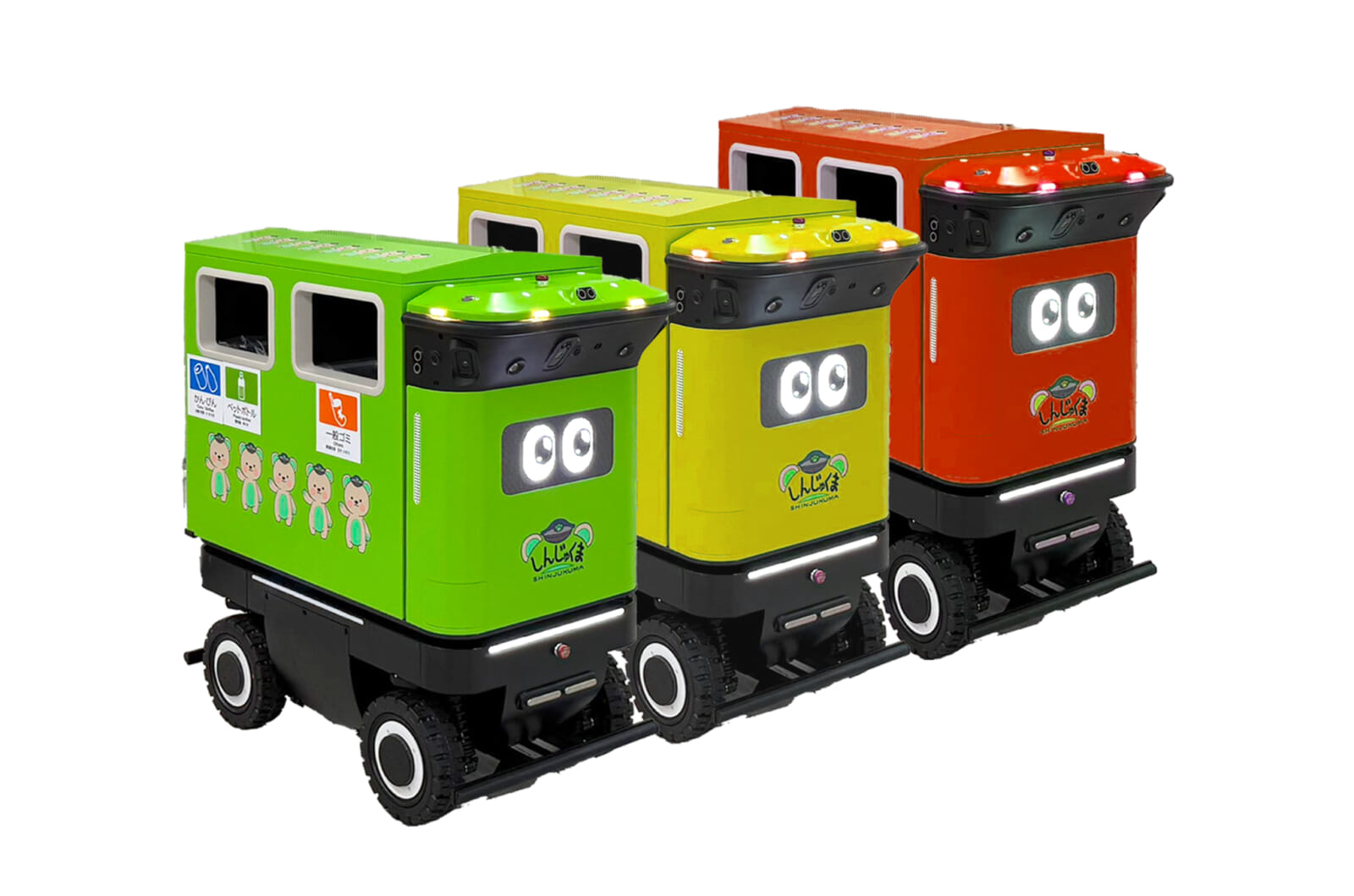
Finding a garbage can in Shinjuku Station has (maybe) gotten easier. On September 8, JR East began sending autonomous garbage-bin robots around the station’s underground concourse, following programmed routes between the East, West, Central East and Central West gates. The boxy machines have large cartoon eyes, exteriors colored after JR train lines and Shinjuku Station mascot Shinjukuma plastered across their sides. Passengers can drop general garbage and plastic bottles into openings on top; when the bins fill up, they can travel back to the station’s garbage collection area on their own.
A Trash Can That Comes to You
The robots will roam the B1 paid concourse from 10 a.m. to 5 p.m. on weekdays through November 20. Existing trash cans are staying put, because JR East is less interested in replacing them, for now, than in finding out whether a bin gains anything by moving.
One possible advantage is surprisingly basic. Station staff currently collect garbage from fixed bins more than 10 times a day. A robot can theoretically bring itself back for emptying, reducing some of that work, while also making trash cans easier for passengers to find. On the first day of the trial, Nippon TV filmed passengers stopping to photograph and use them. A tourist from Spain said he had struggled to find trash cans during his first five days in Japan; this one was difficult to miss because it came moving through the station.
JR East is also considering having the robots make announcements as they travel. Shinjuku Station’s manager told reporters that passengers do not always know where the existing bins are located.
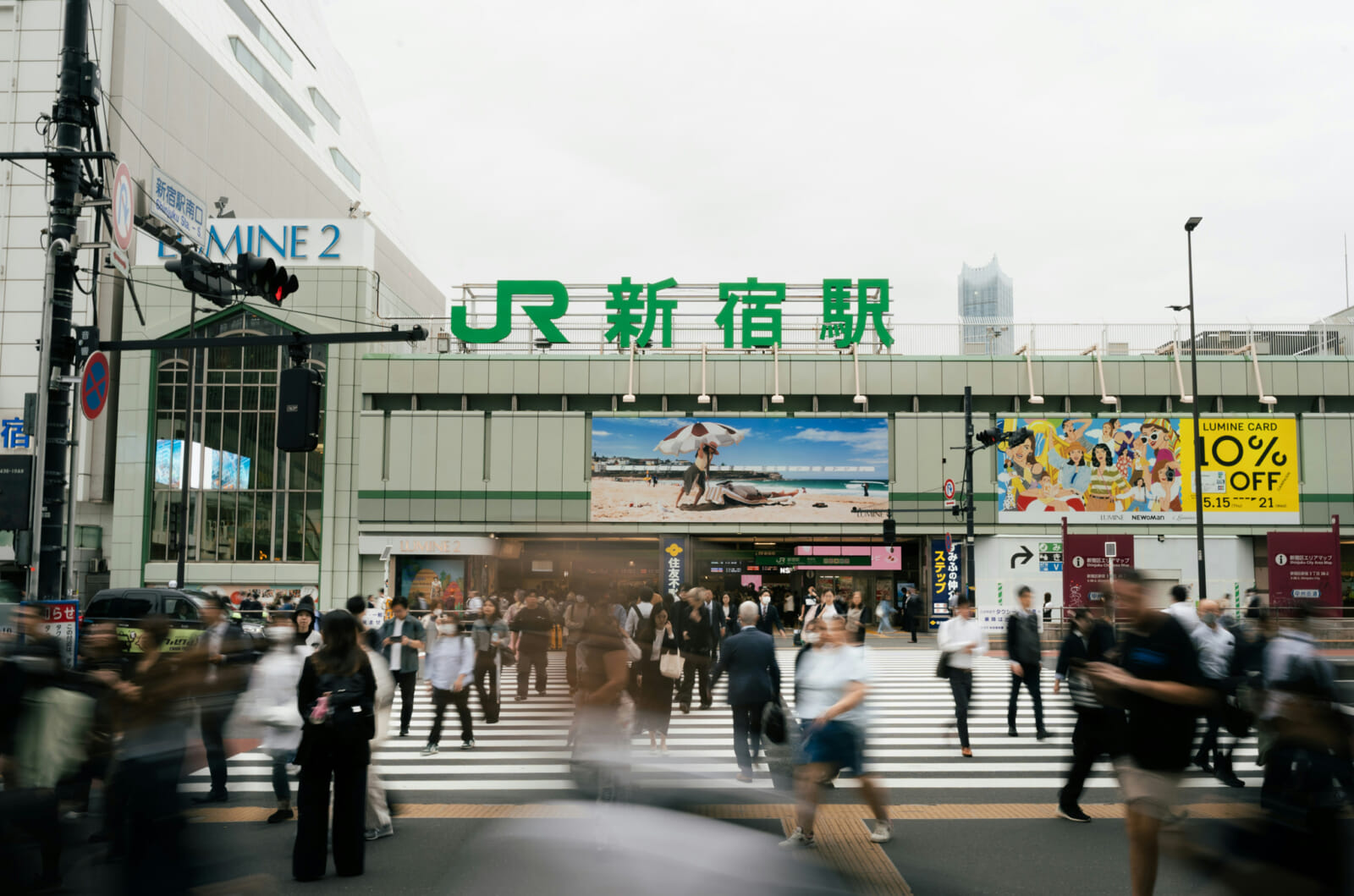
Photo: Keith Chan
The Shinjuku Stress Test
The harder question is whether a trash can should be moving through Shinjuku at all. An average of 666,809 people boarded JR East trains there each day in 2024, more than at any other station in its network, and that figure excludes passengers arriving at Shinjuku or using the private railway and subway lines that also converge there. Anyone who has tried to cross the station during a rush knows how quickly a clear path can disappear.
That makes Shinjuku something of a stress test. JR East says it will study how safely the robots navigate when the concourse becomes crowded and whether they interfere with passenger movement. A bin that saves staff a trip downstairs is less useful if hundreds of commuters have to dodge it on the way to their trains.
The idea itself has been tested before. In 2023, JR East ran another autonomous trash-can robot at Takanawa Gateway Station for three days during “Playable Week,” an event showcasing technologies being considered for the developing Takanawa Gateway City. That machine appeared alongside cleaning and communication robots as a glimpse of how people might eventually share public space with autonomous machines.
Three years later, the experiment has moved from a showcase of the future to the considerably less controlled reality of Shinjuku. This time, it will run for more than two months, among commuters who did not come to see robots and may simply want somewhere to throw away a coffee cup.