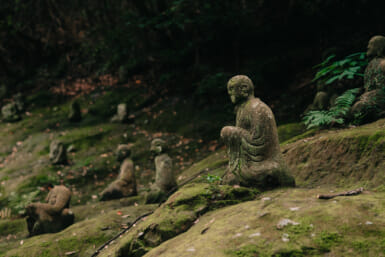
Just off the coast of Hiroshima, Miyajima has long held a certain fascination. Considered sacred, with deer moving freely through its shrine-lined paths, the island has for centuries been understood as a dwelling place of the gods. Offshore, the vermilion torii gate of Itsukushima Shrine stands in the water — an image that has come to define not only the region, but Japan itself.
Across the channel, on the mainland shore, sits Hotel Fork & Knife Miyajima. Opened in March, the boutique hotel was designed by renowned artist Fumihiko Sano. Every detail is imbued with the beauty and serenity of the region: shoji screens that open onto ocean views, open-air onsen baths on the facility’s top floor, an 11-course dinner that meticulously showcases the bounty of the mountains and sea.
Guided by the philosophy of “tradition served quietly,” the hotel encourages guests to slow down and engage more deliberately with their environment. Overlooking Setonaikai National Park, it features spaces shaped by shifting light and seascape, creating an atmosphere that feels both deeply rooted and gently removed from the pace of everyday life.
A Contemporary Take on Tradition
Hotel Fork & Knife Miyajima reflects the sensibility, culture and craftsmanship of Hiroshima and Miyajima with a thoughtful, almost meditative restraint. Sano describes it as “an eclectic space that combines the old with the new; a place where guests can truly sense the quality of Hiroshima’s raw materials and the atmosphere of Miyajima.”
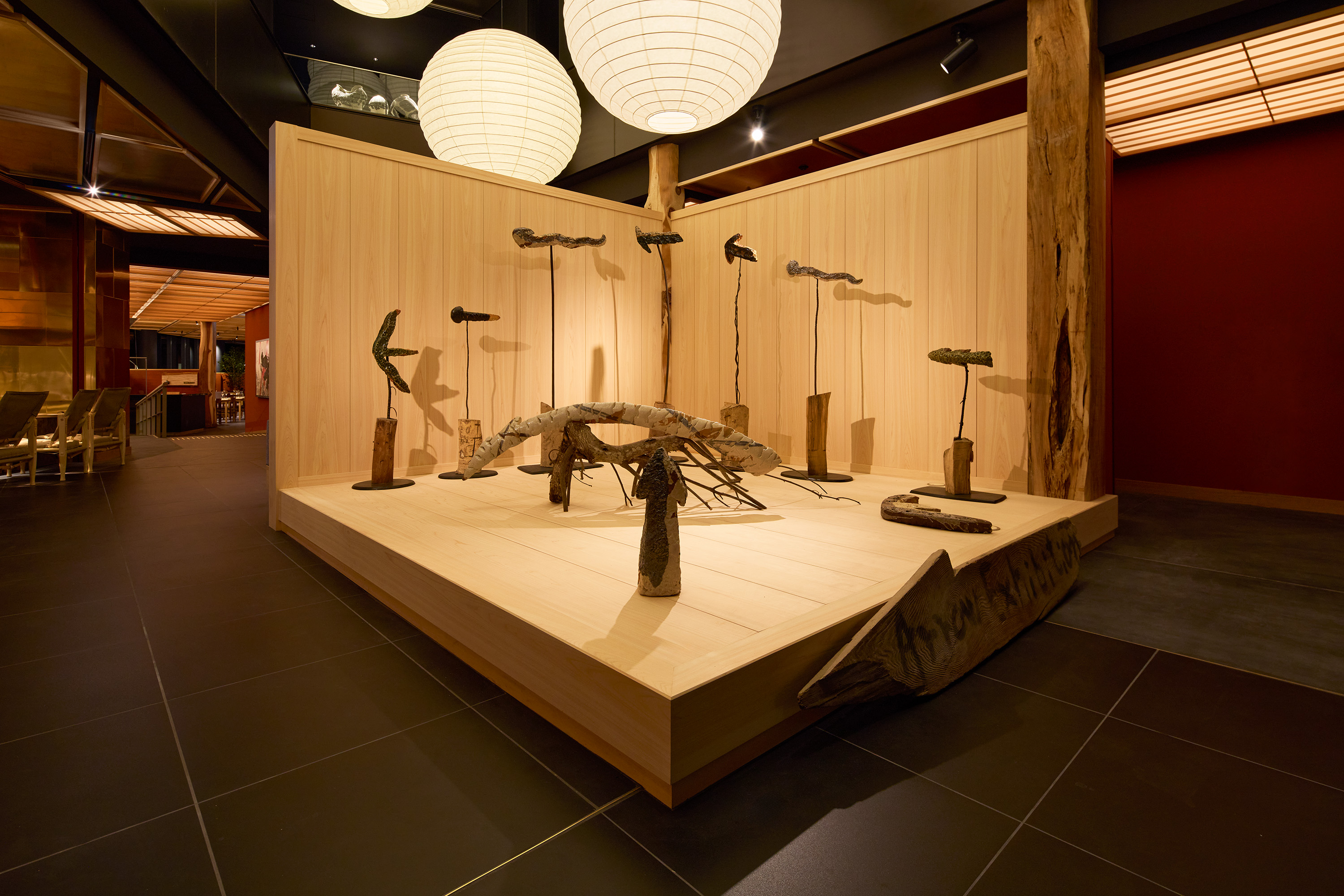
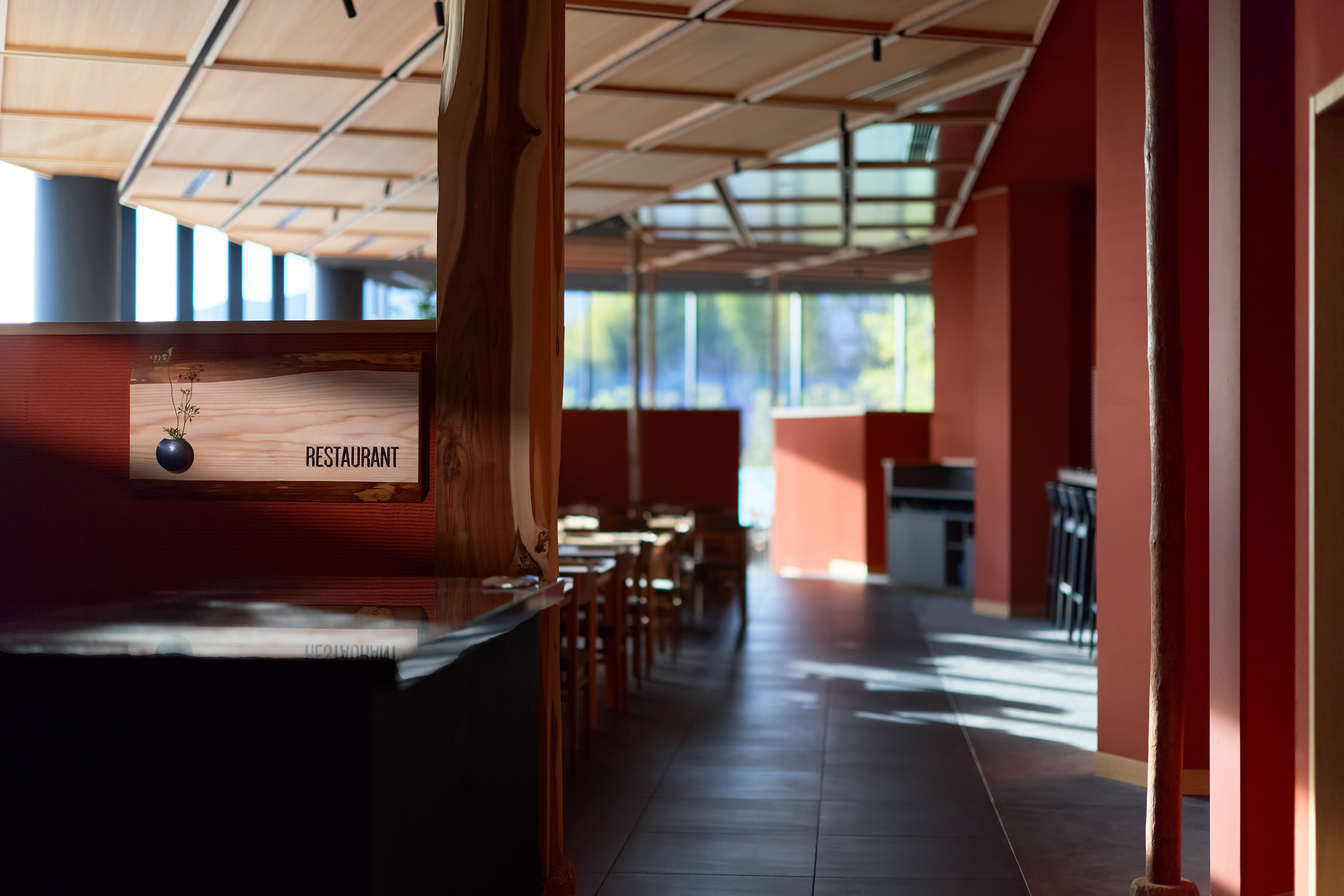
This vision is particularly evident in the hotel’s entrance lobby, which incorporates a gallery space inspired by the noh stage of Itsukushima Shrine — the iconic hinoki cypress structure built over the sea and designated an Important Cultural Property. The space serves as both a cultural touchpoint and a visual introduction to the hotel’s guiding philosophy: a dialogue between history and reinterpretation.
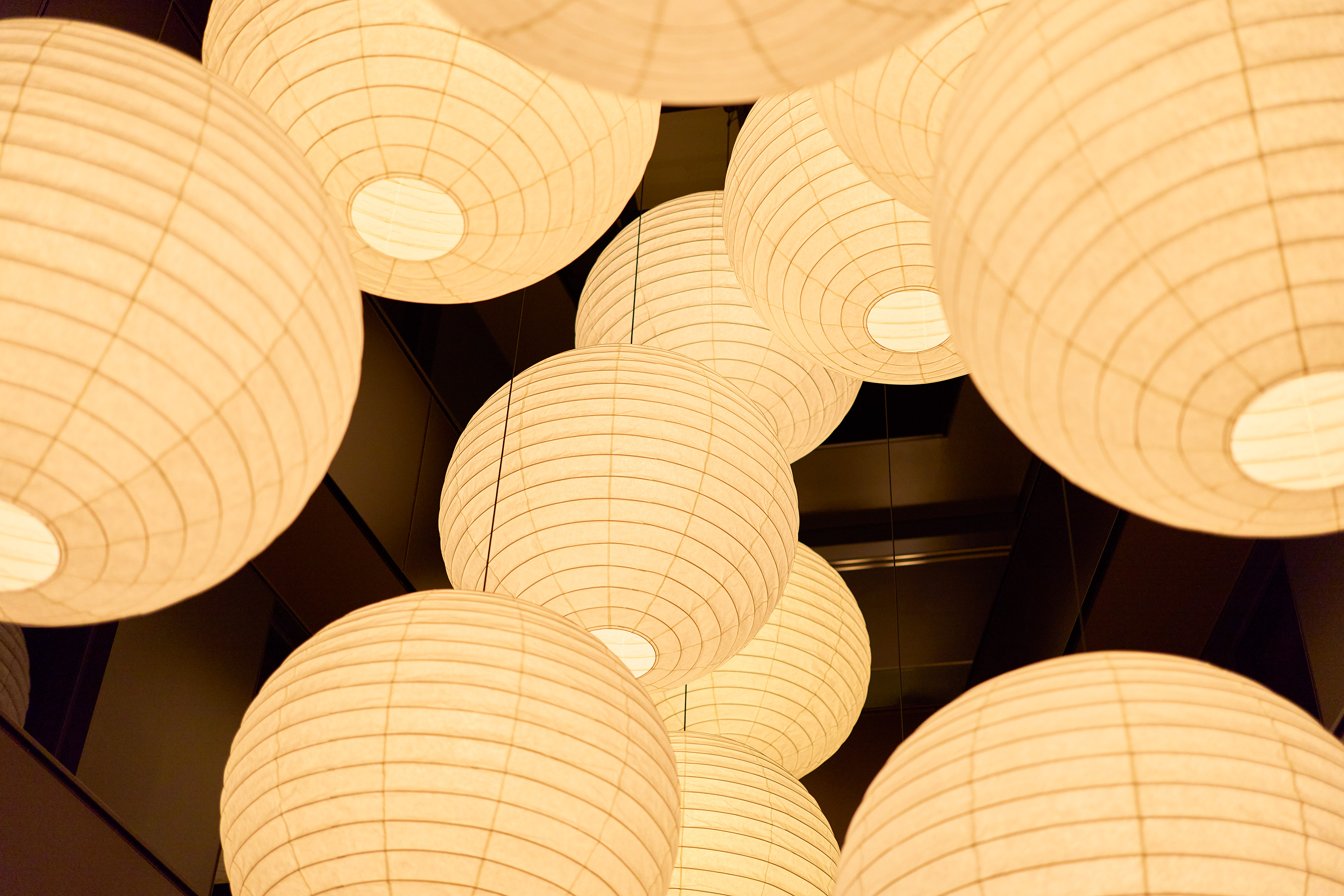
Minimal yet warmly expressive, the lobby features a diagonally intersecting wood lattice ceiling set against deep reddish-brown walls. Locally crafted Hiroshima lanterns hang overhead, casting a soft glow over the space. Functioning as both gallery and gathering point, it hosts rotating exhibitions that invite guests into an ongoing conversation with regional art and craft.
Rooms Inspired by Sea, Light and Nature
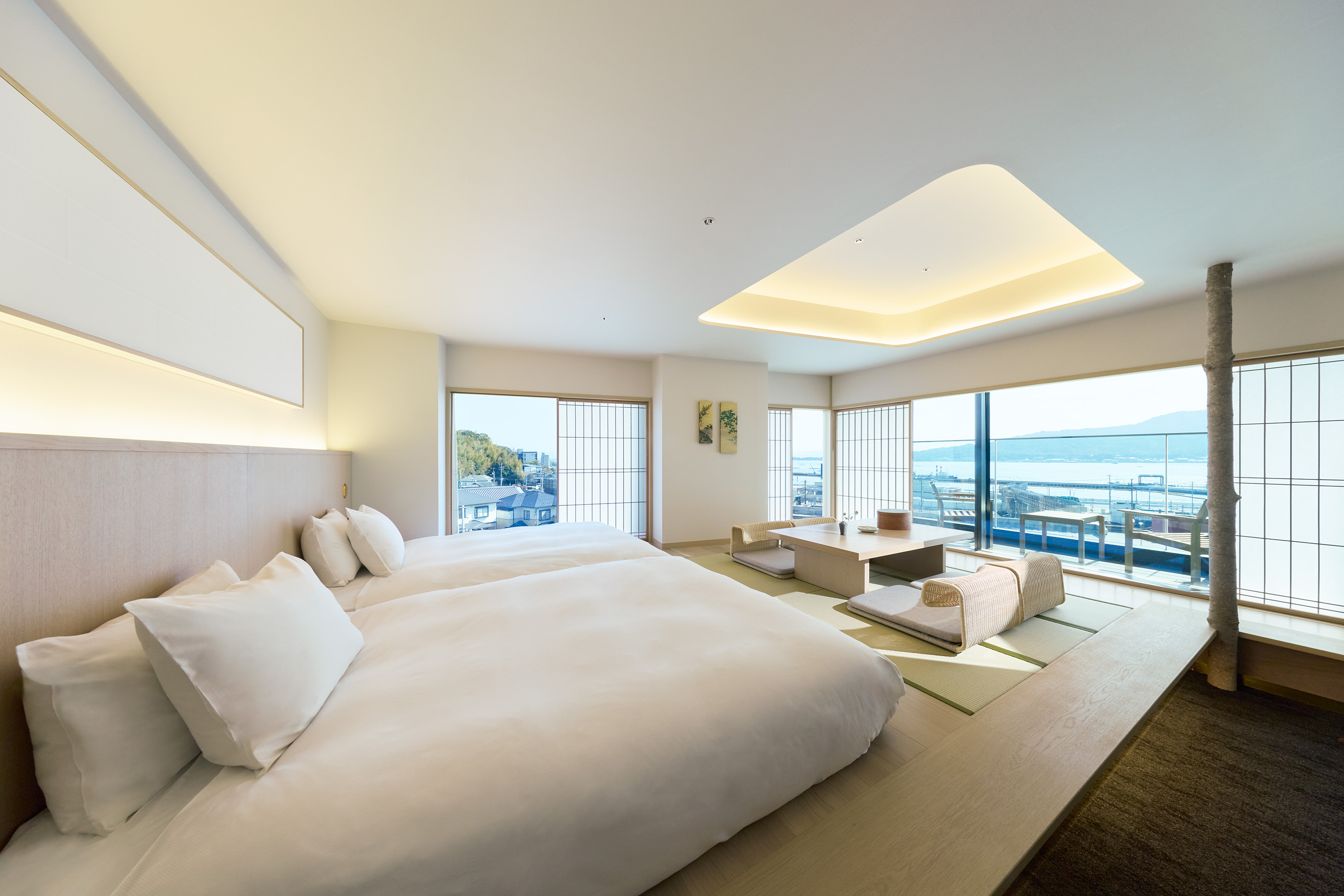
Across its 34 intimate, design-led rooms, the hotel draws on natural wood to evoke a distinctly Japanese sense of calm. Ten accommodation types have fittingly poetic names — one translates as “ripples on water,” another as “morning calm” — each attuned to the sensory character of Miyajima.
Artwork feels integral to the space rather than decorative, woven into each room’s identity, while modern comforts — including free Wi-Fi, refrigerators and electric kettles — are seamlessly integrated. Some rooms feature a koagari (raised tatami seating area) and private balconies that open onto sweeping views of the Seto Inland Sea.
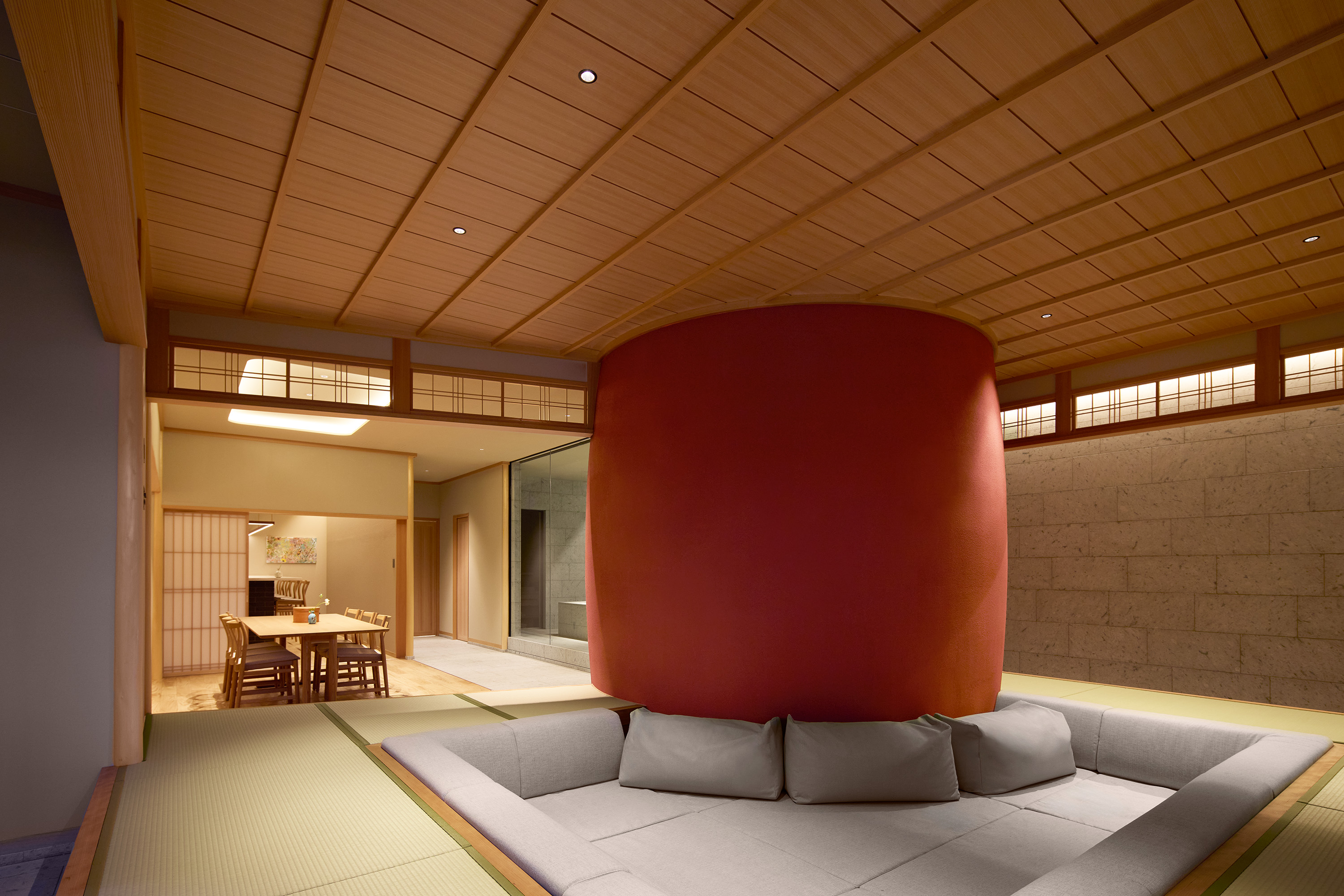
For those aiming for an elevated stay, the 180-square-meter Premium Suite Midori is a multisensory sanctuary featuring a private sauna and an open-air hot spring bath, set to include a dedicated chef’s kitchen counter for bespoke in-room dining. Every detail is considered, creating a stay that feels both indulgent and distinctly personal.
An 11-Course Wood-Fired Menu
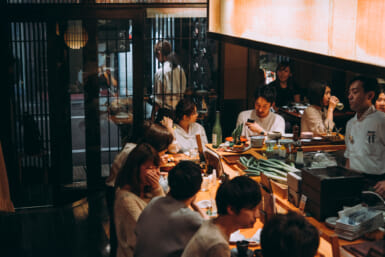
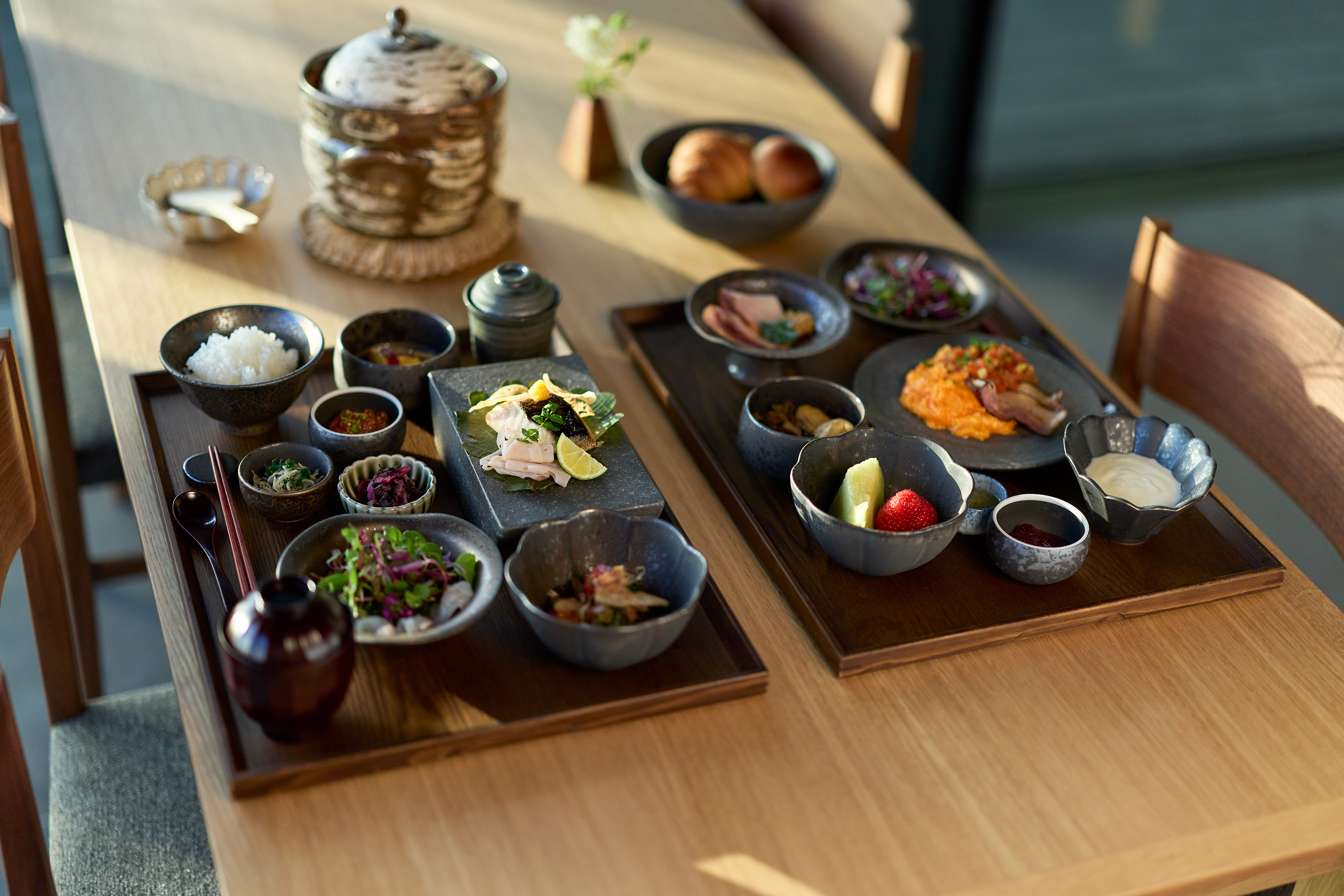
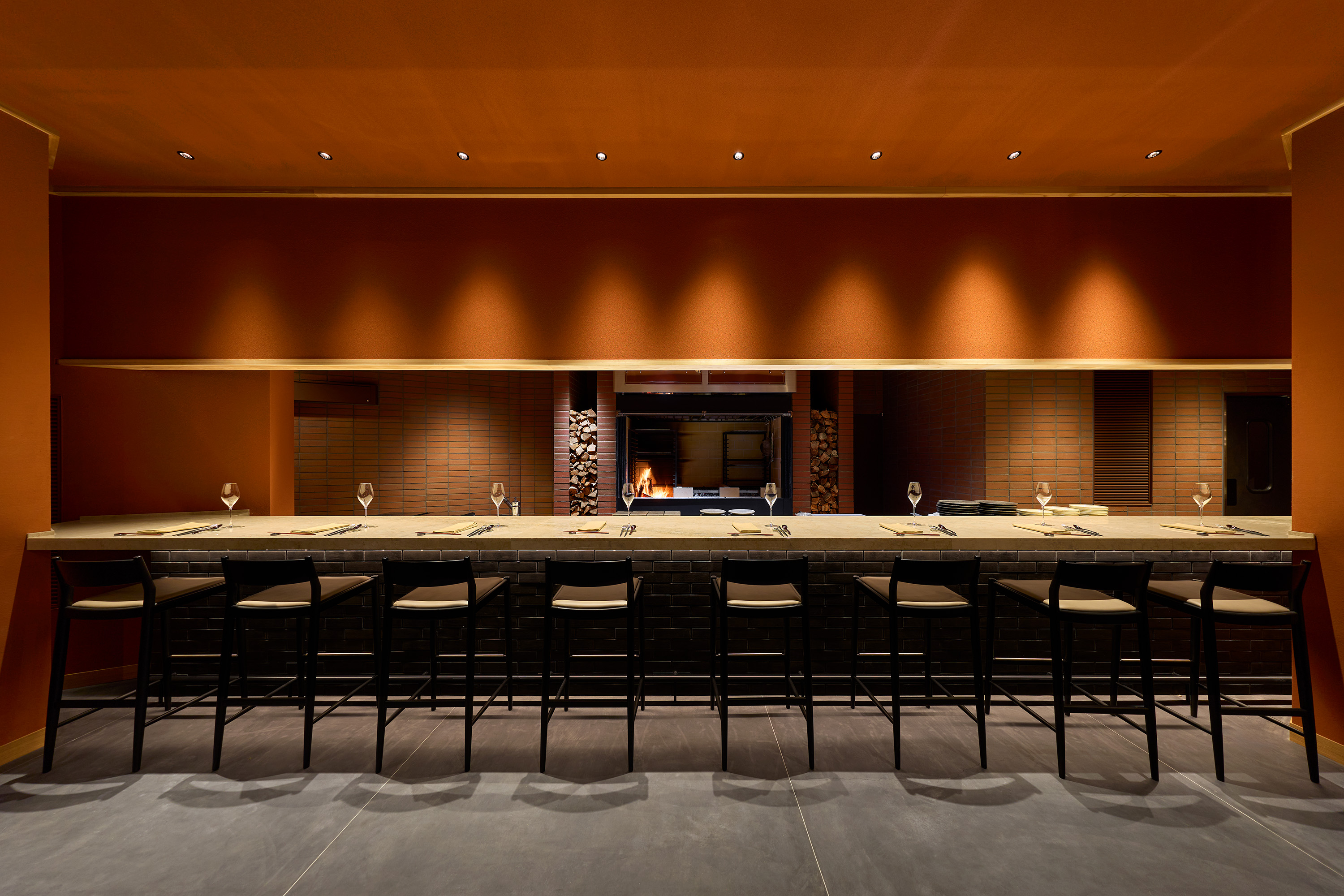
This emphasis on craftsmanship and sensory experience extends to the hotel’s dining, where local ingredients and seasonal flavors take center stage. The restaurant is led by chef Ryo Ishihama, who also runs a seafood restaurant in Shibuya and previously served as sous-chef at Abysse, a Michelin-starred French seafood restaurant.
His 11-course dinner menu centers on wood-fire cooking, drawing out the depth and clarity of seasonal seafood and mountain produce. The experience is accompanied by a thoughtful selection of drinks, including sake from the renowned brewing region of Saijo in Hiroshima, as well as local wines and craft beers.
A particularly intimate detail lies in the restaurant’s in-house rice mill, where grains are polished just before cooking and prepared in a traditional donabe (earthen pot). Served at both breakfast and dinner, freshly milled rice forms part of a dining experience that brings together seasonality, technique and locality.
The Spa Area and Public Outdoor Onsen
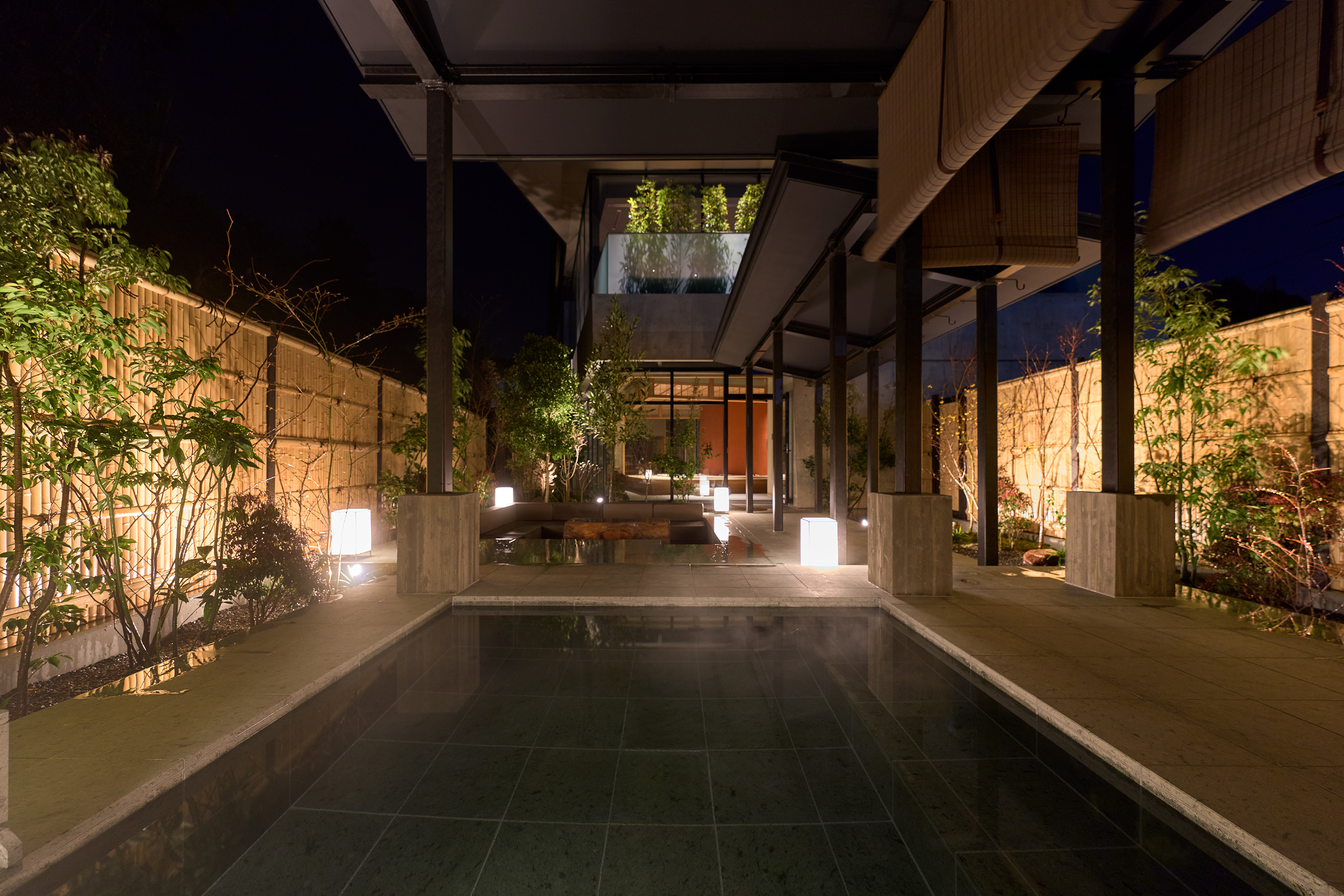
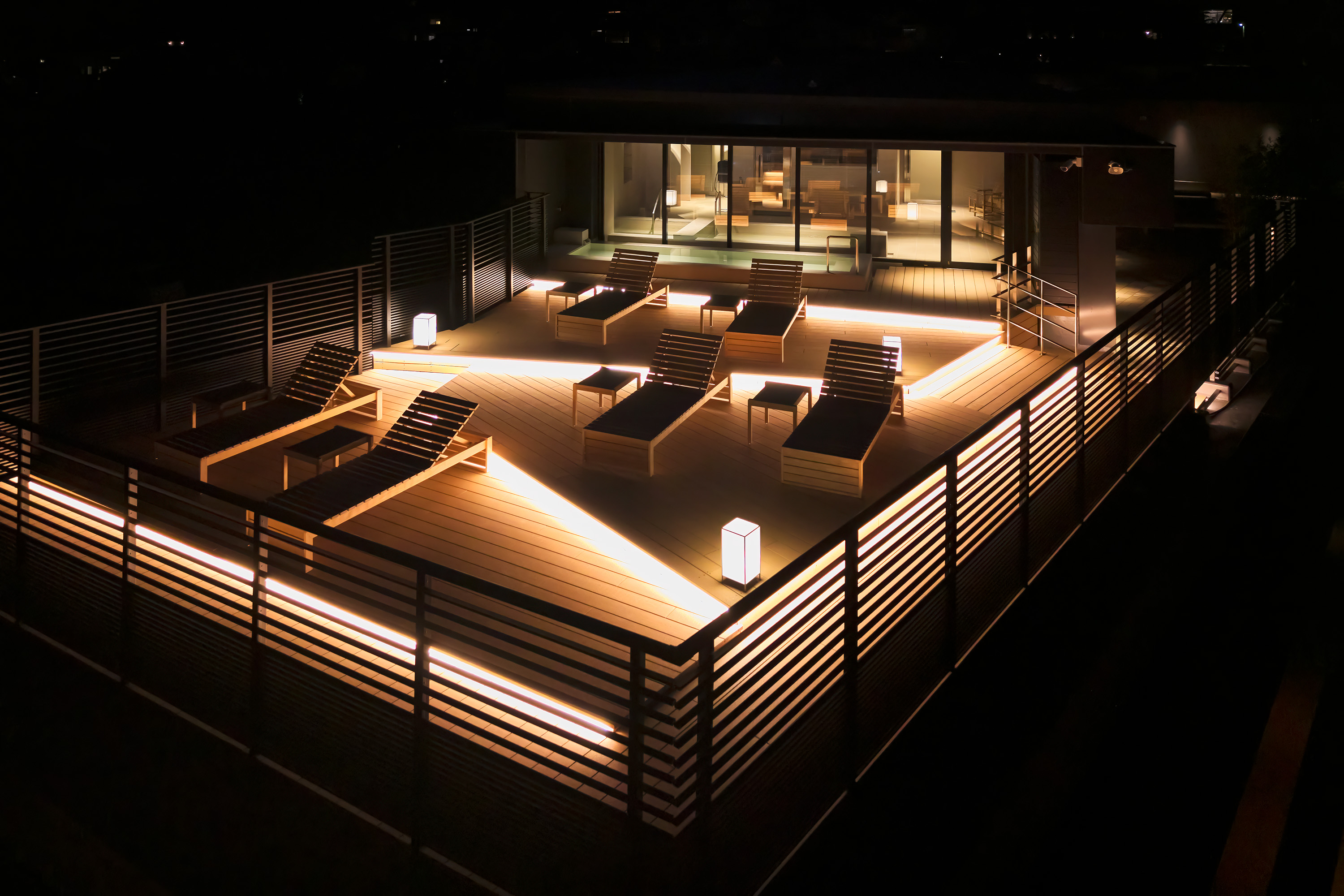
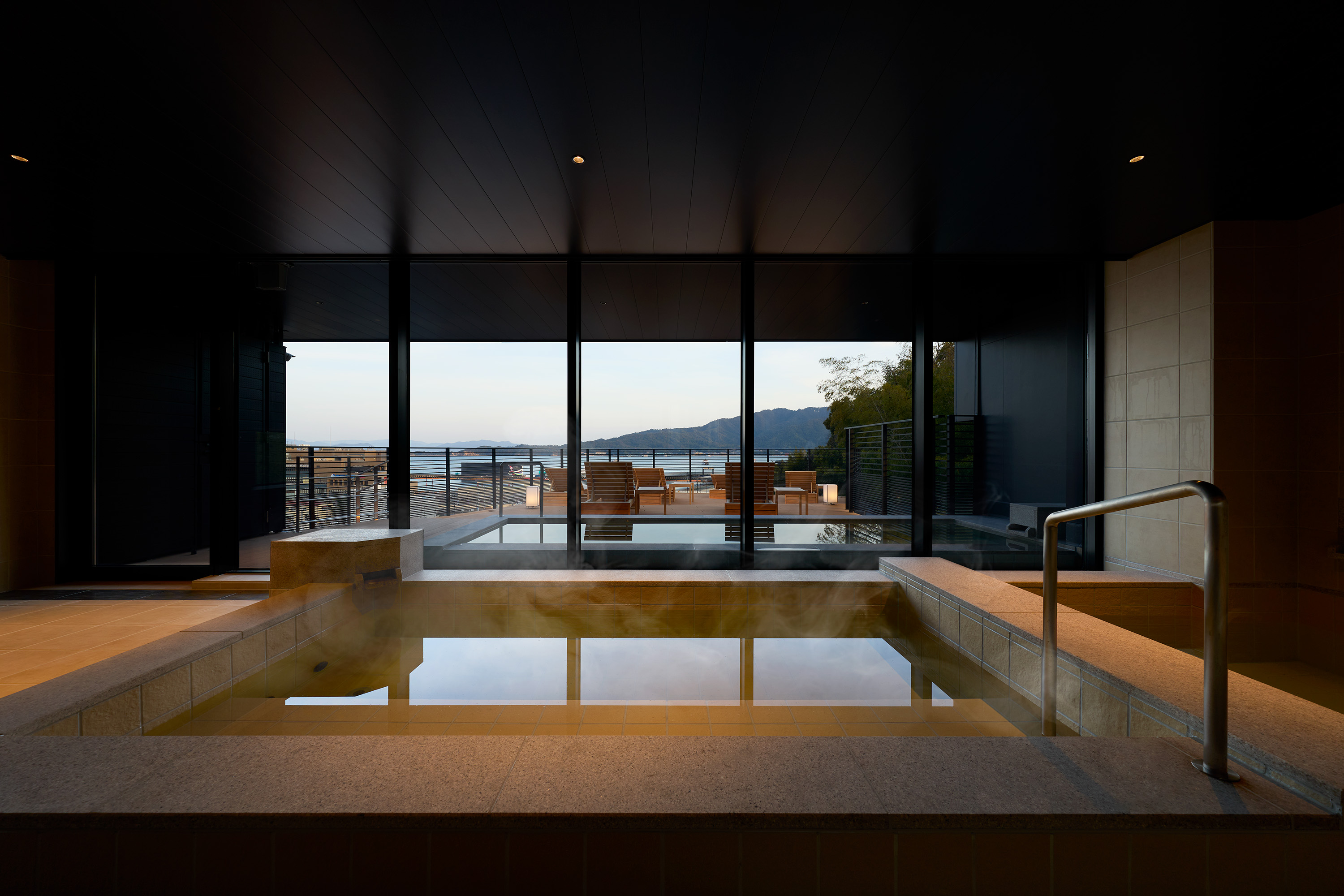
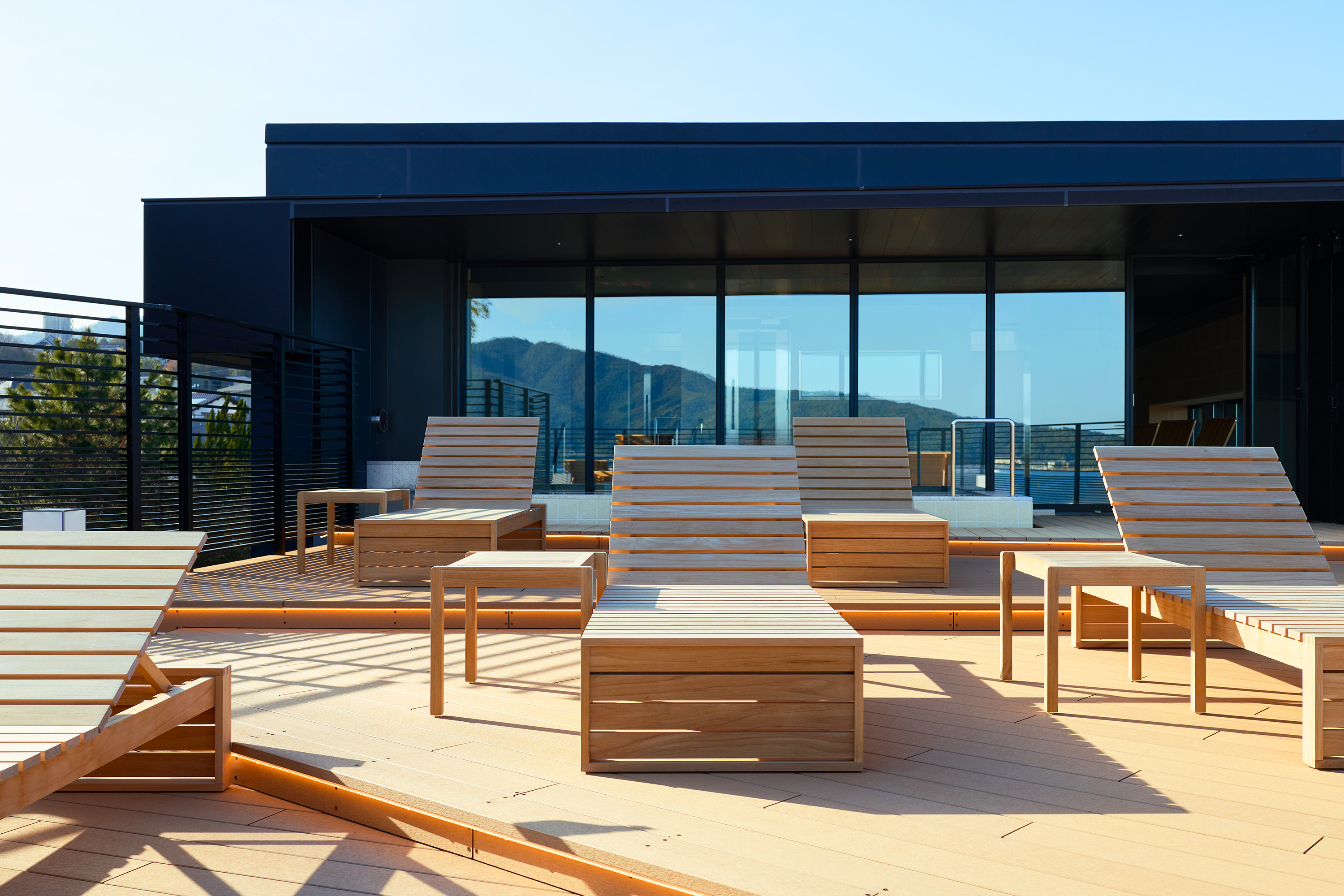
The hotel extends its focus on ritual and relaxation to the top-floor spa area. Complete with a gorgeous open-air balcony, it includes indoor and outdoor baths with natural hot spring water transported from Miyahama Onsen, in addition to a sauna. It is a mixed-gender space, with swimwear required.
Elsewhere in the hotel, guests can enjoy various spaces designed for both relaxation and cultural engagement, including the study area, which showcases a photobook by French actress Emmanuelle Riva in 1958, when she visited Hiroshima to film the movie Hiroshima Mon Amour.
There’s also a gallery, a compact gym and an elegantly designed salon lounge, which is ideal for unwinding at the end of the evening. Centered around a traditional irori hearth, the space offers a cozy, intimate atmosphere where guests can sit back with a drink and reflect on the day’s experiences.
From the hotel, take a short walk to Miyajimaguchi Pier, then board the ferry to Miyajima — the ride takes around 10 minutes and offers beautiful views of the Seto Inland Sea. From the island’s ferry terminal, the shrine is about a 15-minute walk along the waterfront, passing friendly deer, souvenir shops and local street food stalls along the way.
How To Get to Hotel Fork & Knife Miyajima
From Hiroshima Station, take the JR Sanyo Line to Miyajimaguchi Station, which takes just under 30 minutes. From there, it is a short walk — approximately seven minutes — to Hotel Fork & Knife Miyajima. There’s also a free shuttle service to the hotel from Miyajimaguchi Station.
Visiting Itsukushima Shrine from the Hotel
While in Miyajima, it is recommended to visit the UNESCO World Heritage Site Itsukushima Shrine. The ferry port is a 10-minute walk from the hotel, while the crossing takes another 10 minutes. JR West Miyajima Ferry and Miyajima Matsudai Kisen operate frequent services to and from the port.
Hotel Knife & Fork Miyajima Prices and Booking Details
Rates at Hotel Fork & Knife Miyajima generally start at around ¥60,000 for the Standard Room 1-night stay plan (breakfast and dinner included), while larger concept rooms and suites can exceed ¥100,000 per night.
Rates fluctuate depending on the season, with weekends, holidays and peak travel periods around cherry blossom and autumn foliage season typically commanding higher prices.
Please note that all guests must be above the age of 13.
To book a room at Hotel Fork & Knife Miyajima, click here.
Updated On May 29, 2026