What happens when raw nature meets one of Tokyo’s most refined retail spaces? At Ginza Six the ongoing three-year art initiative A Tree answers that question and is now entering its second phase with a new lineup of designers from around the world.
Launched in 2025 in collaboration with design office Daikei Mills, the project started with a single material: Yoshino cedar, sourced from the historic forestry region in Nara Prefecture. Rather than presenting finished objects, A Tree traces the full journey of a tree — from log to furniture to architecture —and turns the process itself into the artwork.
While Phase 1 introduced minimal wooden furniture by Daikei Mills that highlighted the raw qualities of the material, Phase 2 expands the narrative by inviting six renowned designers to reinterpret Yoshino cedar through their own perspectives. Installed across the rest areas on floors three to five around the atrium, the new works invite visitors to sit, touch and interact with, offering a more immediate, tactile experience than a traditional museum setting.
Six Designers, One Material
For Phase 2, six designers from Japan and abroad were invited to immerse themselves in the forests of Yoshino before creating their works, bringing distinct perspectives shaped by direct engagement with the material.
DAISUKE SHIMA
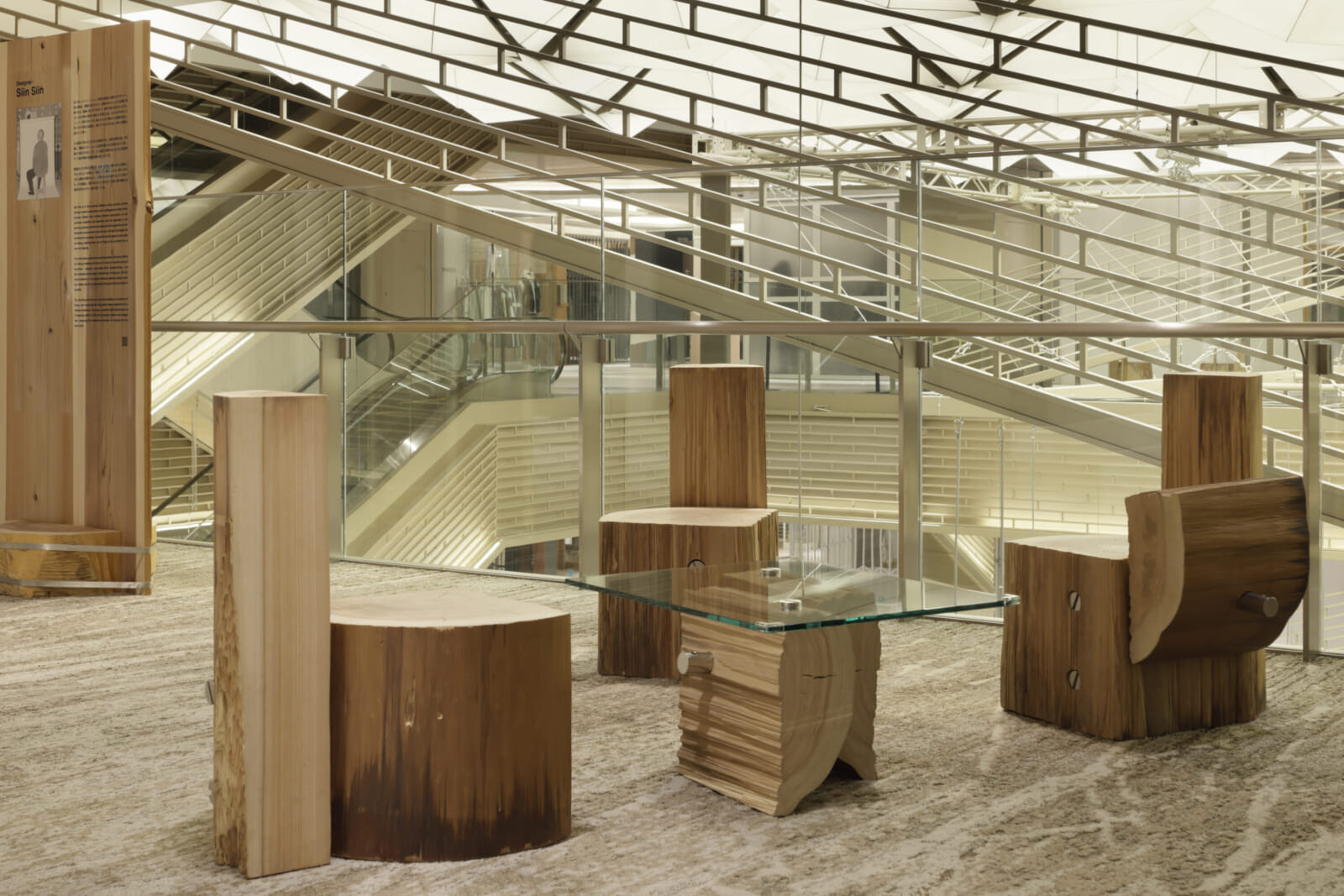
Tokyo-based Siin Siin presents Tou Tou, a piece that embraces imperfection and process. Drawing from traditional wood-splitting techniques and modern machinery, the work exposes marks, fractures and joints, allowing the material’s history and flaws to remain visible.

DAISUKE SHIMA
Kuo Duo from Seoul presents Kiri Kabu, a series inspired by tree stumps. Carefully carved to highlight the contrast between pale sapwood and darker heartwood, the works evoke both the beginning and end of a tree’s life cycle.

DAISUKE SHIMA
London-based Rio Kobayashi presents Edisni tuo (or Inside Out), a piece that reimagines the log by turning it “inside out.” By foregrounding overlooked surfaces and adding subtle movement, the work invites interaction and shared use.

DAISUKE SHIMA
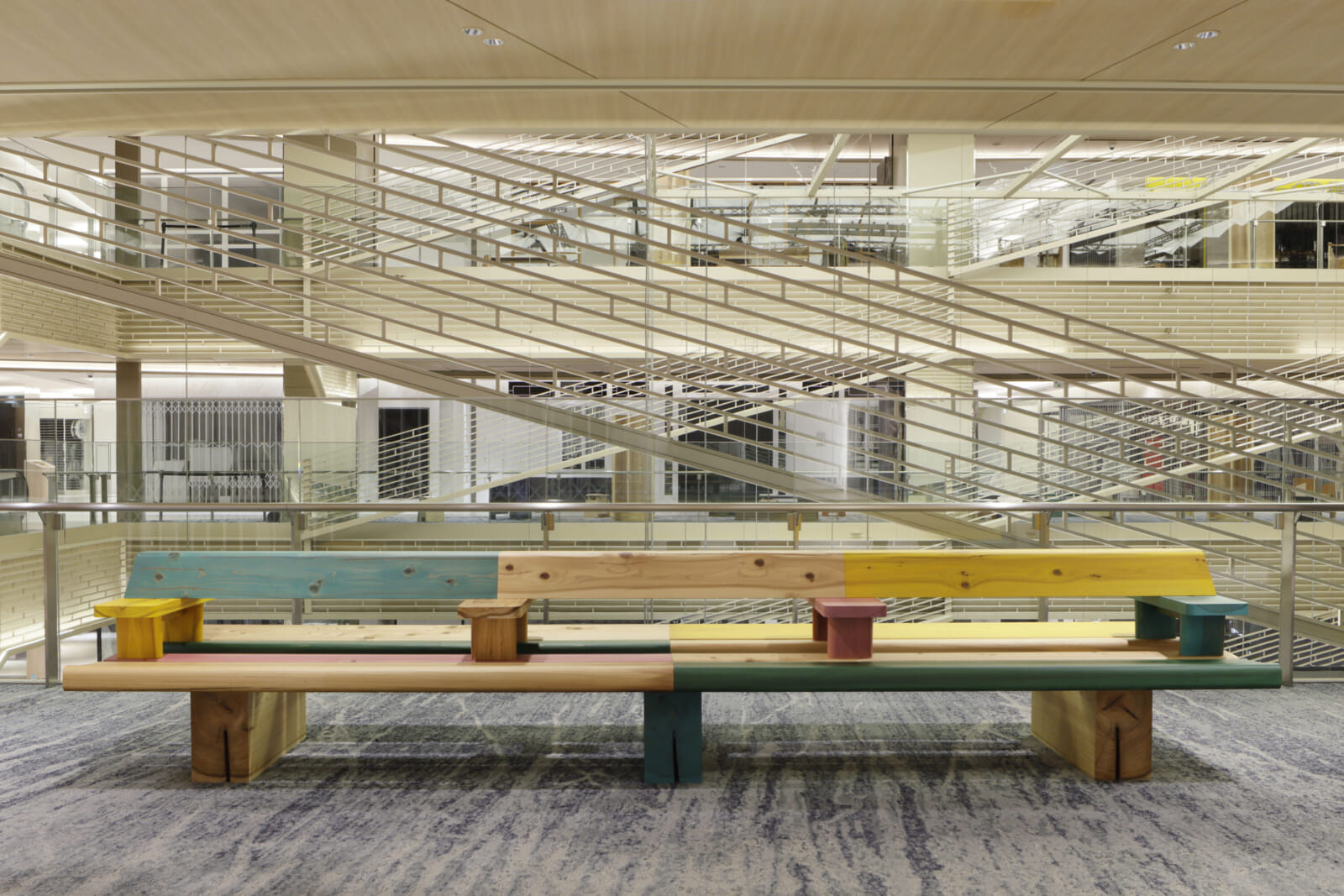
Fabien Cappello from Mexico presents Multi, a bench that encourages social interaction. Drawing from the language of public seating, the work transforms a simple form into a shared, communal experience.
DAISUKE SHIMA
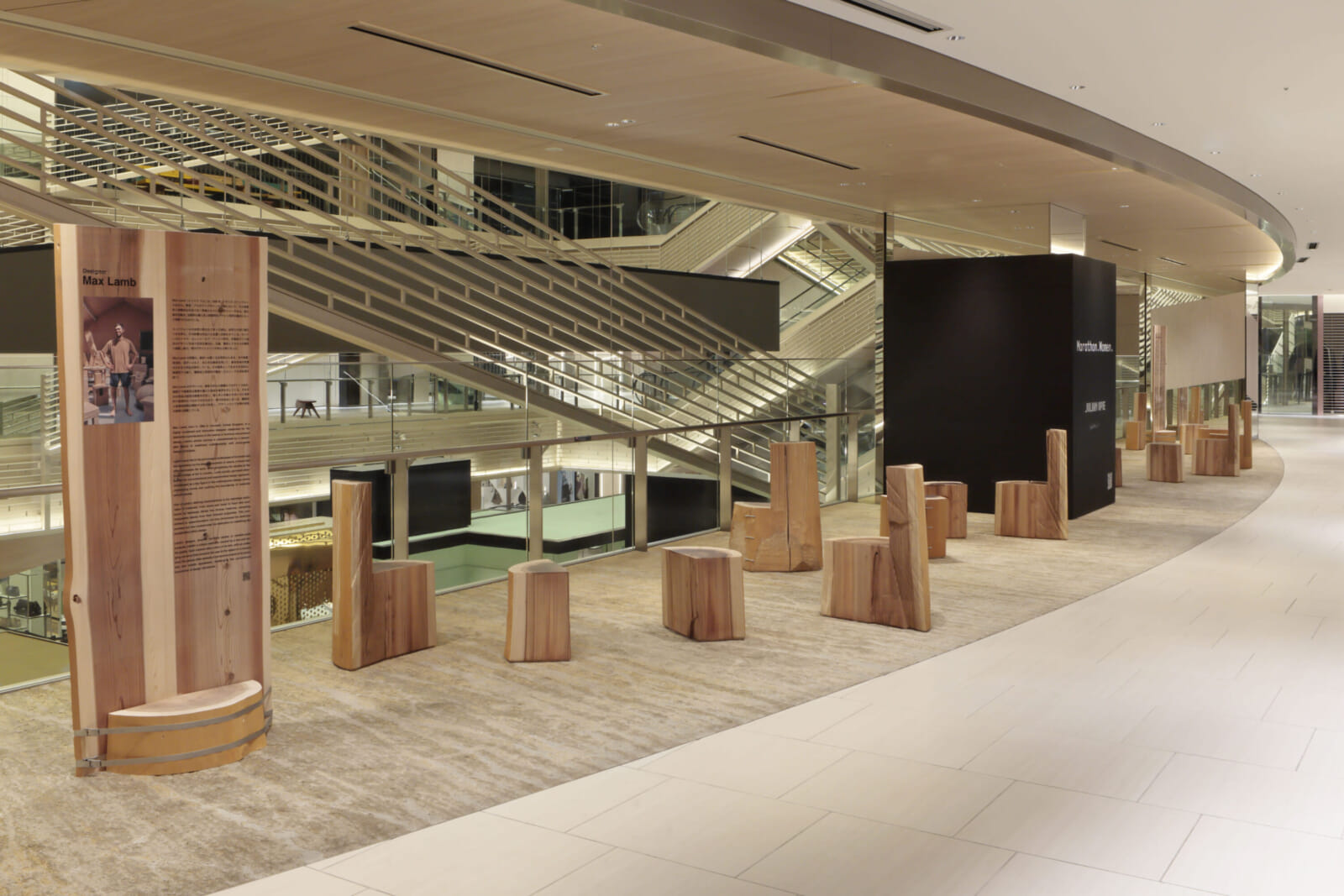
British designer Max Lamb presents Cedar is a Soft Wood, a piece that strips down the wood to its bare essentials. Working with a single craftsman and a bandsaw, thin cedar boards are cut and layered into a softly curved form that reimagines the solidity of the original log.

DAISUKE SHIMA
Also from the UK, Faye Toogood presents Five Spirits, One Sugi, a piece inspired by the living organisms that inhabit Yoshino. Drawing on imagined animal “spirits,” the work translates movement and character into sculptural forms that suggest the tree’s life that continues beyond its original state.
“Not Just To See, But To Experience”
At the core of A Tree is a desire to shift how people encounter design, especially in a commercial environment. Unlike traditional exhibitions, the works are fully integrated into the building. “We didn’t want people to just look at the work; we wanted them to touch it, sit on it and experience the material with their bodies,” says Daikei Mills CEO Keisuke Nakamura.
That accessibility is intentional. Despite featuring globally recognized designers, the pieces are not placed behind barriers. “It’s quite rare to have works like this that people can freely use,” Nakamura says. “In that sense, the project is very open and democratic, as anyone who visits can engage with it.”
Currently on view at Ginza Six, Phase 2 (from October 2025) introduces furniture designed by six international artists. Launching sometime in 2026, Phase 3 will expand these works into larger stall-like structures, which will be integrated within Ginza Six continuing through 2027.
The choice of Yoshino cedar also carries deeper meaning. Known for its slow growth, strength and fine grain, it was once a highly prized material in Japan, though demand has declined in recent years. “When you trace things back to their origin, many of them begin with a tree,” Nakamura reflects. “If visitors can feel that — even slightly — then the project has meaning.”
DAISUKE SHIMA
Plan Your Visit
Currently on view at Ginza Six, Phase 2 (from October 2025) features the artists’ chairs in designated lounge areas throughout the building — including the 3F to 5F Central Atrium Rest Space, where visitors can sit and engage directly with the works.
Whether you’re a design enthusiast or simply passing through, A Tree offers a rare chance to experience design not as a finished object, but as an ongoing process — and one you can sit with.
Visit here to learn more about A Tree in Ginza Six.
More Information
Address: Ginza Six, 6-10-1 Ginza, Chuo-ku, Tokyo 104-0061
Phone: 03-6891-3390 (Inquiry hours: 10:30 – 20:30)
Shops & Cafes Hours: 10:30 – 20:30
Restaurant Hours: 11:00 – 23:00
Updated On May 14, 2026