
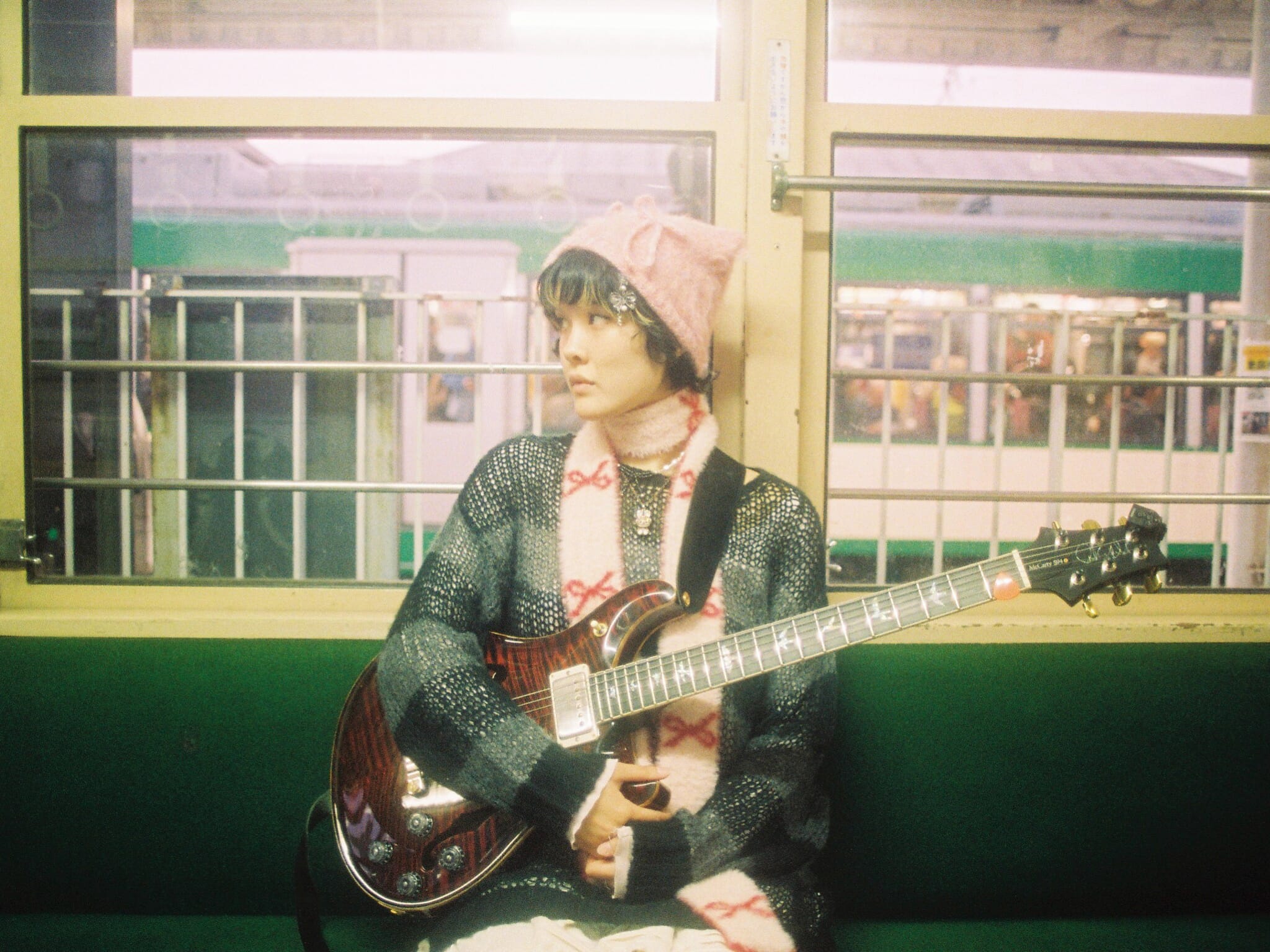
There’s a particular kind of music that finds its way to you serendipitously, catching you by surprise, like a kitten that suddenly appears on a street corner. This is exactly how I felt when I stumbled onto Mei Semones’ music. It was “Hfoas,” her earliest single, and something about the lightness of it stopped me where I was: the guitar, soft and unhurried, the strings sliding in at just the right moments and her vocals sitting easy above it all, effortlessly switching between English and Japanese.
It brought me straight back to my father’s living room, and the sound of Brazilian-Japanese bossa nova legend Lisa Ono drifting from his hi-fi set, her voice intimate and sun-dappled. And further back still, to the bossa classics I grew up hearing: “The Girl From Ipanema,” “Desafinado” and standards that felt less like songs and more like a certain quality of afternoon light.
Semones carries that same warmth in her music, but the architecture around it is entirely her own: jazz-trained, intricate guitar work; sweeping strings and drums that feel nearly orchestral. Besides the bossa undercurrent and in the general pop profile of her songs, she weaves in quick signature changes and quirky guitar riffs — moments where the song itself bends to her will and lets her play, unhurried and self-assured.
Ann Arbor to Brooklyn
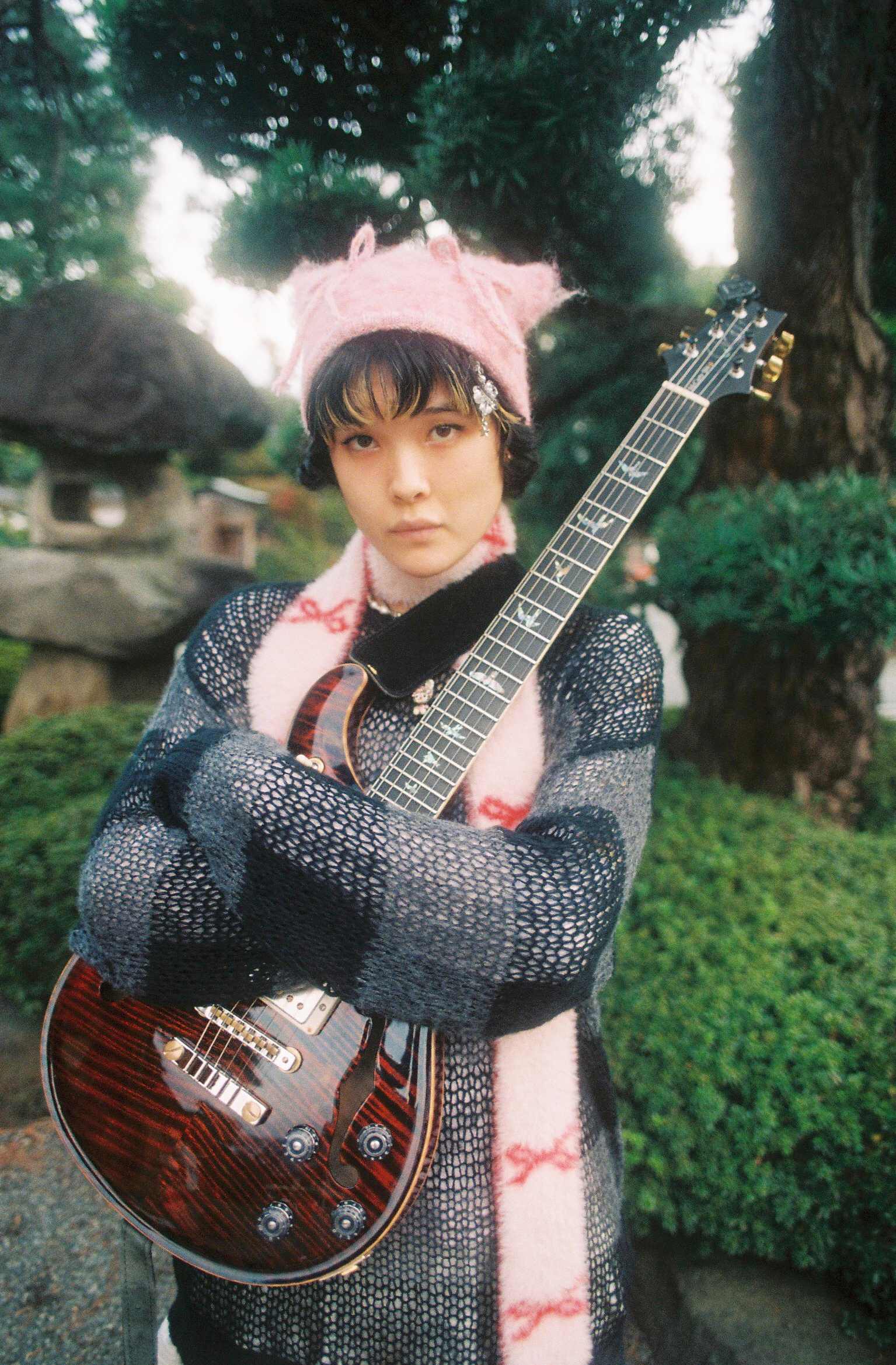
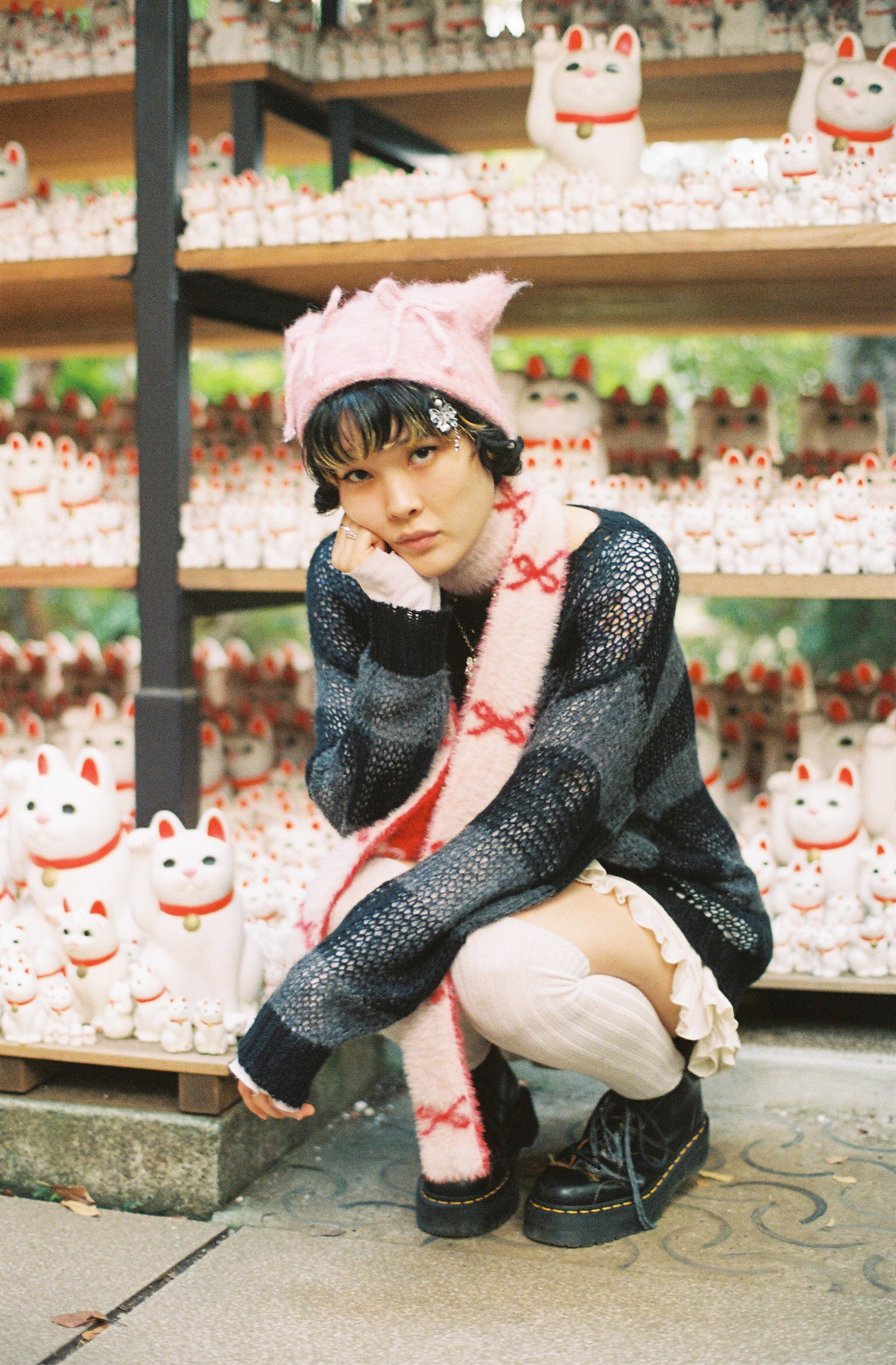
Semones grew up in Ann Arbor, Michigan, with an American father — also a musician — and a Japanese mother. She spent her summers in Japan, visiting her grandmother in Yokosuka. At age 4, she started playing the piano — a gift from her grandmother, bought for Semones and her twin sister. She then switched to electric guitar at 11 after watching Marty McFly play Chuck Berry in Back to the Future. In her teens, she joined the jazz program at her local community high school, where she was introduced to João Gilberto’s recordings of “The Girl From Ipanema,” “Corcovado” and “Wave.”
Bossa nova “brings me a sense of warmth and comfort that keeps drawing me back to it,” she tells TW. But her taste in music is wide-ranging; her father played jazz, classical and rock on the radio at home, and she fell in love with Nirvana and The Smashing Pumpkins in middle school. The influences piled up without canceling each other out. From the cascading math-rock structures of “Tora Moyo” to the distortion-tinged “Dumb Feeling” and “I Can Do What I Want” — songs that echo the indie and grunge-y sound of the 90s — she is doing exactly what she wants, without being limited by genre.
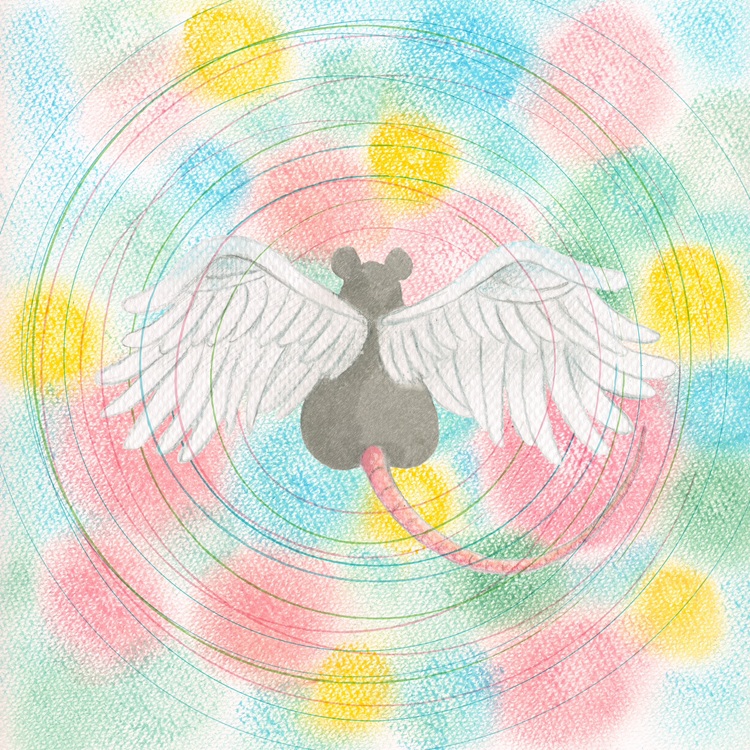
The cover art of Animaru (2025)
From Tsukino to Animaru
Semones followed up 2020’s “Hfoas” with “Muchuu” in early 2022. Shortly after, she released her debut EP, Tsukino — all while completing her final semester at the prestigious Berklee College of Music. Later that year came a second EP, Sukikirai — its title blending the Japanese words for “likes” and “dislikes,” the push and pull of complicated feelings — which was released through Northeastern University’s student-driven Green Line Records label.
Kabutomushi, her Bayonet Records debut, arrived in 2024 and introduced her to a much wider audience. Named after the Japanese rhinoceros beetle, it is a five-song study in romantic love — infatuation, devotion, distance, vulnerability, goodbye — rendered with sweeping strings, intricate guitar work and lyrics that move between English and Japanese with the ease of someone who has never had to choose between them. Paste Magazine named her one of its “Best of What’s Next” artists that year.
Animaru, her debut full-length, followed in 2025 — and it is a leap. Where Kabutomushi looks inward, Animaru looks outward: at life, at family, at music itself. It was made during her transition to doing music full time, after years of balancing songwriting with work at a Japanese kindergarten in New York. When she left her day job to focus entirely on music, something shifted. “A lot of the songs on Animaru came from a place of happiness and gratefulness to be able to make music with my friends.”
The record arrived into what would become a breakout year on the road: sold-out rooms across North America, Asia, and the UK and Europe. In Japan, she had her first Fuji Rock performance; held sold-out shows in Tokyo, Osaka and Nagoya; and even opened for dreampop giants Men I Trust in the same month.
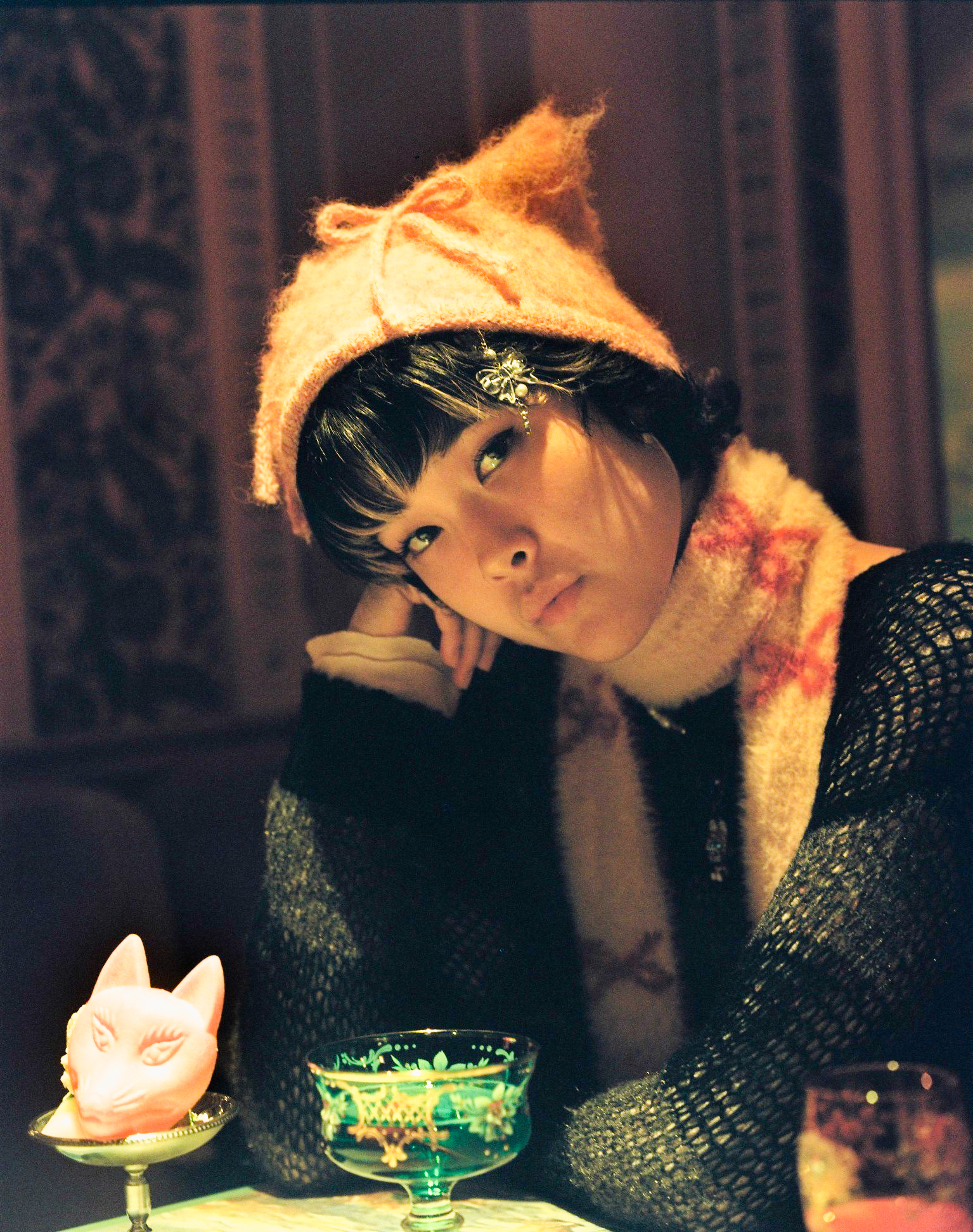
Photography: Alec Hirata
Between Two Worlds
Across her discography, a world takes shape: one of childhood forests and the Japanese countryside, of love given and outgrown, of creatures big and small living alongside humans. Many of her song titles — “Kurage” (“Jellyfish”), “Koneko” (“Kitten”), “Tora Moyo” (“Tiger Stripes”) — are Japanese words written in romaji, small invitations into a language that half her audience may not speak. The music itself moves between English and Japanese with such ease that the transition is often imperceptible, a word or phrase slipping from one language into the other mid-breath, mid-melody, as naturally as thought.
Bilingualism itself is not a choice she makes so much as something she simply is. Growing up speaking both languages, she says, it felt natural to have both in her music. Her most recent album title captures it precisely — neither “Animal” (too English) nor “Dobutsu” (too Japanese), but Animaru: the Japanese pronunciation of the English word, sitting exactly between both. “Writing in Japanese has helped me keep in touch with the language, and I have also been able to visit Japan more thanks to the people listening to my music there,” she says.
Performing in Japan feels different from anywhere else. “The audience often understands a different part of the song than when I am playing for primarily English-speaking audiences,” she says, “It feels vulnerable in a different way.”

Photography: Dan Hureira
The Nature of Things
Animals make frequent appearances in Semones’ songs — beetles, crayfish, kittens, woodland creatures she briefly imagines herself as. “I have always loved animals,” she says, “and often try to remind myself that I am an animal, too. People think too much, are too self-conscious. Animals aren’t like that. I think humans could learn something from animals.”
Semones told Japanese indie mag Me and You in 2025 that much of the whimsical imagery in her music comes from specific places: “Donguri” (“Acorn”), in which she sings about encountering various woodland creatures, grew from memories of the forest behind her family’s house in Michigan, where she played as a child. “Zarigani” came from catching crayfish in that same forest with her twin sister.
They’re songs overflowing with innocence and nostalgia, pure and childlike. There’s something strikingly honest and straightforward about them. But it’s whimsy with a purpose. Her compositions remind you of the joy of being fully immersed in the world, with the unthinking certainty of an animal — a state of being that functions as an antidote to self-consciousness and self-doubt.
When asked what advice she would have for her audience and budding musicians — listeners, aspiring musicians, anyone — she doesn’t hesitate. “Do what you love and what’s important to you,” she says, “and don’t worry too much about what other people think.”
More Info
Follow Mei Semones on Instagram at @mei_semones, and visit her website for music, tour dates and more.