Just four years after the assassination of former Prime Minister Shinzo Abe, his assassination may already be headed to the big screen. Tokyo Sports reported on September 2 that a major Japanese director is developing a film about the 2022 assassination, with filming potentially beginning as early as this fall. The newspaper also cited unnamed sources claiming that actor Masaki Suda could play assassin Tetsuya Yamagami, though his involvement has not been confirmed. Neither the director nor the film’s title has been made public, and Suda’s agency did not respond to Tokyo Sports’ request for comment.
The film will reportedly trace Yamagami’s life before and after the shooting, including his arrest, detention and trial, taking what sources described as a journalistic rather than explicitly political approach. News of the project nevertheless prompted anger online, with critics questioning what it would mean to place Yamagami at the center of the story.
“If Suda plays Yamagami, it basically means that guy’s the main character,” one X user wrote. “It’s bound to be told from his perspective, and it’ll definitely hint at sympathy for his motives.”
Another user, who said they witnessed the assassination while waiting to see Abe speak in Nara, argued that making the perpetrator the protagonist could give him greater notoriety and potentially contribute to his glorification. “If it becomes the trigger for a second or third copycat crime, there would be no taking it back,” they wrote.
The Political Fallout of Abe’s Assassination
Abe was shot and killed with a homemade gun while delivering a campaign speech in Nara on July 8, 2022, in an assassination that shocked a country where gun violence is exceedingly rare. Yamagami was arrested at the scene and later said he had targeted Abe because of the former prime minister’s perceived connections to the Unification Church, formally known as the Family Federation for World Peace and Unification. Yamagami’s mother had reportedly donated around ¥100 million to the religious group, leaving the family in severe financial difficulty.
The assassination subsequently triggered scrutiny extending far beyond Yamagami himself, exposing extensive connections between the Unification Church and Japan’s ruling Liberal Democratic Party. An internal LDP survey ultimately found ties between the church and 179 of its lawmakers. Abe himself had delivered a video message in 2021 to an event held by an organization affiliated with the church.
The revelations intensified longstanding scrutiny of the church’s fundraising practices and ultimately prompted the government to seek its dissolution. In June 2026, Japan’s Supreme Court upheld the dissolution order, citing the financial and psychological harm caused by the church’s prolonged solicitation of donations and stripping it of its status as a religious corporation.
A Previous Film
This would not, however, be the first film to dramatize Yamagami’s story. Just months after Abe’s death, former Japanese Red Army member and filmmaker Masao Adachi directed Revolution+1, a low-budget fictionalized account of Yamagami’s life. Its protagonist, Tatsuya Kawakami, closely mirrors Yamagami, following a man whose family is devastated by his mother’s involvement with the Unification Church and who ultimately turns to violence.
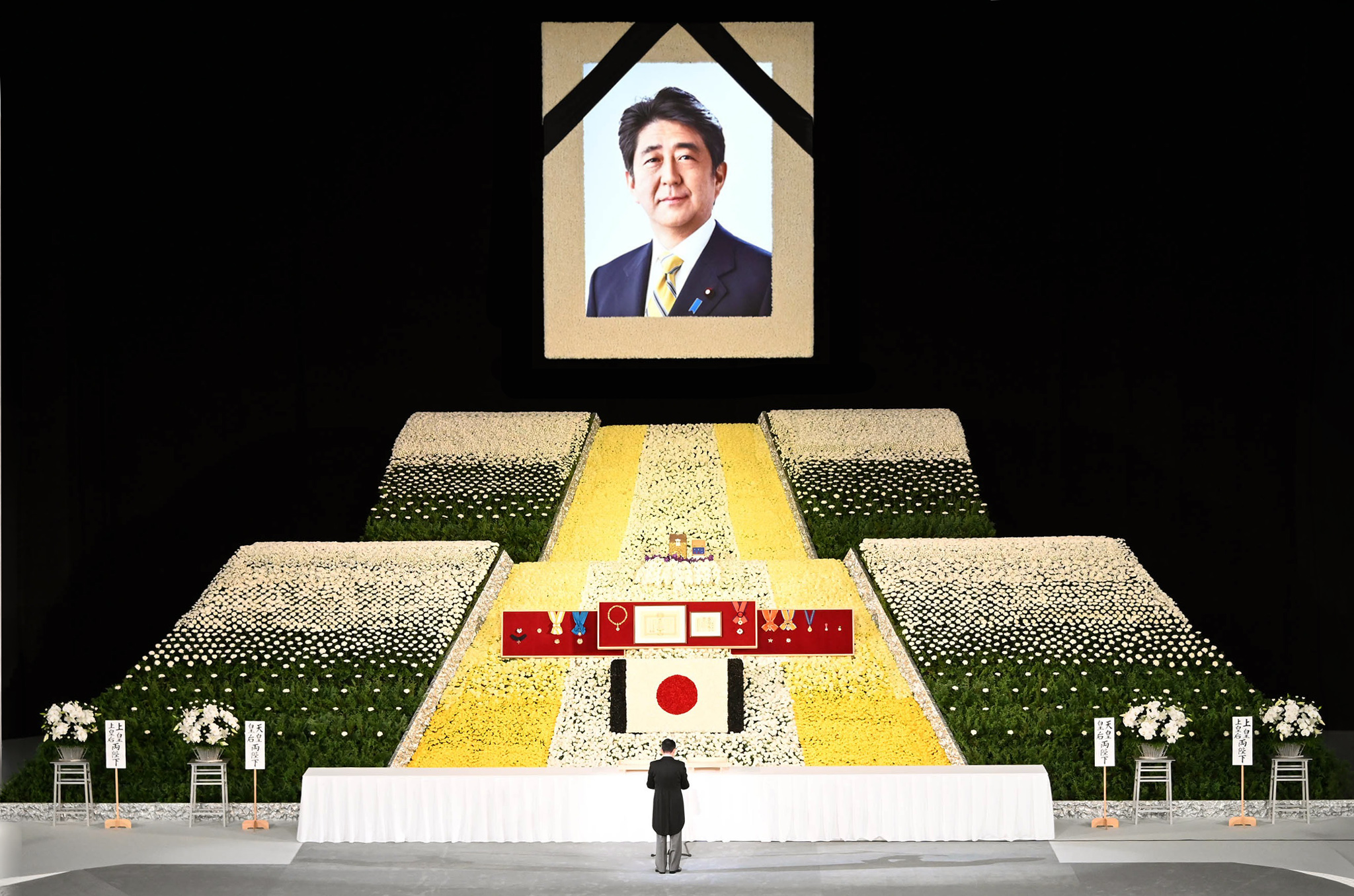
Filming began in late August 2022 and lasted just eight days. On September 27 — the day of Abe’s state funeral — an unfinished, roughly 50-minute version was screened in Tokyo and elsewhere in Japan. A completed 75-minute version received advance theatrical screenings beginning that December before expanding to additional cinemas in 2023. Amid accusations that the film risked glorifying Yamagami, Adachi insisted at the time that “crime is crime” and that the film had been made on the premise that Yamagami would not be treated as a hero.
Unlike that small independent production, however, the newly reported project appears to be aiming considerably higher. And with that larger platform comes greater scrutiny over how Yamagami’s story will be told — whether the film can examine the circumstances that led to Abe’s assassination without either reducing them to a simple act of violence or turning the man responsible into a sympathetic protagonist.