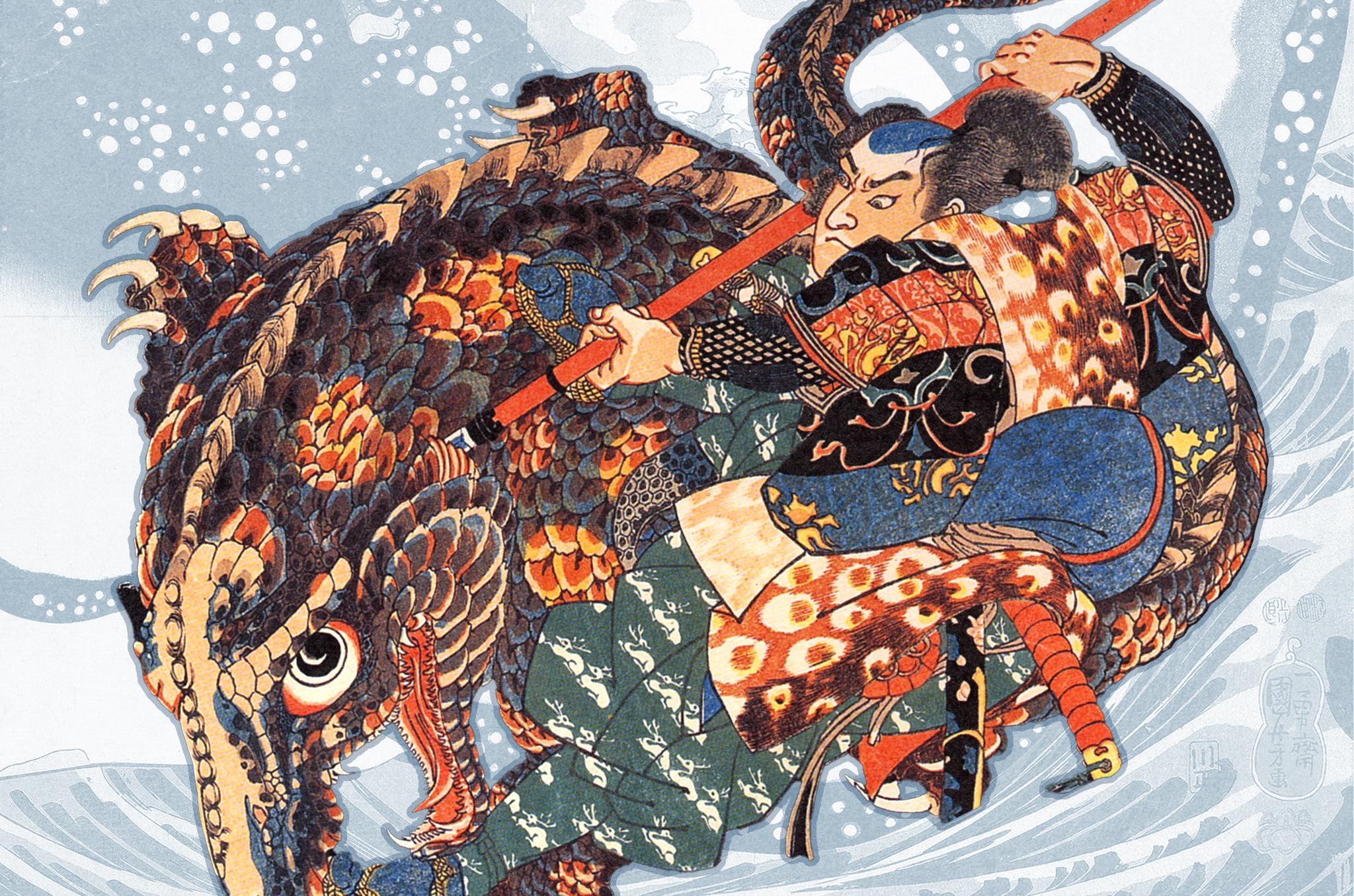
Miyamoto Musashi has had a busy year. Netflix’s Baki-Dou: The Invincible Samurai revived him as a cloned, resurrected villain in the long-running Baki fighting franchise, pitting the legendary swordsman against the series’ toughest fighters. Meanwhile, rumors of an anime adaptation of Takehiko Inoue’s Vagabond, the acclaimed manga that retells his life, keep resurfacing, though nothing has been announced. If they ever pan out, we could be heading into a year or two of Musashi.
It was about time.
The fascination with possibly the most famous samurai in history is pretty cyclical, ebbing and flowing ever since he became a living legend in the early 17th century. Yet throughout these past four centuries, a few things have gotten mixed up, lost or straight-up invented, leaving the image of Miyamoto Musashi in the public consciousness — incomplete, to say the least. Let’s try to fix that.
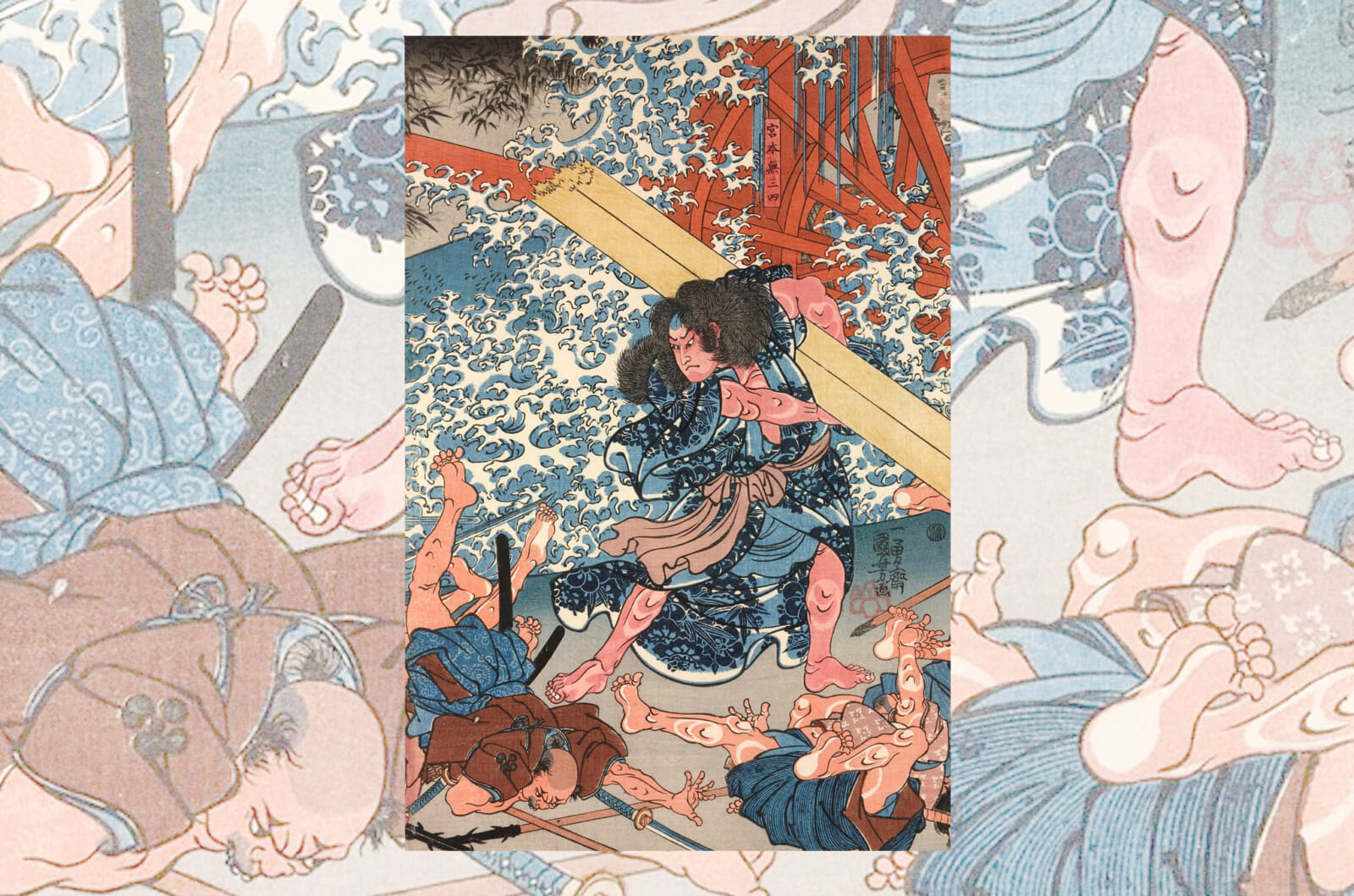
“Miyamoto Musashi” by Utagawa Kuniyoshi (c. 1845-46)
The Murder Baby Years: Musashi’s First Duel
The Japanese tradition of yomyo or warawana childhood names goes back to the Nara period (710–794). It was the custom of giving a child a sort of placeholder name that would later be discarded during their coming-of-age ceremony, held sometime between the ages of 13 and 17 and symbolizing their entrance into adulthood.
Warawana were usually “soft,” endearing and cute, with the suffix “-suke” (help/helpful) being especially popular. This naming practice was believed to protect children from harm, but ultimately, warawana were something created to be cast off. They weren’t important because obviously no child would achieve anything worth mentioning in chronicles. Miyamoto Musashi, as you may have guessed, was the exception to this rule.
Young Musashi (born circa 1584) had his first official duel at age 12 or 13 under his childhood name, Bennosuke. He fought the accomplished samurai Arima Kihei, who used the pragmatic style of certified sword genius Tsukahara Bokuden. Arima, who was traveling to hone his skills, arrived in Hirafuku village in what is today Hyogo Prefecture and posted a signboard inviting anyone in the area to a match. Bennosuke answered it. According to later biographies, the boy then beat the full-grown adult to death with a wooden staff. If there is an afterlife, Arima Kihei has had to spend it explaining to people that he was killed by a child who might as well have been named “Little Benny the Helper.”
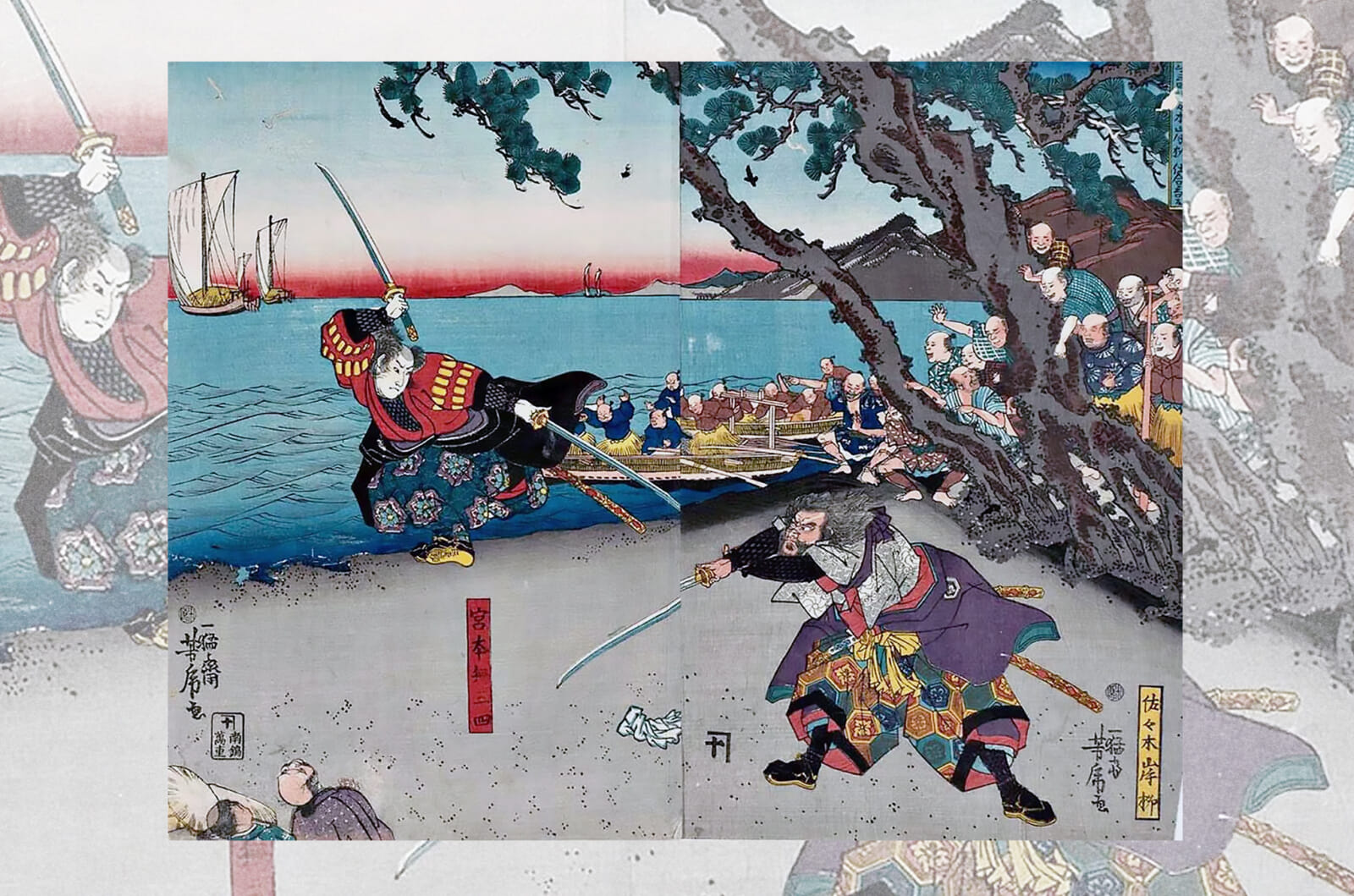
A depiction of Musashi’s “Niten Ichi-ryu” two blade fighting style (left), in “Musashi vs Sasaki Kojiro” by Utagawa Yoshitora (c. 1844-48)
A Prodigy Who Fought Dirty
Musashi received martial arts education from his father, but after leaving his village around 1599, he sought out opponents of various styles — including the inventor of the crescent spear — to analyze their techniques and pick up what worked for him. Throughout the course of around 60 duels, he created his own approach to swordsmanship built on practicality and fueled entirely by his keen mind and natural proficiency with swords.
The end result would be Niten Ichi-ryu (Style of Two Heavens), also known as Nito Ichi-ryu (Style of Two Swords as One), which used two blades — a longer katana and a shorter wakizashi. Musashi would work on refining his style for nearly 40 years between 1603 and 1640.
But that is not to say that Musashi was some honorable warrior on a path toward martial enlightenment. He could be a bit of a bastard, at least according to legend. His most famous duel, fought against Sasaki Kojiro on Ganryujima Island in 1612, was supposedly a masterclass of psychological warfare. Instead of facing Sasaki head-on, Musashi unnerved him by intentionally arriving late, and fought the samurai with a wooden sword he carved out of an oar, as if to say that he didn’t even think to bring a proper weapon with him. Maybe. The thing is, with no witnesses and very few historical sources on Sasaki, we’ll never know exactly what happened on Ganryujima.
That said, using every advantage possible would fit the psychological profile of Musashi, who was reportedly so paranoid about being ambushed that he rarely, if ever, bathed or cut his hair. (Those standard grooming practices would also have aggravated the eczema he developed as a child.) Not to put too fine a point on it, but the most famous samurai in history probably reeked, even by the standards of his time. Who knows — maybe he used that to his advantage by fighting upwind of Sasaki Kojiro.
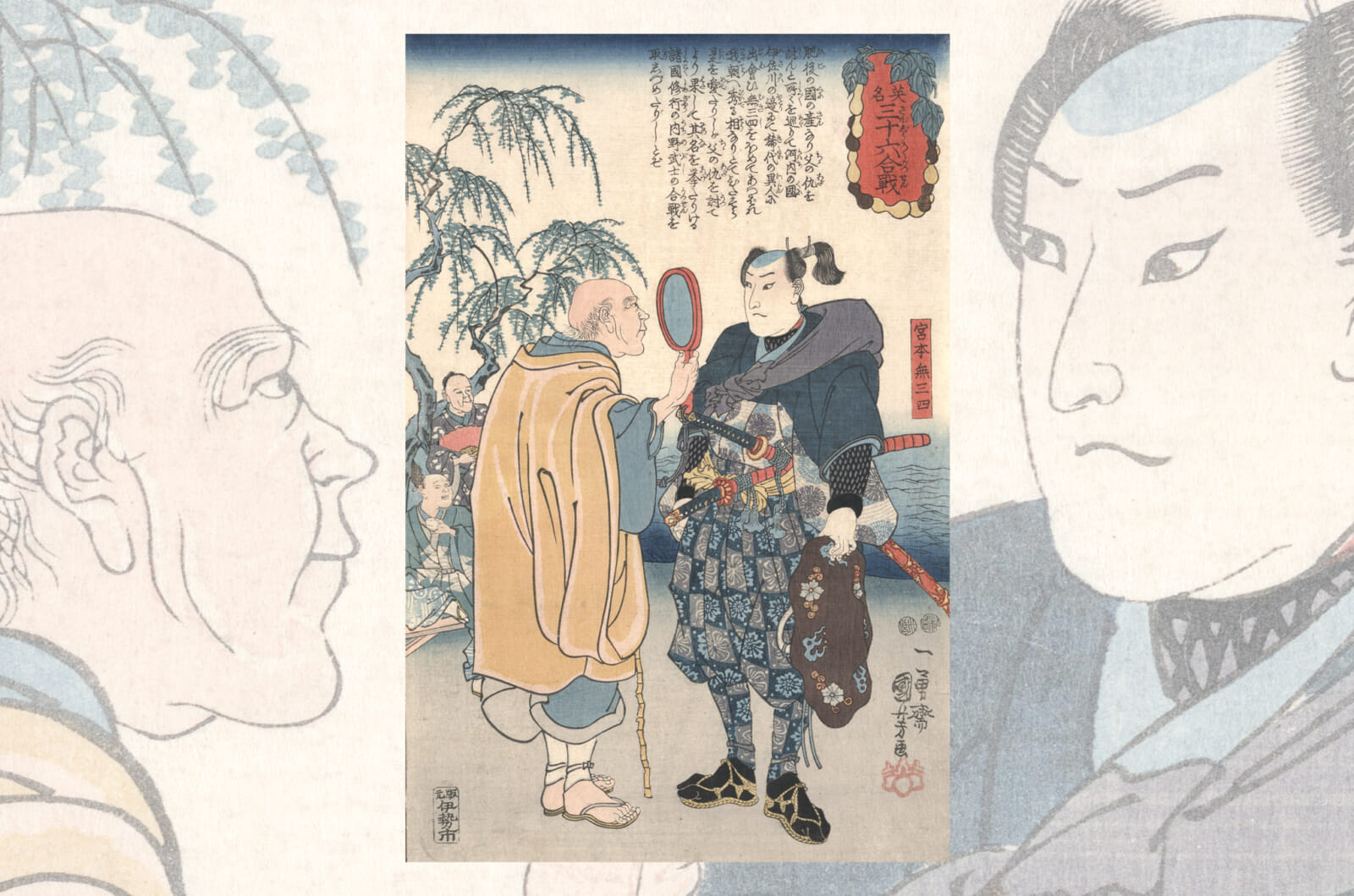
“Miyamoto Musashi” from the series “Thirty-six Famous Battles” by Utagawa Kuniyoshi (c. 1847-50)
A Refreshingly Humble Genius
Miyamoto Musashi was born at the tail end of the Warring States period, a bloody era of civil war that was all about warriors trying to survive by any means necessary. But after the Battle of Sekigahara won Japan for Tokugawa Ieyasu and ushered in the Edo period (1603–1867), the fighting mostly stopped, freeing samurai to sit back and start meditating on their lives and roles in society. It marked the beginning of Musashi’s transition into a philosopher.
However, instead of going on about how his swords were his soul (a romanticized idea that emerged later), Musashi focused on his life and concluded that a lot of his early successes were down to dumb luck. As he wrote in the introduction to his famous Book of Five Rings: “When I reached thirty I looked back on my past. The previous victories were not due to my having mastered strategy. Perhaps it was natural ability, or the order of heaven, or that other schools’ strategy was inferior.” In a time when nearly every other warrior was waxing poetic about the glory of combat, Musashi was out there openly shocked that he was still alive.
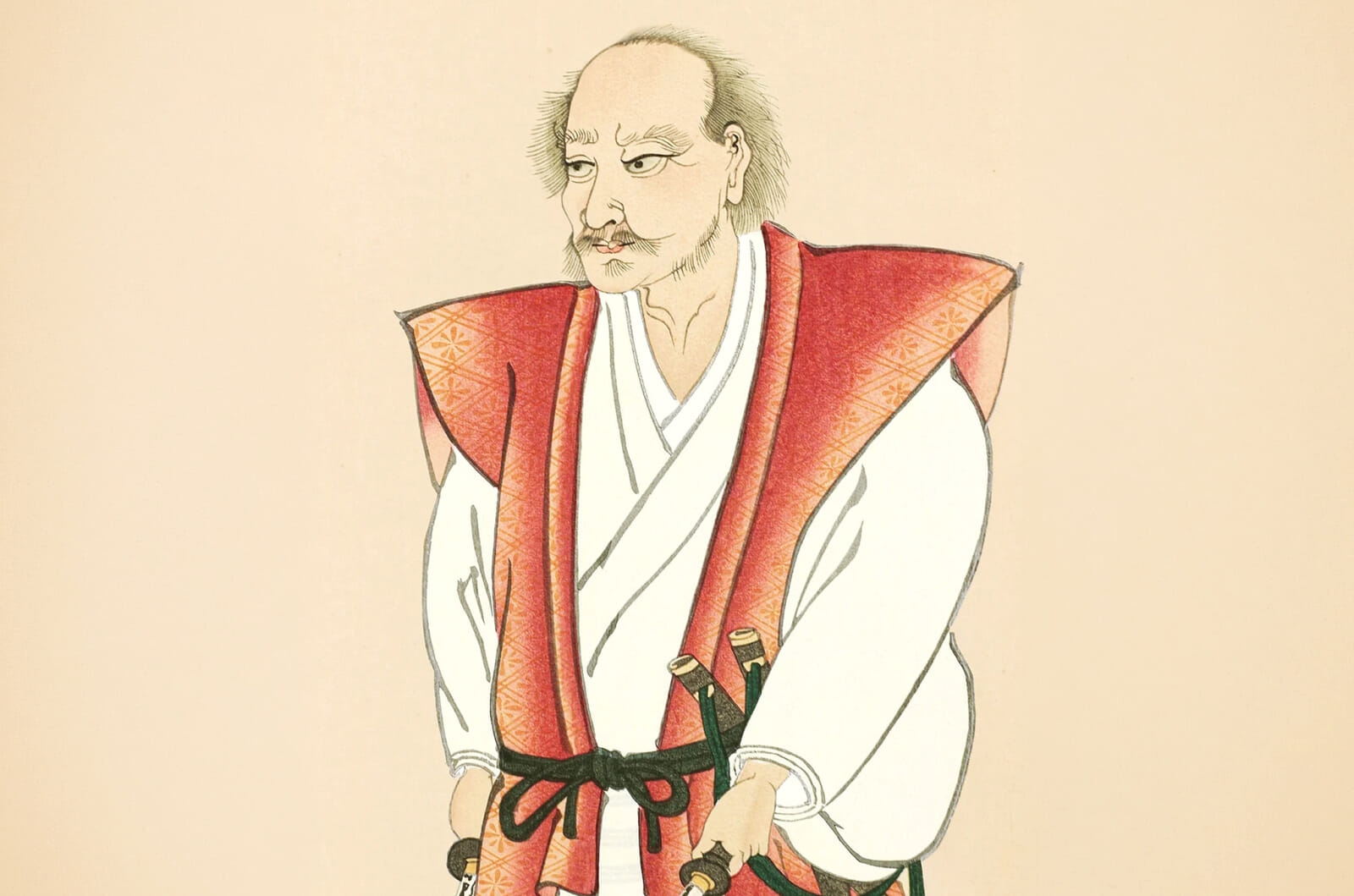
Self-portrait by Musashi, painted c. 1640s
The Book of Five Rings Explained: Strategy Beyond the Sword
As Musashi got older, he started to believe that “strategy” (the thing he apparently hadn’t mastered at 30) was a way of devoting oneself wholly and open-mindedly to any given subject, not just fighting. His favorite analogy was that of a woodworker. A carpenter begins with a blueprint, just as a samurai commander begins with a plan. Both must think ahead, choose the right materials, use supporting pieces where necessary and create order before taking action.
Strategy, as the older Musashi understood it, was less about unleashing the beast and beating someone over the head with a stick and more about proper preparations and discipline while staying flexible and open to meeting unexpected challenges head on. Much like Tsukahara Bokuden, whose teachings failed Arima Kihei all those years ago, Musashi believed in adaptability over rigid form, but he took this view further, also applying it to painting, calligraphy, craftsmanship and more.
Although Sun Tzu’s The Art of War is no longer brought up, ad nauseam, as a guide to succeeding in business, the legacy of that bizarre trend lingers on. And while The Book of Five Rings did make the occasional appearance in a corporate setting, it was never as praised as The Art of War, despite the former saying unambiguously that its teachings are applicable to so much more than just killing people. The book is less of a martial arts manual and more of a self-help guide. It talks about things like developing broad awareness across many disciplines, understanding others to understand oneself and changing strategies if one fails or a new situation calls for it.
Miyamoto Musashi’s Legacy
Miyamoto Musashi is in large part remembered today because of his dual legacy. He acted as a sort of bridge between the blood-soaked samurai of the Warring States and the internally focused philosophers of the Edo period, excelling in both areas and more than earning the title of kensei (sword saint). And it would be awesome if we could see some of that in an animated Vagabond series. The manga debuted in 1998. It’s time.
Related Posts
- Honda Tadakatsu: The Indestructible Samurai
- Amakusa Shiro: The Teenage Samurai ‘Saint’ of the Shimabara Rebellion
- The Red Monk: How One Angry Samurai Started a 150-Year War
Updated On October 7, 2026