Yamana Sozen (1404–1473) was a man at odds with himself. As head of the esteemed Yamana samurai clan, he was in part a classic aristocrat who loved the status quo … which unfortunately involved fealty to the shogun. The problem was that Sozen despised the ruling Ashikaga shogunate. Even after taking the tonsure and becoming a warrior monk, no amount of the Buddha’s teachings on love and mercy made him warm up to the country’s military leaders. In the end, he dealt with his cognitive dissonance in the worst way possible — by starting a war that destroyed most of Kyoto and plunged Japan into 150 years of bloody anarchy. This is the complex legacy of the Red Monk.
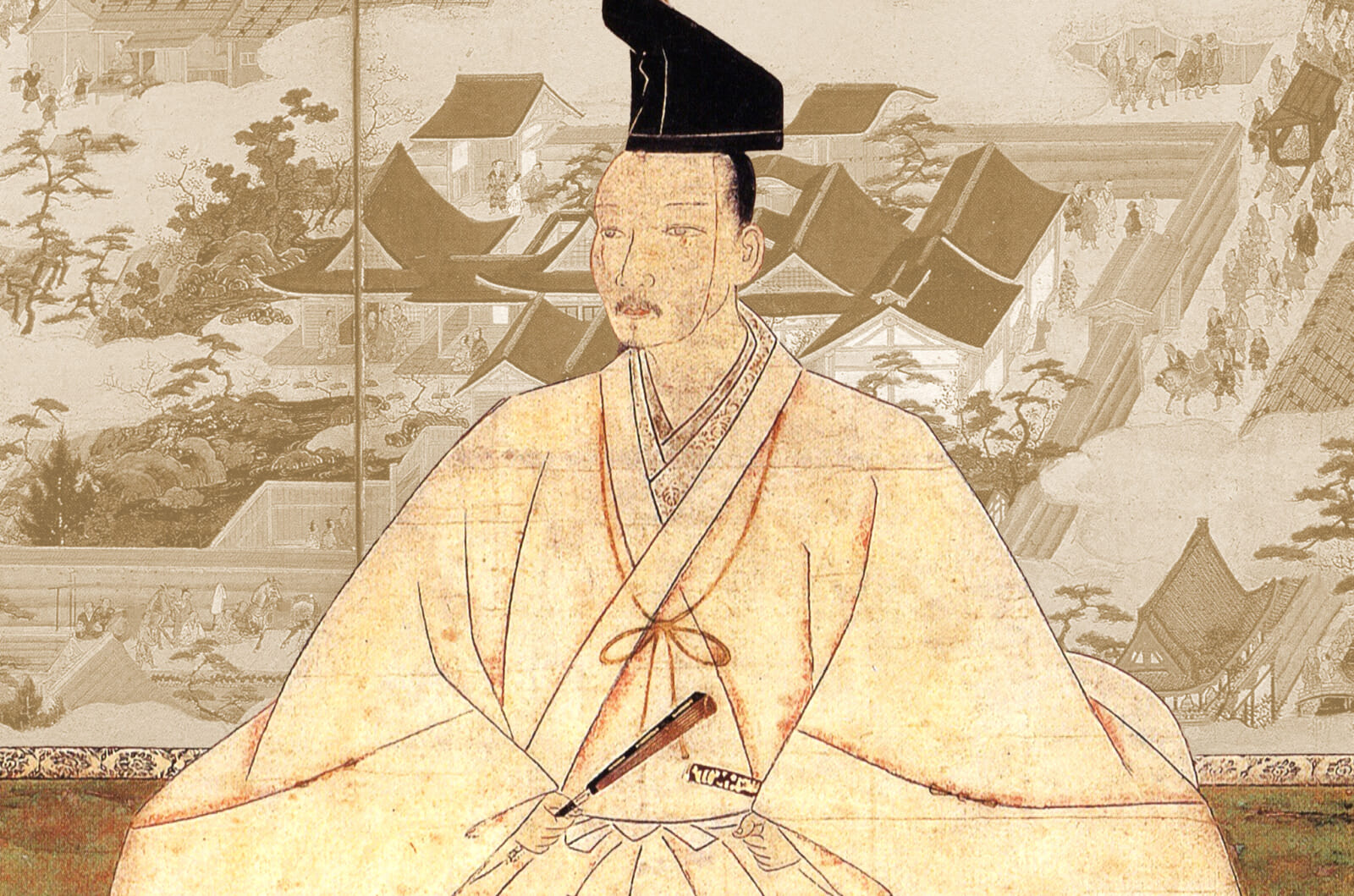
Ruling shogun Ashikaga Yoshinori depicted with his grand residence (the Hana no Gosho / “Flower Palace”) which was burned down during the Onin War | Composite image / Wikimedia
Taking Back the One-Sixth
Sozen was born Yamana Mochitoyo to a prestigious family descending from the Nitta clan, which helped topple the Hojo regents and paved the way for the Ashikaga to seize power in 1336. The new shogunate sadly cared more about the Yamana controlling so many provinces that people called them Rokubun no Ichi-dono, the “Lords of One-Sixth,” meaning one-sixth of all the provinces in Japan. Ashikaga Yoshimitsu, in an effort to limit their power, launched a campaign against the Yamana and took many of their holdings in the 1390s, causing Mochitoyo to be born into a clan with a burning hatred of the shogun family.
After being made head of the Yamana, he waited for the right moment to restore his family’s position. His big break came in 1441, when the oppressive and volatile shogun Ashikaga Yoshinori was assassinated by the powerful Akamatsu Mitsusuke. On the inside, Sozen was likely doing backflips and laughing, but publicly, he made himself the face of divine retribution against the Akamatsu, ultimately defeating their armies and taking their lands for himself. By the time Sozen was done with his conquests, his family once more controlled about one-sixth of Japan’s provinces. But Sozen decided that he was also owed interest.
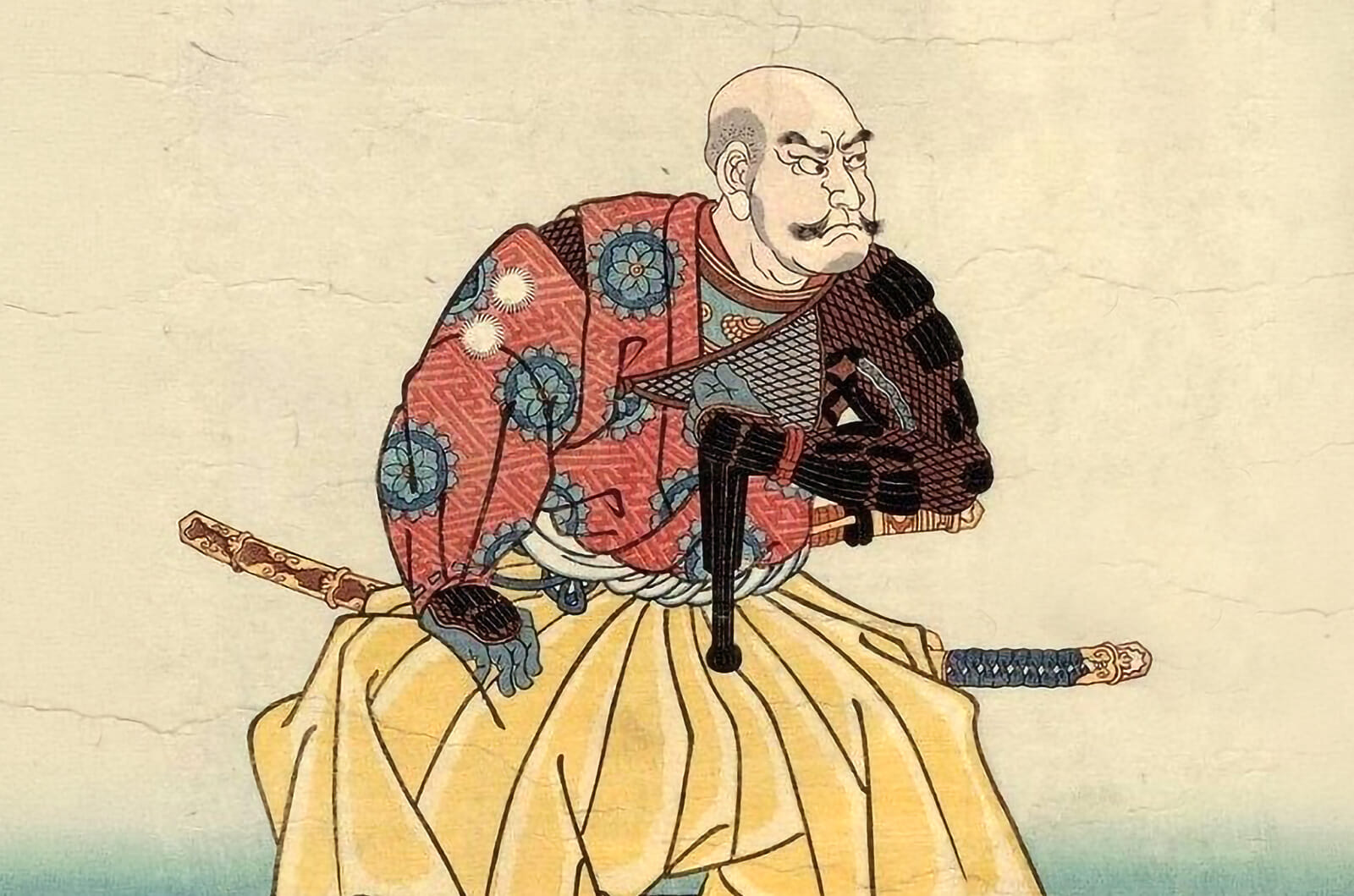
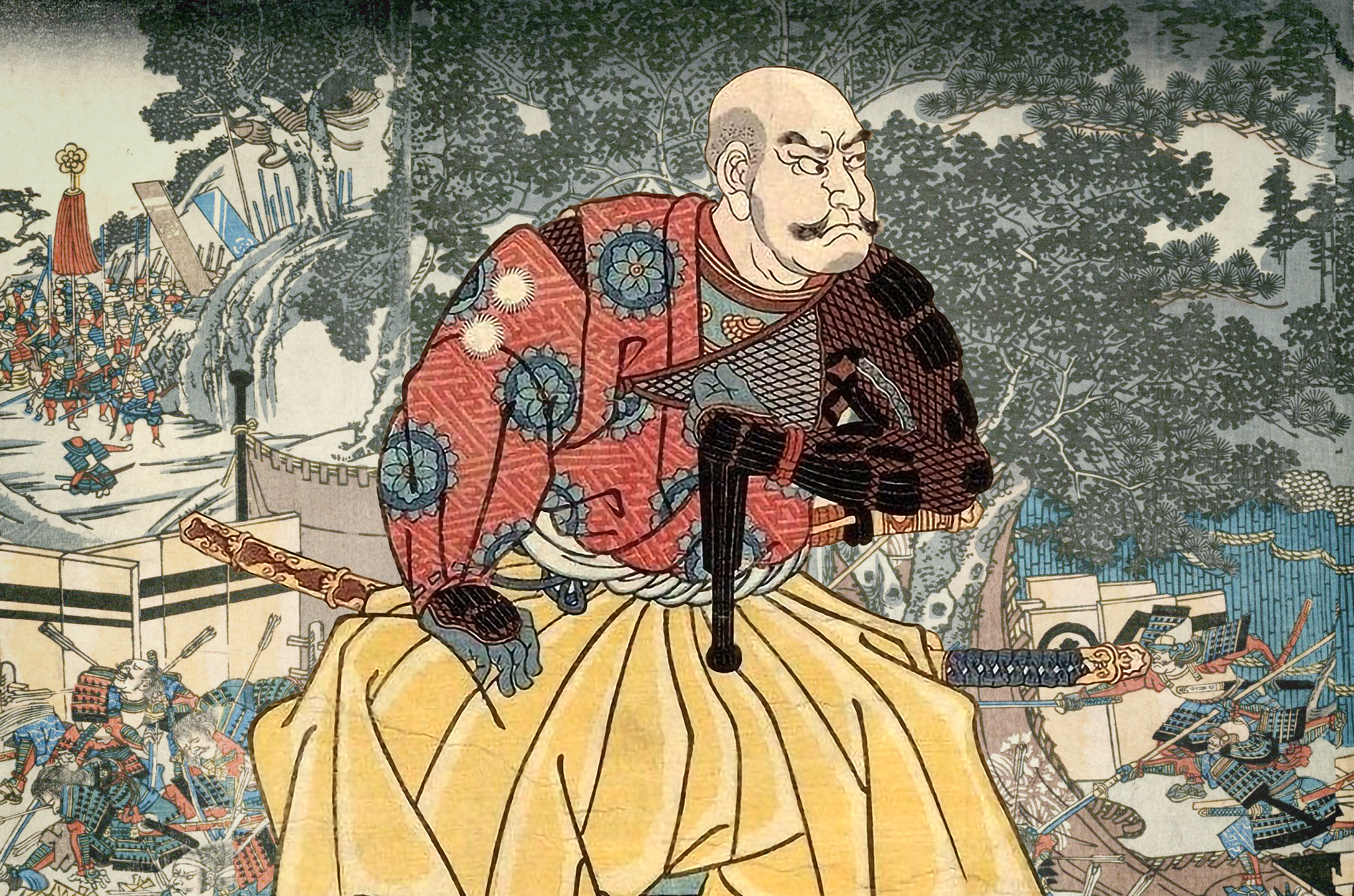
Portrait of Yamana Sozen by Utagawa Yoshikazu (c. 1858) | Wikimedia
An Angry Monk but a Pretty Great Boss
By the mid-15th century, Yamana Sozen had become one of the most powerful samurai in Japan, not just because of the size of his holdings but also because he inspired a lot of loyalty in his retainers. “Sozen” was his monk name after he took Buddhist vows, which earned him the nickname Aka-nyudo (the “Red Monk”) because of his unusually red complexion and abrasive personality. Sozen was famously short-tempered, aggressive and unpleasant … to people he deemed useless or foolish. But his devotion to his men apparently bordered on “fatherly.”
While some of these stories may have been exaggerated over time, Sozen would reportedly often pray and read sutras for his vassals’ health and souls. When one of his trusted retainers fell ill, Sozen is said to have locked himself away for days at a temple, conducting devotions to aid in his recovery, something that most high-ranking samurai outsourced to non-warrior monks. He’d also hold memorial services, once handwriting Buddhist invocations (considered especially powerful) to honor a fallen soldier. Basically, Sozen got respect because he gave respect.
But what he really wanted was absolute political dominance. He finally saw his chance during the shogun succession crisis.
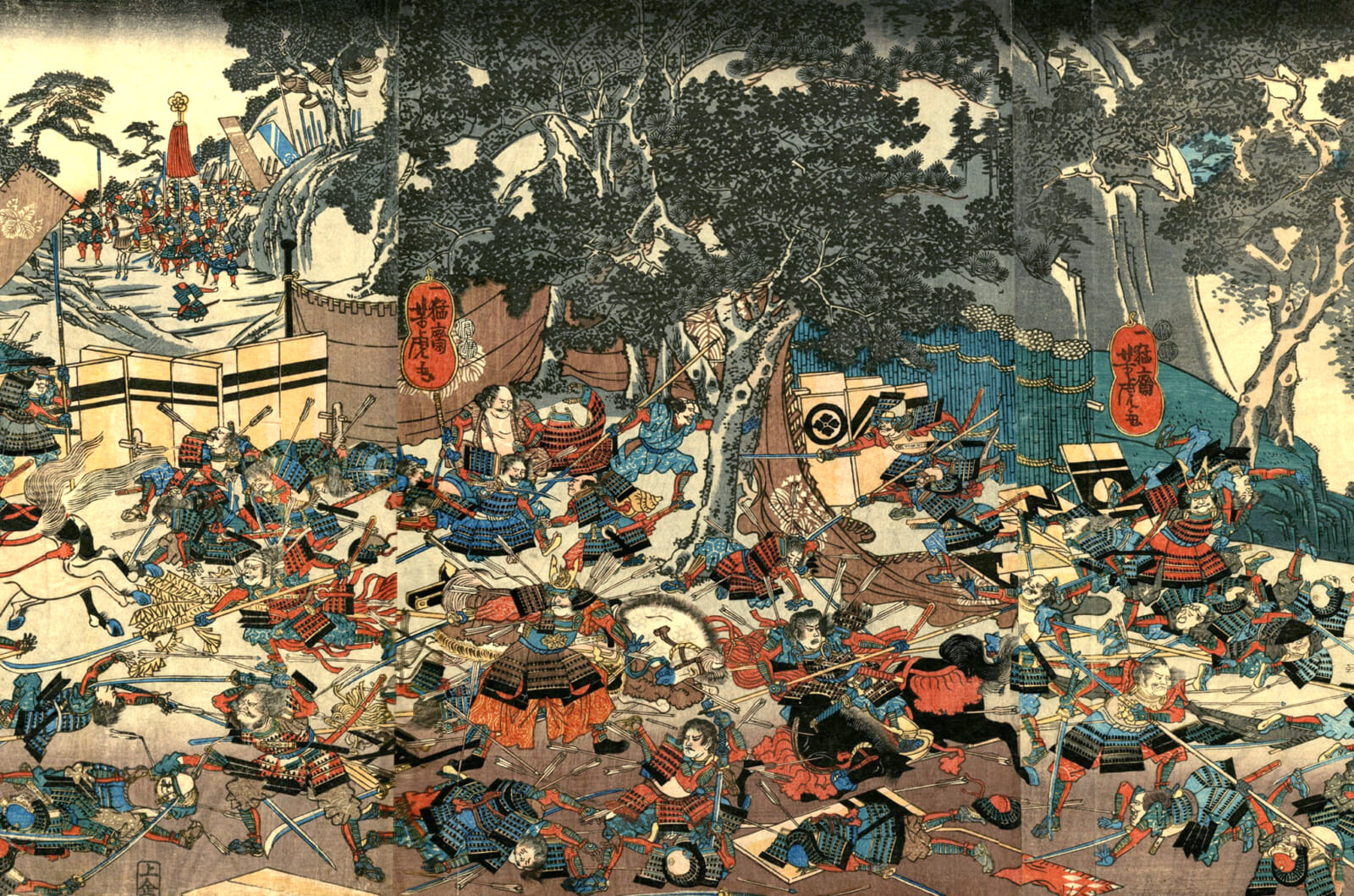
“The Battle of Onin” by Utagawa Yoshitora (c. 1847-1852) | Wikimedia
Kyoto Burns
In 1464, shogun Ashikaga Yoshimasa, having no children of his own, made his brother Ashikaga Yoshimi his heir. Then a year later, Yoshimasa’s wife gave birth to a son, Ashikaga Yoshihisa. It was probably one of the worst cases of bad timing in Japan’s entire history. Traditionalists stood by Yoshimi, but Sozen, leading a coalition that didn’t care about the Ashikaga but wanted to shake things up, declared themselves for the infant Yoshihisa, with Sozen undoubtedly imagining himself standing behind the child as the real power in Japan. In 1467, these camps clashed in what came to be known as the Onin War.
Sozen led the 110,000-warrior-strong Western Army against the 160,000 Eastern Army soldiers led by Hosokawa Katsumoto … who was Sozen’s son-in-law. Look, you don’t go down in history as the Red Monk if you let little things like family get in the way of total carnage. And that basically sums up the Onin War.
The conflict tore Kyoto apart. Mansions and temples burned, entire neighborhoods were barricaded and razed, the streets literally ran red with blood. Yoshimasa, widely considered one of the most incompetent leaders in Japanese history, failed to stop the Capital of Peace and Tranquility from turning into a smoking hellscape.
Despite being well into his 60s at the time, Sozen allegedly took part in some of the fighting himself, like when his camp was invaded. But as the years went on, no side managed to get the upper hand. In the end, both Sozen and Katsumoto died the same year, in 1473, though the Onin War continued without them until 1477. And it later spread far outside the capital.
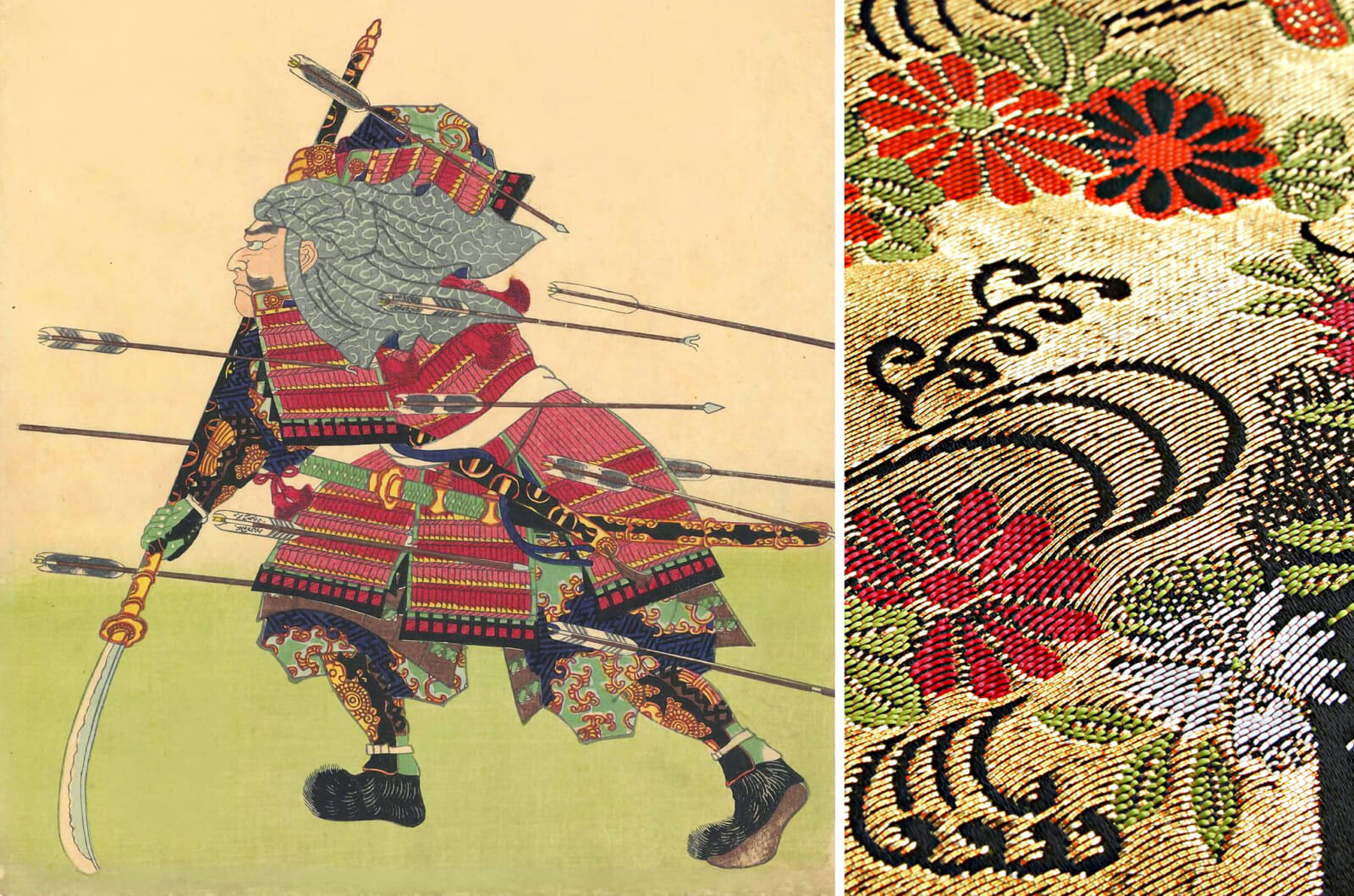
Left: Portrait of Sozen by
Utagawa Yoshitora (c. 1866) / Right: Nishijin-ori Silk | Wikimedia / Pixta
The Bloody and Silky Legacy of Yamana Sozen
After word got out that the shogun couldn’t stop two guys from turning his own backyard into a war zone, all faith in the central government was destroyed. Soon, provincial samurai came to the conclusion that nobody was actually in charge of the country. Not only was the shogun toothless, the emperor was a mere figurehead.
In the resulting power vacuum, some decided to rule their fiefs as basically independent kingdoms, while others tried to unify the country under their rule. This is how Japan slid into Sengoku, the Warring States period: 150 years of civil war when the titles of “emperor” or “shogun” meant nothing. It was a time of rule by strength.
But much like the man himself, the legacy of Yamana Sozen is complex. On the one hand, yes, he did thrust Japan into an era of brutal anarchy; on the other, he inspired one of Japan’s most famous textile traditions.
After the Onin War, weavers settled on the site of Sozen’s wartime camp, where they started producing a specific variety of decorative silk. The technique had been known for centuries by that point, but it began to thrive so much in the late 15th century that it was named after the artisan neighborhood: Nishijin (“western army camp”). As in Kyoto’s famous Nishijin-ori silk.
Granted, it feels like it should primarily be red to really tie it to the legacy of the Red Monk — but you can’t have everything.
Related Posts
- Debunking the Three Great Villains of Japan’s Sengoku Period
- Famous Samurai Battles and Conflicts | List of 7
- Hojo Masako: Exploring the Incredible and Violent Life of the ‘Nun Shogun’
Updated On July 20, 2026