Masuda Shiro Tokisada was born around 1621 in Kyushu to Japanese Christian parents. He was later baptized and took on the names “Geronimo” and “Francisco.” To the people of the Amakusa Islands, he became known as “Amakusa Shiro,” while Jesuit missionaries preferred to call him the “child of prophecy” and “Heaven’s messenger.” The point is, he was known by many names, but is remembered today for one thing: leading one of the largest anti-government rebellions in Japanese history. Not bad for a 16-year-old. This is the story of Masuda Amakusa “Child of Prophecy” Geronimo Francisco Shiro “Heaven’s Messenger” Tokisada.
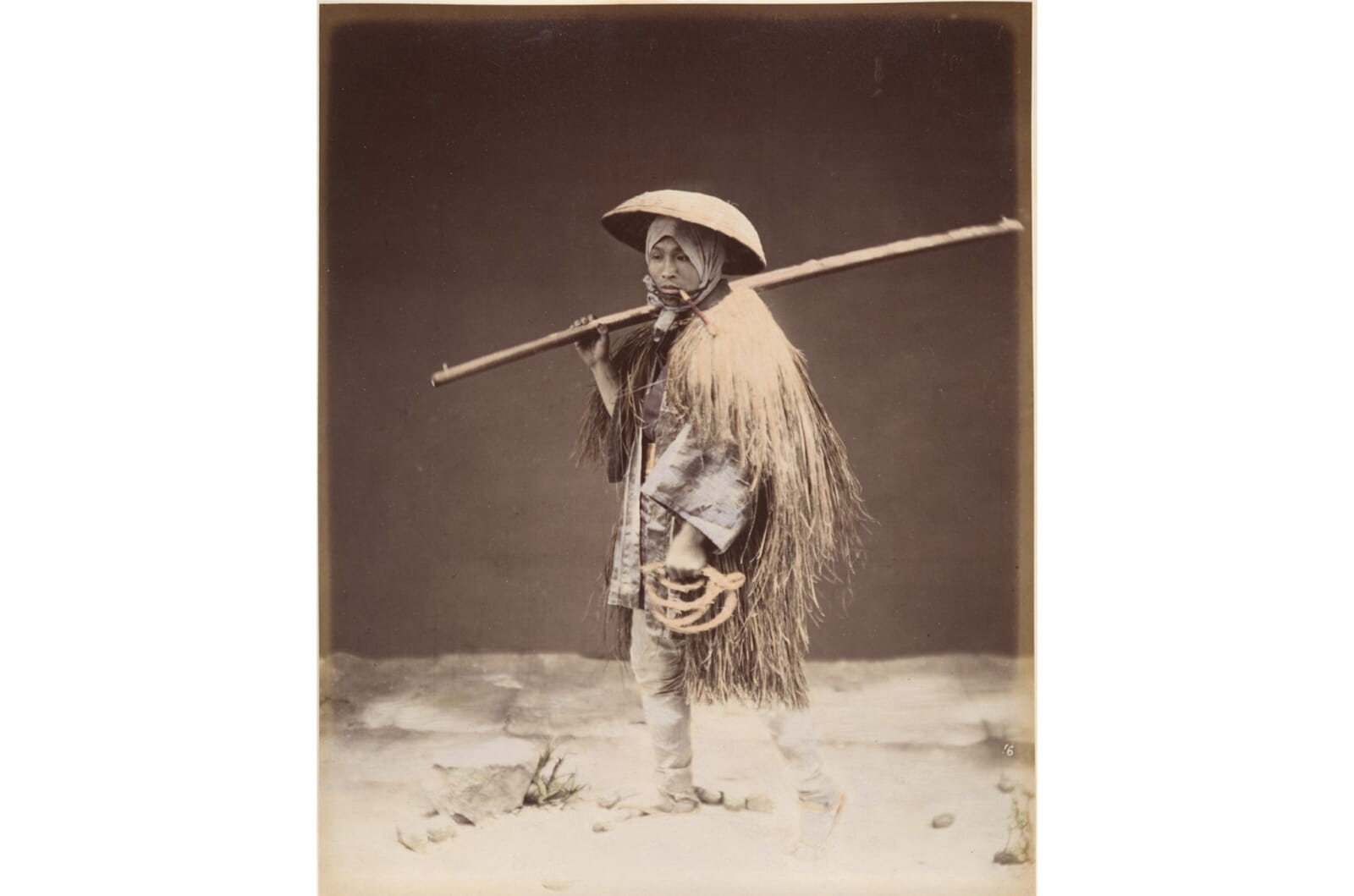
Farm laborer in a straw mino coat, taken by Suzuki Shinichi (c. 1870s) | Public Domain
No Taxation Without Extermination
It was a bad time to be Christian in early 17th-century Shimabara (part of modern-day Nagasaki) and the Amakusa Islands (in modern-day Kumamoto), what with the whole drought, famine, exorbitant taxation and brutal persecution by local lords. What’s worse, that last bit was an egregiously unfair case of religious entrapment.
Most of the peasants of Shimabara and the Amakusa Islands only converted to Christianity because the previous lords embraced the new religion. But once foreign missionaries fell out of favor (and into torture pits), swathes of Kyushu ended up under new management that was not a fan of the Western faith. What they loved were huge and expensive construction projects to impress the ruling Tokugawa shogunate, so they tried to squeeze every last coin from the people in their domains.
The torture of Christians was done mostly for the love of the game, but punishments for unpaid taxes? There was cold, calculated cruelty there, including unconfirmed reports of binding people’s hands and setting their straw raincoats (mino) on fire in what was supposedly known as the “mino dance.”
Christian or not, the people of Shimabara and Amakusa finally reached a breaking point on December 17, 1637, and killed a local magistrate. It was the spark that lit the fuse of the Shimabara-Amakusa Rebellion (or simply the Shimabara Rebellion), where 40,000 people fought against injustice with a divine teenager as their spiritual leader.
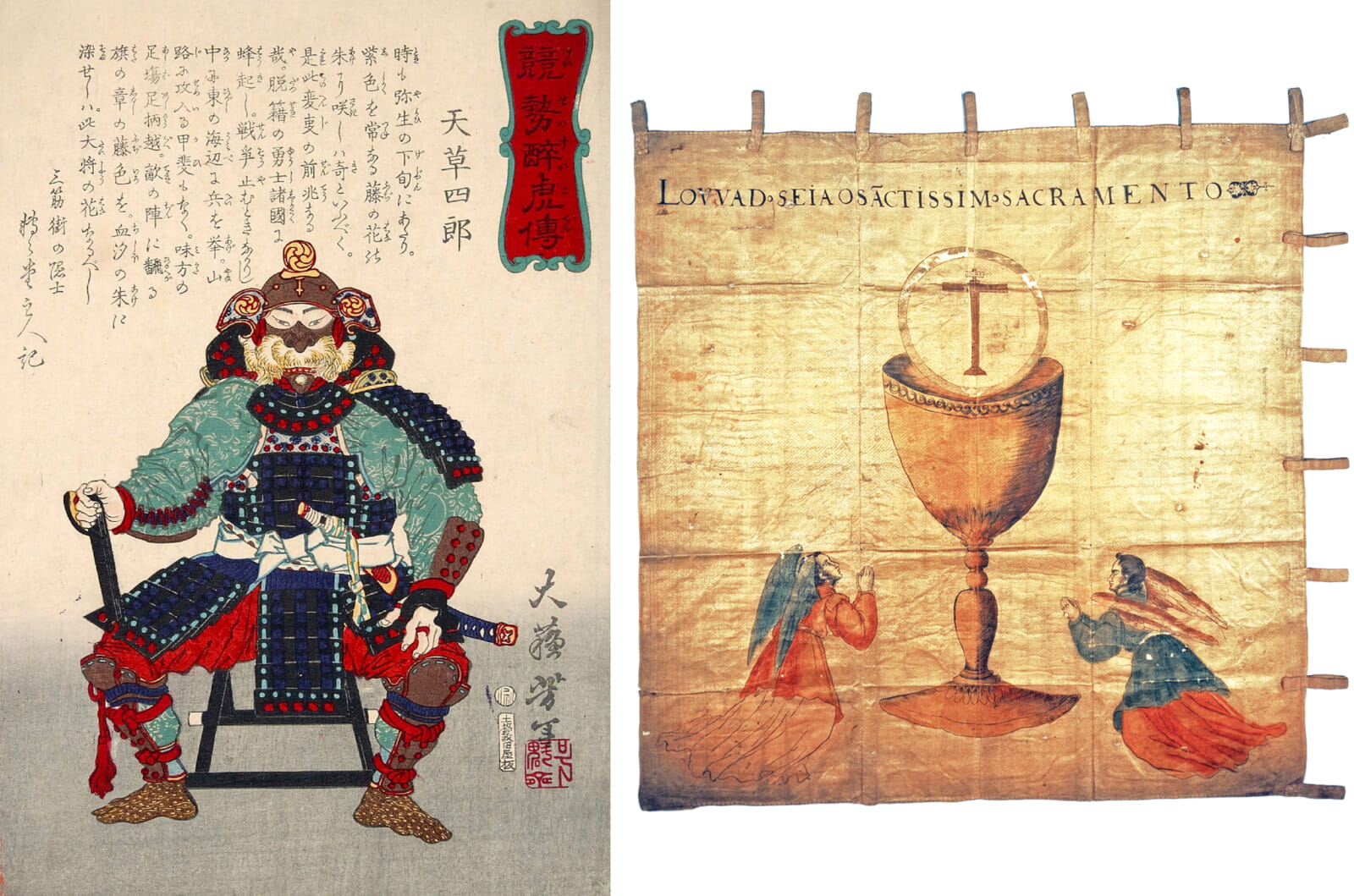
Portrait of Amakusa Shiro (left c. 1874) and his battle flag (right) held at the Amakusa Christian Museum | Wikimedia
There Are No Age Limits for Holy Warriors
The Shimabara Rebellion was made up of farmers, fishermen, craftsmen, merchants and, most importantly, ronin. The masterless samurai and local chieftains became responsible for all logistics and tactics, but Amakusa Shiro (we will not be using his full name) was the undisputed “leader” of the insurrection.
Though only 16 at the time, he ascended to the position due to his palpable charisma, oratory skills and a reputation for performing miracles. Not all of the Shimabara rebels were Christian, but there were enough of them amid the group to elevate a boy — who could allegedly walk on water, heal the sick and command animals — to a symbol of their struggle. These claims were most likely started by Jesuits trying to craft a beacon for what they saw as a religious uprising (which was actually more about taxes). To make sure non-Christians followed Shiro into battle, additional rumors were spread that Shiro was also the son of Toyotomi Hideyori.
Hideyori was the heir of Toyotomi Hideyoshi, the de facto ruler of Japan from 1590 to 1598. He was destined to rule Japan but was ultimately defeated and killed at the Siege of Osaka in 1615, with his death ending the Toyotomi line and cementing the Tokugawa shogunate’s rule over Japan. But if Hideyori had a secret son, then the Toyotomi cause lived on, and the whole rebellion became that little bit more legitimized. From what we can tell, though, Amakusa Shiro himself wasn’t trying to deceive anyone.
By all accounts, he had a deep sense of justice and truly believed in the cause. After a few false starts, his followers managed to fortify the ruins of Hara Castle, which became their stronghold. From there, Shiro would keep everyone’s spirits up with rousing speeches. The young samurai inspired tens of thousands of people to hold out for months against 120,000 soldiers sent after them. Only a small portion of the insurgents were actual fighters, but many still participated in night raids that inflicted heavy losses on the shogunate’s army. With a blessing from Heaven’s messenger, how could the rebels lose?
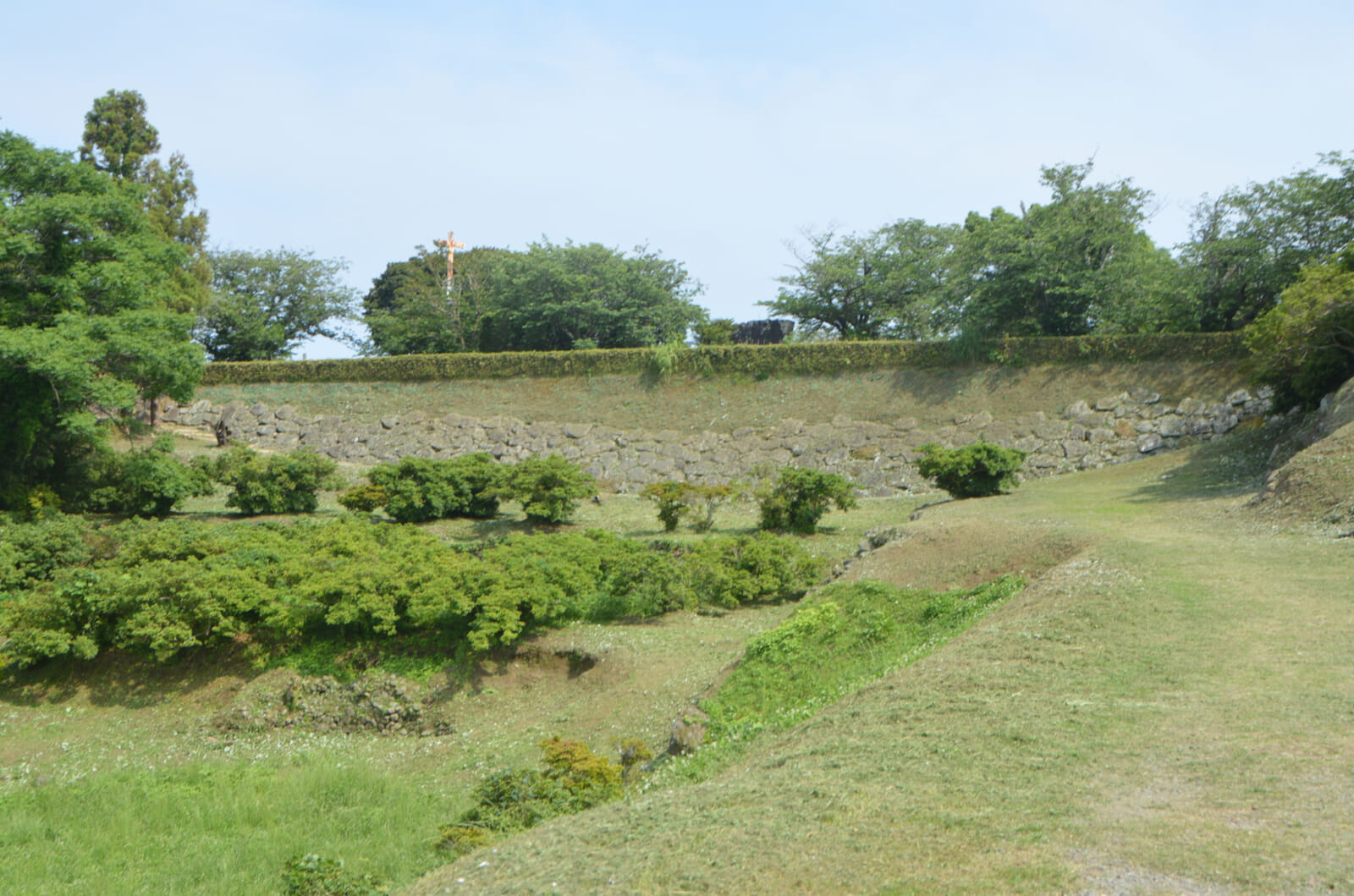
Present day ruins of Hara Castle with Crucifix monument seen on left
How the Rebels Lost
Pretty words only go so far in war before the reality of dwindling provisions and ammunition — and of being severely outnumbered — finally catches up to you. Or until the Dutch butt in to score some points with the government. One Captain Nicolaes Couckebacker of the Dutch trading post supplied the shogunate forces with cannons and gunpowder and even personally oversaw a naval bombardment of Hara Castle. It didn’t have a huge impact on the rebellion, but it definitely didn’t help.
Hara Castle, and with it the whole of the Shimabara Rebellion, fell on April 15, 1638. Amakusa Shiro was captured and swiftly executed, with the same fate awaiting his followers. All of them.
The actual number of the Shimabara rebels is heavily disputed. Forty thousand is the high end of historical estimates. There might have “only” been 27,000 of them. That is still a lot of people to put to the sword … or on the cross. In fact, some historians have called this slaughter of mostly civilians a “holocaust.” The government actually had to forcefully resettle people to the Shimabara-Amakusa region to maintain its paddies and fields, as they had killed all of their previous tenders. The death of Amakusa Shiro also had other serious effects on Japan.
In the aftermath of the Shimabara Rebellion, Christians were driven underground and Japan virtually closed itself to the outside world for over 200 years, trading only with the Dutch and a few Asian countries. It’s amazing how radically different the country’s history would have been if just one teenage samurai could have actually performed miracles like talking to animals. He could have sent flying dogs to annoy and distract his enemies. It worked on Toyotomi Hideyoshi.