On the morning of March 20, 1995, during the morning rush hour, five members of the doomsday cult Aum Shinrikyo boarded separate cars on three subway lines converging on Kasumigaseki, the Tokyo district that houses Japan’s ministries, placed plastic bags containing liquid sarin on the floor and pierced them with the tips of their umbrellas.
Thirteen people died in the immediate aftermath, and a fourteenth victim died in 2020, bringing the eventual death toll to 14; more than 6,000 people were sickened in what remains one of the worst atrocities in modern Japanese history. The cult’s leader, Shoko Asahara, was executed along with 12 of his followers in 2018.
Thirty-one years later, the attack has an unlikely afterlife in travel advice. Ask why you can walk for 20 minutes through Tokyo with an empty plastic bottle in your hand and nowhere to put it, and you’ll almost certainly be told it’s because of the sarin attack, since the bins disappeared after the incident and supposedly never came back.
That’s true up to a point, but the bins did come back, more than once, and each time they vanished again it was for a slightly different reason, only some of which had anything to do with terrorism.
The Years After the Sarin Attack
The sarin itself was never hidden in a trash can, but in the weeks after the attack, railway operators sealed and removed their bins anyway, and restricted coin lockers and vending machines for a time, on the logic that anything enclosed could conceal something dangerous.
That first removal didn’t last long. Eidan, the authority that ran the subway at the time, brought its bins back on a smaller scale in 1997, and by the end of the decade Tokyo’s platforms had trash cans again.
The next scare, at the end of 1999, actually involved a garbage bag. On December 24, a bag taken off a bullet train at Shin-Osaka exploded at a JR Tokai yard in Osaka Prefecture, and three days later a device planted in a coin locker at JR Urawa Station in Saitama went off and injured a man, so JR East and JR Tokai covered the bins and closed the lockers at around 500 Tokyo-area stations until the holiday rush had passed 10 days later.
Almost nobody outside Japan remembers the episode, but it offered an early illustration of a pattern that would recur over the next two decades: bins closed whenever a security threat emerged, then quietly reopened once it faded.
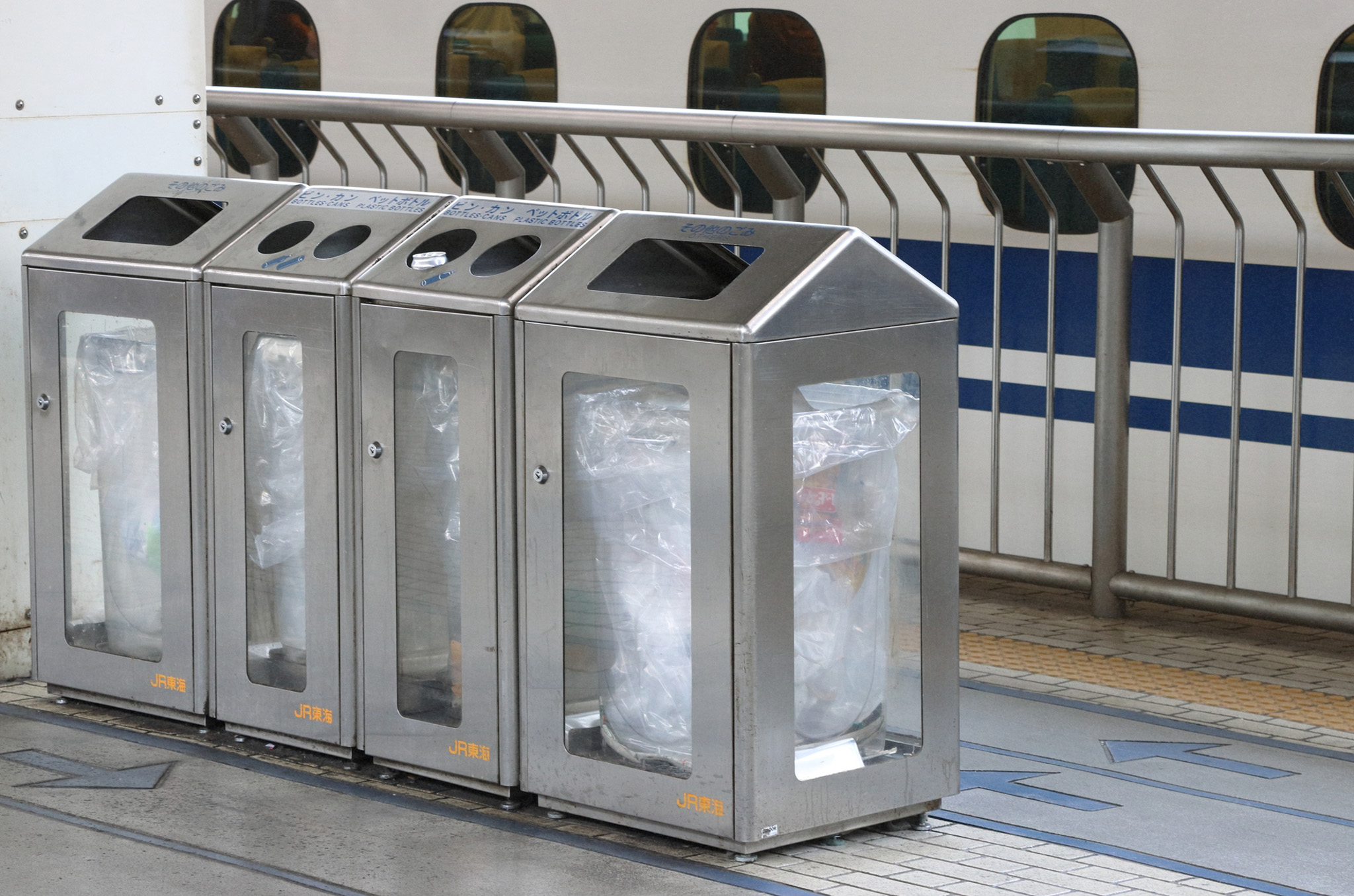
After the commuter-train bombings in Madrid in 2004, Japanese railway operators began removing bins again. The London bombings the following year reinforced those security concerns. Keio and Tokyu both traced their removals to Madrid. The compromise that followed was the see-through bin, which Tokyo Metro adopted from 2005 so staff could check what was inside.
For about 15 years these clear bins were an ordinary part of the commute, sealed for summits and state visits and opened again afterward. European operators facing the same fears mostly kept their bins, and as a column in Toyo Keizai pointed out, German and Dutch commuter trains still carry them, fitted with stiff spring-loaded lids that make it hard to push anything large inside.
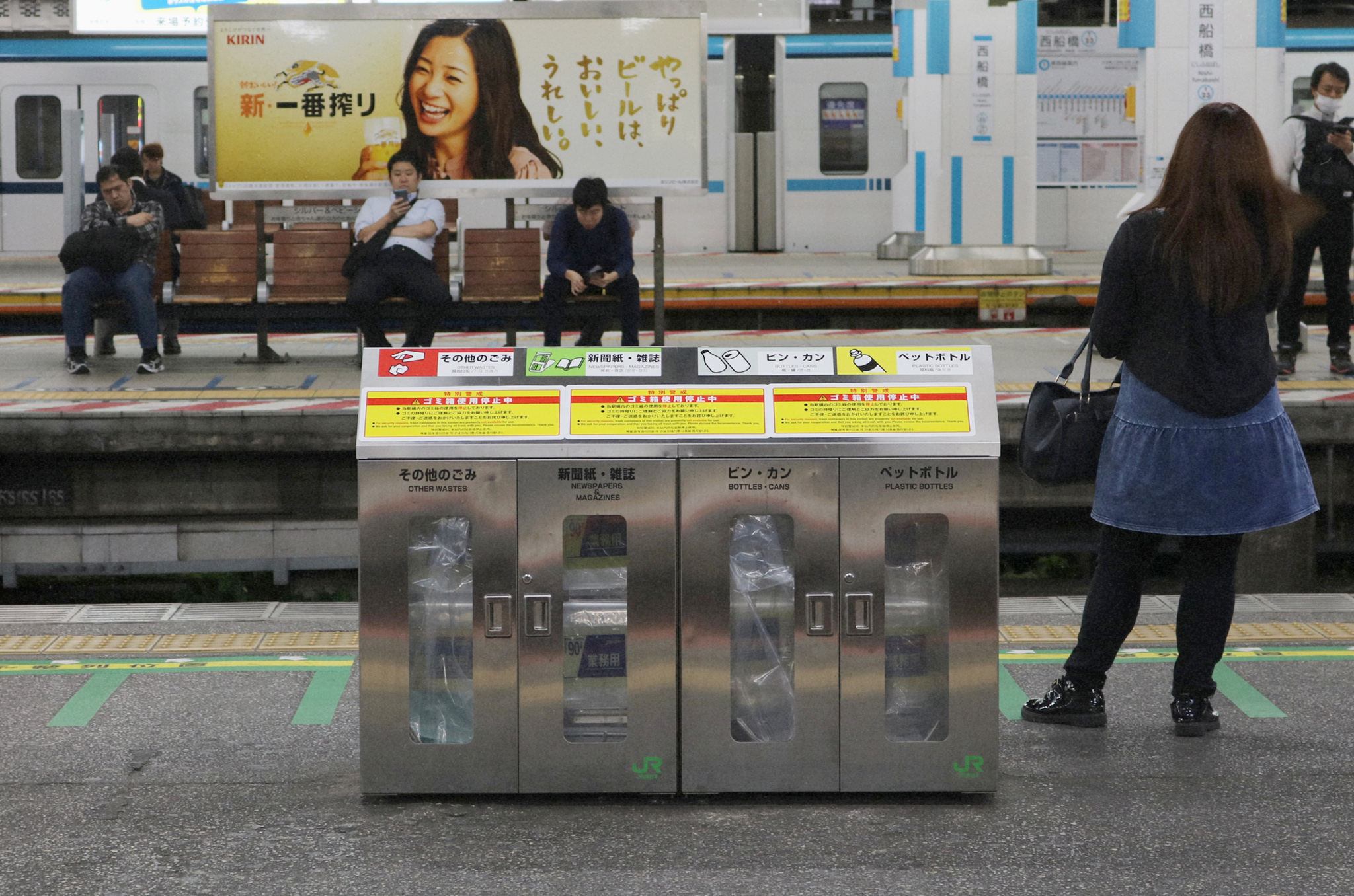
Tokyo metro bin restrictions during the 2019 G20 Osaka Summit, three years before they were removed completely
Why the Bins Stayed Gone
The largest wave of removals came not in 1995 but between 2021 and 2022, when several Tokyo-area railways took their bins out during the pandemic and Tokyo Metro cleared them from every one of its stations in January 2022. When Business Insider Japan asked the operators why, terrorism turned out to be only one item on a longer list.
Tobu cited suspicious objects, but also the risk of COVID-19 to cleaning staff, people bringing in garbage from home, cigarette butts that hadn’t been properly put out and medical waste such as syringe needles, while Odakyu mentioned terrorism and crime prevention and declined to say more.
Household rubbish has emptied parks as well as platforms. Minato ward also resisted installing or maintaining public bins in its parks, citing a series of small fires, smells and pests, and Nara Park removed the bins from its parks in the mid-1980s, a decade before the sarin gas attack, to keep the deer from eating out of them.
None of this makes the security concerns imaginary, but it does suggest that terrorism gave operators a reason the public would readily accept for a change that also cut cleaning costs and kept other people’s garbage off their books.
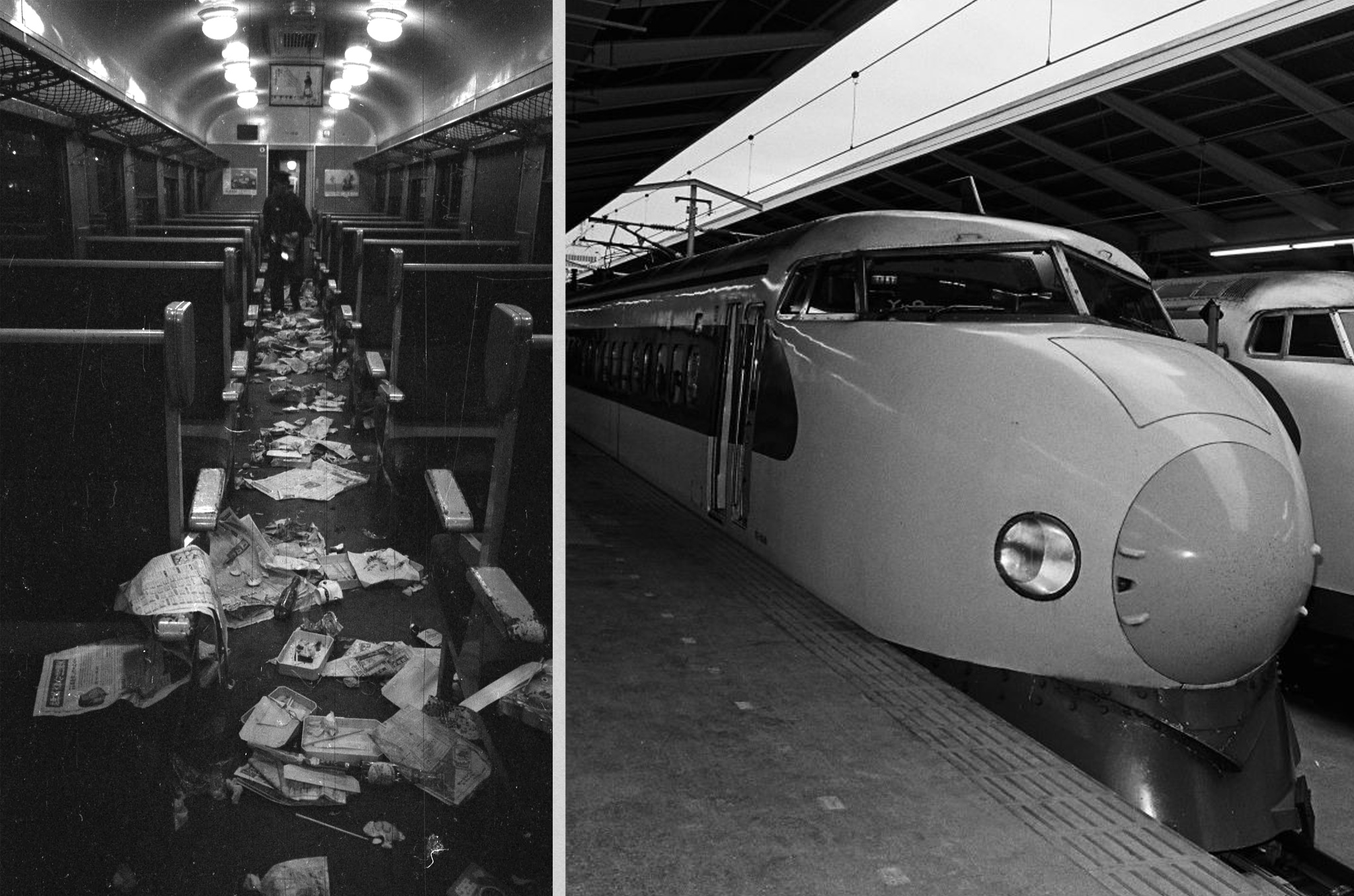
Left: a 1959 news report pictured the trash left on a train to Kagoshima. Right: the first shinkansen pictured in 1964
The History of Japanese Cleanliness
The other half of the usual explanation is cultural, the idea that Japan can do without bins because people here simply carry their trash home. Rail historian Tatsuya Edakuni, a former Tokyo Metro employee, has shown that this habit is more recent than it might appear.
A 1955 etiquette guide warned passengers not to throw things out of train windows, because empty bottles tossed from moving trains were regularly injuring track workers, passersby and passengers on oncoming trains, and since many carriages of the era had no bins, travelers were told to wrap their bento boxes and mikan peels in newspaper and leave the bundles under the seat for staff to collect.
Trains equipped with rubbish bins became more common in the 1960s, and a 1964 guide to the new Shinkansen asked passengers to give up their old habits and carry their rubbish to the bin by the door, though Edakuni notes that the under-seat bundle survived in some regions into the late 1970s.
In his reading, rising incomes, decades of public campaigns and better facilities, bins included, built these manners together, which means the take-it-home ethic now used to explain why Japan has no bins was partly taught by having them.
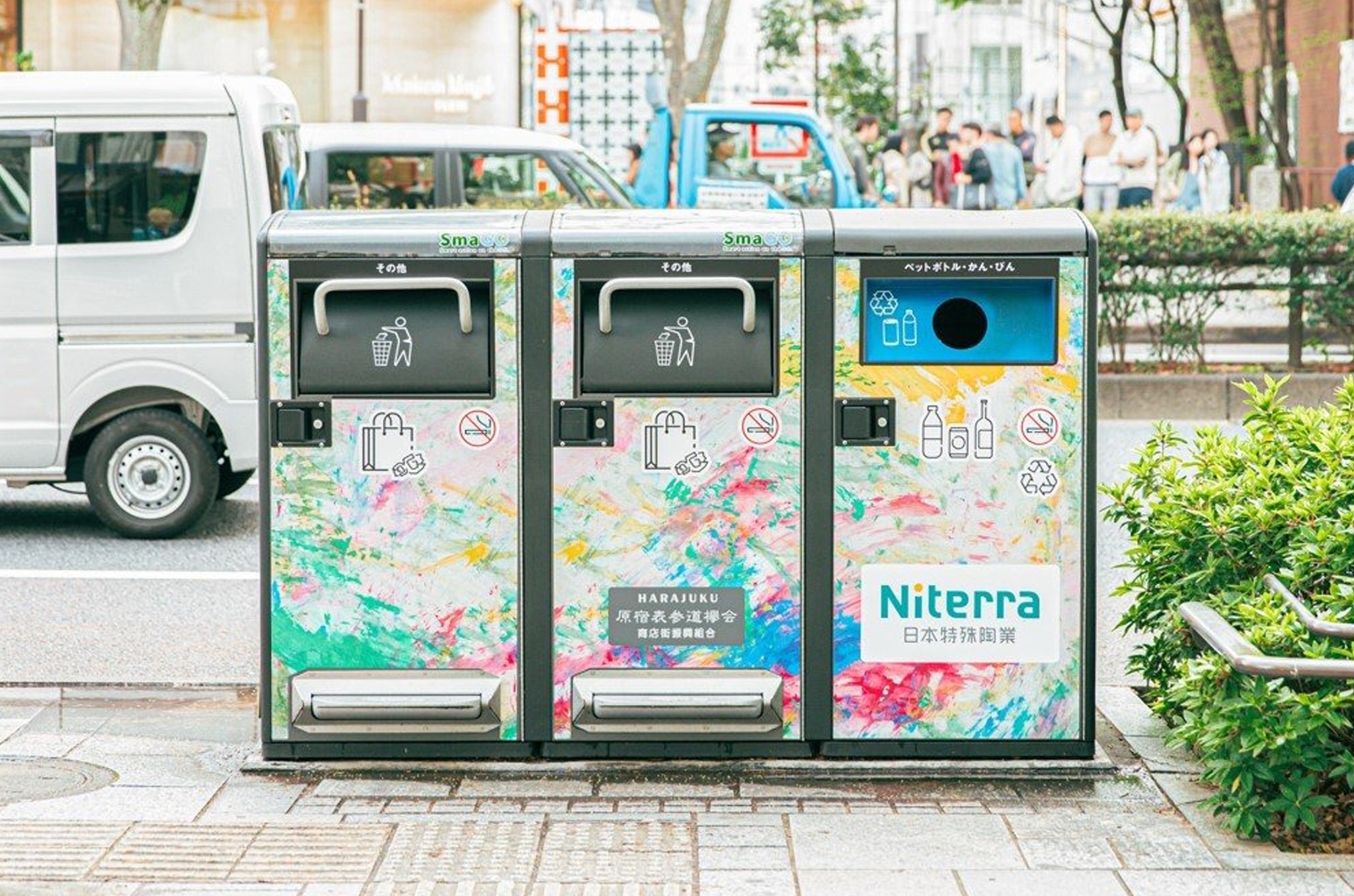
Solar-powered “SmaGO” bins, first used in Omotesando (pictured), are being adopted across more areas of Tokyo
A New Approach to Public Waste
What has finally reopened the question is tourism. In a 2025 Japan Tourism Agency survey of more than 4,000 foreign visitors, 21.9% cited the lack of rubbish bins as an inconvenience, making it the most commonly reported problem, ahead of language barriers and crowding.
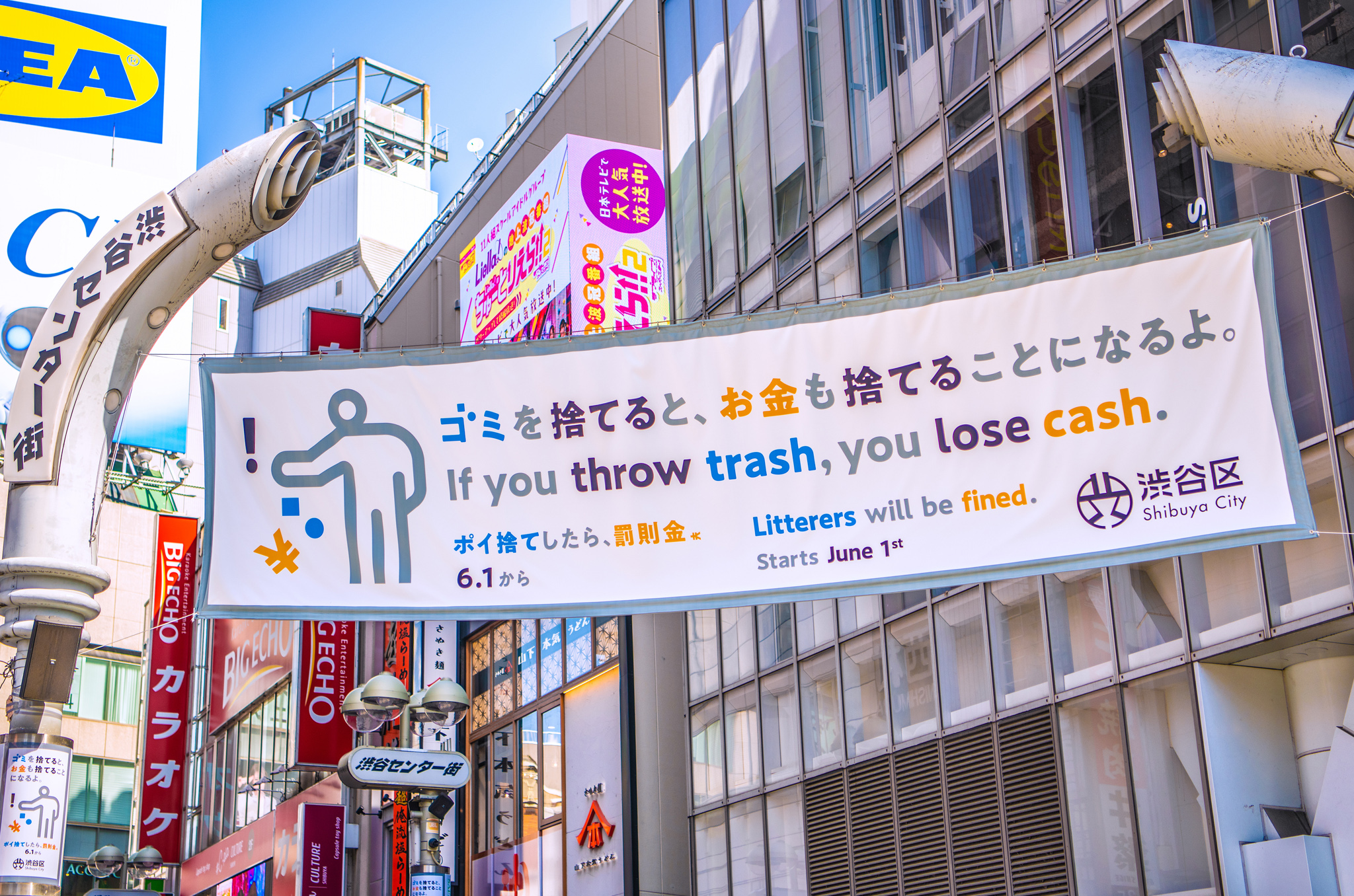
Shibuya, which had just three outdoor public bins of its own and none in Hachiko Plaza in front of the station, now carries on-the-spot ¥2,000 fines for littering, while specified convenience stores and food and drink businesses in designated areas around Shibuya, Harajuku and Ebisu stations are required to provide bins, with businesses that fail to comply with an improvement order facing fines of up to ¥50,000.
Elsewhere the answer has been technology. Solar-powered SmaGO bins, made by the Tokyo company Forcetec, compress their contents and alert crews when they’re full, and in Omotesando they cut collection from three or four rounds a day to one while covering much of their own cost through advertising.
On November 8, Chiyoda ward put 22 of them into service around Akihabara Station and along Chuo-dori. They’re a long way from the bins Eidan sealed in 1995, and they’re going in because of tourists and litter counts rather than any official sense that the danger has passed.